
Journalist

Eugene Y. Chan, Ali Goharyis
-
 Olive Young Reports 24.5% Revenue Increase in Q1 Driven by Foreign Customers CJ Olive Young achieved sales of 1.5372 trillion won in the first quarter of this year, marking a 24.5% increase compared to the same period last year. This growth was supported by an increase in foreign visitors, the expansion of specialized stores, and the launch of wellness-focused outlets.According to the Financial Supervisory Service's electronic disclosure system on May 15, the company's net profit for the quarter rose by 2.9% to 130 billion won.The surge in sales is attributed to the influx of foreign customers. At the 'Olive Young Myeongdong Town,' one of the company's top-performing stores, 95% of total sales came from foreign patrons. Additionally, the newly launched wellness-centered store, 'Olive Better,' reported that nearly 50% of its sales were generated from foreign customers.CJ Olive Young plans to invest 123.8 billion won this year to expand its presence outside the capital region, renovate existing stores, and enhance its logistics infrastructure. This strategy aims to strengthen both regional markets and logistics networks, moving away from a focus solely on the metropolitan area.A company representative stated, "We recorded solid growth through offline innovations centered on specialized stores, the launch of Olive Better, and investments in region-based retail and logistics. We will continue to invest domestically and internationally to secure future growth drivers."Meanwhile, CJ Olive Young is also intensifying its overseas operations. The company is set to open its first international store in Pasadena, California, at the end of this month, with plans for additional locations in key areas of Los Angeles, including Westfield Century City and Del Amo Fashion Center.Olive Better is also accelerating its expansion, with plans to increase the number of stores to ten by the end of the year, and there are discussions about opening hybrid stores that combine Olive Young and Olive Better offerings.* This article has been translated by AI. 2026-05-16 00:28:14
 -
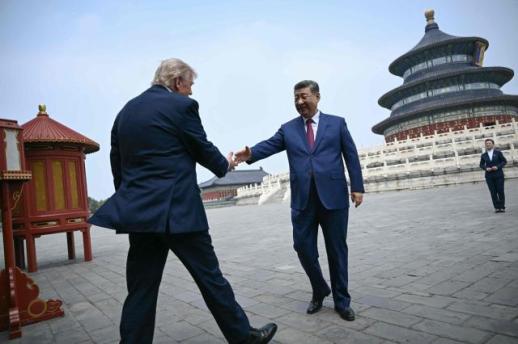 US-China Summit Addresses Iran Nuclear Issue and Hormuz Strait Access The summit between U.S. President Donald Trump and Chinese President Xi Jinping in Beijing in May 2026 transcended mere bilateral relations, impacting the geopolitical landscape of the Middle East and global energy order. The primary focus of the meeting was the Iran nuclear issue and the reopening of the Hormuz Strait.According to a White House statement, both leaders agreed on the principle that “Iran must never possess nuclear weapons” and that “the Hormuz Strait must remain open for international energy supply.” Following the summit, President Trump emphasized that “President Xi also desires the reopening of the Hormuz Strait and is willing to assist in resolving the Iran issue.”On the surface, this appears to be a significant diplomatic advancement. However, a closer examination of the messages from both the U.S. and China reveals a more complex reality. While the U.S. strongly emphasized “zero tolerance for Iran’s nuclear ambitions” and “full reopening of the Hormuz Strait,” China maintained a cautious stance. The Chinese Foreign Ministry confirmed that the Middle East issue was on the summit agenda but did not officially mention the U.S. emphasis on “zero tolerance for Iranian nuclear weapons.” Regarding the Hormuz Strait, China’s position remained at a general level, stating that “China’s stance is consistent and clear.”This subtle difference in tone illustrates that while the U.S. and China sat at the same table, they are pursuing fundamentally different strategic calculations. For the U.S., the Hormuz Strait is not just another waterway in the Middle East; it is the heart of the global energy supply chain, influencing international oil prices, global inflation, maritime logistics, and financial market stability. The ongoing conflict in Iran has led to rising oil prices and inflationary pressures in the U.S., posing direct challenges for the Trump administration ahead of the midterm elections. Therefore, managing tensions in the Middle East is crucial for the U.S.A key variable in this process is China’s influence over Iran. As one of the world’s largest oil importers and a major buyer of Iranian crude, the U.S. hopes China will exert pressure on Iran to ease tensions in the Hormuz Strait. Reports indicate that during the summit, President Xi expressed interest in increasing imports of U.S. oil and LNG. This is not merely an energy transaction; China aims to diversify its dependence on the Hormuz Strait while securing leverage in economic negotiations with the U.S. Expanding imports of U.S. energy could serve as a stabilizing factor in U.S.-China trade tensions.However, the likelihood of China acting to the extent desired by the U.S. remains low. The relationship between China and Iran extends beyond simple oil transactions to a strategic partnership. Historically, the ties between the two nations run deep, dating back to the ancient Silk Road, which connected civilizations, commerce, religion, and culture across Eurasia. The Silk Road, which linked Chang'an to Persia, was not just a trade route but a vital artery of civilization. Today, China reinterprets this as its modern Silk Road initiative, the Belt and Road Initiative, with Iran as a key component. Geographically, Iran serves as a strategic gateway connecting the Middle East, Central Asia, Russia, and Europe. For China, Iran is an essential partner to reduce reliance on U.S. naval dominance and expand land-based supply chains.The two countries have significantly strengthened their cooperation in energy, infrastructure, finance, and military sectors through a 25-year strategic cooperation agreement signed in 2021. China is effectively the largest customer for Iranian oil, while Iran continues to survive economically amid U.S. sanctions thanks to Chinese technology and capital. In essence, China has filled the void left by Western capital due to U.S. sanctions.Energy cooperation is particularly critical. The Chinese economy relies heavily on vast oil and LNG consumption, with a significant portion of its oil imports coming from the Middle East, primarily through the Hormuz Strait. In other words, the Hormuz Strait is a lifeline for China’s industrial economy.Thus, China does not desire a complete blockade of the Hormuz Strait either. The question remains: what form of reopening does China seek? The U.S. advocates for a complete freedom of navigation system under international law, while Iran aims to allow limited and selective passage under its security control. Recently, Iran has permitted certain friendly nations, including China, to navigate under specific conditions. This is not merely maritime control; Iran seeks to establish new geopolitical influence through the Hormuz Strait, applying pressure on vessels linked to the U.S. and Israel while allowing limited passage for China and some allies, thereby attempting to reshape the international order in its favor.From China’s perspective, this structure is not entirely disadvantageous. A weakened U.S.-centric order in the Middle East could allow China to expand its strategic space. Ultimately, the Xi administration appears to be employing a complex strategy of cooperating with the U.S. while simultaneously maintaining its strategic relationship with Iran. This is why, despite the announcements from the U.S.-China summit, the actual situation remains uncertain. Attacks on vessels and incidents of seizure continue in the Hormuz Strait. An Indian cargo ship has been attacked and sunk, and there have been incidents of vessel seizures near the UAE. The international shipping industry is on high alert, with insurance premiums and freight rates soaring.The global energy market is also unstable. The Hormuz Strait is a crucial corridor for global oil maritime traffic. If current tensions persist or escalate into military conflict, international oil prices could surge again, potentially reigniting inflationary pressures in the U.S. and Europe and posing serious challenges to the growth of Asian manufacturing countries like South Korea, China, and Japan.So, is a peace negotiation between the U.S. and Iran possible? Currently, there is potential for limited ceasefires or partial de-escalation. However, numerous obstacles remain before full normalization of relations can occur. Iran has already secured a powerful strategic card in the Hormuz Strait through this conflict. Meanwhile, the U.S. seeks stability in the Middle East but cannot tolerate Iran’s nuclear development and regional hegemony. Ultimately, the future order in the Middle East is likely to be shaped by a complex balance of power involving the U.S., China, Iran, Saudi Arabia, Israel, and Russia.The U.S.-China summit in Beijing symbolized both nations’ preference for manageable tensions over direct confrontation on this vast geopolitical chessboard. However, challenges remain. There is will, but trust is still lacking. The most dangerous moments in international politics arise when the gap between these two factors widens.* This article has been translated by AI. 2026-05-16 00:21:00
 -
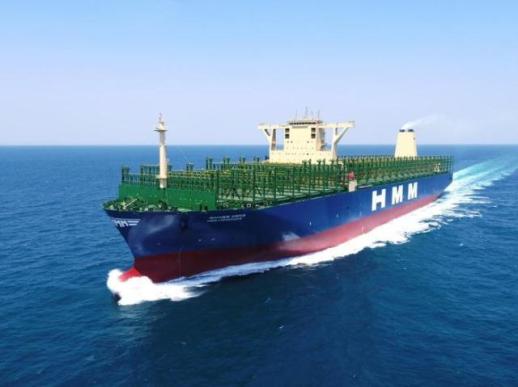 SCFI Index Recovers Above 2000, Boosting Hopes for South Korean Shipping Sector Global container freight rates are showing signs of recovery as the Shanghai Container Freight Index (SCFI) has rebounded, signaling positive prospects for the shipping industry in the second half of the year. Analysts attribute this trend to uncertainties in the Middle East affecting supply and the onset of an early peak season. The market is closely watching to see if this upward momentum will continue into the latter half of the year. On May 15, the Shanghai Shipping Exchange (SSE) reported that the SCFI rose by 186.45 points to reach 2140.66 points, marking an increase of nearly 10% from the previous week. The SCFI is a key indicator of global container shipping trends, calculated based on freight rates from Shanghai. It is recognized for its ability to reflect global trade flows and shipping supply-demand conditions relatively quickly. The industry typically uses SCFI trends to gauge future performance of shipping companies. By route, freight rates for the U.S. East Coast (USEC) increased to $5,043 per 40-foot container (1 FEU), an approximate 8% rise, surpassing the psychological barrier of $5,000. This increase is attributed to a rapid rise in cargo volumes to the U.S. East Coast and challenges related to transiting the Panama Canal. Freight rates for the U.S. West Coast (USWC) also saw a significant increase, rising about 12% to $4,393 per FEU, while European routes climbed to $2,518 per twenty-foot container (1 TEU), up 9.5% from the previous week. The backdrop for this freight rate rebound is the prevailing geopolitical risks. Typically, the global shipping market experiences a surge in cargo volumes starting in the third quarter, leading up to the year-end shopping season. However, due to the recent conflict in the Middle East, concerns about supply disruptions have prompted shippers to secure cargo earlier than usual for the second half of the year. This has led to an early peak season phenomenon in the market. Shipping companies have also actively pursued freight rate increases. Major global carriers, including HMM and Yang Ming, have recently implemented General Rate Increases (GRI) and Peak Season Surcharges (PSS). While there was skepticism about the actual implementation of these increases, the sharp rise in the SCFI indicates that these pricing strategies are being reflected in the market. Industry insiders believe that this freight rate rebound may not be a short-term spike. Although the likelihood of a return to the extremely high rates seen during the pandemic is limited, the ongoing supply shortage could enhance the pricing power of shipping companies more than anticipated. The South Korean shipping industry is closely monitoring freight trends. Domestic carriers, including HMM, have faced sharp adjustments in freight rates due to the impact of the Middle East conflict. Notably, HMM's operating profit in the first quarter of this year was halved compared to the same period last year, with revenues of 2.7187 trillion won, down 4.8% from 2.8547 trillion won last year, and operating profit of 269.1 billion won, a 56.2% decrease from 613.9 billion won a year earlier. However, the recent upward trend has increased expectations for improved performance in the second half of the year. Should the SCFI maintain a strong trajectory, operating profits could significantly exceed initial forecasts. One industry source noted, "Given the high market volatility, a cautious approach is necessary," but added, "The recent rise in freight rates should be viewed as a reflection of actual supply-demand improvements rather than a temporary shift in sentiment."* This article has been translated by AI. 2026-05-16 00:19:04
 -
 Kolon Industries Reports 1st Quarter Operating Profit of 98.8 Billion Won, Up 158.3% Year-on-Year ㈜코오롱 announced on May 15 that it recorded sales of 1.5188 trillion won, an operating profit of 98.8 billion won, and a net loss of 44.7 billion won for the first quarter of 2026. Compared to the same period last year, sales increased by 7.7% and operating profit rose by 158.3%, although the net loss persists. Its subsidiary, Kolon Industries, saw both sales and operating profit rise year-on-year, driven by the success of its operational efficiency (OE) projects and strong sales growth in the industrial materials and chemicals sectors. Kolon Global, another subsidiary, experienced a slight decline in sales compared to the previous year, but significantly increased its operating profit due to enhanced site management and improved cost ratios. Kolon Mobility Group also reported growth in both sales and operating profit, benefiting from strong sales of premium imported vehicles. The net loss was attributed to increased valuation losses related to convertible bonds due to the rise in Kolon TissueGene's stock price. Kolon Industries' manufacturing division is expected to continue its profitability-focused growth, supported by ongoing operational efficiency efforts and an increased share of high-value products. Kolon Global recorded new orders worth 404.4 billion won in the first quarter, marking a 19% increase from the same period last year. Meanwhile, Kolon Industries is concentrating on strengthening its competitiveness through initiatives centered around its research and development (R&D) hub, the Kolon One&Only Tower. These initiatives include reorganizing the R&D team, expanding AI-based R&D processes, and enhancing its intellectual property portfolio.* This article has been translated by AI. 2026-05-16 00:15:32
 -
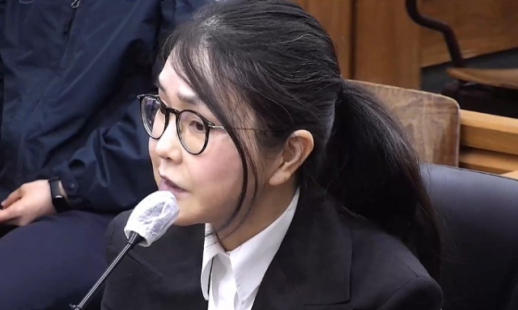 Kim Geon-hee Faces 7 Years and 6 Months in Prison for Corruption Charges The special prosecutor's team, led by Min Jung-ki, has requested a prison sentence of 7 years and 6 months for Kim Geon-hee, who is accused of receiving expensive gifts in exchange for favors related to personnel and business dealings. The special prosecutor characterized Kim's actions as a form of corruption exploiting her status as the spouse of the president, emphasizing the need for severe punishment. During a hearing on May 15 at the Seoul Central District Court, the special prosecutor's team requested the court impose a sentence of 7 years and 6 months along with a fine of 56.36 million won. They also sought the confiscation of luxury items, including a painting by Lee U-hwan, a gold turtle, a Van Cleef & Arpels necklace, and a Dior bag, which were reportedly received by Kim. The special prosecutor stated, "The spouse of the president is expected to maintain the highest standards of integrity and restraint. Kim has repeatedly exploited her influence as the president's spouse to engage in private transactions for personal gain." They further asserted that she effectively reduced the state's public authority and influence to mere commodities, committing acts of corruption rarely seen in constitutional history, yet she continues to deny the allegations, claiming they were merely gifts from acquaintances. They stressed that "severe punishment is unavoidable." Kim, dressed in a black suit, appeared in court with a stern expression, keeping her head down throughout the proceedings. When asked by the special prosecutor about her wearing jewelry received from Lee Bong-kwan, the chairman of Seohui Construction, she largely declined to answer. Kim stated, "I have been taking psychiatric medication for a long time, and there are many parts I do not remember due to my health issues. I will exercise my right to refuse to testify, as I might provide incorrect information." She has been indicted for allegedly receiving luxury items worth approximately 100 million won, including a Van Cleef & Arpels necklace and a Tiffany & Co. brooch, from Lee Bong-kwan between March and May 2022 in exchange for personnel favors for her son-in-law, Park Seong-geun, who was the former chief of staff to the prime minister. The special prosecutor also reported that Kim received a gold turtle worth 2.65 million won from Lee Bae-yong, the former chair of the National Education Commission, in April 2022 in exchange for a request for an appointment. In September of the same year, she allegedly received a Vacheron Constantin wristwatch valued at 39.9 million won from robot dog entrepreneur Seo Seong-bin in return for business support. Additionally, between June and September 2022, she is accused of receiving gifts worth 5.4 million won, including a Dior bag, from Pastor Choi Jae-young in connection with public service duties, and in February 2023, she allegedly received a painting by Lee U-hwan valued at 140 million won in exchange for a request for nomination from former chief prosecutor Kim Sang-min. In contrast, Kim's defense team maintains that most of the gifts were simple presents without any expectation of return or were merely for purchasing on her behalf. They argued that the Van Cleef & Arpels necklace was a congratulatory gift for her election and inauguration, the gold turtle was a token of gratitude, and the wristwatch was simply a purchase on her behalf. They also claimed that there was no evidence that Kim received the painting by Lee U-hwan. Previously, the special prosecutor sought prison sentences of 1 year for Lee Bong-kwan, 1 year for Lee Bae-yong, 1 year and 6 months for Seo Seong-bin, and 4 months for Pastor Choi Jae-young, who were also indicted in the case. The court is scheduled to hold a sentencing hearing for Kim on June 26.* This article has been translated by AI. 2026-05-16 00:10:43
 -
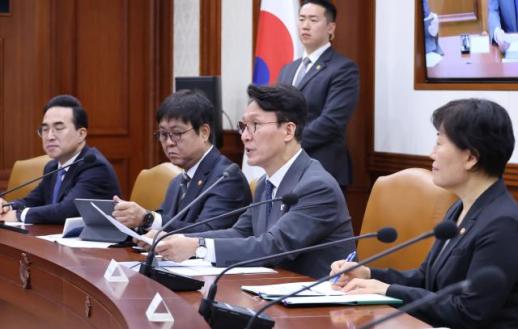 Counterterrorism Center to be Reformed into National Counterterrorism Headquarters The government is reforming the Counterterrorism Center, currently under the Prime Minister's office, into the National Counterterrorism Headquarters. On May 15, a final report meeting of the public-private counterterrorism task force was held at the Government Seoul Building, chaired by Prime Minister Kim Min-seok, where the reform was confirmed. The National Counterterrorism Headquarters will serve as a central control tower overseeing and coordinating government-wide counterterrorism activities. Plans include expanding the recruitment of private experts, implementing a long-term employment system, and enhancing preventive and response systems using technologies such as artificial intelligence (AI), data analysis, and drones. In the event of a terrorist incident, a unified command system led by the police will ensure efficient responses. Additionally, new threats such as drone and unmanned aerial vehicle risks will be explicitly categorized as types of terrorism, and the criteria for defining terrorism will be clarified. The National Counterterrorism Committee will be granted the authority and procedures to directly designate and declassify domestic terrorist organizations. The training and education system will also be improved. Furthermore, plans will be pursued for regional joint national training, central-local cooperation bodies, reflecting field demands for counterterrorism equipment, establishing budget coordination systems, and building strategic cooperation with key overseas institutions. Prime Minister Kim stated, "New types of risks continue to increase, including traditional terrorist threats, the spread of extremism in online spaces, crimes motivated against unspecified individuals, and risks utilizing new technologies such as drones. We will create a national response system that proactively addresses the changing terrorism environment so that citizens can feel safe in their daily lives."* This article has been translated by AI. 2026-05-16 00:09:00
 -
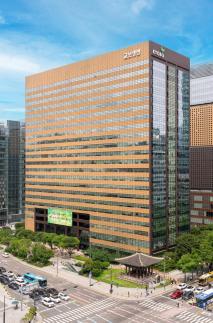 Kyobo Life Reports 60.7% Increase in Q1 Net Profit to 458.7 Billion Won Kyobo Life Insurance continued to improve its performance in the first quarter of this year, driven by increased sales of health and protection insurance and rising investment profits. On May 15, Kyobo Life announced that its consolidated net profit for the first quarter was 458.7 billion won, up 173.3 billion won, or 60.7%, from 285.4 billion won in the same period last year. The standalone net profit was 330.1 billion won, a 4.7% increase from 315.3 billion won a year earlier. Both insurance and investment profits contributed to this performance improvement. The insurance profit for the first quarter was 184.8 billion won, a 13.3% increase from 163.1 billion won in the same period last year. The steady growth in sales of protection products, including health insurance, and the introduction of new products tailored to customer demand, such as health insurance for seniors and chronic patients, enhanced product competitiveness. Investment profits also showed improvement. The investment profit for the first quarter was 259.4 billion won, up 7.1% from 242.3 billion won a year earlier. The company responded to interest rate volatility by actively trading long- and short-term bonds and preemptively incorporating high-quality assets. A rebalancing strategy that adjusted the stock and alternative investment portfolio according to market conditions also contributed to the increase in investment profits. The foundation for future profits has also expanded. The standalone new contract CSM (Contractual Service Margin) for the first quarter reached 415.9 billion won, a 61.6% increase from 257.3 billion won in the same period last year. This growth was influenced by the increase in sales of protection insurance, leading to a rise in profitable new contracts. Cumulative CSM also showed an upward trend. By the end of the first quarter, the cumulative CSM was 6.6869 trillion won, up 2.7% from 6.5110 trillion won at the end of last year. This increase reflects the rise in new contract CSM as well as the effects of stock price increases related to variable insurance.* This article has been translated by AI. 2026-05-16 00:06:21
 -
 Orion Reports 26% Increase in Q1 Operating Profit Driven by Overseas Growth Orion has reported a double-digit improvement in performance for the first quarter of this year, driven by growth in its overseas subsidiaries.The company announced on May 15 that its consolidated operating profit for the first quarter reached 165.5 billion won, a 26% increase compared to the same period last year. Revenue rose 16% to 930.4 billion won.The growth was primarily attributed to overseas subsidiaries in China, Vietnam, and Russia. The Chinese subsidiary reported sales of 409.7 billion won, a 24.8% increase, benefiting from the peak season of the Lunar New Year and increased sales of key products such as potato snacks, pies, and jelly. Operating profit in China surged 42.7% to 79.9 billion won.In Vietnam, the subsidiary continued its growth trend, driven by seasonal demand during the Tet holiday and the impact of new products. First-quarter sales reached 151.3 billion won, with operating profit increasing by 25.2% to 26.6 billion won.The Russian subsidiary saw a 34.7% increase in sales to 90.5 billion won, with operating profit rising 66.2% to 14.2 billion won, thanks to expanded production capacity for products like Choco Pie and Fresh Pie and enhanced dedicated products for various distribution channels. The Indian subsidiary, now in its fifth year of local sales, recorded a 67% increase in revenue, reaching 9.8 billion won.Despite sluggish domestic demand, a decrease in sales partners, and rising prices of key raw materials, the Korean subsidiary achieved slight growth. First-quarter sales were 283.4 billion won, up 0.4%, while operating profit increased by 4.6% to 48.5 billion won.Orion plans to continue its growth trajectory in the second half of the year by expanding production facilities both domestically and internationally. The Korean subsidiary will enhance production lines for Poca Chips and nachos to meet summer snack demand. In China, the company aims to accelerate its efforts in key growth markets in the central and southern regions, including Guangzhou.In Vietnam, a newly established snack and candy production line at the Hanoi Yen Phong factory will begin full operations to increase product supply. In Russia, the company plans to double the production capacity of its rapidly growing Choco Pie line. India will also see additional production lines for Choco Pie and custard.An Orion official stated, "With investments in domestic and international production and logistics facilities, we expect to accelerate our growth in the second half as supply volumes increase."Additionally, due to the increase in overseas sales of confectionery, Orion's total assets reached 5.143 trillion won last year, marking its first inclusion in the Fair Trade Commission's designated large business group this year.* This article has been translated by AI. 2026-05-16 00:03:26
 -
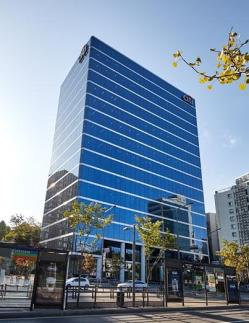 Citibank Reports Record Q1 Profit of 132.8 Billion Won Citibank Korea announced on May 15 that it achieved a net profit of 132.8 billion won in the first quarter of this year. This marks a 61% increase compared to the same period last year, reaching the highest level in eight years.Total revenue for the first quarter was 330.5 billion won, a 23% increase year-over-year. This growth was largely driven by a 77% rise in non-interest income from corporate finance, including foreign exchange, derivatives, and securities-related earnings.Interest income fell to 104.2 billion won, a 26% decrease from the previous year. The net interest margin (NIM) dropped to 2.01%, down 0.36 percentage points from 2.37% in the same quarter last year.Total loans decreased by 5% to 9.7741 trillion won due to the gradual phase-out of the consumer finance sector. However, total deposits rose by 16% to 21 trillion won, driven by growth in the corporate finance sector.Citibank plans to continue expanding corporate loans and securities this year to sustain the upward trend in both interest and non-interest income.Yoo Myung-soon, CEO of Citibank Korea, stated, "Despite the challenging market environment characterized by geopolitical conflicts and increased volatility in interest and exchange rates, we achieved our best quarterly performance since 2018. This success is a result of significantly enhancing non-interest income in our core business areas, including foreign exchange, capital markets, and securities services."* This article has been translated by AI. 2026-05-16 00:00:40
 -
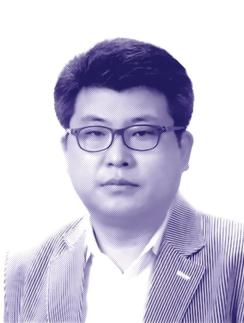 Power Ultimately Tests Humanity History is often said to repeat itself, but more accurately, it is human nature that recurs. Across different eras, human nature remains remarkably consistent. The desires, pride, face-saving, and emotions surrounding power are strikingly similar to those we see today. The story of Yi Seong-gye, the founder of the Joseon Dynasty, and the Lee An-sa family, a powerful local elite in Jeonju during the late Goryeo period, illustrates this point. Regardless of its factual accuracy, the enduring nature of this tale is not solely due to its mythic origins. It encapsulates the age-old political dynamics of power, humanity, jealousy, fear, and survival. According to this narrative, the Lee An-sa family was a significant local force in Jeonju. One day, a conflict arose between this local power and the central authority. At the heart of the dispute was a beautiful courtesan, which sparked issues of pride and emotion. While the story is anecdotal and its veracity cannot be confirmed, its underlying structure is intriguing. It represents not merely a love affair but a struggle for dominance in the region. Central power always claims legitimacy, asserting that it upholds order by royal decree. However, local elites have long held the trust of the people, land, economic resources, and networks. If the power from the center is merely paper authority, then the local elite represents power on the ground. The clash between the two was perhaps inevitable—a confrontation between local elites and central authority. Power, despite the passage of time, remains astonishingly similar. History often moves not by grand ideologies but by human emotions. Pride provokes power, and face-saving escalates conflicts. In the Goryeo period, a rumor that “royal energy flows from the ancestral graves” could lead to the downfall of a family, illustrating this dynamic. While such beliefs may seem absurd today, in an era lacking scientific advancement, geomancy was not merely superstition; it was a framework for understanding the world and a quasi-science explaining political realities. When deciding on a capital or constructing royal tombs, people sought to interpret the will of heaven and the energies of the earth. In such times, the phrase “the king is in my grave” was not just a rumor; it was a political attack and sometimes a weapon threatening survival. When human jealousy and the fear of power intertwine, personal emotions can quickly transform into public violence. Thus, the story of the Lee An-sa family’s grave desecration and their flight becomes even more symbolic. Whether the tale is true or not, it reflects the desperation of a family forced to uproot itself for survival. Relocating ancestral graves is not merely a move; it involves shifting the very foundation of life, memory, and family history. Ultimately, this family, once pushed to the periphery, would find itself at the center of a new dynasty. The oppressed become the powerful, and the periphery becomes the center—a historical irony. What is fascinating is how history tests humanity in this manner. Power often conceals individuals, only to reveal their true nature at critical moments. Desires, character, restraint, and limits that were invisible during ordinary times become starkly apparent at the threshold of power. Today's politics are not much different. During election seasons, politicians' pasts are scrutinized. Long-forgotten remarks, youthful mistakes, and personal conflicts resurface for public judgment. Some claim injustice, while others argue that these are old matters. Both perspectives hold some truth. Everyone has immature phases and makes mistakes. The issue is not the mistakes themselves but what kind of person emerges after those experiences. Power is a test of humanity before it is a test of ability. People do not only read campaign platforms; they observe how candidates respond in crises, how they treat others in conflicts, whether they evade or accept responsibility, and if they can exercise restraint in the face of emotions. A leader's qualities are often revealed more in uncomfortable moments than in grand speeches. Reflecting on this, the criteria by which communities choose their leaders have not changed significantly over time. People in the Goryeo period likely asked, “Can we trust this person with power?” Today’s voters pose a similar question. The reason the Lee An-sa tale endures to this day is rooted in this very conflict of pride and emotion that unfolded in a tavern in Jeonju during the late Goryeo period. * This article has been translated by AI. 2026-05-15 23:58:16