
Journalist

Gareth Thomas
-
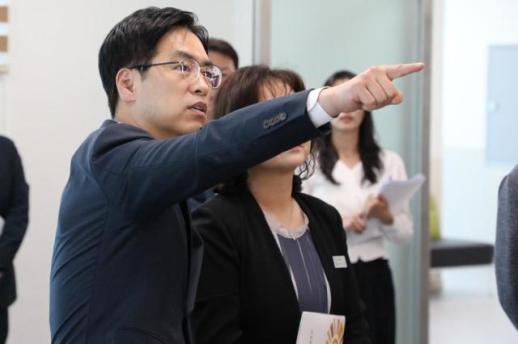 Ministry of Interior to Begin Second Round of High Oil Price Relief Payments on May 18 The Ministry of Interior announced on May 14 that Vice Minister Kim Min-jae visited Gongju, South Chungcheong Province, to assess preparations for the second round of high oil price relief payments, set to begin on May 18. During his visit, he listened to local concerns and checked the readiness of the facilities. Kim visited the Okryong-dong community center to ensure that residents applying for the relief payments would not face any inconveniences. He emphasized the importance of thorough preparations, especially since this second round will include about 70% of the population, including those who did not apply in the first round. He inspected the availability of offline payment methods, such as prepaid cards, and noted that many elderly residents who visit the center may struggle with online applications. Kim requested that sufficient indoor waiting space and guidance staff be provided, especially as temperatures rise. Additionally, he urged the promotion of the opportunity for those who missed the first application period to apply during the second round, ensuring that all eligible individuals can receive the relief payments without gaps in coverage. The second round of high oil price relief payments will begin simultaneously online and offline at 9 a.m. on May 18. Eligible amounts include 130,000 won for single-income households with one employee, 140,000 won for two-person households, 80,000 won for single-income households with regional subscribers, and 120,000 won for two-person households. To prevent congestion and system overload during the first week of applications, a system based on the last digit of applicants' birth years will be implemented. Kim stated, "As the number of eligible individuals expands in this second round, meticulous preparations are necessary to ensure that every citizen can apply and receive their payments without inconvenience. While the current workload is significant, the Ministry of Interior and local governments will work closely to ensure a smooth and prompt payment process for the public."* This article has been translated by AI. 2026-05-14 17:44:03
 -
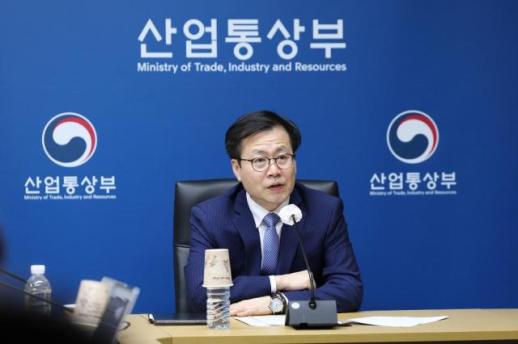 Korea's Trade Chief Pledges Support Amid EU and Mexico Outreach Yeo Han-goo, the head of the Trade Negotiation Bureau at the Ministry of Trade, Industry and Energy, stated, "The government will mobilize all trade capabilities to support our companies operating abroad in securing stable investments and competitiveness."On May 14, the ministry announced that Yeo met with Valdis Dombrovskis, the European Commissioner for Trade and Economic Security, in Brussels on May 11 to discuss the EU's plans to strengthen steel import regulations and to convey the concerns of the Korean industry while seeking cooperation.This meeting was held as the EU is set to implement the 'Steel Oversupply Response Act' starting in July, which includes raising tariffs on 30 steel products and introducing import quotas (TRQ). Yeo requested a cautious approach from the EU to ensure that Korean steel products are not subjected to unreasonable restrictions due to the new regulations.He emphasized that the EU is Korea's second-largest steel export market and explained that these measures could impact not only the steel industry but also the supply chains and production stability of Korean companies manufacturing automobiles and electronics locally.In response, the EU acknowledged the strategic importance of the steel industry for both Korea and the EU and expressed a willingness to seek mutually beneficial solutions through high-level and technical discussions.Earlier, on May 10, Yeo held a meeting with Korean companies operating in the EU to assess the challenges faced by the steel, automotive, and battery sectors. Attending companies reported that various industrial and environmental regulations, including the Industrial Acceleration Act (IAA) and the Carbon Border Adjustment Mechanism (CBAM), have increased their operational burdens. They specifically expressed concerns that the upcoming steel import regulations could extend the burden to downstream industries such as automotive and electronics.Korean battery companies operating in Poland evaluated the EU Commission's decision last December to include the battery industry as a target for support under 'energy-intensive industries' as a positive step, expecting relief from electricity costs and reduced manufacturing expenses. The ministry explained that it has continuously raised the need for support for the battery industry in discussions with the EU and Polish governments.Yeo also visited Mexico from May 12 to 13, where he met with key figures, including Economy Minister Marcelo Ebrard, to emphasize the need for progress on the Korea-Mexico Free Trade Agreement (FTA).He explained that Korean companies operating in Mexico are facing difficulties due to tariff increases on countries without an FTA with Mexico and requested stable implementation of tariff reduction systems, expansion of duty-free quotas for automobiles, and the introduction of new quotas for electronics.Additionally, he conveyed the requirements of Korean companies regarding origin standards during the review process of the United States-Mexico-Canada Agreement (USMCA).Both countries agreed on the necessity of improving trade and investment relations and decided to establish ministerial-level strategic dialogues and working groups. Yeo met with local political and business leaders to explain the importance of Korean investment in Mexico and sought cooperation for advancing the FTA.Korean companies operating in Mexico highlighted the need for the Korea-Mexico FTA, citing increased operational burdens due to U.S. Section 232 tariffs, Mexico's tariff hikes, and strengthened labor laws.Yeo stated, "In an uncertain trade environment, the government is actively pursuing a diversification policy. We will support our companies through expanded tariff reduction incentives and FTA progress with Mexico, our top trading partner in Latin America."* This article has been translated by AI. 2026-05-14 17:42:55
 -
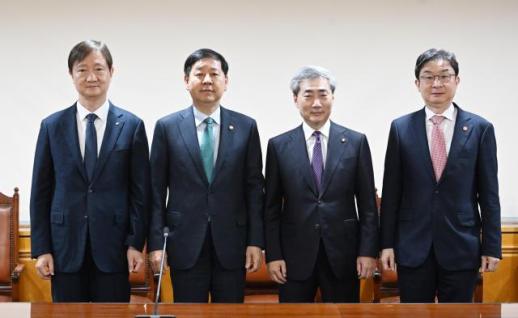 Financial chiefs monitor market volatility, Samsung strike risks SEOUL, May 14 (AJP) -The so-called 'financial four (F4)' - chiefs responsible for fiscal, monetary, and financial policies - gathered Thursday to monitor recent volatility in the financial and foreign exchange markets, assess risks stemming from the war in the Middle East, and discuss market stabilization measures. Notably, the meeting also addressed the potential impact of a general strike at Samsung Electronics, the nation's largest company, on the financial market and the real economy. Koo Yun-cheol, Deputy Prime Minister and Minister of Economy and Finance, presided over the joint market monitoring meeting at the Korea Federation of Banks in Seoul. The meeting was attended by Bank of Korea (BOK) Governor Shin Hyun-song, Financial Services Commission Chairman Lee Eog-won, and Financial Supervisory Service Governor Lee Chan-jin. The policy chiefs evaluated that the Korean economy continues to show higher-than-expected growth driven by robust semiconductors, with the fundamentals of the macroeconomy and financial markets remaining solid. Still, the volatility in the won-dollar exchange rate has expanded recently due to the prolonged Middle East conflict, rising international oil prices, and uncertainty regarding the monetary policies of major economies. Korea's gross domestic product (GDP) grew 1.7 percent in the first quarter, doubling the previous consensus of 0.9 percent. However, during the same period, the average exchange rate reached 1,469 won per dollar, weakening by more than 1 percent from 1,453.5 won in the previous quarter. Government bond yields also rose by an average of 35.4 bps for the three-year bond and 41.1 bps for the 10-year bond. KOSPI has grown into a globally top-tier market based on the competitiveness and earnings of key industries like semiconductors. However, they shared the consensus that efforts to improve the structure of the capital market must continue for it to solidify its position as a world-class market. As of Thursday's close, Samsung Electronics and SK hynix accounted for 48.1 percent of the total KOSPI market capitalization, raising concerns about a "K-shaped" polarization in the securities market. Regarding the weakness in the bond market, officials explained that the recent rise in treasury bond yields resulted from global inflation concerns, shifts in expectations for major countries' monetary policies, and strong first-quarter GDP growth. The government evaluated that the structural demand base for the bond market is improving, supported by healthy fiscal soundness and capital inflows following the inclusion in the World Government Bond Index (WGBI). They agreed the recent weakness of the won is excessive relative to the country's economic fundamentals. The government diagnosed that recent net selling of domestic stocks by foreign investors and an increase in offshore speculative trading have increased exchange rate volatility. They pointed out foreign exchange liquidity remains at a good level, and institutional improvements such as the WGBI inclusion, the National Pension Service’s new framework, and the Return-to-Korea Investment Account (RIA) are contributing to the stabilization of supply and demand. They projected that the exchange market would stabilize quickly if external uncertainties, such as the Middle East war, ease, supported by a record-high current account surplus. The meeting also touched upon the labor conflict at Samsung Electronics. Participants expressed concern that a general strike could pose significant risks to growth, exports, and the overall financial market, emphasizing the need for a swift resolution through principled negotiations. The management and labor union of Samsung Electronics have held negotiations since their first 2026 wage talk meeting on December 11 last year, but failed to bridge differences over the restructuring of the performance-based bonus system and the removal of the salary cap. The union secured the right to strike with a 93.1 percent approval rate in a March 18 vote and has intensified its struggle through rallies. Following mediation by the Ministry of Employment and Labor and the National Labor Relations Commission, post-adjustment procedures were held from May 11 to 13 but failed to reach a final agreement. Immediately after the breakdown of talks, the union announced it would go on a full-scale strike for 18 days, from May 21 to June 7. 2026-05-14 17:36:56
 -
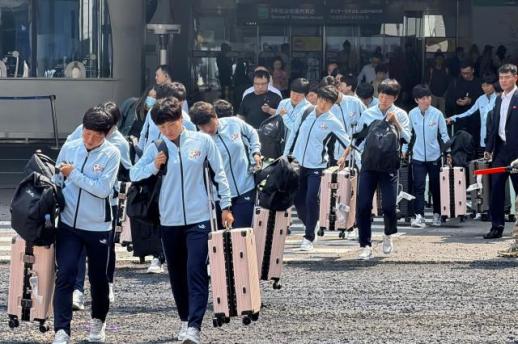 South Korea Approves Visit of North Korean Women's Football Team South Korea's Ministry of Unification announced on May 14 that it has approved the visit of the North Korean women's football team, Naegohyang, to participate in the Asian Football Confederation (AFC) Women's Champions League (AWCL) semifinals scheduled for May 20 in Suwon. The approved delegation consists of 39 members, the same number initially submitted by North Korea to the AFC. The visit is authorized from May 17 to May 24. Once the visit is approved, an entry permit will be issued, which is required under South Korea's Inter-Korean Exchange and Cooperation Act for North Korean officials visiting the South. The entry permit serves as a document to verify identity in place of a passport during the entry screening process. A Ministry of Unification official stated that North Korea defines inter-Korean relations as involving two separate states. Regarding the possibility of the North Korean delegation presenting passports during entry screening at Incheon International Airport on May 17, the official said, "The screening will fundamentally follow the Inter-Korean Exchange and Cooperation Act, but if the North Korean football team presents passports, it will be used as supplementary material for photo verification on a practical level." The Naegohyang women's football team is set to arrive at Incheon International Airport on May 17 and will face Suwon FC Women at the Suwon Sports Complex on May 20. This marks the first time a North Korean sports team has visited South Korea for a competition since the International Table Tennis Federation (ITTF) World Tour Grand Finals held in Incheon in December 2018, and it is the first visit by the North Korean women's football team since the 2014 Asian Games in Incheon. The Ministry of Unification has decided to support up to 300 million won (approximately $250,000) from the Inter-Korean Cooperation Fund for the expenses of cheering groups from the private sector. According to a reference document released by the Ministry, the joint cheering group organized by over 200 civic organizations, including the National Council for Reconciliation and Cooperation, will consist of approximately 3,000 members. The Ministry stated, "We respect the autonomous discussions and negotiations of civic groups and are communicating to ensure that cheering is conducted in an orderly manner within the framework of AFC regulations," adding that it has provided guidance on prohibited items and the ban on political and religious messages in the stadium. As a result of discussions with civic organizations, the joint cheering group has agreed to use cheering tools such as banners, cheering towels, cheering sticks, and club flags from both sides, in accordance with AFC regulations.* This article has been translated by AI. 2026-05-14 17:35:04
 -
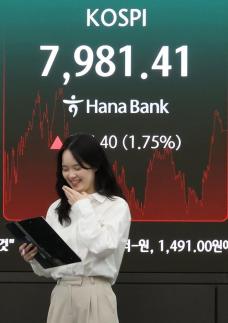 KOSPI Hits Record High, Just 19 Points Away from 8000 The KOSPI continued its upward trend throughout the trading session, closing at a record high. Although it fell short of breaking the 8000 mark, it ended just 19 points shy of that milestone. On May 14, the Korea Exchange reported that the KOSPI rose by 137.40 points, or 1.75%, to close at 7981.41. The index opened at 7873.91, up 29.90 points, and steadily increased throughout the day. In terms of trading volume, both individual and institutional investors contributed to the index's rise. In the main market, individuals purchased a net 22.9 billion won, while institutions bought a net 1.289 billion won. In contrast, foreign investors sold a net 23.048 billion won, taking profits. Lee Kyung-min, a researcher at Daishin Securities, noted, "Foreign investors have been net sellers for six consecutive trading days. However, the intensity of their selling has eased, and the impact on the index has been limited due to the buying from individuals and institutions." Large-cap stocks showed mixed performance across sectors. Samsung Electronics rose by 4.23%, Hyundai Motor by 0.28%, LG Energy Solution by 2.79%, and Samsung C&T by 1.63%. Conversely, SK Hynix fell by 0.30%, SK Square by 1.60%, Samsung Electro-Mechanics by 0.49%, Doosan Enerbility by 2.42%, and HD Hyundai Heavy Industries dropped by 7.37%. The KOSDAQ index also maintained its upward trajectory, closing at 1191.09, up 14.16 points or 1.20%. The index opened at 1187.02 and fluctuated throughout the day but ultimately finished higher. In the KOSDAQ market, foreign and institutional investors sold a net 130.1 billion won and 72.8 billion won, respectively. Meanwhile, individual investors bought a net 143.3 billion won, indicating a trend of bargain hunting. The top KOSDAQ stocks exhibited a mixed trend as well. Alteogen rose by 8.90%, EcoPro BM by 5.53%, EcoPro by 4.44%, and Samchundang Pharm by 0.38%. On the other hand, Rainbow Robotics fell by 3.99%, Kolon TissueGene by 6.92%, Rino Technology by 0.36%, Rigakem Bio by 0.96%, and HLB by 0.37%. 2026-05-14 17:33:12
 -
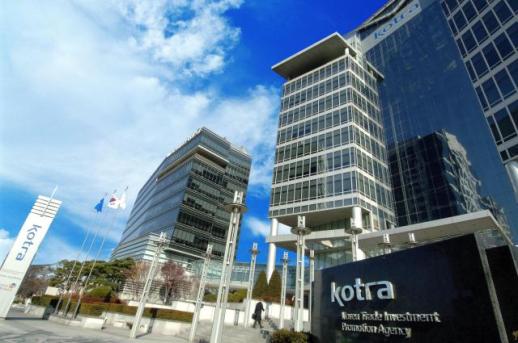 KOTRA Expands Market for K-Robots and AI in Vietnam KOTRA is supporting the entry of domestic robotics and artificial intelligence (AI) companies into Vietnam, which is emerging as a hub for advanced manufacturing. As Vietnam expands its investments in smart manufacturing and automation, the demand for K-robots and manufacturing AI solutions is also increasing. KOTRA announced that it will operate a "K-Robot Pavilion" at the Vietnam International Machinery Industry Expo (VINAMAC EXPO 2026) from May 14 to 16 at the I.C.E International Exhibition Center in Hanoi, in collaboration with the Korea Robotics Industry Promotion Agency. VINAMAC is Vietnam's leading manufacturing exhibition, now in its 23rd year. It attracts over 300 companies from around 20 countries and more than 10,000 industry professionals annually, covering a wide range of advanced manufacturing fields, including industrial machinery, robotics technology, automation, transportation, and control. Five innovative Korean robotics companies are participating in the Korean Pavilion, showcasing automation equipment, sensors, and components for smart processes. They are also conducting over 50 export consultations with 17 local buyers, including Vietnam's automation company, ITEK Automation Solutions. Vietnam has recently accelerated its manufacturing modernization efforts. The Vietnamese government is promoting the development of automation, robotics, AI, and smart factory industries through its "Smart Manufacturing Development Strategy." According to market research firm TechSci Research, Vietnam's robotics market is projected to reach approximately $400 million by 2025, with an expected annual growth rate of around 4% until 2030. Exports of Korean-made robots to Vietnam are also on the rise. According to customs statistics, exports of industrial robots to Vietnam surged by 67% in 2022 compared to the previous year, reaching $15.29 million in 2025, a 12.4% increase. In the past three years, exports of transport and loading robots have increased thirteenfold, and exports of automation solutions have risen by 40%. Industry experts anticipate that rising labor costs and a shortage of skilled workers in Vietnam will drive demand for solutions that combine process automation packages with maintenance, rather than simple equipment. Interest from local manufacturing, robotics, and system integration (SI) companies has been strong since the first day of the expo. A representative from a Vietnamese SI company visiting the Korean Pavilion remarked, "The K-Robot Pavilion is impressive as it is structured like a complete smart factory package. We focused on consulting with companies that possess applicable technologies for our clients, and we plan to continue discussions on actual project applications with several of them." Following the Hanoi robotics exhibition, KOTRA will hold a "Korea-Vietnam AI Innovation Day" in Ho Chi Minh City on May 20. This event aims to uncover overseas demand for AI transformation in manufacturing through consultations and pitches from domestic AI innovation companies. KOTRA's Southeast Asia and Oceania Regional Headquarters Director, Koo Bon-kyung, stated, "Collaboration in advanced industries between our two manufacturing powerhouses can provide opportunities for both Korean and Vietnamese companies in exports and technology development. As Vietnam transitions from a production base to a hub for advanced manufacturing, we will do our utmost to help our robotics and AI industries seize new opportunities."* This article has been translated by AI. 2026-05-14 17:31:21
 -
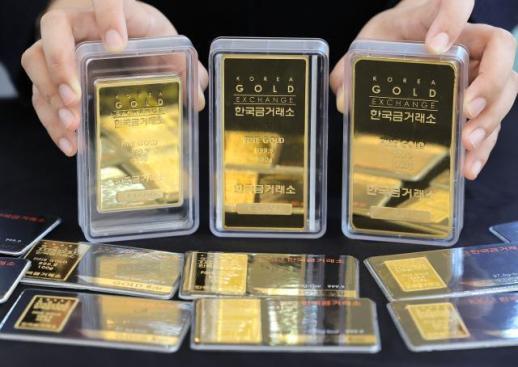 Korea's gold restraint pays off amid Gulf crisis SEOUL, May 14 (AJP) - Restraint from joining the global gold rush may have worked in the favor of the Bank of Korea, as the country’s relatively low gold exposure helped shield South Korea from sharper foreign reserve losses during market turmoil triggered by the Iran war earlier this year. As oil prices surged following the outbreak of the conflict in late February, governments around the world drew down reserves in March to stabilize currencies and protect their economies. South Korea’s foreign reserves fell by $4 billion as authorities intervened to defend the won after it weakened beyond 1,490 per dollar, according to the BOK. Despite the intervention, the decline was among the smallest recorded among major reserve-holding countries. China’s reserves fell by $85.7 billion in March, while India’s dropped by $37.4 billion. Russia posted a $60 billion decline and Germany recorded a $69.2 billion decrease. Among the world’s 12 largest reserve holders, only Saudi Arabia outperformed South Korea, posting a $20 billion increase as Dubai crude prices averaged more than $120 per barrel during the month. Analysts say South Korea’s comparatively low exposure to gold helped cushion reserve volatility as the precious metal — traditionally regarded as a safe-haven asset — turned unexpectedly volatile during the crisis. Although the U.S. dollar index rose above 100 following the blockade of the Strait of Hormuz and a broader flight toward safe assets, international gold prices fell sharply in March. Prices dropped 3.3 percent to $4,867.7 per troy ounce from $5,034.4 in February. The decline erased roughly half of February’s gains, when gold prices had climbed nearly 6 percent from the previous month. Gold prices continued to weaken through April and May even as the dollar index remained near 98. The April average slipped below $4,800 per troy ounce, and by Thursday prices had fallen further to $4,688. Analysts attributed the downturn partly to the scale of gold’s earlier rally. Prices, which stood near $2,700 per ounce in January last year, had surged to more than $5,100 by January this year — an increase of roughly 80 percent in just 12 months. Expectations that U.S. interest rates had peaked also contributed to the rally. When U.S. consumer inflation remained stable at 2.4 percent year-on-year in January, markets increasingly expected the Federal Reserve to cut rates and resume quantitative easing in line with the policy stance of President Donald Trump. The yield on the 10-year U.S. Treasury bond remained near 4.1 percent at the time. The outbreak of war quickly altered those expectations. Average March prices for the world’s three major oil benchmarks — West Texas Intermediate (WTI), Brent and Dubai crude — all exceeded $100 per barrel, fueling renewed inflationary pressure. The U.S. Consumer Price Index rose 3.3 percent in March and 3.8 percent in April, while 10-year Treasury yields climbed above 4.4 percent by Thursday. The shift prompted policymakers to adopt a more hawkish tone. Kevin Warsh, considered a leading contender to become the next Federal Reserve chair, stressed the need to contain inflation during a late-April hearing and rejected expectations of automatic quantitative easing. Central bank officials across Asia have echoed similar concerns. Major Asian central bank officials including Reserve Bank of India (RBI) Governor Sanjay Malhotra and Bank of Korea (BOK) Senior Deputy Governor Ryoo Sang-dai have both indicated that additional rate hikes may need to be considered if inflationary pressure intensifies. With gold retreating from record highs and the prospect of higher interest rates reemerging, investors have increasingly shifted funds back toward currency and bond markets. “During wars tied directly to energy supply disruptions, gains in gold prices have historically been more limited than during broader financial crises,” a foreign exchange dealing room official said on condition of anonymity. “Because gold prices had already surged to unprecedented levels before the Strait of Hormuz blockade, the base effect is becoming increasingly pronounced,” the official added. 2026-05-14 17:29:48
 -
 President Yoon Calls Saemaul Undong a Major Achievement of Park Chung-hee Lee Jae-myung, the President of South Korea, stated on May 14 that the Saemaul Undong (New Village Movement) was a significant achievement during the industrialization era under President Park Chung-hee, which improved the cultural, economic, and social environment of the country.During a meeting at the Saemaul Undong headquarters in Bundang, Seongnam, the President remarked, "The Saemaul Undong is still very useful in this era." This marks the first official visit by a sitting president to the Saemaul Undong headquarters.President Lee expressed that he had wanted to visit earlier in his term but delayed due to concerns about appearing biased. He acknowledged the support he received from Saemaul members and leaders during his time as the mayor of Seongnam.He emphasized the movement's crucial role in South Korea's history, particularly in modernization, and noted its unmatched dedication to social service activities. He stated, "Without the Saemaul organization, it would be difficult to conduct official social service events at the local government level."The President also mentioned the need to expand agricultural support activities in international volunteer work, questioning whether foreign aid initiatives truly benefit the recipient countries.He reflected on the importance of maximizing efficiency, suggesting that sharing the principles of the Saemaul Undong could be beneficial.Furthermore, President Lee advised that organizations should focus on their core roles without being swayed by political affiliations. He cautioned that if they align with political motives, they risk losing respect.He concluded by expressing a desire for all matters to be based on common sense and rationality, emphasizing that while ideology and values are important, they should not interfere in the public sphere. He advocated for fairness and transparency in all dealings.* This article has been translated by AI. 2026-05-14 17:29:35
 -
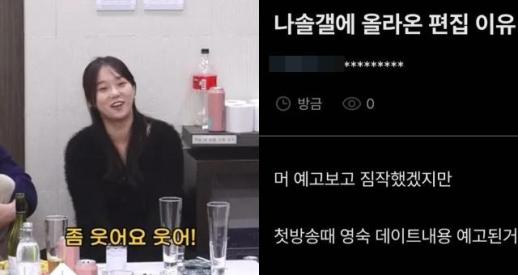 Unreleased Footage from 'I Am Solo' Sparks Controversy Over Final Couples ENA and SBS Plus's dating show 'I Am Solo' Season 31 is facing backlash after unreleased footage featuring contestant Oksun was posted online and subsequently removed. The controversy intensified as various online communities began sharing lists of the final couples. Recently, the YouTube channel 'Chonjang Entertainment TV' uploaded previously unseen footage from Season 31. In the clip, Oksun is seen waiting for a conversation between Kyungsoo and Youngsook to end, telling Sunja, "Is this a documentary? Why does it feel like a funeral? Smile a bit." Sunja laughed it off, but Oksun followed up with, "Are you jealous?" to which Sunja replied, "Of course, I am jealous." Oksun then stated, "Love is something you have to seize," to which Sunja retorted, "I am seizing it," prompting Oksun to respond, "Look at that confidence." This scene quickly spread across various communities and social media following the broadcast. Earlier in the main broadcast, a scene featuring Youngsook, Oksun, and Jeonghee talking in front of Sunja had already sparked what is referred to as the 'behind-the-scenes controversy.' With the release of the unreleased footage, some viewers expressed concerns that the pressure on a particular contestant had become excessive. As a result, the footage was taken down just two days after its release. As the controversy grew, an anonymous post appeared on a workplace community titled 'Reason for Editing Posted on Nasol Gallery.' The author, identified as A, claimed, "The date shown in the preview was ultimately a super date, and Kyungsoo chose Youngsook in the end," adding that Youngsook returned to the lodging and told Oksun and Jeonghee, "We did well; I am the final choice." A further explained that Sunja's response of "I know what you're going to say" before Kyungsoo arrived was also due to this context, suggesting that Sunja was being unfairly pressured. The author speculated that the footage was removed to prevent further controversy if it aired as is. The post mentioned final couples including Yeongho and Oksun, Yeongsik and Jeonghee, and Kyungsoo and Youngsook. However, these claims were based on speculation circulating online before the broadcast, and the actual results remain unverified. In response to the post, netizens commented, "If the PD of Nasol is as I know, they might just go ahead with it," and "Past contestants have said that the PD edits out the real villains, leaving the less significant ones to take the heat." Others remarked, "Kyungsoo really can't read people. Didn't he notice Youngsook's attitude?" and "Wow, if this is true..."* This article has been translated by AI. 2026-05-14 17:27:42
 -
 NS Home Shopping Hosts International Museum Day Event at Napoleon Gallery NS Home Shopping will celebrate International Museum Day on May 18 by hosting interactive programs at the Napoleon Gallery located in its Pangyo headquarters.The company announced on May 14 that it will hold special programs on May 20 and 27 in honor of International Museum Day, designated by the International Council of Museums (ICOM).The program will feature explanations of artifacts related to Napoleon and his life, followed by a hands-on activity where participants can create custom keycap keyrings. After learning about the gallery's key artifacts, attendees will have the opportunity to craft keyrings featuring their own supportive messages.NS Home Shopping aims to make history and cultural content more accessible through this event, which will take place on the first floor of the Napoleon Gallery at its Pangyo headquarters.A company representative stated, "In celebration of International Museum Day, we prepared an interactive program to help people experience the value of history and culture in a more approachable way. We hope this will be a time to encourage oneself through Napoleon's spirit of challenge and gain new energy."Additionally, NS Home Shopping is a subsidiary of the Harim Group. Harim Group Chairman Kim Hong-guk gained attention in 2014 when he purchased Napoleon's bicorne hat at an international auction for 2.6 billion won. At the time, he stated, "I bought the hat to inspire a spirit of challenge among domestic entrepreneurs."* This article has been translated by AI. 2026-05-14 17:26:44