
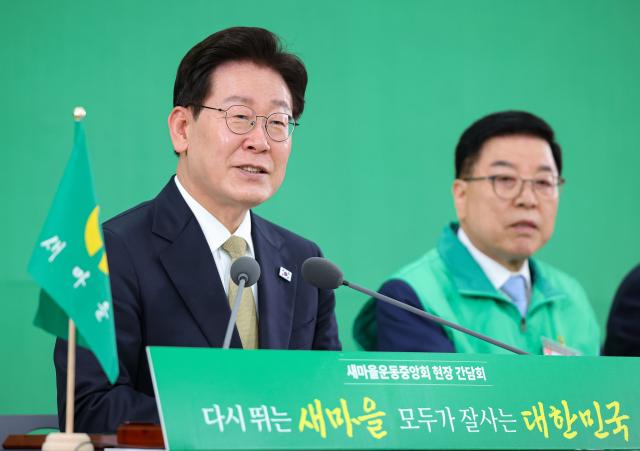
During a meeting at the Saemaul Undong headquarters in Bundang, Seongnam, the President remarked, "The Saemaul Undong is still very useful in this era." This marks the first official visit by a sitting president to the Saemaul Undong headquarters.
President Lee expressed that he had wanted to visit earlier in his term but delayed due to concerns about appearing biased. He acknowledged the support he received from Saemaul members and leaders during his time as the mayor of Seongnam.
He emphasized the movement's crucial role in South Korea's history, particularly in modernization, and noted its unmatched dedication to social service activities. He stated, "Without the Saemaul organization, it would be difficult to conduct official social service events at the local government level."
The President also mentioned the need to expand agricultural support activities in international volunteer work, questioning whether foreign aid initiatives truly benefit the recipient countries.
He reflected on the importance of maximizing efficiency, suggesting that sharing the principles of the Saemaul Undong could be beneficial.
Furthermore, President Lee advised that organizations should focus on their core roles without being swayed by political affiliations. He cautioned that if they align with political motives, they risk losing respect.
He concluded by expressing a desire for all matters to be based on common sense and rationality, emphasizing that while ideology and values are important, they should not interfere in the public sphere. He advocated for fairness and transparency in all dealings.
* This article has been translated by AI.

Copyright ⓒ Aju Press All rights reserved.