
Journalist

HAN Joon ho
-
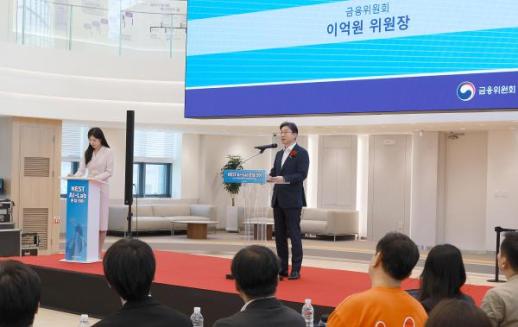 Shinbo Opens First AI Startup Hub in Northeast Seoul, Promoting Future Growth The Financial Services Commission, in collaboration with the Credit Guarantee Fund, has launched the first startup incubation space for policy finance institutions in Northeast Seoul, aimed at bolstering support for artificial intelligence (AI) startups. The initiative goes beyond merely providing office space; it plans to offer long-term support, technology commercialization, and assistance with international expansion.On May 8, Chairman Lee Eok-won attended the opening ceremony of Shinbo's 'Nest AI Lab Gwangjin' and a youth startup meeting.Nest is a platform that selects promising startups each year and provides comprehensive incubation services, including office space, mentoring, consulting, and networking.Since its launch in 2020, Nest has operated five locations across the country, including in Seoul (Mapo and Gangnam), Gangwon (Chuncheon), and Busan. By last year, it had supported a total of 1,500 startups across 18 cohorts.The Gwangjin location, the sixth Nest facility, has been transformed from a former women's basketball team facility into the first startup incubation center in Northeast Seoul.The Gwangjin site will extend the residency period from a maximum of one year to two years, providing long-term support. It also plans to offer tailored programs that connect research institutions and large corporations for technology validation, in response to the demand from AI-related companies.During the opening ceremony, Lee emphasized, "As the global economic and trade environment undergoes rapid changes and industrial restructuring accelerates, it has become crucial to discover and nurture new growth engines. We will create an environment where anyone with an idea can take on challenges and support entrepreneurs' growth journeys in collaboration with policy finance institutions."* This article has been translated by AI. 2026-05-08 18:20:41
 -
 KT Alpha Reports 10.5% Increase in Q1 Operating Profit KT Alpha has opted for profitability over expansion, achieving a double-digit growth rate in operating profit for the first quarter of this year. The company has reduced its reliance on low-margin direct purchases, which carry significant inventory burdens, and has focused on developing its business-to-business (B2B) mobile gift certificate operations. This strategy has been deemed successful. According to the Financial Supervisory Service's electronic disclosure system on May 8, KT Alpha reported a consolidated operating profit of 13.5 billion won for the first quarter, a 10.5% increase compared to the same period last year. Net profit for the period was 11.4 billion won, while total sales decreased by 0.4% to 96.2 billion won. A representative from KT Alpha stated, "Sales slightly decreased due to adjustments in our product portfolio focused on consignment operations, but overall stability has improved." In its core T-commerce sector, the effects of the profitability-focused restructuring are becoming evident. First-quarter sales fell by 4.0% year-on-year to 63.8 billion won due to reduced direct purchase operations, yet operating profit increased by 4.8%. The introduction of exclusive products tailored to active seniors and lifestyle trends, along with enhanced programming, has contributed to this improvement in profitability. The T-commerce market, which sells products via television, has faced challenges recently as viewership declines and mobile shopping surges. In response, KT Alpha plans to strengthen its mobile channels and enhance broadcast quality through artificial intelligence (AI) technology to boost competitiveness. The mobile gift certificate business has shown even more pronounced growth. First-quarter sales of mobile gift certificates rose by 7.5% year-on-year to 32.4 billion won, with operating profit increasing by 8.4%. Notably, a targeted sales approach aimed at B2B clients and proactive partnerships with major platforms led to a 43.3% surge in overall transaction volume. KT Alpha's mobile gift certificate brand, 'Giftishow,' maintains the top market share in the domestic B2B mobile gift certificate sector, surpassing 180,000 corporate clients by the end of last year. KT Alpha is also enhancing its shareholder return policy. The company achieved a record annual operating profit of 44.2 billion won last year and initiated its first cash dividend of 280 won per common share, marking the beginning of its shareholder return strategy. A KT Alpha representative remarked, "This year, we will focus on AI-driven efficiency and customer experience innovation under the theme of 'innovation amid stability.' Additionally, we plan to achieve sustainable growth and enhance shareholder value through expanded partnerships and group synergies."* This article has been translated by AI. 2026-05-08 18:18:29
 -
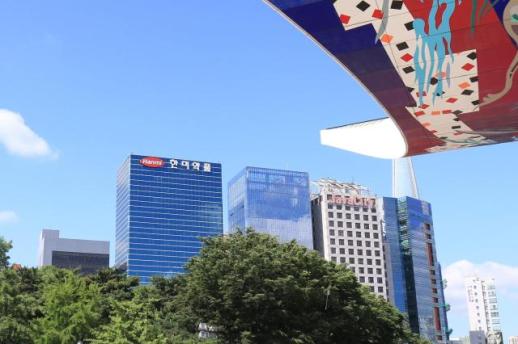 Hana Pharm CEO Hwang Sang-yeon Announces Organizational Restructuring "This is to establish a 'One Team' system that can respond immediately and flexibly to any crisis or change," said Hwang Sang-yeon, the first external CEO of Hana Pharm since its founding in 1973, as he initiated a major restructuring. This decision aims to effectively achieve business goals in response to the rapidly changing global pharmaceutical and biotech market by integrating existing divisions based on work relevance into a new 'departmental system.'According to Hana Pharm, the company was reorganized on May 1 into four core integrated areas: innovation growth, sustainable growth, future growth, and growth support.A key aspect of this restructuring is the establishment of the 'Innovation Growth Division.' To ensure the successful domestic and international launch of its obesity treatment, Hana Pharm plans to maximize synergy by consolidating its new product development center, marketing center, Pyeongtaek manufacturing center, pharmaceutical innovation center, and overseas sales team.The existing R&D center has been restructured into the 'Future Growth Division,' which will house three centers: the Obesity Metabolism Center, the Oncology Center, and the Convergence Center, ensuring research and development independence while continuously discovering innovative early-stage pipelines.Additionally, the domestic sales headquarters has been elevated to the 'Sustainable Growth Division' to enhance its external standing, while the 'Growth Support Division' will include the Paltan manufacturing center and business management center to support the efficient operation of each growth area.The 'Portfolio Committee' has been restructured to include the clinical center, serving as a control tower to make final decisions on the company's overall portfolio, including new projects and product adjustments.On May 6, Hwang held a town hall meeting at Hana Pharm's headquarters in Songpa-gu, Seoul, to explain the purpose and details of the restructuring to employees.He emphasized that this restructuring is not merely a "game of musical chairs" with department names, but rather a move to create a 'One Team' system that can respond immediately and flexibly to any crisis or change, akin to a snake shedding its skin.Hwang further stated, "We focused on breaking down barriers between departments and concentrating the company's capabilities solely on achieving business objectives. We aim to establish an integrated system where each division is organically connected, transforming into a global pharmaceutical and biotech company that simultaneously realizes innovative drug development and sustainable growth."* This article has been translated by AI. 2026-05-08 18:16:20
 -
 JIHYO joins Genevieve on new R&B single 'Hvnly' SEOUL, May 08 (AJP) - JIHYO of K-pop girl band TWICE joined forces with rising U.S. R&B singer Genevieve on the newly released track "Hvnly (feat. JIHYO of TWICE)," expanding the singer’s global collaborative portfolio as TWICE continues its record-setting world tour. The song was officially released Friday as part of Genevieve’s deluxe album "CRYSALIS (CODA)." The track is a remix version of Genevieve’s earlier song "Hvn High," reinterpreted as an alternative R&B-pop track layered with soulful vocals from both artists. Genevieve, known among Korean listeners for songs such as "Love Quotes" and "Baby Powder," has been gaining attention in the U.S. R&B scene for her atmospheric vocal style and genre-blending sound. The collaboration with JIHYO drew attention from both K-pop and international R&B listeners ahead of the release. JIHYO, the leader and main vocalist of TWICE, debuted as a solo artist in August 2023 with her first mini album ZONE. TWICE, a nine-member girl group formed by JYP Entertainment, debuted in 2015 and rose to global fame with hit songs such as Cheer Up, TT and Feel Special, becoming one of the most commercially successful K-pop acts of their generation. The album showcased her stronger R&B and pop influences while highlighting her vocal versatility beyond the group’s signature sound. She has also participated in several soundtrack projects, including Stardust love song for the tvN drama "Twenty-Five Twenty-One" and "TAKEDOWN" for Netflix’s "KPop Demon Hunters OST" lineup. The latest collaboration comes as TWICE continues its sixth world tour, "THIS IS FOR," the group’s largest global tour to date. The nine-member act recently became the first K-pop group and the first overseas artist to headline solo concerts at Japan’s National Stadium in Tokyo, drawing around 240,000 fans across three shows in April. The group also wrapped up a major North American leg earlier this year, attracting roughly 550,000 attendees across 35 concerts in 20 cities, according to JYP Entertainment. The company described the tour as the largest North American turnout ever achieved by a K-pop girl group. TWICE is set to continue the European leg of the tour beginning Friday in Lisbon. 2026-05-08 18:07:00
 -
 Demand Shifts to Non-Regulated Areas in Seoul's Housing Market The apartment market in the Seoul metropolitan area is showing stark contrasts based on regulatory status. While transactions in key regulated areas of Seoul and Gwacheon have sharply declined, non-regulated regions like Guri, Hanam, and Anyang’s Manan district are experiencing a surge in purchases from outside buyers, leading to a series of record-high sales. Analysts attribute this trend to relatively lenient loan conditions and the absence of mandatory residency requirements, attracting both genuine buyers and investors. Gyeonggi Province Apartment Prices Rise 0.08%...Regional Disparities Widen According to KB Real Estate's weekly statistics released on May 8, apartment prices in Gyeonggi Province rose by 0.08% in the first week of May, maintaining the same growth rate as the previous week. The growth rate, which peaked at 0.12% in mid-March, showed slight moderation in April but rebounded to 0.11% in the third week of April, followed by two consecutive weeks at 0.08%. Regionally, Seongnam's Jungwon district (0.51%), Gwangmyeong (0.39%), Guri (0.36%), Anyang’s Manan district (0.28%), Seongnam's Bundang district (0.27%), and Hanam (0.25%) led the price increases. In contrast, Icheon (-0.13%), Gwacheon (-0.08%), and Hwaseong's Manseong district (-0.06%) experienced declines. The disparity between rising and falling regions has reached as much as 0.64 percentage points, indicating a growing divide within the market. In Seongnam's Jungwon district, which recorded the highest growth rate, the depletion of affordable listings has led to a decrease in buyer inquiries, causing transactions to slow down somewhat. This week's price increases were concentrated around large complexes in Geumgwang-dong. In Incheon, apartment prices fell by 0.01%, marking a downturn this week. Only Bupyeong (0.02%) saw an increase, while Yeonsu, Seo, Michuhol, and Namdong districts remained stable, with Jung-gu (-0.15%), Gyeyang (-0.03%), and Dong-gu (-0.01%) experiencing greater declines. Guri's Transaction Volume Surges 314% vs. Gwacheon's 85% Decline The disparity in transaction volumes based on regulatory status is becoming increasingly pronounced. According to an analysis by real estate research firm RealToday of actual transaction data from the Ministry of Land, Infrastructure and Transport, the volume of apartment transactions in Guri, Gyeonggi Province, surged by 314% in the first quarter of this year compared to the same period last year. In stark contrast, the regulated area of Gwacheon saw an 85% decline during the same timeframe. The concentration of demand in non-regulated areas can be attributed to differences in loan and resale conditions. Regulated areas face lower loan-to-value (LTV) limits and are subject to mandatory residency requirements and land transaction permit regulations, effectively blocking investment entry. In contrast, non-regulated areas offer relatively flexible loan limits and conditions, with looser resale restrictions, allowing both genuine buyers and investors to enter the market. This trend is also evident in the new housing market. In February, the 'Syangyong The Platinum Onsu Station' project in Bucheon, Gyeonggi Province, attracted 1,317 applicants for 109 units, resulting in an average competition ratio of 12.08 to 1. Similarly, the 'Anyang Station Central I-Park Sujin' project in Anyang’s Manan district recorded an average competition ratio of 11.93 to 1. Both developments are located in non-regulated areas and are priced below 1.5 billion won. Guri and Hanam See Continuous Record-High Prices Driven by Transportation Benefits According to the Ministry of Land, Infrastructure and Transport's actual transaction disclosure system, Guri and Hanam, adjacent to Seoul, are witnessing a continuous influx of outside buyers, leading to a series of record-high prices. Guri is particularly notable. The 'e-Pyeonhansesang Inchang Urban Forest' apartment, with a dedicated area of 84 square meters, was sold for 1.315 billion won in March, setting a new record. The opening of the extension of Line 8 (Byeollae Line) has improved accessibility to Gangnam, rapidly attracting demand from northern and southeastern Seoul. A real estate agent in Inchang-dong, Guri, stated, "While Seoul is constrained by residency requirements and land transaction permits, Guri allows entry with 200 to 300 million won in cash alongside a jeonse. With the opening of Line 8, the demand for jeonse has solidified, reducing investment risks, prompting investors to quickly acquire lower-priced listings from Gangnam." Hanam's Misa River City is also experiencing steep price increases. The 'Lunarrium' apartment, with a dedicated area of 84 square meters, was sold for 1.295 billion won last month, while the Misa River City Complex 8 Star Hills, with a dedicated area of 51 square meters, also set a record at 900 million won. The trend of record-high prices continues in the Gwangmyeong and Anyang areas as well. Anyang's 'Raemian Anyang Mega Tria' apartment, with a dedicated area of 59 square meters, sold for 930 million won, and the 'Lotte Castle Signature' apartment near Gimpo's Pungmu Station, with a dedicated area of 75 square meters, changed hands for 738.5 million won, also reaching a new high. In contrast, key areas in Seoul are facing challenges due to land transaction permits and high prices, making it difficult to leverage jeonse. Meanwhile, regions like Guri, Hanam, and Anyang's Manan district still have relatively high jeonse rates and lower upper price limits, allowing for ownership transfer with smaller capital investments. In fact, some non-regulated areas like Anyang's Manan district have dominated transaction volumes in Gyeonggi Province this year, emerging as key investment destinations in the metropolitan area. The concentration of demand for properties priced below 1.5 billion won aligns with the high-end apartment loan regulations (prohibiting mortgage loans for properties over 1.5 billion won). Ultimately, the influx of investment demand exploiting regulatory gaps is driving price increases in non-regulated areas. However, market participants are cautious about the sustainability of this trend in the long term. A representative from a real estate agency in Guri noted, "Demand for gap investments is sensitive to interest rates and the stability of the jeonse market. If adjustments in jeonse prices become evident, the risk of reverse jeonse could materialize, necessitating careful consideration when investing funds."* This article has been translated by AI. 2026-05-08 18:06:00
 -
 Chairman Lee Joong-geun: Today's Prosperity is Thanks to the Sacrifices of Parents Buyeong Group announced that the 54th Parents' Day ceremony, hosted by the Ministry of Health and Welfare and organized by the Korean Senior Citizens Association, was successfully held on May 8 at the International Conference Hall of the Korea Chamber of Commerce and Industry in Seoul. The ceremony, themed "Parents! With the Wings of Love, We Bloom as Flowers," was attended by over 230 participants, including honorees for filial piety and their families, as well as elderly individuals living alone. Notably, President Yoon Suk-yeol and First Lady Kim Hye-kyung attended the event, expressing deep respect and gratitude towards the older generation, enhancing the significance of the occasion. In his speech, President Yoon stated, "The prosperity that South Korea enjoys today is possible because of the sacrifices made by our parents, who dedicated themselves to their families and society." The event also drew attention with the invitation of parents of firefighters and police officers who lost their lives while responding to incidents in Mungyeong and Gimje. The presidential couple personally presented carnations to these parents, offering comfort and stating, "The nation will fulfill its duty to remember their sacrifices forever." During the ceremony, 22 individuals who contributed to the practice of filial piety and the promotion of filial culture were honored. President Yoon personally awarded medals to six recipients, including Park Jae-du, who has cared for his disabled mother for over 40 years and established a Confucian university in Donghae that provides filial education to around 5,000 students annually. In his opening remarks, Chairman Lee Joong-geun emphasized, "South Korea was built on the sacrifices of the parent generation, who overcame difficult times and led the country’s industrialization and development." He added, "Parents' Day should not only be a day to express gratitude but also a 'day for everyone' to understand and care for each other across generations, continuing the values of community." He expressed hope that this ceremony would help foster a warmer society. The government plans to significantly enhance policy support to ensure that elderly individuals can live comfortably in their communities as the country faces an aging population. The Ministry of Health and Welfare is also providing tailored medical and caregiving services through the 'Community Integrated Care' system, which has been implemented nationwide since March of this year. Chairman Lee has proposed several initiatives to enhance the rights and welfare of the elderly, including raising the elderly age threshold, promoting home hospice care, establishing a population department, and supporting the construction of a central headquarters for the Korean Senior Citizens Association. He specifically suggested gradually raising the elderly age from the current 65 to 75, one year at a time, to manage the elderly population appropriately. Additionally, he has advocated for the activation of home hospice care to allow families to choose a dignified death at home.* This article has been translated by AI. 2026-05-08 18:00:36
 -
 CJ Freshway Reports 1st Quarter Operating Profit of 11 Billion Won CJ Freshway has continued its growth in the first quarter by evenly expanding its distribution and food service sectors. On May 8, CJ Freshway announced that it achieved sales of 833.9 billion won and an operating profit of 11 billion won in the first quarter of this year, marking increases of 4.4% and 3.8%, respectively, compared to the same period last year. The core food distribution business, which includes restaurant ingredients and food materials, recorded sales of 399.9 billion won. Online sales in this segment surged by 17% year-on-year, driving overall growth. The domestic B2B food distribution market is valued at 50 trillion won annually, but most transactions still occur offline through regional wholesalers. This is why major distribution companies are fiercely competing to digitize this market. To lead this market transformation, CJ Freshway increased its stake in the IT company Marketboro, which operates the B2B food distribution open market platform 'Sikbom,' to 55%, becoming its largest shareholder in March. Leveraging this position, the company is aggressively expanding its franchise customer base and enhancing its logistics network with differentiated products such as dairy and seafood to accelerate its dominance in the online distribution ecosystem. The food service business, benefiting from the kitchenless strategy, recorded sales of 427.4 billion won. The kitchenless model, which provides meal services without location constraints, saw related service revenues, including 'Fresh Meal On,' increase by 41% year-on-year, contributing to improved profitability. In January, CJ Freshway opened the country's largest food court, 'Gourmet Bridge,' at Incheon Airport's Terminal 2, resulting in a 43% increase in sales from large concession channels compared to the previous year. The expansion of food service ingredient sales, particularly in the kids' and school meal segments, also supported the company's overall performance. Im Sung-cheol, Chief Financial Officer of CJ Freshway, stated, "Despite seasonal off-peak periods and an uncertain external environment, we have confirmed balanced growth in both the distribution and food service sectors, as well as the success of our new growth model centered on online and kitchenless strategies. We will accelerate our execution to establish a sustainable growth structure focused on profitability, as the foundation we have built in new businesses is beginning to yield significant results."* This article has been translated by AI. 2026-05-08 17:58:48
 -
 Middle East Risks Prompt Government to Double Consulting Support for Overseas Construction Disputes As instability in the Middle East continues, risks in the overseas construction market are escalating beyond poor contract awards to include project delays, payment issues, and contract disputes. The government has decided to expand consulting support for small and medium-sized construction firms facing overseas construction disputes, allocating an additional 400 million won through a supplementary budget. According to the Ministry of Land, Infrastructure and Transport, the government will secure 400 million won through the supplementary budget to enhance the "Integrated Consulting Support Project for Overseas Construction." This initiative provides legal, labor, and tax support for small and medium-sized construction firms that have registered for overseas construction. The ministry has increased expert consultation hours from 12 to 24 hours and has included labor consulting in the support services starting this year. The government's decision to expand support comes as geopolitical risks from the Middle East are likely to lead to increased costs and contract disputes in overseas construction projects. With rising oil prices, raw material costs, and logistics expenses due to instability in the region, there are growing concerns about conflicts between clients and contractors over project suspensions, delays, and payment issues. The flow of overseas construction contracts has already seen a sharp decline. According to the Overseas Construction Integrated Information Service (OCIS), the total value of overseas construction contracts in the first quarter of this year was $2.037 billion, a 75.2% decrease from $8.212 billion during the same period last year. This figure is also down 70.4% compared to the five-year average of $6.887 billion for the first quarter. Notably, contracts in the Middle East plummeted to $316.2 million, a staggering 93.6% drop from the previous year. Given the heavy reliance on the Middle East for overseas construction, the impact is significant. According to the Ministry of Land and the Korea Overseas Construction Association, the total value of overseas construction contracts last year reached $47.27 billion, the highest in 11 years since 2014. Of this, contracts in the Middle East accounted for approximately $11.9 billion, or 25.1% of the total. The Middle East has long been a key market for domestic construction firms, particularly in the plant and infrastructure sectors. The risks extend beyond just a decrease in new contracts. Ongoing projects are facing challenges related to logistics disruptions, workforce management, material procurement, and fluctuations in exchange rates and oil prices, which can lead to increased costs and project management issues. Prolonged construction periods heighten the likelihood of disputes over penalties for delays, contract modifications, and additional cost approvals between clients and contractors. Small and medium-sized construction firms are particularly vulnerable to these disputes due to their lack of local legal and contractual expertise compared to larger firms. Overseas projects often involve complex interactions among force majeure clauses, requirements for extending deadlines, local labor and tax laws, and responsibilities for exchange rate and logistics costs. Delayed responses to these issues can result in significant losses. The Ministry of Land plans to provide comprehensive consulting services through this initiative, including reviews of problematic contract clauses, assessments of force majeure related to delays, responses to defaults, local tax law advice, financial procurement, and risk management. Eligible applicants are small and medium-sized enterprises engaged in overseas construction as defined by the Overseas Construction Promotion Act, and they can apply through the Korea Overseas Construction Association. An industry insider noted, "The Middle East risk is not just about delays in new contracts; it can also lead to issues with existing project timelines, costs, and payment recovery, which adds to the burden. Large firms have their own legal and contractual teams, but small and medium-sized firms often find themselves responding too late after disputes arise, increasing the demand for preemptive consulting services." Kim Yoon-deok, Minister of Land, Infrastructure and Transport, stated, "Given the unavoidable situation of war in the Middle East, we anticipate that small and medium-sized construction companies operating overseas will face significant challenges. The government will do its utmost to minimize the damage to our companies."* This article has been translated by AI. 2026-05-08 17:56:41
 -
 Controversy Over Villa Supply in Seongdong District Amid Low Proportion Jung Won-o, the Democratic Party's candidate for Seoul mayor, has raised concerns about villa supply as part of his real estate policy. However, statistics reveal that the proportion of villas in Seongdong District, where he served as district chief for 12 years, is among the lowest in Seoul. In contrast, the proportion of apartments in Seongdong District exceeds the city average significantly. According to analysis from the National Statistical Office obtained by Aju Economy, as of 2024, the proportion of multi-family and villa units in Seongdong District stands at 9.9%, the second lowest after Nowon District at 8.8%. This figure is less than half of the Seoul average of 21.4%. Other districts with low villa proportions include Yeongdeungpo (10.0%), Dongdaemun (12.4%), and Gangnam (14.3%). Conversely, the proportion of apartments in Seongdong District is 54.0%, significantly higher than the Seoul average of 44.4%. Only seven of the 25 districts in Seoul have apartment proportions exceeding 50%. Nowon District leads with 78.4%, followed by Gangnam (62.2%), Seocho (58.1%), and then Seongdong. Other districts with high apartment proportions include Gangdong (50.3%) and Songpa (50.1%). In response, a representative from Oh Se-hoon’s camp criticized Jung, stating, "The 9.9% villa proportion in Seongdong District indicates a lack of available land for new villas or that existing low-rise residential areas have already been redeveloped into apartments. Jung is completely unaware of the realities in Seongdong District when discussing villa supply." The representative also pointed out that the surge in housing prices in Seongdong District is linked to the low villa proportion and high apartment ratio. Previously, Jung had identified villa supply as a key component of his real estate strategy. During a meeting with Seoul's district mayor candidates on May 4, he challenged Oh, asking, "Why didn’t you prepare for the soaring rents during your five years in office?" He noted that issues related to apartment redevelopment and reconstruction take 10 to 15 years, which he partially agreed was not solely his responsibility. Jung added, "The rental issue can be addressed within 2 to 3 years through supply via villas, officetels, and residential-type lodging facilities." Meanwhile, Oh also responded to Jung's comments on villa supply. On the previous day, he appeared on BBS Buddhist Broadcasting's "Kim Tae-seop’s Morning Journal" and remarked, "If Jung becomes mayor for four years, he will focus on villas since apartments take a long time to develop. However, villas are constructed by the private sector, not the city."* This article has been translated by AI. 2026-05-08 17:54:39
 -
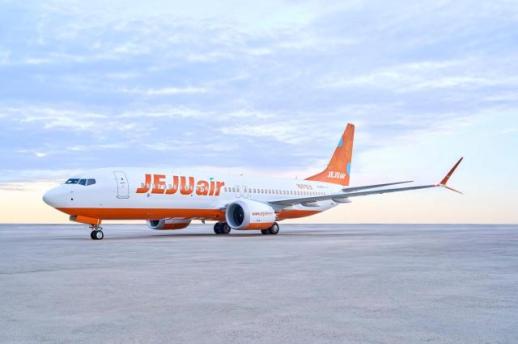 Jeju Air Reports 644 Billion Won Operating Profit Amid High Oil Prices Jeju Air has reported a second consecutive quarter of profit despite the pressures of rising international oil prices and exchange rates. The airline attributed its performance rebound to improved fuel efficiency through fleet modernization and a recovery in passenger demand. On May 8, Jeju Air announced that it achieved a revenue of 498.2 billion won and an operating profit of 64.4 billion won in the first quarter of this year. This represents a 36.5% increase in revenue compared to the same period last year, while the operating profit turned around from a loss of 35.7 billion won. The net profit for the period was recorded at 12.2 billion won. Following an operating profit of 18.6 billion won in the fourth quarter of last year, Jeju Air has maintained profitability for two consecutive quarters. This performance is seen as commendable given the challenges faced by most airlines due to high fuel prices and fluctuating exchange rates. The airline cited improvements in its revenue structure through fleet modernization and an increase in passenger demand as key factors behind its improved results. In the first quarter, Jeju Air added two next-generation B737-8 aircraft to its fleet. It also returned two leased B737-800 aircraft that were over 20 years old in November last year and February this year, and sold two older aircraft in March and April. As a result, fuel costs for the airline decreased by approximately 16% compared to the previous year. In addition to the 10 B737-8 aircraft currently in its fleet, Jeju Air plans to introduce five more by the end of the year. The number of passengers in the first quarter totaled 3,311,358, making it the leading low-cost carrier in South Korea. The load factor during this period was 91.9%, surpassing the national airline average of 88.8%. Jeju Air aims to continue its trend of improved performance through efficient route management. To address the uncertainties posed by increased volatility in fuel prices and exchange rates, as well as intensified competition, the airline plans to focus on sound management strategies. A company representative stated, "We will gradually improve our revenue structure based on fleet modernization and efficient route operations."* This article has been translated by AI. 2026-05-08 17:52:20