
Journalist

HAN Joon ho
-
 South Korean Defense Stocks Slide on Hopes for U.S.-Iran War-End Talks South Korean defense stocks fell broadly Thursday as expectations grew for progress in U.S.-Iran talks aimed at ending the war, prompting profit-taking after a recent surge tied to rising Middle East tensions. As of 11:01 a.m., Hyundai Rotem was down 23,000 won, or 8.78%, at 239,000 won, according to the Korea Exchange. Hanwha Aerospace fell 5.23%, Korea Aerospace Industries dropped 3.57%, and LIG Defense & Aerospace declined 1.84%. The declines were widely attributed to reports that negotiations between the United States and Iran were gaining momentum, shrinking the geopolitical premium that had supported the sector as Middle East risks intensified. U.S. online outlet Axios reported on May 6 (local time), citing multiple sources, that the United States and Iran were close to signing a one-page memorandum of understanding laying out a basic framework to end the war and address the nuclear issue. While no final agreement has been reached, Axios said the talks were at their most advanced stage since the war began on Feb. 28. U.S. President Donald Trump, in an interview the same day with public broadcaster PBS, said he believed a deal with Iran was possible, adding that there was a “very high” chance of reaching an agreement. He also mentioned the possibility of a deal before his planned visit to China on May 14-15. In the market, concerns have grown that order momentum for defense companies could cool after shares jumped on expectations the war would be prolonged. Institutional and foreign investors were seen concentrating profit-taking in stocks that had posted the biggest recent gains. * This article has been translated by AI. 2026-05-07 11:18:17
 -
 South Korea’s KF-21 Fighter Cleared for Combat Use, Air Force Delivery Set for Second Half South Korea’s domestically developed KF-21 Boramae fighter has received a final determination that it is suitable for combat use, the Defense Acquisition Program Administration said Wednesday. DAPA said the decision marks completion of verification of all performance requirements for the KF-21 Block-I after about three years of follow-on testing and evaluation since a “provisional combat suitability” determination in May 2023. The KF-21 program formally entered full-scale system development in December 2015. Flight testing began in May 2021, and through February this year the program conducted about five years of ground tests to verify durability and structural integrity, DAPA said. DAPA said about 1,600 test flights validated flight performance and stability across about 13,000 test conditions, including aerial refueling and weapons-release tests. The agency said it expanded test airfields from Sacheon to Seosan and, for the first time in South Korea, introduced aerial refueling into flight testing, improving efficiency and scope. It said the development flight-test schedule was completed two months earlier than planned. DAPA said the KF-21 meets the Air Force’s required operational capabilities and has secured the technology level and stability needed to carry out missions in real battlefield conditions. The program is set to complete system development in June. The first mass-produced KF-21, rolled out in March, is scheduled to be delivered to the Air Force in the second half of this year, with subsequent aircraft to be deployed in sequence, DAPA said. No Ji-man, head of DAPA’s Korea Fighter Program Division, said the combat suitability determination was achieved through close cooperation among the Defense Ministry, the Joint Chiefs of Staff, the Air Force, Korea Aerospace Industries and the Agency for Defense Development. He called it a symbolic achievement showing South Korea has fully secured an independent fighter-development capability. No said the agency will push ahead with mass production and fielding without disruption to further strengthen the Air Force’s operational capability. DAPA said it plans to deliver 40 initial mass-produced KF-21s focused on air-to-air capability to the Air Force by 2028. It also plans to produce an additional 80 aircraft by 2032 with air-to-ground and air-to-ship capabilities, for a total of 120 deliveries. * This article has been translated by AI. 2026-05-07 11:14:57
 -
 South Korea finds 84 violations in monthlong inspection of seasonal migrant workers’ housing, rights Government inspections of farms and fishing households employing foreign seasonal workers found 84 violations over one month, including substandard housing and alleged rights abuses, the Justice Ministry said Thursday. The ministry said it inspected 849 workplaces in 15 cities and counties and interviewed 2,035 seasonal workers from April 1 to 30. It found 84 violations at 61 workplaces across eight cities and counties. Investigators from the Korea Immigration Service are conducting a three-month nationwide review through June 30 covering 3,445 workplaces in 27 cities and counties and 7,997 seasonal workers. The inspections focus on overall working and living conditions, including suspected involvement of illegal brokers, unpaid wages, contract violations and whether adequate housing is provided. In the interim results released Thursday, the ministry cited 34 cases involving inadequate housing, including 16 cases of providing container housing and 18 cases of missing fire-prevention equipment such as extinguishers. It also reported 25 labor contract violations, including failure to pay the minimum wage or overtime, failure to guarantee days off, and wage arrears. Another 25 cases involved alleged human rights abuses, including restricting phone use and verbal abuse. By region, Goryeong County in North Gyeongsang Province recorded the most violations with 29 cases, followed by Uiryeong County in South Gyeongsang (10). Changnyeong County in South Gyeongsang and Nonsan and Yesan in South Chungcheong each had six, Miryang in South Gyeongsang had two, and Gochang in North Jeolla and Damyang in South Jeolla had one each. The immigration policy bureau said it has demanded corrective action from workplaces and local governments where violations were found. Depending on the severity, it plans to impose penalty points and restrict the assignment of seasonal workers. For alleged rights abuses, the Migrant Rights Protection Task Force will begin detailed investigations and, if confirmed, start relief procedures through the Foreigners’ Human Rights Protection and Rights Promotion Council, the ministry said. If broker involvement is suspected, the ministry said it will immediately launch targeted investigations and seek punishment, including referring illegal brokers to prosecutors. A revised Immigration Control Act banning and penalizing broker activity took effect Jan. 23; violations are punishable by up to three years in prison or a fine of up to 30 million won. Justice Minister Jeong Seong-ho said, “Human rights violations against seasonal workers cannot be tolerated under any circumstances.” He said the ministry will strengthen on-site inspections through June 30 to ensure meaningful protection and, after the inspection period ends, improve the system so the 1345 immigration hotline can more actively receive reports through multilingual counselors. * This article has been translated by AI. 2026-05-07 11:13:59
 -
 Report warns South Korea’s industry is highly exposed to energy price swings South Korea’s industrial structure is vulnerable to swings in global energy prices, raising the risk that the country’s shift to cleaner production could be disrupted, a government-funded think tank said. It warned that higher energy costs can go beyond raising production expenses, eroding profitability and curbing investment — and ultimately weakening companies’ capacity to move to low-carbon operations. The Korea Institute for Industrial Economics and Trade said in a report released on the 7th, titled “In the era of energy security: Responding to green-transition risks for South Korean industry under a triple-exposure structure,” that the country faces a “triple exposure” of high dependence on imported energy, an economy centered on manufacturing, and heavy industrial energy use. Analyzing 2024 data from the International Energy Agency and the World Bank, the institute said South Korea’s energy import dependence stood at 84.2%, high among major economies. Manufacturing accounted for 26.6% of gross domestic product, while the industrial sector’s share of energy consumption was 26.4%, underscoring an energy-intensive industrial base. Under those conditions, the institute said, rising international energy prices are likely to feed directly into manufacturing costs and could squeeze spending on facilities and technology upgrades needed for the transition. Energy-intensive industries such as steel and petrochemicals saw profitability deteriorate during the 2022 surge in global energy prices, it said. The institute added that energy security has become a structural factor affecting industrial competitiveness and the pace of the green transition, not merely a cost issue. Major economies are already adjusting policies with energy-security risks in mind. The United States and Japan are strengthening measures that link energy security with industrial competitiveness, the report said. The United States is focusing on supply-chain restructuring and energy infrastructure investment, while Japan is pursuing its “GX (Green Transformation)” strategy alongside expanded investment in renewable energy and next-generation industries. The European Union, it said, kept policies to expand renewable energy during the energy crisis while also using fossil fuels and promoting demand-management measures to cushion the shock. In South Korea, calls are growing for policy steps to ease the burden on industry. The institute said near-term measures could include improving the industrial electricity pricing system to reduce cost volatility. Over the medium to long term, it said, transition finance and carbon contracts for difference, or CCfD, could help secure companies’ capacity to invest. “Green transition is an inevitable trend, but under the current industrial structure, external energy shocks can become a burden on the transition process,” Lee Sang-won, a research fellow at the institute, said. “Rather than a speed-focused approach, we need a transition strategy with the ability to respond to shocks.”* This article has been translated by AI. 2026-05-07 11:08:47
 -
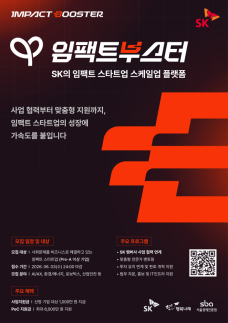 SK Launches Impact Booster Program to Help Social Ventures Scale Up SK said Wednesday it is launching “Impact Booster,” a program designed to help social ventures that have entered a growth stage scale up. Social ventures are startups that pursue profits while offering innovative solutions to social problems. The program targets social ventures that have moved beyond pre-A funding and entered Series A or B rounds, before an IPO. SK plans to select about 10 companies each year for intensive support. Selected companies will be offered opportunities to work with major SK affiliates including SK hynix, SK Innovation and SK Telecom, along with up to 70 million won in business support funding. SK will first provide 10 million won for growth, then offer up to 60 million won more for demonstration projects after companies identify tasks to pursue with SK affiliates. SK said it will link the new program with existing initiatives such as SK Pro Bono and SE Consultant to provide integrated support. For business-to-consumer companies, it will offer product consulting and help expand sales channels. For business-to-business companies, it will support pilot projects to help them build references and attract follow-on investment. SK also plans to strengthen support by working with outside organizations, including the Seoul Business Agency to back demonstration funding and the nonprofit OnYul to provide free legal advice. SK said the program is intended to address structural hurdles faced by social ventures, which it said can be undervalued in the market because of their focus on solving social problems and can struggle to secure opportunities to break through at the growth stage. The company cited its broader efforts to build an ecosystem for businesses focused on social problem-solving, including Impact MBA to develop social entrepreneurs, Impact Unicorn to help promising social ventures grow into unicorns valued at 100 billion won or more, and SOVAC (Social Value Connect) to promote connections and cooperation among companies working on social issues. SK said the push aligns with the group’s management philosophy. SK Group Chairman Chey Tae-won has emphasized the “Double Bottom Line,” arguing that companies should pursue social outcomes alongside financial performance to ensure sustainability. Under that approach, SK said it views social enterprises and social ventures as partners for shared growth, designing support to go beyond funding by providing business cooperation with affiliates and proof-of-concept opportunities aimed at generating sales and raising company value. “While the number of social ventures in Korea has increased, many are relatively undervalued as they carry out missions to solve social problems, and often fail to secure growth opportunities,” said Ji Dong-seop, SV committee chair of the SK Supex Council. “We will be a sponsor that provides integrated support so that no company fails to make a leap because it could not get an opportunity at the growth stage.”* This article has been translated by AI. 2026-05-07 11:07:33
 -
 Labor Minister Pledges Stronger Support for New Labor Inspectors, Worker Rights The government is pushing a plan to expand the number of labor inspectors to 8,000 by 2028, and Employment and Labor Minister Kim Young-hoon said Wednesday he will significantly improve training, personnel systems and working conditions so new inspectors can take pride in their work and focus on their duties. Kim delivered a special lecture to 210 prospective labor inspectors training at Seoul National University’s Siheung campus. The recruits have been in job training since May 4 and will be assigned to frontline posts after about three months of instruction. The government is seeking to increase central and local labor inspector staffing to 8,000 from 3,000 by 2028. The newly hired inspectors joined through rolling recruitment for Grade 7 civil service positions as part of the staffing expansion. “Labor inspectors’ passion and effort, communicating directly with the public at the front lines of workplaces, are the heartbeat of our ministry,” Kim said. He urged them to do their best to protect workers’ basic rights and safeguard workers’ lives and safety through fair and swift enforcement of the law, while respecting the value of people’s labor. Kim also pledged stronger support to build inspection capabilities. The ministry has overhauled its training program through a task force of veteran inspectors, and is moving ahead with steps including expanding special promotions based on performance and competence rather than seniority, a project to cut unnecessary work, and a broad revamp of its awards system. After the lecture, Kim held a question-and-answer session with the trainees in a “new hires ask, the minister answers” format. Kim is scheduled to hold an additional meeting Thursday with 280 prospective inspectors in the industrial safety field at the Cheonan Jaeneung Education Training Institute.* This article has been translated by AI. 2026-05-07 11:06:43
 -
 South Korea Speeds Subsidy Payments for Coastal Ferry Operators to Deploy Extra Budget The South Korean government will shorten the payment cycle for subsidies to coastal shipping companies and speed up disbursements to keep ferries running smoothly on routes often described as island residents’ lifeline. The Ministry of Oceans and Fisheries said May 7 it will quickly execute a total of 22.6 billion won in supplementary budget funds to support coastal shipping operators facing financial strain from a surge in global oil prices. The package includes oil price-linked subsidies and compensation for operating losses. Although the maximum price for marine diesel was set at 1,923 won on March 27, it remains about 32% higher than in February. Tax-free diesel rose 68.5% to 1,382 won, the ministry said. To accelerate support, the ministry revised the payment schedule for fuel tax subsidies (6.7 billion won) and oil price-linked subsidies (6.2 billion won). Amounts that were to be paid quarterly will instead be paid monthly. Local maritime and fisheries offices and the Korea Shipping Association plan to notify operators of application procedures and methods. Operating-loss compensation had been calculated based on deficits tallied at year’s end. To speed execution, the ministry will disburse part of the deficit incurred up to those points in June and August. It will then make a final payment within 30% of the deficit amount after an accounting review by the end of October, reflecting operating results from January through September. Of 99 coastal passenger routes, the ministry will disburse 2.9 billion won in additional operating-loss support for 42 routes by next month. Eligible routes include 29 state-subsidized routes and 13 deficit routes, including routes aimed at creating a “one-day living zone.” The remaining 57 routes will be supported using 6.8 billion won secured through a supplementary budget for the “2026 temporary operating-loss support project for short-term deficit routes.” Funds will be paid in three rounds at two-month intervals starting next month. The ministry said the subsidies are expected to ease some of the burden on operators covering losses on state-subsidized and deficit routes. Hwang Jong-woo, the oceans and fisheries minister, said coastal passenger ships are “like a lifeline” for South Korea’s coast and that disruptions could cause serious inconvenience for island residents. He said the ministry will “do everything possible” to support normal operations through rapid fiscal execution. * This article has been translated by AI. 2026-05-07 11:05:32
 -
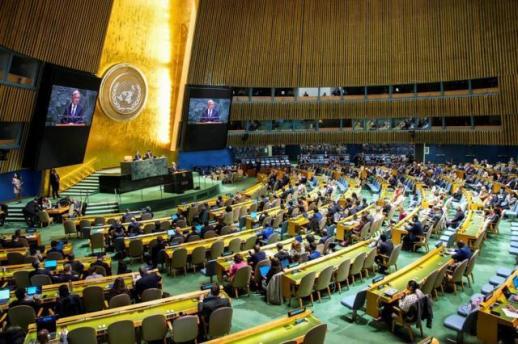 North Korea 'not bound by NPT,' UN envoy says SEOUL, May 7 (AJP) - North Korea is "not bound" by the Nuclear Non-Proliferation Treaty (NPT), its representative to the United Nations (UN) said in a statement released by state media on Thursday. Kim Song, North Korea's permanent representative to the United Nations, who is currently attending the monthlong NPT review conference in New York, said that the country is "not bound by the NPT in any case," according to state-run Korean Central News Agency (KCNA). "I denounce and reject in the strongest tone the brigandish and shameless acts of the specific countries including the U.S. which are taking issue with the as a nuclear weapons state does not change in accordance with rhetorical assertion or unilateral desire of outsiders." Defending North Korea's withdrawal from the NPT, he also accused the U.S. and its Western allies of committing "a wanton violation of the spirit of the treaty and a total disregard of the purpose and principle of international law" by pressuring Pyongyang to comply with its obligations under the treaty. But he said his country would remain "faithful" to the principle of using nuclear energy peacefully and to the obligation to prevent nuclear proliferation "in a most transparent way," unlike the U.S. and some other countries, which he accused of "neglecting the obligations to nuclear disarmament as the signatories to the NPT and resorting to such proliferation acts as offer of 'extended deterrence' and transfer of nuclear submarine technology to non-nuclear states." Adopted by the UN in 1968, the NPT is an international pledge to curb the spread of nuclear weapons. North Korea declared its withdrawal from the treaty in 1993. Now in its eleventh year, the conference, which began on April 27 and runs until May 22, is held every five years to assess how the treaty has been implemented. 2026-05-07 11:04:34
 -
 South Korea Pushes to Fold IFDA Into WTO Rules, Warns of Steel TRQ Protectionism The South Korean government is again moving to incorporate the Investment Facilitation for Development Agreement, or IFDA, which it has led, into the World Trade Organization’s legal framework. The Ministry of Trade, Industry and Energy said a delegation led by Kwon Hye-jin, the ministry’s chief trade negotiator, attended the WTO General Council meeting held May 6-7 (local time) in Geneva, Switzerland. The session was the first high-level multilateral meeting since the 14th WTO Ministerial Conference, or MC-14, held in Cameroon in March. South Korea’s senior delegation, led by Trade Minister Yeo Han-koo, took part in MC-14 from March 26-30. Yeo was appointed coordinator of the WTO reform session — the first time a South Korean chief delegate held that role — and helped steer broad agreement on reform talks. However, an extension of the long-standing practice of not imposing customs duties on electronic transmissions, known as the moratorium, failed due to opposition from some members and was not adopted as a final agreement. South Korea also helped lay groundwork for implementing IFDA but did not secure a final deal. At the General Council, Kwon stressed the urgency of restoring confidence in the multilateral trading system, saying reform discussions should move quickly based on the WTO reform work plan prepared at MC-14. She said she regretted that the moratorium — maintained for about 30 years — was not extended, and argued it should be renewed to ensure stability and predictability in digital trade. On IFDA, she proposed launching detailed talks on entry into force and implementation so the agreement can make a tangible contribution to improving investment conditions in developing countries. Kwon also raised concerns that the spread of trade-restrictive measures, including import curbs on steel and other products, could undermine trade liberalization. “Relying on short-term tariff hikes can create a vicious cycle of retaliatory measures,” she said, adding that structural issues such as overcapacity and subsidies should be addressed by tackling root causes. In bilateral talks with major economies including the United Kingdom, Japan and Turkiye, the delegation voiced concerns about protectionist steps such as the steel safeguard tariff-rate quotas, or TRQs, introduced by the European Union and the U.K. The sides also exchanged views on broader trade issues. Kwon said South Korea had actively raised the TRQ issue facing its steel industry through multilateral and bilateral channels, and pledged to strengthen trade diplomacy to help restore the WTO system and protect the rights and interests of South Korean companies.* This article has been translated by AI. 2026-05-07 11:04:30
 -
 South Korea Launches Joint Task Force to Crack Down on Unpaid Wages at Construction Sites The government will begin joint public-private inspections to curb unpaid wages and overdue equipment payments at construction sites. The Ministry of Land, Infrastructure and Transport, the Ministry of Employment and Labor, the Seoul Metropolitan Government, Gyeonggi Province and the Korea Construction Equipment Association will start inspections on May 11 at 108 major construction sites in the Seoul area. Targets include 96 sites suspected of illegal subcontracting and 12 sites where payment-arrears complaints have been filed. The inspections are the first activity of a newly formed joint support team aimed at resolving payment arrears at construction sites. The team will be led by the first vice minister of land. The land ministry said it has conducted ongoing checks since November 2023 with five regional land management offices and local governments, but those efforts had limits in raising awareness in the field. Inspectors will check for illegal subcontracting and for overdue construction payments, equipment fees and wages. The land ministry, Seoul and Gyeonggi will focus on illegal subcontracting. If violations are confirmed, authorities plan administrative penalties such as business suspensions and fines, and will pursue criminal complaints in serious cases. The land ministry and the Korea Construction Equipment Association will jointly review whether equipment payments are overdue, cross-checking site records to identify harm to small equipment operators. The review will also cover alleged unfair practices related to monthly payments to tower crane operators. The labor ministry will deploy labor inspectors for surprise on-site checks, focusing on contractors with worksites where serious accidents have been frequent and on sites with multiple past wage-arrears cases. It said sites with illegal subcontracting are more likely to see serious accidents or wage theft. Authorities will also verify compliance with safety measures in higher-risk subcontracted work such as structural framing, civil engineering and plastering. They will check whether wages are overdue and whether wages are being paid directly, and will take action under relevant laws if violations are found. Kim I-tak, first vice minister of land, said disputes between construction companies and workers are increasing as “worsening domestic and external conditions” lead to unpaid construction bills and wage arrears. “We will work with relevant agencies to support resolving arrears and normalizing worksites,” he said. Kwon Chang-jun, vice minister of employment and labor, said illegal subcontracting at construction sites is a serious issue that can lead to wage arrears and industrial safety problems. “We will thoroughly check compliance with occupational safety and health measures and violations of labor-related laws,” he said. In September last year, President Lee Jae-myung said at a Cabinet meeting that wage arrears are a “serious crime,” adding that penalties have been too weak and that violators should be punished severely. Late last year, he said the problem remained serious and called for a policy approach that goes beyond existing methods.* This article has been translated by AI. 2026-05-07 11:03:15