

Journalist

Imran Khalid
-
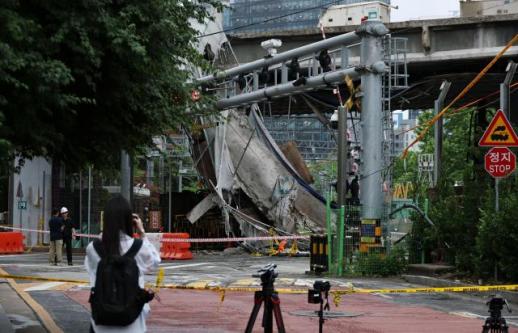 Structural Failures Highlight Gaps in Demolition Safety Standards The recent collapse of the Seosomun overpass has prompted South Korea's largest civil engineering organization to declare that the incident reflects a systemic failure rather than mere negligence at the site. As investigations into the cause of the accident continue, concerns are being raised about the deficiencies in the cost and oversight systems for demolishing aging infrastructure. On May 28, the Korean Society of Civil Engineers issued a statement identifying three major gaps in the country's demolition construction system as contributing factors to the incident. They noted the absence of mandatory pre-demolition design, insufficient reflection of demolition costs in standard cost estimates, and a lack of specialized oversight systems and qualification criteria. The society emphasized that financial considerations are at the core of the issue. They pointed out that costs for structural analysis, temporary support structures, and monitoring are not included in standard cost estimates, leading to lower bidding prices. This, in turn, can result in safety procedures being either inadequately implemented or overlooked altogether. According to the Ministry of Land, Infrastructure and Transport's standard cost estimates for construction projects, there are few specific items for estimating the demolition of civil structures like bridges. The existing guidelines primarily address the demolition of small concrete structures and the installation and dismantling of temporary scaffolding. There is a lack of clear criteria for assessing the changing loads during the phased demolition of a bridge, installing temporary supports, and monitoring deflections as part of the safety process. While standard cost estimates define the input quantities for unit tasks, the absence of standards for the demolition process itself makes it difficult to incorporate related costs into bidding prices. The quantity of materials being demolished is accounted for, but the costs associated with safe design and oversight are not. Internationally, there are movements to treat demolition work as a distinct engineering discipline. The American Society of Civil Engineers (ASCE) published a dedicated technical guideline for bridge demolition, titled 'MOP 157,' in 2024. This aims to reduce inconsistencies in demolition analysis criteria across different regions and companies. The risks associated with demolition work are evident in statistics. According to the Ministry of Land, Infrastructure and Transport, there have been 1,141 accidents related to demolition and dismantling work over the past five years, with the fatality rate for demolition work being twice that of the overall construction industry. Concerns are growing as the number of aging bridges and overpasses increases. However, some experts caution against attributing the incident solely to systemic deficiencies. They argue that the more significant issue may be the failure to adhere to established principles on-site. The Seoul city guidelines stipulate that temporary supports should be installed as needed to prevent deformation or subsidence of the structures being demolished. Whether adequate reinforcement measures were in place at the accident site will be a key point of investigation. To prevent future incidents, the society has proposed several measures, including: mandatory pre-demolition design services for civil structures, establishing appropriate cost standards for high-risk demolition projects, creating qualifications for specialized demolition oversight, prioritizing remote inspections when signs of collapse are detected, and establishing protections and compensation systems for private experts involved in public safety inspections. The proposals for prioritizing remote inspections and expert protections are particularly relevant in light of this recent accident. Han Seung-hun, president of the Korean Society of Civil Engineers and a professor in the Department of Civil and Environmental Engineering at Yonsei University, stated, "If the system does not keep pace with the field, tragedies like this can happen again at any time. We need a comprehensive overhaul of the safety management system for aging bridges nationwide." 2026-05-28 14:58:00
 -
 OpenAI and Anthropic Prepare for IPOs, Valuations Reach $2 Trillion OpenAI and Anthropic are both gearing up for initial public offerings (IPOs), with a combined valuation potentially reaching $2 trillion. Among domestic companies, SK Telecom and LG CNS are expected to directly benefit from the anticipated rise in corporate value following these IPOs. According to Yuanta Securities on May 28, Anthropic's post-IPO valuation is estimated to be as high as $1 trillion. The 0.3% stake held by SK Telecom could be valued at approximately 3.5 trillion won. After investing 130 billion won in Anthropic in August 2023, SK Telecom is poised to realize a return of about 26.9 times its investment in just over three years. LG CNS is also expected to benefit from the increase in asset value due to its indirect investment through LG Technology Ventures, a Silicon Valley venture capital firm, although the exact investment amount remains undisclosed. In the tech industry, OpenAI submitted a confidential S-1 registration statement to the U.S. Securities and Exchange Commission (SEC) on May 22. Goldman Sachs and Morgan Stanley are serving as underwriters, with a target IPO date set for September and a valuation exceeding $1 trillion. Anthropic aims for an October listing and has appointed law firm Wilson Sonsini while negotiating with underwriters Goldman Sachs, JPMorgan, and Morgan Stanley. However, evaluations of both companies vary. Concerns about OpenAI's financial structure are significant. The company reported revenues of $13.1 billion in 2025 while incurring losses of approximately $22 billion. This year's projected losses alone could reach $14 billion, with contractual liabilities estimated at $14 trillion. HSBC analysts suggest that OpenAI may need to raise an additional $207 billion by 2030, casting doubt on its ability to achieve profitability by that year. In contrast, market outlooks for the newer entrant Anthropic are generally positive. According to Counterpoint Research, Anthropic captured a 31.4% share of the global large language model (LLM) revenue in the first quarter of this year, surpassing OpenAI's 29% for the first time. Investment banking analysts predict that Anthropic will achieve its first-ever quarterly operating profit in the second quarter of this year, with revenues projected at $10.9 billion. The expected breakeven point is anticipated in 2028, two years earlier than OpenAI's 2030 target. Anthropic's current valuation stands at around $900 billion based on ongoing funding rounds, and demand for its shares in the secondary market has already surpassed that of OpenAI.* This article has been translated by AI. 2026-05-28 14:56:00
 -
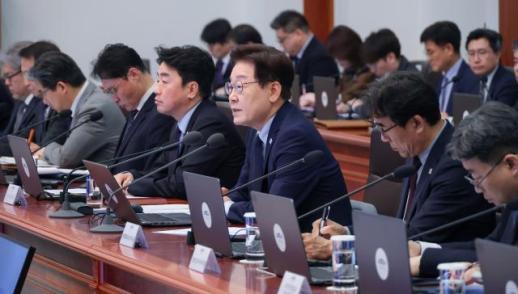 Lee Calls for Thorough Investigation on 10th Anniversary of Guui Station Tragedy President Lee Jae-myung stated on May 28 that "the harmful practice of prioritizing money and efficiency over safety still exists in some parts of society." He emphasized the need for a thorough investigation into the recent accidents at the Seosomun overpass demolition site and the missing rebar issue at the Samsung Station GTX construction site, suggesting these incidents may stem from the same systemic issues.During a senior secretary meeting at the Blue House, President Lee remarked, "Money cannot be more valuable than human life." He highlighted the seriousness of these incidents, particularly because they involve the public sector, which should prioritize citizen safety above all else. He urged relevant agencies to swiftly uncover the truth and hold accountable those responsible, regardless of their position.President Lee noted that today marks the 10th anniversary of the Guui Station tragedy, where a young worker was killed by a train while working alone on the platform. He lamented that since that day, many workers have continued to lose their lives in unsafe workplaces, a heartbreaking reality that persists.He reiterated the importance of recognizing that safety is the most effective investment and pledged that the government would dedicate maximum resources to protect and save the lives of citizens.* This article has been translated by AI. 2026-05-28 14:56:00
 -
 The Ongoing Tensions in the Strait of Hormuz: A New World Order Amidst War and Diplomacy As the world approaches the end of May 2026, attention is once again focused on the Middle East. The Strait of Hormuz is echoing with explosions as the United States and Iran engage in both negotiations and military actions simultaneously. The White House has indicated that there is "progress," but President Donald Trump has also warned that he could "end it all again if necessary." Iran, while expressing a desire to maintain a ceasefire, criticizes the U.S. for its limited airstrikes, calling them a "violation of the ceasefire." The current situation is characterized by a peculiar form of warfare that is neither full-scale war nor complete peace. It is not a ceasefire, nor is it a formal end to hostilities. Negotiations are ongoing, yet the sounds of conflict persist. This is a classic example of a 21st-century gray zone war. However, the essence of this conflict extends beyond mere military clashes; it intertwines issues of nuclear weapons, oil, the dollar system, U.S.-China power competition, and the competition for supply chains in the AI era. The Strait of Hormuz has become a fault line for the entire global order. A key feature of the current crisis is that war and diplomacy are moving in tandem. The U.S. and Iran are discussing a memorandum of understanding (MOU) for peace, with both sides signaling that there is "progress." The U.S. State Department and the White House maintain that negotiations have not completely broken down, and Iran has not officially closed the door on diplomatic solutions. However, U.S. forces have conducted airstrikes on Iranian military facilities near the Strait of Hormuz just two days later, which they claim are "defensive measures." They reported shooting down four Iranian drones and striking a ground control station preparing to launch a fifth drone. While this appears to be a limited confrontation, global financial markets and the international community do not view it as merely a localized conflict, given that the Strait of Hormuz is the heart of global oil transportation. A significant portion of the world's maritime oil traffic passes through this region, serving as a lifeline for manufacturing nations like South Korea, China, and Japan. If this area were to be blocked or enter a prolonged state of instability, international oil prices could surge, global logistics could be disrupted, and inflation could rise again. The U.S. is acutely aware of these stakes. President Trump has cultivated an image as a "president who does not prolong wars." He prefers to pressure and negotiate with limited military action rather than engage in large-scale ground wars. However, Iran does not operate on the U.S. timetable. While the U.S. seeks speed, Iran uses time as a weapon, a strategy rooted in the ancient survival tactics of Persian civilization. The U.S. is a young superpower with only 250 years of history, while Iran has a legacy of 5,000 years. The U.S. has historically wielded military and financial power to influence the world, but Iran has learned to endure external pressures and imperial domination throughout its long history. Thus, as U.S. military pressure increases, Iran opts for a strategy of delay and psychological warfare rather than direct confrontation. In fact, Iran is currently managing tensions rather than launching immediate large-scale retaliation, fully aware of the risks of total war. The Iranian economy is already devastated by sanctions, with rising youth unemployment, inflation, and systemic fatigue. Meanwhile, the U.S. also does not desire a full-scale war, as its economy has not fully escaped inflationary pressures, and a prolonged conflict could pose political challenges for Trump ahead of the elections. Ultimately, the current situation represents a precarious balance where neither side can fully attack nor easily retreat. The core issues in the U.S.-Iran negotiations can be summarized into four main points. First is the nuclear issue. President Trump has repeatedly stated that "Iran's possession of nuclear weapons is absolutely unacceptable." The U.S. is particularly concerned about Iran's stockpile of 440 kilograms of uranium enriched to 60%. Nuclear experts generally consider uranium enriched to 90% to be weapon-grade, but 60% enrichment is already deemed a significant risk, as it can be further enriched in a short time. The U.S. believes that it cannot move toward a peace settlement without eliminating or controlling this stockpile. Conversely, for Iran, nuclear capability is not merely a weapon; it is a guarantee of regime survival. The case of Libya's Gaddafi regime, which collapsed after giving up its nuclear program, has left a deep trauma in the Iranian leadership. The second issue is the handling of uranium. The U.S. strongly opposes the idea of China and Russia taking Iran's enriched uranium, as these nations are strategic competitors. A potential alternative could involve third-party management, particularly with Pakistan, which is an interesting option. Pakistan is the first nuclear-armed nation in the Islamic world and maintains a strategic relationship with China while not being entirely hostile to the U.S. It also has deep ties with Saudi Arabia. If some of Iran's enriched uranium could be temporarily stored in an internationally managed facility in Pakistan under the supervision of the International Atomic Energy Agency (IAEA), the U.S. could alleviate concerns about nuclear proliferation while allowing Iran to save face. Diplomacy ultimately involves creating exit strategies that do not leave the other side feeling completely defeated. The third issue is the Strait of Hormuz itself. This region is not just a maritime passage; it is a vital artery of modern civilization. The global economy still operates on oil and LNG. Even in the AI era, semiconductor factories and data centers require vast amounts of power and energy. AI consumes enormous energy, and data centers, semiconductor plants, cloud servers, and supercomputing systems demand unprecedented energy resources. This is why U.S. tech giants are competing for nuclear, LNG, and renewable energy resources. Ultimately, the AI era is not merely a post-oil age but rather a period of energy hegemony reconfiguration. Therefore, the Strait of Hormuz is likely to remain a critical variable in the global economy for the foreseeable future. For China, the Strait of Hormuz is a lifeline. As the world's largest manufacturing nation and one of the largest oil importers, China's factories, logistics, cities, and industrial zones depend on the energy flow from the Middle East. If the Strait of Hormuz were to become unstable in the long term, the Chinese economy could face severe pressure. The U.S. is well aware of this, which is why its strategy extends beyond merely pressuring Iran; it also aims to control China's energy arteries. This is where the Middle East issue intersects with U.S.-China power competition. China is strengthening its strategic relationship with Iran, as is Russia. Meanwhile, the U.S. seeks to establish a new Middle Eastern order centered around Saudi Arabia, the UAE, and Israel. Ultimately, the Middle East is becoming a crossroads for a new Cold War. Whereas the previous Cold War was a clash between liberalism and communism, the current conflict is far more complex, involving AI hegemony, semiconductor supply chains, energy control, maritime logistics, the dollar system, and digital finance, all intertwined with religious and civilizational factors. The issue of the dollar system is particularly significant. The U.S. has controlled the global economy through the dollar. The SWIFT payment network and international financial systems are essentially structured around U.S. interests. Sanctions against Iran were ultimately a financial blockade through the dollar system. However, recently, China, Russia, and some Middle Eastern countries have been expanding their de-dollarization efforts, increasing transactions in yuan, gold trading, and energy transactions in their own currencies. While this has not yet shaken the dollar system, the U.S. is feeling a sense of crisis, as one of the core elements of dollar hegemony has been the Middle Eastern oil payment system. If the Middle Eastern order shifts from a U.S.-centric model to a multipolar system, the dollar system will inevitably be affected in the long term. In fact, the conflicts currently unfolding in the Middle East are not merely clashes of national interests. They encompass simultaneous conflicts between Jewish and Islamic civilizations, Shia and Sunni sects, and the U.S.-centric order versus a multipolar system. Since the Trump era, the Middle East has begun to create a new dynamic through the Abraham Accords, establishing a pragmatic coexistence order centered around Israel, the UAE, and Saudi Arabia. However, Iran remains excluded from this framework. Therefore, moving forward, it is essential to evolve from the Abraham Accords to the Noah Accords. Judaism, Christianity, and Islam ultimately share a common root. The lineage of Shem, one of Noah's descendants, connects the spiritual origins of today's Jewish, Arab, and Persian worlds. True peace in the Middle East can only begin with the recognition that "one cannot completely eliminate the other." Currently, the global financial market operates on three massive axes: the AI revolution, U.S.-China power competition, and Middle Eastern risks. Until now, global stock markets have been driven by the AI rally, with U.S. AI semiconductor companies and big tech remaining at the center of the market. However, the Middle Eastern variable poses a significant risk that could disrupt this trend at any moment. If the U.S. and Iran succeed in reaching a limited agreement and stabilize the Strait of Hormuz, global stock markets are likely to continue their AI-driven upward trajectory. Conversely, if negotiations collapse completely and the crisis in the Strait of Hormuz escalates, international oil prices could soar, and global inflation could resurface. The U.S. Federal Reserve may find it difficult to lower interest rates, and the world economy could face the risk of stagflation. Chinese manufacturing and European industries could suffer significant blows, and South Korea would inevitably experience direct impacts. Although South Korea is geographically distant from the Middle East, it is not in a safe zone. The South Korean economy is export-driven and heavily reliant on energy imports. Instability in the Strait of Hormuz would directly lead to increased costs for South Korean industries. Semiconductor companies like Samsung Electronics and SK Hynix ultimately grow based on global financial stability and energy security. A surge in international oil prices and geopolitical conflicts would inevitably burden the entire South Korean stock market. Therefore, South Korea must simultaneously pursue energy supply chain diversification, strengthen its competitiveness in AI and semiconductor industries, and implement a balanced diplomatic strategy in the Middle East. Today, the world does not operate solely on military power. We are in an era where energy, AI, finance, supply chains, civilization, and geopolitics move simultaneously. The Strait of Hormuz is not just a body of water; it is a microcosm of the 21st-century world order. Humanity is currently testing a new order over that sea: a system of coexistence rather than a balance of warfare, a management system of trust rather than the fear of nuclear weapons, and a civilizational imagination that transcends the Abraham Accords towards the Noah Accords. This is the path for the Middle East and the world to survive together.* This article has been translated by AI. 2026-05-28 14:54:00
 -
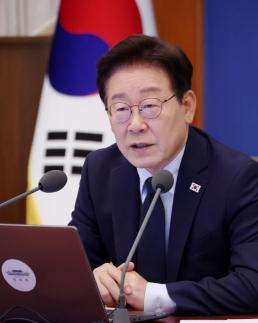 President Lee Dismisses Opposition Claims of Election Interference President Lee Jae-myung on May 28 dismissed claims of election interference from opposition parties, stating, "I have always enjoyed eating at markets, so I hope people can understand that." During a senior secretary meeting that afternoon, President Lee noted, "I often have meals at markets after events, listening to various people's stories." He has consistently visited traditional markets during regional schedules. Notably, on May 26, he had dinner at the Jagalchi Market in Busan, followed by lunch at the Namhang Market on May 27, where he enjoyed sashimi and soup. In the meeting, President Lee instructed Kim Yong-beom, his policy chief, to oversee the modernization of traditional markets. He highlighted the need for improvements in facilities such as canopies and signage, diagnosing that the current structure, which requires merchants to bear some costs, hinders effective implementation of these projects. Additionally, he called for the activation of an "online distribution platform" that connects traditional markets nationwide. He remarked, "These days, online transactions are prevalent, and traditional markets seem to be falling behind, which limits their revenue sources and causes difficulties." He added, "While this is just one approach, I hope all means are utilized to promote active distribution." President Lee emphasized, "For traditional markets to thrive, local communities and regions must also prosper, which is essential for the country's overall well-being." He concluded by stating that balanced economic growth is only possible when all areas and sectors of society grow together.* This article has been translated by AI. 2026-05-28 14:48:00
 -
 Vietnam Strengthens Tourism Cooperation with South Korea, Expands 10-Year Multiple Visa South Korea is reaffirming its commitment to Vietnam as a key strategic market for tourism in 2026, accelerating efforts to attract visitors. The expansion of the 10-year multiple-entry visa, focused support for MICE (Meetings, Incentives, Conferences, and Exhibitions), and large-scale roadshows are set to enhance tourism exchanges between the two countries. According to various Vietnamese media outlets, including Bao Dau Tu (Investment News), the Korea Tourism Organization (KTO) office in Vietnam announced that the South Korean government has expanded the eligibility for the 10-year multiple-entry visa (C-3-91) since the end of March. This new eligibility includes residents of Hanoi, Da Nang, and Ho Chi Minh City, as well as individuals with travel histories to OECD countries, employees of major South Korean investment firms, and executives and their families from large Vietnamese companies. Park Eun-jung, head of the KTO Vietnam office, stated, "The South Korean government is working to facilitate visits from Vietnamese tourists, and expanding the 10-year multiple-entry visa for residents of major cities is a prime example of this effort." The impact of the visa relaxation is already evident in the numbers. According to KTO, over 167,000 Vietnamese visited South Korea from January to March 2026, marking a 29.6% increase compared to the same period last year. As of April, the growth rate continued at over 10%. Notably, the MICE sector saw a significant increase, supporting 12,888 visitors through April, up 64.4% from 7,838 during the same period last year. In this context, KTO held the '2026 Korea Travel Roadshow' in Da Nang on May 20 and in Ho Chi Minh City on May 22. The events featured participation from 22 South Korean organizations and companies, along with over 100 Vietnamese travel agencies, facilitating B2B consultations and discussions on new product development. BenThanh Tourist hosted a workshop in Da Nang titled "Discover Your Own Korea" to expand MICE demand in the central region. The company reported operating MICE groups of up to 200 people through its Da Nang and Hue branches in the past year and the first quarter of this year. Product strategies are also diversifying. KTO is supporting marketing costs for specialized programs related to K-culture, sports, study tours, charter flights, and heritage-linked products, covering 50% to 80% of expenses, along with experience support ranging from 500,000 to 1,200,000 VND (approximately $21 to $52) per person. The 'All-in-K' campaign, which involves collaboration between South Korean airlines, banks, and online travel platforms, will be rolled out gradually starting at the end of May. Da Nang is emerging as a major gateway for tourism exchanges between Vietnam and South Korea. From January to April this year, 823,000 South Korean tourists visited Da Nang, accounting for 21.75% of all foreign visitors. Currently, direct flights operate from four cities: Incheon, Busan, Daegu, and Cheongju, with 13 airlines servicing these routes. However, there are concerns that rising operational costs may lead to reduced flight frequencies on some routes. Cultural exchange projects are also being pursued. The 'K-Vietnam Valley' being developed in Bonghwa, Gyeongbuk, is based on the historical story of Ly Long Tuong, a descendant of the Vietnamese royal family who fled to Korea in the 13th century. This project is being promoted as a symbolic initiative to attract Vietnamese tourists this year. Park Eun-jung emphasized, "Vietnam is one of the most important markets for South Korean tourism. Through this roadshow, we aim to strengthen connections between businesses in both countries and continue to provide substantial support." The strategy combines visa relaxation, MICE support, and cultural projects to sustain the growth of Vietnamese tourists visiting South Korea.* This article has been translated by AI. 2026-05-28 14:46:00
 -
 Alibaba.com Launches AI Agent 'Accio Work' to Streamline Trade for SMEs in South Korea A new era of hiring artificial intelligence (AI) team members has begun. Alibaba.com has launched its AI business team 'Accio Work' in the South Korean market. The initiative aims to significantly lower the barriers for domestic small and medium-sized enterprises (SMEs) to enter global markets by having AI manage the entire trade process, from sourcing to negotiation and marketing. On May 28, Alibaba.com held a press conference at the Lotte Hotel in Seoul to announce the launch of Accio Work. The AI agent will handle all aspects of business-to-business (B2B) trade, including market research, product planning, sourcing, price negotiation, product registration, global marketing, and store operations. According to the company, this 24/7 operational system allows staff to focus on high-value decision-making tasks such as supplier negotiations and risk management, rather than repetitive duties. South Korea has been identified as a strategic market for Alibaba.com. Since the introduction of the trade assurance service in July 2025, the number of new export companies in the country has increased by 18% compared to the previous year, and inquiries from global buyers to Korean sellers have surged by 128%. Shen Yang, head of Alibaba.com's Asia-Pacific region, stated, "Our goal is not just to increase the number of exporting companies but to enhance the business capabilities of Korean firms." During the press conference, questions arose regarding AI malfunctions and accountability. James Zhang, head of global seller products and services at Alibaba.com, explained, "We developed the AI based on 27 years of trade data, addressing issues of AI hallucinations." He added, "We designed a system where human approval is required before the agent takes any action, and all execution and decision-making processes are recorded for users to review and halt at any time." In response to concerns that AI could standardize seller capabilities, Yang emphasized that creative tasks such as sales and brand strategy still require irreplaceable human skills. He noted, "What becomes important in the AI era is the ability to identify good products." Regarding security issues, he assured that the company strictly adheres to local laws in all countries, including South Korea, to ensure user information safety. The subscription fee for Accio Work ranges from free to $19.99, $99, and $199 per month. Higher-tier plans offer more 'credits' that allow users to flexibly purchase detailed business support services tailored to their needs. A customized pricing plan for the South Korean market is also planned for the future. Alongside the launch, the AI startup competition 'Co-Create Pitch 2026' was announced for South Korea. With a total prize pool of 200 million won, the competition is divided into three tracks: general SMEs, early-stage startups, and students, with applications accepted until July 25. The winning team from the finals on August 25 will represent Korea at a global summit in the United States.* This article has been translated by AI. 2026-05-28 14:46:00
 -
 NC Hits New 52-Week High Amid Defense AI Development News NC reached a new 52-week high during trading on news of its participation in an artificial intelligence (AI) defense project. This development, coupled with positive earnings forecasts from analysts, has improved investor sentiment. According to the Korea Exchange, as of 2:27 PM, NC's stock was trading at 280,000 won, up 2,500 won (0.09%) from the previous trading day. The stock opened at 276,000 won and surged to 297,000 won at one point, marking a new 52-week high. However, some profit-taking led to a slight reduction in gains. The stock's strength is attributed to NC AI, a subsidiary specializing in AI, which announced its collaboration with Hyundai Rotem to develop physical AI for defense applications. On the same day, NC AI revealed that its consortium with Hyundai Rotem was selected as the final contractor for a national research and development project titled 'Integrated Simulator and Modular Robot System Based on Physical AI,' commissioned by the Agency for Defense Development (ADD). Analysts have maintained a positive outlook on NC. Daol Investment & Securities set a target price of 350,000 won and rated the stock as a 'buy.' In a report, analyst Kim Hye-young stated, "With the continuous success of new titles leveraging existing intellectual property, we expect revenue and operating profit to grow. The anticipation for in the third quarter of this year remains strong."* This article has been translated by AI. 2026-05-28 14:42:00
 -
 South Korea Prepares for Semiconductor Boom Amid AI Revolution 2026 finds South Korea once again at the forefront of the semiconductor industry. The world stands on the brink of a massive artificial intelligence (AI) revolution, with semiconductors at its core, and South Korea positioned as a key player. Just a few years ago, the Korean semiconductor sector was in deep decline, facing plummeting memory prices and a global economic slowdown that forced Samsung Electronics and SK Hynix to endure a harsh winter. However, the advent of the AI era has rapidly transformed the global industrial landscape. The generative AI revolution, sparked by ChatGPT, has led to a surge in investments in data centers and AI servers worldwide. AI requires the ability to process vast amounts of data simultaneously, demanding ultra-fast and high-capacity memory that far exceeds traditional DRAM. This is where high-bandwidth memory (HBM) comes into play. While the global AI industry currently revolves around Nvidia, South Korean memory technology is integral to its operations. If the U.S. dominates AI platforms and software, South Korea supplies the “memory” of the AI era. Consequently, the market now refers to this situation as a “semiconductor supercycle” not seen in 43 years. Yet, South Korea must remain cautious at this juncture. Economic booms can cloud judgment. Historically, when a specific industry surges, Korean society tends to view it as a permanent future. From the heavy chemical industry in the 1970s to shipbuilding and steel in the 1980s, IT and semiconductors in the 1990s, real estate and construction in the 2000s, and the recent platform and secondary battery booms, South Korea has often embraced the rise of a single industry as the fate of the entire nation. However, industrial history is cyclical. Booms lead to over-investment, which results in oversupply, ultimately causing price crashes and restructuring. This cycle is a harsh reality of capitalist industrial history. The semiconductor industry is no exception. In the 1980s, Japan dominated the global semiconductor market, instilling fear in the U.S. as Japanese companies nearly monopolized the memory sector. The world declared it the “era of Japanese semiconductors.” However, following the bubble burst and structural changes, coupled with U.S. technological and trade pressures, the Japanese semiconductor industry rapidly faltered, paving the way for South Korea to rise. Samsung Electronics emerged as a dominant force in the memory market, and SK Hynix also ascended to become a top-tier company. Yet, this journey was fraught with challenges, as the South Korean semiconductor industry survived numerous downturns, price crashes, and the global financial crisis. This makes the current moment crucial; economic booms are often the most perilous times. Recent debates in South Korea, while appearing to be simple wage disputes, actually reflect deeper issues. Labor unions, corporations, political factions, and financial markets are clashing over how to distribute record-high operating profits. Labor representatives argue that “the record performance is due to the dedication of workers.” Meanwhile, market participants and minority shareholders assert that “the profits of publicly traded companies fundamentally belong to shareholders.” Politicians add another dimension, claiming that “semiconductors are a strategic national industry.” The problem lies in the collision of these three narratives. Semiconductors are no longer just an industry; they have become a vital export sector, a matter of national security, a driving force in the stock market, and a cornerstone of youth aspirations and the nation’s future. Consequently, semiconductors are increasingly treated as if they embody the “nation itself.” This is where the danger of “semiconductor disease” begins. Dutch Disease, a term in economics, describes a scenario where a specific industry or resource becomes overly dominant, disrupting the balance of the entire national economy. Originally coined from the Netherlands’ experience with a natural gas boom that weakened manufacturing competitiveness, South Korea now faces a similar risk in a different form. As the semiconductor industry grows too powerful, there is a potential for the national economy, financial markets, and policy decisions to become overly centered around semiconductors. In fact, the South Korean stock market has effectively become a semiconductor market; when Samsung Electronics and SK Hynix rise, the entire market follows, and conversely, when semiconductors falter, the whole economy shakes. This is not a healthy long-term structure. Over-reliance on a single industry can ultimately destabilize the nation’s fate. A more pressing issue is the essence of the AI era. Currently, many believe the AI industry will grow indefinitely. However, the history of technology industries does not support this notion. The dot-com bubble, the LCD industry, and the solar and battery sectors have all experienced significant cycles. AI will inevitably face oversupply, price competition, shifts in technological standards, geopolitical risks, and the challenge posed by China. The Chinese factor is particularly critical, as China is pouring substantial funds into AI semiconductors and memory industries. Despite existing technological gaps, China is waging a national effort to create its own semiconductor ecosystem, even amid U.S. technological sanctions. Underestimating a competitor’s pace of advancement is the most dangerous mistake in industrial competition. Japan once chased the U.S., South Korea pursued Japan, and now China is closing in on South Korea. Ultimately, the semiconductor industry is a battleground with no permanent victors. Moreover, the AI era will not conclude with mere memory competition. Future competition is likely to encompass a vast ecosystem involving semiconductors, energy, software, cloud computing, data centers, robotics, AI platforms, defense AI, and quantum computing. At this critical juncture, South Korea faces a significant choice. While it currently possesses world-class memory competitiveness, relying solely on memory cannot guarantee future success. The true victor in the AI era will likely be the nation that dominates the entire AI ecosystem. The strength of the U.S. is not solely due to Nvidia; it stems from a cohesive ecosystem that includes OpenAI, Microsoft, Google, Amazon, Meta, and Tesla, integrating AI platforms, cloud computing, data centers, and software. In contrast, South Korea remains overly focused on a hardware-centric structure. Therefore, what South Korea truly needs to contemplate is not merely the distribution of operating profits. The more critical issues are how to prepare for next-generation AI structures, innovate energy efficiency, ensure data sovereignty in AI software, restructure global supply chains, cultivate talent, diversify industries, and develop energy strategies. Particularly in the AI era, energy issues are pivotal. AI data centers consume enormous amounts of electricity. Ultimately, semiconductor competitiveness is likely to be linked to energy competitiveness. This is why major U.S. tech companies are competing to secure nuclear, LNG, and renewable energy sources. The AI era is not just a semiconductor era; it is an “era of energy and data.” In fact, the world is currently undergoing three massive transitions simultaneously. The first is the AI revolution. The second is the U.S.-China power struggle. The third is the restructuring of energy and supply chains. Semiconductors lie at the intersection of these three axes. The U.S. has begun to view semiconductors as a national security issue, while China regards them as a matter of national survival. Europe is also investing heavily to revive its domestic semiconductor industry. Ultimately, semiconductors have evolved into a strategic asset of modern civilization, rather than just an industry. However, this is precisely why a level-headed approach is essential. The moment one becomes complacent during a boom, the risk begins. The Korean proverb “거사안위 (Gyeosa Anwi)” suggests thinking about crises during times of comfort. The South Korean semiconductor industry is undoubtedly at a world-class level. Yet paradoxically, this may be the most dangerous moment. History has not favored arrogant victors for long. The industries that survive are not those intoxicated by current booms, but those prepared for future crises. The same applies to South Korea’s semiconductor industry. What is needed now is not mere celebration but a sober strategy. Labor must consider long-term competitiveness, companies should prioritize preparing for future ecosystems over short-term results, and the government must focus on the overall structure of national industries rather than political popularity. Above all, balance is crucial. Semiconductors are a core strategic industry for South Korea. However, they must not become a “semiconductor disease” that engulfs the entire nation. The world has already entered an era where the AI revolution, U.S.-China power competition, and energy restructuring and supply chain wars are occurring simultaneously. For South Korea to survive amid these monumental changes, what is needed is not just a jackpot but the ability to design future structures. Preparing for downturns without succumbing to booms, prioritizing future survival structures over current profits—this is the true strategy that the South Korean semiconductor industry and the entire economy must adopt. The AI era is just beginning, and South Korea stands at the center of this monumental historical transition. Ultimately, the nations that endure will be those that prepare for future crises rather than those intoxicated by present successes. The same applies to industries. Semiconductors should be a source of pride for South Korea. However, the nation must also prepare for a future that extends beyond semiconductors. This is the true national strategy and the condition for survival in the AI era. 2026-05-28 14:42:00
 -
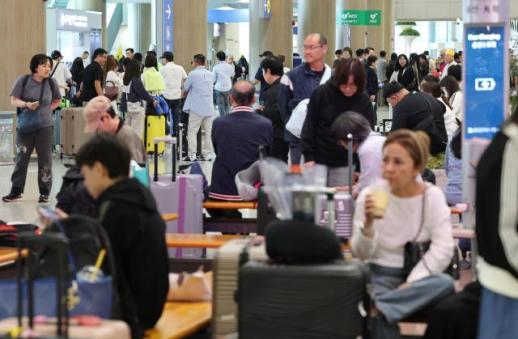 Group tourists from Indonesia allowed temporary visa-free entry until year's end SEOUL, May 28 (AJP) - Tourists from Indonesia are now allowed visa-free entry to South Korea from Thursday through the end of December. According to the Ministry of Justice, Indonesian tourists traveling in groups of three or more, whether independently or through a travel agency, are allowed to stay in South Korea for up to 15 days without a visa. The temporary measure in cooperation with the Ministry of Culture, Sports and Tourism and the Ministry of Foreign Affairs comes as Seoul seeks to boost tourism and domestic spending after Indonesian arrivals reached a record high of 365,596 visitors last year. The number of visitors from Indonesia has rebounded since the coronavirus pandemic, rising from around 250,000 in 2023 to more than 330,000 in 2024, after a pre-pandemic high of 270,000 in 2019. The measure is part of Seoul's broader push to boost tourism, aimed at attracting 30 million foreign visitors by 2030, by easing entry requirements for Southeast Asian travelers and expanding multiple-entry visas. Instead, they have to undergo stricter screening procedures to minimize illegal overstays. Travel agencies are also required to upload tourist lists to a state-run immigration portal at least 24 hours before arrival, or 36 hours in advance for travelers entering by ship. Immigration authorities will thoroughly review the lists to identify high-risk individuals including those previously involved in illegal stays or subject to entry restrictions. Such travelers are excluded from the visa-waiver program. Travel agencies could have their licenses revoked if the rate of tourists who go AWOL exceeds an average of 2 percent per quarter. 2026-05-28 14:41:02