

Journalist

Imran Khalid
-
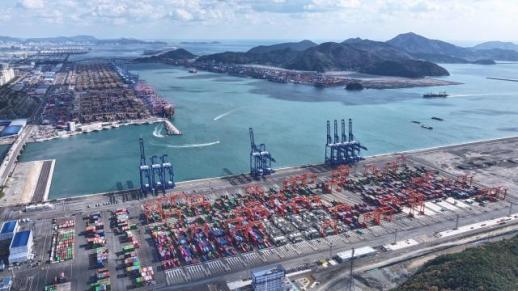 Government to Manage Port Safety Incidents with New Statistics and Plans The South Korean government is taking steps to systematically manage port safety incidents at the national level by establishing tailored disaster statistics and a safety basic plan. The initiative aims to identify hidden risk factors at port sites in advance to prevent serious accidents. The Ministry of Oceans and Fisheries announced on May 28 that it will conduct a legislative notice for amendments to the "Port Safety Special Act Enforcement Decree" and the "Port Safety Special Act Enforcement Regulations" from May 29 to July 8. This legislative notice is a follow-up to the amendment of the "Port Safety Special Act" that passed the National Assembly in February. The amendments aim to specify provisions delegated by the law, including the procedures for establishing the port safety basic plan and the basis for conducting tailored disaster statistics. Before formulating the port safety basic plan, which is established every five years, the government will conduct surveys on the occurrence and causes of port safety incidents, the training of specialized personnel, and the development and dissemination of safety facility technologies. The basic plan will be finalized after consultations with relevant central administrative agencies and local governors overseeing trade ports, followed by a review by the Central Port Policy Council. To address the long-standing need for tailored disaster statistics for ports, the government will conduct annual surveys on port incidents. Officials believe that existing industrial accident statistics do not adequately reflect the unique risk factors present in port environments, prompting the need for a separate statistical system. To enhance the professionalism and effectiveness of the surveys, the qualifications for commissioned organizations have been specified. Organizations or groups with experience in statistical production, port safety policy research, or surveys related to port transportation and relevant industries will be eligible to conduct the surveys. The Ministry of Oceans and Fisheries aims to shift the port safety management system from a reactive approach to a proactive one through this regulatory overhaul. With ongoing concerns about serious accidents in port loading and transportation operations, the government seeks to establish a national safety management system. Han Ji-woong, head of the Port Safety and Security Division at the Ministry of Oceans and Fisheries, stated, "This legal amendment is intended to institutionally support the establishment of the port safety basic plan and the production of tailored disaster statistics. We will identify hidden risk factors in port workplaces in advance and implement effective disaster prevention policies to create a safe working environment for port workers."* This article has been translated by AI. 2026-05-28 11:06:00
 -
 Hyundai Mobis Joins Global Open Source Ecosystem to Boost SDV Competitiveness Hyundai Mobis has joined the global open-source ecosystem to enhance its competitiveness in software-defined vehicles (SDV). The company plans to share some of its proprietary technologies to secure global standards and expand its ecosystem. On May 28, Hyundai Mobis announced its membership in the Eclipse Foundation's SDV Working Group and participation in the S-Core project. This initiative marks the beginning of its efforts to develop a software platform for SDVs. The S-Core project aims to standardize automotive software platforms and middleware through global collaboration. Launched in late 2024, primarily among European companies, it is working to develop the first open-source-based SDV platform with functional safety standards (ASIL-B). Thirteen companies, including automakers, parts suppliers, and software firms, are involved in the project. The adoption of open-source methods, traditionally used in the IT industry, is significant for mobility companies. Participating firms will share some of their code, allowing developers worldwide to utilize it freely. Hyundai Mobis plans to unveil a Linux-based 'container solution' as part of this project. This technology creates independent spaces in the SDV environment to prevent interference between various software applications, enabling stable execution of multiple functions simultaneously. According to Hyundai Mobis, the container solution operates over ten times faster than existing technologies in automotive control environments. It also features continuous integrity assurance to prevent software tampering from external intrusions. A Hyundai Mobis representative stated, "Through our participation in this project, we aim to emerge as a leading company in mobility software." Meanwhile, the automotive software market is experiencing rapid growth. According to market research firm MarketsandMarkets, the SDV market is projected to increase from $270.9 billion in 2024 to $419.7 billion by 2028.* This article has been translated by AI. 2026-05-28 11:06:00
 -
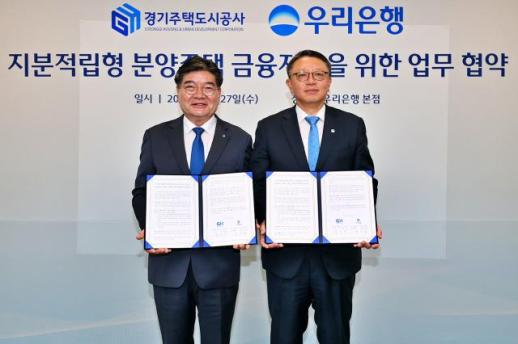 Woori Bank and GH Develop Exclusive Loan for Shared Equity Housing Woori Bank is moving forward with the development of an exclusive loan product to ensure the stable supply of shared equity housing.On May 28, Woori Bank announced that it has signed a memorandum of understanding (MOU) with the Gyeonggi Housing and Urban Corporation (GH) for financial support for buyers of shared equity housing.In this public sale model, buyers initially acquire only a portion (10-25%) of the housing equity and gradually purchase the remaining equity over 20 to 30 years, ultimately achieving full ownership.Despite the advantage of significantly reducing initial financial burdens, financial support for shared equity housing has faced limitations. Due to the shared ownership structure between buyers and the public supplier, traditional mortgage structures have not recognized the equity as collateral, making the development of exclusive loan products impossible.In response, the two organizations have jointly developed a financial support model based on the 'bond transfer method,' utilizing the buyer's right to claim the return of their equity acquisition funds. Woori Bank plans to complete the product development before the first sale announcement of shared equity housing, scheduled for October.Jung Jin-wan, President of Woori Bank, stated, "This agreement is significant as it proactively establishes a financial support system tailored to a new public housing supply model. We will continue to strengthen collaboration with public institutions to expand financial products that support housing stability and asset formation for those without homes."* This article has been translated by AI. 2026-05-28 11:03:00
 -
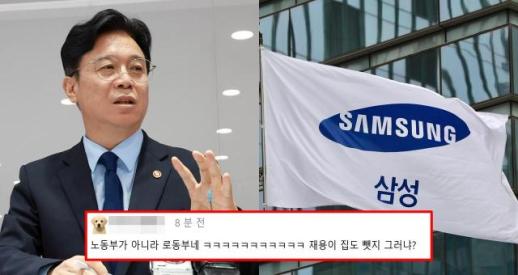 Labor Minister Kim Young-hoon to Discuss Redistribution of Samsung's Excess Profits Labor Minister Kim Young-hoon announced plans to hold an urgent discussion on how to redistribute the "astronomical excess profits" of large corporations amid the ongoing Samsung strike. The announcement has sparked reactions from netizens. During a press briefing at the Government Sejong Center, Minister Kim stated, "I would like to open a discussion on how to socially redistribute the excess profits of large companies and explore the possibilities of a Korean-style social solidarity wage policy." He revealed that the urgent discussion is scheduled for June 1. Kim explained that the discussion aims to set the agenda and initiate dialogue before formal labor-management negotiations. He referred to the event as a "tentative discussion on the possibilities of a Korean-style social solidarity wage policy." The social solidarity wage policy is a labor initiative aimed at reducing wage disparities between large and small businesses, as well as between regular and non-regular workers. It involves using the funds saved from restraining wage increases for high-income workers to boost the wages or welfare of vulnerable workers. The Rehn-Meidner Model from Sweden is a notable example. While acknowledging that applying Sweden's social solidarity fund model directly to Korea is nearly impossible, Kim emphasized the importance of upholding its spirit. He expressed a desire to foster social dialogue aimed at collective well-being. "We must reflect deeply and rationally on this issue, and the solution ultimately lies in social dialogue," Kim said. He added, "The success of Samsung Electronics is not only due to the dedication of its labor and management but also the contributions of all communities and society. If we agree that this success should be redistributed socially, then the solution is social dialogue." He further clarified, "We need to discuss how to share the pure profits remaining after excluding taxes, interest, depreciation, and other financial costs. This is not about the government collecting more taxes or directly intervening in distribution, but rather about labor and management autonomously seeking ways to achieve mutual growth and reduce disparities in the labor market alongside the primary distribution of taxes." However, netizens have expressed criticism in response to the report. Comments included, "What excess profits does a private company have?" and "If there are losses, the government won't take responsibility, so why discuss sharing profits?" Others questioned, "Why is the government discussing the distribution of corporate profits? Isn't that a communist idea?" Some suggested, "If you want to share profits, buy stocks," and remarked, "Only Lee Jae-yong suffers in this structure." Some commenters acknowledged the issue of disparities between subcontractors and non-regular workers but argued that it is excessive for the government to address profit distribution in private companies. Meanwhile, Samsung Electronics' labor and management recently reached a dramatic agreement after mediation by the Central Labor Relations Commission, averting a total strike. However, discussions surrounding the bonus system and excess profit distribution are expected to continue in the political and labor sectors for the foreseeable future.* This article has been translated by AI. 2026-05-28 11:03:00
 -
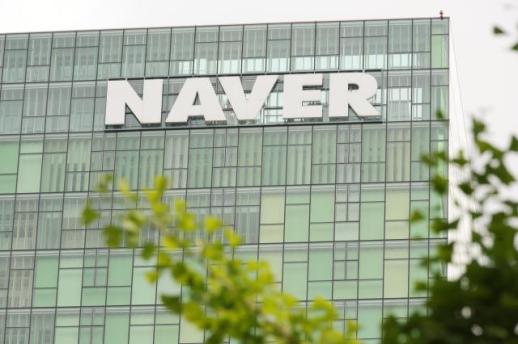 Naver pledges 1 trillion won for creators in AI shift SEOUL, May 28 (AJP) - Naver will pour 1 trillion won ($663 million) into its content creator ecosystem over the next five years, the South Korean internet giant pledged, betting that proprietary data and creator partnerships — not raw model performance — will decide the next phase of the artificial intelligence race. The announced was unveiled at a media round table in central Seoul on Thursday led by Kim Kwang-hyun, Naver's chief data and contents officer, in his first public appearance since taking the role in February. The company, headed by CEO Choi Soo-yeon, said the spending will fund efforts to surface high-quality creators and feed their work into its AI services. "As a CDO, I will build up quality data — the foundation of execution-capable agents — through our creator ecosystem and external partnerships, connect it to AI to deliver differentiated user experiences, and dive more aggressively into the competition," Kim said. As part of the strategy, Naver is launching a fellowship called Naver Mate, which will select about 3,000 top contributors each month from its blog, cafe, Knowledge iN and Premium Content platforms, ranked by how often their work is cited in the company's AI Briefing service. Kim Sang-bum, head of Naver's search platform division, said the company's edge lies in its product-native large language model, a trove of about 10 billion data records, and the operational know-how built up over more than two decades of running its own search ecosystem. A next-generation HyperCLOVA X model will also be deployed shortly, he added. 2026-05-28 11:02:46
 -
 LG Uplus Reduces Plans from 53 to 18, Implements QoS Across All Tiers LG Uplus is set to overhaul its telecommunications pricing structure, focusing on a new integrated 5G and LTE plan launching on June 1. The company aims to simplify its pricing by centering on data volume and speed, while implementing a data assurance option (QoS) across all tiers. Additionally, age-based benefits and discounts for bundled services will now be automatically applied without separate applications, streamlining the subscription process. On May 28, LG Uplus held an online press conference to announce the launch of its 'Simply 2.0' campaign, which aims to simplify the subscription and usage processes for its services, particularly focusing on pricing and bundling. Jang Jun-young, head of LG Uplus's marketing group, stated, "This reform is focused on reducing the time customers spend making decisions. Previously, customers had to compare LTE and 5G plans along with data offerings, but the new integrated plan redefines the product structure to simplify selection criteria." The key features of this overhaul include the integrated 5G and LTE plans called 'Data Plan' and 'Plus Plan,' automatic application of benefits based on age and usage patterns, an all-in-one structure that combines mobile and internet services, and expanded 5G roaming coverage. LG Uplus has reduced its plans from 53 to 18, simplifying the structure to allow customers to choose based on data volume and speed. A notable feature is the application of the data assurance option (QoS) across all tiers. However, there are limitations on QoS speeds in the lower-priced tiers. Depending on the plan, QoS speeds can reach up to 400 Kbps, which is sufficient for standard video viewing, messaging, and web browsing, but may not support high-performance gaming or high-definition video streaming. Specifically, for monthly fees: the 'Data Plan 300MB' at 28,000 won offers a speed of 400 Kbps; the 'Data Plan 14GB' at 55,000 won provides 1 Mbps; the 'Data Plan 95GB' at 68,000 won offers 3 Mbps; and the 'Data Plan 125GB' at 70,000 won delivers 5 Mbps. Plans priced at 85,000 won or higher, such as the 'Data Plan MAX,' allow unlimited data usage without speed restrictions. Kang Jin-wook, head of LG Uplus's mobile and digital business group, remarked, "Regardless of the plan chosen, customers will experience uninterrupted data usage, marking a significant change for users. We believe we are entering an era where unlimited access to YouTube and KakaoTalk is possible." Some analysts have raised concerns that expanding QoS to lower-priced tiers could negatively impact the company's profitability. In response, Kang stated, "While there may be concerns about profitability due to the government's announcement of a 380 billion won reduction in telecommunications costs across the three major carriers, we plan to offset this by securing additional revenue through new businesses like AI." Age-based benefits will also be automatically applied without separate applications. For instance, a youth customer using the 'Data Plan 9GB' at 47,000 won will receive 11GB of data monthly, and after exhausting that, they can use data at 1 Mbps. Upon turning 20, they will automatically receive an additional 4GB of data without any application process. The bundling structure for mobile and internet services has also been simplified. Customers can now receive mobile, internet, and bundling benefits with a single subscription, and the previously scattered discount structures can now be easily viewed. LG Uplus will also introduce a dedicated internet product called 'Nugget All-in-One,' which offers the same speeds as existing internet products (100 Mbps, 500 Mbps, 1 Gbps) while automatically applying bundling benefits when combined with mobile plans. Roaming services have also been revamped. Customers can now use roaming on their existing tablets or secondary phones without a separate application process. Changes have also been made to voice roaming services, allowing free calls through the 'Exio' roaming service, which previously incurred additional charges. Starting next month, LG Uplus plans to offer free calls based on the Exio service in Japan, expanding to 171 countries worldwide by July. To ensure stable roaming quality in popular travel destinations, the company is collaborating with global network quality analysis firm OpenSignal. They aim to continuously manage customer experience quality, focusing not only on speed but also on network reliability. In the future, LG Uplus plans to introduce an AI-based optimal plan recommendation feature. Kang noted, "From a business strategy perspective, we are preparing an AI-based optimal plan recommendation feature. As discussions on related regulations are underway at the government level this year, we are researching ways to recommend plans that better suit our customers."* This article has been translated by AI. 2026-05-28 11:00:00
 -
 Naver to Invest 1 Trillion Won in AI Content and Creator Ecosystem Over Five Years Naver is accelerating its efforts to enhance its artificial intelligence (AI) search competitiveness by expanding its content and creator ecosystem. The company believes that the strength of its AI platform lies in content based on service experience. Naver plans to invest 1 trillion won over the next five years to secure quality content and strengthen its creator compensation system. Having grown as a search portal in the 2000s while creating a creator ecosystem, Naver sees this ecosystem as a crucial factor for continued growth in the AI era. On May 28, Naver held a media roundtable at The Plaza Hotel in central Seoul, focusing on its data and content strategy for the AI era. The event featured Chief Data and Content Officer (CDO) Kim Kwang-hyun, Content Service Division Head Lee Il-koo, and Search Platform Division Head Kim Sang-beom, who discussed strategies for revitalizing the content and creator ecosystem and enhancing the competitiveness of AI search services. Kim emphasized that the focus of AI platform competition is shifting from model performance to data quality and service competitiveness. “As CDO, I will work to build high-quality data that serves as the foundation for executable agents through partnerships with creators and external partners, connecting this data with AI to provide differentiated user experiences and compete more boldly,” Kim said. He also highlighted plans to expand non-technical efforts to find quality content and creators over the next five years with the same 1 trillion won investment. “In the AI era, where we need to create gaps in data and service experience in addition to technology, Naver's unique content ecosystem, built over 25 years, is our strongest asset,” Kim added. Naver aims to strengthen its competitiveness by partnering with creators as core partners and expanding the AI ecosystem together. As part of its strategy to explore content and creators, Naver is launching a new fellowship program called 'Naver Mate.' This program will spotlight around 3,000 outstanding creators who enrich the content ecosystem with expertise and diversity, based on AI briefing citation counts, each month. Creators in the Naver Mate program will have their profiles and content marked with an official emblem, making their work more visible across various Naver services, including integrated search and AI briefings. To encourage the production of quality content, Naver will provide activity funds ranging from 300,000 to 10 million won, totaling 20 billion won, based on citation counts. The Naver Mate program will begin next month, targeting creators of blogs, cafes, Knowledge iN, and premium content, with plans to expand to clip creators in the second half of the year. Naver plans to operate the program in beta until the end of this year, gradually enhancing it by incorporating AI tab response citations and expanding the support targets and scale. Lee Il-koo stated, “Even in the AI era, user-generated content (UGC) that reflects creators' real experiences and insights is a key asset that adds diversity and expertise to AI. We will focus on creating a consensus among all users about good creators and content to revitalize the content ecosystem.” Naver aims to implement an integrated AI agent that seamlessly connects various services beyond AI search. The company revealed its technological direction and core assets. Kim Sang-beom highlighted the importance of a product-native large language model (LLM) optimized for service scenarios, a vast dataset of 10 billion records, and harness engineering for stable service operation as key assets. He explained that Naver's experience in building and operating its search ecosystem with proprietary technology is a unique strength. The next-generation Hyperclova X model will also be applied soon. Naver is enhancing its AI search lineup. According to the company, the AI briefing launched in March last year has been used by 30 million people monthly, providing quick and accurate answers. The AI tab, which entered closed beta in April, has surpassed 3 million users. Additionally, Naver plans to introduce a new version of Smart Lens by the end of next month, a service that allows users to quickly capture information through their camera and connect to actions. This is expected to create strong synergy with the AI briefing and AI tab. Kim Sang-beom noted, “Starting next month, when the AI tab is officially launched, all Naver users will be able to utilize conversational search on both mobile and PC. We will implement an agentic AI service that connects search to actual execution based on Naver's unique assets that best understand the daily lives and contexts of Korean users.” 2026-05-28 11:00:00
 -
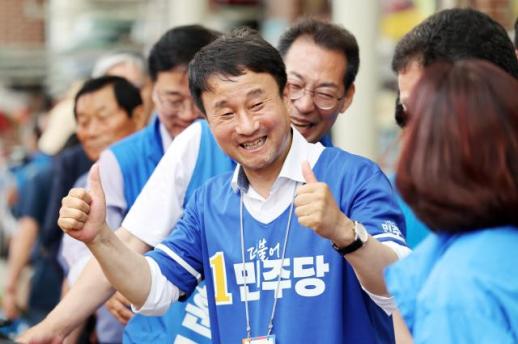 Han Byeong-do Promises Support for Daegu's New Airport and Administrative Merger Han Byeong-do, the floor leader of the Democratic Party, visited Daegu on May 28 to pledge full support for the campaign promises of mayoral candidate Kim Boo-kyum, including the integration of the Daegu-Gyeongbuk new airport and a previously stalled administrative merger. He also committed to creating a Daegu that retains its youth through industrial transformation. During his visit to Kim's campaign rally, Han expressed, "I am here to convey my urgent hope that you will elect Kim. We will surely change Daegu's difficult issues through administration, not politics, with the strength of the ruling party." Han emphasized that if Kim is elected, he will work with President Lee Jae-myung to realize the new airport project and the administrative merger of Daegu and Gyeongbuk. "Regarding the airport issue, the most challenging core problem is the financial aspect. We will secure the budget for this within the year," Han stated. He added that the administrative merger would receive 20 trillion won over four years, with 5 trillion won allocated annually, which he believes will significantly transform Daegu and Gyeongbuk. He concluded, "The only candidate who can overcome Daegu's crisis and make this transformation a reality is Kim. If you elect him, we will turn these promises into reality alongside President Lee. We will show that through industrial transformation, we can create hope in Daegu, where young people are leaving due to a lack of jobs. Please lend your support so we can work for Daegu."* This article has been translated by AI. 2026-05-28 10:57:00
 -
 Samsung Electronics Union Plans Two-Track Negotiation System After a tentative wage agreement received 80% approval, the Samsung Electronics branch of the super corporate union announced plans to implement a two-track negotiation system separating the DS (semiconductor) and DX (finished products) divisions.Choi Seung-ho, head of the super corporate union, stated on May 28 that the leadership will be divided into five members for the DS division and three for the DX division to better reflect the unique circumstances and issues of each sector.Choi expressed gratitude to union members for their support of the 2026 wage agreement, noting, "While the 80% approval is encouraging, I understand it does not necessarily reflect overall member satisfaction." He acknowledged the disappointment and concerns that may not be captured in the vote.Previously, Lee Song-yi, the vice chair from the DX division, announced plans for a leadership overhaul, including a vote for the chair's reappointment.The restructuring will focus on improving losses in the non-memory sector within the DS division and addressing demands from the DX division.In the DS division, the union plans to demand that the company present a vision for turning the non-memory sectors, such as system LSI and foundry, into profitable areas. Choi promised to communicate directly with members regarding customer service issues and advocate for improvements in business continuity and working conditions.For the DX division, two new leaders will be appointed to focus on member demands, and the union plans to allow participation from other unions in future negotiations to gather diverse opinions.Choi apologized for past mistakes and committed to fulfilling his responsibilities as chair. He also expressed regret for inappropriate comments made during negotiations, such as those regarding assisting with foundry job transitions and frustrations within the DX division.A meeting to announce the vote for the chair's reappointment is scheduled for June 17.Choi stated, "The super corporate union will focus on preparing for the 2027 wage and collective agreement while restructuring operations for both DS and DX divisions. We will strive to achieve more satisfactory results in the next negotiations compared to those in 2026." 2026-05-28 10:57:00
 -
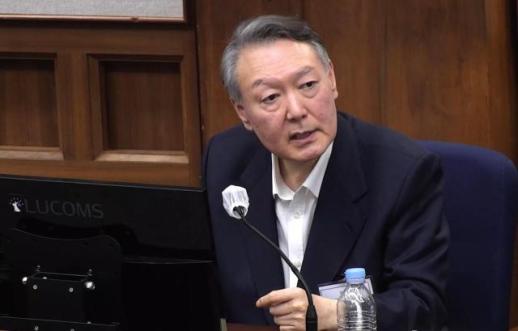 Yoon Suk Yeol Acquitted of Perjury in Han Duck-soo Trial Yoon Suk Yeol, the former president, was acquitted of perjury charges related to his testimony in the trial of former Prime Minister Han Duck-soo concerning the declaration of martial law on December 3. On May 28, the Seoul Central District Court's Criminal Division 32, presided over by Judge Ryu Kyung-jin, ruled Yoon not guilty of perjury and dismissed the request for compensation related to the case. The court also provided guidance on the criminal compensation process for Yoon following the verdict. Previously, the special prosecution team led by Jo Eun-seok had sought a two-year prison sentence for Yoon. The court stated, "Considering that Yoon directed the additional gathering of six cabinet members just two minutes after a meeting in his office at 9:09 PM on December 3, 2024, and that the documents related to the martial law had already been prepared for Deputy Prime Minister Choi Sang-mok, it appears that the defendant (Yoon) had a plan to convene the cabinet regardless of Han's suggestion." The court concluded, "It is difficult to view the defendant's testimony as contradictory to his memory." Furthermore, the court noted that the testimony of former Defense Minister Kim Yong-hyun, who reported to Yoon before the martial law declaration that it was necessary to present agenda items to the cabinet meeting, supported this conclusion, indicating that the prosecution had not sufficiently proven the charges. The court emphasized the legal criteria for establishing perjury, stating that perjury occurs when a witness makes statements that contradict their experienced facts, while subjective evaluations or opinions regarding legal effects are not subject to punishment. The court remarked, "Whether the meeting of the convened cabinet members actually met the legal quorum for a cabinet meeting or had legal effect is a separate issue," adding that Yoon's assertion that he intended to convene the cabinet from the outset is merely a subjective evaluation of the nature of that meeting, making it difficult to classify as perjury regarding factual matters. This implies that even if Han and other cabinet members did not fully recognize Yoon's directive for an additional gathering and claimed they intended to persuade the president to hold a cabinet meeting, it does not negate Yoon's original plan. This trial stemmed from Yoon's testimony as a witness in Han's trial last November. At that time, when asked by the special prosecution team whether Han suggested convening the cabinet meeting to maintain a legal appearance, Yoon responded, "Cabinet members are not puppets here to maintain an appearance; isn't that a question reflecting too much opinion?" The special prosecution team deemed this a false testimony implying that Yoon intended to hold the cabinet meeting from the beginning, leading to the perjury charges filed against him a month later in December. This ruling marks the first acquittal for Yoon in a trial related to the December 3 martial law. However, while Yoon has been cleared of perjury charges, he still faces multiple ongoing trials related to insurrection charges. Yoon was sentenced to life imprisonment in the first trial for his role as the "mastermind" behind the martial law declaration and is currently undergoing an appeals process. Additionally, he received a seven-year prison sentence in the second trial for obstructing the execution of an arrest warrant by mobilizing the presidential security service, with a first trial ruling regarding his directive for a drone operation in Pyongyang also scheduled for June 21. Meanwhile, the special prosecution team plans to review the ruling in detail before deciding whether to appeal. 2026-05-28 10:57:00