

Journalist

Imran Khalid
-
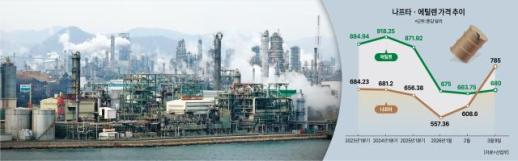 Korea Petrochemical Sector Exposed as Russia, Middle East Naphtha Supplies Tighten South Korea’s petrochemical industry has been laid bare by the latest naphtha crunch, with experts pointing to a fragile supply chain now squeezed on multiple fronts. With imports of Russian naphtha already blocked and Middle Eastern supplies disrupted by war risks, the sector is facing what industry officials describe as a potential collapse in operations. While restarting Russian naphtha imports is cited as the most direct remedy, analysts say it is effectively impossible for South Korea, a U.S. ally, because it must comply with sanctions on Russia. The same constraint is expected to limit efforts to expand imports of “commercial tank” naphtha, which can be blended from multiple origins. Industry officials said Tuesday that Korean petrochemical companies previously secured naphtha steadily from three main sources: Russia, the Middle East and other countries. In the 2010s, companies enjoyed a boom as supply prices were about 60% of today’s naphtha prices and demand for petrochemical products was strong in China and elsewhere, generating operating profits in the trillions of won for individual firms. That picture changed in the 2020s as China brought large petrochemical complexes online, halted imports of Korean products, and the 2022 Russia-Ukraine war cut off Russian naphtha, a key supply source. Company performance deteriorated sharply, officials said. To fill the gap left by Russia, Korean firms increased imports from the Middle East, a shift that made them more vulnerable to any disruption in the Strait of Hormuz, industry officials said. China, meanwhile, imported large volumes of Russian naphtha after the Ukraine war, as export routes to South Korea and Japan narrowed, strengthening its petrochemical competitiveness and pressuring Korean companies, experts said. They added that access to Russian crude and naphtha helps explain why China can respond more flexibly to an Iran war and a Strait of Hormuz blockade. The Financial Times reported that China has built competitive integrated refining and petrochemical complexes based on Russian crude and naphtha, while South Korea and Japan face overlapping pressures including higher raw material and electricity costs, shrinking domestic markets and weaker currencies. As allied economies including South Korea, Japan and the European Union have come under strain, the U.S. government temporarily suspended sanctions on Russian crude and petrochemical products on March 12 local time, but it remains unclear whether the move will have meaningful impact. The measure allows transactions for Russian crude and petrochemical products already on ships through April 11, but industry officials said it is far from enough to cover the shortfall in Middle Eastern supplies. “There is currently no way to import petrochemical products by evading sanctions on Russia, and there is a risk of even greater damage if sanctions are violated,” a petrochemical industry official said. Those concerns are also fueling worries that the South Korean government and companies will struggle to import commercial-tank naphtha stored at ports around the world, because it is likely to contain some Russian-origin material, officials said. After Russian naphtha imports were blocked in 2022, some Korean petrochemical companies increased purchases of commercial-tank naphtha stored in Tunisia. They later halted imports entirely after Bloomberg and other foreign media raised suspicions that the cargoes included Russian naphtha, according to industry officials. Another industry official said Korean companies are believed to be importing commercial-tank naphtha from Singapore and Indonesia, where origin is relatively easier to verify. The official added that companies will also move aggressively to secure supplies to prevent a worst-case scenario in which ethylene production stops.* This article has been translated by AI. 2026-03-17 17:12:18
 -
 Hyundai Mobis Lowers Board Entry Bar Under Revised Commercial Act, Raising Governance Risks Hyundai Mobis has amended its articles of incorporation in line with South Korea’s revised Commercial Act, a move expected to lower barriers for activist funds and minority shareholders seeking seats on the board. As a key affiliate in Hyundai Motor Group’s governance structure, the changes are fueling concerns that risks could grow during any future groupwide governance overhaul. At its 49th annual shareholders meeting held March 17 at GS Tower in Seoul’s Gangnam district, Hyundai Mobis approved multiple charter revisions, including deleting a clause that excluded cumulative voting, clarifying directors’ duty of loyalty, renaming outside directors and strengthening audit committee composition requirements. Most agenda items were tied to the revised Commercial Act, which is set to take effect this year. A central change is the so-called “3% rule,” under which voting rights of the largest shareholder and related parties will be capped at 3% when electing audit committee members starting July 23. Additional provisions scheduled for Sept. 10 include mandatory cumulative voting and expanded separate elections for audit committee members. The revisions aim to strengthen minority shareholder rights and board oversight, but companies view them as a new burden. Hyundai Mobis is seen as central to any Hyundai Motor Group governance restructuring, and critics say the new rules could become a risk factor. With the removal of the cumulative-voting exclusion, the likelihood has increased that directors representing minority shareholders could be elected. Under cumulative voting, shareholders can cast all votes they hold — equal to the number of director candidates — for a single nominee. If more directors aligned with minority shareholders join the board, differing views could complicate efforts to push ahead with governance changes. Hyundai Motor Group previously attempted a governance overhaul in 2018, but the plan was scrapped after opposition from activist hedge fund Elliott. The group is now the only one among South Korea’s top 10 conglomerates that still maintains a circular shareholding structure. In such a structure — for example, “Hyundai Mobis-Hyundai Motor-Kia-Hyundai Mobis” — a group can control the broader conglomerate with relatively small stakes. Converting that into a simpler, linear structure remains a long-standing goal for the group. * This article has been translated by AI. 2026-03-17 17:11:06
 -
 Hanwha Aerospace Buys Nearly 5% Stake in KAI, Deepening Defense Ties Hanwha Group’s move to secure nearly 5% of Korea Aerospace Industries (KAI) is drawing attention in the defense industry, as it could strengthen Hanwha’s position in fighter-jet production through closer cooperation with the aircraft maker. Industry officials said Tuesday that Hanwha Aerospace recently bought a 4.41% stake in KAI. Combined with the 0.58% held by Hanwha Systems, the group’s total stake stands at 4.99%. It marks Hanwha Aerospace’s first KAI share purchase in about seven years, after it sold its entire 5.99% stake in 2018. The purchase makes Hanwha Group KAI’s fourth-largest shareholder. The Export-Import Bank of Korea is KAI’s largest shareholder with a 26.41% stake. Hanwha Aerospace said the investment is intended to “expand cooperation in the aerospace business based on a mid- to long-term strategic partnership and strengthen global export competitiveness.” In South Korea’s defense sector, companies have increasingly pursued joint bids in which a prime contractor signs an export deal and participating firms share the proceeds. A key example is the KF-21 fighter jet, scheduled to be delivered to the Air Force starting in the second half of this year. KAI produces the airframe, while Hanwha Aerospace supplies the engine. Last month, Hanwha and KAI signed an agreement on joint cooperation in future core businesses to boost the global competitiveness of South Korea’s defense industry, and said they would expand that collaboration. Inside KAI, expectations for growth have risen as the company moves toward greater management stability. At an extraordinary shareholders meeting on March 18, shareholders will decide whether to appoint Kim Jong-chul, a former director at the Defense Acquisition Program Administration’s Defense Technology Protection Bureau, as CEO. Some observers say a management vacuum that has lasted for years is entering a resolution phase. Hanwha has expanded its defense footprint through acquisitions, leaving open the possibility of further KAI share purchases. In 2022, Hanwha secured a 49.3% stake in Daewoo Shipbuilding & Marine Engineering and reorganized it as Hanwha Ocean. Some analysts, however, say Hanwha’s recent expansion could limit the scope for a rapid increase in its KAI stake. At KAI, the labor union has expressed mixed views, citing expectations for business expansion if the company is brought under a large conglomerate, while also warning of potential conflict during any push toward privatization. “This stake purchase is more of a strategic investment to strengthen cooperation than a move to take management control,” one industry official said. “Depending on whether additional shares are bought, the direction of the relationship could change.”* This article has been translated by AI. 2026-03-17 17:10:13
 -
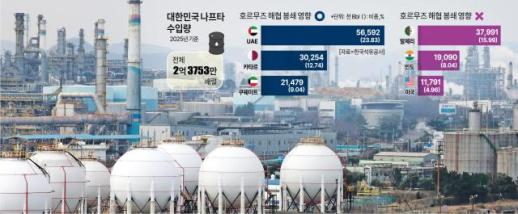 South Korea Scrambles for Naphtha Supplies After Strait of Hormuz Closure South Korea’s government and petrochemical companies are moving to secure alternative naphtha supplies from Algeria, India and the United States as concerns grow that domestic stockpiles of the widely used feedstock could run out. Industry officials said Tuesday that the government and companies have set a joint plan to check on-the-ground naphtha inventories in those countries and to contact global commodities traders including Glencore and Trafigura, aiming to bring as much available supply into South Korea as possible. A government official said authorities are “communicating closely with companies” to build alternative supply lines and are pursuing ways to identify and secure naphtha stocks outside the Middle East. The push follows the closure of the Strait of Hormuz after U.S. and Israeli airstrikes on Iran, a development that has hit South Korea’s petrochemical sector, which largely imports naphtha from Middle Eastern producers. Remaining domestic inventories are believed to be less than two weeks’ worth, according to the industry. If naphtha runs out and production of basic petrochemical feedstocks such as ethylene, butadiene and aromatics stops, output of a wide range of consumer necessities derived from them would also halt, the industry warned. About half of South Korea’s naphtha supply comes from refining imported crude oil, while the rest is imported as naphtha, mainly from the Middle East. More than half of imported volumes — 54% — are sourced from the United Arab Emirates, Qatar and Kuwait, which are inside the Strait of Hormuz, leaving supplies exposed to the closure. As supply lines wavered, major petrochemical makers including LG Chem, Lotte Chemical, Hanwha Solutions, DL Chemical and Yeochun NCC cut naphtha cracker (NCC) operating rates to the 50% range, cited the possibility of force majeure and shifted into emergency management, the industry said. In response, the Lee Jae-myung government decided to take a more direct role in managing naphtha rather than leaving it solely to the private sector. At a Cabinet meeting chaired by President Lee Jae-myung at the government complex in Sejong on Tuesday morning, Deputy Prime Minister and Minister of Economy and Finance Koo Yun-cheol said disruptions were occurring in naphtha supply because of heavy reliance on the Strait of Hormuz and that the government plans to designate naphtha as an economic security item within the week. The government is also expected to pursue steps to restrict overseas exports of naphtha refined from crude oil and prioritize domestic supply. An economic security item refers to raw materials, parts and equipment that the government manages closely because heavy dependence on specific countries and supply-chain disruptions could severely affect daily life and the national economy. Officials and companies are said to be placing particular hopes on Algeria and India, which are major oil-producing countries believed to have relatively more naphtha on hand. They are also reviewing whether to confirm and import commercial tank naphtha stocks — mixed-origin supplies — available in the Singapore and Indonesia markets. Lee Deok-hwan, an emeritus professor of chemistry at Sogang University, said, “Other than Algeria, India and the United States, it is difficult to find an objectively better naphtha supply chain,” adding that with the risk of a sharp drop in demand for petrochemical products due to shortages, “it is a serious crisis for the national economy, so (the public and companies) have no choice but to trust and follow the government’s active efforts.” 2026-03-17 17:04:25
 -
 SK Biopharm JV, Samjin Pharma, Hecto Group, Medytox and Gil Medical Center updates SK Biopharm JV Mentis Care begins joint research with Emory School of Medicine on AI seizure detection and real-time prediction SK Biopharm said March 17 that its joint venture, Mentis Care, has started a joint study with Emory University School of Medicine to develop an artificial intelligence model to detect seizures and predict them in real time. The two-year project aims to build a general-purpose AI model that can be used across settings, from precision hospital equipment to wearable devices. The partners plan to develop a transformer-based EEG foundation model designed to perform consistently across different environments, from the standard clinical 10-20 EEG system to reduced-channel wearable EEG. The goal is to establish the technical basis for continuous epilepsy monitoring in everyday life. The work will focus on five areas: large-scale data curation and a standardized preprocessing pipeline; a high-performance seizure-detection foundation model; validation across patient groups and recording environments; adaptation to reduced-channel wearable EEG systems; and expansion of a real-time pre-seizure prediction module. SK Biopharm said the research is at an early stage, and any eventual product would require further development, clinical trials, and review and approval by relevant regulators. Samjin Pharmaceutical hires Lee Ye-jin as new head of marketing Samjin Pharmaceutical said March 17 it has hired Lee Ye-jin, a veteran with more than 20 years of experience across global drugmakers overseeing marketing, sales and market access, as its new head of marketing. Lee graduated from Chung-Ang University’s College of Pharmacy and held key roles at Janssen Korea, including medical representative and product manager, as well as market access work involving strategies for health insurance listing and appropriate drug pricing, the company said. Samjin said Lee also served as a Bayer headquarters-certified training manager, designing product education programs to strengthen the clinical expertise of sales staff and introducing and establishing patient-centered sales techniques in the Korean market. Hecto Group to hold employee blood drive as part of its Hecto& social contribution project Hecto Group said March 17 it will run a two-day blood donation campaign for employees from March 19 to 20 under its “Hecto&” initiative. The company described the program as an ESG effort to promote social value and a sustainable culture of giving, now in its ninth round. About 160 employees from key affiliates have signed up, including IT-based information services company Hecto Innovation, fintech firm Hecto Financial, data specialist Hecto Data and global healthcare company Hecto Healthcare, it said. Hecto Group said it will provide participants with Hecto Healthcare’s “O2 Booster Fresh” product and delivery gift certificates to encourage voluntary participation. Blood donation certificates collected through the campaign will be delivered to the Korea Pediatric Cancer Foundation, the company said. Medytox says study finds strong heat stability for Innotox, the world’s first liquid botulinum toxin Medytox said March 17 that a comparative study supporting the heat stability of its non-animal, liquid botulinum toxin product Innotox was published in the international aesthetic surgery journal “Aesthetic Surgery Journal Open Forum.” The study compared Innotox with a powdered toxin product under conditions meant to resemble combination procedures using energy-based aesthetic devices such as high-intensity focused ultrasound and radiofrequency. The products were exposed to 60 degrees Celsius for 25 minutes. The powdered comparator uses human serum albumin as an excipient. Based on changes in potency measured by mouse median lethal dose (LD50), Innotox maintained nearly the same titer after heat exposure, Medytox said. Under the same conditions, the powdered toxin products showed potency declines of up to 51%, it said. The research team suggested polysorbate 20 and L-methionine in Innotox may contribute to resistance against protein denaturation and high-temperature heat exposure. Gachon University Gil Medical Center signs MOU with drug safety institute on medication safety research Gachon University Gil Medical Center said March 17 it signed a memorandum of understanding with the Korea Institute of Drug Safety and Risk Management on March 16 to cooperate on medication safety research based on health care data. The hospital said the agreement follows its participation in a project to expand a common data model and is intended to build a cooperative framework and strengthen capabilities for drug safety analysis research. The signing ceremony was held in the Women’s Cancer Center conference room with hospital President Kim Woo-kyung and Research Vice President Seonwoo Woong-sang, along with institute President Son Soo-jung and Acting Headquarters Director Jeong Hyeon-ju, the hospital said. Under the agreement, the two sides plan to cooperate in areas including information exchange on the use and standardization of health care data, information sharing for analysis of drug safety information, and exchanges in education, research, technology and personnel.* This article has been translated by AI. 2026-03-17 17:03:00
 -
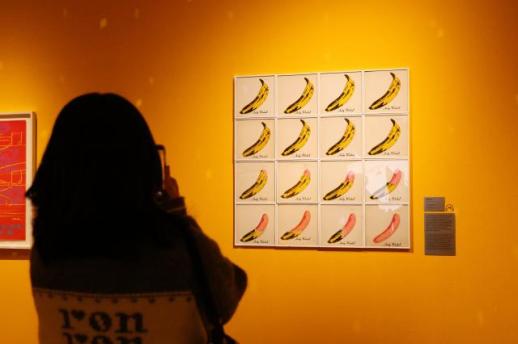 Exhibition in Daejeon to showcase over 300 works by Andy Warhol SEOUL, March 17 (AJP) - A special exhibition featuring American pop artist Andy Warhol's works is set to open to the general public in Daejeon on Wednesday. The months-long exhibition, "Andy Warhol: Selling Art," runs until June 21 at the Daejeon Museum of Art, featuring about 300 works including several pieces being unveiled for the first time in the world. The collection was made available by art historian and curator Paul Maréchal, who spent 30 years tirelessly gathering Warhol's artworks, ranging from early illustrations and paintings to album covers and more. 2026-03-17 16:53:32
 -
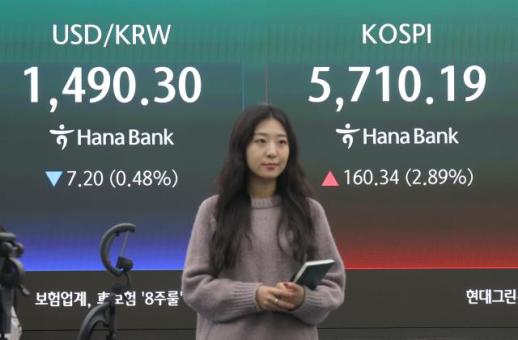 Korean legislative finally moves on FX support as won levels breach crisis levels SEOUL, Mar. 17 (AJP) - South Korea’s National Assembly is scrambling to fast-track a package of exchange-rate support bills after sitting on them for months as the won comes under renewed pressure from the widening Gulf war. The urgency reflects not just broad dollar strength but a sharper loss of confidence in the won itself. According to the Financial Supervisory Service, the won weakened 4.12 percent against the dollar as of Monday from end-February, before the war erupted, with the rate rising from 1,438.4 won to 1,497.6 won. That compares with a 2.82 percent rise in the Dollar Index over the same period and a 2.08 percent gain in the dollar against the Japanese yen — even as the two neighboring economies share similar exposure to disruptions in the Strait of Hormuz. China’s yuan, also dependent on Gulf shipping routes, moved only 0.55 percent. The scale of the move has reinforced market concerns that Korea is being punished more severely than its peers, reflecting heavier foreign outflows from local equities that had outperformed prior to the war. The won-dollar exchange rate averaged 1,476.9 won this month, the highest monthly level since the 1998 Asian financial crisis, while last week’s average climbed to 1,480.7 won. The currency briefly breached the 1,500 won threshold in daytime trading on Monday for the first time since the global financial crisis, triggering speculation authorities may have given up 1,500-won defense. "We are not 100 percent sure about intervention. But the dollar has retreated. It can be attributed to the easing in bond yields," said one trader on Tuesday. The dollar eased to 1,493.40 won as of 4:00 p.m. in Seoul. Volatility still has been topping peers. The won’s average daily swing widened to 14.24 won, the largest since the 2010 euro-area sovereign debt crisis, while intraday moves stretched to 24.82 won — the biggest since Korea introduced overnight foreign-exchange trading. Foreign investors are reacting more sensitively to Korea’s exposure to Gulf energy risks and surging oil prices. Brent crude jumped 42.3 percent from end-February to March 16, to $103.14 a barrel, while WTI surged 47.28 percent to $98.71. Compared with end-2025, Brent is up 69.5 percent and WTI 71.91 percent. Those terms-of-trade pressures are now feeding directly into Korean asset markets. Foreign investors sold a net 16.5 trillion won worth of Korean stocks in March through March 16, including 16.1 trillion won from the KOSPI alone, according to the same FSS data. Korea’s five-year sovereign CDS premium also widened to 28.9 basis points from 24.6 basis points at end-February. Only after the exchange rate broke above 1,500 won did the legislature move to advance the so-called “Triple Exchange Rate Stability Acts.” On Monday, the Tax Subcommittee of the Strategy and Finance Committee approved the package, which includes amendments to the Restriction of Special Taxation Act and the Special Tax for Rural Development Act. Having cleared the subcommittee, the bills are expected to go before the full committee on Tuesday and then to a plenary session on March 19. The measures were first proposed on Jan. 3 by Rep. Jung Tae-ho of the Democratic Party, after the finance ministry outlined the plan in December when the won slid toward crisis-era levels. They were further stalled by political wrangling over tax fairness and broader legislative disputes. The centerpiece of the package is an amendment to the Restriction of Special Taxation Act that would grant a 50 to 100 percent deduction on capital gains taxes for investments in domestic stocks made through Return to Korea Investment Accounts, or RIAs. The aim is to encourage capital repatriation and stem the outflow of won-denominated funds. The package also includes income deductions for investments in currency-hedging products and raises the exclusion rate for dividends received from overseas subsidiaries to as much as 100 percent. Lawmakers say the measures are designed to attract foreign currency holdings back onshore while promoting financial products that cushion exchange-rate volatility. Given the won’s weakening trend, economists remain skeptical about the effectiveness of the incentives. “Capital outflows from the National Pension Service and individual overseas investors exceeded $140 billion last year, surpassing the current account surplus of around $100 billion,” said Lee Seung-ho, a senior research fellow at the Korea Capital Market Institute. While acknowledging the need to attract capital back into domestic markets, he questioned whether the tax breaks would be sufficient to alter investor behavior. He noted that overseas equity investments already benefit from an annual tax exemption of up to 2.5 million won and that many retail investors operate on a relatively small scale, limiting the likely policy impact. Other KCMI researchers, including Kim Min-ki and Kang So-hyun, argue that the shift toward foreign assets reflects deeper fundamentals: stronger returns in global technology stocks, lower barriers to overseas investing and persistent expectations of further won depreciation. Until those conditions change, they say, the outflow trend is unlikely to reverse. Some in the market also warn that the legislation could send an unintended signal. “Currency-related tax support can itself be read by the market as a signal that the authorities expect the won to remain weak,” a foreign-exchange market source said on condition of anonymity. “If it is seen as defensive rather than confidence-building, it could have the opposite effect.” 2026-03-17 16:44:15
 -
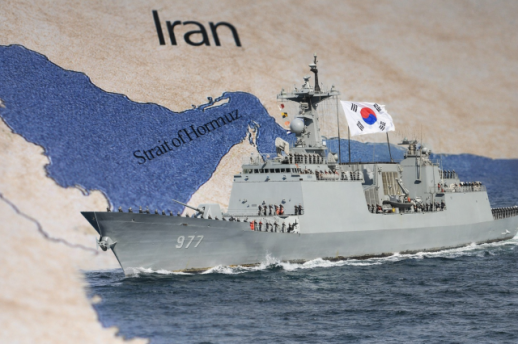 GULF CRISIS: Korean naval ability to answer Trump's Hormuz call in doubt SEOUL, March 17 (AJP) - U.S. President Donald Trump made pretty much clear that Washington expects South Korea to join escort operations in the Strait of Hormuz, but defense experts doubt the country's navy capabilities can meet the call. Iran’s Islamic Revolutionary Guard Corps has attacked at least 10 vessels, including tankers and tugboats, using missiles and surface drones, and threats to strike any attempting to pass the waterway off Iran coastline. A strategic chokepoint between Iran to the north and Oman to the south, the Strait of Hormuz is just 30 kilometers at its narrowest point. Much of the cargo that passes through it is bound for South Korea, Japan, China and India, which together account for roughly 70 percent of global output. With Tehran effectively treating the closure of the strait as a fait accompli, oil-producing nations and the global shipping industry have begun suspending operations or seeking alternative routes. The main threat to tankers and escorting warships comes from land-based anti-ship missiles and suicide drones, experts say. While much of Iran’s conventional naval and air assets, along with some missile bases, have reportedly been put out of action by successive U.S. and Israeli strikes, there is a broad consensus that not all launch sites have been eliminated. At sea, Iran’s forces are limited to small boats and unmanned surface vessels. Even if these assets attempt to lay mines or carry out surprise attacks, modern naval forces are capable of detecting and neutralizing such threats, experts say. But without neutralizing Iran’s dispersed coastal missile batteries and long-range drone platforms, simply reinforcing naval escort operations would leave U.S. and allied ships operating for weeks or even months under persistent aerial threats. “As long as land-based threats remain, maritime escort operations are structurally limited to a temporary fix, and inherently dangerous,” one analyst said. A South Korean naval officer, speaking on terms of anonymity, explained that fully ensuring the safety of tankers would require deployment of ground forces to secure Iranian-held islands near the strait and installation of air defense systems to block missile and drone launches. It would also require completely neutralizing land-based launch sites. “Even with such measures, missiles launched from deeper inland would remain a threat, meaning multiple brigades, or even division-level ground forces, along with layered air defense systems would be necessary,” he said. “Without addressing land-based threats, sending more escort ships is less about managing risk and more about dispersing it,” he said. Should Seoul respond to Trump’s request, the most readily available option is the Cheonghae Unit, currently operating in the Gulf of Aden on anti-piracy and escort missions. While the unit’s 4,000-ton-class destroyers are equipped with close-in weapon systems, surface-to-air missiles, and torpedoes, experts agree that they are not designed for the kind of high-intensity threat environment currently seen in the Strait of Hormuz. “In reality, the Cheonghae Unit can engage only a limited number of targets at once,” said Jeong Kyung-woon, a researcher at the Korea Association of Military Studies. “Given radar and system constraints, the unit lacks the means to effectively counter multiple incoming drones or missiles.” However, this picture might change if South Korea operates under U.S. command and control, being integrated into American intelligence networks and missile defense systems. Paik Seung-hoon, a researcher at the Middle East Institute of Hankuk University of Foreign Studies, said that in such a case, participation with just two or three ships could be feasible as part of a combined task force. “However, there’s a fundamental issue,” Paik said. “If South Korea operates under U.S. wartime operational control, it would be seen as endorsing and participating in the conflict against Iran.” “If, on the other hand, Seoul wants to carry out an independent mission, as it did in 2020, when it retained wartime operational control and focused on protecting Korean merchant vessels, it would need to deploy a separate fleet of around 10 ships, including Aegis destroyers, submarines, and mine countermeasure vessels,” he said. Sources say that, within military circles, there is a growing consensus that if South Korea is to deploy naval assets to the Strait of Hormuz, it would need to form a new task group centered on Aegis destroyers. Such a force would require not only close-in defense systems but also advanced air and missile defense capabilities to intercept Iranian threats, along with logistics and maintenance support for sustained operations far from home waters. Operational difficulties extend to sustainment. The naval officer said it takes three to four weeks for a 7,000-ton-class Aegis destroyer to reach the Strait of Hormuz from South Korea. Once deployed, ships typically require resupply every 15 days for fuel, food, and ammunition. “In near-war conditions, returning to port for resupply is virtually impossible,” he noted. “A fully self-sustaining expeditionary task group, with large supply ships enabling continuous operations at sea, would be necessary.” Caught between alliance pressure and operational limitations, Seoul faces a difficult dilemma: given the close defense relations, it cannot easily ignore Washington’s request, yet it also cannot readily commit to a mission that may exceed its capabilities. “The U.S. ultimately wants to shift some of the burden, not just financially, but in terms of responsibility,” Paik said. “We need to watch how the situation unfolds, but if deployment remains a possibility, it would be better to prepare accordingly rather than avoid it outright.” “At the same time, South Korea must clearly define the nature of its mission, including command structure and assigned roles, before making any decision,” he said. 2026-03-17 16:42:52
 -
 BTS Live D-4 : BTS comeback turns Seoul into citywide festival SEOUL, March 17 (AJP) - Seoul is transforming into a festive atmosphere for the BTS comeback. Various commemorative events including a drone show at Ttukseom Hangang Park, media facades, and music light shows will take place. BTS announced detailed programs for 'BTS THE CITY: ARIRANG SEOUL' (hereafter THE CITY SEOUL) through Weverse on March 16. THE CITY SEOUL is a citywide project that will unfold across the city from March 20 to April 19. On March 20, when BTS's fifth full-length album ARIRANG is released, media facades will begin at 7 p.m. at Sungnyemun Gate and N Seoul Tower. A drone light show will take place at Ttukseom Hangang Park for approximately 15 minutes starting at 8:30 p.m. A music light show will be held at Banpo Bridge Moonlight Rainbow Fountain on March 21-22. 2026-03-17 16:27:57
 -
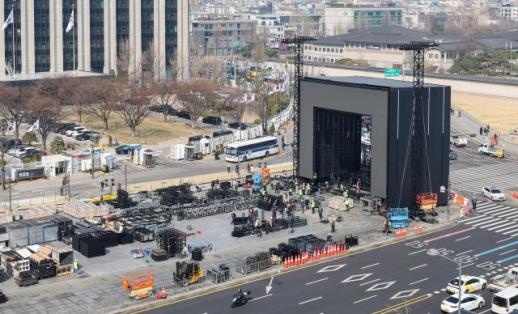 BTS Live D-4: Gwanghwamun transforming into a mega open-air stage SEOUL, March 17 (AJP) -Seoul is turning its historic heart into a carefully controlled arena as nearly 260,000 fans are expected to gather for BTS’s return concert at Gwanghwamun on March 21. At the center of the plan is a transformation of open city streets into a “stadium-style” venue. Thirty-one official entry gates—stretching from the west (W1–W15) to the east (E1–E16)—will funnel crowds into designated zones, preventing dangerous overcrowding in one of the capital’s busiest districts. Security begins early. From 7 a.m., every gate will be equipped with metal detectors to screen bags and block hazardous items. Even those who enter earlier will face additional handheld scanning—an uncommon level of scrutiny for a public concert, reflecting heightened global security concerns. Beyond the square, the city itself bends to the event. Major arteries including Sejong-daero will be shut for up to 33 hours, with nearby roads closing in phases throughout the day. Police will deploy 6,500 personnel across crowd control, traffic management and counterterrorism units. The result is a rare moment when a pop concert reshapes urban space—turning Gwanghwamun from a civic landmark into a tightly managed live venue, built not with walls, but with people, planning and precision. 2026-03-17 16:25:55