

Journalist

Imran Khalid
-
 KB Kookmin Bank Rebrands Family Office Service, Targets 2 Trillion Won in Assets KB Kookmin Bank said on the 16th it has rebranded its “KB Wise Family Office” service as “KB The First Family Office” to strengthen comprehensive, long-term wealth management for client families. To support the expanded offering, the bank created a dedicated family office unit, the “Solution Team (F/O Solution Team),” bringing together specialists in investment strategy, tax, law, accounting and real estate. The bank said it will provide on-site, end-to-end services including restructuring family asset portfolios, corporate and governance consulting, tax strategies for business succession, inheritance and gifts, and advice on domestic and overseas investments, including alternative assets. It also plans to broaden nonfinancial services by holding regular family-focused seminars and running a “successor development education program” for next-generation leaders. The bank said the program will cover core principles of wealth management, business management, key knowledge in finance, real estate and taxation, and support for building professional networks. KB Kookmin Bank said it aims to increase family office assets under management to 2 trillion won within the year, from about 1.1 trillion won as of the end of January. A bank official said the bank will offer “comprehensive solutions” spanning asset management and succession, adding that it aims to establish itself as a leading family office by strengthening customer-focused innovation and expertise built on long-term trust. 2026-03-16 16:30:00
 -
 GULF CRISIS: Trump's coalition push puts Korea's Cheonghae Unit in spotlight SEOUL, March 16 (AJP) - U.S. President Donald Trump’s call for other countries to help escort commercial shipping through the Strait of Hormuz has drawn cautious and broadly noncommittal responses from allies, with South Korea’s Cheonghae Unit emerging as the most likely naval asset should Seoul decide to participate. South Korea and other countries asked by Washington to help protect merchant vessels from Iranian attacks in the strategic waterway are quietly weighing the request, while officials in Seoul stress that no formal decision has been made. The Strait of Hormuz is one of the world’s most critical maritime chokepoints, carrying roughly 20 percent of global crude oil shipments. At its narrowest point, the channel is about 39 kilometers wide. As the conflict between the United States and Iran has intensified, Iran has begun laying naval mines in the waterway after U.S. strikes degraded much of its conventional military capability, effectively halting civilian shipping. Trump has argued that countries heavily dependent on Middle Eastern energy should take responsibility for securing the route. “We have already destroyed 100 percent of Iran’s military capability, but it’s easy for them to send a drone or two, drop a mine, or deliver a close-range missile somewhere along this waterway,” Trump said, emphasizing the need for naval escort operations. He claimed the United States itself does not rely heavily on the route for energy supplies and urged countries that do to help protect it, with his tone shifting within a day from “hopefully” urging allies to participate to saying “I’m demanding” that they join and adding “we will remember” if they do. Governments identified as potential members of an escort coalition are weighing their responses as pressure from Washington grows more direct. For South Korea, the naval unit most suited to such a role is the Cheonghae Unit, an anti-piracy force deployed in the Gulf of Aden near Somalia. Formed in March 2009, the unit is the South Korean Navy’s first permanently deployed overseas combat unit. Its name comes from Cheonghae-jin, the maritime base established by the Unified Silla naval commander Jang Bogo. Under United Nations Security Council resolutions addressing piracy, the unit’s mission has been to escort Korean and foreign vessels in waters off Somalia and protect Korean nationals in the region. Since its establishment, the Cheonghae Unit has maintained a continuous presence in the Gulf of Aden on a rotational basis. Each deployment typically includes a 4,400-ton destroyer, a maritime operations helicopter and a 30-member UDT/SEAL boarding team, with roughly 300 personnel in total. The destroyer is equipped with anti-ship missiles, a 127-millimeter main gun, surface-to-air missiles, anti-submarine torpedoes and a close-in weapon system. Through operations such as the rescue of hijacked vessels in the “Dawn of the Gulf of Aden” mission and the escort of hundreds of merchant ships, the unit has become a symbol of the Korean Navy’s blue-water operations. The Cheonghae Unit operates under the direct control of South Korea’s Joint Chiefs of Staff, allowing the navy to maintain a permanent operational presence in distant waters. Its deployment is based on an overseas troop dispatch mandate that requires annual approval from the National Assembly. The mandate designates the Gulf of Aden off Somalia as the primary area of operations and defines the mission as counter-piracy, escort duties and protection of Korean nationals. However, it also includes a clause allowing operations in “other waters designated for the protection of our nationals in emergency situations.” In 2020, when tensions between the United States and Iran escalated after Washington killed Iranian commander Qassem Soleimani, the South Korean government used this clause to expand the Cheonghae Unit’s operational area to waters near the Strait of Hormuz without separate parliamentary approval. At the time, Seoul avoided formally joining the U.S.-led International Maritime Security Construct and instead carried out an independent mission focused on protecting Korean vessels. Defense experts say any redeployment to Hormuz now would likely require renewed review by the National Assembly because the situation has evolved into an active armed conflict. Six years ago the unit operated largely on its own in a limited mission. Any new deployment would take place during an ongoing war and potentially as part of a multinational naval operation. Military analysts also note that the operational environment in the Strait of Hormuz differs significantly from the anti-piracy missions the Cheonghae Unit typically performs. “The biggest threats to tankers in the Strait of Hormuz are Iran’s land-based anti-ship missiles and drones,” said Jeong Kyung-woon, a research fellow at the Korea Association of Military Studies. “If those land-based threats are not neutralized, the risks will remain even if naval forces escort tankers,” he said. Iran’s remaining naval capabilities include small attack craft and mine-laying operations, while missiles and drones launched from coastal areas and nearby islands pose additional threats. International reaction to Trump’s proposal so far has been negative. China’s state-run Global Times criticized the idea, saying it resembled “someone who set the fire now asking the whole world to help put it out.” Japan has also signaled caution. Prime Minister Sanae Takaichi said on Monday that Tokyo is considering possible responses within the limits of domestic law. Its defense minister said the government wasn't considering the option of sending its self defense forces to the Middle East. Australia's transport minister also made a similar remark. The South Korean Navy maintained a reserved stance. “The U.S. president has made certain remarks, but those need to be translated into concrete requests before we can offer any real opinion,” a Navy official in Seoul said. “We need to see exactly what is being asked before discussing whether it is feasible.” 2026-03-16 16:21:39
 -
 BTS Live D-5 : Seoul turns into citywide festival as BTS makes comeback SEOUL, March 16 (AJP) - Seoul is poised to burst into light and sound this weekend as a quarter million fans descend on the Korean capital for a comeback performance by the mega-group BTS. The concert in Gwanghwamun Square will be the first in four years, following the completion of mandatory military service by the group members. The performance will follow the release Friday of ARIRANG, BTS’ fifth studio album. All 22,000 concert seats sold out rapidly, underscoring global demand for the return of the world’s most influential K-pop act. Seoul is making the best of the global attention, with a city-wide “BTS THE CITY ARIRANG SEOUL” campaign running from Friday thru April 19, and featuring fan events, cultural programs, and public installations across major landmarks throughout the capital. The city’s project effectively expands the concert from the stage to all of Seoul itself, turning it into spaces where visitors can encounter the music and themes of the new album. Foreign fans have already begun arriving in the Myeongdong and Hongdae areas of the city ahead of the concert week, filling K-pop merchandise stores and popular fan gathering spots. Landmarks lighting up across Seoul Many of Seoul’s most recognizable landmarks will be lit up in celebration of the BTS comeback. Displays will appear Friday and Saturday at 15 locations across the city, including the Sebitseom floating islands on the Han River. A 500-meter stretch of the walkway along the downtown Cheonggyecheon stream between the Ogansugyo and Beodeuldari bridges will turn into an “Arirang Light Walk” nighttime promenade featuring lighting installations and visual elements inspired by BTS and the new album. With the installation running from April 6 through April 19, visitors will be able to experience themed displays as they take a springtime stroll along one of Seoul’s most popular urban public spaces. Meanwhile, the Banpo Bridge Moonlight Rainbow Fountain, one of the capital’s best-known riverside light shows, will stage special performances set to BTS music Saturday and Sunday, pairing the group’s songs with the nighttime skyline of the Han River. Across the city, ten large media facade screens will display welcome messages for visiting fans, while banners will line Sejong-daero, the main boulevard leading to Gwanghwamun Square. To assist international visitors, multilingual welcome messages will also appear at major tourist sites and traditional markets. Fan events and interactive experiences The citywide project also introduces several fan participation programs. At Yeouido Hangang Park, a riverside park along the Han River, there will be a temporary venue titled the “Love Song Lounge” Friday and Saturday. The space will host listening sessions, busking performances and fan activities linked to the album’s campaign theme, “What Is Your Love Song?” Fans can also take part in a stamp rally connecting multiple BTS-themed locations across Seoul. Meanwhile, Dongdaemun Design Plaza, the landmark cultural complex designed by architect Zaha Hadid, will host additional programs including a music light show and live performances from April 6 to April 12. Events along the Han River Celebrations will extend beyond central Seoul to the Han River and surrounding districts. The 2026 Seoul Spring Festival will run from April 10 to May 5, while the opening performance of the Han River Drone Light Show is scheduled for April 10. Visitors can also explore the river with a one-day unlimited Hangang bus pass offered on Friday and Saturday, providing views of landmarks such as Sebitseom and N Seoul Tower from the water. Traditional and contemporary performances will also take place at river terminals in Mangwon, Yeouido and Apgujeong under the program “Arirang on Seoul Stage.” 2026-03-16 16:08:19
 -
 Samsung Bioepis Invests 20 Billion Won in G2GBio to Develop Obesity Drug; Celltrion Leads Japan Shares Samsung Bioepis enters obesity drug development, invests 20 billion won in G2GBio Samsung Bioepis has moved into obesity drug development with a 20 billion won investment in G2GBio. Samsung Bioepis and EpisNex Lab, both subsidiaries of Samsung Epis Holdings, said they signed a joint research and licensing agreement with G2GBio on March 16 to develop obesity treatments. The deal aims to develop long-acting obesity drugs and secure platform technology using G2GBio’s microsphere-based drug-delivery technology. Samsung Bioepis will receive exclusive development rights to two candidates, including a long-acting semaglutide-based obesity treatment, and will pay an upfront fee and development-stage milestones. EpisNex Lab will conduct joint research with G2GBio to build a long-acting drug-delivery platform. The companies also agreed on a right of first negotiation to develop three additional new drug candidates. Financial terms were not disclosed. Samsung Epis Holdings also said it will invest in 20 billion won worth of convertible bonds issued by G2GBio, establishing cooperation that includes both technology collaboration and financial investment. Celltrion keeps No. 1 market share in Japan for cancer drugs including Vegzelma Celltrion said its oncology products are leading the market in Japan, a key pharmaceutical market in Asia, backed by strong prescribing results. IQVIA data show that as of December last year, Vegzelma (bevacizumab), used to treat metastatic colorectal cancer and breast cancer, held a 58% share in Japan. Celltrion attributed the momentum to earlier performance by Herzuma (trastuzumab), a breast and gastric cancer treatment. As of the same period, Herzuma held a 76% share in Japan. Herzuma was first launched in Japan in 2019, and prescriptions have steadily increased since it won approval in August that year for a three-week dosing regimen that extended the dosing interval. Celltrion’s autoimmune disease treatments have also gained ground in Japan. Remsima (infliximab) and Yuflyma (adalimumab) posted shares of 43% and 17%, respectively, the highest prescription volumes among biosimilars, the company said. Celltrion said it expects the performance in Japan to continue. After launching Stekima (ustekinumab) in August last year, it plans to add another autoimmune treatment, Aptozma (tocilizumab), in Japan in the second quarter of this year. Hanmi Science launches balanced nutrition drink for growing children Hanmi Science, the holding company of Hanmi Group, said March 16 it has launched a children’s balanced nutrition drink, TenTen Kids Nutrition, along with its in-house character, Tendungi. The product is designed to balance the three major nutrients needed for children’s growth — carbohydrates, protein and fat — and contains 19 vitamins and minerals, the company said. It also includes EPA and DHA, described as brain components, at about 10% of the daily recommended intake to make daily nutrition easier to consume in a busy routine. Hanmi Science said the drink is formulated with 2 grams of sugar and includes 7 grams of complete protein, making it suitable as a snack or supplement. It uses cocoa powder for a chocolate flavor aimed at improving children’s acceptance for daily use. The company said TenTen Kids Nutrition contains 10 billion postbiotic cells and has received a quality certification for children’s preferred foods. Hanmi Science said it manages everything from ingredient selection to manufacturing under strict quality standards. Dongkook Pharmaceutical wraps dkma symposium, shares total aesthetic solutions Dongkook Pharmaceutical said it held its dkma symposium on March 14 at the Fairmont Ambassador Seoul in Yeouido, Seoul. The symposium was organized to share procedure strategies and combination-treatment know-how that can be used in clinical settings, based on key products from the company’s medical aesthetics brand, it said. In the first session, Lee Yong-haeng, director of Wellga Clinic, served as chair. Ahn Seong-hwan, director of Gangnam Yonsei Line Clinic, presented a strategy using the DCA fat-dissolving injection Millifit to improve submental fat for a smoother facial contour. Kim Geon-woo, director of Cellinic Clinic, shared clinical experience with Madecaiel, discussing synergy between EBD procedures and a skin booster containing Centella asiatica extract and chitosan. In the second session, Yoo Jae-uk, director of Baromi Clinic, served as chair. Lee Dong-jin, director of BLS Clinic, discussed improving facial harmony using HA fillers and botulinum toxin, explaining contour correction through combined procedures using Bellast and Bienox. Jo Chang-hwan, director of Dongan Center Clinic, presented clinical cases of the new product Inhillo under the theme “new possibilities for HA skin boosters.” A Dongkook Pharmaceutical MA marketing official said the company plans to continue strengthening the dkma brand’s expertise and competitiveness through academic exchanges with medical professionals. “Hope it helps children’s treatment” — QWER donates 30 million won to Asan Medical Center Children’s Hospital Asan Medical Center said March 16 that QWER donated 30 million won to support pediatric patients. The donation came from proceeds of a flea market the group organized with fans last month. The effort began after QWER was contacted by a child fan hospitalized at the center’s Children’s Hospital, the hospital said. After learning the child’s story, QWER visited the hospital to offer encouragement and spent time with pediatric cancer patients during an art activity. QWER said, “We are grateful that the flea market proceeds prepared with fans can help, even in a small way, with children’s treatment,” adding, “We sincerely hope the children overcome their illness and achieve the dreams they want.” The hospital said it plans to use the funds to improve clinical facilities and the medical environment for pediatric and adolescent patients, and to support home medical care for critically ill children and psychological healing programs.* This article has been translated by AI. 2026-03-16 15:57:00
 -
 COFIX for New Loans Rises to 2.82% in February, Lifting Variable-Rate Mortgages The COFIX, a key benchmark for banks’ variable-rate mortgage loans, turned higher again after a one-month decline. The Korea Federation of Banks said Sunday that the new-loan COFIX for February came to 2.82%, up 0.05 percentage points from the previous month. The index had climbed for four straight months, from 2.52% in September last year to 2.89% in December, then fell in January by 0.12 percentage points — its first drop in five months — before rising again. Over the same period, the COFIX based on outstanding balances held steady at 2.85%, while the new outstanding-balance COFIX slipped 0.01 percentage points to 2.47%. COFIX is the weighted average interest rate on funds raised by eight South Korean banks. It moves up or down as rates on major funding products such as deposits and bank bonds change. The federation said borrowers considering COFIX-linked loans should fully understand how market rates move and choose loan products carefully. Commercial banks are expected to begin reflecting the newly released COFIX in variable-rate mortgages for new loans as early as March 17. At KB Kookmin Bank, the six-month variable mortgage rate tied to the new-loan COFIX will rise 0.05 percentage points, to 4.15% to 5.55% from 4.1% to 5.5%. Under the same benchmark, the rate on jeonse loans backed by a Korea Housing Finance Corp. guarantee will also increase to 3.85% to 5.25% from 3.8% to 5.2%. Woori Bank’s six-month variable mortgage rate tied to the new-loan COFIX will rise to 4.37% to 5.57% from 4.32% to 5.52%.* This article has been translated by AI. 2026-03-16 15:45:00
 -
 Korea Arts and Culture Education Agency Opens Applications for 2026 Online ArtE Academy The Ministry of Culture, Sports and Tourism and the Korea Arts and Culture Education Service said on 16 they have begun recruiting participants for the “2026 Online ArtE Academy,” a program designed to train arts and culture education professionals. Courses for arts educators include legally required training for school arts instructors and arts-and-culture education organizations, along with modules on domestic and international trends, case studies and how to plan education programs. The curriculum is intended to strengthen both fieldwork skills and planning capacity. Training for teachers focuses on examples of arts-and-culture education programs and planning methods that can be used in schools by grade level and art genre. It will be carried out in cooperation with the Ministry of Education’s General Training Institute and the National Institute for Central Education Training. Courses for administrative staff will center on policy trends in arts-and-culture education and core administrative competencies, aiming to improve understanding needed to run projects, support the field and respond in practice. Reflecting changes in the arts environment, the Online ArtE Academy will newly release 16 training courses: four on overseas cases, four collaborative courses with prominent artists and eight practical courses for professionals in after-school care programs. The overseas-case series will offer four video courses covering sound-based arts education and examples of using artificial intelligence, drawing on institutions such as France’s IRCAM and the Netherlands’ Muziekgebouw. For emerging arts educators, the academy will also introduce four “Artist Code” courses sharing the education philosophy and perspectives of well-known artists including Choo Soo, Choi Jeong-hwa, Eom Jeong-soon and choreographer Kim Seong-hoon. All courses are free. Starting in April, the academy will roll out topic-based recommended-course content and run participation programs such as course-registration events. Details are available on the Online ArtE Academy website and the agency’s official social media channels.* This article has been translated by AI. 2026-03-16 15:24:29
 -
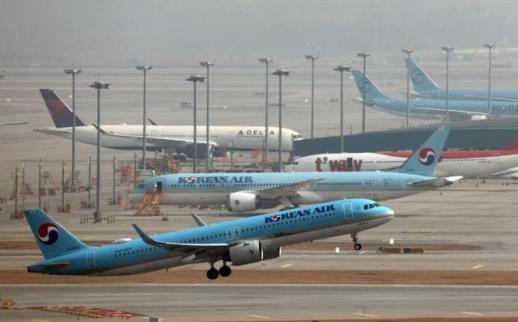 Airlines set to hike fuel surcharges amid rising oil prices SEOUL, March 16 (AJP) - Airlines are raising their fuel surcharges due to soaring oil prices amid the escalating conflict in the Middle East. Fuel surcharges are applied on both international and domestic flight routes based on changes in the average price of fuel traded on Singapore's spot market. According to aviation industry data released on Monday, the average price of Singapore jet fuel, known as MOPS, is projected to reach at least 300 cents per gallon for the period from Feb. 16 to March 15, up from 204 cents the previous month. It falls into level 18 on the 33-tier fuel surcharge scale, a jump of 12 levels from the current level of 6, the biggest jump since this scale was first implemented in 2016 and also the highest level since October 2022, when it reached level 17 at the height of Russia's war in Ukraine. Fuel surcharges imposed by airlines are expected to soar by more than threefold. For one-way tickets on Asiana Airlines, surcharges that ranged from 14,600 (US$9.93) to 78,600 Korean won this month, depending on flight routes, are set to jump to between 43,900 and 251,900 won next month. Flagship carrier Korean Air is expected to adjust its fuel surcharges for April next week, with a sharp increase likely unavoidable. 2026-03-16 15:02:22
 -
 BTS to Stage Drone Show, Citywide Events in Seoul for 'Arirang' Album Release BTS will turn Seoul into a citywide celebration around the release of its new album, ‘Arirang,’ with media facade displays, a drone light show and hands-on fan programs planned across major sites. The group on Monday posted details on the global fan platform Weverse for ‘BTS THE CITY ARIRANG SEOUL.’ The city project, branded ‘THE CITY SEOUL,’ will run from March 20 to April 19 across central Seoul, aiming to offer experiences available only during the limited period and at specific locations. On March 20, the album’s release day, large-scale events are scheduled back-to-back. Media facade shows will run from 7 p.m. at sites including Sungnyemun and N Seoul Tower. A drone light show is set for the sky over Ttukseom Hangang Park from 8:30 p.m. for about 15 minutes. The area around Gwanghwamun Square, where ‘BTS THE COMEBACK LIVE|ARIRANG’ will be held, will also be filled with related programming. From 7 p.m. March 20 to midnight March 21, comeback content will be shown on large outdoor screens near the square. Music-themed light shows are also planned at Dongdaemun Design Plaza, or DDP, and at Banpo Bridge’s Moonlight Rainbow Fountain. The DDP program will run March 20 to April 12, and the Banpo Bridge fountain production will continue March 21-22. Interactive events include a ‘stamp rally’ mission at key hubs such as Yeouido, DDP and Shinsegae Square, where visitors collect stamps by checking in at locations around the city. From March 20-22, a ‘Love Song Lounge’ will operate at the event plaza of Yeouido Hangang Park, tied to the album’s global campaign phrase, “WHAT IS YOUR LOVE SONG?” Organizers said the space will feature music-based activities, busking and photo zones. From April 6-12, DDP Exhibition Hall 1 will be set up as ‘DDP ARMY Madang.’ From April 6-19, a ‘Love Quarter’ program will run around Cheonggyecheon and the Yongsan Station area, using light and video to project the album’s message onto settings such as stone walls, stairs and street trees. Organizers also plan tie-ins with mobility, lodging, finance and food-and-beverage partners to improve visitor convenience and extend the project into everyday settings. They said collaborations with new business areas will broaden the experience compared with earlier ‘THE CITY’ projects. Detailed schedules and program information are available on BTS’ Weverse channel and the official website. Some programs will require advance reservations. ‘BTS THE CITY ARIRANG’ is to roll out sequentially in major cities worldwide, starting in Seoul.* This article has been translated by AI. 2026-03-16 14:57:15
 -
 South Korea Launches ‘Dream Studio’ Visual Arts Program, Seeks 20 Regional Hubs The Ministry of Culture, Sports and Tourism and the Korea Arts & Culture Education Service said March 16 they will begin full-scale operations of “Dream Studio” as a regular program. To do so, they will accept applications from March 16 to April 15 to select 20 regional hub institutions to run the program nationwide. Dream Studio is a new project under the “Dream Arts Group,” introduced with a focus on visual arts, following the existing Dream Orchestra, dance troupe and theater troupe programs. After a yearlong pilot, it will shift to a regular program this year and expand nationwide. The program is designed to help children grow as creators who interpret and express the world. It will be based in artists’ studios or professional workspaces and support visual arts education across media including painting, sculpture, video and artificial intelligence. Eligible applicants include public institutions and incorporated organizations such as local cultural foundations and cultural facilities that can operate the program over the mid to long term. Applicants must secure a dedicated visual arts space, such as a workshop or studio, though operations may also be linked to private artists’ studios. The 20 selected hubs will receive continuous national funding of 100 million won through the third year, and up to 50 million won in years four and five, to encourage stable local settlement. From the sixth year, the plan calls for systematic growth support so local governments can operate the program independently. Separately, the ministry and the agency will run a pilot “Dream Arts Group Plus” program this year to offer broader arts experiences beyond single-discipline instruction. Centered on the Dream Orchestra, it will add new music fields such as Korean traditional music and choir, and expand participation from children and teens to include infants, toddlers and families, aiming to build a more comprehensive arts education environment for future generations. Applications for 10 operating institutions will be accepted from March 26 to April 23 from public institutions and incorporated organizations nationwide that run children’s and youth orchestras, including Dream Orchestra hubs. Selected institutions will receive about 100 million won each to operate new convergence programs combined with orchestras. More details will be posted March 26 on the agency’s website. Applications for Dream Studio will be submitted online via e-Nara Help Desk starting March 16. An online briefing for interested institutions and organizations will be held at 2 p.m. March 25. Details are available on the agency’s website. * This article has been translated by AI. 2026-03-16 14:42:17
 -
 NH NongHyup Financial to Open Marine and Aviation Industry Support Center NH NongHyup Financial Group said on the 16th it will establish a “NongHyup Financial Marine and Aviation Industry Comprehensive Support Center” to strengthen support for the marine and aviation industries in the country’s southeastern region. The move is part of the government’s “5 hubs, 3 special zones” balanced-growth policy. The center is scheduled to open in April in Changwon, South Gyeongsang Province, and is expected to serve as key infrastructure to help boost per-capita gross regional domestic product in the southeastern region. NH NongHyup Financial said it will bring together its affiliates — including banking, nonlife insurance, securities, capital and venture capital — to provide integrated financial services. Under the plan, the bank will handle lending and foreign-exchange services; the nonlife insurer will provide ship and cargo insurance; the securities unit will support corporate bond issuance, IPO underwriting and corporate finance; the capital unit will offer lending and industrial equipment leasing; and the venture capital arm will make equity investments in innovation-driven growth companies. The group plans to invest 5 trillion won over the next five years. NH NongHyup Financial said it will continue developing financial support models tailored to regional characteristics under the “5 hubs, 3 special zones” framework, drawing on its nationwide network of more than 1,200 offices. Chairman Lee Chan-woo said the new center is a proactive and essential step to advance both the balanced-development policy and the integrated goal of fostering advanced industries through “productive finance.” 2026-03-16 14:21:00