

Journalist

Jack L. Rozdilsky
-
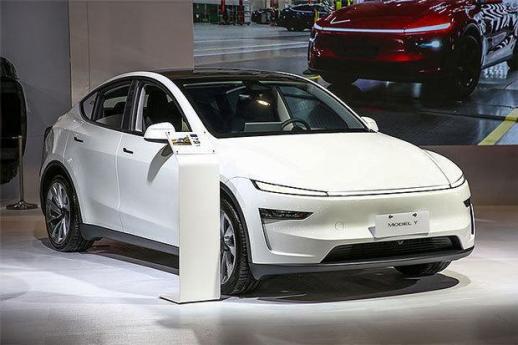 Mercedes-Benz Korea to Launch Direct Online Sales as Imported Brands Expand Fixed-Price Model Imported carmakers are moving away from dealer-led sales toward online direct-to-consumer models. Following Tesla, brands such as Polestar, Honda and Volvo (for new vehicles) have expanded direct sales, and industry No. 2 Mercedes-Benz is set to introduce its own system in the first half of this year. Supporters say cutting distribution margins and price markups could expand the overall market, while critics warn it could weaken dealer-built service networks and hurt consumers. According to industry officials on the 19th, Mercedes-Benz Korea will begin fully implementing its direct-sales model, “Retail of the Future” (RoF), starting in April. Under RoF, the Korean unit distributes vehicles directly and runs pricing closer to a fixed-price system. The key feature is that headquarters will manage vehicle prices, inventory and delivery dates, allowing customers to buy at the same price nationwide. To integrate systems, the company has significantly increased staff based in South Korea, while dealers will focus on showroom operations, after-sales service and specialized repairs. A Mercedes-Benz Korea official said the company communicated steadily with dealers for about two years to address misunderstandings and distrust that could arise early in the rollout, and now believes the groundwork is in place for stable adoption. The official said consumers can expect benefits from removing distribution margins and moving toward fixed pricing, while dealers, as official partners, can concentrate on improving service quality, calling it a win-win. More imported brands have adopted direct sales in recent years. Tesla Korea has used direct sales since entering the market, and Volvo Korea, Polestar Korea, Honda Korea, Toyota Korea, Stellantis Korea and Cadillac Korea have expanded direct-sales programs over the past five years. These brands allow customers to buy vehicles online and check inventory and delivery timing in real time. An industry official said the traditional dealer system often forced consumers to shop around because prices, delivery dates and service benefits varied by importer, but direct sales unify pricing and channels, making management easier for headquarters and purchases more convenient for customers. Dealers, however, say wider adoption of direct sales could limit competition, raise imported-car prices over the long term and lead to negative effects such as fewer service centers. Tesla, which has maintained direct sales, sells about 60,000 vehicles a year in South Korea but has only 16 service locations nationwide. A dealer official said dealers have helped expand the imported-car ecosystem despite low margins of about 3% to 5% of vehicle prices, taking on inventory purchases, financing interest, large showroom openings and building after-sales networks. The official said that as direct sales expand and sales margins shrink, dealers could face disruptions in operating the large service centers they currently run. 2026-02-19 18:04:20
 -
 Hyundai to Supply 20 More Ioniq 5 Robotaxis in U.S., Expanding Physical AI Push Hyundai Motor Group is expanding robotaxi supply in the United States, accelerating its autonomous-driving business built around what it calls “physical AI.” The automaker is supplying vehicles not only to its self-driving unit Motional, which is preparing to commercialize robotaxis this year, but also to Google-owned Waymo as it seeks a bigger role in the U.S. autonomous-driving ecosystem. After drawing attention at CES 2026 in Las Vegas last month with the humanoid robot “Atlas,” Hyundai is now seeing its push into autonomous-driving commercialization take clearer shape, with robotics and self-driving technology at the center of its physical AI strategy. According to industry sources on Feb. 19, Hyundai sold 20 Ioniq 5 robotaxis in the United States in January alone, exceeding its total U.S. robotaxi sales for all of last year, which stood at 16 vehicles. The vehicles are believed to have been supplied to robotaxi operators such as Waymo and Motional. Waymo, widely viewed as a leading player in autonomous driving, is running commercial services in five major U.S. cities and plans to offer services in more than 20 cities, including in Texas and Florida, by the end of this year. Hyundai said in October 2024 that it had signed a strategic partnership with Waymo to integrate Waymo’s sixth-generation fully autonomous technology, the Waymo Driver, into the Hyundai Ioniq 5. At the time, Hyundai President Jose Munoz said, “Hyundai and Waymo share a vision of making the way people move safer, more efficient and more convenient,” adding that “Waymo’s innovative technology is improving road safety in the regions where it operates, and the Ioniq 5 is an ideal vehicle to help expand that vision.” Ioniq 5 vehicles for Waymo are assembled at Hyundai Motor Group Metaplant America, the company’s EV production facility in Georgia. Initial road tests of the Ioniq 5 equipped with Waymo technology are reported to have begun late last year. Hyundai’s autonomous-driving joint venture Motional has also announced plans to commercialize a Level 4 driverless service in Las Vegas within this year, suggesting Ioniq 5 robotaxi supply will continue to rise. Hyundai aims to use Ioniq 5 supply to Waymo and Motional to secure positions in the U.S. autonomous-driving market as both a robotaxi hardware platform supplier and a software player. Kim Dong-young, a senior researcher at the Korea Development Institute, said Hyundai is working to raise its software competitiveness to match its hardware strength. “Collaboration with AI companies is likely to go beyond simply supplying hardware and could be linked to software development as well,” he said. Hyundai Motor Group is also investing in humanoid robots, another pillar of its physical AI strategy. Hyundai plans to invest 50.5 trillion won in AI robotics by 2030 and is building a robot-dedicated factory in the United States with annual capacity of 30,000 units.* This article has been translated by AI. 2026-02-19 18:03:30
 -
 Volvo S90 and XC90 Sales Jump in South Korea After New Models Begin Deliveries Volvo’s flagship S90 sedan and XC90 SUV are posting rising sales in South Korea. Volvo Car Korea said on the 19th that since full-scale deliveries of the new S90 and XC90 began in July last year, sales have increased 57.5% and 95.5%, respectively, compared with the first half of the year. The S90 is the brand’s flagship sedan, combining Volvo technology with the lifestyle the company says it aims to deliver. It measures 5,090 millimeters in length with a 3,060-millimeter wheelbase, which Volvo said provides roomy comfort beyond its class. The interior reflects a “Swedish living room” concept, using a mix of high-quality materials. Rear air suspension, previously limited to the top trim, is now standard on the B5 Ultra trim. Volvo said the system automatically adjusts ride height and damping based on road conditions and load. The plug-in hybrid T8 model was named “Hybrid Sedan of the Year” by the Korea Automobile Writers Association (AWAK), which cited both the electrified powertrain’s completeness and the sedan’s quietness and driving quality. The XC90 is Volvo’s representative SUV, showcasing the company’s technology and product competitiveness. Exterior updates focus on new matrix LED headlights and changes to the front bumper, fenders and hood details. Like the S90, the cabin follows the “Swedish living room” theme, combining recycled polyester textile, wood trim and upgraded ambient lighting. The XC90 is offered with a plug-in hybrid T8 and a mild-hybrid B6 powertrain, which Volvo said deliver efficiency and performance suited to the electrification era. Both vehicles come standard with Volvo’s next-generation user experience system, “Volvo Car UX.”* This article has been translated by AI. 2026-02-19 18:03:00
 -
 Samsung's historic surge lifts KOSPI to record close SEOUL, February 19 (AJP) - South Korea's benchmark KOSPI set a fresh record on Thursday as trading resumed following the Lunar New Year break, led by Samsung Electronics' historic close above 190,000 won. A buy-side sidecar was triggered on the KOSDAQ at 10:41 a.m. amid an aggressive rally in mid- and small-cap shares. The KOSPI jumped 3.1 percent to close at 5,677.3 points, marking a fresh all-time high after hitting an intraday peak of 5,681.7. The strong upward momentum was broad-based across large-cap stocks, with the KOSPI 200 climbing 3.2 percent to 840.2. The rally was symbolically anchored by Samsung Electronics, which settled at 190,000 won, up 5.9 percent, marking the first-ever close above the 190,000 level. The stock briefly touched 190,900 won within the market, setting a new record high. Gains followed overnight strength in U.S. technology shares, with continued enthusiasm surrounding artificial intelligence and semiconductor demand. SK hynix added 1.6 percent to 894,000 won, while semiconductor equipment makers in the KOSDAQ market posted double-digit gains, reflecting renewed expectations for memory supply tightness and high-bandwidth memory pricing momentum. The KOSDAQ soared 4.9 percent to 1,160.7, significantly outperforming the main board. A buy-side sidecar was triggered at 10:40 a.m., signaling an exceptional surge in futures-linked buying. The measure marked heightened volatility on the upside, underscoring strong speculative momentum in growth stocks. Institutional investors led buying on the KOSPI with purchases of 1.64 trillion won, while foreigners were modest sellers of 923.2 billion won. Retail investors offloaded 860.5 billion won, reflecting profit-taking at elevated levels. On the KOSDAQ, both foreign and institutional investors turned strong buyers. Beyond semiconductors, policy-driven themes gained traction. Shares of Hanwha Solutions surged 27.5 percent to 58,500 won, while Samsung SDI advanced 9 percent to 408,000 won, leading gains in the energy equipment and services sector, which rose more than 16 percent. Investor attention also shifted to shipbuilding stocks after the U.S. administration unveiled its "America's Maritime Action Plan," which calls for cooperation with allied shipyards, including those in South Korea, under a so-called bridge strategy. Under the proposal, initial vessel construction would take place in allied countries before production gradually transitions to U.S. facilities. The framework is seen as opening potential early-stage contract opportunities for Korean shipbuilders, given their established infrastructure and technical competitiveness. However, uncertainties remain over how existing regulatory frameworks, such as the Jones Act, would be addressed or circumvented. Despite these unresolved questions, market participants broadly viewed the announcement as structurally supportive for Korea's globally competitive shipbuilding sector. Korean won strengthened to 1,447.3 per dollar, down 5.7 won from the previous session, easing pressure on foreign flows. Precious metals advanced, with gold rising 2.1 percent to $5,009.5 per troy ounce and silver climbing 5.5 percent to $77.6. Across Asia, Japan's Nikkei 225 rose 0.6 percent to 57,467.8, while China's Shanghai Composite fell 1.3 percent to 4,082.1. Wednesday's session underscored a powerful convergence of semiconductor momentum, policy-driven industrial optimism and liquidity-driven small-cap strength, with Samsung's 190,000-won milestone serving as the defining symbol of the rally. 2026-02-19 18:00:34
 -
 When Seoul becomes the screen: From neon signs to BTS's digital stage SEOUL, February 19 (AJP) - On March 21, Gwanghwamun will not need to be transformed into a concert venue. It already is one. Along the 12-lane, 512-meter boulevard leading to the historic gate, walls of massive digital displays are permanently embedded into the cityscape. Office towers, commercial buildings and transit hubs double as screens. When BTS stages its comeback there, livestreamed on Netflix, the infrastructure will simply shift mode — from advertising and public messaging to performance. The streets will not be rebuilt. They will be activated. For several hours, Seoul’s everyday screens will operate as a single, synchronized stage. That ability — to reorganize public space around light and data at a moment’s notice — did not emerge by chance. It is the result of more than a century of technological accumulation, industrial policy and visual experimentation. Korea’s outdoor advertising began modestly. During the Joseon Dynasty, shopkeepers relied on wooden signboards and tavern markers. In 1886, commercial notices appeared in Hanseong Jubo, the country’s first modern newspaper. Advertising was informational, functional and limited in scale. After the Korean War armistice in 1953, hand-painted storefront signs spread across a devastated capital. In a city rebuilding from rubble, a sign meant survival. Visibility meant existence. The skyline changed in the late 1960s. When restrictions on neon signage were lifted in 1967, red and blue lights spread across Myeong-dong and Jongno. Rooftops began to glow. Commercial districts acquired night identities. Neon became the visual language of industrial ambition. It mirrored South Korea’s rapid economic ascent. Factories multiplied. Exports surged. Cities learned to shine. For the first time, Seoul advertised itself after dark. The next transformation arrived in the late 1980s. Around the 1988 Seoul Olympics, full-color electronic billboards appeared. Static signs gave way to motion. Images began to circulate. Advertising became cinematic. In the 2000s, LED technology and media facades accelerated that shift. Screens were no longer attached to buildings. They became part of them. Architecture and media fused. Few places capture this evolution better than COEX K-POP Square in Samseong-dong. Its 81-by-20-meter display dominates the district like an urban theater. By 2020, monthly advertising slots cost about 70 million won. Full-day exclusivity commanded similar prices. What began as neon craftsmanship had become premium digital real estate. The market followed the technology. South Korea’s outdoor advertising sector has grown by about 7 percent annually since 2017. It surpassed 4 trillion won in 2022 and reached an estimated 4.3 trillion won in 2024. Digital out-of-home advertising has driven most of that growth. Revenue from digital formats jumped nearly 34 percent in 2022 and rose again in 2023. Globally, the sector is projected to double from 2020 levels by 2027. Once grouped with print and broadcast as “legacy media,” outdoor advertising has been rebuilt as data infrastructure. Today, screens are traded through automated platforms. Campaigns are adjusted by time, traffic flow, weather and demographics. Exposure is measured, priced and optimized in real time. The city itself has become a marketplace of attention. Seen in that context, broadcasting a BTS concert across Gwanghwamun’s urban screens is not merely a fan-oriented experiment. It is the visible outcome of decades of industrial strategy and technological layering. On March 21, as BTS performs and Gwanghwamun’s screens light up in unison, Seoul will not simply host a show. It will function as one. In that glow, projected across glass and stone, will be the story of how Seoul made the night its stage. 2026-02-19 17:59:32
 -
 BTS Comeback D-30: J-Hope, a messenger of hope through lyrics, rap, and giving *Editor’s Note — As BTS prepares to return as a full seven-member act with a new album set for March 20 and an open-stage performance at Gwanghwamun on March 21, following a near four-year hiatus for rotational military service, AJP revisits the group’s 13-year trajectory. This series reexamines BTS’s history, music, performance identity and enduring appeal. The fourth installment traces the roots and growth of J-Hope. SEOUL, February 19 (AJP) - By the time BTS gathers again on stage this spring, the distance between where J-Hope began and where he now stands will be measured not only in chart rankings and stadium crowds, but also in quiet acts of continuity. J-Hope celebrated his 32nd birthday on Feb. 18 not with spectacle, but with another donation. Child welfare agency Green Umbrella announced that he had contributed 100 million won to support students at his alma mater. From 2019 to 2023, he provided scholarships to students at Gwangju International High School and Jeonnam Girls’ Commercial High School facing financial hardship — a pattern of giving that reflects his enduring ties to his hometown. With the latest contribution, he became the 14th member of the Green Noble Trinity Club, reserved for donors whose cumulative giving exceeds 1 billion won. His philanthropy extends beyond education. Proceeds from the “Human Hope: A Joopiter Special” auction, linked to his Human Made collaboration, were donated to animal welfare groups. The birthday boy separately contributed 200 million won to Asan Medical Center to support pediatric treatment, home medical care and psychological services for critically ill children. Such gestures have become a steady undercurrent in his public life. But they are, in many ways, an extension of the discipline and responsibility that have defined his career. From street dancer to center of gravity “I’m your HOPE, you’re my HOPE, I’m J-Hope.” Since BTS’s debut in 2013, the greeting has served as both signature and promise. Born Jeong Hoseok on Feb. 18, 1994, he joined Big Hit Entertainment in 2010 and debuted as the group’s main dancer and lead rapper. Before entering the idol system, he trained in popping at Joy Dance Academy in Gwangju and performed with the street crew Neuron under the nickname “Smile Hoya.” The street dancer never disappeared. His foundation in popping, wave techniques and freestyle remains visible in his stage work, lending BTS performances a sense of elasticity and rhythm that is difficult to replicate. Choreographer Son Sung-deuk and fellow members have repeatedly cited him as the group’s technical anchor — the performer who stabilizes timing, spacing and transitions when live stages become unpredictable. In a group built on precision, J-Hope has long functioned as its internal metronome. Building a solo identity His solo career unfolded alongside his group role, not in competition with it, but in dialogue. In 2018, his mixtape Hope World entered the Billboard 200, signaling that his appeal could stand independently. The following year, “Chicken Noodle Soup” revived a classic dance track for a new generation. With Jack In The Box in 2022, he pivoted sharply. The album replaced brightness with tension, playfulness with self-examination. Tracks such as “MORE” and “Arson” presented an artist willing to interrogate ambition, exhaustion and identity. In March 2023, “On the Street” returned to quieter ground, blending lo-fi hip-hop with reflections on his beginnings. His most commercially successful single to date, “Killin’ It Girl” featuring GloRilla, arrived in 2025, marking his strongest solo chart showing and reinforcing his growing international footprint. Projects such as HOPE ON THE STREET VOL.1 in 2024 and “Sweet Dreams” in 2025 further expanded his stylistic range, reconnecting him with street dance while exploring R&B and melodic hip-hop. The pattern is consistent: experimentation anchored by craft. Service, return and continuity J-Hope completed his mandatory military service in June 2025 and formally resumed public activities soon afterward, rejoining a group preparing for its first full reunion in years. On stage, his defining elements remain intact — wave sequences, popping accents, controlled improvisation, and signature openings such as those in “MIC DROP.” Yet the performances now carry added weight: the assurance of an artist who has tested himself outside the group and returned with clearer intent. Within BTS, he continues to drive energy and cohesion. As a solo artist, he has built a catalog marked by steady growth rather than abrupt reinvention. And beyond music, his philanthropy has reinforced an image of responsibility that resonates quietly but persistently. In K-pop, optimism is often packaged as concept. For J-Hope, it has functioned more as practice. It appears in the discipline of rehearsal rooms, in the consistency of donations, in the willingness to take creative risks without abandoning fundamentals. It is visible in how he balances spectacle with substance, popularity with accountability. As BTS approaches its long-awaited return, J-Hope stands not as a symbol of nostalgia, but as evidence of maturation — an artist who has learned how to sustain momentum across changing eras. The greeting still opens performances. But after thirteen years, it sounds less like a slogan and more like a record of work done. The next installment will focus on RM. 2026-02-19 17:49:46
 -
 Déjà vu on housing as Seoul launches another real estate war SEOUL, Feb 19 (AJP) - Seoul has once again taken a hard-line approach to real estate policy — deploying higher taxes, stricter lending caps and strong-worded warnings from the president. Yet instead of cooling the market, the measures have fueled another surge in housing prices and rents in the capital. Sound familiar? Koreans have witnessed this cycle under almost every progressive government over the past two decades. The pattern is repeated: authorities crack down on multi-home owners to suppress demand, while supply remains constrained and demand stays concentrated in Seoul. The result is the opposite of what policymakers intend. According to the Korea Real Estate Board (REB), the average sale price of apartments in Seoul rose about 9 percent in 2025, the steepest increase since 2006, when prices surged nearly 20 percent. Over the same period, Seoul’s price-to-income ratio (PIR) approached 14 based on median income. In practical terms, this means a household would need to save its entire income for more than 14 years — without spending a single won — to afford a home. Since PIR does not account for living expenses or widening income inequality, the actual burden is even heavier. Regulatory tightening, limited impact To rein in prices, the government has rolled out successive regulations. On June 27 last year, mortgage loans in major regulated areas were capped at 600 million won ($440,000), and buyers were required to move in within six months. On Oct. 15, Seoul and major cities in Gyeonggi Province, including Suwon, Anyang and Gunpo, were designated as land-use permit zones, extending mortgage restrictions even to non-regulated areas. Despite these interventions, prices have continued to climb. Supply shortage meets excessive liquidity Two essential conditions for stabilizing housing prices — expanding supply and absorbing excess liquidity — have remained unmet. According to the Korean Statistical Information Service (KOSIS), nationwide housing supply in 2025 fell to about 380,000 units, down 14.5 percent from the previous year. In Seoul, supply dropped nearly 20 percent to 41,566 units from 51,452 in 2024. While supply in 2025 was slightly higher than in 2023, the key difference was liquidity. In 2023, M2 money supply growth stood at just 3.89 percent. By 2025, it had surged to 8.5 percent, more than doubling in two years. Liquidity was being injected into the market at a much faster pace. History shows that housing booms have consistently coincided with rising M2 growth. In 2006, when prices jumped about 24 percent, M2 growth reached 8.3 percent. In 2021, when prices rose nearly 20 percent, it climbed to 11.7 percent. Similar regulatory regimes were in place at the time. Under former President Roh Moo-hyun, the government strengthened comprehensive real estate taxes and introduced the reconstruction excess profit restitution system. During the Moon Jae-in administration, speculative zones and tighter mortgage limits became the policy centerpiece. Abundant liquidity tends to push down interest rates and inflate asset prices. When strict regulations collide with shrinking supply, competition for remaining inventory intensifies, driving prices even higher. Liquidity debate After the Jan. 15 Monetary Policy Committee meeting, Bank of Korea Governor Rhee Chang-yong argued that M2 growth excluding securities was only 4.74 percent in 2025, saying the money supply had not increased significantly. However, data suggests that a large portion of liquidity entered the housing market through stock gains. According to documents submitted to Rep. Kim Jong-yang’s office on Feb. 10, more than 2 trillion won in stock profits was used for home purchases in the second half of last year alone. This weakens the rationale for excluding securities from liquidity assessments. Need for liquidity management and tax reform Financial authorities acknowledge the importance of liquidity control. Explaining the rate freeze on Jan. 15, Rhee noted that “abundant liquidity acts as a driver for rising asset prices,” implicitly recognizing its role in real estate inflation. Experts also warn that tax policies can backfire. “Holding taxes can reinforce the perception of property as a premium asset, while high transaction taxes discourage selling,” said a real estate research institute official, adding that taxes ultimately become part of a home’s price tag. Supply is key — but no quick fix The most effective long-term solution remains boosting supply. On Jan. 29, the government announced plans to prioritize 60,000 units in Seoul and surrounding areas. Yet few expect immediate relief. “Construction will not begin until 2027 or 2028 at the earliest, so it will take time for supply to reach the market,” said Lee Chang-moo, a professor at Hanyang University. “These measures should be viewed from a mid- to long-term perspective.” A similar lag occurred under the Roh administration, when new towns such as Pangyo, Dongtan and Gwanggyo were planned. Although roughly 300,000 units were announced, large-scale move-ins did not begin until 2009, after Roh left office. Experts say today’s policies should be judged in the same way — not by short-term price movements, but by whether they ultimately correct the structural imbalance between supply, liquidity and demand. 2026-02-19 17:49:09
 -
 Naver Pay payment outage resolved after 3.5 hours; cause under review Naver Pay said its payment service was restored about 3 hours and 30 minutes after an outage disrupted transactions. The company said it does not believe the problem was caused by an external factor such as hacking, but added that it is still investigating the exact cause. Naver Pay said an error occurred in its payment system at about 12 p.m. on the 19th and that it completed an emergency restoration at about 3:30 p.m. The outage temporarily halted services including checking and using points for payment on order forms, viewing payment and event history, using points and money for in-person payments, and Pay Money Card payments. A Naver Pay official said the disruption was not believed to be linked to external intrusion or hacking and was presumed to have stemmed from an internal issue, adding that the company was still confirming the circumstances behind the incident.* This article has been translated by AI. 2026-02-19 17:36:00
 -
 Lingering chill gives way to spring SEOUL, February 19 (AJP) - Morning temperatures still remained low across most parts of the country on Thursday, which marks "Woosoo" on the lunar calendar, a seasonal term that literally means the time when snow melts and turns to rain. Despite the lingering winter chill, the first harbingers of spring have begun to appear on the southern resort island of Jeju, with canola flowers coming into bloom. The sweeping fields of canola in Seogwipo are heralding the arrival of spring. 2026-02-19 17:35:34
 -
 KOSPI's star winners show why Seoul market shines in the AI transition SEOUL, February 19 (AJP) — South Korea’s benchmark KOSPI has emerged as the world’s best-performing major equity index so far in 2026, extending a record-breaking rally and decisively shaking off the long-standing “Korea discount.” The index has more than doubled since the end of 2024, rising nearly 34 percent this year alone after a 75.6 percent surge in 2025. No other major global benchmark has matched its year-to-date performance, reflecting a structural re-rating of Korean equities rather than a temporary rebound. Market analysts say the rally is being driven by Korea’s growing role at the core of the global artificial intelligence supply chain — from memory chips powering hyperscale data centers to power and grid equipment needed to support soaring electricity demand. With the index advancing steadily toward the symbolic 6,000 level, most major winners are concentrated in sectors benefiting from the AI investment cycle. Power equipment leads the rally Among the standout performers is HD Hyundai Electric, whose shares have surged about 5,300 percent over the past five years. The rally has been fueled by a global supercycle in power infrastructure, driven by massive investment in transmission networks and substations to support data centers and electrification. Last year, the company posted revenue of 4.08 trillion won, up 22.8 percent from a year earlier, while operating profit jumped 48.8 percent to 995.3 billion won. Yoo Jae-sun, an analyst at Hana Securities, said the company’s product mix is strengthening earnings. “High-margin power distribution products centered on ultra-high-voltage equipment are being added to the portfolio, which should make a meaningful contribution to profits,” Yoo said. Overseas markets have been the main growth engine. North American revenue rose 29.7 percent last year to account for 47 percent of total sales, while European revenue climbed 38.3 percent to exceed 10 percent. Shares have gained more than 13 percent over the past month and were trading up 2 percent at 968,000 won on Thursday afternoon. Semiconductors ride the AI supercycle Chipmakers are also benefiting from sustained global demand for AI hardware. The Philadelphia Semiconductor Index remains near record territory, reinforcing confidence in the sector. Son Ik-jun of Heungkuk Securities expects the upcycle to persist. “The supply shortage of DRAM and NAND is likely to continue through 2027,” Son said. “Combined operating profit at major memory makers could reach 36.2 trillion won in 2026 and 46.9 trillion won in 2027.” Against this backdrop, Samsung Electronics has climbed sharply over the past year, rising from around 50,000 won to above 170,000 won as AI-driven chip demand accelerates. The rebound has been supported by rising DRAM and NAND prices since late 2024, improving margins and a turnaround in quarterly earnings. The stock was up 4.25 percent at 188,900 won on Thursday. Nomura Securities recently raised its target price for Samsung to 290,000 won, citing signs that the company is regaining leadership in the memory market. SK hynix has also advanced, supported by strong demand for high-bandwidth memory used in Nvidia’s AI accelerators. Shares rose 1.99 percent to 897,500 won. Over five years, SK hynix has gained 561.6 percent, while Samsung is up 115.2 percent, reflecting the memory supercycle and the rapid expansion of AI-related workloads. Long-term winners broaden Five-year performance data point to a broader multi-year upcycle across Korean industries. As of Feb. 13, 2026, Isu Petasys led long-term gainers with a 3,379 percent rise, followed by Hyosung Heavy Industries (2,645 percent) and Hanwha Aerospace (2,464 percent). HD Hyundai Marine Engine and Doosan Enerbility also delivered strong gains of 2,308 percent and 696 percent, respectively. Isu Petasys has benefited from rising demand for high-layer printed circuit boards used in AI servers, high-performance computing systems and advanced networking equipment. Brokerages including Meritz and SK Securities have raised target prices, citing its growing role in advanced packaging and TPU-related supply chains. Strong performance has not been limited to technology. Industrial and defense-related names have also outperformed amid shifting geopolitical and security conditions. Hanwha Ocean has risen 379 percent over five years, supported by rising global defense spending and stronger shipbuilding demand. Shipbuilding, aerospace and heavy machinery firms have benefited from expanding export orders and government-backed investment programs linked to security and energy infrastructure. Analysts say the KOSPI’s strong showing reflects more than cyclical recovery. After years of underperformance due to governance concerns, geopolitical risk and weak valuations, Korea’s equity market is undergoing a structural re-rating as global investors reassess its position in the AI-driven economy. Korean companies now occupy critical positions in memory chips, advanced components, power equipment and industrial systems — industries that form the backbone of the AI ecosystem. As global investment in artificial intelligence infrastructure continues to accelerate, Korea’s equity market is adjusting in parallel. Market participants say the rally increasingly reflects long-term competitiveness rather than short-term speculation, positioning the KOSPI as a leading global benchmark in the AI era. 2026-02-19 17:16:26