

Journalist

Jack L. Rozdilsky
-
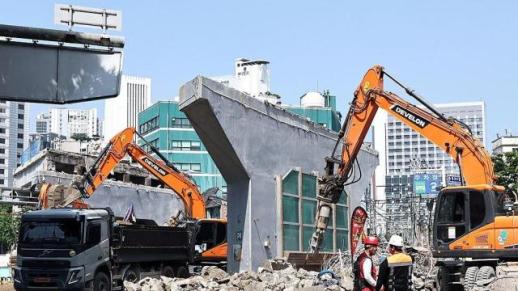 Police Investigate Decision-Making Before Seoul Overpass Collapse Police investigating the Seosomun overpass collapse in Seoul are examining the decision-making processes of construction officials before and after the incident. According to Yonhap News on May 31, the Seoul Metropolitan Police Agency's dedicated investigation team is analyzing evidence collected from the construction firm Heung-Hwa Construction and the city's Urban Infrastructure Headquarters. The police conducted searches at seven locations, including the Urban Infrastructure Headquarters, the construction company, and the supervising firm on May 29. The investigation team is reviewing safety management plans, structural designs, and work directives to determine how the demolition was originally planned. They are also assessing whether safety management plans were properly established during the design and construction phases and if the demolition work was executed as planned. Police are also looking into the communication that occurred among personnel on-site, the construction company, the city government, and the Ministry of Land, Infrastructure and Transport before and after the collapse. Notably, about 12 hours before the incident, signs of potential collapse were observed, including a step difference in the structure. Investigators are focusing on who made decisions at that time and whether necessary actions were taken. Concerns about safety had been raised prior to the incident. The Korea Safety Management Agency had advised the city in June 2024 to establish reinforcement plans, including temporary supports, and to review safety based on the demolition sequence, but these recommendations were not reflected in the safety plan, according to Yonhap News. Similar issues were raised again in October of the previous year, but the construction firm did not implement adequate measures, and the demolition proceeded with the city's approval. Additionally, it has been claimed that Heung-Hwa Construction and the city failed to notify the Korea Rail Network Authority or Korea Railroad Corporation about the discovered step difference, and train operations continued until one minute before the collapse. In fact, 59 trains carrying passengers passed through the tracks below the collapse site before the incident. The Ministry of Land, Infrastructure and Transport has also begun investigating the cause of the accident. The ministry announced it would form a construction accident investigation committee to examine the cause and develop measures to enhance safety management for demolition and dismantling work. This incident has evolved beyond a simple workplace accident, intertwining issues of design, safety management, on-site judgment, and inter-agency reporting systems. Police plan to summon officials from the construction company and the city for questioning once the analysis of the evidence is complete.* This article has been translated by AI. 2026-05-31 15:03:00
 -
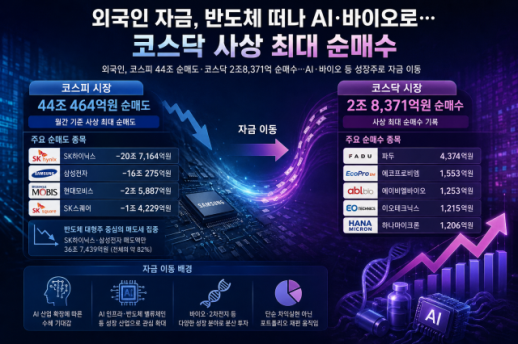 Foreign Investors Shift Funds from Semiconductors to AI and Bio, Achieving Record Net Purchases in KOSDAQ Foreign investors have engaged in significant net selling in the KOSPI while achieving record net buying in the KOSDAQ. They have shifted their funds from large-cap semiconductor stocks to growth sectors such as AI and biotechnology. According to the Korea Exchange on May 31, foreign investors sold a net 44.46 trillion won ($39.5 billion) in the KOSPI market in May, marking the largest monthly outflow on record, surpassing the previous high of 35.75 trillion won set in March. The selling trend persisted throughout the month, with foreign investors recording net sales for 16 consecutive trading days from May 7 to 29, the longest streak since the global financial crisis in 2009. The sell-off was concentrated in large-cap semiconductor stocks. Foreign investors sold a net 20.72 trillion won in SK Hynix and 16.07 trillion won in Samsung Electronics. Other notable sell-offs included Hyundai Mobis at 2.59 trillion won and SK Square at 1.42 trillion won. The combined net selling of SK Hynix and Samsung Electronics reached 36.74 trillion won, accounting for approximately 82% of the total net selling in the KOSPI. The funds withdrawn from semiconductor stocks were redirected to the KOSDAQ market, where foreign investors recorded a net purchase of 2.84 trillion won, the highest on record. This trend contrasts sharply with the KOSPI, highlighting a strong buying interest in growth stocks. In the KOSDAQ, investments flowed into companies involved in AI infrastructure, semiconductor value chains, biotechnology, and secondary batteries. Analysts suggest that foreign buying is particularly focused on companies expected to benefit from the expansion of the AI industry. Among the top net purchases, Pado led with 437.4 billion won, followed by EcoPro BM at 155.3 billion won, ABL Bio at 125.3 billion won, IOTech at 121.5 billion won, and Hana Micron at 120.6 billion won. These companies span various sectors, including storage devices for AI data centers, semiconductor equipment and post-processing, biotechnology, and secondary batteries, but they share the commonality of being in growth industries. Market analysts indicate that the recent changes in foreign investment reflect a shift in investment portfolios beyond mere profit-taking, suggesting a broader strategy that includes equipment, components, and biotechnology as beneficiaries of the AI industry's expansion. 2026-05-31 15:03:00
 -
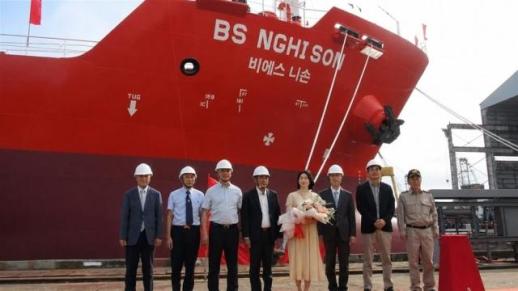 Vietnam's Parung Shipyard Expands High-Value Ship Production with South Korea Vietnam's Parung Shipyard has delivered a 13,000 DWT (deadweight tonnage) tanker and chemical ship while simultaneously commencing construction on a new vessel, continuing its trend of securing high-value ship orders. The shipyard's collaboration with South Korean owner Yentec is also expanding, strengthening its position in the international market. On May 29, local time, Vietnamese media reported that Parung delivered the 13,000 DWT tanker and chemical ship BS NGHI SON (series number 13K-YN04) to Yentec and held a steel cutting ceremony for the new vessel 13K-YN08 at the same event. This occasion highlighted Parung's consistent production system for the 13,000 DWT series. The delivered BS NGHI SON is a 13,000 DWT tanker and chemical ship designed by South Korea's Far East Ship Design (FESDEC) and certified by Korean Register (KR). The vessel measures 128.6 meters in length, 20.4 meters in width, and 11.5 meters in depth, with a design draft of 8.7 meters. This Handysize-class vessel is widely used for transporting oil and chemical products on international routes. The company stated that after completing construction, sea trials, and technical inspections, the ship met all contractual quality, safety, and technical standards before delivery to the owner. The steel cutting for the 13K-YN08 marks the first step in the new construction project, transitioning into the production phase. The simultaneous delivery of BS NGHI SON and the commencement of 13K-YN08 clearly demonstrate the uninterrupted production of the 13,000 DWT series. The vessel was received by South Korean company Yentec, which has been a key partner for Parung in various collaborations. Earlier, on April 22, Parung signed a construction contract and a memorandum of understanding (MOU) with Yentec for ten 6,500 DWT tanker and chemical ships. These vessels will feature a double-hull structure and are planned to be approximately 109.45 meters long, 18.2 meters wide, with a design draft of 6.8 meters and a cruising speed of 13.5 knots. The project will adhere to Korean Register (KR) standards and will be implemented over several years. Parung is a subsidiary of Vietnam's state-owned shipbuilding group SBIC. The company began its operations as a marine vessel repair facility, with its first new construction product being a 4,200-ton floating dock, followed by a 6,300 DWT cargo ship. It has since expanded its range to include bulk carriers from 6,500 to 20,000 DWT and 34,000 DWT vessels. With nearly 50 years of operation, the company has built a workforce of around 950 and has accumulated thousands of repair records while broadening its collaboration with foreign owners from countries such as Russia, Germany, South Korea, and Greece. Tanker and chemical ships must meet stringent standards for hazardous material transport, fire prevention, environmental protection, and operational safety. A company representative explained that the delivery of BS NGHI SON and the start of 13K-YN08 construction are results of close collaboration among the owner, partners, and in-house technical teams. Looking ahead, Parung plans to focus on new construction and repair projects, enhancing production management, process control, and quality and safety management to actively respond to the needs of domestic and international customers. The delivery of the 13,000 DWT vessel and multiple construction contracts for 6,500 DWT ships exemplify Parung's solidifying foundation in the tanker and chemical ship sector.* This article has been translated by AI. 2026-05-31 14:39:00
 -
 CJ Group Chairman Lee Jae-hyun Reviews North American Strategy, Promotes K-Lifestyle CJ Group Chairman Lee Jae-hyun has been actively overseeing the company’s North American K-lifestyle strategy by visiting key business locations in the United States. This management initiative, which began at the CJ Cup in Texas, has extended to Minnesota and California, signaling a commitment to intensify efforts in the U.S. market through a synergy of food, beauty, and content sectors. On May 31, CJ Group announced that Chairman Lee inspected the first CJ Olive Young store in Pasadena, Los Angeles, on May 29, where he discussed plans for expanding North American operations. He was accompanied by key executives, including Kim Hong-ki, CEO of CJ Corporation; Lee Sun-jung, CEO of CJ Olive Young; and Lee Sun-ho, head of the Future Planning Group at CJ Group. Lee stated, "The opening of the first Olive Young store in the U.S. is not just about launching a single store; it marks our first step into the world's largest market and a great beginning for our global expansion. We must spread a healthy and stylish lifestyle culture among American consumers." He particularly urged on-site employees to take pride in their role as a bridge to discover capable small K-brands and help them grow into global mega brands, thereby establishing a sustainable K-beauty ecosystem. The Pasadena store features products from 400 brands, with a majority being from small and medium-sized enterprises. CJ plans to establish a core market for Olive Young in California before gradually expanding into the eastern and midwestern regions. The company is also exploring ways to create synergies with its food and entertainment businesses, including Bibigo, Tous Les Jours, and KCON. ◆ Lee: "We will be the fastest-growing food company in the U.S. this year" Earlier, Lee visited CJ CheilJedang's North American subsidiary in Minneapolis, Minnesota, for the first time since acquiring the frozen food company Schwans in 2019. During this visit, he emphasized the importance of synergy across the company’s diverse sectors, stating, "CJ is a 'life company' with numerous characteristics, including food, beauty, style, and convenience. It is crucial that we work as one team to create synergy. We must aim to be the number one company in the food market based on our Only One spirit, which focuses on being the first, the best, and differentiated." After tasting the new 'Crunch Time' pizza, which cooks in just five minutes in a microwave, he remarked, "I want to offer customers a product that is cheaper, more convenient, and of better quality than delivery pizza, allowing them to save real money. This is the direction we need to pursue." He expressed confidence, stating, "By the end of this year, I am certain that we will be the fastest-growing company among U.S. food businesses." Lee also drew attention with gifts he presented at both locations. He gave Olive Young face masks and sunscreen to employees in Minnesota and a Tous Les Jours cake to staff at the LA Olive Young store. He emphasized, "CJ is not just a cosmetics company; we also sell food. We are a lifestyle company that showcases trendy lifestyles to our customers." Additionally, Lee reviewed expansion plans for CJ Foodville, CJ ENM, and CJ Logistics in North America. He is expected to remain in the U.S. until early next month to assess the competitiveness of future content businesses, such as ScreenX and 4DX, and to discuss global collaboration opportunities with industry stakeholders in the content and media sectors. * This article has been translated by AI. 2026-05-31 14:33:00
 -
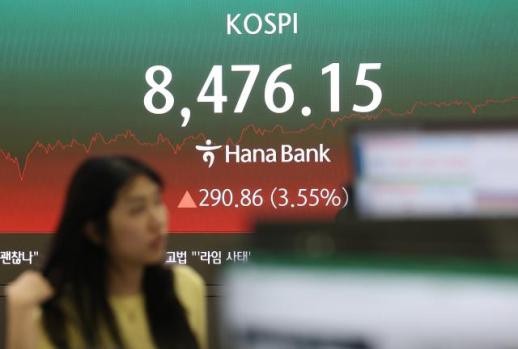 Shift from Home Loans to Credit Loans as Stock Investments Surge The focus of household lending is shifting from mortgage loans to credit loans. As expectations for a stock market rally grow, demand for investment funds has surged, with credit loans from the five major banks increasing by more than 100 times the amount of mortgage loans in May. As of May 28, the total balance of personal credit loans at KB Kookmin, Shinhan, Hana, Woori, and NH Nonghyup banks reached 106.99 trillion won, an increase of 2.65 trillion won from the end of April, when it stood at 104.34 trillion won. This monthly increase is the largest since April 2021, when the KOSPI first surpassed the 3,200 mark. The current balance of credit loans is also the highest since November 2023, when it was 107.72 trillion won, marking a 2.5-year peak. In contrast, mortgage loans have remained stagnant under the government's strict lending regulations. The balance of mortgage loans at the five major banks was 612.27 trillion won in May, increasing by only 250 billion won compared to the previous month. This is a significant slowdown from the previous month, when mortgage loans increased by 1.91 trillion won. Consequently, the increase in credit loans in May exceeded that of mortgage loans by more than 100 times. The expansion of credit loans has been primarily driven by overdraft loans. The balance of personal overdraft loans at the five major banks rose from 39.79 trillion won at the end of April to 41.93 trillion won by May 28, an increase of 2.14 trillion won. This marks the first time since April 2021 that the balance of overdraft loans has increased by over 2 trillion won in a month. The current balance is also the highest since December 2022. Typically, overdraft balances decrease around the 25th of each month when salaries are paid, but this month saw the opposite trend. The balance, which was 41.28 trillion won on May 21, increased by about 650 billion won within a week. Market analysts believe that borrowers are opting to draw additional funds for stock investments rather than repaying their loans with their salaries. The recent surge in the KOSPI, which has been hitting record highs, is also cited as a factor behind the increase in credit loans. However, the concern is that loan interest rates are hovering around 6%. As of May 29, the interest rates for credit loans at the five major banks ranged from 4.16% to 5.85% (for top credit ratings and one-year terms). This is higher than the rates at the end of last year (3.84% to 5.36%) and also above the rates from March this year (3.85% to 5.53%), when geopolitical tensions in the Middle East caused market rates to spike. Market analysts anticipate that the Bank of Korea may raise interest rates at least twice this year. Such increases could not only heighten the burden of interest payments for borrowers but also act as a downward pressure on the stock market, creating a dual challenge for investors engaged in debt-funded investments. A banking industry official stated, "The recent increase in credit loans is largely driven by demand for investment purposes. We cannot rule out the possibility of rising delinquency risks centered around credit loans."* This article has been translated by AI. 2026-05-31 14:33:00
 -
 'Backroom' Thrives in South Korea and North America, Surpassing 300,000 Viewers in Five Days "Backroom" is experiencing significant success in both South Korea and North America. In South Korea, the film surpassed 300,000 viewers within just five days of its release, while in North America, it debuted at the top of the box office on its opening day, emerging as a dark horse for this summer's theater lineup.According to the integrated ticket sales network, as of May 31, "Backroom" has accumulated over 300,000 viewers in its first five days. This achievement is faster than recent hits in the same genre, such as "Noise," which reached 300,000 in eight days, "Spring Garden" in eleven days, and "Exit 8" in twelve days. Despite having fewer screens, it has shown a steep growth curve among films released during the same period, establishing a strong presence in the South Korean market.The film's early performance was notable. On its opening day, May 27, "Backroom" attracted 54,100 viewers, bringing its total to 54,629, making it the top foreign film at the box office. This figure surpassed the opening day numbers of "Exit 8" with 31,965 viewers and "Noise" with 28,162 viewers. On its second day, it maintained its lead with a cumulative total of 87,859 viewers."Backroom" is also achieving rapid success among A24's releases in South Korea. "Minari" surpassed 100,000 viewers within three days of its March 2021 release, while "Everything Everywhere All at Once" exceeded 110,000 viewers in twelve days. With over 50,000 viewers on its opening day alone, "Backroom" is quickly breaking records for A24 films in the country.In North America, the film continued to perform well. On its preview night, it earned $10.4 million, setting a new record for A24's highest preview earnings. This figure significantly surpassed the previous record of $2.9 million set by "Civil War." With a production budget of approximately $10 million, the film's preview earnings nearly matched its production costs, marking a strong start in the North American market.Director Kane Parsons, at just 20 years old, is gaining attention for placing his debut feature at the top of the North American box office. The film features performances by Chuitel Edgiofo, Renate Reinsve, Mark Duplass, Finn Bennett, Aivan Georgia, and Lukita Maxwell, enhancing its immersive experience.The film's unique premise, based on the "Backroom" universe, has also contributed to its success. It tells the story of Clark and Mary, who encounter inexplicable events in a bizarre space characterized by yellow walls and endless fluorescent lights. The expansion of this internet-based horror universe into a feature film, combined with the collaboration between A24 and producer James Wan, generated significant interest prior to its release.With simultaneous success in both South Korean and North American markets, "Backroom" has emerged as a new variable in this summer's theater scene. Having surpassed 300,000 viewers domestically in just five days and set a record for A24's preview earnings in North America, there is growing anticipation regarding its potential for long-term success.* This article has been translated by AI. 2026-05-31 14:33:00
 -
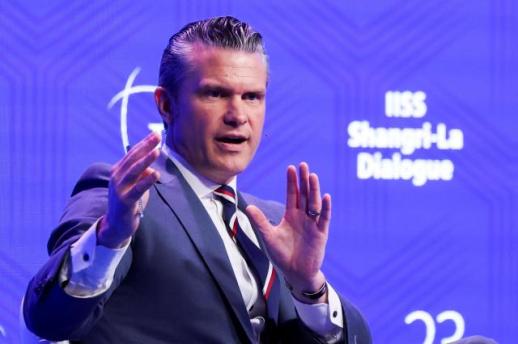 U.S. Defense Secretary Confirms Strong Iran Maritime Blockade Amid Military Actions U.S. Secretary of Defense Pete Hegseth reaffirmed the commitment to maintaining a maritime blockade against Iran, stating that military intervention could resume if peace negotiations fail. On May 30, during a press conference at the U.S. Embassy in Singapore following the Shangri-La Dialogue, Hegseth emphasized, "We have the capability to resume operations if necessary, and our resources are more than adequate both there and globally." He added, "This reflects how we balance precision weapons with ample ammunition." Hegseth noted that the blockade operations against Iran are "firmly in place" and mentioned that the issue of the Strait of Hormuz was frequently discussed during bilateral meetings at the conference. He stated, "The Strait of Hormuz will be an open waterway, a toll-free passage for the world, as it should be." On the same day, the U.S. military launched missiles at a Gambian-flagged cargo ship heading for an Iranian port, according to U.S. Central Command (CENTCOM). CENTCOM reported that the vessel was observed transiting international waters toward the Iranian port in the Gulf of Oman and that it had received over 20 warnings regarding violations of the U.S. maritime blockade. Military authorities confirmed that the ship was incapacitated by the missiles and is no longer heading to Iran. No information on casualties has been released. When asked whether the U.S. is considering a permanent withdrawal of troops from Middle Eastern bases attacked by Iran, Hegseth responded, "That is a decision for President Trump to make," adding that such decisions will be based on the final outcomes of peace negotiations with Iran. He concluded, "Currently, we are focused on maintaining our readiness to re-engage militarily if necessary."* This article has been translated by AI. 2026-05-31 14:30:00
 -
 SoftBank to Build Europe's Largest AI Data Center in France SoftBank Group will invest up to 75 billion euros (approximately 131 trillion won) to build the largest artificial intelligence (AI) data center in Europe in France. This initiative aims to expand AI computing infrastructure, which is currently concentrated in the United States, while establishing France as a new base due to its high reliance on nuclear power for stable electricity supply. Nihon Keizai Shimbun (Nikkei) reported on May 31 that SoftBank Group plans to construct a total of 5 gigawatts of data center capacity in France. The total investment is expected to reach 75 billion euros (about 14 trillion yen), making it the largest AI data center project in Europe if all goes according to plan. Masayoshi Son, chairman of SoftBank Group, will officially announce this plan at the investment promotion event "Choose France" hosted by the French government on June 1. This follows a request for investment made by President Emmanuel Macron during his visit to Japan from late March to early April. This marks SoftBank's first establishment of an AI base in Europe. In the first phase, the company plans to invest 45 billion euros (approximately 8.4 trillion yen) over the next five years to build data centers exceeding 3 gigawatts in the Hauts-de-France region, including Dunkirk and Bosquel. They are also considering options to lease computing resources not only within France but also to neighboring countries. However, not all of the 75 billion euros will come from SoftBank's direct investment. According to Nikkei, SoftBank will oversee the project while its own investment will be limited. The servers and AI semiconductors used in the data centers will be supplied directly by clients such as cloud service providers, and SoftBank will secure funding through project financing. According to the German research firm Statista, the number of data centers in the U.S. exceeds 4,000, far surpassing other countries. The UK and Germany each have over 500, but they still lag significantly behind the U.S., while France has only about 300. SoftBank is also building a supply chain. In partnership with French electrical equipment company Schneider Electric, it will establish a power supply facility for data centers at the port of Dunkirk. This move aims to expedite the construction of data centers by securing equipment directly. AI data centers require substantial capital, power, cooling systems, and land. While the competition for AI has previously centered around securing advanced semiconductors like NVIDIA's graphics processing units (GPUs), the focus is now shifting to where and how these semiconductors will be powered. The choice of France is also influenced by its stable electricity supply due to a high proportion of nuclear power. Additionally, the cost of building data centers in France is lower than in the U.S. The French government announced last February as part of its "AI National Strategy" that it would invest over 100 billion euros in public and private funds in the AI sector over several years. There is also a growing movement to collaborate with India and Global South countries in AI development and utilization, aiming to establish a distinct "third pole" in AI separate from the U.S. and China. AI computing resources are not merely private facilities; they are directly linked to national competitiveness. Without large-scale data centers in their own countries or regions, businesses and research institutions have no choice but to rely on the infrastructure of American cloud companies, making it imperative for Europe to secure its own AI infrastructure for data sovereignty and industrial competitiveness. U.S. tech giants also view France as a promising investment destination. Amazon Web Services (AWS) plans to invest over 15 billion euros in AI infrastructure from 2026 to 2028, while Microsoft has announced a 4 billion euro investment in AI-related fields in 2024. Son's AI investments are also ongoing in the U.S. SoftBank is planning to build a data center in Ohio worth 80 trillion yen. However, as SoftBank continues to announce large-scale investments in AI, its debt is increasing, raising concerns that if AI demand does not grow as expected, recovering investments may become challenging.* This article has been translated by AI. 2026-05-31 14:27:00
 -
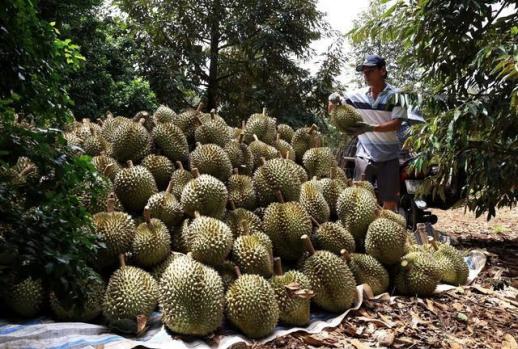 Vietnam's Durian Exports to South Korea Surge Amid Inspection Challenges Vietnam's durian exports are rapidly increasing, particularly in the South Korean market, showing a clear growth trend. However, in the Mekong Delta, the largest production area, delays in residue testing are causing both price drops and shipping disruptions. While export figures continue to rise, a lack of inspection infrastructure remains a significant constraint. According to various Vietnamese media reports on May 30, customs data shows that from January to April, durian exports reached $293 million (approximately 442 billion won), a 60% increase compared to the same period last year. Of this, exports to China accounted for $257 million (about 388 billion won), marking a 142.7% increase, while South Korea recorded a 201.5% growth, entering the top 10 markets. ◆ South Korean Market Sees 201.5% Surge, Frozen Products Offer a Breakthrough The South Korean market demonstrated the most significant growth rate. However, the export value remains just over $1 million, indicating that the absolute scale is still small. Nguyen Duy Phuc, Secretary-General of the Vietnam Fruit and Vegetable Association, stated, "Vietnam has not yet been able to export fresh durians to South Korea; currently, we are only exporting frozen whole fruit or separated flesh." He noted that the recent export growth rate to South Korea had even reached 500%, attributing this to the expanding demand from the Vietnamese community, students, and workers in Korea. Additionally, the perception of durian as a unique fruit in South Korea contributes to its growth. South Korea has strict food safety standards, including the Pesticide Residue Management System (PLS). As a result, frozen durians are being used as an alternative to reduce the risk of spoilage during logistics. Nguyen emphasized, "South Korea has high purchasing power and long winters, presenting opportunities not only for durians but for all Vietnamese agricultural products." ◆ Dong Thap Province, a Major Production Area, Struggles with Inspection Shortages However, the situation in production areas contrasts sharply with export statistics. Dong Thap Province, located in the Mekong Delta and a key cultivation area producing hundreds of thousands of tons of durians annually, is facing challenges in shipping due to a lack of facilities for testing cadmium and Aflatoxin O residues. According to the Dong Thap Department of Agriculture and Rural Development, the area dedicated to durian cultivation spans 32,100 hectares, with an expected production of about 111,221 tons in May and June. Despite this, the price of the Ri6 variety has recently dropped to around 30,000 dong per kilogram, a 46% decrease compared to after the 2026 Lunar New Year. Although durian exports exceeded $221 million in the first quarter, local farmers and purchasing companies are struggling to prepare export documents on time due to inspection delays. The Dong Thap Durian Association has received complaints that some inspection centers have refused to accept samples or have extended processing times. ◆ Limited Certified Laboratories and Canceled Approvals There are only 12 cadmium testing laboratories and 8 Aflatoxin O testing laboratories recognized by China in Vietnam. In the Mekong Delta, there are 8 certified facilities, but only 5 can conduct cadmium testing. Nguyen Khanh Ngoc, Deputy Director of the Can Tho Technical Standards and Quality Center, stated that the center currently only performs Aflatoxin O testing, as cadmium testing has been suspended due to the cancellation of approval by Chinese authorities. He mentioned that a supplementary application was submitted in December 2025, and they are awaiting re-approval, adding, "If operational, we have the capacity to process 50 to 60 containers a day, which would greatly benefit the region." The Regional Center No. 5 for Agricultural and Fishery Quality in Ca Mau has laboratories capable of testing both substances but has not yet resumed operations. Reasons cited include the review of new regulations, distance from production areas, and a lack of concentrated cultivation areas for exports. According to the Crop Protection Bureau under the Ministry of Agriculture and Rural Development, as of early May, 16 out of 21 cadmium testing laboratories and 19 out of 22 Aflatoxin O laboratories were operational, while the rest were temporarily suspended. Deputy Director Nguyen Quang Hieu emphasized, "Export companies must conduct food safety and cadmium testing before loading containers." Meanwhile, netizens have expressed strong dissatisfaction with the recurring lack of inspection infrastructure. One user remarked, "It's unfortunate that no one is held accountable in these articles, and the expression 'we will do it' is repeated without any real intention to solve the problem." Another user pointed out, "With such a large production area lacking testing facilities, equipment is stalled due to a shortage of technicians and processing technology." Some argued, "The failure of state management to keep pace with industrial growth has resulted in a need for a clear management system to determine who is responsible for what."* This article has been translated by AI. 2026-05-31 14:21:00
 -
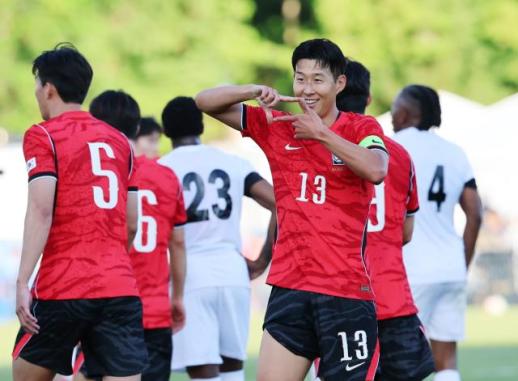 Son Heung-min Scores Twice as South Korea Defeats Trinidad and Tobago 5-0 Hong Myung-bo's squad achieved a decisive victory in their first warm-up match ahead of the 2026 FIFA North and Central America World Cup. The South Korea national football team, led by coach Hong Myung-bo, defeated Trinidad and Tobago 5-0 in a friendly match held on May 31 at Brigham Young University's South Field in Provo, Utah. After suffering consecutive losses to Ivory Coast (0-4) and Austria (0-1) during a European tour in March, this victory marked South Korea's first win in three matches since their 1-0 victory over Ghana last year. Son Heung-min (Los Angeles FC) and Cho Gue-sung (Midtjylland) each scored two goals to lead the team to victory. Notably, Son scored his 55th and 56th career goals in international matches, narrowing the gap to just two goals behind former coach Cha Bum-kun, who holds the record for the most goals by a South Korean player in international matches with 58. Coach Hong employed a three-back formation against Trinidad and Tobago, with Son positioned at the forefront, supported by Bae Jun-ho (Stoke City) and Lee Dong-kyung (Ulsan Hyundai) in the attacking midfield. Kim Jin-kyu (Jeonbuk Hyundai) and Baek Seung-ho (Birmingham City) coordinated in the midfield, while Jens Castrop (Borussia Mönchengladbach) and Kim Moon-hwan (Daejeon Hana Citizen) played as wing-backs. The three-man defense consisted of Lee Gi-hyeok (Gangwon FC), Jo Yu-min (Sharjah), and Lee Han-beom (Midtjylland). The goalkeeper was Jo Hyun-woo (Ulsan Hyundai). South Korea took the lead in the 40th minute, with Son scoring after receiving a cross from Kim Moon-hwan. Just three minutes later, he converted a penalty kick awarded to Bae Jun-ho, completing his brace. In the second half, Coach Hong actively utilized substitutions, bringing in Lee Jae-sung (Mainz), Hwang Hee-chan, Eom Ji-sung (Swansea City), Kim Min-jae (Bayern Munich), Seol Young-woo (Crvena Zvezda), and Hwang In-beom (Feyenoord) for Kim Jin-kyu, Bae Jun-ho, Son, Lee Han-beom, Baek Seung-ho, Castrop, and Kim Moon-hwan. A third goal came in the 65th minute when Cho Gue-sung headed in a cross from Lee Dong-kyung. South Korea added two more goals with a penalty kick from Hwang Hee-chan in the 75th minute and another goal from Cho Gue-sung in the 77th minute, sealing the 5-0 victory. Despite the impressive win, South Korea faced injury concerns as Jo Yu-min and Bae Jun-ho were substituted in the second half due to potential injuries. The team will face El Salvador in their second warm-up match on June 4 at 10 AM at the same venue before moving to Guadalajara for their training camp.* This article has been translated by AI. 2026-05-31 14:21:00