

Journalist

Jack L. Rozdilsky
-
 South Korea Drops to No. 25 in FIFA Rankings After Two Losses in March Friendlies South Korea fell three places to No. 25 in the latest FIFA men’s world rankings after losing both of its March internationals. FIFA announced the updated standings on April 1 (Korea time). South Korea had been No. 22 in the first rankings release of the year in January. The national team coached by Hong Myung-bo was routed 4-0 by Ivory Coast on March 28 and then lost 1-0 to Austria on April 1, results that contributed to the drop. Japan, the highest-ranked Asian team, moved up one spot to No. 18 from No. 19 after 1-0 wins over Scotland and England during the same international window. Mexico, which will face South Korea in Group A of the 2026 FIFA World Cup in North and Central America, rose one place to No. 15. Mexico drew 0-0 with Portugal and 1-1 with Belgium. The Czech Republic, which reached the World Cup finals for the first time in 20 years by advancing through the UEFA playoffs, climbed two places to No. 41. It beat Ireland and Denmark on penalty shootouts. South Africa, the lowest-ranked team in Group A, stayed at No. 60 after a 1-1 draw and a 2-1 loss in two matches against Panama in March. At the top, France moved from third to first after beating Colombia 3-1, while Spain, the previous No. 1, drew Egypt 0-0 and slipped to second. Argentina is third.* This article has been translated by AI. 2026-04-02 09:30:46
 -
 Korea inflation hits 3-month high March on oil shock from Middle East conflict SEOUL, April 2 (AJP) — South Korea's consumer prices accelerated at their fastest pace in three months in March on surging oil prices in the first month of the Middle East conflict, as the crippling of a key shipping waterway for energy supplies followed U.S.-Israeli attacks on Iran in late February, government data showed Thursday. The consumer price index for March rose 2.2 percent from a year earlier, the fastest since a 2.3 percent increase in December, driven by higher transportation and utility costs linked to a spike in fuel imports, according to the Ministry of Data and Statistics. Oil prices have surged amid tensions around the Strait of Hormuz — a chokepoint for roughly one-fifth of global oil and LNG trade — exposing South Korea’s deep reliance on imported energy. The Strait of Hormuz, through which a significant share of Middle East energy supplies passes, has remained effectively constrained since the outbreak of the conflict. South Korea relies on the Gulf for about 71 percent of its crude imports, 20 percent of LNG and around 77 percent of naphtha used in a wide range of industrial production, from plastics to paints. The Korean won has visited the lows of 2009 crisis period against the U.S. dollar, adding to import price pressure. Petroleum prices jumped 10.4 percent from February and 9.9 percent from a year earlier, the primary driver behind a 1.5 percent on-month and 2.7 percent on-year rise in industrial goods prices, contributing 0.9 percentage point to the headline inflation increase. Transportation costs rose 4.3 percent from a year earlier, while utility charges, including electricity, gas and water, climbed 3.1 percent, reflecting the pass-through of higher global energy prices. Among key items, gasoline prices surged 8 percent on year and diesel rose 17 percent. The government has imposed a temporary cap on gas-pump prices, helping to contain further rise. Service prices rose 2.4 percent on year, with dining-out costs up 2.8 percent and personal services gaining 3.2 percent. Agricultural, livestock and fishery products eased 1.9 percent on month and 0.6 percent from a year earlier, with fresh food prices falling 2.7 percent on month and 6.6 percent on year to cap broader inflation. Core inflation, which excludes food and energy, rose 2.1 percent on-year, remaining relatively stable and suggesting limited demand-driven pressure. The livelihood price index rose 2.3 percent, accelerated from 1.8 percent. 2026-04-02 09:07:16
 -
 KB Kookmin Bank Expands QR Payments Across Indonesia in KB Star Banking App KB Kookmin Bank said April 2 it has expanded its cross-border QR payment service, “KB Star Banking Overseas Payment Service,” to cover all of Indonesia. The service, operated through the Korea Financial Telecommunications & Clearings Institute, links Korean financial firms with overseas payment institutions so users can make QR payments abroad through their home-country banking apps. KB Kookmin Bank said it now offers the service in 12 countries and regions, including Indonesia, Japan, Thailand, Vietnam, Taiwan and Hawaii. With the expansion, customers can pay using QR codes in the KB Star Banking app at more than 32 million merchants across Indonesia. The bank said it is the first in South Korea to directly connect, using the institute’s payment infrastructure, to Indonesia’s national QR network, QRIS, enabling payments in local currency without double currency conversion. “This expansion improves access and convenience so customers can pay overseas in a familiar way,” a KB Kookmin Bank official said. The official added the bank will continue expanding its global payment infrastructure to provide financial services that fit naturally into customers’ daily lives.* This article has been translated by AI. 2026-04-02 08:54:00
 -
 Korea to Recruit 300 Trainees for 2026 Creative Content Mentoring Program The Ministry of Culture, Sports and Tourism and the Korea Creative Content Agency said Thursday they will recruit 300 trainees through April 15 for the 2026 Creative Content Talent Companion Program. Now in its 15th year, the program is a flagship effort to develop talent across the content industry. Past graduates include Hong Bichira, creator of the webtoon “Severe Trauma Center: Golden Hour,” director Jang Jae-hyun of the film “Exhuma,” and writer Moon Ji-won of the drama “Extraordinary Attorney Woo.” KOCCA said it selected 15 platform partner organizations in March, centered on four areas: video and animation, webtoons and story, games, and music and performance. It said this year’s support system covers a wider range of content, including dramas, variety shows, documentaries, films, animation, webtoons, comics, games (analog and digital), K-pop and musicals. Each platform partner will select trainees tailored to its field and provide close mentoring from planning through production. KOCCA said the mentor pool includes 150 experts such as producer Kim Se-hoon (“Master of the World”), variety writer Shin Yeo-jin (“Heart Signal”), producer Han Kyung-soo (the documentary “My Love, Don’t Cross That River”), Redice Studio CEO Jang Jeong-sook (producer of the webtoon “Omniscient Reader’s Viewpoint”), and producer Kim Do-hoon, a hit songwriter for BTS and Hwasa. KOCCA also said it will run follow-up support for projects by graduates from the past five years. Five organizations in video, webtoons and story, and games are expected to select and support about 30 projects. Details and application instructions are available on KOCCA’s website. Applicants can apply online through each platform partner’s recruitment page through April 15. 2026-04-02 08:45:17
 -
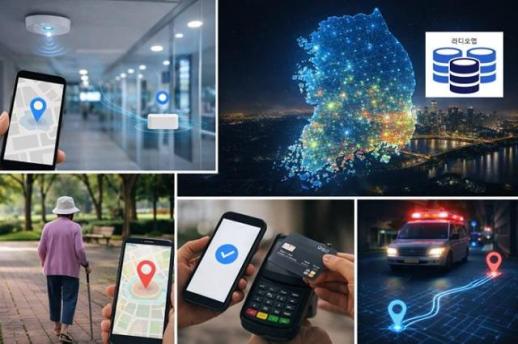 KAIST researchers develop automation technology for national Wi-Fi radio map SEOUL, April 02 (AJP) - Researchers at the Korea Advanced Institute of Science and Technology have developed a foundational technology to build a nationwide Wi-Fi radio map, the prominent research institute said Thursday. The development could lay a stepping stone for a move expected to secure South Korea's "location sovereignty" and reduce reliance on global tech giants. A radio map acts as a database linking Wi-Fi signals, which are wireless internet signals, to specific physical coordinates. By identifying unique signal patterns, mobile devices can pinpoint their location indoors or in dense urban areas where Global Positioning System (GPS) signals are often blocked by skyscrapers or thick walls. For South Korea, establishing an independent national radio map is a critical step toward ensuring that essential location data remains a domestic asset rather than depending on proprietary databases managed by foreign entities like Google or Apple. Korea Advanced Institute of Science and Technology (KAIST) said that a research team led by School of Computing Professor Han Dong-su has spent eight years perfecting this technology. The method automates the creation of these maps by pairing Wi-Fi signals collected by smartphones with existing address information. The core innovation lies in its efficiency. Traditional methods of building radio maps require manual data collection, which is often too expensive and time-consuming to execute at a national scale. The new technique utilizes signals gathered through everyday smartphone app usage—such as during online shopping or making payments—and links them to merchant or delivery addresses. This allows for the rapid construction of a comprehensive database at a low cost. This infrastructure has significant implications for public safety. During emergency calls to police or fire departments, the technology can drastically reduce the search radius for missing persons, such as elderly citizens with dementia, helping responders secure the "golden time" necessary to save lives. It can also prevent financial fraud by ensuring that digital payments only occur at verified physical locations, making remote hacking or identity theft much harder to execute. The technology was recently validated in Daejeon, where researchers used a gas meter reading app to test the system. The demonstration confirmed that an average of 30 Wi-Fi signals could be detected in a single apartment unit, proving that a city-wide radio map could be built quickly using existing mobile traffic. Beyond safety, the research team noted that precise location data is essential for the future of artificial intelligence (AI), including autonomous driving, robotics, and logistics. It also enables advanced services like GeoLLM, which integrates location data with large language models to provide contextual information about a user's environment and activities. "Building a national-scale radio map is a task too large for any single company," Professor Han Dong-su said. "It requires a public-private partnership involving the government, telecommunications companies, and platform providers. Location infrastructure is a core asset directly linked to national data sovereignty." 2026-04-02 08:41:52
 -
 PLAVE Releases Pre-Release Track 'Heung Heung Heung' After Fan Mission, Builds Comeback Buzz Virtual idol group PLAVE has released a pre-release song tied to a fan-completed mission, fueling anticipation for its comeback. The group recently ran a fan-participation event on its official promotional website. Fans joined as “secret agents,” played mini-games to collect “Star Shards,” and unlocked rewards once a target score was reached. The mission began at noon on March 28 and moved quickly with strong fan participation. The target score was reached at about 5:30 p.m. on April 1, prompting the reveal of “Heung Heung Heung (feat. SOLE),” a pre-release track from the group’s fourth mini-album, “Caligo Pt.2.” The video drew attention for its bright, lovable tone, distinct from previously released concepts, while incorporating PLAVE’s signature storyline. Fans responded strongly after the reveal. The track will be officially released at 6 p.m. on April 3 on major music platforms. The event also highlighted fans’ direct role in producing the outcome, strengthening ties between PLAVE’s narrative universe and its fandom. PLAVE has been building expectations by rolling out concept photos. With the pre-release now out, attention is turning to additional content as the comeback countdown begins in earnest. A pop-up store will also mark the album release. From April 8 to 19, PLAVE will hold “PLAVE 4th Mini Album ‘Caligo Pt.2’ Pop-up Store in The Hyundai Seoul” at Sounds Forest in The Hyundai Seoul in Seoul, featuring album-themed displays and various content. PLAVE previously underscored its digital strength with the release of its second single album, “PLBBUU,” in November. The group also sold out its Nov. 21-22 shows at Seoul’s Gocheok Sky Dome for the “2025 PLAVE Asia Tour ‘Dash: Quantum Leap Encore,’” wrapping up its first Asia tour. PLAVE’s new mini-album, “Caligo Pt.2,” will be released on April 13 on major music platforms.* This article has been translated by AI. 2026-04-02 08:33:17
 -
 OPINION: Drums in sync, strategy in step: why Seoul and Tokyo can't afford to drift apart SEOUL, April 02 (AJP) -President Lee Jae Myung’s drum duet with Japanese Prime Minister Sanae Takaichi during his January visit to Tokyo was more than a light cultural moment. It captured, in miniature, a broader shift: two uneasy neighbors moving — cautiously but unmistakably — back into rhythm. Lee himself framed the stakes with unusual clarity, warning that the global trade order is “unstable like never before” and calling deeper bilateral ties “an urgent task of our time.” That urgency is no exaggeration. The strategic environment surrounding the Korean Peninsula has deteriorated sharply. War in Ukraine has tightened alignment among North Korea, China and Russia. The widening confrontation involving the United States, Israel and Iran has added a new layer of global volatility. What once looked like isolated flashpoints is increasingly converging into a more systemic rivalry. Nowhere is that tension more concentrated than in the Indo-Pacific. China’s growing assertiveness — from its installation of structures in the Yellow Sea to its sweeping export controls on critical materials — is no longer an abstract concern. It is already reshaping supply chains, testing economic resilience and signaling how coercion can be deployed below the threshold of conflict. For economies like South Korea and Japan, deeply embedded in global manufacturing networks, the implications are immediate and material. The Taiwan Strait sits at the center of this strategic equation. Any disruption there would not simply be a regional security crisis; it would sever trade arteries that sustain both economies. That reality is driving Japan, backed by the United States, to expand deployments along its southwestern island chain — a move aimed at reinforcing deterrence before crisis becomes conflict. For Seoul, geography leaves little room for strategic ambiguity. It faces not only the Taiwan contingency but also a nuclear-armed North Korea. The logic of closer coordination with Tokyo — once politically fraught — is becoming operationally unavoidable. That shift is already visible. The real-time trilateral missile data-sharing system launched in late 2023, along with joint exercises such as Freedom Edge, marks a transition from symbolic cooperation to integrated defense readiness. Maintaining frameworks like GSOMIA is no longer a diplomatic choice but a functional necessity, combining South Korea’s proximity with Japan’s surveillance reach. What makes this moment notable is not just the scale of external threats, but the contrast with the recent past. Only a few years ago, historical disputes pushed Seoul–Tokyo ties to the brink, spilling into trade retaliation and security friction. Today, those same two countries are rebuilding cooperation under far less forgiving conditions. The broader strategic vision underpinning this rapprochement — the “Free and Open Indo-Pacific” — is often framed in abstract terms. But recent crises have made its stakes tangible. Disruptions in the Strait of Hormuz have already shown how quickly energy markets and global capital flows can be destabilized. In an interconnected system, security and economics are inseparable. Japan now openly acknowledges that it faces its most severe security environment since World War II. South Korea, confronting parallel pressures, is arriving at a similar conclusion. The drumbeat, then, is not just ceremonial. It reflects a deeper alignment driven less by sentiment than by necessity. History still matters. Domestic politics still constrains. But the strategic calculus is shifting faster than either. For Seoul and Tokyo, staying in step is no longer optional. It is the baseline for navigating an Indo-Pacific that is becoming more contested, more interconnected — and far less forgiving of hesitation. *The author is a professor in the Global Service Department at Sookmyung Women’s University About the author: Author’s background ▷Ph.D. in journalism and communication, Yonsei University ▷AP correspondent ▷Newsweek Korea bureau chief ▷President, Seoul Foreign Correspondents’ Club 2026-04-02 07:38:00
 -
 Korean Drugmakers Diversify Into New Businesses to Offset Price Cuts, Supply Risks South Korea’s pharmaceutical and biotech industry is accelerating diversification as a survival strategy amid drug price cuts and global supply-chain uncertainty tied to Middle East tensions. Companies are widening their portfolios beyond medicines, from health supplements and animal drugs to solar power and even car-wash operations. Industry officials said April 1 that several established drugmakers are adding new business purposes at shareholder meetings this season, positioning the moves as a way to find growth as price cuts make limits in the traditional drug business more apparent. Yuyu Pharma recently amended its articles of incorporation to add the manufacturing and sale of “animal quasi-drugs, quasi-drugs and health functional foods.” Animal medicines are seen as a potential steady earner as pet ownership rises and entry barriers are relatively low. The global pet market is projected to grow from $320 billion in 2022 to $493 billion in 2030, the report said. Health functional foods are also a key target. Despite intense competition, the domestic market reached 5.9626 trillion won last year, making it attractive for drugmakers seeking a stable cash generator outside direct drug-pricing regulation. Many companies have already entered with products such as probiotics and collagen, drawn by higher margins, the report said. Expansion into beauty and medical devices is also gaining attention. Anguk Pharm added “development and sales of plastic surgery-related formulations” and “development and sales of biomedical-related products” to its corporate purposes, aiming to strengthen its health care portfolio by tapping growing demand for cosmetic dermatology in an aging society. After acquiring health care company Dmedicorea, Anguk has broadened beyond prescription drugs into supplements, beauty and sleep-related businesses. A frequently cited success story is Dongkook Pharmaceutical’s cosmetics brand Centellian24, which built recognition by applying the concept of ingredients used in its wound treatment Madecassol to skincare products. Some forecasts say the company could join the ranks of firms with 1 trillion won in annual sales on the back of growth in its health care business. Some companies are moving into businesses far removed from their core. Daewoong Pharmaceutical added a “solar power generation business” through its annual shareholder meeting, a step the report linked to ESG management. The company is expected to pursue rooftop solar installations at factories to generate power and cut energy costs. With raw material prices rising amid Middle East instability, solar power is also expected to help reduce costs over the long term, the report said. Dong-A ST newly listed “car-wash operation” as a business, describing it as part of ESG efforts alongside employment for people with disabilities. JW Pharmaceutical added “investment, management advisory and consulting,” a move seen as aimed at strengthening investment and management support functions across affiliates. Still, some in the industry warn that new ventures could dilute drugmakers’ core capabilities in pharmaceutical research and development and sales. “The key question is whether these new businesses will connect to existing strengths and translate into real profitability, or whether they will reduce room for R&D investment,” one industry official said. 2026-04-01 19:33:24
 -
 Korean Pharma and Biotech Briefs: Dongkook, Dong-A, HK inno.N, Daewoong, Huons Dongkook Pharmaceutical marks 10th year of ‘Love Scaling’ volunteer dental program Dongkook Pharmaceutical said Wednesday it held a “Love Scaling” volunteer event with the Korean Academy of Periodontology on March 27 at Hanyang Women’s University. The program is a joint talent-donation initiative by the academy, the university and Dongkook Pharmaceutical. It provides oral checkups, scaling and other dental services to people who have difficulty visiting a dentist. A separate ceremony was held to mark the program’s 10th event. Rep. Jeon Hyeon-hui of the Democratic Party, whose constituency includes the area where the university is located, was appointed this year’s “Love Scaling” ambassador. At the ceremony, the Korean Academy of Periodontology presented recent research on periodontal disease at Seongbundo Welfare Center and proposed institutional adoption of panoramic imaging during health screenings for people with disabilities so all teeth can be checked at once. Dongkook Pharmaceutical presented on the ESG value of the volunteer program. Dong-A Pharmaceutical’s Fation launches after-sun gel lotion Dong-A Pharmaceutical said Wednesday its derma-cosmetics brand Fation has launched an “After Sun Gel Lotion” designed to care for sunburned skin after UV exposure. The product is intended to soothe irritated skin and provide moisture while addressing five sunburn-related symptoms: heat, irritation, dryness, flaking and hyperpigmentation, the company said. Combining features of gel and lotion, it can be used on the face and body in settings such as outdoor sports, camping and travel, it said. Dong-A said human application testing confirmed it helps lower skin temperature and calm the skin, and may help improve UV-related moisture loss, flaking and hyperpigmentation. The product contains 58% of the company’s proprietary ingredient, Azulene Repair™. Fation said it plans to expand into after-sun care, beyond a market centered on sunscreen products. HK inno.N holds 42nd anniversary ceremony and Compliance Day event HK inno.N said Wednesday it held a ceremony for its 42nd anniversary and an event marking “Compliance Day” on March 31 at HK inno.N Square. The event, attended by CEO Kwak Dal-won, executives and employees, reviewed the company’s 42-year history and aimed to strengthen communication. It was held both in person and online, the company said. Participants watched a commemorative video in which long-serving employees and new hires exchanged questions to promote intergenerational understanding. The company also presented long-service awards to five employee representatives, it said. After the ceremony, HK inno.N held its 11th Compliance Day event. Kwak and Executive Director Kim Ki-ho, who serve as co-compliance officers, joined employees in signing an anti-corruption and compliance pledge, the company said. Daewoong Pharmaceutical to launch low-dose combination drug for dyslipidemia Daewoong Pharmaceutical said it will launch Baroejet tablets (pitavastatin 1 mg and ezetimibe 10 mg) on April 1 as a treatment for dyslipidemia. The new low-dose combination is indicated for primary hypercholesterolemia, the company said. The company said statins are known to show diminishing gains in efficacy at higher doses, while concerns about side effects such as muscle pain increase. It said that when a statin dose is doubled, LDL cholesterol reduction increases by about 6%, while adding ezetimibe can be expected to provide an additional reduction of at least about 18%. Daewoong said demand for low-dose statin combination therapies is rising as treatment strategies change. It cited domestic prescription growth last year of 37% for low-dose combinations based on rosuvastatin and 157% for those based on atorvastatin. Baroejet was developed to address unmet needs, the company said, adding it offers a new 1/10 mg low-dose option among pitavastatin-based combinations and expands treatment choices. Daewoong said the product may also be useful for patients taking multiple medications because pitavastatin has low dependence on CYP enzymes, which could reduce the burden of drug interactions. Huons Group donates 100 million won to Choi Jae-hyung memorial foundation Huons Group said Wednesday it delivered a total of 100 million won in donations on March 31 to the Choi Jae-hyung Memorial Foundation, a nonprofit honoring the independence activist. The company said the funds will be used to highlight Choi’s achievements, expand education and commemorative projects, and support Koryo-saram and younger generations of ethnic Koreans. Choi, described as an entrepreneur and educator, led the Korean community in Russia’s Primorsky Krai. The company said he devoted himself to Korea’s independence by raising funds for the independence movement and supporting Ahn Jung-geun’s actions, and that he died after being arrested by Japanese forces in 1920. The foundation continues fundraising at home and abroad for historical recognition efforts and support programs for Koreans, it said. Huons Group Chairman Yoon Sung-tae attended the foundation’s supporters’ association launch ceremony on March 26 as a leading business figure and expressed support for fundraising and sponsorship, the company said. It said the association is co-chaired by Park Jong-beom, chairman of the World-OKTA, and Jung Seok-hyun, chairman of Susan Group, with Kim Hyung-oh, a former National Assembly speaker, serving as an adviser, among others.* This article has been translated by AI. 2026-04-01 19:30:00
 -
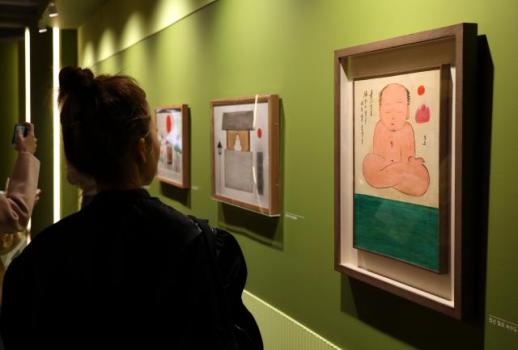 Exhibition in Seoul brings forgotten pioneer of etching and painting into spotlight SEOUL, March 31 (AJP) - A retrospective exhibition commemorating the 100th anniversary of South Korea's late artist Kim Sang-yu opened in Seoul on Wednesday. The exhibition, which runs at the Seoul Museum of Art until Aug. 17, features more than 150 works along with Kim's historical records including personal belongings such as his painting tools, offering a comprehensive overview of his five-decade career in chronological order with six-different themes. Known for his unique etchings and calligraphy-inspired paintings, the artist is regarded as a pioneer of copperplate printing in South Korea, credited with expanding the boundaries of modern art. Beginning with experiments in abstract work in the 1960s, he developed a distinctive visual language across multiple media including woodcuts and oil paintings. Unlike many exhibitions that focus on "star" artists, this exhibition takes a meaningful approach by featuring an artist who was once celebrated but has since faded from public attention. The exhibition comes after Kim has recently regained public interest after K-pop juggernaut BTS' member RM revealed in 2022 that he had purchased one of Kim's works, bringing renewed attention to the artist. 2026-04-01 18:09:41