

Journalist

Jack L. Rozdilsky
-
 Asian stocks slump on war fears, chip rout hits KOSPI SEOUL, March 31 (AJP) - Asian stocks overall traded lower on Tuesday, with South Korea’s benchmark KOSPI extending losses for a fourth straight session amid uncertainty surrounding the Iran crisis and weakness in global semiconductor shares. Japan’s Nikkei 225 fell 1.58 percent to 51,063.72, Hong Kong's Hang Seng Index edged down 0.16 percent to 24,712.24, China’s Shanghai Composite Index fell 0.80 percent to 3,891.86, and Taiwan’s TAIEX Index fell 2.45 percent to 31,722.99. The KOSPI opened 2.53 percent lower at 5,143.75 and fell 4.26 percent to close at 5,052.46, after briefly threatening to dip below the 5,000 level in early trade. It later pared losses to reclaim the 5,200 mark, but selling pressure intensified again toward the close. Heavyweight chip stocks led the decline, as concerns grew that the sharp rally in memory prices driven by the AI boom could lose momentum. Samsung Electronics plunged 5.16 percent to close at 167,200 won, after opening 3.57 percent lower at 170,000 won and briefly trimming losses to 174,700 won before resuming its decline. The company’s announcement that it would cancel about 14.5 trillion won worth of treasury shares failed to support the stock. SK hynix also dropped sharply, falling 7.56 percent to 807,000 won, tracking a steep overnight sell-off in semiconductor stocks on Wall Street. In the auto sector, Hyundai Motor declined 5.11 percent to 445,500 won, slipping to fourth in market capitalization as the Iran conflict raised concerns over supply chain disruptions and production setbacks. Analysts warned that a prolonged war could pressure margins and disrupt supplies of key inputs such as plastics, chemicals and automotive semiconductors, while longer shipping routes could add to near-term production risks. However, a weaker won and a higher share of high-margin models, including SUVs, Genesis vehicles and hybrids, are expected to support profitability. Affiliate Kia fell 4.16 percent to 145,200 won, and Hyundai Mobis dropped 5.03 percent to 378,000 won. In the shipbuilding and defense sector, HD Hyundai Heavy Industries shed 3.12 percent to 465,000 won, and Hanwha Aerospace lost 4.51 percent to 1,249,000 won. In biopharmaceuticals, Samsung Biologics slipped 1.70 percent to 1,504,000 won and Celltrion declined 2.13 percent to 197,200 won. Financials were also lower, with KB Financial Group falling 2.74 percent to 141,900 won, Samsung Life Insurance dropping 4.10 percent to 210,500 won, Shinhan Financial declining 3.09 percent to 87,700 won, and Mirae Asset Securities edging down 1.75 percent to 61,600 won. Elsewhere, Samsung C&T fell 2.31 percent to 253,500 won and Doosan Enerbility dropped 2.55 percent to 91,800 won, Hanwha Ocean was the only gainer among the major stocks, rising 1.69 percent to close at 120,200 won. On the secondary KOSDAQ market, Samchundang Pharm plunged 29.98 percent to 829,000 won, retreating sharply from recent highs above 1.1 million won the previous day. The drop came despite the company’s announcement of an exclusive agreement in the United States for an oral semaglutide generic, which includes about $100 million in conditional payments and a 90 percent share of sales for 10 years, as profit-taking emerged amid concerns over stretched valuations after a rapid rally. The Korean won traded at 1,529.30 per dollar, weakening further from around 1,522.60 earlier in the day, as persistent geopolitical tensions, elevated oil prices and strong dollar demand continued to weigh on the currency. 2026-03-31 17:24:13
 -
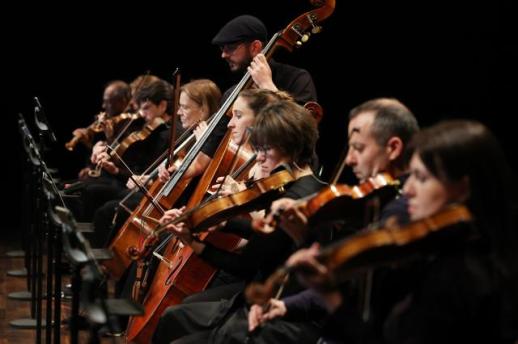 Tracing humanity in the age of AI; MMCA's Deep Time SEOUL, March 31 (AJP) - In an age where artificial intelligence processes information at lightning speed, what makes humans uniquely human? At the National Museum of Modern and Contemporary Art, the answer unfolds not through data, but through the patient gaze of a detective — observing, tracking and interpreting over time. The museum on March 31 unveiled its 2026 performing arts program, Deep Time, a yearlong exploration of how humans perceive, question and endure in an era increasingly shaped by machines. The museum announced on March 31 that it will host MMCA Performing Arts 2026 'Deep Time' from April 1 through December 6, exploring humanity's distinctive approach to observation and inquiry in the AI era. The long-term project will unfold over two years. This year's Chapter I, themed 'Observation and Tracking,' explores "deep and slow" time revealed through persistent observation over extended durations. Next year's Chapter II, 'Slow Creep,' will examine how this accumulated deep time transforms both the observer and the observed. At a briefing held on Tuesday, electronic music composer Ryoji Ikeda and contemporary music ensemble Ensemble Modern presented a collaborative work. Detailed programs will be revealed sequentially each month. 2026-03-31 17:08:22
 -
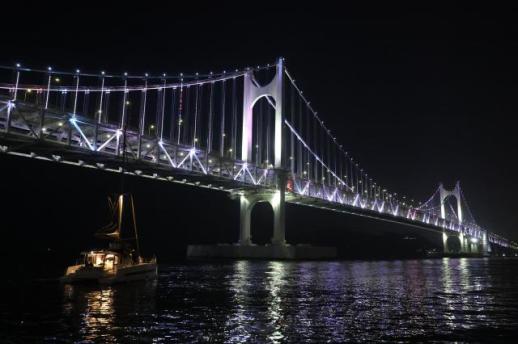 Why yacht tour is best way to enjoy Busan's iconic Gwangan Bridge BUSAN, March 31 (AJP) -A yacht tour would be the best way to soak in the beauty of Gwangan Bridge, one of the must-see landmarks in the southern port city of Busan. Several tour programs are available at Haeundae Beach, the city's most famous beach, known for its long sandy shoreline and seaside attractions. Depending on the type of yacht, routes may vary, but some tours take you right under Gwangan Bridge, offering breathtaking views of Busan's coastal scenery. Cruise tours run throughout the day. Daytime tours are perfect for exploring Busan's urban landscape, while nighttime tours offer spectacular views of the bridge lit up against the city skyline. Tours on every Saturday evening are especially popular, coinciding with a weekly drone show that passengers can enjoy against the stunning night sky, with the bridge as a dramatic backdrop. 2026-03-31 16:38:05
 -
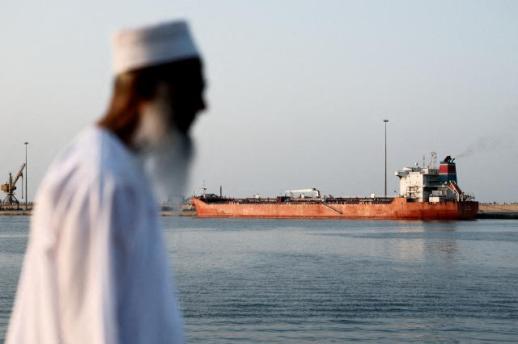 Iran's Hormuz toll push risks turning global chokepoint into a priced corridor SEOUL, March 31 (AJP) - Iran is moving to monetize control of the Strait of Hormuz, threatening to impose transit fees on one of the world’s most critical energy arteries — a step that could recast the waterway from a global commons into a contested, pay-to-pass corridor. The proposal, approved by Iran’s parliament, comes as Tehran tightens its grip on the chokepoint, through which roughly 20 percent of global oil supply normally flows. Since the outbreak of conflict, vessel traffic has plunged by as much as 90 percent, while access for Western-linked ships has been selectively restricted. Ships are increasingly required to submit detailed cargo and ownership data to intermediaries linked to the Islamic Revolutionary Guard Corps before being allowed safe passage, with some reportedly paying fees in Chinese yuan — underscoring how control is already being exercised in practice. The impact is rippling far beyond the Gulf. Oil prices have surged, while energy-importing economies in Asia — including South Korea and Japan — face renewed supply risks as one of their most vital maritime lifelines comes under strain. From legal norms to leverage Legal scholars say Iran’s proposed toll regime collides directly with established international law governing maritime passage. “Under current international law, a coastal state may not lawfully impose a general toll simply for ships’ passage through an international strait used for international navigation,” said Shahla Ali, a law professor at the University of Hong Kong. She noted that the United Nations Convention on the Law of the Sea guarantees “transit passage” — the right of continuous and unimpeded movement — and that any charges must be tied to specific services and must not “effectively deny or unreasonably burden” passage. Similarly, James D. Fry, also a law professor at the University of Hong Kong, said imposing unilateral transit fees would “go against freedom of navigation” protected under customary international law. “There is no precedent that might allow for an interpretation of UNCLOS to permit such a transit fee,” Fry said. But the issue is quickly moving beyond legal doctrine. Iran’s growing “de facto control” over the strait — screening vessels, dictating passage conditions and shaping traffic flows — is raising a more fundamental question: whether physical dominance over a chokepoint can begin to override long-standing legal norms. “If, in fact, Iran can exercise control over the Strait of Hormuz to the point that all others are excluded, it might be difficult to say that Iran lacks sovereignty,” Fry said, while cautioning that any such shift would depend on how the international community responds. War backdrop deepens uncertainty The toll push is unfolding against a backdrop of escalating military tensions involving Iran, the United States and Israel, further complicating the legal and strategic landscape. Washington has defended its strikes as necessary to counter threats from Iran’s missile and nuclear programs, while Tehran has accused the U.S. and Israel of committing “internationally wrongful acts,” including what it described as state-sponsored assassination attempts. The competing claims underscore a broader erosion of international norms, with legal arguments increasingly shaped by geopolitical leverage. For now, legal experts remain skeptical that Iran’s toll plan can be justified under existing frameworks. But they also acknowledge that international law is not static. “The law is not static,” Fry said. “But any evolution will depend on state practice — and on whether the international community accepts or resists what Iran is doing.” That leaves Hormuz emerging as more than a regional flashpoint. It is becoming a test case for whether global trade routes remain governed by law — or by control. If economic leverage and military presence can redefine access to strategic waterways, the implications will extend far beyond the Gulf, potentially reshaping the rules that underpin global commerce. For Asia’s energy-dependent economies, the stakes are immediate. What happens in Hormuz may determine not only the flow of oil, but whether the architecture of international maritime order can withstand an era increasingly defined by power over principle. 2026-03-31 16:27:39
 -
 Korea burned $22.5 bln defending won Q4, USD-KRW nears 1,530 SEOUL, March 31 (AJP) -South Korea spent a staggering $22.5 billion in the final quarter of 2025 to stabilize the won, as the currency hovered near crisis-era lows amid intensifying capital outflows and dollar demand, central bank data showed. Net dollar sales for “market stability” surged to $22.47 billion in the fourth quarter, the Bank of Korea said in its disclosure of its intervention balance sheet — a sharp escalation from $1.75 billion in the third quarter, $797 million in the second and $2.96 billion in the first. The October-December interventionist spending is the largest three-month record since disclosure started in 2019. The intervention brought total spending for the year to roughly $28 billion, the largest since 2022 when authorities struggled to tame the won amid Legoland debt crisis from rapid tightening in the U.S. The won averaged 1,450.71 per dollar in the first quarter, strengthening modestly to 1,399.13 in the second and 1,386.77 in the third, before weakening sharply to 1,448.87 in the fourth — when intervention intensified. “Supply-demand conditions were extremely skewed in the fourth quarter. Outflows by residents far exceeded the current account surplus,” Yoon Kyung-soo, director of the BOK's international department said in a briefing. “In October alone, overseas securities investment by residents was roughly three times the size of the current account surplus," he added. The won lifted partly by dollar retreat and intervention gave ground after the war in the Middle East broke out. The dollar briefly touched 1,530 won, revisiting the level of March 2009 amid global financial crisis in Tuesday trading. The won has lost more than 6 percent of its value against the dollar, double the gain in the dollar index over the same period. Authorities said they were "closely monitoring" if one-sided bias deepens and the won's depreciation is deemed too steep versus other currency movements. 2026-03-31 16:16:13
 -
 Asiana Airlines to cut int'l flights amid soaring oil prices SEOUL, March 31 (AJP) - Asiana Airlines will cut about a dozen flights on four international routes this spring amid rising oil prices caused by the prolonged conflict in the Middle East. The flagship carrier said on Tuesday it canceled seven flights from Incheon to Changchun, China; three flights to Harbin; and two flights each to Phnom Penh, Cambodia, and Yanji, China for the months of April and May, as jet fuel prices surged sharply. "We will minimize inconvenience for affected customers by offering alternative flights and waiving fees for changes to their trip schedules," Asiana Airlines said. Amid soaring oil prices, domestic airlines are trimming flights to reduce costs, with Asiana becoming the first full-service carrier to follow suit after low-cost carriers made similar cuts. Asiana became the first full-service carrier to follow suit after low-cost airlines made similar cuts, as soaring oil prices push domestic carriers to trim flights to reduce costs. Korean Air, the country's largest flagship carrier, which completed its acquisition of Asiana Airlines in December last year, will also enter emergency mode starting next month. 2026-03-31 15:58:00
 -
 Citi Korea Marks International Women’s Day With Talk by Inertia CEO Kim Hyoi Citibank Korea said March 31 that it held a special lecture for employees on March 30 featuring Kim Hyoi, CEO of startup Inertia, to mark International Women’s Day 2026. The session, titled “Startup leadership that challenges inertia,” was designed to prompt employees to examine organizational habits and consider change, the bank said. Citi marks International Women’s Day each year with programs involving employees worldwide, including lectures, panel discussions and networking events, it said. Inertia is a startup founded by women scientists from KAIST. It has recently expanded overseas through entry into the U.S. market and sales on Amazon. Kim decided to launch the company while researching quantum engineering and medical artificial intelligence at KAIST, aiming to use technology to address everyday inconveniences. In 2024, Forbes Korea named her to its “30 Under 30” list. In her talk, Kim described practical constraints startups face when entering the market and shared bias she experienced as a woman founder. “The law of inertia applies in our daily lives, too,” she said. “It’s not that it can’t be done — we just haven’t tried it yet. Change in an organization becomes possible when leaders first ask questions that break existing inertia.” Yoo said Kim’s story offered a chance to reflect on the leadership needed in a changing environment. She added she hoped the lecture would help employees seek new possibilities in their work. * This article has been translated by AI. 2026-03-31 15:46:07
 -
 NH NongHyup Financial Expands Senior Products, Weighs Elder Care Infrastructure NH NongHyup Financial Group is moving to aggressively expand senior-focused products and offline service spaces this year, aiming to convert community hub branches into senior-oriented locations and win market share with higher-value offerings tied to health management. A key variable is whether it can ease internal friction over potential overlap with local cooperatives. According to the financial industry on Monday, NH NongHyup Financial will step up its push into the so-called silver market under its senior brand, “NH All Wonderful,” launched in November. The group has positioned this year as the starting point for expanding the brand and plans to introduce specialized products such as savings and loans linked to health management. The strategy is to turn its comparatively strong base of older customers — reinforced by aging in rural areas — into a profit model and a competitive edge. NH NongHyup Financial has about 12 million customers age 50 and older, accounting for 55% of its total. By affiliate, customers 50 and older make up 54.6% at NH NongHyup Bank, 71.3% at NH NongHyup Life Insurance and 66.2% at NH NongHyup Property & Casualty Insurance. NH NongHyup Financial plans to roll out a total of 22 senior-only products in stages this year, focusing on health care-linked finance. It is considering products that offer preferential interest rates when customers can document improvements in certain health indicators. The group also plans to strengthen both online and offline touchpoints by designating and operating “senior-specialized branches and lounges” in the first half of the year and improving a senior-only space in its app in the second half. Building elder care facilities and senior housing remains an unresolved task. The broader NongHyup network includes many local agricultural cooperatives, and some already operate nursing homes. A move by the holding company or its life insurance unit into elder care could trigger internal pushback over perceived encroachment on existing business rights. Local NongHyup cooperative branches total 4,894 — more than four times the 1,065 locations operated by NH NongHyup Bank — making friction with local cooperative leaders difficult to avoid, from site selection onward. Some observers warn that because NH All Wonderful launched later than rival programs, further delays in entering elder care could mean missing a critical window. KB Financial Group has KB Golden Life Care, a specialized elder care subsidiary, and operates care facilities including Wirye, Seocho and Eunpyeong Villages; Pyeongchang County; and day care centers in Gangdong, Wirye and Eunpyeong. Shinhan Financial Group is expanding senior care services centered on Shinhan Life, and Hana Financial Group has been opening senior-specialized branches. “NH NongHyup Financial’s senior customer assets are a powerful weapon, but housing and care infrastructure will ultimately be needed to support it,” a financial industry official said. “It is important to quickly develop a model of coexistence with local cooperatives.” 2026-03-31 15:45:28
 -
 South Korea’s Three-Back Defense Faces Key Test vs. Austria After 4-0 Loss South Korea coach Hong Myung-bo’s three-back system unraveled in the team’s last friendly, raising fresh doubts about whether it can hold up on the World Cup stage. The upcoming match against Austria is widely seen as the final proving ground for keeping the setup for the 2026 FIFA World Cup. South Korea lost 4-0 to Ivory Coast on March 28 (Korea time) in a friendly at Stadium MK in Milton Keynes, England. The match was intended as a tune-up against a team modeled on South Africa, a group-stage opponent at the 2026 World Cup, but South Korea struggled throughout against intense pressure and quick transitions. The biggest concern was the collapse of the three-center-back line of Kim Tae-hyeon (Kashima Antlers), Kim Min-jae (Bayern Munich) and Cho Yu-min (Sharjah). Ivory Coast repeatedly attacked down the flanks. Even when wingbacks Seol Young-woo (Crvena Zvezda) and Kim Moon-hwan (Daejeon Hana Citizen) dropped to form a five-man back line, South Korea showed costly problems with spacing and covering. The team allowed nine shots from inside the penalty area and, with passing lanes into midfield cut off, often resorted to aimless long balls from the goalkeeper that quickly surrendered possession. Individual strengths were also blunted. Cho appeared burdened by wide defensive cover and made a series of mistakes, while Kim Min-jae — known for dominant one-on-one defending — was repeatedly forced into reactive cover after the flanks had already been breached. The performance echoed issues exposed in last October’s 5-0 loss to Brazil, when South Korea’s three-back struggled against speed and dribbling. After the match, captain Son Heung-min (Los Angeles FC) told reporters the team must improve its use of space and off-the-ball movement. “If I have to play uncomfortably, the opponent also becomes uncomfortable,” Son said. “I need to position myself in places where it’s difficult to receive the ball.” Hong pointed instead to shortcomings in individual duels. “We were lacking in one-on-one battles,” he said. “We’ll look for ways to grow further.” South Korea now must find answers to the defensive flaws and buildup problems exposed against Ivory Coast in its next test, a friendly against Austria scheduled for 3:45 a.m. April 1 in Vienna at Ernst Happel Stadium. It is the team’s final warmup before the World Cup final roster is announced in May. With the tournament approaching, a major tactical overhaul appears unlikely. South Korea used a three-back in five of six friendlies in the second half of last year, investing heavily in it as the team’s primary system. The broad framework is expected to remain in place against Austria. At an official news conference on March 30 (local time), Hong said there was little time to introduce something new. “We don’t have the room to prepare something new in two days,” he said. “The most important thing is where we lost the ball. We need to prepare a style of play that allows us to press immediately when we lose it.” Hong also called for a quick response, citing last year’s rebound after the heavy loss to Brazil. “After the big defeat to Brazil last year, the players handled it wisely and won the next match (against Paraguay),” he said. “Playing again after a short rest in a difficult situation will help us grow mentally as a team.”* This article has been translated by AI. 2026-03-31 15:36:00
 -
 Samsung Elec union crying foul over wage talks to press ahead with strikes SEOUL, March 31 (AJP) - Samsung Electronics claims it has put forward a compensation package more attractive than that of rival SK hynix, but its largest labor union is calling it a deception — and is pressing ahead with plans for a general strike in May. “The company lied to us,” Kim Jae-won, head of policy planning at the National Samsung Electronics Union (NSEU), told AJP on Tuesday. “There is no other way to describe what happened at that table.” Wage negotiations have collapsed, pushing South Korea’s largest tech firm toward what could become its most significant strike yet — at a time when chip prices are surging amid supply shortages, compounded by raw material and shipping disruptions tied to the widening conflict in the Middle East. The Samsung Electronics Labor Union (SELU), which represents more than 70,000 employees — over half of Samsung Electronics’ workforce — suspended talks on Friday. The union accuses management of presenting a proposal to institutionalize bonuses, only to later deny that such an offer was ever made. The union has warned it will proceed with a general strike in May unless executives issue a formal apology for what it calls a “deceptive approach to bargaining” and replace the current negotiation team. At the heart of the dispute is what transpired in the latest round of talks. According to Kim, management offered two options: a one-time bonus or the permanent institutionalization of the Overachievement Performance Incentive (OPI) system. “They told us they would persuade top management based on our choice,” Kim said. “We chose institutionalization. But later we were told it had been rejected — and now they claim it was never proposed at all.” Kim suggested either the negotiating team acted without senior approval or top management reversed course afterward. “Either way, they stabbed us in the back. This is something we cannot accept,” he said. Union leader Choi Seung-ho said the alternative proposal was equally unacceptable. “The company tried to push a one-time payout using treasury stock, which we rejected,” Choi said. “We are demanding a transparent, cash-based system. Management appears reluctant because it wants to preserve its corporate governance structure.” Samsung acknowledged the breakdown in talks but offered a different interpretation. “We sought a method to allocate additional resources more clearly to high-performing business units, while the union insisted on maintaining a uniform distribution approach,” a company official said. On the key issue of the OPI cap — currently set at 50 percent of annual salary — the company said it had not ruled out adjustments. “It’s not that we refused to lift the cap,” the official said. “Our proposal included similar conditions, but our focus was on how to distribute additional resources, whereas the union prioritized securing a fixed share of operating profit.” What is clear is that the standoff is deepening. Samsung’s attempt to offer a one-time payout — reportedly exceeding SK hynix’s package — while preserving the existing compensation structure appears to have backfired. The union has escalated its demands, calling for 15 percent of operating profit to be allocated as a bonus pool, above the 10 percent benchmark at domestic peers. It also proposes a “7-to-3” distribution split — 70 percent at the division level and 30 percent at the business unit level — aimed at narrowing pay gaps across divisions. “The company only justified our actions,” Kim said. “Members are angrier than ever and uniting faster. They’re spending money but still getting blamed because of their own actions.” As of Tuesday, SELU membership stood at 70,375, accounting for 54.5 percent of Samsung Electronics’ workforce. Unionization in the core chipmaking Device Solutions (DS) division has climbed to 72.2 percent. The union plans a mass rally of around 30,000 workers at the Pyeongtaek semiconductor complex on April 23, with 22,000 already committed to attend. A full-scale strike will proceed in May unless management changes course. Samsung said it will continue efforts to resolve the dispute and avoid a strike that could surpass the scale of its first walkout two years ago. “We don’t yet know how it will impact operations, but the best-case scenario is to resolve this before a strike,” an official said, requesting anonymity. 2026-03-31 15:33:25