

Journalist

Jack L. Rozdilsky
-
 Korea braces for fertilizer crunch on top of energy crisis in Gulf fallout SEOUL, March 24 (AJP) - As the Middle East war drags into its third week, the extensive closure of Strait of Hormuz is no longer just an energy story. Beneath the surface, it is beginning to choke the fertilizer supply chain that underpins global food production — a shift that could soon translate into higher food prices for import-dependent economies like South Korea. About 40 percent of South Korea's urea and ammonia — key inputs for nitrogen fertilizers — move through the chokepoint, according to the Korea International Trade Association. While domestic fertilizer output exceeds local demand, the industry remains structurally dependent on imported feedstocks. That dependency leaves Korea exposed to what analysts describe as a "second-round shock": not just higher energy prices, but a breakdown in the economics of fertilizer use worldwide. "The immediate impact will be on raw material costs for fertilizer exporters, but the bigger picture is that fertilizer prices, oil prices and exchange rates are all moving together, driving up overall agricultural production costs," said Chung Dae-hee, a researcher at the Korea Rural Economic Institute. "If imports of not just fertilizer but also pesticides and other raw materials remain disrupted, it will directly affect agricultural commodity prices." The Strait of Hormuz disruption is particularly acute because it hits the fertilizer chain at its source. Nitrogen fertilizers — which account for more than half of global usage — are produced from natural gas, much of it supplied or priced off exports from Gulf producers such as Qatar and Saudi Arabia. The same corridor also carries large volumes of ammonia and urea shipments to Asia. With shipping effectively halted since late February, at least 21 vessels carrying nearly 1 million metric tons of fertilizer remain stranded in the Gulf. Major suppliers including Qatar's Industries Qatar and Saudi Arabia's SABIC Agri-Nutrients have declared force majeure on deliveries to Asia. The result is a sharp spike in global fertilizer prices, with some contracts jumping from $750 to $1,000 per ton within weeks. More critically, the surge is already altering planting decisions. U.S. Department of Agriculture projections show corn acreage falling to around 94 million acres this year from nearly 99 million in 2025, as farmers shift to less fertilizer-intensive crops such as soybeans. Some growers are planning to cut fertilizer application by as much as 25 percent — a move that directly lowers yields. Brazil, which imports about 85 percent of its fertilizer, has warned of an "extremely high risk" to its 2026–2027 harvest. Any disruption there feeds straight into South Korea, which depends heavily on Brazilian and U.S. soybeans for cooking oil, animal feed and processed foods. The crisis extends well beyond fertilizer. South Korea's wheat self-sufficiency rate stands at around 2 percent, and the country ranks among the world's top five corn importers. Overall grain self-sufficiency — excluding rice — hovers near 20 percent, underscoring its exposure to global supply shocks. What makes the current disruption more severe than past crises is its reach across both energy and food systems. "Unlike the 2022 Ukraine shock, which primarily hit grain exports, this crisis is choking fertilizer inputs that every major food-producing country depends on," said Lorenzo Rosa, a principal investigator at the Carnegie Institution for Science, as cited by the World Economic Forum. That dynamic creates a lagged but more entrenched risk. While energy and shipping costs rise immediately, the impact on food supply emerges months later as lower fertilizer use translates into weaker harvests. At the same time, policy responses are compounding the pressure. China has expanded export controls on fertilizers, including nitrogen-potassium compounds and certain phosphate products, on top of existing urea restrictions. India's urea production has been disrupted by reduced LNG inflows from Qatar, while Bangladesh has shut down four of its five fertilizer plants, according to Hana Securities analyst Yoon Jae-sung. The United Nations World Food Programme warned on March 8 that rising fuel and food costs could push more households into food insecurity, calling the situation a rare "dual chokepoint" crisis spanning both the Red Sea and the Strait of Hormuz. "If agricultural production costs rise like this, margins that are already razor-thin will force producers to pass costs onto consumers," Chung said. "Food price increases are particularly sensitive for the public — it becomes a situation where nobody wins." Seoul is scrambling to contain the fallout. Agriculture Minister Song Mi-ryung convened an emergency review on March 20, pledging to mobilize all available resources while confirming that domestic fertilizer supplies remain stable through the first half of the year. "In the short term, what matters most is easing the cost burden on importers — freight support covering war-risk surcharges and rerouting premiums, relief on cargo detention fees, and reducing the self-pay ratio on exchange-rate hedging insurance," Chung said. "Over the medium to long term, diversifying import sources toward countries such as China and the United States will need to be explored." But diversification offers only partial relief in a market where supply is tightening globally at the same time. With its fertilizer industry reliant on imported inputs, limited strategic reserves, and a grain supply chain that depends overwhelmingly on overseas harvests, Korea is now confronting a deeper question emerging across global agriculture: not just how much food can be shipped — but whether farmers can afford to grow it at all. 2026-03-24 14:57:05
 -
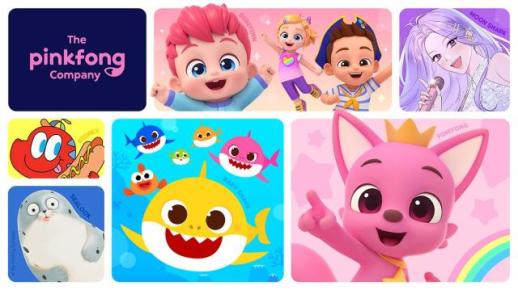 'Baby Shark' creator Pinkfong garners more than 210 billion views, 300mln subscribers SEOUL, March 24 (AJP) - The Pinkfong Company, the creator of global children's hit "Baby Shark" song, has surpassed 210 billion cumulative views and 300 million subscribers, highlighting the global popularity of the online content that united children across the globe for more than a decade, the company said Tuesday. Baby Shark gained global popularity through a combination of simple repetition, an easily recognizable melody, and strong visual synchronization, making it highly accessible to young audiences. Its short phrases, repetitive lyrics and hand gestures encourages participation, allowing children to engage with the content actively rather than passively. The song’s rapid spread was further amplified by platforms such as YouTube, where algorithm-driven recommendations and short-form viewing habits helped it reach audiences beyond its original target demographic, turning it into a cross-generational viral phenomenon. According to the company, Pinkfong's YouTube videos were watched about 66.5 billion times in 2025, up 52 percent from 43.6 billion a year earlier. The growth in accumulative view counts was driven largely by overseas audiences consuming Korean-language content, the company analyzed. Views of Korean-language videos reached 11.1 billion in 2025, nearly quadrupling from the previous year, while the share of overseas viewers rose to 90 percent from 75 percent. Its flagship "Baby Shark Dance" video has accumulated 16.7 billion views as of March 2026, maintaining its position as the most-viewed video on YouTube for 64 consecutive months. "We are seeing a rapid expansion of IP influence in the global market," adding "As global demand for Korean-language content increases, we are also contributing to the broader expansion of K-content." said Kwon Bit-na, chief strategy officer at The Pinkfong Company. 2026-03-24 14:56:50
 -
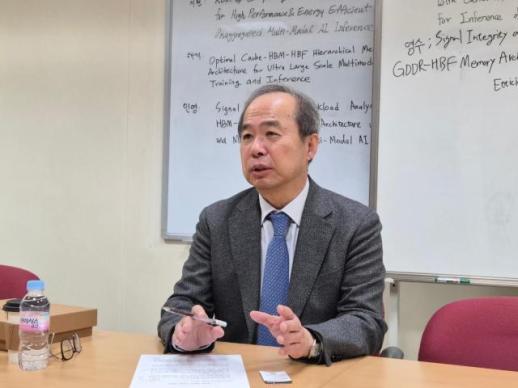 Beyond HBM: The next AI memory race is already underway DAEJEON, March 24 (AJP) - High bandwidth memory (HBM) is what enabled the current artificial intelligence boom, giving chips the speed needed to train large-scale models. But as AI shifts from training to real-world deployment, the industry is running into a different constraint — not speed, but scale. That shift is beginning to redefine the competitive landscape. The next phase of the AI chip race may hinge not on HBM itself, but on what comes after it: high bandwidth flash (HBF). Joung-ho Kim, a professor at the Korea Advanced Institute of Science and Technology (KAIST) and dubbed as the “father of HBM,” argues that this shift is not incremental but structural. In an interview with AJP, he argued the future of AI competitiveness will hinge on how quickly companies adapt their memory architecture to this new reality. “The memory architecture must be fundamentally restructured,” Kim said. “HBM defined the last decade, but HBF will likely determine the next.” The urgency stems from the rapid expansion of AI workloads, particularly in inference — the stage where trained models generate responses in real time. Unlike training, inference relies heavily on key-value (KV) caches, which store intermediate data and grow rapidly as models process longer context windows. What was once a manageable memory demand is now pushing into the terabyte range per system, exposing the limits of existing HBM-based designs. HBM, built on stacked DRAM, has served as an ultra-fast layer closely attached to GPUs, effectively acting as the system’s “working memory.” But its strengths — speed and bandwidth — are increasingly offset by limitations in scalability and cost. As models expand, simply adding more HBM becomes inefficient and prohibitively expensive. HBF addresses this bottleneck by introducing NAND flash into the memory hierarchy. While slower than DRAM, NAND offers significantly greater capacity at a fraction of the cost, enabling a new layered approach in which high-speed HBM handles immediate computation while HBF stores the massive datasets required for sustained inference. This shift marks a subtle but critical change in how AI performance is defined. “Once decoding begins, throughput becomes memory-bound,” Kim noted. “At that stage, capacity matters as much as bandwidth.” The implications are already shaping corporate strategies. SK hynix, which secured an early lead in HBM through aggressive investment in the 2010s, is once again moving ahead of the curve. In February, the company launched a high bandwidth flash standardization consortium with U.S.-based SanDisk, aiming to establish global specifications under the Open Compute Project. The move signals an attempt not just to develop technology, but to shape the broader ecosystem before the market fully materializes. The timeline remains long, with engineering samples expected around 2027 and commercialization closer to 2030. Yet the strategic positioning is taking place now, as companies seek to avoid repeating past missteps. Samsung Electronics, which was slower to commit to HBM in its early stages, is approaching the transition with greater caution. While focusing its immediate resources on next-generation HBM products such as HBM4E and HBM5, it is also investing in NAND-based architectures aligned with the HBF concept. The goal is clear: to ensure it does not lose its footing in another architectural shift. At its core, the emerging competition is less about a single product than about control over the entire memory system. The question is no longer who can produce faster chips, but who can design the most efficient hierarchy of compute and storage for an AI-driven world. The parallels with the past are difficult to ignore. SK hynix’s early bet on HBM reshaped the competitive landscape, while hesitation from rivals proved costly. Kim suggests that the same dynamic could play out again. “If companies fail to invest in HBF now, they could face the same risks we saw before,” he said. HBF may still be years away from commercial deployment, but the direction of the industry is already becoming clear. If HBM enabled the rise of large-scale AI training, HBF is positioning itself as the foundation for scalable, real-time AI services. In that sense, the next phase of the AI race may not be decided by raw processing power alone, but by something less visible — the architecture of memory itself. 2026-03-24 14:41:12
 -
 Celltrion Chairman Seo Jung-jin Returns as Shareholder Meeting Chair, Predicts Sales Growth Seo Jung-jin, chairman of Celltrion Group, returned to the role of chair at the company’s shareholder meeting for the first time in 11 years, since the 2015 meeting, saying he wanted to explain mid- to long-term responses directly to shareholders as the global business environment shifts rapidly, including the U.S.-Iran war in the Middle East. Seo chaired Celltrion’s 35th annual general meeting of shareholders on the morning of March 24 at Songdo Convensia in Incheon and spoke with shareholders in person. Citing the fast-changing environment, he said, “Our company is export-oriented, so we are not affected by oil prices,” adding, “Since there is no major impact on ongoing business, sales will grow this year as well.” On the stock price, Seo said he does not believe it is “overvalued compared with performance.” Celltrion posted record results last year, with revenue topping 4 trillion won and operating profit exceeding 1 trillion won. This year, it is targeting revenue in the 5 trillion won range. The company also presented a development roadmap for an obesity drug. Seo said Celltrion is developing a fourth-generation obesity treatment and plans to enter Phase 1 clinical trials next year. “The fourth-generation obesity treatment we are developing shows less muscle loss and consistent efficacy, and we are among the leaders in the fourth generation,” he said, adding that clinical development “will move quickly.” Celltrion said it will secure new production capacity, including a major expansion investment of more than 1 trillion won at its Songdo headquarters, to meet demand for its biopharmaceuticals and strengthen global manufacturing competitiveness. The investment will be carried out in stages from this year through 2030 and will expand infrastructure across the Songdo campus in Korea, a U.S. production base and domestic sites. Specifically, it will invest 1.2265 trillion won to expand Plants 4 and 5 simultaneously at its Incheon Songdo campus, bringing total capacity to 180,000 liters. It also finalized an expansion plan for its Branchburg, New Jersey, facility, which is expected to increase capacity to 141,000 liters. “That would make us third in facilities, after Samsung Biologics and Lonza,” Seo said.* This article has been translated by AI. 2026-03-24 14:36:00
 -
 IBK Industrial Bank of Korea to Provide 2 Trillion Won Package for Regional SMEs IBK Industrial Bank of Korea said March 24 it will launch a 2 trillion won ($) “regional balanced growth” financing package to strengthen the competitiveness of small and midsize companies outside the capital area. The package consists of three programs: liquidity support (1 trillion won), financing-cost relief (1 trillion won) and business restructuring support. The liquidity program targets companies in regional strategic industries and firms relocating to provincial areas. It offers a 0.6 percentage point cut in guarantee fees and up to a 1.3 percentage point reduction in loan rates for three years. To fund the program, the bank will make a special 42 billion won contribution to the Korea Credit Guarantee Fund and the Korea Technology Finance Corp. The financing-cost relief program will be linked to interest-subsidy loans backed by local governments and public institutions, under which they cover the gap between commercial bank rates and a policy target rate. IBK said it will add up to a 1.0 percentage point rate cut on top of local-government benefits to ease interest burdens for regional companies. Under the business restructuring program, the bank will provide investment and financing to strong regional companies that need to shift their business lines, aiming to help provincial SMEs improve their fundamentals and pursue sustainable growth. IBK CEO Jang Min-young said the bank will “take the lead in balanced regional development” by offering “meaningful rate benefits that regional SMEs can feel” and supporting local industrial ecosystems.* This article has been translated by AI. 2026-03-24 14:03:40
 -
 KB Financial to Launch Consumer Protection Quality Index to Flag Investment, Fraud Risks KB Financial Group is launching a Consumer Protection Quality Index, or CPQI, to spot risks early, including mismatches between customers’ investment profiles and product risk, as well as financial fraud. The group said the move is aimed at strengthening trust in its financial services. KB Financial said on 24 it is pushing the consumer-rights measures to mark the fifth anniversary of the Financial Consumer Protection Act. Major affiliates, including KB Kookmin Bank and KB Life Insurance, will set up consumer protection committees within their boards. The group will also introduce CPQI to respond quickly to warning signs such as sales concentration in certain products or a sudden rise in customer complaints. The CPQI consolidates consumer-protection check indicators that had been spread across departments involved in risk management, compliance and product operations, covering the full process from product planning and sales to post-sale management. If indicators fall outside the standard, an early-warning system will be triggered. CPQI is divided into four categories: before sales, during sales, after sales and other management indicators. Risk levels will be shown in a three-tier system — normal, watch and high-risk — to support early action and decision-making. Before-sales indicators include the appropriateness of matching product risk to customers’ investment profiles, the suitability of product mix by risk grade, and monitoring concentration risk in specific funds. During- and after-sales indicators track investor profit-and-loss status and complaint intake. A KB Financial official said the group aims to build a practical consumer-protection system that customers can feel, rather than a formal one, marking five years since the law took effect. The official said KB Financial will do its best to create a trustworthy financial environment through the new CPQI. * This article has been translated by AI. 2026-03-24 14:03:00
 -
 Seoul gains traction as fine-dining destination SEOUL, March 24 (AJP) - Seoul is rapidly emerging as a destination for global gourmets, with interest in the city's fine dining rising sharply recently. According to an analysis by Singapore-based online travel agency Trip.com, searches for fine dining restaurants in Seoul are on the rise. The biggest increase came from Singapore at 22.2 percent from a year ago, followed by Japan at 21.7 percent, Thailand at 17.9 percent and Hong Kong at 15.7 percent. Among South Korean users, the increase was 16.8 percent. The agency attributed the increase to the popularity of South Korean dramas and cooking-themed reality shows. Restaurants run by chefs who appeared on the latest season of Netflix's hit cooking competition show "Culinary Class Wars" such as Eatanic Garden, Mosu Seoul and Swaaniye, all Michelin-starred fine dining restaurants, have placed highly on Trip.com's rankings, with booking inquiries surging. The agency said nearly half of its users cited tasting authentic local food as one of the key factors in choosing a travel destination, and food-related bookings rose 43 percent from a year earlier. "Trips where restaurants themselves become the destination will shape Seoul's tourism competitiveness," said Hong Jong-min, head of Trip.com's Seoul office. Seoul's reputation as a fine-dining destination has been growing, as Trip.com's latest list released last year featured 17 South Korean restaurants among top venues across 68 countries. 2026-03-24 13:56:36
 -
 NH NongHyup Bank Offers Free Anti-Voice Phishing Insurance for Seniors NH NongHyup Bank said March 24 it will provide free enrollment in a “voice phishing compensation insurance” program for 1 million South Koreans age 60 and older, a group it described as especially vulnerable to financial fraud. Customers can apply at NH NongHyup Bank branches or through the NH All One Bank app. The policy covers up to 70% of direct remittance losses caused by voice phishing or messenger phishing, with a maximum payout of 10 million won. Bank President Kang Tae-young visited a senior welfare center in Namyangju, Gyeonggi Province, on March 24 and held an on-site enrollment event using a mobile branch. The bank also provided fraud-prevention education for center users. The bank said the initiative was designed to support financially vulnerable groups in line with the government’s inclusive finance policy direction. It is being jointly promoted by NH NongHyup Bank and the NH Urban-Rural Co-Prosperity National Movement Headquarters to build a practical compensation system. NH NongHyup Bank said it has strengthened consumer protection, including creating a dedicated financial fraud response unit within its consumer protection division last year and elevating the division’s standing in its internal organization chart from 15th to second, raising the profile of its chief consumer officer. The bank also operates 24-hour monitoring of suspicious accounts to detect and block transactions believed to be linked to voice phishing, and it said branch staff may halt suspicious transactions during in-person consultations. The amount of losses prevented through these efforts rose from 27.2 billion won at the end of 2023 to 101.0 billion won at the end of 2025, more than tripling. “As financial fraud damage continues to rise, we hope this compensation insurance will provide real help to victims,” Kang said. “We will continue to expand support to underserved areas by using our nationwide branch network.” 2026-03-24 13:39:00
 -
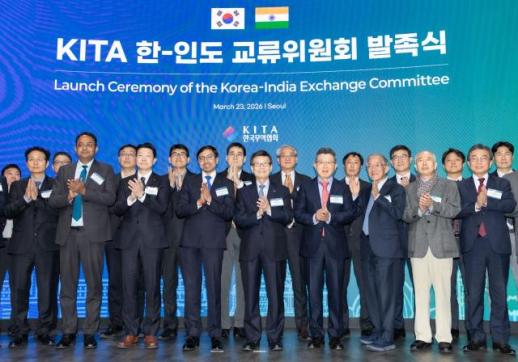 KITA launches Korea-India Exchange Committee to boost business cooperation SEOUL, March 24 (AJP) - The Korea International Trade Association (KITA) announced Tuesday that it has launched the Korea-India Exchange Committee in Seoul to strengthen bilateral economic cooperation. The committee will operate through two groups: an India committee within KITA comprising 28 Korean companies either operating in or seeking entry into India, and a Korea committee under the Confederation of Indian Industry (CII), made up of Indian companies interested in expanding into South Korea. Founded in 1895, CII is India’s largest private-sector business organization, representing more than 360,000 member companies. Around 30 representatives attended the launch ceremony, including KITA Chairman Yoon Jin-sik, Indian Ambassador to South Korea Gourangalal Das, and officials from participating firms such as Meta Biomed, Shinhan Bank, LG Electronics, YG-1, Jusung Engineering, Hana Bank, Hyundai Motor, and Hyosung Heavy Industries. In his opening remarks, Yoon described India as a rapidly growing global manufacturing hub. “India is the world’s fourth-largest economy and is expected to enter the top three within the next three years,” he said. “We hope the Korea-India Exchange Committee will serve as a practical communication channel at the private-sector level and play a key role in elevating bilateral economic cooperation.” Ambassador Das also emphasized the potential for stronger bilateral ties, noting that South Korea is an important strategic partner for India, particularly in manufacturing and advanced technology sectors such as semiconductors, shipbuilding and defense. During an expert session, Korea Institute for International Economic Policy (KIEP) researcher Kim Kyung-hoon presented on recent trends in Korea-India economic cooperation. Kim highlighted India’s role as a key production base for automobiles, smartphones and home appliances, while noting that South Korea’s exports and investment in India remain at about 30 percent and 20 percent, respectively, compared with Vietnam. “This paradoxically suggests significant potential for expanding economic cooperation between the two countries,” he said. The committee plans to co-host the 9th Korea-India Business Forum with CII in the second half of this year to strengthen business partnerships and discuss trade and investment cooperation. KITA also said it will enhance support for Korean companies operating in India through its New Delhi office, which serves as the secretariat for the Korean Chamber of Commerce in India. The office will share information on local regulations and help relay business difficulties — including customs, certification and incentive delays — to the government. 2026-03-24 13:14:23
 -
 Asia advances on easing Middle East tensions and oil price drop SEOUL, March 24 (AJP) — Asian markets found modest relief Tuesday on signals of a potential truce after U.S. President Donald Trump suspended his ultimatum over attacks on Iran’s power infrastructure, though gains were pared amid mixed signals from Tehran and Gulf states. Japanese stocks rose at the open on expectations of early de-escalation in the Middle East, with the Nikkei 225 rebounding after plunging more than 5 percent in the previous session on fears of prolonged oil supply disruptions. The index was up 1.42 percent at 52,249.45 in morning trade. Hong Kong’s Hang Seng Index gained 1.55 percent to 24,761.14, China’s Shanghai Composite rose 0.68 percent to 3,839.05, and Taiwan’s TAIEX added 0.58 percent to 32,913.26. Overnight on Wall Street, all three major indexes closed higher after Trump signaled a pause in potential military action against Iran and a resumption of negotiations, boosting hopes for near-term de-escalation. The Dow Jones Industrial Average rose 1.38 percent, while the S&P 500 and Nasdaq gained 1.15 percent and 1.38 percent, respectively. Oil prices also fell more than 10 percent, easing inflation concerns. In Seoul, the benchmark KOSPI rebounded sharply after the previous session’s steep decline. It rose 4.30 percent at the open before trimming gains to trade up 0.32 percent at 5,423.18 as of 10:53 a.m. The KOSDAQ added 0.34 percent to 1,100.63. Major KOSPI heavyweights traded mostly higher. Samsung Electronics rose 1.50 percent to 189,100 won, while SK hynix gained 2.79 percent to 959,000 won. Hyundai Motor advanced 1.55 percent to 492,500 won, and LG Energy Solution jumped 6.60 percent to 379,500 won. Samsung Biologics added 0.46 percent to 1,530,000 won, Hanwha Aerospace rose 3.29 percent to 1,320,000 won, and HD Hyundai Heavy Industries gained 1.79 percent to 511,000 won. Celltrion climbed 2.66 percent to 193,300 won, Hanwha Ocean gained 2.27 percent to 121,600 won, and Hyundai Mobis rose 2.76 percent to 391,500 won. Naver advanced 1.56 percent to 212,250 won, while Mirae Asset Securities edged up 0.48 percent to 62,200 won. KB Financial Group and Samsung C&T posted modest gains, and HD Hyundai Electric rose 0.11 percent to 914,000 won. Samsung Life Insurance was unchanged at 217,500 won. On the downside, Kia fell 2.72 percent to 157,300 won, marking the steepest decline among major stocks. Doosan Enerbility slipped 0.35 percent to 100,350 won, while Shinhan Financial Group edged down 0.67 percent to 89,300 won. On the KOSDAQ, market leadership has been shifting rapidly, with the top spot by market capitalization changing five times so far this year. Biotech stocks have recently emerged as a key driver. Samchundang Pharm rose 4.57 percent to 984,000 won, briefly becoming the largest KOSDAQ stock by market cap. Its share price has surged more than 300 percent so far this year. Leadership has rotated among battery and biotech names, including EcoPro BM, EcoPro, Alteogen and now Samchundang. Despite net foreign selling of 5.8 trillion won in Korean equities over the past week, investors continued to buy biotech stocks, with four biotech firms among the top 10 net purchases. Strong inflows into newly listed active ETFs on the KOSDAQ, heavily weighted toward biotech, have also supported the sector. Analysts say biotech could replace secondary batteries as the next market leader, though high volatility tied to clinical outcomes remains a key risk. The won strengthened slightly to 1,500.60 per dollar from the previous close of 1,517.6, reflecting a temporary easing of Middle East tensions. 2026-03-24 11:24:06