

Journalist

Jack L. Rozdilsky
-
 Trump 'won't rule out deploying US ground troops to Iran' SEOUL, March 3 (AJP) - The U.S. would not rule out sending ground troops into Iran "if they were necessary," U.S. President Donald Trump hinted amid an escalation of hostilities across the Middle East. In an interview with the New York Post on Monday, a day after the U.S.-led military action against Tehran dubbed "Operation Epic Fury," Trump said, "I don't have the yips with respect to boots on the ground — like every president says, 'There will be no boots on the ground.' I don't say it." He added, "I say 'probably don't need them,' ensures our enemies understand we'll go as far as we need to go to advance American interests. But we're not dumb about it," Hegseth told reporters. "You don't have to roll 200,000 people in there and stay for 20 years." "We expect to take additional losses, and as always, we will work to minimize U.S. losses," he added. The confrontations, which began with a surprise joint airstrike by the U.S. and Israel last Saturday that killed Iran's Supreme Leader Ayatollah Ali Khamenei, have expanded into a broader conflict involving countries across the Gulf region. Now in its third day, intense violence continues as Iranian forces retaliate with drone and missile attacks on targets across Israel, U.S. bases and Gulf states. Many analysts assess that the operation could last four to five weeks or longer, depending on developments on the ground. But Trump said, "Right from the beginning, we projected four to five weeks, but we have capability to go far longer than that," adding, "So we're ahead of schedule there by a lot." Meanwhile, six U.S. service members have been killed since the operation against Iran began, according to U.S. Central Command (CENTCOM). "As of , six U.S. service members have been killed in action. U.S. forces recently recovered the remains of two previously unaccounted for service members from a facility that was struck during Iran's initial attacks in the region. Major combat operations continue. The identities of the fallen are being withheld until 24 hours after next of kin notification," CENTCOM said. 2026-03-03 09:16:17
 -
 Actress Ji So-yeon Apologizes for Posting Japan Trip Video Ahead of March 1 Holiday Actress Ji So-yeon has apologized after drawing criticism for uploading a Japan travel video to her personal YouTube channel a day before the March 1 holiday. On March 2, Ji wrote on social media that she was taking “the many opinions” about the Japan trip video posted in late February “very seriously.” She said the video documented a trip taken on Feb. 11, but added, “It was entirely my fault that I did not think deeply enough about the meaning of the timing of the post.” Ji also said she felt heavy-hearted that criticism had extended to Yang Mira, who traveled with her, stressing that the upload schedule and the decision to make it public were “entirely my decision.” She added that the incident made her realize she must act with greater caution and responsibility, and said she would more carefully consider social context and timing in planning and releasing future content. Ji uploaded the video on Feb. 28 under the title, “Starting today, I’m a free woman!! (Japan trip with Yang Mira).” It shows the two traveling in Takamatsu, Japan. Some online commenters criticized the post as inappropriate ahead of the March 1 holiday.* This article has been translated by AI. 2026-03-03 09:15:15
 -
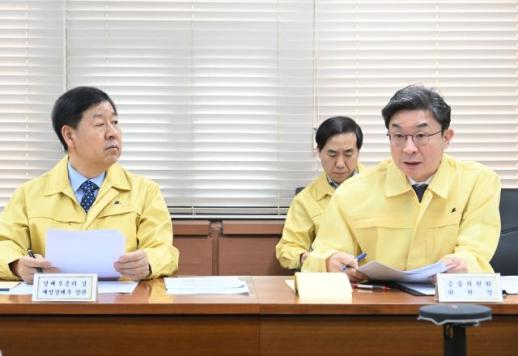 Seoul claims fuel stock enough to last more than 6 months SEOUL, March 03 (AJP) -South Korea moved to calm markets, saying it holds enough crude oil and petroleum products to last at least 208 days, as spiraling fighting in the Middle East escalated into a direct threat to global energy flows and tanker traffic through the Strait of Hormuz, a chokepoint responsible for around 70 percent of fuel imports for Asia's fourth-largest economy. With Iran declaring restrictions in the strategic waterway following U.S.-Israeli strikes and retaliatory drone and missile attacks across the Gulf, Seoul said it is maintaining an emergency posture across energy, finance and security — but stressed there is “no need for excessive concern.” The government said crude oil and petroleum product reserves stand at levels sufficient for more than six months, even if supply disruptions are prolonged. “Oil and petroleum products are stockpiled for 208 days. We are fully prepared even for a long-term disruption,” Vice Industry Minister Moon Shin-hak told reporters after a ministerial meeting on Middle East developments on Sunday. Liquefied natural gas (LNG) exposure is also seen as manageable. Qatar accounts for a portion of Korea’s LNG imports, but the Middle East share in Korea’s total LNG mix has fallen to around 20 percent. With spring approaching and seasonal gas demand easing, authorities said supply risks remain contained even if the situation drags on. The reassurance comes as shipping through the Strait of Hormuz — a chokepoint that handles roughly a fifth of global oil consumption and about 70 percent of Korea’s crude imports — has slowed sharply amid Iranian warnings to commercial vessels. Data providers reported hundreds of tankers anchored outside the strait, unable to transit. Brent crude surged more than 6 percent in Monday trading, briefly approaching $80 a barrel, while European gas prices spiked nearly 40 percent after Qatar halted LNG output at a major facility following intercepted drone threats. Analysts warn that a sustained disruption to Hormuz traffic could push oil above $100 a barrel, reigniting global inflation pressures. Wi Sung-rak, head of the presidential National Security Office, said the government remains in full emergency-response mode following the reported death of Iran’s Supreme Leader Ayatollah Seyyed Ali Khamenei and the widening regional strikes. “As the president has said, there is no need for excessive concern,” Wi told reporters in Singapore, where the president stopped for a state visit. “We are thoroughly prepared in the real economy, financial markets and military security.” The presidential office said it is operating an emergency system, with daily reviews chaired by the prime minister and cross-ministerial monitoring of energy supply, logistics and financial markets. All senior staff reported to work during the alternative holiday to assess developments, prioritizing the safety of South Korean nationals in the region. Officials declined to predict oil-price trajectories or the conflict’s duration, saying contingency measures would be adjusted after “sufficient observation.” Vice Finance Minister Lee Hyeong-il said Asian currencies weakened amid a broader flight to safety, while stock markets showed mixed performance. Safe-haven currencies such as the U.S. dollar and Swiss franc strengthened. Japan’s Nikkei index fell, Australia’s market was little changed and China’s Shanghai Composite edged higher, reflecting uneven investor sentiment. In the United States, equities initially fell but later pared losses, while Treasury yields rose on concerns that higher oil prices could rekindle inflation. The 10-year yield climbed above 4 percent. Lee said a joint emergency task force will monitor domestic financial markets and the real economy around the clock. “If abnormal signs emerge, we will respond swiftly in close coordination with relevant agencies,” he said, adding that the scale of impact will hinge on how long the conflict persists. The government has advised domestic carriers to avoid Middle Eastern waters and urged vessels entering the Strait of Hormuz to wait and take enhanced safety measures. As of Monday, no South Korean-flagged vessels were transiting the strait, officials said. One tanker that had been inside the waterway exited safely a day earlier. HMM, South Korea’s largest container carrier, said its 16,000-TEU vessel HMM Daon is currently docked at Jebel Ali Port in Dubai — the Middle East’s largest port and a key logistics hub linking Asia, Africa and Europe. The company said the vessel is not in a designated high-risk zone and is conducting routine port operations. It is monitoring the situation and will decide whether to relocate to a safer area depending on further developments. Of roughly 20 HMM container ships and tankers operating on Middle East routes, industry officials expect possible rerouting or schedule adjustments if instability persists. The conflict’s expansion to energy infrastructure — including reported drone strikes near Saudi Arabia’s Ras Tanura oil complex and threats to Qatari LNG facilities — has raised the stakes for global supply chains. Saudi Arabia, which exports more than 6 million barrels a day from Ras Tanura alone, is central to global market stability. Any sustained damage to its export capacity would weaken a critical buffer against price spikes. For South Korea, which recently saw the KOSPI break above the 6,000 milestone on strong semiconductor-driven gains, a prolonged oil shock could cloud the outlook. Economists warn that every sustained $10 rise in oil prices can shave 0.1 to 0.2 percentage point off global growth over 12 months. A move toward $100 oil could complicate monetary easing plans worldwide and strengthen the dollar further, adding pressure to emerging-market currencies. 2026-03-03 08:36:19
 -
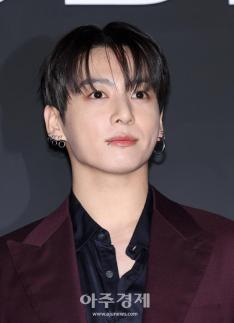 BTS’ Jung Kook’s ‘Please Don’t Change’ Tops Worldwide iTunes Song Chart BTS member Jung Kook’s solo track “Please Don’t Change” is gaining traction on global music charts. The song, from his solo album “GOLDEN,” ranked No. 1 on the Worldwide iTunes Song Chart dated Feb. 28. Released in November 2023, it has climbed back up the charts about two years later, holding the top spot for three straight days through the 27th and 28th. On the European iTunes Song Chart, it was No. 1 on the 26th and 27th and No. 2 on the 28th. On Spotify, the track has surpassed 219 million streams. Jung Kook’s cumulative streams stand at 6.79 billion, nearing 6.8 billion. 2026-03-03 08:33:16
 -
 Lee Sang-min Recalls Past Plagiarism Uproar Over R.ef’s Song Broadcaster Lee Sang-min, a member of the co-ed group R.ef, has recounted an incident tied to a past uproar over alleged song plagiarism. In a video posted March 2 on the YouTube channel “Jjanhanhyeong Shin Dong-yup,” titled “Can this even air? Tak Jae-hoon, Lee Sang-min, Kim Jun-ho,” Lee addressed reports that he caused a commotion after R.ef’s third-album title track “Cheonsang Yuae” was accused of plagiarism. “I got angry and hit glass, and I was slightly hurt,” Lee said, adding that he learned then that “everything has to be fact-checked.” The song, released in 1995, was previously swept up in controversy over claims it plagiarized “Omasuri Ninja” by the Japanese six-member group Ninja. Lee has also said in the past that there were separate composers for “Cheonsang Yuae,” but that he still felt guilty for singing it. Tak Jae-hoon, reacting to Lee’s account, said he “ran to the hospital crying” and told him, “Even I’m living with just 1,000 won, so why would you die?” He added that when the bandage came off, “a scab had already formed,” suggesting the injury was not serious. Lee said he had pushed the members to practice and finished recording because he liked the song so much, but the plagiarism dispute erupted before promotions even began. “I was shocked, too,” he said. “There was a singer who sang the exact same song I sang. If it had been a remake, nothing would have happened, but it really hurt my pride.” Lee again stressed that he was not suicidal at the time, saying, “I didn’t want to die.” 2026-03-03 08:24:28
 -
 Hwang Bo-ra Says She Often Sees Cha Jeong-won, Suggests Ha Jung-woo Made the First Move Hwang Bo-ra said she often meets with Cha Jeong-won. On the March 2 broadcast of TV Chosun's "Joseon's Lovebirds," actor Kim Yong-geon was shown visiting Hwang's home. When host Kim Guk-jin asked whether she had met Cha, Hwang replied, "We've known each other for a long time, so we see each other often." Hwang said the two appeared to have met by chance. She added that Cha greeted her with, "Hello, senior," and that it seemed they met again in a private setting. Asked who felt the attraction first, Hwang said, "In the end, doesn't it work only when the man likes her more?"* This article has been translated by AI. 2026-03-03 08:12:23
 -
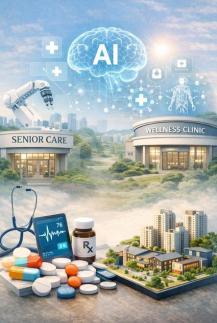 Drugmakers in South Korea Expand Into Senior Care, Eye Long-Term Growth but Face Profit Hurdles Pharmaceutical and biotech companies are accelerating expansion into senior health care, positioning it as a new growth engine as South Korea enters a super-aged society. With medical and caregiving demand expected to rise structurally, companies are moving into the “silver market,” where they can apply core capabilities while seeking long-term revenue with relatively lighter regulatory burdens. According to the Korea Insurance Research Institute on the 2nd, the number of older people needing care — including those with dementia and seniors living alone — is steadily increasing. By 2030, it projects that 16.5% to 26.3% of older adults will need elder-care services. Companies are responding by combining real estate development capacity with differentiated models such as health functional foods and digital technology. Among early movers is Chong Kun Dang. Chong Kun Dang Industry, a property asset management company under Chong Kun Dang Holdings, has expanded its footprint by acquiring nursing-care facilities. It operates “Bellforest” and “Heritage Nursing Home,” offering premium services. Heritage Nursing Home has a system designed to respond immediately in emergencies by linking with major hospitals. “Pharmaceutical companies already have networks among older adults and chronic-disease data, so combining that with the care industry creates strong synergy,” an industry source said. Still, concerns remain that care businesses may not deliver the profitability companies expect, largely because labor costs dominate spending. Nursing facilities must use 62.5% of government reimbursement payments for labor, and when indirect labor costs are included, staffing can account for about 70% to 80% of total expenditures. The burden can grow as facilities scale and it becomes harder to meet required ratios. “Separating the business into a separate corporation may limit financial risk, but operating nursing facilities requires distinct capabilities because it involves managing the overall brand image,” another industry official said. Kim Dae-jong, a professor in the School of Business at Sejong University, said, “Korea has the second-largest elderly population after Japan, and the silver industry is structurally bound to grow over the long term,” adding, “Any company will face limits to growth with its core business alone.” Overseas, pharmaceutical companies’ expansion into senior care is already seen as a proven model as aging becomes a business opportunity. Recently, Asian companies have focused on mental health and elder nursing. Japan’s Eisai, judging that “medicine alone cannot solve the dementia problem,” launched its subsidiary Theoria Technologies in 2023 and entered the dementia management platform business. China’s major drugmaker Sinopharm operates an integrated senior-care system built around combined medical and nursing-care hubs, expanding services on a “whole life-cycle” basis. The offering includes rehabilitation care, chronic-disease management and professional nursing services, in addition to supplying medicines. In South Korea, drugmakers are pursuing strategies aligned with their strengths. Daewoong Pharmaceutical formed a dedicated digital health care organization and unveiled its integrated artificial intelligence platform, “All New Think.” With more older adults needing ongoing management and more than 90% of domestic hospital beds lacking real-time monitoring systems, analysts see room for growth. However, as the market is still in an early stage, issues such as integrating AI technology and the contribution to sales remain to be assessed. Senior nutrition is also emerging as a new expansion track. Hanmi Science introduced “Hanmi Care Me,” a premium complete balanced nutrition product aimed at addressing nutritional imbalance among older adults. For seniors who struggle to consume adequate nutrients due to reduced activity and smaller meals, the message that it is “nutrition designed by a pharmaceutical company” can boost trust in purchasing. “Because the senior market is driven by trust-based consumption, pharmaceutical brands have an advantage,” an industry source said, while noting that the food industry already holds high market share and companies must also weigh the cost of building distribution and marketing infrastructure. Some also see longer-term benefits in understanding seniors’ needs and data. Sung Hye-jin, deputy director at the Pharmaceutical Industry Strategy Institute, said, “The senior market has a trust-based consumption tendency that fits well with pharmaceutical companies,” adding, “With the market still in its early stage, now is the time to enter, and there will be opportunities to lead across diverse fields.”* This article has been translated by AI. 2026-03-03 06:05:26
 -
 Korean Drugmakers Expand Into Senior Care as Super-Aged Society Grows South Korea’s shift into a super-aged society is pushing “senior health care” — spanning medical services, caregiving, housing and nutrition — to the center of a fast-changing industry. Domestic pharmaceutical and biotech companies are moving beyond drug development, expanding into housing and artificial intelligence-based digital care as they seek new growth in an aging era. According to the National Data Portal on March 2, people 65 and older accounted for 20.3% of the population as of 2025, marking the country’s entry into a super-aged society. The government projects the share will reach 30% in 2036 and exceed 40% in 2050. As the senior population grows, the market is increasingly viewed less as welfare and more as a high-value business. In particular, pharma and biotech companies are combining their drug-development capabilities with data and facility planning to build models that manage seniors across the full span of later life. Daewoong Group will open a senior-only “Care Hub” in Hanam, Gyeonggi Province, in April. The complex, about 3,800 square meters (1,150 pyeong), is designed to continuously monitor seniors’ health by combining data and AI. Unlike traditional nursing facilities focused on care and treatment, it emphasizes disease prevention and extending healthy life expectancy. The company plans to link clinical and disease data it has accumulated with wearable devices and AI analysis to provide preventive, preemptive services. The hub will offer outpatient-style programs and stays of up to three months for intensive management. Cha Bio Group is focusing on combining housing and medical services. Its affiliate Cha Healthcare last year partnered with POSCO E&C to develop senior residences, aiming to make living spaces function as medical platforms and narrow the gap between hospital and home. AI-based senior platforms are also emerging. HLB Global, through its subsidiary HLB Lifecare, operates a platform that predicts and manages chronic diseases. Using data from Yonsei University medical institutions and AI, it forecasts the onset of conditions such as diabetes complications and provides highly personalized management. Last year it formed an “AI medical health care council” with Japan’s largest private equity fund manager, ACA, and Korean AI firms including Selvas AI, JLK, VUNO and Mediana, stepping up efforts to enter the Japanese market. Senior nursing, housing and management services are widely seen as areas that can generate long-term cash flow. Hana Financial Research Institute projects South Korea’s senior market will expand to 241 trillion won by 2030 from 88 trillion won in 2022, an average annual growth rate of 13.4%. Kim Dae-jong, a professor in the business administration department at Sejong University, said the senior industry is poised for rapid growth as longer life expectancy makes healthy longevity a shared goal. He added that pharmaceutical companies’ performance in related noncore businesses is also likely to rise.* This article has been translated by AI. 2026-03-03 06:04:13
 -
 Six Korean Business Groups Urge Parliament to Pass U.S. Investment Special Act Six major South Korean business groups on Tuesday urged the National Assembly to swiftly pass a special law aimed at supporting investment in the United States. In an emergency appeal issued Tuesday, the Korea Enterprises Federation, the Korea Employers Federation, the Korea Chamber of Commerce and Industry, the Korea International Trade Association, the Korea Federation of SMEs and the Korea Association of Medium-Sized Enterprises said uncertainty in the trade environment has intensified after a recent U.S. Supreme Court ruling that found the International Emergency Economic Powers Act, or IEEPA, unlawful. They said the ruling could prompt the United States to rely on alternative laws to keep its current tariff policy direction while imposing additional, selective tariffs on specific countries or products, making passage of the bill urgent. The groups said exports to the United States in key South Korean industries — including semiconductors, automobiles and pharmaceuticals — are being directly affected, raising concerns about weakening industrial competitiveness. They warned that delays in handling the bill would weaken South Korea’s negotiating leverage with the United States and make it harder to realize tangible benefits from bilateral economic cooperation. They again called on lawmakers to pass the bill within the special committee’s mandate so companies can reduce trade risks and pursue exports to the United States more actively. * This article has been translated by AI. 2026-03-03 06:03:24
 -
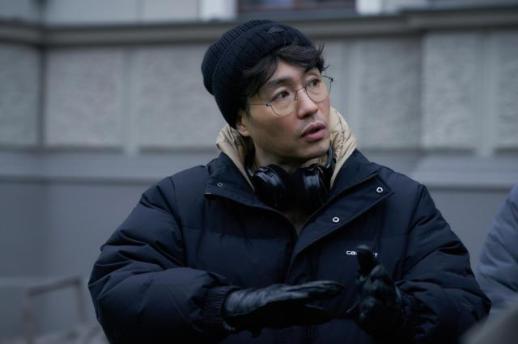 Director Ryoo Seung-wan Says ‘Humint’ Marks a Turning Point in His Filmmaking 'Veteran' and 'Smugglers' helped director Ryoo Seung-wan prove he could deliver both mass appeal and genre thrills. With his new film, 'Humint,' he returns with a quieter approach, trading punchy energy for a closer look at emotions and fractured relationships set against Vladivostok. Working within action-movie conventions, he pares back technique to move closer to his characters’ inner lives. The film opened Feb. 11 and has drawn a cumulative 1.82 million viewers, according to the Korean Film Council’s integrated box office system as of March 1. Ryoo first expressed gratitude for the renewed energy in theaters over the Lunar New Year holiday period and for fellow directors’ strong showings. "What I’m feeling is that theaters have come alive again after a long time. Compared with last year’s Lunar New Year holiday, it feels completely different. I’m grateful for that," he said. "I’m really happy director Jang Hang-jun is doing well. The cinematographer for 'The Man Who Lives With the King' is someone I’ve worked with my whole life, and I’m close with Yoo Hae-jin, too. Anyway, it feels good that two films with different sensibilities are out and audiences are coming to theaters. We’re also continuing stage greetings and meeting audiences." Ryoo said the project began with anger he felt after encountering a real-life tragedy while reporting in the past. "The basic incidents I gathered while preparing 'The Berlin File' — things that happened on the Chinese border and what I learned while covering a North Korean mission — became the foundation," he said. "The human trafficking case set in Vladivostok in the film is something that actually happened. What I heard was a crime so severe it’s hard to describe. When you ask why I chose this material, if I look back purely, I was furious after hearing it. You hear a lot about smuggling cigarettes, but buying and selling people … that’s something that must not exist. That anger was the starting point." Because the subject is tragic, he said he repeatedly weighed how to keep the camera from exploiting its victims. "The moment I chose this material, there was no longer any question of comfort or discomfort. It’s something that makes you angry, so it’s inevitably uncomfortable," he said. "The filmmaker’s task is that our gaze must not exploit the subject. Setting the distance between the camera and the subject required real care. The priority was not to emphasize it or treat it as something to gawk at. Even in postproduction, if the women stood out in the later images of the factory basement, I blocked all of that. I didn’t want the audience’s gaze to drift there and create an exploitative look inside the screen. We struggled with how to handle the material. On set, it was difficult and delicate." To capture the mood of the setting, he said he stripped away noise and focused on the landscape his characters move through. "Rather than emphasizing action spectacle, I wanted to preserve the characters’ emotional lines," he said. "So we removed the loud background extras walking around in the streets. I wanted the focus only on the characters. For every scene of someone walking, we searched the city thoroughly — the buildings, the streets — and checked everything in detail. We built a set for the North Korean restaurant, but everything else was shot in Vladivostok. There was only one method: the staff’s legwork." Ryoo pointed to what he called the film’s central image: a person who is ultimately alone even within relationships. "The title is 'Humint,'" he said. "The people placed inside this world. In the opening and ending, you see someone waking up and falling asleep somewhere that isn’t their home — that’s the image. They form tight relationships, and yet they’re ultimately alone within them. The keyword is 'parting,' a 'person who leaves.' That was important to me. This is an action film, but when it reaches action, the emotion isn’t the pleasure of beating a bad guy like I’ve handled before. It’s action that explodes after being compressed within a calm emotional line. So the approach was less about action itself and more about refining the characters." He said he aimed for traditional suspense that makes a theater go quiet, balancing familiarity and novelty. "When more than 100 people watch a film in a theater, I wanted suspense that makes them hold their breath," he said. "You can feel that silence when people are focused. I’ve used humor a lot, but I thought: Let’s go for real, traditional suspense in a theater. I wanted the appeal of seeing actors on a big screen again. Action matters, but I wanted something that lingers. Because this isn’t made from scientific data, if it feels too familiar people get bored, and if it’s too new they reject it. How do you create harmony between the familiar and the new? I thought it might feel new to build emotional density step by step, then pull the climax forward and drive hard in the final stretch." Ryoo also cited the film’s mirrored opening and ending, saying it was possible because of actor Zo In-sung. He said it was his most explicit use of that structure and that he wanted the afterimage left with viewers to be the character himself. "This is the first time I’ve placed such an obvious mirrored structure in a film, and it was possible because of Jo, because of Zo In-sung," he said. "In a way, I think this story may be in the form of Jo’s recollection. After watching, people may remember many things, but I hoped the afterimage would be purely a 'person.'" In shaping what he called realistic, self-directed female characters, he said feedback from his family and his own approach as a director played a major role. "When I handle female characters, I have very strong censors: my wife and daughter," he said, laughing. "In real life, we don’t find someone appealing if they only lean on others. We’re attracted to independence. Chae Seon-hwa is already the person who causes the incident in 'Humint' and drives it to its outcome. If you treat her as a character consumed by an action film, you lose the engine itself. There were different ways to portray rescuing female colleagues, but I thought it had to be Seon-hwa who does it. Even the character who gets shot and collapses should be saved and protected by their own group. I’m attracted to that kind of person. I think that’s cool." Ryoo said he accepted audience criticism with humility and treated it as a chance to learn. "One of the most shocking things I heard was that in reality, people were placed together in glass cases like merchandise," he said. "Their condition, too. We couldn’t portray it close to reality, so after a lot of 고민, we created our own setting to condemn the act. When you shoot action, you also think about what makes an interesting setup. But with the audience’s points of dislike, I realized, 'I didn’t think that far.' I considered it something worth taking to heart. I’m grateful to receive it and I think I need to keep checking those things as I make films. Even for me, the starting point wasn’t, 'Let’s squeeze it all out.' I should have looked more carefully and in more detail, but I fell short. I’m learning a lot from the feedback." Looking back on two decades in film, Ryoo said 'Humint' left him feeling unburdened — and could mark a turning point toward something different next. "After finishing the film, releasing it, and reaching this moment, I feel lighter and I have no regrets. It feels like, 'I’ve done everything I wanted to do,'" he said, laughing. "I even think, 'If I died tomorrow, it would be a good death.' Of course, I still have homework. With reactions I didn’t anticipate, I think, 'Ah, I need to think more about this.' What I’m grateful for with this film is that it may become a turning point for me. Over 20 years, I tried everything I liked and wanted to do, and I’m thinking the next film could be very different."* This article has been translated by AI. 2026-03-03 00:03:22