
Journalist

Jang Suna
-
 Coupang CLS to Allow 18,000 Delivery Workers Time Off for Local Elections Coupang's delivery subsidiary, Coupang Logistics Service (CLS), will implement time off for over 18,000 delivery workers nationwide to participate in the upcoming local elections.On May 19, CLS announced that it will adjust time off for delivery workers to allow them to vote during the early voting days on May 29-30 and the main election day on June 3.Since April 15, 50 days before the local elections, CLS has been encouraging delivery companies across the country to adjust their schedules to ensure workers can exercise their voting rights. The company has sent out official requests to delivery partners to facilitate time off for workers, and many locations are adjusting their delivery schedules to allow workers to take at least one day off during the three-day voting period.According to CLS, more than 6,000 workers have already requested time off for each of the three voting days. In total, over 18,000 delivery workers are expected to take time off during the election period, with some opting for more than two days off depending on their schedules. CLS plans to send additional requests to delivery partners to encourage even more workers to participate in the voting process before the elections.A CLS official stated, "We have implemented a backup driver system to provide customers with seven-day delivery service while allowing delivery workers to work less than five days a week. During the local elections, we are also encouraging time off to ensure that delivery workers can participate in voting."Last year, on June 3, the day of the presidential election, CLS suspended its weekly rocket delivery service to ensure that delivery workers could exercise their voting rights. This marked the first time since the service's launch in 2014 that rocket deliveries were halted.* This article has been translated by AI. 2026-05-19 14:15:31
 -
 Minister Kim Jong-kwan Expresses Urgency Against Samsung Electronics Strike Kim Jong-kwan, the Minister of Trade, Industry and Energy, stated on May 19 that he feels a "desperate need" to prevent the planned strike at Samsung Electronics. He acknowledged that while everyone understands the workers' demands, the potential impact of the strike is a concern for the entire nation. During a meeting of the National Assembly's Trade, Industry, Energy, Small and Medium Enterprises Committee, Minister Kim expressed caution about the situation, saying, "If we cannot even address the potential negative effects of a strike, what can our society achieve in the future?" He emphasized the urgency and concern surrounding the issue. Regarding a recent court's temporary injunction decision, he remarked, "It seems inappropriate to discuss what is right or wrong at this moment." He also mentioned that he is in close discussions with the Minister of Employment and Labor on various matters related to the emergency mediation authority. On the same day, the labor and management sides of Samsung Electronics were engaged in a second round of post-adjustment discussions at the Central Labor Relations Commission. Park Soo-geun, the chair of the Commission, indicated that a proposal for mediation is expected, stating, "It should come out, and while it’s not ready yet, there is a possibility this evening." He noted that there has been some narrowing of differences between the two sides and that negotiations on distribution rates by sector are ongoing. The Commission plans to listen to both sides and find common ground for a mediation proposal. However, if the discussions extend for too long, they may continue into May 20. The first round of post-adjustment discussions, held on May 11-12, concluded in the early hours of May 13. The government has indicated that it may invoke emergency mediation authority if the Samsung Electronics strike materializes. The union has announced that the strike is set to begin on May 21.* This article has been translated by AI. 2026-05-19 14:09:19
 -
 Google and Blackstone Launch AI Cloud Company to Compete with Nvidia Google and Blackstone are establishing a new artificial intelligence (AI) cloud company. Google plans to leverage its proprietary AI chip, the Tensor Processing Unit (TPU), to challenge Nvidia's dominance in the AI infrastructure market. According to the Wall Street Journal on May 18, the two companies have agreed to create the AI cloud firm in the United States, although the name has not yet been disclosed. Blackstone will invest $5 billion in equity for this venture. The new company will provide cloud computing services based on Google's TPU. Benjamin Trainer Sloss, a long-time Google executive, will serve as the CEO of the new company. Google and Blackstone announced plans for the company to operate with a computing capacity of 500 megawatts (MW) by 2027, which is comparable to the power demand of a medium-sized city. The Wall Street Journal reported that Blackstone is expected to support investments totaling around $25 billion, including debt financing. This joint venture is seen as Google's most significant attempt to monetize its AI chips in the external market. Industry observers have been watching closely to see whether Google would use its TPU primarily for internal services or expand into the external cloud market. Recently, Google secured a major contract to provide approximately 1 million TPUs to Anthropic and has also entered into agreements with Meta Platforms. Competitors include Nvidia and CoreWeave. Currently, major AI companies rely on Nvidia chip-based cloud infrastructure to train and run advanced AI models. CoreWeave has rapidly grown by capitalizing on AI computing demand with Nvidia chips. Google's strategy aims to reduce its dependence on Nvidia by creating alternatives with its own chips. Last month, Google unveiled a new processor for AI inference, which is the computation involved in executing already trained AI models in real-world applications. As businesses increasingly adopt AI, the demand for inference is rising. Blackstone is accelerating its investments in AI infrastructure. The firm has pursued acquisitions of data center operators QTS Realty Trust and AirTrunk, and has invested in CoreWeave, Anthropic, and OpenAI. Stephen Schwarzman, Chairman and CEO of Blackstone, recently stated that the company holds over $150 billion in data center assets, including facilities under construction.* This article has been translated by AI. 2026-05-19 14:06:37
 -
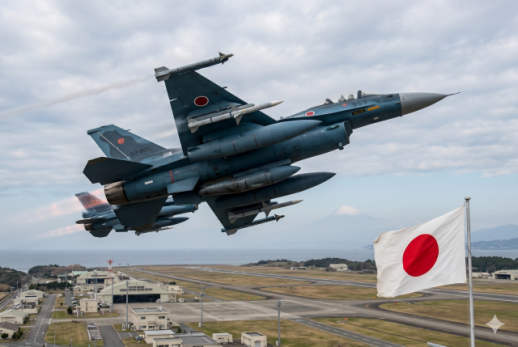 ASIA DEEP INSIGHT: Pacific forgets ghosts as Japan embraces arms trade By welcoming Japanese military exports, Manila helps Tokyo dismantle an eighty-year pacifist legacy in the name of regional deterrence. When Philippine President Ferdinand Marcos Jr. recently addressed the press to welcome Japan’s decision to loosen its post-war ban on lethal weapon exports, his phrasing was carefully calibrated for the current geopolitical moment. Japan and the Philippines, he noted, have faced "the same difficulties." He was referring, of course, to the encroaching shadow of Chinese maritime militias in the South China Sea. It is a unifying, urgent threat. But to accept his premise requires an extraordinary act of historical amnesia, effectively erasing the memory of a time when the greatest existential threat to Manila was the Imperial Japanese Army. Marcos is not acting irrationally. The daily, suffocating squeeze from Chinese coast guard vessels around contested shoals requires immediate, hard assets. Radar systems, patrol vessels, and coastal defense missiles are the currency of survival in the South China Sea today. Marcos is desperate for a patron capable of providing that maritime deterrence, and he is entirely willing to grant Tokyo moral amnesty to secure it. Washington is cheering from the sidelines, eager to outsource the heavy lifting of Pacific security to capable deputies. But look past the diplomatic handshakes and the shared anxieties over Beijing, and a profound institutional shift comes into focus. Japan is not merely adjusting its export controls to help a beleaguered neighbor. It is executing a structural dismantling of the pacifist identity that anchored East Asian geopolitics for eight decades, transforming itself from a restrained economic heavyweight into an active merchant of lethal force. The true driver of this pivot is less about democratic solidarity and more about industrial survival. For years, Japan’s defense contractors have been quietly starving. Constrained by a constitution that strictly limited the domestic military to self-defense, conglomerates like Mitsubishi Heavy Industries and Kawasaki Heavy Industries were trapped in a catastrophic business model. Building bespoke, high-tech weaponry for a single, non-combatant buyer is financially ruinous. A shrinking, aging population translates to a dwindling tax base and flat procurement budgets. Major corporations were threatening to abandon the defense sector entirely. By opening the export spigot to overseas buyers, the Japanese cabinet is executing a massive corporate bailout. Exporting lethal hardware lowers per-unit costs, scales production, and artificially sustains a manufacturing base that Tokyo believes it desperately needs. Yet, in doing so, Japan has crossed a psychological Rubicon. It has linked the financial health of its defense-industrial complex to the proliferation of global friction. Once a nation’s shipyards and aerospace factories require foreign conflicts to balance their ledgers, the state’s diplomatic posture inevitably hardens. Viewed from across the water in Seoul, this awakening provokes a quiet, historical unease. South Korea has spent the last decade building its own formidable defense export machine, moving tanks and self-propelled artillery across the globe to secure diplomatic leverage and economic growth. Now, Japan steps into the same arena, wielding immense technological supremacy, deep pockets, and an aggressive new mandate. When Japan begins mass-producing lethal weaponry for foreign battlefields, it signals to the rest of the peninsula—and to Beijing—that the era of restrained diplomacy is functionally dead. East Asia is actively replacing the fragile promise of economic integration with a cold, unforgiving race for hard military deterrence. The domestic blowback within Japan reveals a profound national cognitive dissonance. When the cabinet pushed the export revision through, it bypassed parliamentary pre-approval, sparking protests outside the Diet building. Polling consistently indicates that nearly 60 percent of the Japanese public opposes the export of lethal weapons. The citizenry recognizes what the state refuses to admit outright: becoming merchants of death strips Japan of the unique moral authority it wielded as a nation that knew the apocalyptic horrors of war and consciously chose a different path. This is what modern militarism looks like. It does not announce itself with imperial ambitions or territorial conquests. It creeps in through the quiet normalization of the military-industrial complex. The current, palpable panic regarding China provides the perfect, unassailable excuse for Tokyo to shed its historical guilt and dismantle the structural brakes that kept its defense contractors in check. The administration in Tokyo insists it is merely building a network of allied partners to prevent the outbreak of conflict, relying on the familiar, sterile belief that flooding a theater with more weapons will somehow manufacture peace. But deterrence is a fragile psychology. Manila is cheering for the very machine that once brought the Pacific to ruin, simply because this time, the weapons are pointed in the other direction. Tokyo has traded the quiet dignity of its pacifist shield for the raw, lucrative leverage of the sword, leaving a heavily armed region to wonder who will eventually bleed from its edge. 2026-05-19 14:04:54
 -
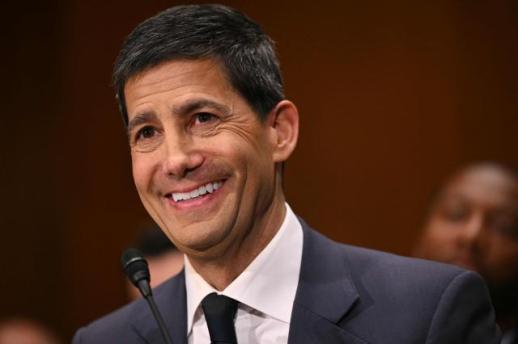 Kevin Warsh to be Sworn in as Next Fed Chair on May 22 Amid Inflation Concerns Kevin Warsh will be sworn in as the next chair of the U.S. Federal Reserve this week, beginning a four-year term. Reuters reported on May 18, citing White House officials, that Warsh is scheduled to take the oath of office on May 22, presided over by President Donald Trump. Warsh's confirmation passed the Senate on May 13 with a vote of 53 in favor and 45 against. He will chair his first Federal Open Market Committee (FOMC) meeting on June 16-17. A lawyer and financial expert, Warsh previously served as a Fed governor during the global financial crisis. He takes on the role amid inflation significantly exceeding the Fed's target of 2%. According to Reuters, while some Fed officials viewed tariff impacts as a one-time price increase, concerns about inflation have intensified due to energy price shocks stemming from the Iran conflict affecting a broad range of goods and services. Austan Goolsbee, president of the Chicago Federal Reserve Bank, stated in an interview with Fox Business, "We are facing an inflation problem," noting that the rising service prices may not solely be attributed to oil prices or tariffs. He added, "There are many issues to watch, and we need guidance from the chair." Markets are increasingly anticipating that the current benchmark interest rate of 3.50-3.75% will remain unchanged at the June FOMC meeting. However, with inflation indicators coming in higher than expected, there are speculations that the Fed may raise rates as early as December. Meanwhile, Jerome Powell, who led the Fed for eight years, completed his term on May 15. He served as interim chair until Warsh's official swearing-in and is expected to remain on the Fed board.* This article has been translated by AI. 2026-05-19 13:59:17
 -
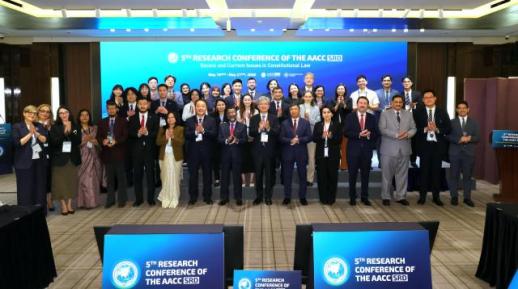 Experts Discuss the Future of Constitutional Justice in Asia at AACC Conference in Seoul Experts in constitutional law from across Asia gathered in Seoul to strengthen the values of human rights, democracy, and the rule of law in the region. On May 19, the Asian Constitutional Courts Consortium (AACC), led by Chief Justice Kim Sang-hwan, held the opening ceremony of its 5th International Conference at the Westin Chosun Seoul, marking the beginning of a two-day official agenda. The conference featured over 50 experts, including Chief Justice Kim, Justice Kim Hyung-doo, and AACC Secretary General Son In-hyuk, who represented major domestic institutions and member courts from 15 AACC member organizations. In his opening remarks, Chief Justice Kim highlighted the remarkable growth of the AACC, stating, "What began as a small initiative with a memorandum of understanding among four institutions in 2007 has now evolved into a global regional consortium with 22 member organizations. This is evidence of how deeply Asia has cooperated to uphold universal values." He further emphasized the importance of maintaining democratic principles and the practical value of the rule of law in the face of recent international developments, stating, "In a rapidly changing international environment, our most pressing mission is to uphold democratic principles and implement the true value of the rule of law. I hope the insights gained from this conference will serve as a foundation for further protecting the fundamental rights of Asian citizens." Following him, Son In-hyuk, Secretary General of the AACC, introduced the specific goals and session structure of the conference. Son explained, "Since its establishment in 2017, the research office has laid a solid foundation for constitutional justice in Asia through annual international conferences and research reports." The main theme of the 5th conference is 'Recent Trends and Issues in Constitutional Law.' The agenda includes three sessions and a comprehensive session. The AACC aims to enhance collaborative responses to constitutional challenges faced by Asian countries based on the research outcomes accumulated during this conference. In particular, the Constitutional Court of Korea plans to continue supporting the academic and practical efforts of member institutions through the activities of the research office, reinforcing its role as a center for cooperation in the rule of law in Asia. After two days of intense discussions, participants will consolidate their discussions in a comprehensive session to derive future values that Asian constitutional courts should pursue. This conference is expected to serve as a significant milestone in forming a constitutional community in the Asian region, going beyond mere academic exchange.* This article has been translated by AI. 2026-05-19 13:57:30
 -
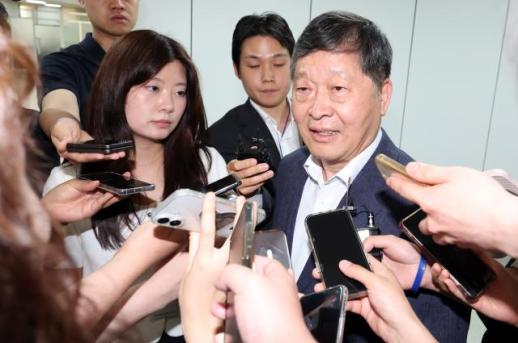 Samsung Electronics Strike Countdown: Mediation Talks Gain Momentum Samsung Electronics is entering the second day of mediation talks, with the possibility of a proposal from the Central Labor Commission. The commission is holding the second day of mediation talks from 10 a.m. to 7 p.m. on May 19 at the government complex in Sejong. The meeting is closed to the public. Park Soo-geun, chair of the Central Labor Commission, indicated during a break that a proposal may be forthcoming, stating, "It should come out. It’s still early, but there’s a possibility this evening." He noted that some differences between the parties have narrowed, saying, "A little," and mentioned that negotiations on sector-specific distribution rates are ongoing. Choi Seung-ho, chair of the joint action committee of the Samsung Electronics union, who had not made any statements before entering the meeting, said, "We will create a proposal that maximizes member satisfaction." When asked if they are maintaining their stance on institutionalizing performance bonuses, he replied, "Yes." Lee Myung-gu, head of the People Team for Samsung Electronics' Device Solutions (semiconductor division), stated before entering the meeting, "We will do our best until the end." As he entered the meeting, Park responded to a question about whether the opinions of both sides are converging, saying, "Some are narrowing," and added that they would confirm the differences from the morning session. Regarding the mediation proposal, he explained, "We will see if both sides can reach an agreement; if it seems unlikely, we will present it. For now, there is still a possibility of an agreement between the two parties, so we will decide after observing." He stated that a draft of the mediation proposal has not yet been prepared. Samsung Electronics and its union are engaged in the second round of mediation talks at the request of Minister of Employment and Labor Kim Young-hoon, ahead of a planned strike on May 21. In the previous day's meeting, both sides outlined their positions and began negotiations on key issues such as the criteria and caps for performance bonuses. The Central Labor Commission plans to listen to both sides and find common ground to prepare a mediation proposal. However, if the meeting extends, it may continue until May 20. The first round of mediation held on May 11-12 also concluded in the early hours of May 13. The government has indicated that it may invoke emergency mediation powers if the strike at Samsung Electronics materializes. The union has announced that the strike is set to begin on May 21, just two days away. 2026-05-19 13:55:18
 -
 Korea's household debt tips over $1.3 trillion Q1 SEOUL, May 19 (AJP) - South Korea’s household debt climbed to the brink of the symbolic 2,000 trillion won ($1.33 trillion) threshold as of March as tighter bank regulations failed to stop a fresh wave of housing-related borrowing that increasingly migrated to non-bank lenders. Outstanding household credit reached 1,993.1 trillion won at the end of March, up 14 trillion won, or 0.7 percent, from the previous quarter, according to preliminary data released by the Bank of Korea (BOK) on Tuesday. The annual growth rate accelerated to 3.5 percent from 2.9 percent in the fourth quarter. Household loans accounted for 1,865.8 trillion won of the total, rising 12.9 trillion won on quarter, while credit card and installment debt increased 1.1 trillion won to 127.3 trillion won. The increase was driven overwhelmingly by housing demand rather than consumer spending, underscoring how Korea’s property market continues to fuel leverage despite prolonged efforts by regulators to cool borrowing. Housing-related loans — a newly renamed category previously classified as mortgage loans — expanded by 8.1 trillion won in the January-March period, up from a 7.2 trillion won increase in the previous quarter. Other loans, including personal credit lending, also rose at a faster pace, increasing 4.8 trillion won after a 4.1 trillion won gain three months earlier. The more striking shift came from where the borrowing occurred. Commercial bank household lending, which had increased by 6 trillion won in the fourth quarter, swung to a 200 billion won decline in the first quarter as tighter lending controls curbed bank-based mortgages. But the slowdown merely pushed borrowers toward secondary lenders. Loans extended by non-bank depository institutions nearly doubled in growth pace to 8.2 trillion won from 4.1 trillion won in the previous quarter, according to the BOK. Housing-related lending at those institutions surged 10.6 trillion won, sharply accelerating from a 6.5 trillion won increase three months earlier. Mutual finance cooperatives accounted for 5.1 trillion won of the increase, while Saemaul Geumgo, or MG Community Credit Cooperatives, added another 2.4 trillion won. “The recent rise in housing transactions means we need to closely monitor related lending trends,” Lee Hye-young, head of the Financial Statistics Team at the BOK, said during a briefing. The data suggest regulators may be containing risk within the banking sector only to see leverage resurface elsewhere in the financial system — a recurring concern in Korea’s long-running household debt cycle. By contrast, signs of consumer weakness remained limited. Growth in merchandise credit slowed to 1.1 trillion won from 3 trillion won in the previous quarter, but the central bank said seasonal factors likely accounted for much of the moderation, noting that card spending typically peaks in year-end quarters. In a notable methodological change, the BOK also began separately disclosing jeonse loans — financing tied to Korea’s lump-sum rental deposit system — from commercial banks. The central bank said the split was necessary because such loans have expanded rapidly over the past decade and have become increasingly important in assessing housing-related debt risks. Outstanding jeonse loans at commercial banks reached 165.7 trillion won at the end of March, accounting for 16.6 percent of total commercial bank household lending. The figure has surged more than sixfold since 2015, when related balances stood at just 25.3 trillion won. 2026-05-19 13:50:29
 -
 Lee brings heritage-inspired gifts for Japanese PM to Andong summit SEOUL, May 19 (AJP) - President Lee Jae-myung is set to meet Japanese Prime Minister Sanae Takaichi at a summit in Andong, North Gyeongsang Province on Tuesday. Lee has prepared locally themed gifts for Takaichi, according to Cheong Wa Dae. Among them is a framed set of wood carvings depicting nine types of traditional folk masks, a well-known symbol of Andong, home to Hahoe Village, one of the country's most notable living repositories of Joseon-era heritage. The item was chosen to represent harmony and hopes for stronger ties between the two neighboring countries. The gift list also includes a leather bag made with hanji, traditional Korean paper, and red ginseng, known for its health benefits. Lee will also present her with an artwork featuring a moon jar, reflecting the moon as a symbol of wishes in both countries. For Takaichi's husband, former Japanese politician Yamamoto Taku, Lee has prepared a snowflake-themed tableware set crafted with zinc glaze and silver to create snow-crystal patterns, resembling the snowy landscapes of Fukui Prefecture, his hometown. Separately, local cultural heritage organizations prepared a lightweight blanket made from Andongpo, a traditional hemp fabric once used as a royal court tribute, as a gesture wishing Takaichi good health and well-being. The historic city's Confucius clan also prepared a miniature set of traditional village guardian totems believed to ward off evil spirits and illness, saying their symbolism reflects the roles of the two leaders. The two leaders first met last fall on the sidelines of the Asia-Pacific Economic Cooperation (APEC) summit in Gyeongju, where they agreed to pursue shuttle diplomacy between the two countries. Lee then traveled to Nara in January, during which he proposed that the next summit be held in Andong. 2026-05-19 13:40:40
 -
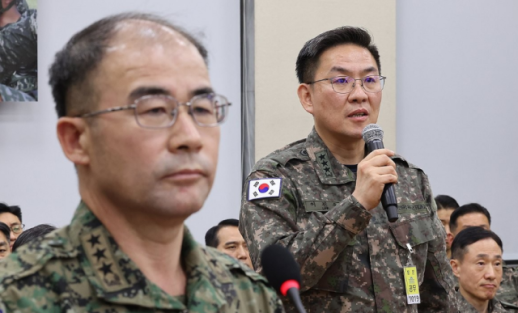 Special Prosecutors Target Military Leadership in Second Martial Law Investigation The second comprehensive special investigation team, led by Special Prosecutor Kwon Chang-young, is intensifying its probe into allegations surrounding the second martial law, targeting both the Joint Chiefs of Staff leadership and field commanders. Notably, the special prosecutors are applying charges of 'rebellion' under military law to field commanders, indicating a focus on the mobilization of armed forces rather than merely executing unlawful orders.As of the morning of May 19, the special prosecutors are questioning former Army Capital Defense Command Chief Lee Jin-woo as a suspect under military law for rebellion. On May 14, they also investigated former Army Special Warfare Command Chief Kwak Jong-geun on similar charges.Lee is accused of instructing his armed subordinates to block the National Assembly during the declaration of emergency martial law and allowing troops to enter the National Assembly premises. The special prosecutors are expected to press Lee on the directives from former President Yoon Suk Yeol and the circumstances surrounding the troop deployment.The investigation has already implicated Yoon, former Defense Minister Kim Yong-hyun, former National Intelligence Service Director Noh Sang-won, and former Commander Kwak on charges of rebellion. Yoon has been summoned to appear for questioning on May 23, while Kim is set to appear on May 26. Focus on Charges of 'Rebellion' Instead of 'Important Duties in Insurrection'Legal experts are noting the significance of the special prosecutors applying charges of rebellion to Lee and Kwak instead of 'important duties in insurrection.'The rebellion charge punishes collective violent acts using military organization and armed forces. The key issue is whether actual forces were mobilized to operate the military command structure, beyond merely transmitting or executing unlawful orders.This suggests that the special prosecutors are investigating the Defense Command and Special Forces not merely as executing organizations but as 'actual perpetrators of armed force mobilization.'This aligns with the interpretation that the special prosecutors view the case as a 'three-tier command structure' involving the final directive line of Yoon and Kim, the Joint Chiefs of Staff leadership, and the executing units of the Defense Command and Special Forces. The special prosecutors are also accelerating their investigation into the Joint Chiefs of Staff leadership.They have notified former Joint Chiefs of Staff Chairman Kim Myung-soo to appear for questioning on charges of important duties in insurrection on May 27. Kim is reported to have expressed his intention to attend.Kim is suspected of being involved in the formation of the martial law command while monitoring the military's entry into the National Assembly from the Joint Chiefs of Staff command control center during the declaration of emergency martial law on December 3, 2024.The special prosecutors suspect that Kim issued fragmentary orders to the Special Forces and Defense Command to prioritize martial law operations. Fragmentary orders are military operational commands that quickly convey changes in operational situations or missions.The special prosecutors are examining whether Kim's orders went beyond mere situation management to actively support the emergency martial law operations.Previously, the special prosecutors classified the Joint Chiefs of Staff-related allegations as a 'first recognized case.' In addition to Kim, they have also charged former Deputy Chief Jeong Jin-pal, former Military Support Headquarters Chief Kang Dong-gil, former Operations Headquarters Chief Lee Seung-o, former Operations Department Chief Ahn Chan-myung, and former Defense Readiness Inspection Chief Lee Jae-sik with important duties in insurrection. The special prosecutors conducted a search and seizure operation at the Joint Chiefs of Staff on April 24. Military Requests for Troops After National Assembly's Martial Law RepealA key aspect of this investigation is whether discussions about additional troop deployments occurred after the National Assembly passed a resolution to repeal martial law.The special prosecutors have reportedly secured statements from current and former Joint Chiefs of Staff officials indicating that there were requests for additional troop deployments after the National Assembly's resolution to repeal martial law.Based on this, the special prosecutors are looking into whether Yoon and military leaders considered re-deploying troops or implementing additional martial law measures after the repeal.The special prosecutors are broadening their investigation to include not only troop movements and entry into the National Assembly immediately after the martial law declaration but also the actions of military leadership following the resolution to repeal martial law. Remaining Challenge: Evidence and C4I Operational RecordsHowever, as the special prosecutors reach the midpoint of their extended investigation and enter the critical phase of questioning key suspects, securing decisive evidence to substantiate the 'three-tier command structure' is seen as a major challenge ahead.So far, statements from military officials indicating that there were requests for additional troop deployments have been obtained, but legal experts emphasize the need to secure internal military records that objectively prove the structure of directives, transmission, and execution.In particular, operational records from the military command and control system, known as C4I (Command, Control, Communications, Computers, and Information), are considered a key piece of evidence.According to reports from Aju Economy, some military units during the martial law period did not operate C4I equipment normally. In standard military operations, troop movements, command orders, and location information are recorded within the C4I system. If the special prosecutors can obtain the operational logs, communication records, and terminal access records from the day of the martial law declaration, it could serve as crucial evidence to clarify the command line from Yoon to the Joint Chiefs of Staff, Defense Command, and Special Forces.Conversely, if it is confirmed that some troops operated outside the command control network, the existence of separate command lines or abnormal operational systems within the military could also become a focus of investigation.* This article has been translated by AI. 2026-05-19 13:34:02