

Journalist

Jinkyu, Myung
-
 AI Agent Platform Wars Intensify: OpenAI Governance, Microsoft Windows, China's Semiconductor Push As the battle for AI agent platforms heats up, OpenAI has released a global AI regulatory framework, Microsoft has declared Windows as an agent operating system, and China is accelerating its semiconductor and infrastructure efforts to catch up with the United States. OpenAI Unveils AI Safety Governance Framework According to the IT industry on June 1, OpenAI unveiled its 'Frontier Governance Framework (FGF)' on May 29. This document outlines risk management strategies for cyberattacks, weapons of mass destruction (CBRN) risks, harmful manipulation, and loss of control, aligning with the EU AI Act's implementation guidelines and California's Frontier AI Transparency Act (TFAIA). On the same day, OpenAI also announced a separate program called 'Trusted Access for Cyber,' utilizing its cyber-specialized reasoning model GPT-5.3-Codex. This model can automate and accelerate vulnerability detection and security defense, highlighting the dual-use nature of AI in both cyber offense and defense. Microsoft Build 2026 Kicks Off: 'Windows as an Agent Platform' Microsoft Build 2026 will take place from June 2 for two days at the Fort Mason Center in San Francisco. The event will feature a keynote address by CEO Satya Nadella, focusing on AI agents, GitHub Copilot, WSL, and cloud-based AI workflows. Confirmed session topics include agentic AI workflows, enhancements to GitHub Copilot, updates to the Azure AI Foundry platform, on-device AI development for Windows, and responsible AI tooling. The strategic message of this event is a declaration that the operating system is no longer just a container for applications but is being redefined as a native platform where agents, people, and applications work together. ByteDance Bets $70 Billion on AI; CXMT IPO Approved in China Bloomberg reports that ByteDance is considering investing up to $70 billion in building AI data centers by 2026, planning to fund this through an estimated $50 billion in net profit in 2025. This positions the company as a significant player capable of executing infrastructure investments at the individual enterprise level without external funding among U.S. hyperscalers. In the same week, the Shanghai Stock Exchange approved the listing of Chinese memory semiconductor company CXMT (Changxin Memory Technologies) on the STAR Market. The target fundraising amount is approximately 29.5 billion yuan (about $4.5 billion), which could become the largest IPO in China since 2022.* This article has been translated by AI. 2026-06-01 08:18:00
 -
 Bitcoin Holds Steady at $73,800 Amid Altcoin Struggles The cryptocurrency market showed mixed signals as expectations for a U.S. interest rate cut weakened. While major altcoins struggled, Bitcoin saw a slight increase thanks to institutional investment. According to CoinMarketCap, Bitcoin was trading at $73,872 as of 8 a.m. on June 1, reflecting a 0.10% increase from the previous day. In contrast, Ethereum's price fell by 0.53% to $2,010. Binance Coin (BNB) and Solana also recorded declines of 0.07% and 0.01%, trading at $710 and $82, respectively. Ripple (XRP) decreased by 0.26% to $1.33. Market analysts attribute the decline in altcoins to profit-taking and risk-averse sentiment as expectations for a U.S. interest rate cut diminish. However, Bitcoin has maintained a relatively strong position due to ongoing inflows into Bitcoin spot exchange-traded funds (ETFs) from institutional investors. As of 8 a.m. on June 1, Bitcoin was trading at approximately 1,906,000 won ($73,998) on the domestic exchange Bithumb, marking a 0.38% increase from the previous day. The 'Kimchi Premium' stood at -2.226%, indicating that the price of Bitcoin in South Korea is lower than that in international markets.* This article has been translated by AI. 2026-06-01 08:18:00
 -
 Kiwoom Securities Raises LG Target Price to 200,000 Won Amid AI and Robotics Growth Kiwoom Securities has raised its target price for LG to 200,000 won, citing an increase in net asset value (NAV) driven by rising stock prices of key subsidiaries and the growing competitiveness of new business areas such as AI and robotics. The firm maintained its 'buy' rating on the stock. Analyst Ahn Young-jun noted, "LG's NAV recently reached a record high of 37.5 trillion won," attributing this growth to the rising stock prices of major listed subsidiaries like LG Electronics and LG CNS. He added that the NAV discount rate has decreased to around 40%, down from 45% at the end of last year, indicating an improvement in market perception of LG. Ahn particularly highlighted LG's capabilities in AI. He stated, "The recent rise in the stock prices of group companies reflects the growth potential of new businesses in AI and robotics," and emphasized that LG stands to benefit not only from the increase in NAV due to rising subsidiary stock prices but also from the enhancement of the group's new business capabilities. A key asset is identified as the LG AI Research Institute. Ahn mentioned, "The AI model 'EXAONE' developed by LG AI Research Institute ranked first in the initial evaluation of the national AI project in January, proving its competitiveness," and he anticipates that LG's AI capabilities will be further highlighted during the second evaluation scheduled for August. He added, "The rising value of LG AI Research Institute is likely to be linked to an expansion in LG's corporate value due to its share structure." Ahn concluded, "As the corporate value of AI model development companies is rapidly increasing, LG's capabilities in AI model development will gradually be reflected in its stock price, and expectations for expanded investments in new businesses based on its cash assets remain valid."* This article has been translated by AI. 2026-06-01 08:03:00
 -
 AI Semiconductor Stocks Surge Amid Bubble Concerns AI semiconductor stocks are experiencing unprecedented growth, intensifying discussions about a potential bubble. The surge in demand for high-bandwidth memory (HBM) has driven up stock prices and performance forecasts. However, concerns are growing that a slowdown in AI investments by major tech companies could reignite risks associated with the semiconductor cycle. According to Bloomberg on May 31, the Philadelphia Semiconductor Index has risen 69% over the past two months. If this trend continues through the end of the quarter, it is expected to achieve the highest quarterly growth rate on record. Approximately 80% of the S&P 500's 11% increase this year has been attributed to 10 tech stocks, seven of which are chip-related, with Micron and NVIDIA being the most significant contributors. At the center of this bullish trend are memory companies. The demand for HBM used in AI data centers has simultaneously boosted prices and performance expectations. Micron's stock price has more than tripled this year, while SK Hynix and Samsung Electronics have seen increases of 260% and 165%, respectively. Bloomberg reports that the market capitalizations of all three companies have surpassed $1 trillion. Optimism is fueled by the belief that HBM is reshaping the supply structure of the memory market. HBM is more challenging to manufacture than standard products and has a higher defect rate. It requires more processing resources for the same production capacity, leading to prolonged shortages. This supply-demand pressure has resulted in upward revisions of profit estimates. According to Bloomberg's projections, Micron's net income is expected to rise from $8.5 billion in 2025 to $66.8 billion in 2026, with an anticipated increase to around $120 billion by 2027, surpassing Amazon's expected net income. However, caution is also evident. Memory products are typically cyclical, and a decline in demand or an increase in supply can lead to falling prices and rising inventory burdens. Micron reported a net income of $8.7 billion in 2022 due to increased electronics purchases during the pandemic, but faced a $5.8 billion loss in 2023 due to severe oversupply. Valuation concerns are adding to the debate. Based on expected earnings over the next 12 months, Micron and SanDisk are trading at about 10 times earnings. However, this figure assumes that the current surge in profits will continue. Historically, Micron has traded at 46 times earnings, while SanDisk has traded at 58 times. The price-to-earnings ratio of the Philadelphia Semiconductor Index is approximately 71, the highest level since the 2008 financial crisis. The sustainability of this rally hinges on spending in AI data centers. Amazon, Meta, Alphabet, and Microsoft, the four major cloud and platform companies, are expected to invest up to $725 billion in capital expenditures by 2026, primarily for AI infrastructure. However, some companies are increasing their debt to finance this spending. If the pace of expenditure slows, the performance forecasts and stock prices of chip companies could be adversely affected. 2026-06-01 07:54:00
 -
 U.S. Supports Limited Shipping Through Strait of Hormuz Amid Iranian Threats The United States has reportedly facilitated the movement of some commercial vessels through the Strait of Hormuz despite ongoing navigation restrictions. This support comes as ships communicate with U.S. military forces to avoid potential Iranian attacks. The situation reflects limited operations rather than a return to normal navigation. According to a report by Investing Live citing the New York Times, the U.S. Central Command coordinated the movement of approximately 70 commercial vessels in the Strait over the past three weeks, averaging about three vessels per day. These ships reportedly turned off their Automatic Identification System (AIS) devices to evade detection by Iran, adjusting their routes closer to the coast of Oman rather than near Iranian shores. The New York Times, referencing U.S. officials and shipping analysts, noted that approaching the Iranian coast without permission poses a significant risk of drone or missile attacks. Consequently, it appears that the vessels adjusted their paths in coordination with U.S. military communications. The U.S. military has not characterized this operation as an official escort mission. Captain Tim Hawkins, a spokesperson for U.S. Central Command, stated, "We are communicating and coordinating to ensure that commercial vessels can transit the strait 'freely and safely.'" This indicates that U.S. naval ships are not directly escorting the vessels. The New York Times also reported that prior to the U.S.-Israel attacks on Iran at the end of February, more than 100 vessels used this maritime route daily.* This article has been translated by AI. 2026-06-01 07:42:00
 -
 IDID's Kim Min-jae Denies Allegations of Far-Right Online Community Ties Newcomer group IDID's Kim Min-jae has denied allegations linking him to the far-right online community Ilbe. According to Yonhap News on the 31st, Kim Min-jae released a vlog filmed using the social sharing app Setlog on May 17. In the content, he included a caption reading '19:00,' which indicates 7 PM, in a video shot upside down. He also posted on the fan platform BeRise, expressing, "Wow!!" which conveys a sense of excitement. This led to speculation among internet users that the content could be interpreted as mocking the late former President Roh Moo-hyun, a sentiment often associated with Ilbe. In response to the controversy, the agency stated, "The specific allegations currently circulating online are not true, and we want to clarify that there was no intention behind them." The agency explained that Kim Min-jae was unfamiliar with the new filming method, which caused confusion during the filming process, resulting in the upside-down video being sent to staff. They added, "The captions and phrases in the video were inserted in reverse during the editing process to match the upside-down format, and they were not created with any specific meaning or intention. The '19:00' noted in the video was the actual time the performance ended." Regarding the expression "Wow" posted in the fan community, the agency clarified, "It was a general expression of amazement. He was not aware that this expression is used on a specific site." Finally, the agency expressed, "The artist (Kim Min-jae) feels cautious and sorry for causing concern due to this unexpected situation. We will ensure more thorough checks and internal reviews in all stages of content creation and uploading to prevent similar misunderstandings in the future."* This article has been translated by AI. 2026-06-01 07:21:00
 -
 Is a Second Declaration of Independence Needed Now? The 100-Year Strategy of South Korea from AI Semiconductors to Physical AI As discussed in Part 1, the starting point of the AI revolution is semiconductors. However, transformative technologies have never been limited to specific components or devices. The steam engine of the 18th century was not just a simple power device; it created railroads and factories, sparking the Industrial Revolution. In the 19th century, electricity was not merely an energy source; it illuminated cities and gave birth to mass production systems. Similarly, the internet in the 20th century was not just a communication technology; it enabled e-commerce and platform economies, connecting the world into a single network. AI is no different. While the world today focuses on generative AI and semiconductors, historians are likely to record the late 2020s as the "starting point of the Physical AI revolution." Until now, AI has primarily existed within screens. People have interacted with AI, created documents, and generated images. But this is just the beginning. In the future, AI will step into the real world, becoming robots, cars, factories, and cities. AI is evolving from a technology that answers questions to one that moves, judges, and acts. This is what Physical AI means. The moment AI begins to dominate physical spaces beyond digital realms, humanity will enter another industrial revolution. Recent movements by global tech companies symbolize this shift. Major AI firms in the U.S. are pouring astronomical investments into robotics, autonomous driving, and industrial automation, moving beyond the competition of large language models. AI semiconductor companies are developing operating systems for robots and simulation platforms, while automotive companies are transforming vehicles into massive AI platforms. Tesla is nurturing its humanoid robot Optimus as a future growth driver, and leading U.S. tech firms are accelerating the development of industrial robots and logistics automation systems. Just two decades ago, smartphones were the key devices of the internet age; in the future, robots and autonomous vehicles are likely to become the central devices of the AI era. South Korea occupies a unique position in this landscape. The U.S. excels in software and platforms, while China boasts a vast domestic market and state-led investment capabilities. However, few countries possess both a manufacturing base and advanced technological capabilities. South Korea has world-class shipbuilding, automotive, battery, semiconductor, and electronics industries. It is rare for a country to simultaneously hold top-tier shipbuilding technology, leading memory semiconductors, significant automotive production capacity, and world-class battery companies. This represents a tremendous strategic asset in the era of Physical AI. Take the shipbuilding industry as an example. South Korean shipyards possess world-class technology but still rely heavily on skilled labor for many processes. However, the combination of AI and robotics can change this entirely. During the design phase, AI can analyze hundreds of thousands of design proposals to suggest the optimal one, while robots can perform welding, painting, and inspection during production. Utilizing digital twin technology allows for the verification of safety and performance in a virtual space before constructing actual vessels. Even after a ship begins operations, AI can analyze engine status and fuel efficiency in real-time to support optimal navigation. The shipbuilding industry is evolving from simple manufacturing to a data-driven, ultra-precision industry. The automotive industry is undergoing a similar transformation. In the past, a car's competitiveness was determined by engine performance and fuel efficiency. However, in the future, software and AI are likely to dictate a vehicle's competitiveness. An electric vehicle contains thousands of semiconductors, with AI controlling its operation. As autonomous driving technology advances, the automotive industry is shifting from a mechanical industry to a software industry. In the future, the ability of a vehicle to make intelligent decisions and operate autonomously may become more critical than how well it is manufactured. If South Korea's automotive industry successfully transitions to AI, it could leap from being a mere exporter of finished vehicles to becoming a future mobility platform nation. The battery industry is also a key sector in the era of Physical AI. AI can optimize battery production processes, predict lifespans, and maximize energy efficiency. The integration of AI and batteries can create new industrial ecosystems, not only for electric vehicles but also for energy storage systems (ESS), smart grids, and next-generation power networks. The global battery market has already grown to hundreds of billions of dollars, and demand is expected to increase further with the expansion of electric vehicles and data centers. South Korea, home to some of the world's leading battery companies, stands to benefit significantly from this integration. Logistics and ports are similarly positioned. Busan Port is a global transshipment hub, while Incheon Port serves as a logistics hub for Northeast Asia. With the introduction of AI-based logistics systems, container movement, storage, customs procedures, and transportation route optimization can all be automated. The combination of autonomous vessels and AI logistics platforms could drastically reduce logistics costs and maximize efficiency. Positioned at the center of global trade, South Korea is one of the countries best suited to experiment with these changes. Agriculture is no exception. AI can analyze soil conditions and climate changes to suggest optimal cultivation methods, while drones and unmanned agricultural machinery can address labor shortages. Given the aging population and declining numbers in rural South Korea, AI in agriculture is likely to become a necessity rather than an option. Agriculture is also transitioning from a labor-intensive industry to a data-intensive one. The core concept driving these changes is AX (AI Transformation). While digital transformation focused on collecting and utilizing data, AI transformation represents a stage where data can make autonomous judgments and execute actions. Factories will operate independently, equipment will self-diagnose, and logistics will optimize themselves. This marks a shift from an era where humans made all decisions to one where AI collaborates in decision-making. It can be viewed as a process where much of the management and control functions traditionally performed by humans over the past few centuries are transferred to AI. The world has already entered the AX competition. Germany is promoting smart manufacturing innovation through Industry 4.0, while the U.S. is accelerating industrial transformation using AI and cloud technologies. China is also investing heavily in AI-based factory innovations as part of its Manufacturing 2025 strategy. Global consulting firms predict that AI-driven manufacturing innovations will lead to productivity increases worth tens of trillions of dollars in the coming decades. This is not merely a technological change but a reconfiguration of national competitiveness. South Korea's path is clear: it must not remain a semiconductor powerhouse but strive to become the world's leading AI manufacturing nation. Semiconductors are the starting point, while manufacturing AX represents the expansion. South Korea must evolve from a country that produces AI semiconductors to one that innovates its entire industry through AI. Achieving this requires a national strategy. Relying solely on the success of a few companies is insufficient. Education, research, industrial policy, power infrastructure, and regulatory innovation must all move in tandem. A power grid is needed to build AI data centers, universities and research institutes are required to cultivate AI talent, and an investment ecosystem must be established to support innovative companies. Semiconductors, batteries, robotics, software, data centers, and power grids must be integrated into a cohesive national strategy. In particular, the issue of power is a critical challenge in the era of Physical AI. AI data centers consume vast amounts of electricity. A data center with thousands of the latest AI servers can use as much power as an entire small city. The International Energy Agency (IEA) predicts that the spread of AI and data centers will lead to a surge in global electricity demand. Therefore, an AI powerhouse must also be an energy powerhouse. Without a comprehensive infrastructure that includes nuclear and renewable energy, next-generation transmission and distribution systems, and energy storage devices, maintaining AI competitiveness will be difficult. Ultimately, competition in the era of Physical AI transcends technological rivalry; it is a competition of national systems. Semiconductors, data centers, power grids, manufacturing, education, research, finance, and investment ecosystems must be interconnected as a single platform. South Korea is already at the starting line. The question is how quickly it can move forward. If AI semiconductors represented the first opportunity, Physical AI and manufacturing AX represent the second. The country that seizes this second opportunity is likely to stand at the center of the global industrial order by the mid-21st century. Just as South Korea achieved the Miracle on the Han River through industrialization in the 20th century, it can create another miracle through Physical AI and manufacturing AX in the 21st century. This is not merely a matter of economic growth; it is about determining what kind of nation South Korea will become over the next 100 years. And the answer is already beginning to emerge. If AI semiconductors opened the door to a new industrialization for South Korea, Physical AI will become the tool for designing the nation's future civilization. The next step is not just about technology; it is about the nation's vision. That vision will be addressed in Part 3, focusing on the 'Great Korea' and the second declaration of independence in the AI era. 2026-06-01 07:18:00
 -
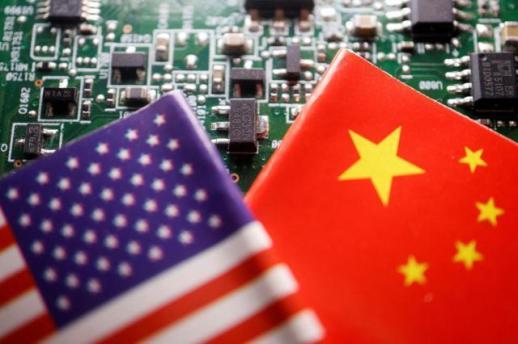 U.S. Blocks Chinese Firms from Purchasing AI Chips via Foreign Subsidiaries The U.S. Department of Commerce has moved to block Chinese companies from acquiring advanced artificial intelligence (AI) chips through their foreign subsidiaries. This action aims to prevent circumvention of restrictions via third-country entities, such as those in Malaysia. The focus of U.S. semiconductor regulations is expanding from mainland China to include overseas bypass routes. On May 31, Reuters reported that the U.S. Department of Commerce posted guidelines on its website stating that export licensing requirements for advanced AI chips will now apply to foreign subsidiaries of companies based in China. This includes cutting-edge products like NVIDIA's Rubin-Blackwell processors and AMD's MI350x. The new measure is designed to close loopholes that allow Chinese AI firms to import high-performance semiconductors from the U.S. through third-country subsidiaries. According to Reuters, these companies may have sourced U.S. products from regions like Malaysia. An industry insider familiar with supply chains estimated that hundreds of thousands of units could have been exported in this manner over the past year. Under the new guidelines, companies headquartered in China must obtain U.S. government approval when importing advanced semiconductors through their foreign subsidiaries. However, the regulations do not require immediate cessation of use or maintenance for existing data center equipment. Instead, the focus is on preventing additional exports and new acquisitions.* This article has been translated by AI. 2026-06-01 07:09:00
 -
 Trump Calls Departure of Government Lawyers a 'Good Thing' Amid Staffing Concerns President Donald Trump has described the departure of government lawyers as a "good thing." His comments came in response to a New York Times report raising concerns about staffing shortages among legal professionals in the federal government. In a post on Truth Social on May 31, Trump referenced the Times' article titled "Trump Administration Sees Notable Exodus of Legal Talent." According to the report, more than 10,000 federal lawyers have left the government since Trump took office, with some agencies reportedly facing shortages of attorneys to handle lawsuits and administrative tasks. Trump criticized the departed individuals, labeling them as "radical left deep state lunatics" and claimed, "They have weaponized the government and destroyed America." He also stated that many of those who left were not voluntary departures but were fired. He asserted, "The people who came in during the Obama-Biden era should never have represented America in the first place," emphasizing the need for someone who can "Make America Great Again." These remarks highlight differing perspectives on the issue of lawyer departures. While the Times views the reduction of legal professionals as a threat to administrative and litigation capabilities, Trump interprets it as a success in streamlining the bureaucratic structure. This clash reflects the ongoing debate between concerns over staffing shortages and Trump's approach to personnel changes.* This article has been translated by AI. 2026-06-01 06:57:00
 -
 U.S. Treasury Secretary Vows Continued Pressure on Iran Amid Negotiations Scott Besant, the U.S. Treasury Secretary, has reaffirmed a tough stance in negotiations with Iran. While discussions about a ceasefire and peace continue, the U.S. maintains that key conditions revolve around Iran's nuclear program and the navigation of the Strait of Hormuz. On June 1, Besant appeared on Fox News' "Sunday Morning Futures" to explain President Donald Trump's policy toward Iran. According to Fox News, he referenced the economic pressure operation known as "Economic Fury" and the unstable ceasefire situation. Besant stated that even if an agreement is reached, President Trump will use military and economic means to ensure Iran's compliance. This suggests a focus on enforcing compliance after any potential agreement rather than merely achieving a deal. The U.S. demands are centered on issues related to nuclear capabilities and the Strait of Hormuz. Reports indicate that discussions include normalizing navigation through the Strait, removing mines, and managing stockpiles of highly enriched uranium. President Trump has repeatedly stated that he will not allow Iran to possess nuclear weapons. Economic sanctions are also being utilized as leverage in the negotiations. Besant previously disclosed in an interview with Fox Business that the U.S. has seized approximately $1 billion in virtual assets linked to Iran. He also pointed to local military payroll issues, high inflation, and internet blackouts as signs that the regime is facing financial pressure. However, discussions are still ongoing. Reports suggest that President Trump has requested additional modifications to the existing negotiation framework. While the U.S. and Iran are discussing extending the ceasefire and addressing nuclear issues and navigation through the Strait, the final approval and acceptance by Iran remain uncertain.* This article has been translated by AI. 2026-06-01 06:42:00