

Journalist

Jinkyu, Myung
-
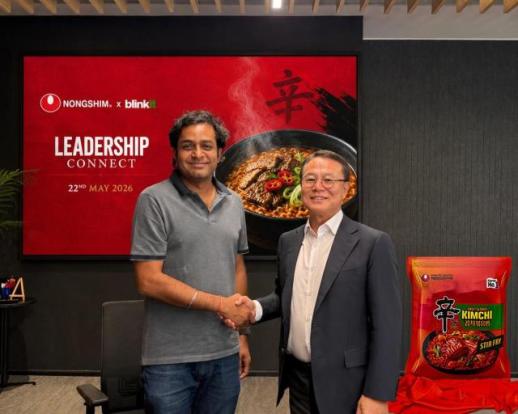 Nongshim signs deal with Indian grocery delivery app SEOUL, May 26 (AJP) - Instant noodle giant Nongshim has partnered with India's leading quick-commerce platform to expand its presence in one of the world's most populous countries. Nongshim said it held a launch event in New Delhi over the weekend for its signature "Shin Ramyun" series, after signing a deal with Blinkit to distribute its products there. Blinkit is the leading player in India's quick-commerce market, with around a 50-percent market share. The event featured a pop-up booth and photo zones where local influencers and visitors could sample products and share their experiences on social media. In particular, a highlight was stir-fried noodles, tailored to local tastes and younger consumers who frequently use quick-commerce platforms. With the latest deal, Nongshim aims to leverage Blinkit's delivery infrastructure to rapidly distribute its key products in major cities such as New Delhi and Mumbai, tapping into India's booming online commerce market. According to the Korea International Trade Association, India's e-commerce market is projected to grow from US$90 billion in 2025 to $240 billion by 2030. "By cooperating with Blinkit, we plan to promote our Shin Ramyun products throughout India, ensuring that local customers can enjoy them in their daily lives," said a Nongshim staffer. 2026-05-26 15:05:37
 -
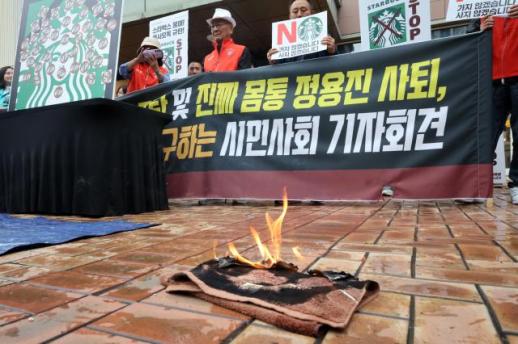 OPINION: Starbucks, memory wars and South Korea's new political taboos SEOUL, May 26 (AJP) - There are taboos in South Korea that never fully fade with time. They remain politically radioactive, emotionally unresolved and socially unforgiving. Japanese colonial rule is one. The democratization movement is another. For decades, anti-communism and North Korea defined the country’s ideological fault lines. But modern South Korea has undergone a profound political inversion. Under the dominance of liberal President Lee Jae Myung and the ruling Democratic Party of Korea — the sanctity of the democratization movement has become one of the defining moral pillars of public life. Anything perceived as mocking or distorting that legacy can trigger overwhelming public condemnation, economic retaliation and even criminal prosecution under laws such as the May 18 Distortion Punishment Act. What began as a Starbucks Korea marketing blunder therefore escalated into something far larger than a failed promotion. It became a national ideological confrontation. The controversy erupted after Starbucks Korea promoted “Tank Day” tumblers on May 18 — the anniversary of the 1980 Gwangju Democratization Movement — while another phrase, “Tak! on the desk,” evoked the infamous cover story surrounding the 1987 torture death of student activist Park Jong-chul. Critics viewed the combination as a grotesque trivialization of two defining traumas from South Korea’s authoritarian era. The backlash spread with extraordinary speed. Boycott campaigns flooded social media. Government agencies suspended cooperation projects. Police investigations expanded. President Lee himself publicly condemned the campaign in unusually emotional language, accusing the company of mocking national tragedy. Local elections that were supposed to revolve around regional administration suddenly transformed into another ideological battlefield. The ruling bloc framed the controversy as historical desecration. The conservative People Power Party, meanwhile, accused the government of orchestrating political hysteria and taming corporations through ideological intimidation. The result exposed a deeper reality about contemporary South Korea: history is no longer merely remembered here. It is actively enforced. The conservatives, already struggling to recover after the collapse of former President Yoon Suk Yeol following his failed martial law declaration in late 2024, seized on the Starbucks controversy as proof that the ruling camp had become punitive and intolerant. Opposition politicians described the government-led boycott atmosphere as “state violence,” “witch-hunting” and even a form of “cultural revolution.” They argued that liberal forces were weaponizing historical memory ahead of local elections to consolidate their political base while diverting attention from economic hardship and weak domestic consumption. But the political momentum shifted on Tuesday. At a televised press conference in Seoul, Chung Yong-jin appeared alongside his top executives and bowed repeatedly before the cameras in one of the most striking displays of corporate humiliation seen in recent years. “First, to the bereaved families of the May 18 Democratization Movement, the family of Park Jong-chul, the citizens of Gwangju and the Korean public, I sincerely bow my head in apology and ask for your forgiveness,” Chung said. “I will not make any excuses. This is my fault.” The Shinsegae chairman bowed three times during the five-minute televised apology. “Today’s apology will not be the end, but a beginning,” he said. “We will regain public trust not through words, but through actions.” His top executives followed with deep bows of their own and offered an unusually detailed account of the internal investigation, alongside blunt admissions that the company’s marketing oversight system had grown lax and overly fixated on speed and sales. Kim Su-wan, vice president and head of external affairs, described the controversy as the product of a corporate culture that prioritized rapid promotions and commercial performance over historical awareness and social sensitivity. “This case showed that speed and sales considerations had taken priority over historical awareness and social sensitivity,” Kim said. According to Kim, the promotion was handled by a small e-commerce team largely composed of younger employees, including two staff members in their early 20s. Internal reviews conducted after the backlash suggested that some employees did not fully understand the historical weight associated with May 18 or the wording used in the campaign. “The task now is to create programs that can strengthen historical awareness across generations, from younger employees to senior staff,” Kim said. In South Korea’s chaebol culture — historically associated with hierarchy, opacity and executive distance — such a public act of submission remains extraordinary. More remarkable still was Shinsegae’s decision to publicly disclose details of its internal forensic investigation, including reviews of emails, laptops and internal messenger records involving executives and marketing staff. Executives admitted the company’s internal safeguards had failed. They acknowledged that speed, sales performance and social media competitiveness had overtaken historical sensitivity inside an organization increasingly driven by ultra-fast consumer marketing cycles. The company also openly recognized a widening generational disconnect. According to executives, several younger employees involved in the promotion did not fully understand the historical implications associated with phrases tied to May 18 or Park Jong-chul. That admission touched a deeper nerve in South Korea’s evolving social landscape. Many South Koreans now in their 20s and early 30s grew up in one of the world’s wealthiest and most technologically advanced societies. They did not personally experience war, military dictatorship or democratization protests. To them, events like the Gwangju uprising or the June Democracy Movement can feel less like lived memory and more like inherited civic doctrine. That creates not necessarily malice — but detachment. And in a hyper-accelerated retail environment dominated by ultra-fast deliveries, viral marketing and algorithm-driven consumer engagement, detachment itself can become dangerous. Modern Korean retailers now compete not merely on products, but on speed, emotional resonance and social media visibility. Campaigns are designed for instant reaction. Historical awareness often struggles to survive in that environment. Yet Chung’s rapid and overwhelming humbling also demonstrated something else: how quickly South Korea’s conglomerates now yield when social outrage reaches critical mass. Within hours, the tone from the ruling Democratic Party softened noticeably. “We believe Chairman Chung’s apology was sincere,” Democratic Party chief spokesperson Kang Jun-hyun told reporters, adding that Shinsegae had “made considerable efforts” to investigate the matter and prevent recurrence. Another party spokesperson, Park Ji-hye, said the company had “spent time and effort to establish the facts” and acknowledged sympathy for frontline Starbucks employees caught in the backlash. The de-escalation was politically significant. The ruling camp appeared satisfied once the chaebol visibly surrendered, apologized and pledged reform. That will likely mute conservative counterattacks accusing the government of weaponizing historical morality for electoral advantage. The fire, at least politically, was partially extinguished. The controversy illustrated the shrinking margin for cultural miscalculation in South Korea’s hyperconnected public sphere. For corporations, historical awareness is no longer a matter of image management alone. It has become a core governance issue — one capable of triggering consumer backlash, political intervention and institutional crisis within days. *The author is the managing editor of AJP 2026-05-26 14:33:40
 -
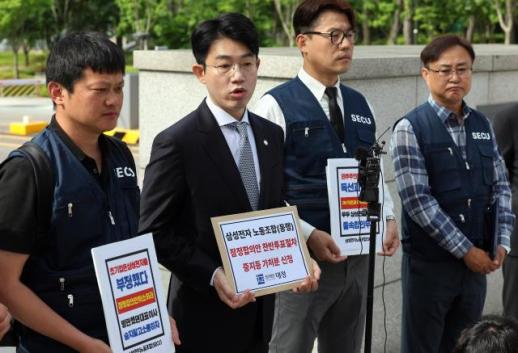 Samsung Electronics' DX union files injunction to halt wage deal vote amid internal rift SEOUL, May 26 (AJP) - A labor union representing Samsung Electronics' Device eXperience (DX) division filed a court injunction on Tuesday to halt an ongoing vote on a tentative wage agreement, highlighting a deepening internal conflict among the tech giant's labor groups. The "Donghaeng" union submitted the request to the Suwon District Court, accusing the larger "Enterprise Union" of unlawfully stripping its members of their voting rights. During a press conference ahead of the filing, Donghaeng representatives stated that the larger union abruptly revoked their voting rights on the evening of May 21, shortly after repeatedly asking them to participate in the vote. The minority union argued that excluding a participating member of the joint bargaining group is legally impermissible. Donghaeng claims the exclusion stems from the larger union's concerns over the DX division's growing influence. Membership in the Donghaeng union has recently surged from approximately 2,600 to over 13,000. The likelihood of the court intervening in time appears low, as the voting period is set to close on Wednesday. A court hearing would need to take place on Tuesday, a timeline legal observers note is practically difficult. However, Donghaeng representatives expressed hope that the court might expedite the process given the urgency of the matter. If the voting concludes before a court ruling is issued, the Donghaeng union plans to file a separate injunction to suspend the validity of the finalized agreement. The legal action underscores a growing "union-versus-union" dispute within Samsung Electronics, as non-memory and DX employees actively campaign to reject the tentative wage deal. 2026-05-26 14:00:20
 -
 Yeon Sang-ho's new zombie film draws 2 million moviegoers in less than a week since release SEOUL, May 26 (AJP) - Director Yeon Sang-ho's latest film "'Gunch'e," also known as "Colony," has drawn over 2 million moviegoers less than a week since its release last Thursday. According to the Korean Film Council, the zombie film surpassed 2 million in cumulative theater attendance as of Monday, reaching the milestone faster than any other film released this year and outpacing previous box-office hits such as "The King's Warden" and "Salmokji: Whispering Water" in opening weekend performance. Even before its release here, the film had already attracted considerable attention after being invited to this year's Cannes Film Festival, which wrapped up last week. The 122-minute film, starring Jun Ji-hyun, Koo Kyo-wan and Ji Chang-wook, revolves around survivors trapped inside a building sealed off after an unidentified outbreak as they confront infected people evolving in unpredictable ways. It is Yeon Sang-ho's latest work in the zombie genre, following "Train to Busan" (2016) and "Peninsula" (2020). 2026-05-26 13:48:54
 -
 SK hynix unveils 'iHBM' cooling tech to tackle AI chip heat SEOUL, May 26 (AJP) - South Korean chipmaker SK hynix Inc. on Tuesday unveiled its "iHBM" (Integrated High Bandwidth Memory) technology, a memory solution incorporating Integrated Cooling Elements (ICE) directly into the High Bandwidth Memory (HBM) package to dramatically reduce heat and enhance the efficiency of overall AI systems.1 The company plans to apply the iHBM technology starting with its next-generation products, such as HBM5, to meet the stringent thermal management requirements of ultra-high integration and ultra-high bandwidth environments like High-Performance Computing (HPC) and AI data centers. SK hynix developed iHBM to address rising heat issues as HBM performance advances through increased stacking and faster speeds to handle soaring AI processing demands. The technology structurally resolves this issue by placing a thermal control element (ICE) in the Die-to-Die Physical Layer (D2D PHY) area—where heat is most concentrated—creating a separate, dedicated "Heat Path". This method, which contrasts with the traditional indirect approach of relying on the Core Die to expel heat, reduces thermal resistance by over 30 percent, ensuring stable operating characteristics even in high-temperature and high-load environments. ICE uses a silicon material with high thermal conductivity but no electrical conductivity to form the additional heat dissipation route inside the HBM package. "iHBM is the optimal solution for minimizing heat generation, developed by combining memory design capability and advanced packaging technology," said Lee Kang-wook, Vice President of Package Development at SK hynix. He added that the company will "further solidify its AI memory leadership by preemptively providing the value customers need in the AI environment". The solution also boasts strong advantages in manufacturability, utilizing the market-proven Advanced MR-MUF (Mass Reflow Molded Underfill) based WLP (Wafer Level Packaging) process for stable mass production. Furthermore, its high design compatibility with customers' existing SiP (System in Package) environments allows for immediate application without major design changes, substantially lowering the adoption burden for customers. 2026-05-26 13:42:49
 -
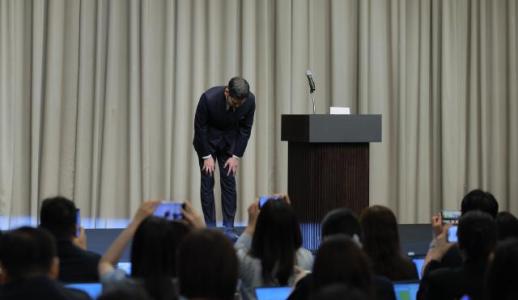 AJP Watch: Shinsegae vows to make amends "regardless of cost" over Starbucks Korea blunder SEOUL, May 26 (AJP) - Shinsegae Group Chairman Chung Yong-jin on Tuesday delivered a second public apology within a week over Starbucks Korea’s controversial “Tank Day” promotion, bowing repeatedly in a televised appearance and pledging to restore public trust through action rather than words after what the group described as a “serious” failure in historical awareness. Speaking at the Josun Palace hotel in Seoul, Chung bowed deeply three times during a five-minute apology addressing bereaved families of the May 18 Democratization Movement, the family of late student activist Park Jong-chul, citizens of Gwangju and the broader Korean public. “I will not make any excuses. This is my fault,” Chung said. “We will regain the public’s trust not through words, but through actions.” The apology came eight days after Starbucks Korea promoted tumblers branded with the word “Tank” on May 18, the anniversary of the 1980 Gwangju pro-democracy uprising. Critics also condemned the campaign’s use of the phrase “Tak! on the desk,” saying it evoked the infamous explanation once used to cover up the 1987 torture death of student activist Park Jong-chul. What initially appeared to be a marketing blunder quickly escalated into one of the most serious reputational crises faced by the Shinsegae Group in recent years, triggering boycott campaigns, police complaints, mounting political pressure and public criticism from President Lee Jae Myung. Social media became a major battleground for the backlash. One video posted on X showing a consumer removing a Starbucks logo from a tumbler with nail polish remover drew 4.8 million views, while another post showing an unusually empty Starbucks outlet during the holiday weekend amassed nearly 4 million views alongside thousands of reposts and boycott messages. Internal review finds systemic failures In a follow-up briefing, Yang Jong-hwan, managing director of Shinsegae’s internal audit team, said investigators reviewed company emails, work laptops, internal messenger records and other communication channels involving 15 employees, including five executives, using digital forensic methods. Cross-check interviews were also conducted with more than 10 employees. The probe did not uncover evidence of deliberate coordination or intentional political messaging, according to the company. But the review also exposed clear limitations. Of the five key employees directly involved in handling the “Tank” naming process, only two voluntarily submitted personal mobile phones for forensic analysis. Three declined, citing privacy concerns. Yang acknowledged that while the company wanted broader access, it lacked authority to compel employees to surrender personal devices. Executives nevertheless insisted that internal messenger records and work-related data showed no evidence of premeditated collusion. Kim Su-wan, vice president and head of external affairs, described the controversy as a symptom of an organization overly focused on speed and sales performance at the expense of historical sensitivity. “This case showed that speed and sales considerations had taken priority over historical awareness and social sensitivity,” Kim said. According to Kim, the promotion was handled by a small e-commerce team composed largely of younger employees, including two workers in their early 20s. Internal communications after the controversy suggested that some staff members did not fully grasp the historical weight associated with May 18 or the wording used in the campaign. “The task now is to create programs that can strengthen historical awareness across generations, from younger employees to senior staff,” Kim said. Executives acknowledged that the campaign should have passed through multiple review layers including corporate social responsibility and legal checks, but said several safeguards either failed or were bypassed altogether. “Even if the original planner made a poor judgment, this situation would not have escalated this far if the internal filtering system had functioned properly,” Kim said. “The core problem was that the review system failed to work as it should have.” Why the backlash became so explosive The controversy touched two of the most painful episodes in South Korea’s democratic history. The May 18 Democratization Movement refers to the 1980 uprising in Gwangju against military rule under the Chun Doo-hwan regime. The movement was violently suppressed by troops and later became one of the defining symbols of South Korea’s democratization struggle. Critics argued that using the word “Tank” on May 18 inevitably evoked memories of military violence and authoritarian repression tied to the uprising. The phrase “Tak! on the desk” carried a separate historical resonance linked to the death of Park Jong-chul, a Seoul National University student activist tortured to death during police interrogation in 1987. Authorities initially attempted to explain his death by claiming an investigator had struck the desk — “tak” — causing Park to collapse suddenly, a story later exposed as a cover-up. His death helped ignite the June Democracy Movement that accelerated South Korea’s transition to direct presidential elections. For many South Koreans, the combination of “Tank Day” and wording associated with Park’s death appeared to trivialize two defining traumas of the country’s authoritarian era. Growing commercial fallout Shinsegae said former Starbucks Korea CEO Sohn Jung-hyun and the executive overseeing e-commerce operations were dismissed immediately after the controversy erupted, with additional disciplinary action under review. Chung’s first apology, issued shortly after the backlash began, failed to calm public anger as boycott campaigns intensified online and civic groups filed criminal complaints. At Tuesday’s press conference, Chung repeatedly stressed that front-line Starbucks employees should not bear the blame. “The responsibility lies with the organization and management, including myself,” he said. “I earnestly ask that people look more warmly upon Starbucks partners and field employees at stores across the country.” He described store workers as “diligent employees” serving customers from early morning until late at night, while pledging a fundamental overhaul of the group’s risk management and social responsibility systems. “Today’s apology will not be the end, but a beginning,” Chung said. “We will start again from the beginning.” Executives also acknowledged the growing financial impact. Jeon Sang-jin, executive vice president overseeing corporate management, said sales had fallen “considerably” since the controversy, though the company declined to provide figures. He said the priority was restoring trust rather than minimizing short-term damage. The company said it is reviewing refund requests for prepaid Starbucks cards and account cancellations with relevant authorities because such products are governed by Fair Trade Commission regulations. Executives added that Starbucks’ U.S. headquarters had been fully informed of the incident and is discussing improvements to internal risk-control systems with the Korean operation. However, Shinsegae said the controversy does not currently appear to trigger contractual issues involving Starbucks’ U.S. parent company. The episode has also revived scrutiny of earlier marketing controversies among Korean consumer brands. In 2024, Starbucks Korea faced criticism for releasing a “Siren Classic Mug” on the anniversary of the Sewol ferry disaster, while fashion platform Musinsa issued a renewed apology after the Starbucks controversy resurfaced attention on a similar “Tak! on the desk” phrase used in one of its 2019 advertisements. For Shinsegae, the central challenge now extends beyond whether the campaign was intentional. The deeper question is whether one of South Korea’s most influential consumer groups can convince the public that its internal systems are capable of preventing another breakdown where commercial marketing collides with unresolved national trauma. 2026-05-26 12:21:00
 -
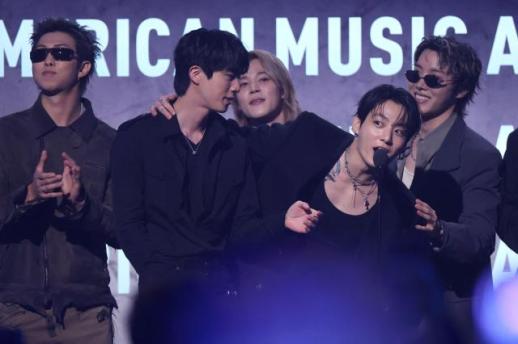 BTS wins 2026 American Music Award's Artist of the Year, second title after 2021 SEOUL, May 26 (AJP) -K-pop superstar BTS captured the top prize at the 2026 American Music Awards on Monday night, winning Artist of the Year for the second time as the group cemented its global comeback just two months after releasing its fifth studio album, ARIRANG. The seven-member group defeated a heavyweight field including Bad Bunny, Bruno Mars, Taylor Swift, Lady Gaga and Justin Bieber to claim the fan-voted grand prize at the ceremony held at the MGM Grand Garden Arena in Las Vegas. The victory marked BTS’ second Artist of the Year win at the AMAs after becoming the first Asian act to receive the honor in 2021 with the global hit “Butter.” The group also won Song of the Summer for “SWIM,” one of the lead tracks from ARIRANG, continuing a comeback year that has rapidly restored BTS to the center of the global pop industry following a multiyear hiatus caused by mandatory military service in South Korea. “All seven members have completed military service, and it is an honor to receive this precious award once again,” leader RM told the audience during the acceptance speech. “Our biggest gratitude always goes to ARMY for the past 13 years.” Members j-hope, Jimin, Jin and Jung Kook also thanked fans for embracing the new album and supporting the group during its ongoing world tour. BTS delivered a televised performance of “Hooligan,” another track from ARIRANG, in a dramatic stage sequence filmed during the group’s sold-out concerts at Allegiant Stadium in Las Vegas. Dressed in black and surrounded by masked dancers under deep red lighting, the performance echoed the darker visual themes of the music video while drawing loud reactions from fans inside the arena. The appearance came as BTS continued a four-night concert run in Las Vegas that began May 23, with additional shows scheduled later this week. The concerts are part of the group’s massive ARIRANG World Tour, spanning 82 shows across 34 cities. Released in March, ARIRANG debuted at No. 1 on the Billboard 200 and Top Album Sales charts, remaining atop the rankings for three consecutive weeks. The album marked BTS’ first full-group studio release since all members completed military service last year and resumed group activities. Since first winning at the American Music Awards in 2018 with Favorite Social Artist, BTS has accumulated more than a dozen AMA trophies including Favorite Pop Duo or Group, Favorite K-pop Artist and Tour of the Year, becoming one of the most decorated Asian acts in the history of the awards show. 2026-05-26 12:20:24
 -
 'Golden' wins 'Song of the Year' award at AMAs SEOUL, May 26 (AJP) - "Golden," the main theme song of Netflix's animated film "KPop Demon Hunters" won "Song of the Year" award at the American Music Awards in Las Vegas on Monday. The global hit song beat out nine major contenders including American singer-songwriter Taylor Swift's "The Fate of Ophelia," Alex Warren's "Ordinary," Morgan Wallen's "I'm The Problem" and Ella Langley's "Choosin' Texas." At the ceremony held at the MGM Grand Garden Arena, the song's performers, Ejae and Rei Ami, appeared on stage to accept the award, while Audrey Nuna was unable to attend. Ejae credited fans for giving the song and film "tremendous strength," expressing gratitude to them as well as the cast and crew of the 99-minute film. She also wished Rei Ami a happy birthday, as she turned 31 that same day. Rei Ami also thanked fans, family, and others, saying she is grateful for what has been a "life-changing year." "Golden," co-written by Ejae, became a global hit alongside the success of the film, topping the Billboard Hot 100 chart for eight consecutive weeks. It had previously earned critical acclaim by winning top honors at major awards ceremonies including the Grammy Awards, the Academy Awards and the Golden Globe Awards. 2026-05-26 11:32:59
 -
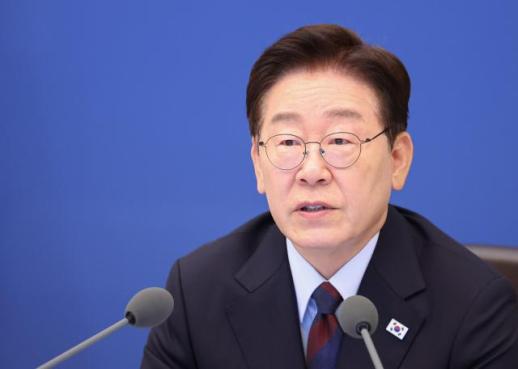 Lee calls for faster push to acquire nuclear-powered submarines SEOUL, May 26 (AJP) - President Lee Jae Myung on Tuesday called for accelerating South Korea’s push to acquire nuclear-powered submarines, as the government is seeking to unveil a basic plan for the development of a Korean nuclear-powered submarine by the end of this month. “We must speed up the introduction of AI and drone technologies and move faster to acquire nuclear-powered submarines, a key strategic asset for future defense capabilities,” Lee said during a Cabinet meeting at Cheong Wa Dae. Lee said South Korea must hurry its transition into a future-oriented, advanced military. His remarks came as the Navy recently submitted a formal request to the Joint Chiefs of Staff for the acquisition of Korean nuclear-powered submarines. The request marks the first step in the country’s weapons acquisition process, under which the military formally lays out operational requirements, concepts of operation, the number of units needed and the timing of deployment for a new weapons system. “South Korea’s defense capabilities currently rank fifth in the world, and its annual defense spending far exceeds North Korea’s annual gross domestic product,” Lee said. “We already have sufficient capability to defend ourselves, but we must further strengthen our defense power in the face of the harsh international reality of self-reliance and survival of the fittest.” Lee also called for greater national efforts to foster the country’s defense industry by continuously expanding research and development budgets, localizing key components and strengthening public-private cooperation. “Winning a war is important, but efforts to build peace so that war does not break out are also very important,” he said. “Above all, what matters most is the attitude that we will take responsibility for and defend our own security.” Lee also called for a swift transfer of wartime operational control from Washington to Seoul, after U.S. Forces Korea Commander Gen. Xavier Brunson recently told the House Armed Services Committee that the transition could be completed before the first quarter of 2029. “Only with a firm commitment to self-reliant defense can we earn the respect of our friends and keep our alliance even stronger,” Lee said. “I ask that the transfer of wartime operational control proceed swiftly and smoothly, in a way that further strengthens the South Korea-U.S. alliance.” “True and capable security is not only about winning a war, but also about creating peace so that war does not break out,” Lee said. “We will do our utmost to strengthen our defense capabilities in a way that supports peace on the Korean Peninsula and South Korea’s continued progress.” 2026-05-26 11:27:51
 -
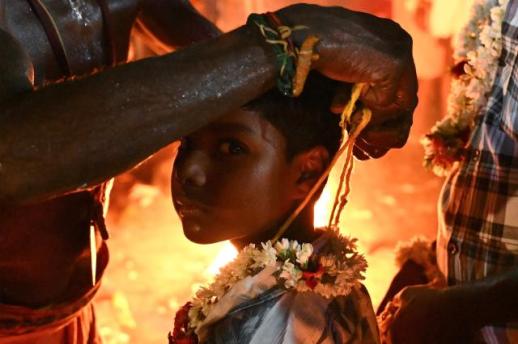 Spiritual Asia series: Vedas, Upanishads, and Cheonbugyeong cosmos in AI era This is the third installment of AJP’s “Spiritual Asia” series exploring the religious traditions and philosophical foundations that have shaped Asia’s spiritual consciousness. This chapter turns to the ancient texts of Hinduism — the Vedas and Upanishads — and their enduring ideas on cosmos, consciousness and the nature of existence in the emerging AI era. In the twenty-first century, humanity stands at the threshold of a vast civilizational transition. Artificial intelligence has begun to learn human language, robots are taking over human labor, and algorithms are advancing rapidly into the domain of human judgment itself. The world is moving toward an age of civilization wholly unlike any before it. Yet, ironically, the more sophisticated the technology becomes, the more humanity finds itself once again before the oldest questions of all. What is the human being? Where did the universe come from? What is consciousness, and does the human soul exist? And where is humanity meant to go? It is precisely before these questions that humanity has begun, once more, to look back to the spirituality of the ancients. The scriptures of Hinduism — the Vedas, the Rigveda, the Upanishads — are not mere religious texts. They are the record of a vast civilizational contemplation, an inquiry pursued over thousands of years into the cosmos and the human being, into existence and consciousness, into life and truth. The cosmology within these Hindu scriptures bears a striking resemblance to the philosophy of cheon (heaven), ji (earth) and in (humanity) expressed in Korea's Cheonbugyeong. Both refuse to separate the human being from the cosmos, regarding humanity instead as part of a greater whole. Even in today's age of AI, the powerful presence of young Indians across the global IT and AI industries may owe something to this deep philosophical tradition and its culture of abstract thought. The Vedas and the Upanishads are not simply ancient scriptures. They are ancient questions cast toward the civilization of the future. The Vedas: humanity's first questions, recording the breath of the cosmos Veda, in Sanskrit, means "knowledge" or "enlightenment." It is regarded as among the oldest scriptures humanity has left behind. The Vedas are organized into four systems — the Rigveda, the Samaveda, the Yajurveda and the Atharvaveda — of which the oldest and most essential is the Rigveda. The Rigveda is no mere anthology of myths. It is a philosophical inquiry into the cosmos and a poetic question directed at the origin of existence. Its famous hymn, the Nasadiya Sukta, is counted among the most profound cosmological questions in the history of human civilization. "Then there was neither existence nor non-existence." — Rigveda Remarkably, this line connects to modern cosmology, echoing the question physics asks today: what existed before the Big Bang? The ancient Indians did not see the universe as mere matter. They saw in it a vast order and mystery that the human being could never fully comprehend. The Rigveda calls this Rta — the fundamental order that moves the cosmos. The motion of the sun, the turning of the seasons, the life and death of human beings: all exist within a single order. This thought bears a curious resemblance to the Cheonbugyeong's line il-si-mu-si-il — "the One begins, yet the One has no beginning." All existence begins from the One, and that One existed before time itself. The ancient spirituality of the East, it turns out, spoke everywhere of the fundamental unity of the cosmos. "Truth is one, though its names are many" The Rigveda contains a line that resonates deeply even within the civilization of today. "Truth is one. The wise call it by many names." — Rigveda 1.164.46 Within this brief sentence lies the tolerance and inclusiveness of human civilization. The world holds countless religions and civilizations. They speak of different gods and explain truth in different ways. Yet the Rigveda says their origin may be one. This thought connects to the philosophy of the Korean thinker Yu Yeong-mo, known as Daseok, who said that "truth is one, though its prophets are many." He is celebrated as a pure Korean philosopher who reconciled all the religions of East and West into a single vision. The Cheonbugyeong, too, explains the origin of the cosmos as the One. In the end, human civilizations have held different languages and religions, yet they have cast the same question beneath the same sky. Today the world is shaken by collisions of religion and ideology, of peoples and nations. AI technology, too, connects human beings even as it divides them. It is for this very reason that this line of the Rigveda grows more important still. What is needed is a civilizational vision that acknowledges difference while looking toward the fundamental One. The Upanishads: discovering the cosmos within If the Vedas sang of the order of the cosmos, the Upanishads explored the cosmos within the human being. The word Upanishad means "to sit near a teacher and hear the truth." Here Hindu philosophy moves beyond ritual and ceremony to begin asking after the very essence of human existence. At the heart of the Upanishads lies the thought of Brahman and Atman. Brahman is the ultimate reality of the cosmos; Atman is the true self within the human being. And the Upanishads declare that the human soul and the essence of the cosmos are, in the end, one. "Tat Tvam Asi. Thou art that." — Chandogya Upanishad This line reveals the dignity of human existence in dramatic fashion. The human being is not a solitary thing severed from the cosmos, but a part of it. The Cheonbugyeong's thought of heaven, earth and humanity likewise sees the human being as a life existing within the flow of heaven and earth. The ancient spirituality of the East did not regard humanity as a being that reigns over nature. It understood the human being as one that breathes together with the cosmos. The Upanishads contain one of the oldest prayers of the human soul. "Lead me from darkness to light. Lead me from death to the eternal." — Brihadaranyaka Upanishad This passage is no mere religious phrase. It is the eternal longing of human existence. Darkness means ignorance and greed, hatred and fear. Light means truth and love, and enlightenment. Humanity today has built a civilization more abundant than any age before it. Yet it lives at the same time in deep anxiety and emptiness. AI imitates human language, paints pictures and composes music. But it cannot fully account for the human soul and love, for suffering and hope. And so humanity begins, once more, to seek the spiritual. The Upanishads say there is a cosmic light within the human being — that the human being is not mere data, not a mechanical thing. Another famous passage of the Rigveda reveals the essence of the communal spirit. "Walk together. Speak together. Let your minds be as one." — Rigveda 10.191 Modern society, within a civilization of competition and speed, is steadily losing its sense of community. The age of AI, too, has raised productivity and efficiency, yet the severance between human beings has only deepened. The Vedas, however, say that the human being is a connected being. The Cheonbugyeong likewise understands the human being as one that exists within relationship. Heaven, earth and humanity are not severed individuals but a circulating structure of life. In the end, the heart of the future civilization is likely to be not technology itself, but the human capacity for connection between one person and another. Hindu scripture and India's age of AI In the global AI and IT industries today, the presence of people of Indian origin is overwhelming. Sundar Pichai of Google, Satya Nadella of Microsoft and countless others of Indian origin lead the global technology industry. This cannot, of course, be explained by the influence of Hindu scripture alone. English-language education, a mathematics-centered schooling, an enormous demographic structure and a fiercely competitive system are all important factors. Yet India's deep philosophical tradition is a background that can by no means be dismissed. Indian civilization has long explored existence and consciousness, logic and abstract thought. The numeral system and the concept of zero were developed within it as well. The age of AI demands abstract thinking and a capacity for creative synthesis rather than rote memorization. And such capacities are likely bound up with the depth of philosophical contemplation. What is striking is that Korea's Cheonbugyeong, too, emphasizes a cosmically integrative mode of thought. It sees the human being and nature, the cosmos and life, as a single circulating structure — an insight of considerable significance for the age of AI. Technology can strengthen the human hand, but it cannot stand in for the human soul. In the end, the competitiveness of the future civilization is likely to rest not on technological power alone, but on the depth of human understanding. The age of AI: humanity before the ancient questions once more The Vedas and the Upanishads are scriptures of thousands of years ago, yet their questions remain astonishingly modern. What is the human being? What is consciousness? Is the cosmos a mere machine, or a living order? In the age of AI, humanity stands once again before the ancient questions. And the old scriptures of Hinduism speak quietly: that the human being is not severed from the cosmos, that life is bound together, that truth is one yet its expressions may be many. The Cheonbugyeong tells the same story — that heaven, earth and humanity are not separate beings but exist within one vast flow of life. In-jung-cheon-ji-il, it says: within the human being, heaven and earth become one. Perhaps what humanity must read again in the twenty-first century is not a faster manual for technology, but the ancient scriptures of the spirit, which once contemplated the human being and the cosmos together. 2026-05-26 11:21:42