

Journalist

Jinkyu, Myung
-
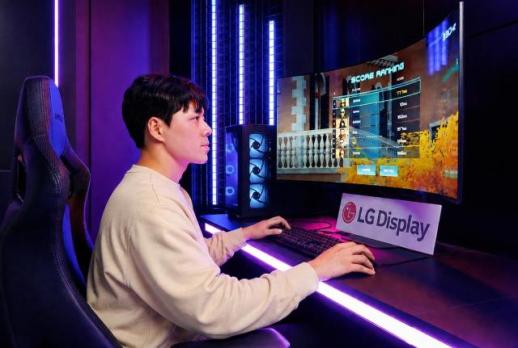 LG Display Unveils Gaming OLED Lineup in Taiwan LG Display is accelerating its entry into the rapidly growing global gaming OLED market. The company aims to strengthen its leadership in the premium gaming monitor sector with a robust product lineup and next-generation technology roadmap. Starting June 4, LG Display will host a "Taiwan Gaming OLED Roadshow" in Taipei for key global clients, running until June 10. The event will feature over 20 global gaming monitor manufacturers who will experience LG Display's new technologies firsthand and discuss potential collaborations. The roadshow will focus on the theme of "Faster, Clearer, and Brighter Display Experiences." LG Display plans to unveil its flagship gaming OLED lineup and next-generation technology roadmap, along with comparative demonstrations against liquid crystal display (LCD) panels to showcase OLED's distinct competitive advantages. Currently, LG Display boasts the industry's largest gaming OLED lineup, ranging from 20 inches to 40 inches. The event will showcase the world's only mass-produced 39-inch model, along with the most popular 27-inch OLED monitor panel. The 39-inch OLED monitor panel is the first in the world to achieve 5K2K ultra-high resolution. It features a 21:9 aspect ratio and a maximum 1500R curvature design, enhancing immersion in racing and simulation games. The wide screen and curved design maximize the gaming experience. LG Display will also introduce the "RGB Stripe OLED," which uniquely arranges red, green, and blue (RGB) subpixels in uniform sizes. This design minimizes color bleeding and ensures sharp text even at close distances. It supports a high refresh rate of up to 240 hertz, enhancing usability for both gaming and document work. Next-generation technology will also be highlighted. LG Display plans to showcase a gaming OLED that meets the "DisplayHDR True Black 1000" standard set by the global display standards organization VESA. This technology allows for accurate color representation as intended by content creators, with peak brightness reaching 2000 nits for a more vivid display. The 27-inch 5K OLED panel is also noteworthy. With a high resolution of 220 pixels per inch (PPI), it provides print-level detail for tasks requiring precision, such as graphic design and video editing. LG Display has applied its proprietary surface treatment technology to reduce reflectivity to an industry-low 0.3%. Leveraging over a decade of expertise in tandem white OLED (WOLED) technology, LG Display entered the monitor OLED market in 2022. In just two years, it has rapidly expanded its market share, securing over ten global monitor manufacturers as key clients. Lee Hyun-woo, head of LG Display's large business division, stated, "Building on our technological leadership in large OLEDs, we will expand collaborations with global clients for both current and next-generation products. We aim to provide gamers with the perfect display experience and actively target the rapidly growing high-end monitor market."* This article has been translated by AI. 2026-06-01 10:33:00
 -
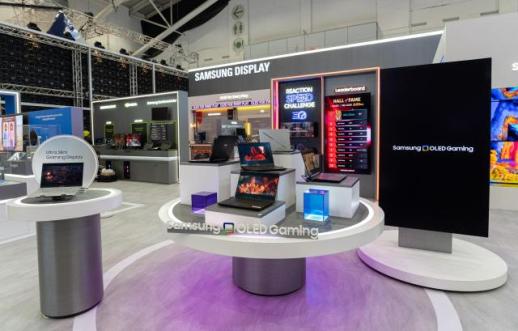 Samsung Display Unveils Gaming OLED Lineup at Computex 2026 Samsung Display is set to showcase a wide range of gaming OLED products at Computex 2026. The lineup includes 16 models spanning portable gaming PCs, laptops, and monitors, aimed at capturing the premium IT display market. According to industry sources, Samsung Display will present its offerings from June 2 to 5 at the Taipei Nangang Exhibition Center, featuring OLED panels for portable gaming PCs starting at 8.8 inches up to a 49-inch QD-OLED monitor. Among the highlights is the debut of an ultra-slim OLED panel for laptops, which reduces the thickness by over 20% compared to existing mass-produced models while maintaining OLED's deep blacks and fast response times. For monitors, the key product is a QD-OLED that achieves both 4K resolution and a 360Hz refresh rate. Samsung Display explained that it optimized the circuitry and driving system to deliver high resolution and high refresh rates simultaneously. Industry experts anticipate a shift in gaming monitor demand from high-refresh-rate LCDs to OLED and QD-OLED models, predicting an increase in OLED monitor adoption among major PC brands this year. The new QD-OLED technology, known as 'Penta Tandem,' will also be introduced. This technology enhances efficiency, lifespan, and brightness by increasing the blue OLED stacking structure from four to five layers, making it suitable for HDR gaming and high-quality content. Samsung Display will also set up a gaming experience zone where visitors can play shooting games on a 500Hz QD-OLED monitor or compare the response times and color representation between a 49-inch QD-OLED and an LCD. Collaborations with game companies such as Krafton, Pearl Abyss, EA, and Neowiz will also be showcased. Son Dong-il, Vice President of Samsung Display's Large Display Business Division and IT Business Team, stated, "The technological trend in the high-end gaming display market is shifting from LCD to self-emissive displays. We will lead the way in showcasing technologies that enhance gamer immersion." 2026-06-01 10:33:00
 -
 NCSoft Reports Strong Growth Driven by Legacy IP and New Ventures NCSoft is demonstrating the results of its two-year restructuring efforts through its first-quarter performance. The revival of legacy game intellectual properties (IPs) and the integration of mobile casual gaming have led to revenues and profits that significantly exceed market expectations. Industry experts view NCSoft's restructuring as the beginning of a structural transformation rather than a one-time event. According to the gaming industry on June 1, NCSoft reported its first-quarter results during a conference call held on May 13, revealing consolidated revenues of 557.4 billion won, operating profit of 113.3 billion won, and net profit of 152.4 billion won. Revenue increased by 55% year-over-year and by 38% from the previous quarter, while operating profit surged 2,070% compared to the same period last year (5.2 billion won). The primary drivers of this performance rebound are the successful launches of two PC massively multiplayer online role-playing games (MMORPGs), Aion 2 and Lineage Classic. First-quarter PC game revenue reached 318.4 billion won, marking a 210% increase year-over-year and a 69% increase from the previous quarter. This is NCSoft's highest quarterly PC revenue on record. For the first time since the launch of Lineage M in 2017, NCSoft's PC game revenue has surpassed its mobile game revenue. Launched simultaneously in South Korea and Taiwan last November, Aion 2 generated 136.8 billion won in quarterly revenue. The company noted that Aion 2's active user engagement and high-quality gameplay contributed to achieving the highest quarterly revenue among NCSoft titles. Aion 2 is also set for a global launch in North America and Europe in the third quarter, indicating significant growth potential. Lineage Classic recorded quarterly revenue of 83.5 billion won. Since its release on February 11, it has accumulated 200 billion won in revenue over 90 days. NCSoft reported that the game has attracted new users in their 20s and 30s while maintaining a solid daily active user (DAU) base among its existing older fan demographic. The mobile casual gaming segment is also noteworthy. The performance of Lihuhu (Vietnam) and Springcoms (South Korea), both acquired by NCSoft last year, is being reflected in this quarter's results for the first time. This marks the beginning of new revenue streams in NCSoft's previously MMORPG-focused revenue structure. Starting in the second quarter, results from JustPlay (Germany) will also be included, suggesting rapid expansion for NCSoft. This earnings surprise is interpreted as evidence that NCSoft's promised "predictable growth structure" is taking shape, rather than being a result of a one-off new release. The company has previously outlined three main growth pillars: enhancing legacy IPs like Lineage, Aion, and Guild Wars; securing new IPs in genres like shooters and subcultures; and expanding into mobile casual gaming. In the second half of this year, NCSoft plans to accelerate its new IP initiatives. The company is preparing for the global launch of Aion 2 in the third quarter, along with a diverse lineup of genres, including the PC console open-world tactical shooter "Cinder City," the animated action RPG "Limit Zero Breakers," and the time survival shooter "Time Takers," all set for global testing and release. Co-CEO Park Byung-moo stated, "Based on our efforts over the past two years for structural improvement, we are designating this year as the year of innovation for NCSoft. As our business structure becomes more predictable and steadily growing, we ask for your continued support for our future achievements."* This article has been translated by AI. 2026-06-01 10:30:00
 -
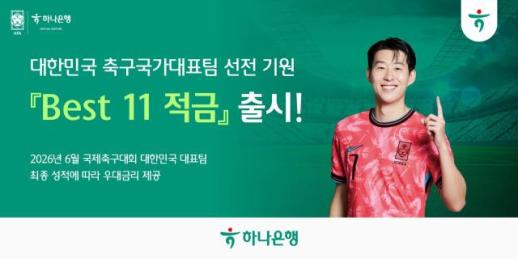 Hana Bank Relaunches 'BEST 11 Savings' with Up to 11% Interest for National Team Success Hana Bank announced on June 1 that it has relaunched its 'BEST 11 Savings' product, offering an interest rate of up to 11.0% based on the performance of the national team in the upcoming 2026 FIFA World Cup in North and Central America. The product will be available for a limited time, with a cap of 30,000 accounts until June 24. Customers can invest between 10,000 and 200,000 won per month, with a contract period of six months. The base interest rate is 2.0%, with an additional preferential rate of up to 0.2% and a special preferential rate of up to 8.8%, bringing the total potential interest to 11.0%. The preferential rates include an automatic transfer registration bonus of 0.1% and a marketing consent bonus of 0.1%. The special preferential rates are contingent on the team's performance: 1.5% for reaching the Round of 32, 2.0% for the Round of 16, 5.5% for the quarter-finals, and 8.8% for the semi-finals, applied at the time of account maturity. A representative from Hana Bank's Inclusive Finance Product Department stated, "After the initial launch in November 2022 sold out quickly, we are responding to ongoing requests for a relaunch of the 'BEST 11 Savings.' We will continue to offer various products and services that football fans in South Korea can enjoy together."* This article has been translated by AI. 2026-06-01 10:30:00
 -
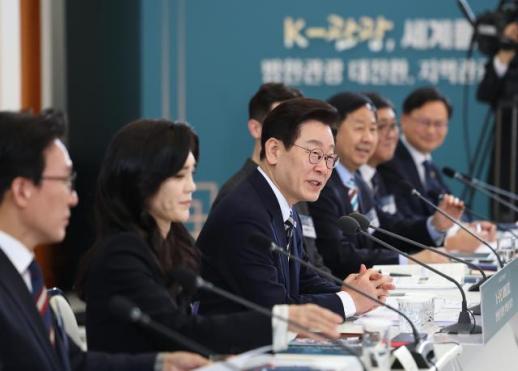 One Year of Lee Jae-myung's Government: Expanding Tourism to Achieve 30 Million Visitors The government of President Lee Jae-myung marks its first anniversary, having made significant strides in revitalizing the tourism sector and expanding the scope of K-tourism. Notably, during the 11th Expanded National Tourism Strategy Meeting in February, the president announced an ambitious goal to achieve 30 million foreign tourists, moving the target date up by a year. With 18.94 million visitors recorded last year, the government's commitment to making tourism a key growth driver for the nation is timely. Among the most notable achievements are bold deregulations and infrastructure improvements aimed at enhancing the tourist experience. The government has effectively lowered barriers to entry for foreign visitors, including the introduction of a visa-free entry trial for groups of three or more from Indonesia and the easing of multiple visa requirements for citizens of major Southeast Asian countries like China and Vietnam. Expanding the use of automated immigration checkpoints for citizens of key countries has also significantly improved entry convenience. Efforts to distribute foreign tourists beyond the capital region have also been commendable. The concentration of 80% of visitors in Seoul has long been seen as a structural weakness in K-tourism. To address this, the government has aggressively expanded direct international flights to regional airports and provided incentives, such as reduced facility fees for airlines that introduce new routes, thereby broadening access to local areas. The swift implementation of the '100×100 Project' to boost domestic tourism is another positive step, ensuring that the benefits of tourism flow to small businesses and local economies nationwide. Despite these clear successes, it is essential to assess whether the necessary systemic improvements have been made to meet these ambitious targets. To ensure that tourism revitalization campaigns do not remain one-off events, there must be a continuous supply of differentiated, high-value content. Above all, addressing persistent issues such as overcharging and unfriendliness that tarnish the image of K-tourism remains an unfinished task. While the government has proposed various measures, relying solely on local governments and the industry for self-regulation has shown limitations in eradicating these problems. If the focus remains solely on short-term numerical goals, the dream of becoming a tourism powerhouse may slip away. For K-tourism to take a significant leap forward, there is an urgent need for institutional enhancements and advanced infrastructure to support quantitative growth. Establishing a cross-regional network that transcends administrative boundaries is a crucial starting point. It is necessary to organically redesign travel routes so that visitors can seamlessly move to various hubs across the country via KTX and other transportation options. Furthermore, leveraging major events like the 2025 APEC Summit in Gyeongju as catalysts for regional tourism activation is essential. To support these initiatives, a thorough review of related laws, such as the Tourism Promotion Act, is necessary to strengthen the 'Tourism Saemaul Movement' on the ground. Outdated regulations should be boldly removed, and effective standards must be established to eliminate unfair pricing and protect tourists' rights. Tourism is at the forefront of enhancing the national brand and supporting domestic consumption. If the past year has laid the groundwork for expanding the tourism sector, the future challenge will be to use these achievements as a stepping stone to create a South Korea that visitors want to return to.* This article has been translated by AI. 2026-06-01 10:24:00
 -
 The Era of AI Creating AI: A National Imperative Artificial intelligence (AI) technology is racing toward a singularity. Having progressed beyond the inability to explain its thought processes, AI has now entered a phase where it can create AI itself. Minister of Science and ICT Baek Kyung-hoon stated, "It is time for us to challenge ourselves to create AI frontier models on par with those of the United States and China." This declaration reflects a significant industrial transformation driven by advancements in AI technology. Just as the steam engine evolved into the internal combustion engine and subsequently into the electronics industry, we are now witnessing an era where technology begets technology, leading to an 'infinite amplification of gaps.' Countries possessing advanced general-purpose AI (AGI) will experience rapid growth, while those relegated to technology consumption risk becoming data and knowledge colonies. Our future may become dependent on the technological ecosystems of the U.S. and China. Building an independent frontier model also serves as a robust social safety net to address the knowledge and educational disparities within our society. If access to cutting-edge AI models is determined by capital, the gap between those who enjoy quality knowledge and education and those who are marginalized will widen uncontrollably. The government's initiative to provide free AI services to all citizens through the 'Everyone's AI' project is part of this context. Ensuring that everyone has equal access to digital intelligence is fundamental to future welfare and upholding democratic values. The issue of productivity polarization among companies cannot be overlooked. Large corporations with abundant capital can invest in high-performance frontier AI models worth trillions of won, maximizing their pace of innovation. In contrast, small and medium-sized enterprises (SMEs) and startups may be forced to rely on lower-performing, budget models, leading to predictable outcomes. Technological inequality will result in productivity gaps among companies, ultimately leading to the decline of SMEs and the devastation of the industrial ecosystem. To foster coexistence and innovation between large and small businesses, the government must establish a reliable and accessible independent frontier AI infrastructure at the national level. However, mere slogans and declarations will not suffice. The annual AI equipment investments of the so-called 'Big Four'—Microsoft, Amazon, Alphabet, and Meta—exceed 150 trillion to 200 trillion won per company. This amount surpasses the total annual research and development (R&D) budget of the South Korean government and even the total investment in the semiconductor industry. Therefore, the government needs to innovate rigid personal data protection regulations and provide comprehensive support for high-quality data and computing resources for AI learning, effectively laying down an 'AI highway.' Rapidly resolving institutional uncertainties, such as the establishment of an AI fundamental law, is the responsibility of the political sphere. The private sector must also invest with the belief that AI is the 'second semiconductor.' Just as it took the lead in investing massive capital to realize the dream of becoming a world-class semiconductor powerhouse, securing frontier AI models will also require significant capital investment. There is an urgent need for private companies to take bold risks and make decisive investments in the foundational technologies and infrastructure that will shape South Korea's digital territory. The timeline for the era of AI creating AI is moving much faster than human predictions. Will we bequeath a digital colony bound by chains of technological dependency, or will we lead in the AI era? The steps we take now will determine the fate of South Korea for the next century. 2026-06-01 10:24:00
 -
 K-pop girl band Hearts2Hearts to release second EP 'Lemon Tang' SEOUL, June 01 (AJP) - K-pop girl band Hearts2Hearts will roll out its second EP, "Lemon Tang," on June 22, the group's agency SM Entertainment said Monday. Hearts2Hearts debuted under SM Entertainment in February 2025, becoming the agency's first new girl band in about five years. The six-track album will be available on major streaming platforms starting 6 p.m. (0900 GMT). A physical edition will also be released, with preorders beginning Monday through online and offline music retailers. "Lemon Tang" includes the title track of the same name and the group's February single "RUDE!" The album title combines "lemon" with "tang," referring to a sharp taste and scent, reflecting the group's bright and refreshing summer mood, according to SM. The upcoming release follows RUDE!, which gave Hearts2Hearts strong momentum earlier this year, drawing 107,601,743 streams on Spotify as of Monday. SM said the single became Hearts2Hearts' first music video to surpass 100 million views on YouTube. "RUDE!" also became the first song by a K-pop girl band released in 2026 to reach 100 million streams on Spotify, according to the agency. 2026-06-01 10:23:41
 -
 Record visitor arrivals drive biggest-ever April spending in Seoul SEOUL, June 01 (AJP) - Foreign visitors flocked to Seoul in record numbers in April and spent more than ever before, signaling that the city's tourism recovery is evolving into a broader consumer spending boom. The number of overseas visitors to the capital reached 1.56 million in April, up 18.8 percent from a year earlier and the highest figure ever recorded for the month, according to data released by the Seoul Metropolitan Government on Sunday. Foreign visitors spent a combined 1.1532 trillion won ($830 million) in Seoul in the same period, up 50.5 percent from a year earlier and the highest monthly total on record. It also marked the first time monthly foreign visitor spending in Seoul exceeded 1 trillion won. The growth was driven partly by strong demand for shopping and medical tourism, two sectors in which South Korea has emerged as a leading destination in Asia. Purchases at large retail complexes climbed 62.5 percent from a year earlier to 245.2 billion won, while medical tourism revenue rose 59.2 percent to 192.1 billion won. Gangnam accounted for the largest share of foreign spending at 29.1 percent, followed by Jung-gu, which includes the Myeongdong shopping district in central Seoul at 27.5 percent, and Mapo District, known for the Hongdae area, Seoul's heart of fashion and trends, at 7.4 percent. According to city officials, Myeongdong and Jamsil, a southern Seoul district where major shopping complexes are located, were the most popular shopping destinations, while the areas around Gangnam Station and Sinnonhyeon Station, famous for beauty and fashion stores, attracted large numbers of visitors seeking medical and cosmetic treatments. Chinese visitors accounted for the largest share of arrivals, with 440,000 tourists visiting, followed by 230,000 Japanese, 150,000 Taiwanese and 130,000 Americans. The cumulative number of foreign visitors to Seoul reached 5.2 million during the first four months of the year. Arrivals from China and Japan continued to strengthen in early May during Japan's Golden Week and China's Labor Day holidays. Between April 29 and May 6, 108,000 Chinese and 112,000 Japanese travelers visited South Korea, up 40.7 percent from a year earlier. Foreign visitor spending in Seoul reached 437.6 billion won during the period. The trend also highlights a shift toward higher-value tourism, with visitors increasingly combining shopping, entertainment and healthcare services in a single trip. To capitalize on the trend, Seoul plans to continue upgrading tourism content and visitor services. Kim Myung-joo, head of Seoul's Tourism and Sports Bureau, said the city aims to attract 30 million international visitors annually. 2026-06-01 10:22:22
 -
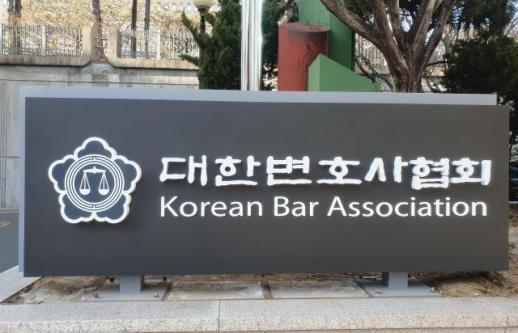 Korean Bar Association Expresses Regret Over Court's Reduction of Attorney Fees The Korean Bar Association, led by President Kim Jung-wook, recently expressed regret over a series of court rulings that retroactively reduce attorney fees agreed upon between lawyers and clients. In a statement on June 1, the association emphasized that "the principle that contracts must be upheld is fundamental to our judicial order," asserting that agreements made freely by the parties involved should be respected. It stressed that court intervention should be limited to exceptional cases with clear and reasonable grounds. The association particularly criticized the courts for applying a double standard specifically to attorney fee agreements. It noted, "When compared to the strict standards under which the Supreme Court did not easily invalidate coercive gift documents from the Chun Doo-hwan military regime, the courts are undermining the validity of attorney fee agreements based on an abstract notion of equity." The Korean Bar Association clarified that attorney fees are not simply calculated mechanically but are determined by considering the complexity of the case, the expertise required, and the anticipated risks. It argued that the courts' retrospective scrutiny of fees undermines the professionalism of legal work and jeopardizes legal stability. The association also pointed out the ambiguity surrounding the criteria for fee reductions. It claimed, "If the relatively easy and broad acceptance of fee reductions in litigation contracts is due to judges' familiarity with this area, it could result in an unreasonable differentiation of the legal profession from other fields without rational justification." The statement concluded that the retrospective reduction of attorney fee agreements should be approached cautiously, considering not only the specifics of individual cases but also the equity with other professions and the judiciary's self-restraint in the realm of private autonomy. Additionally, the association criticized the courts' outdated perspective of viewing clients as unilateral underdogs in contractual relationships, especially in today's world where clients have access to diverse information due to advancements in communication technology. A representative from the Korean Bar Association warned, "If the stability of fee agreements is compromised, lawyers will avoid taking on high-risk cases, ultimately depriving citizens of access to quality legal services." The representative urged the judiciary to recognize that attorney fee agreements are a foundational institutional support for the independence of the legal profession and to exercise restraint in post-facto interventions. Moving forward, the Korean Bar Association plans to closely monitor judicial decisions to ensure that attorneys' rights to fair fee claims are not infringed upon, while also continuing efforts to improve relevant legal principles and systems.* This article has been translated by AI. 2026-06-01 10:18:00
 -
 Hyundai Rotem Shares Rise 8% on Increased K2 Tank Production and Export Prospects Hyundai Rotem's shares surged by 8% in early trading, driven by expectations of increased production capacity and overseas defense contracts in the second half of the year. According to the Korea Exchange, as of 10:07 a.m., Hyundai Rotem's stock was trading at 216,000 won, up 7.73% (15,500 won) from the previous trading day. Analysts noted that following a recent inspection of Hyundai Rotem's Changwon plant, there is growing optimism about the defense sector's growth potential and additional contract opportunities. Lee Jae-gwang, a researcher at LS Securities, stated after visiting the Changwon plant on May 29, "I confirmed the high production capacity and excellent performance of the K2 tank." Hyundai Rotem has converted part of its steel plant into a defense production line, increasing the K2 tank's production capacity from 12 to 15 units per month, a roughly 25% increase. Lee also mentioned that discussions for K2 tank imports are ongoing not only with Poland, Romania, and Peru but also with countries in Northern Europe and Asia. Yang Seung-yoon, a researcher at Eugene Investment & Securities, also visited the Changwon plant on the same day and reported that both defense and railway production lines are operating at full capacity. Yang remarked, "If contracts are confirmed, concerns about performance growth will be minimal," adding that the expansion of production capacity and increased automation are enhancing global competitiveness. He projected that as overseas defense contracts become more visible in the second half of the year, Hyundai Rotem is likely to emerge from its undervalued phase.* This article has been translated by AI. 2026-06-01 10:18:00