

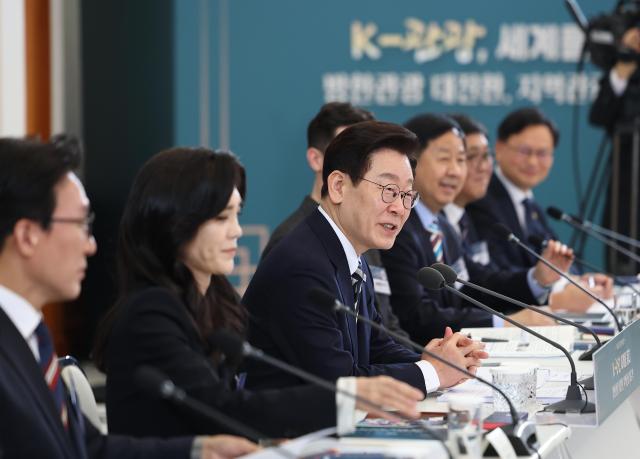
The government of President Lee Jae-myung marks its first anniversary, having made significant strides to revitalize the stagnant tourism sector and expand K-tourism. Notably, during the 11th Expanded National Tourism Strategy Meeting in February, the president announced an ambitious goal to achieve 30 million foreign tourists, moving the target date up by a year. With nearly 18.94 million visitors recorded last year, the government's commitment to elevating tourism as a key growth engine is timely.
Among the most notable achievements are bold deregulations and infrastructure improvements from the consumer's perspective. The government has effectively lowered barriers for incoming tourists. The introduction of a visa-free entry pilot program for groups of three or more from Indonesia, along with relaxed multiple visa requirements for major Southeast Asian countries like China and Vietnam, reflects a practical response to market demands. Expanding access to automated immigration checkpoints for citizens of key countries has also significantly enhanced entry convenience.
Efforts to disperse foreign tourists from the capital region to local areas are commendable. The concentration of 80% of visitors in Seoul has long been identified as a structural weakness in K-tourism. To address this, the government has aggressively expanded direct international flights from regional airports and provided incentives such as reduced facility fees for airlines that introduce new routes, greatly widening access to local destinations. The swift implementation of the '100×100 Project' to boost domestic tourism is another positive initiative aimed at ensuring that tourism benefits flow to small businesses and local economies nationwide.
Despite these clear successes, it is essential to assess whether the necessary systemic improvements have been made to meet these lofty goals. For tourism revitalization campaigns to transcend one-off festivals, there must be a continuous supply of differentiated, high-value content. Above all, addressing persistent issues such as overcharging and unfriendliness that tarnish the image of K-tourism remains an unfinished task. While the government has proposed various measures, relying solely on local governments and the industry for self-regulation has shown limitations in eradicating these on-the-ground problems. If the focus remains solely on short-term numerical targets, the dream of becoming a tourism powerhouse may slip further away.
For K-tourism to take a significant leap forward, institutional enhancements and advanced infrastructure are urgently needed to support quantitative growth. Establishing a super-regional connectivity network that transcends administrative boundaries is a crucial starting point. It is necessary to organically redesign travel routes so that visitors can seamlessly move to key locations across the country via KTX and other transportation options. Furthermore, leveraging major events like the 2025 APEC summit in Gyeongju as catalysts for regional tourism activation is essential.
To support these efforts, a thorough review of related laws, such as the Tourism Promotion Act, is necessary to strengthen the 'Tourism Saemaul Movement' on the ground. Outdated regulations should be boldly removed, and effective standards for eliminating unfair pricing and protecting tourist rights must be refined. Tourism is at the forefront of enhancing the national brand and supporting domestic consumption. If the past year laid the groundwork for expanding the tourism sector, the next challenge is to use this success as a stepping stone to create a South Korea that visitors will want to return to.
* This article has been translated by AI.
Copyright ⓒ Aju Press All rights reserved.