

Journalist

Jinkyu, Myung
-
 Korea spearheads Asia rebound as crude falls below $90 SEOUL, March 10 (AJP) -South Korean stocks posted the strongest advance in Asia on Tuesday, reversing course after leading the region’s losses a day earlier as oil prices retreated sharply from above $100 a barrel and eased fears of a prolonged energy shock from the Middle East conflict. Korea’s benchmark KOSPI closed up 5.35 percent at 5,532.6, recouping much of Monday’s nearly 6 percent drop triggered by the surge in crude prices. The rally gathered momentum after oil prices slid overnight to below $90 per barrel, reviving investor sentiment and triggering a buy-side sidecar shortly after the opening bell as the main index jumped more than 6 percent. Foreign and institutional investors drove the rebound in Seoul. Foreigners bought a net 1.1 trillion won ($749 million) worth of shares on the KOSPI, while institutions added 847 billion won. Individual investors locked in profits, selling a net 1.8 trillion won. Technology shares led the advance. Samsung Electronics surged 8.3 percent to 187,900 won, while SK hynix jumped 12.2 percent to 938,000 won. Automakers also gained, with Hyundai Motor rising 3.6 percent. The smaller KOSDAQ also climbed 3.21 percent to finish at 1,137.7. Foreign investors purchased 128 billion won worth of shares on the KOSDAQ, while institutions added 72 billion won. Retail investors were heavy sellers, offloading about 200 billion won. Japan’s Nikkei 225 rose 2.9 percent to close at 54,248.39, while the broader TOPIX gained 2.2 percent. Semiconductor equipment makers supported the rally, with Tokyo Electron advancing 2.9 percent and Advantest climbing 5.3 percent. Taiwan’s TAIEX added 2.1 percent to close at 32,771.9, tracking gains in global semiconductor stocks. Hong Kong’s Hang Seng Index climbed 1.9 percent to 25,888, while mainland China’s Shanghai Composite rose 0.6 percent. The rebound in regional markets came after U.S. President Donald Trump suggested the conflict with Iran could end soon, easing concerns over prolonged disruption to global energy supplies. “We are going to have a much safer world as soon as it ends, and it's going to finish pretty quickly,” Trump said during a speech at the Republican Members’ Issues Conference in Florida. Brent crude dropped about 8 percent to $90.25 per barrel, while U.S. benchmark West Texas Intermediate fell nearly 8 percent to $87.24. The Korean won also strengthened as easing oil prices improved investor sentiment, closing at 1,469.3 per dollar compared with 1,467.5 won the previous session. 2026-03-10 17:47:22
 -
 Weak won, Middle East risks weigh on Korean economy as Taiwan pulls ahead SEOUL, Mar 10 (AJP) — South Korea’s economy is increasingly lagging behind technology-driven regional peers such as Japan and Taiwan, weighed down by a structurally weak currency and fading industrial competitiveness — pressures that could deepen if the Middle East conflict drags on. According to the Bank of Korea (BOK) on Tuesday, South Korea’s GDP per capita stood at about $35,800 in 2025, largely unchanged from recent years. Per capita gross national income (GNI) reached 52.46 million won ($36,855), rising 4.6 percent in won terms but only 0.3 percent in U.S. dollar terms, reflecting the drag from currency depreciation. By contrast, Taiwan and Japan posted stronger gains. Both countries — which had trailed South Korea in per capita income over the past three years — reported higher provisional figures for 2025, with Taiwan at $40,585 and Japan around $38,000, surpassing South Korea’s GNI range of $36,000 to $37,000. For Seoul, the reversal against Taiwan is particularly symbolic. South Korea first overtook Taiwan in 2003, when its per capita GNI reached $12,000 compared with Taiwan’s $11,000, and maintained the lead for more than two decades. That advantage has now effectively disappeared. Weak won erodes income gains The South Korean won entered 2026 on fragile footing after ending 2025 at 1,421.9 per dollar, a 2.1 percent depreciation from the previous year’s close of 1,392.5. At its weakest intraday level last year, the currency touched 1,487.6 won per dollar, surrendering nearly 6.8 percent of its value compared with the previous year. The slide has been notable because it occurred even while the U.S. Dollar Index remained below the 100 level for extended periods, suggesting the won weakened despite a relatively soft global dollar. In contrast, the New Taiwan dollar strengthened by about 2 to 3 percent against the greenback during the same period. “Assuming no exchange-rate impact, South Korea’s GDP per capita could exceed $40,000 as early as 2027,” said Kim Hwa-yong, head of the BOK’s National Income Department, underscoring how strongly currency movements influence real income levels. The downward pressure intensified earlier this year as geopolitical tensions triggered capital outflows. The won briefly touched the 1,500 level in overnight trading on March 4, following the escalation of the U.S.-Iran conflict. The currency later rebounded to below 1,470 per dollar on Tuesday as oil prices stabilized after U.S. President Donald Trump signaled that the conflict could end soon. Taiwan’s chip boom leaves Korea trailing The BOK on Tuesday confirmed that South Korea’s GDP growth slowed to 1 percent in 2025, matching the central bank’s earlier projection but falling short of 1.5–1.6 percent estimates from institutions such as the International Monetary Fund (IMF) and the Korea Development Institute (KDI). Taiwan, by contrast, posted a striking 8.63 percent growth rate, far above the roughly 7 percent consensus, while Japan recorded 1.1 percent growth, surpassing South Korea for the first time in 27 years. Taiwan’s surge reflects its dominant position in the global semiconductor supply chain. With TSMC controlling much of the world’s advanced chip manufacturing, the island has captured a disproportionate share of growth generated by the artificial intelligence boom. South Korea also benefited from strong demand for AI-related chips through Samsung Electronics and SK hynix, but the broader economy struggled to keep pace. According to BOK data, the semiconductor sector contributed 0.9 percentage points of the economy’s 1 percent growth in the fourth quarter, effectively accounting for nearly all of the expansion. Outside semiconductors, export momentum weakened. Industries that traditionally anchored Korean manufacturing — automobiles, shipbuilding and defense — lost steam in the second half of the year. Sectors facing intense competition from China, including secondary batteries, steel and petrochemicals, also recorded declining exports. Japan, meanwhile, saw improvements in both capital investment and exports. Facility investment rose 4 percent in 2025, while exports — historically a weaker pillar of the Japanese economy — also grew 4 percent. South Korea’s investment cycle told a different story. Facility investment stagnated in the second half, resulting in zero growth for the year. Automobile exports also showed no annual growth, while steel and petrochemical shipments declined, contributing to an overall 2 percent drop in exports. Hormuz disruption adds new risks The Middle East conflict is now adding a fresh layer of uncertainty to the outlook. Following the Feb. 28 strikes, Iran’s Islamic Revolutionary Guard Corps (IRGC) effectively imposed a blockade on the Strait of Hormuz, according to South Korea’s Defense Intelligence Agency (DIA). Maritime traffic through the strait — which averaged about 98 vessels per day in late February — has reportedly plunged to as few as one ship daily. South Korea is among the economies most exposed to such disruption. Data from the Korea National Oil Corporation (KNOC) show that about 70 percent of South Korea’s crude oil imports come from five Middle Eastern countries — Saudi Arabia, the UAE, Kuwait, Qatar and Iraq — all of which rely on the Hormuz passage. “Major Asian economies such as China, India, Japan and South Korea could be particularly affected, as over 80 percent of oil and LNG shipments through the strait are destined for Asia,” the Center for Strategic and International Studies (CSIS) said in a recent analysis. Oil markets have already reacted sharply. WTI crude, which closed at $67 on Feb. 27, surged to $108.5 by March 8 before retreating below $90 on Tuesday after Trump suggested the conflict could end soon and G7 nations signaled possible strategic reserve releases. Even after the pullback, prices remain roughly 30 percent above recent lows. The BOK, which had recently raised its 2026 growth forecast from 1.8 percent to 2 percent, may now face pressure to revise that outlook. A Citigroup report on March 3 estimated that if international oil prices average $82 or higher this year, South Korea’s GDP growth could fall by 0.45 percentage points to around 1.5 percent. At the same time, consumer inflation could rise by about 1.1 percentage points to 3.2 percent, raising the risk of stagflation, according to the Hyundai Research Institute (HRI). “We expect domestic growth and inflation to be negatively affected,” Kim of the BOK said during a press briefing Tuesday. “The ultimate economic impact will largely depend on whether the conflict becomes prolonged.” 2026-03-10 17:37:05
 -
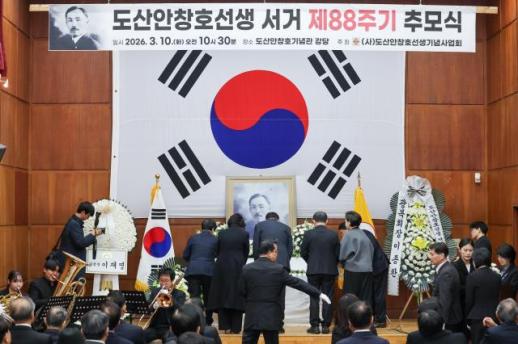 Independence fighter's lifelong dedication remembered SEOUL, March 10 (AJP) - People gathered at a memorial hall in southern Seoul on Tuesday to mark the 88th anniversary of the death of independence fighter Ahn Chang-ho. They laid flowers and bowed their heads in remembrance of his enduring devotion and sacrifice for the country. It was the Sino-Japanese War that changed everything for him. At the age of just sixteen, watching foreign powers clash on Korean soil in 1894, he realized that it was because the country had no strength to defend itself. From that moment, he resolved to dedicate his life to his country, not merely in words but in action. In 1905, he founded the Gongnip Association, the first Korean political organization established in the U.S., drawing 600 members within just two years. He then returned home in 1907 and formed the Sinminhoe, a secret patriotic organization dedicated to restoring Korean sovereignty from Japanese colonial rule. He also established a school in Pyongyang, spearheading educational movements to enlighten people. After the March 1st Independence Movement in 1919, Ahn became Minister of Interior for the Provisional Government in exile in Shanghai. Through both political action and a lifelong commitment to education, Ahn, also known by his pen name Dosan, dedicated himself entirely to the independence of his country. He died in March 1938 at the age of 59, yet his spirit and legacy continue to inspire to this day. 2026-03-10 17:35:53
 -
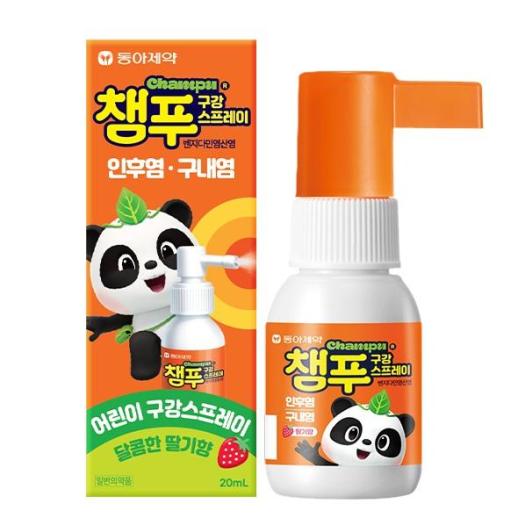 Dong-A Pharma launches oral spray for infants; Centellian24 debuts Japan limited set; HK inno.N deal; Severance study Dong-A Pharmaceutical launches ‘Champu Oral Spray’ for infants and young children Dong-A Pharmaceutical said March 10 it has launched “Champu Oral Spray,” which can be used starting in infancy. The main ingredient is benzydamine hydrochloride, which the company said may help ease inflammation of the throat, mouth and gums and help relieve pain before and after tooth extraction. It can be used by infants and young children under age 6. The spray is used 2 to 6 times a day, with the recommended number of sprays varying by age. To improve adherence among young children, the product has a strawberry flavor, and the packaging uses a panda character to create a familiar look. Dongkook Pharmaceutical’s Centellian24 to debut limited ‘Madeca PDRN Sakura Package’ on Japan’s Qoo10 Dongkook Pharmaceutical’s dermacosmetic brand Centellian24 said March 10 it will introduce a limited-edition “Madeca PDRN Sakura Package.” The set includes four products: Madeca Cream Active Renew PDRN, 360-degree PDRN serum, 360-degree PDRN eye cream, and 360-degree PDRN eye patch. The limited edition centers on popular items from Centellian24’s PDRN line. It will be unveiled during Qoo10’s “Mega Wari” discount event in Japan, which runs through March 11, and will also be available for purchase through Qoo10’s live broadcast starting at 8 p.m. HK inno.N, Tanabe Pharma Korea sign co-promotion deal for anemia drug Badanem HK inno.N said March 10 it held a signing ceremony with Tanabe Pharma Korea for a domestic co-promotion agreement for Badanem tablets (vadadustat), a new drug for renal anemia. Under the agreement, the two companies will jointly handle sales and marketing in South Korea. They will share responsibility for medical institutions with more than 100 beds, while HK inno.N will manage those with 100 beds or fewer. HK inno.N will also exclusively distribute the product domestically, citing its experience selling kidney-disease products and its nationwide sales network. Badanem is an oral treatment used to treat anemia in adult patients with chronic kidney disease who are receiving dialysis. It is a hypoxia-inducible factor prolyl hydroxylase (HIF-PH) inhibitor. It comes in 150 mg and 300 mg doses and is taken once daily. Higher continuity of care tied to lower deaths and cardio-cerebrovascular disease, Severance team says A research team led by Kang Hee-taek, a professor of family medicine at Severance Hospital, and Shim Jae-yong, a professor of family medicine at Gangnam Severance Hospital, said March 10 that greater continuity of care in patients with hypertension or diabetes can reduce medical spending, cardiovascular disease incidence and the risk of death. The findings suggest that, in managing chronic disease, maintaining an ongoing treatment relationship with a specific medical institution matters more for health outcomes and cost savings than the number of medical visits. The results were published in the latest issue of the international journal Nutrition, Metabolism and Cardiovascular Diseases. The team treated “continuity of care” — the extent to which a patient consistently receives care from the same institution or clinician — as a key indicator in chronic-disease management and examined how it relates to real-world outcomes. In patients with hypertension, those with higher continuity of care had fewer hospitalizations among both men and women, and women also had fewer emergency room visits. Total hypertension-related medical costs, costs per visit and annual medical costs all tended to be lower in the high-continuity group. Differences were especially clear in the risk of cardiovascular disease, and similar results were found among patients with diabetes.* This article has been translated by AI. 2026-03-10 17:30:00
 -
 SK Inc. to Cancel All Treasury Shares Worth 4.8 Trillion Won SK Inc. said it will cancel treasury shares worth 4.8 trillion won, the largest such move ever by a holding company and equal to about 20% of its shares outstanding. The company said the decision is part of an aggressive effort to boost corporate value and maximize shareholder value in line with the intent of revisions to the Commercial Act. SK Inc. said it decided at a board meeting on Monday to cancel all treasury shares it holds except those reserved for employee compensation. The cancellation covers about 14.69 million shares out of roughly 17.98 million treasury shares, the company said in a regulatory filing. Based on the previous day’s closing prices — 329,000 won for common shares and 237,500 won for preferred shares — the canceled shares are valued at 4.8343 trillion won, it said. The shares to be canceled include not only treasury shares bought to enhance shareholder value but also shares acquired for a “specific purpose” during past efforts to improve the holding company’s governance structure. SK Inc. merged with SK C&C (now SK AX) in 2015 to simplify its structure and increase transparency. “After several rounds of in-depth discussion, the board concluded that canceling all treasury shares is the best option to serve the maximum interests of all shareholders and raise corporate value,” an SK Inc. official said. The official said the company “actively reflected” the intent of the Commercial Act revision, which allows the board to cancel treasury shares acquired for a specific purpose. SK Inc. said the decision also reflects improved financial strength after two years of portfolio rebalancing. On a separate financial statement basis, net borrowings fell to 8.4 trillion won as of the third quarter of 2025 from 10.5 trillion won at the end of 2024, it said. Over the same period, the debt ratio improved to 77.4% from 86.3%. Canceling nearly 5 trillion won worth of treasury shares shows the board’s firm commitment to continue transparent, shareholder-friendly management and set a model precedent for South Korea’s capital markets, the official said. The company will keep strengthening shareholder trust and maintain a management approach that puts shareholders first, the official added. * This article has been translated by AI. 2026-03-10 17:09:19
 -
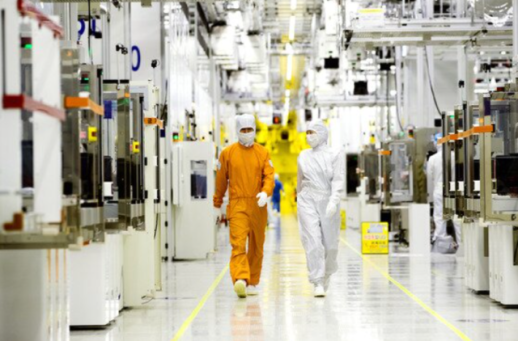 Middle East conflict squeezes Korean chip supply chain as helium shipments face disruption SEOUL, March 10 (AJP) - The widening Middle East conflict is beginning to bite into South Korea’s industrial supply chains, with the semiconductor sector facing growing concern over disruptions to helium shipments — a critical gas used in advanced chip manufacturing. The de facto disruption of shipping routes through the Persian Gulf has hit South Korea particularly hard given the country’s heavy reliance on Middle Eastern energy and industrial materials that feed its export-driven manufacturing base, including the strategically vital semiconductor industry. Industry attention has turned especially to Qatar, a major global supplier of helium, after Iranian retaliatory strikes spread across Gulf states following coordinated U.S. and Israeli attacks on Iran. Helium, a noble gas with an extremely low boiling point, is indispensable in semiconductor fabrication. It is widely used in lithography and plasma etching processes to maintain stable vacuum environments and cool high-temperature equipment during wafer processing, where microscopic circuit patterns are etched to form transistors and interconnects. Any interruption in supply therefore risks creating a bottleneck in the production of advanced chips. According to a Korea International Trade Association (KITA) report, Qatar accounts for roughly 64 percent of South Korea’s helium imports, highlighting the sector’s exposure to geopolitical shocks in the Gulf region. Other major suppliers include the United States and Russia, while the United Arab Emirates — another Gulf producer that has also come under attack — ranks fourth in Korea’s import mix, according to trade data compiled by Volza. Helium is typically transported in liquid form, which allows large volumes to be shipped efficiently before being vaporized upon arrival for industrial use. Shipping disruptions are already pushing up transport costs. The Shanghai Containerized Freight Index (SCFI) for Middle East routes jumped 72.3 percent week-on-week, according to the Shanghai Shipping Exchange, as vessels increasingly divert around the Cape of Good Hope to avoid the conflict zone. Such detours add two to three weeks to delivery times, raising the risk that chipmakers’ stockpiles could be drawn down faster than expected. “Temporary shortages are likely because alternative suppliers currently lack the capacity to immediately offset Qatar’s dominant share,” said Koo Gi-bo, a professor of global commerce at Soongsil University. “South Korea will need to rely on existing reserves while expanding imports from other regions.” Industry sources say Samsung Electronics and SK hynix typically maintain helium inventories sufficient for two to three months of operations. Both companies have already begun securing additional supplies from the United States and Australia, though rerouting shipments comes with sharply higher logistics costs. Yet analysts note that South Korea’s position at the center of the global semiconductor ecosystem could work to its advantage in securing alternative supplies. “The United States has a strategic interest in ensuring helium shipments to South Korea remain stable,” Koo said. “Without Korean high-bandwidth memory (HBM) chips, U.S. companies cannot manufacture advanced AI accelerators. Any disruption to Korean fabs would ripple across the global AI industry.” As fighting in the Middle East threatens vital shipping lanes, the episode is once again exposing a structural vulnerability in South Korea’s export economy — its dependence on imported energy and specialized industrial gases that underpin the world’s semiconductor supply chain. 2026-03-10 16:56:24
 -
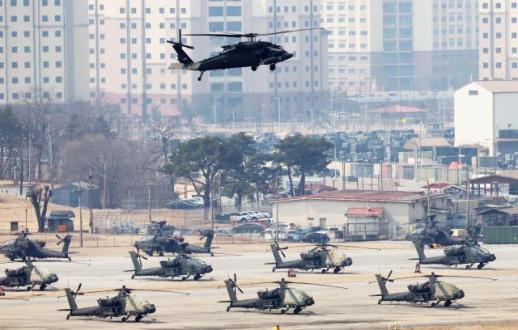 Annual South Korea–US joint military exercise underway SEOUL, March 10 (AJP) - The annual joint military exercise between South Korean and U.S. troops has been underway since early this week. The exercise, dubbed "Freedom Shield," which kicked off on Monday, aims to prepare for contingencies on the Korean Peninsula while assessing combat readiness to prepare for the transfer of wartime operational control from Washington to Seoul. Approximately 18,000 troops are participating in this year's exercise, similar to last year's level, but the number of field training sessions has been reduced to around 22, less than half of last year's 51. North Korea, which has hysterically reacted to these exercises, responded again as Kim Yo-jong, the country's unofficial mouthpiece as the sister of the country's leader Kim Jong-un threatened that it may "cause unimaginably terrible consequences." The exercise runs until March 19. 2026-03-10 16:48:18
 -
 USFK diverts air-defense assets to Middle East as Freedom Shield scales back SEOUL, March 10 (AJP) - The United States has redeployed portions of its air-defense architecture from South Korea to the Middle East as tensions with Iran escalate, coinciding with this year's scaled-back Freedom Shield (FS) joint exercise. According to reports from the Washington Post and real-time flight tracking data, the Pentagon has shifted elements of the Terminal High Altitude Area Defense (THAAD) system out of South Korea while also drawing Patriot interceptor units from the Indo-Pacific theater to counter rising threats of Iranian drone and ballistic missile attacks. Between late February and March 10, 11 C-17 Globemaster III transport aircraft and two C-5 Galaxy heavy airlifters were tracked departing Osan Air Base, a key U.S. Air Force logistics hub south of Seoul. The C-5 — the largest transport aircraft in the U.S. inventory — is capable of carrying an entire Patriot PAC-3 missile battery in a single lift, suggesting that air-defense equipment may have been among the cargo moved out of the peninsula. U.S. officials have described the redeployments as precautionary steps designed to reinforce defenses in the Gulf region should Iran retaliate against U.S. and allied forces following recent strikes. South Korean officials have effectively acknowledged the movement of assets while stressing that such decisions ultimately rest with Washington. President Lee Jae Myung said Tuesday that while Seoul expects U.S. Forces Korea (USFK) to remain committed to maintaining stability on the peninsula, it cannot fully dictate how U.S. military assets are employed globally. “Given that USFK contributes to peace and stability on the Korean Peninsula, we naturally hope its capabilities remain focused here,” Lee said. “However, it is also a reality that we cannot completely prevent the United States from relocating certain defensive systems according to its military needs.” Lee sought to ease concerns about potential gaps in air defense at a time when North Korea continues to advance its missile and nuclear programs. “Considering our defense spending, the development of our defense industry and our international military standing, there is no reason for concern about national security,” he said. The redeployment coincides with the launch of Freedom Shield 2026, the annual combined command-post and field exercise between the U.S. and South Korea, which runs through March 19 and involves roughly 18,000 personnel. This year’s drills place particular emphasis on verifying conditions required for the transfer of wartime operational control (OPCON) from Washington to Seoul — a process the allies are expected to target for completion by 2028, potentially aligning with the current terms of Presidents Lee and Donald Trump. The allies are currently conducting the Full Operational Capability (FOC) assessment, the second stage of a three-step transition process. If the FOC evaluation is approved, the alliance will move to the final Full Mission Capability (FMC) phase in 2027 before the formal transfer of operational control. At the same time, the Lee administration has shifted the structure of Freedom Shield exercises. Rather than concentrating on large-scale Field Training Exercises (FTX), the military has moved toward a more dispersed, year-round training model. This year’s FTX component has been reduced to 22 drills, down sharply from 51 last year, a change that analysts say could help ease tensions on the peninsula ahead of renewed diplomatic engagement between Washington and Pyongyang. President Trump is scheduled to visit China from March 31 to April 2, a trip that could reopen discussions on North Korea. Some military analysts say the redeployment of U.S. defensive systems is unlikely to significantly weaken deterrence against North Korea. Jung Kyeong-woon, a research fellow at the Korea Association of Military Studies, said the assets moved out of the peninsula likely involve reserve equipment and munitions rather than operational frontline units. Similarly, Koh Yu-hwan, former president of the Korea Institute for National Unification, said Pyongyang currently appears focused on signaling rather than escalation. “The fact that Kim Yo-jong issued a statement protesting the exercises suggests the North is reacting to U.S. military pressure rather than preparing offensive action,” Koh said. “Even if minor logistical gaps arise, the core deterrent remains the ROK-U.S. alliance.” North Korea has nonetheless responded sharply to the drills. Kim Yo-jong, the powerful sister of leader Kim Jong-un, warned that the “provocative and aggressive war simulations” conducted by the allies could lead to “unimaginably terrible consequences.” Both USFK and the South Korean military declined to confirm specific details of asset movements, citing operational security. They stressed that the alliance maintains what they described as an “ironclad combined defense posture” to ensure there are no security gaps on the peninsula. 2026-03-10 16:38:03
 -
 Shinhan Bank CEO visits Seoul Cosmetics, pledges expanded tailored financing Jeong Sang-hyeok, CEO of Shinhan Bank, visited a cosmetics manufacturer to review its research and development work and discuss ways to support the company, in line with the group’s push to expand “productive finance.” Shinhan Bank said Jeong on March 10 toured Seoul Cosmetics, an OEM (original equipment manufacturing) and ODM (original development manufacturing) company in Namdong-gu, Incheon, and met with Chairman Han Gwang-seok and CEO Han Jeong-su to discuss growth support measures. The visit was part of Shinhan Financial Group’s broader strategy to expand productive finance. The group held a “Group Productive Finance Steering Committee” meeting on Feb. 11 at its headquarters in Jung-gu, Seoul, to discuss ways to improve the execution and effectiveness of productive finance, which it said will be implemented in earnest starting this year. During the meeting, Jeong heard the company’s plans to expand production capacity as it grows in global markets, along with its mid- to long-term growth strategy. He then toured the company’s research institute and production facilities to review equipment operations and the overall process for pursuing new businesses. In an on-site discussion, the sides talked about strengthening supply capabilities, strategies for developing new product formulations, and financial and nonfinancial support needed to enter overseas markets. “We will further expand tailored cooperation and financial support so companies with strong technology and growth potential can secure competitiveness in global markets,” Jeong said. “We will continue to strengthen field-focused partnerships so corporate innovation and growth can proceed smoothly.”* This article has been translated by AI. 2026-03-10 16:30:00
 -
 South Korea Reaches WBC Quarterfinals for First Time Since 2009 After Beating Australia South Korea advanced to the World Baseball Classic quarterfinals for the first time since its 2009 runner-up finish, breaking a three-tournament streak of group-stage exits. Ryu Ji-hyeon’s team beat Australia 7-2 on March 9 at the Tokyo Dome in Tokyo in Pool C play. South Korea finished 2-2, tied with Taiwan and Australia, but claimed second place behind Japan (3-1) on the tournament’s minimum runs-allowed rate tiebreaker. The stakes were clear: South Korea needed to win by at least five runs and allow no more than two. It did both. Moon Bo-kyung of the LG Twins set the tone. Batting fifth as the designated hitter, he hit a two-run homer in the second inning with a runner on and the game scoreless. He later delivered RBI singles in the third (with one out and a runner on second) and fifth (two outs, runner on second), finishing 3-for-5 with four RBIs. Moon ended the group stage batting .538 with two homers, 11 RBIs and a 1.779 OPS. He matched the South Korean single-tournament WBC RBI record of 11 set by Kim Tae-kyun in 2009. Defense also mattered. In the bottom of the ninth, with South Korea leading 7-2 and one out with a runner on first, Lee Jung-hoo of the San Francisco Giants sprinted and made a sliding catch on a ball that could have led to a run and threatened South Korea’s advancement scenario. ESPN said Lee’s ninth-inning catch created a defining moment, adding that if the ball had dropped and Australia had scored, Australia would have advanced to the quarterfinals. On the mound, South Korea had to adjust early. Starter Son Ju-young of LG worked a scoreless first inning but left after reporting sudden elbow pain, forcing a bullpen game from the second inning. Veteran right-hander Noh Kyung-eun, born in 1984, was summoned and delivered two scoreless innings, allowing one hit and striking out one. He mixed a changeup, fastball, cutter, curve, slider and sinker to keep Australia in check. “Today’s MVP is Noh Kyung-eun,” Ryu told reporters after the game. “In an unprepared situation, he gave us two innings. I want to say I respect him.” Reliever Jo Byeong-hyeon of the SSG Landers closed it out under heavy pressure. He entered in the eighth with one out and a runner on first and South Korea leading 6-2, with three more runs allowed meaning elimination. Jo finished the eighth without damage and returned for the ninth, striking out the first batter, issuing a walk, then recording two flyouts to preserve the two-run-allowed requirement. South Korea will play the Pool D winner in the quarterfinals at 7:30 a.m. March 14 (Korea time). In Pool D, the Dominican Republic and Venezuela were tied atop the standings with three wins each.* This article has been translated by AI. 2026-03-10 16:24:42