

Journalist

Jong Eun Lee
-
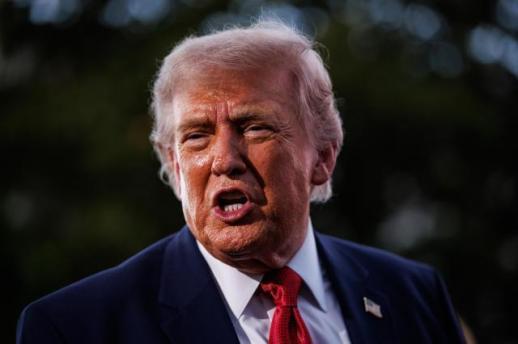 Trump Signs Order for Lower Tariffs on Imports Using 85% U.S. Steel, Aluminum Donald Trump, President of the United States, has signed an order that applies lower tariff rates to imported products that use a significant amount of U.S.-made steel, aluminum, and copper. According to the White House on June 1, President Trump signed a proclamation adjusting the tariff system for steel, aluminum, and copper imports under Section 232 of the Trade Expansion Act. This section allows the president to impose tariffs or other import restrictions if certain imports are deemed a threat to U.S. national security. The key factor is the proportion of U.S.-made metals in the products. Imported goods that contain at least 85% U.S. steel, aluminum, or copper by weight will qualify for a 10% tariff rate. This structure favors products that use a high percentage of U.S. materials, applying a lower preferential tariff rate rather than a straightforward tariff reduction. Additionally, tariffs on some agricultural and industrial equipment will also be reduced. The Wall Street Journal reported that tariffs on certain heavy machinery, including combines, harvesters, bulldozers, and forklifts, will be adjusted to 15%. This move aims to alleviate cost burdens for manufacturers and farmers using this equipment. Conversely, the scope of tariff applications has been expanded. The proclamation includes steel racks and aluminum flat printing plates as new tariff subjects. Reuters reported that these items will be subject to a 25% tariff. The new tariff adjustments will take effect on August 8 and will remain in place until the end of 2027.* This article has been translated by AI. 2026-06-02 13:33:00
 -
 Trump Returns Draft MOU with Iran, Seeks Stronger Nuclear and Hormuz Guarantees President Donald Trump returned the draft memorandum of understanding (MOU) between the United States and Iran, seeking clearer commitments regarding Iran's nuclear program and the reopening of the Hormuz Strait, CNN reported on June 1. According to a government official from a third country familiar with the discussions, "The amendments requested by President Trump do not change the overall direction of the agreement." However, the U.S. wants more explicit language regarding Iran's promise not to pursue nuclear weapons and its commitment to reopen the Hormuz Strait. The draft MOU reportedly included provisions to open the Hormuz Strait, extend the U.S.-Iran ceasefire by 60 days, and initiate serious negotiations on Iran's denuclearization during that period. However, Trump did not approve the draft on May 29 and sent it back to Iran. Sources indicated that Trump has been advocating for stronger language regarding Iran's nuclear commitments and the reopening of the Hormuz Strait. Axios also reported on May 30 that Trump requested more specific details concerning the Iranian nuclear issue and the reopening of the Hormuz Strait. The current draft only includes Iran's commitment not to pursue nuclear weapons, but it remains unclear how the U.S. will secure Iran's highly enriched uranium and the timeline for doing so. Regarding the Hormuz Strait, the draft reportedly includes measures to restore conditions to pre-war levels within 30 days. Trump appears to want clearer specifications on the timeline for reopening and the criteria for restoring pre-war traffic levels. A response from Iran is expected to take more time. According to Axios, a senior U.S. official stated, "I heard it would take three days for a response from Iran to reach President Trump."* This article has been translated by AI. 2026-06-02 13:21:00
 -
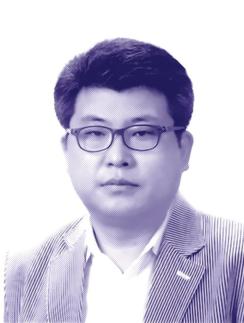 Oh Se-hoon's Message Reflects the Dignity of Great Politics On June 2, the final stretch of the election is underway. As the election nears its end, the rhetoric of politicians often becomes more aggressive. Those who feel they are winning tend to press their opponents, while those who are anxious seek to rally their supporters. Voices grow louder, and emotions run high, which is why politics often loses its dignity as the election concludes. However, just hours before voting, Oh Se-hoon’s message stood out. It was surprisingly humble and remarkably calm, brimming with confidence. He began by addressing the struggles of Seoul's citizens and the frustrations of the youth. He expressed, "Before assigning blame, I apologize," and even acknowledged the shortcomings of the opposition. This prompted a reflection: When can a person truly be humble? Is it when they are losing everything? No, it is often when they feel they have the upper hand. When one is unshaken, there is no need to raise their voice or push their opponent; that is when a person's true character emerges. The resonance of Oh Se-hoon’s message, written just hours before the election, lies in this. He did not use the language of a politician gripped by fear. He did not incite hatred or hurl insults at his opponents. Instead, he spoke of "the balance of South Korea," "the rule of law," and "the future of Seoul." His words felt less like those of a politician and more like those of a seasoned administrator sharing his heart with the citizens one last time. Oh Se-hoon has consistently chosen to confront crises head-on. He was once politically declared dead after a referendum on free school meals. Yet he made a comeback and returned to the center of Seoul's governance. Throughout this journey, he has continually pushed for grand urban visions, such as the Han River Renaissance, transportation, urban design, tourism, and urban competitiveness. Recent controversial policies have followed a similar pattern. The Han River Bus, despite criticism, eventually made its debut before the citizens, and the Gwanghwamun Square has begun to establish itself as a new symbolic space for Seoul, enduring mockery and opposition. He has always responded to criticism with results. Perhaps this is why his final message conveyed a sense of 'calm confidence' rather than desperation. It felt as if someone who had reached the summit after a long battle was looking down and saying, "The choice is now in the hands of the citizens. I am ready to work again." This made his message even more striking. The moment a politician feels certain of victory is often the most dangerous. They can become arrogant, underestimate their opponents, and mistakenly believe they stand above the citizens. However, Oh Se-hoon’s message was different. He expressed even greater humility, stating that Seoul is "everything in my life," and we acknowledge that he has always lived this way. He also mentioned that the tears and sweat of each citizen are etched in his heart. In this part, we see not the words of a campaign strategist but the heartfelt sentiments of someone who has long loved the city of Seoul. This is likely why his message does not come across as a mere election appeal. It reflects the composure and responsibility that only someone who has fought many significant battles can possess. Perhaps this is the highest realm politics can achieve: the more one wins, the more humble they become, and in the final moments, they speak of the citizens first, not themselves. Just hours before voting, Oh Se-hoon’s message exemplified such 'dignity of great politicians.' 2026-06-02 13:15:00
 -
 LF's Double Flag Launches in Japan with Official Entry at Preppy Kobe Store LF's golf brand, Double Flag, has officially entered the Japanese market with its launch at the Preppy Kobe store, marking its first foray into the global arena. LF announced on June 2 that Double Flag officially opened at the Preppy Kobe store in early May. This is the brand's inaugural venture into international markets. Preppy, a retail store based in the Kansai region of Japan, offers a range of brands across sports, outdoor, travel, and golf sectors, and has recently focused on strengthening its golf offerings. Since the second half of last year, Double Flag has been actively introducing its brand and style content within the local fashion and golf community in Japan to gauge market reactions. During this process, local Japanese companies, having engaged with the brand's social media content, directly proposed collaboration, leading to the partnership. LF began selling Double Flag products at the Preppy Kobe store through local export methods, timed to coincide with Japan's Golden Week. The initial export product lineup focuses on summer hybrid styles that connect the golf course with everyday life. It includes signature items such as the mock neck t-shirt and barrel fit pants, along with accessories like the big logo sun cap and socks. LF noted that the response to the accessory line has been particularly positive, with additional orders coming in just three weeks after the store's opening. A local partner commented, "The Japanese golf wear market is heavily male-dominated, and women's golf wear tends to be skewed towards flashy styles or performance-focused brands. We were looking for a brand that seamlessly transitions between the golf course and everyday life while offering originality and high design sensibility." A representative from Double Flag stated, "There is growing interest in lifestyle golf wear that embodies the sophisticated sensibility and styling unique to domestic brands in Japan. Through this collaboration, we plan to expand our engagement with Japanese customers and gradually enhance brand experiences in the local market." Meanwhile, Double Flag's Spring/Summer 2026 collection theme is 'Beauty Tour.' The core strategy revolves around hybrid golf wear that naturally transitions from the golf course to daily life. Key items include a color-block quarter zip, denim point skirt, khaki barrel fit pants, and olive green layered windproof knit. * This article has been translated by AI. 2026-06-02 13:12:00
 -
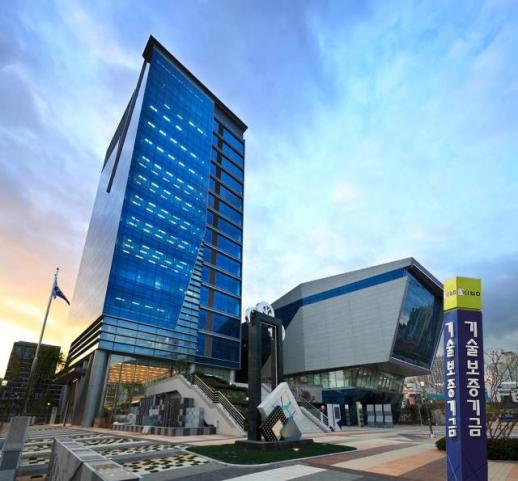 Korea Technology Guarantee Fund Partners with Shinhyup Bank to Support Future Strategic Industries The Korea Technology Guarantee Fund has announced a partnership with Shinhyup Bank to provide financial support for the development of future strategic industries. On June 2, the Technology Guarantee Fund signed a memorandum of understanding with Shinhyup Bank for productive financial support aimed at fostering future strategic industries. This agreement is designed to enhance access to financing for small and medium-sized enterprises (SMEs) in the technology sector and to strengthen the financial support system that underpins innovative growth. Under the agreement, the Technology Guarantee Fund will provide a special guarantee of 84 billion won, funded by a special contribution of 4.2 billion won from Shinhyup Bank. Eligible companies can receive up to 3 billion won in working capital, along with preferential benefits such as an increased guarantee ratio (from 85% to 100% for three years) and a reduction in guarantee fees (by 0.2 percentage points for three years). The support is targeted at new technology businesses that meet the Technology Guarantee Fund's criteria, specifically those operating in six key strategic industries: artificial intelligence (AI), biotechnology, cultural content, defense, energy, and advanced manufacturing. Both organizations aim to reduce the financial burden on SMEs in future strategic industries and continue their collaboration to support the scaling up of technology companies and securing future growth drivers. Previously, the Technology Guarantee Fund signed an agreement with Nonghyup Bank to provide a total of 317 billion won in guarantees to support the development of future strategic industries and assist companies affected by the Middle East crisis. Kim Jong-ho, chairman of the Technology Guarantee Fund, stated, "We will continue to expand our cooperation with financial institutions to strengthen productive finance and actively support the innovative growth of technology companies."* This article has been translated by AI. 2026-06-02 13:00:00
 -
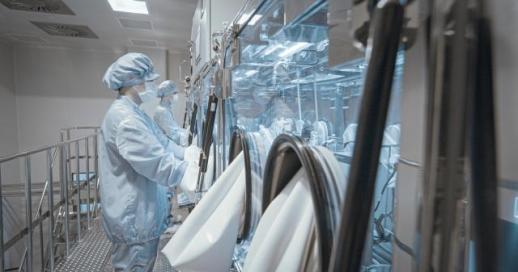 Boryung Completes Acquisition of Taxotere, Launches Global Business Boryung announced on June 2 that it has finalized its acquisition of the global business rights for the anticancer drug Taxotere (generic name docetaxel) from Sanofi and has commenced global sales. Revenue from this product will be reflected in Boryung's financial results starting this month. Taxotere is an original cytotoxic anticancer drug containing docetaxel, widely used for various cancers including breast cancer, non-small cell lung cancer, prostate cancer, gastric cancer, and head and neck cancer, serving as both neoadjuvant and adjuvant therapy as well as first-line treatment for metastatic and progressive cancers. It is also a key drug in combination therapies with immuno-oncology and targeted therapies, and its active ingredient is listed on the World Health Organization's essential medicines list. In 2024, Taxotere generated sales of 70 million euros (approximately 115.4 billion won) globally. Through this acquisition, Boryung has secured comprehensive global business rights for Taxotere, including distribution, licensing, production, and trademark rights across 19 countries and regions, including South Korea, China, Germany, Spain, South America, and the Middle East. The final contract value is approximately 170 million euros (about 279.6 billion won). A Boryung official stated, "During the contract negotiation last year, we adjusted the transaction amount based on the inventory status in each country, resulting in a reduction of about 5 million euros from the initially agreed maximum of 175 million euros." This marks the first time a South Korean pharmaceutical company has acquired the global business rights for an original anticancer drug from a major global pharmaceutical firm and is now directly engaged in global sales. Boryung previously acquired the domestic businesses for Gemzar and Alimta and plans to expand its global operations in cytotoxic anticancer drugs through this contract. Kim Sung-jin, Chief Strategy Officer of Boryung, emphasized, "With the completion of this acquisition, we have established our name in the global anticancer drug supply chain and will continue to expand our position as a major global supplier using Taxotere as a stepping stone."* This article has been translated by AI. 2026-06-02 12:57:00
 -
 UPDATE: Korea-Africa Business Forum highlights growing strategic partnership SEOUL, June 02 (AJP) -South Korea hosted a large-scale business forum with African countries on the sidelines of a summit conference at a time global commodity market is being reshaped from the prolonged conflicts in the Gulf. The 2026 Korea-Africa Business Forum was held Tuesday at Lotte Hotel Seoul in central Seoul, bringing together about 300 government officials, diplomats and business leaders from South Korea and African countries. The forum was hosted by the Ministry of Foreign Affairs, jointly by the Korea-Africa Foundation, the Korea Trade-Investment Promotion Agency (KOTRA) and the Korea International Trade Association (KITA), and Yonhap News Agency. In his opening remarks, Foreign Minister Cho Hyun underscored the growing strategic importance of Africa amid global energy and supply chain challenges, emphasizing the need for “mutual prosperity and shared growth” between Korea and Africa. “The Korea-Africa Foreign Ministers’ Meeting held yesterday provided a valuable opportunity to review the achievements made since the 2024 Korea-Africa Summit and discuss a future vision for cooperation,” Cho said. The forum featured keynote speeches by Sung Kim, President for Strategic Planning at Hyundai Motor Company, and Wamkele Mene, Secretary-General of the African Continental Free Trade Area. The first session, titled “Driving Synergies through Korea-Africa Economic Cooperation: From K-Content to New Markets,” explored opportunities to deepen economic ties and expand business collaboration between Korea and African countries. The session was moderated by Caitlin Nash, CEO of Golden Thread Markets in South Africa. Speakers included Kim Myung-hee, Executive Vice President of KOTRA; Jung Tawon, Head of the Sub-Saharan Africa Region at Daewoo Engineering & Construction; Caleb Maru, CEO of Tech Safari in Kenya; and Nana Aba Anamoah, a Ghanaian media personality and founder of Women of Valour. The participants discussed ways to leverage Korea’s cultural influence, technological capabilities and industrial expertise to create new opportunities in African markets, while exploring avenues for broader economic cooperation and sustainable growth. The latter half of the forum shifted focus from diplomacy to practical business cooperation, with speakers highlighting Africa’s growing potential as a strategic market for Korean industries. During a special dialogue session on the future of Korea-Africa business ties, Victor Lawrence Villacisety, chairman and CEO of Villacisety, argued that Africa should no longer be viewed solely as a source of raw materials, describing the continent instead as an emerging center for global innovation and industrial growth. The Ghanaian businessman introduced his company’s large-scale smart industrial city project near Accra and said he plans to create a “K-Tech Town” within the development to help Korean companies establish a foothold in Africa with fewer risks and greater institutional support. The forum’s third session brought together senior African officials for discussions on cooperation in critical minerals and energy — sectors expected to become increasingly important amid the global supply chain race. Foreign ministers from Gambia, Tunisia and Rwanda, along with Mozambique’s minister for planning and development, called for a more equal partnership model between Korea and African nations. Rather than limiting cooperation to resource extraction, they stressed the need for joint participation in development projects and a fairer sharing of economic gains. Beyond the conference hall, the event also served as a showcase for Korean consumer brands targeting Africa’s fast-growing markets. K-beauty and K-food exhibition booths installed at the entrance of the venue drew heavy attention from African delegates and business participants. Ten Korean companies selected through a highly competitive screening process displayed products tailored to local demand, including hair care products designed for African consumers, vegan cosmetics, premium Korean tea and health drinks. An employee of Korean cosmetics brand Life With Corporation, Sohn Luna, 30, who participated in the event, said it was “a great opportunity to promote the brand.” “Because many parts of Africa have dry climates, a lot of people showed interest in moisturizing products,” Sohn said. She added that while the company currently exports only to Tanzania, “African visitors showed much greater interest than we had expected today, so I believe demand in Africa will continue to grow in the future.” Dana Mopulunga, CEO of South African pharmaceutical company Bernika Health, said the forum made her feel that “there are a lot of opportunities” for economic cooperation between Korea and Africa. She added that she plans to visit Korea again to further discuss business cooperation with Korean partners. 2026-06-02 12:36:35
 -
 UPDATE: Korea's May inflation hits 26-mo high, hastening hike agenda *Updated with additional information and market response. SEOUL, June 02 (AJP) - South Korea's inflation accelerated by the fastest pace in 26 months to run above 3 percent in May as energy shocks from prolonged Gulf conflicts pushed up prices from fueling to service charges coupled with crisis-level exchange rate to rock capital markets and send the central bank scrambling for emergency actions. The composite consumer price index for May rose 3.1 percent from a year earlier, according to the Ministry of Data and Statistics on Tuesday. The annual inflation rate accelerated from 2.6 percent in April and marked the fastest pace since March 2024. Petroleum products were the main driver of the May pickup, rising 24.2 percent on year. Diesel prices jumped 33.3 percent, while gasoline climbed 23.1 percent. In May, the average retail price of gasoline at gas stations in Seoul stood at 2,051.1 won ($1.38) per liter, while diesel recorded 2,038.85 won per liter. The figures represent expansions of 1.46 percent and 1.66 percent, respectively, compared to April's averages of 2,021.6 won and 2,005.46 won when government capped the gains. The impact was most visible in transport costs, which rose 11.6 percent from a year earlier. Recreation and entertaining prices also increased 5.0 percent, while miscellaneous goods and services rose 4.1 percent. An index measuring the prices of daily necessities rose 3.3 percent, the highest level since April 2024, suggesting that households continued to feel the pressure of rising prices. The burden was concentrated more in non-food items, as the non-food component of the living necessities index climbed 4.2 percent while non-food items showed a rather modest rise of 2.1 percent. Fresh food prices, by contrast, fell 1.4 percent from a year earlier, with fresh vegetables and fresh fruit declining 4.9 percent and 2.8 percent, respectively. Agricultural, livestock and fishery products still rose 2.2 percent overall, as livestock and fishery prices increased despite relatively stable agricultural prices. Service prices rose 2.8 percent from a year earlier, led by travel-related items such as domestic and international airfares. Personal services increased 3.7 percent, while personal services excluding dining out climbed 4.4 percent. As of the end of the morning session, the three-year government bond yield rose 3.3 basis points to 3.823 percent, while the 10-year yield edged down 0.7 basis points to 4.167 percent. The longer-dated yields remained largely flat, benefiting from the spillover effects of a 3 trillion won auction for 30-year government bonds scheduled for the day. The benchmark KOSPI fell more than 2 percent while the dollar spiked above 1,518 won. The core inflation measure used by the Organization for Economic Cooperation and Development, which excludes food and energy, rose 2.5 percent, up from 2.2 percent in April. Another core gauge that excludes agricultural products and petroleum products also increased 2.5 percent. The Bank of Korea also held an inflation review meeting Tuesday morning, chaired by Lee Ji-ho, Head of Research Department, to assess recent price conditions and the outlook. The Bank of Korea in late May held the benchmark at 2.5 percent, unchanged for a full year, while clearly indicating rates would go higher possibly through multiple hikes depending on the inflationary trajectory. The next meeting is in July, but the monetary policy board can hold emergency rate-setting meetings. Lee said May inflation rose sharply from April as the pace of petroleum price increases widened and service price growth picked up, particularly in travel-related services such as domestic and international airfares. The central bank said most major categories acted as upward factors in May, with services, agricultural, livestock and fishery products, and petroleum products all contributing to the acceleration in headline inflation. The BOK also warned that inflation is likely to remain around 3 percent as the impact of oil price shocks gradually spreads to other sectors. Last month, it upped this year's inflation forecast to near 3 percent. "Uncertainty remains high over the future inflation path, depending on developments in the Middle East and the resulting movement in oil prices," Lee said. "As oil price shocks are gradually spreading to other sectors, inflation is expected to remain in the 3 percent range for the time being, and we will closely monitor price conditions with vigilance." The central bank also noted that the rise in living necessities prices to the low-to-mid 3 percent range has increased living cost burdens for vulnerable groups, whose spending is more heavily concentrated on essential goods. The latest inflation data came a day after BOK Governor Shin Hyun-song said Korea remains vulnerable to energy price shocks but has room to respond to renewed inflation pressure. "Korea is sensitive to energy price shocks, similar to the euro area," Shin said Monday during a policy dialogue at the 2026 BOK International Conference in Seoul. He added that there are fewer obstacles to adjusting monetary policy in relation to inflation, saying the central bank has "greater room for maneuver" to ease price pressures with potential rate hikes. 2026-06-02 12:23:22
 -
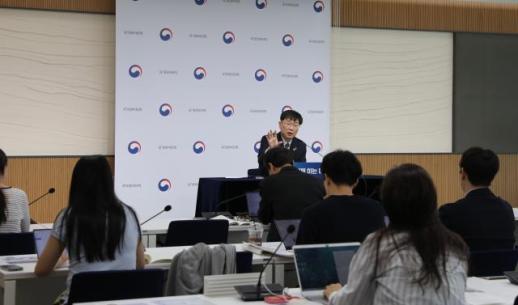 National Data Agency Advances Data Integration and Utilization for AI Competitiveness The National Data Agency is working to establish a national data management system through the promotion of the National Data Basic Law and the expansion of public and private data integration. During the first year of the Lee administration, efforts have intensified to position the agency as the central authority for national data in the era of artificial intelligence (AI), marking the beginning of a national-level data ecosystem. In a report titled "Achievements of the People's Sovereignty Government After One Year," released on June 2, the agency highlighted four key areas of focus: establishing government-wide data governance, enhancing data value, developing national statistics, and strengthening statistical services and infrastructure. As part of these efforts, the agency has prepared a draft of the National Data Basic Law, which was submitted to the National Assembly on May 27. The proposed law includes provisions for establishing a comprehensive coordination system for national data, designating and managing national data, ensuring quality control, and designating national data utilization centers. Ahn Hyung-jun, head of the National Data Agency, stated during the June 1 briefing, "Previously, data governance was fragmented across public data, industrial data, and personal data, leading to a lack of a cohesive national management system. The core of promoting this basic law is to enable citizens to utilize data more easily." The agency is also advancing initiatives to enhance data value. It is working on building AI-friendly metadata (ontology) to ensure that AI can accurately read and interpret statistical data, and is introducing new data protection technologies such as homomorphic encryption and reproducible data. In November of last year, the agency launched a database service for small and medium-sized enterprises, and plans to provide integrated data on the elderly, deceased individuals, and homeowners later this year. Ahn noted, "Data on the elderly can be used to address issues related to an aging society, data on deceased individuals can inform policies to prevent suicide and solitary deaths, and data on homeowners can aid in the development of housing and real estate policies." The agency is also developing statistics to support national policy initiatives. It has published a regional supply and use table that shows the movement of goods and services between regions for the first time and expanded the areas for compiling living population statistics from 89 to 107. Additionally, it has developed population dynamics panel statistics to analyze changes in marriage and childbirth and has expanded youth-related statistics, including a youth statistical map and quality of life analysis. To make data more accessible to the public, the agency is enhancing its statistical services. It has introduced new features for data visualization and industry statistical maps, and starting this month, it will apply AI technology to operate the statistical data center during evenings and weekends. Ahn concluded, "AI competitiveness ultimately stems from data competitiveness. We will accelerate data innovation and actively support the resolution of national issues through the integration and utilization of diverse data."* This article has been translated by AI. 2026-06-02 12:03:00
 -
![[6·3 Local Elections] Ruling Party Appeals for Votes Ahead of Election Day](https://image.ajunews.com//content/image/2026/06/02/20260602115433687314_518_323.jpg) [[6·3 Local Elections]] Ruling Party Appeals for Votes Ahead of Election Day On June 2, the Democratic Party made a final appeal for votes ahead of the June 3 local elections, urging voters to choose the ruling party candidate who will work with President Lee Jae-myung. Jo Seung-rae, the party's secretary-general, spoke to reporters at the National Assembly, stating, "With just one day left until the election, it is time to vote for the normalization of South Korea and to create an effective local government." He emphasized that the essence of this election is to judge the far-right forces and to support a capable president. Jo urged citizens to actively participate in the voting process and reflect on the significance of the election, asking them to support a president who works effectively. "Please choose candidates who will work in sync with the president throughout his term," he added. He also targeted candidates from the People Power Party, including Oh Se-hoon, Yoon Jeung-bok, Park Wan-su, and Choo Kyung-ho, who have faced various allegations. "Oh is under investigation for allegations of polling fraud, while Yoon is currently on trial for violating election laws," Jo pointed out. He noted that Park is facing accusations related to the illegal production and distribution of AI-generated fake videos, and Choo has been indicted for serious charges related to insurrection. "If they are elected, can they govern effectively?" he questioned. Regarding Han Dong-hoon, Jo stated, "There are already allegations of operating an illegal election office, and discussions in a group chat among Han's supporters have raised concerns about fraudulent residency registrations. This is a clear violation of election laws. We request prompt cooperation from the National Election Commission and investigative authorities." Jo also criticized candidates who have run as independents, such as Kim Kwan-young, who was expelled from the party for cash distribution, and Jo Guk, who is running in Pyeongtaek. "Kim Kwan-young was expelled not for political oppression but for distributing cash. We cannot entrust the future of Jeonbuk to a candidate who consistently lies to cover up his wrongdoings," he said. He urged Democratic supporters in Pyeongtaek to choose candidate Kim Yong-nam instead of Jo Guk.* This article has been translated by AI. 2026-06-02 12:00:00
[[6·3 Local Elections]] Ruling Party Appeals for Votes Ahead of Election Day On June 2, the Democratic Party made a final appeal for votes ahead of the June 3 local elections, urging voters to choose the ruling party candidate who will work with President Lee Jae-myung. Jo Seung-rae, the party's secretary-general, spoke to reporters at the National Assembly, stating, "With just one day left until the election, it is time to vote for the normalization of South Korea and to create an effective local government." He emphasized that the essence of this election is to judge the far-right forces and to support a capable president. Jo urged citizens to actively participate in the voting process and reflect on the significance of the election, asking them to support a president who works effectively. "Please choose candidates who will work in sync with the president throughout his term," he added. He also targeted candidates from the People Power Party, including Oh Se-hoon, Yoon Jeung-bok, Park Wan-su, and Choo Kyung-ho, who have faced various allegations. "Oh is under investigation for allegations of polling fraud, while Yoon is currently on trial for violating election laws," Jo pointed out. He noted that Park is facing accusations related to the illegal production and distribution of AI-generated fake videos, and Choo has been indicted for serious charges related to insurrection. "If they are elected, can they govern effectively?" he questioned. Regarding Han Dong-hoon, Jo stated, "There are already allegations of operating an illegal election office, and discussions in a group chat among Han's supporters have raised concerns about fraudulent residency registrations. This is a clear violation of election laws. We request prompt cooperation from the National Election Commission and investigative authorities." Jo also criticized candidates who have run as independents, such as Kim Kwan-young, who was expelled from the party for cash distribution, and Jo Guk, who is running in Pyeongtaek. "Kim Kwan-young was expelled not for political oppression but for distributing cash. We cannot entrust the future of Jeonbuk to a candidate who consistently lies to cover up his wrongdoings," he said. He urged Democratic supporters in Pyeongtaek to choose candidate Kim Yong-nam instead of Jo Guk.* This article has been translated by AI. 2026-06-02 12:00:00