

Journalist

Jong Eun Lee
-
 Hana Bank Relaunches 'BEST 11 Savings' with Up to 11% Interest for World Cup Hana Bank announced on June 1 that it has relaunched its 'BEST 11 Savings' product, offering an interest rate of up to 11.0% based on the performance of the national team in the upcoming 2026 FIFA World Cup in North and Central America. The product will be available for 30,000 accounts until June 24. Customers can invest between 10,000 and 200,000 won per month, with a contract period of six months. The base interest rate is 2.0%, with an additional preferential rate of up to 0.2% and a special preferential rate of up to 8.8%, totaling a maximum of 11.0%. Preferential rates include 0.1% for automatic transfers and another 0.1% for marketing consent. The special preferential rates are contingent on the team's performance: 1.5% for reaching the Round of 32, 2.0% for the Round of 16, 5.5% for the quarterfinals, and 8.8% for the semifinals, applied at the time of maturity. A representative from Hana Bank's Inclusive Finance Product Division stated, "We are reintroducing the 'BEST 11 Savings' in response to continuous requests for its return after it sold out quickly upon its initial launch in November 2022. We will continue to offer various products and services that football fans in South Korea can enjoy together." 2026-06-01 10:30:00
 -
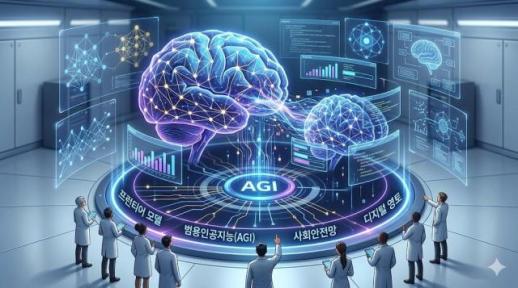 The Era of AI Creating AI: A National Imperative Artificial intelligence (AI) technology is racing toward a singularity. Having progressed beyond the inability to explain its thought processes, AI has now entered a phase where it can create AI itself. Minister of Science and ICT Baek Kyung-hoon stated, "It is time for us to challenge ourselves to create AI frontier models on par with those of the United States and China." This declaration reflects a significant industrial transformation driven by advancements in AI technology. Just as the steam engine evolved into the internal combustion engine and subsequently into the electronics industry, we are now witnessing an era where technology begets technology, leading to an 'infinite amplification of gaps.' Countries possessing advanced general-purpose AI (AGI) will experience rapid growth, while those relegated to technology consumption risk becoming data and knowledge colonies. Our future may become dependent on the technological ecosystems of the U.S. and China. Building an independent frontier model also serves as a robust social safety net to address the knowledge and educational disparities within our society. If access to cutting-edge AI models is determined by capital, the gap between those who enjoy quality knowledge and education and those who are marginalized will widen uncontrollably. The government's initiative to provide free AI services to all citizens through the 'Everyone's AI' project is part of this context. Ensuring that everyone has equal access to digital intelligence is fundamental to future welfare and upholding democratic values. The issue of productivity polarization among companies cannot be overlooked. Large corporations with abundant capital can invest in high-performance frontier AI models worth trillions of won, maximizing their pace of innovation. In contrast, small and medium-sized enterprises (SMEs) and startups may be forced to rely on lower-performing, budget models, leading to predictable outcomes. Technological inequality will result in productivity gaps among companies, ultimately leading to the decline of SMEs and the devastation of the industrial ecosystem. To foster coexistence and innovation between large and small businesses, the government must establish a reliable and accessible independent frontier AI infrastructure at the national level. However, mere slogans and declarations will not suffice. The annual AI equipment investments of the so-called 'Big Four'—Microsoft, Amazon, Alphabet, and Meta—exceed 150 trillion to 200 trillion won per company. This amount surpasses the total annual research and development (R&D) budget of the South Korean government and even the total investment in the semiconductor industry. Therefore, the government needs to innovate rigid personal data protection regulations and provide comprehensive support for high-quality data and computing resources for AI learning, effectively laying down an 'AI highway.' Rapidly resolving institutional uncertainties, such as the establishment of an AI fundamental law, is the responsibility of the political sphere. The private sector must also invest with the belief that AI is the 'second semiconductor.' Just as it took the lead in investing massive capital to realize the dream of becoming a world-class semiconductor powerhouse, securing frontier AI models will also require significant capital investment. There is an urgent need for private companies to take bold risks and make decisive investments in the foundational technologies and infrastructure that will shape South Korea's digital territory. The timeline for the era of AI creating AI is moving much faster than human predictions. Will we bequeath a digital colony bound by chains of technological dependency, or will we lead in the AI era? The steps we take now will determine the fate of South Korea for the next century. 2026-06-01 10:24:00
 -
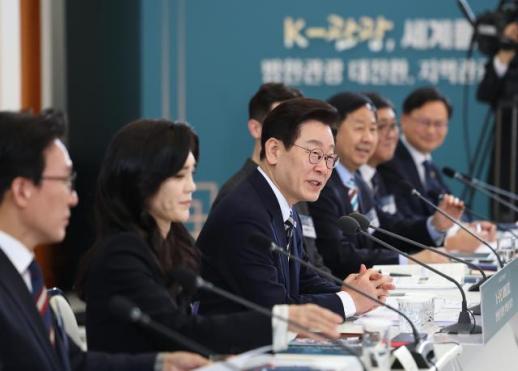 South Korea's Tourism Strategy Aims for 30 Million Foreign Visitors The government of President Lee Jae-myung marks its first anniversary, having made significant strides to revitalize the stagnant tourism sector and expand K-tourism. Notably, during the 11th Expanded National Tourism Strategy Meeting in February, the president announced an ambitious goal to achieve 30 million foreign tourists, moving the target date up by a year. With nearly 18.94 million visitors recorded last year, the government's commitment to elevating tourism as a key growth engine is timely. Among the most notable achievements are bold deregulations and infrastructure improvements from the consumer's perspective. The government has effectively lowered barriers for incoming tourists. The introduction of a visa-free entry pilot program for groups of three or more from Indonesia, along with relaxed multiple visa requirements for major Southeast Asian countries like China and Vietnam, reflects a practical response to market demands. Expanding access to automated immigration checkpoints for citizens of key countries has also significantly enhanced entry convenience. Efforts to disperse foreign tourists from the capital region to local areas are commendable. The concentration of 80% of visitors in Seoul has long been identified as a structural weakness in K-tourism. To address this, the government has aggressively expanded direct international flights from regional airports and provided incentives such as reduced facility fees for airlines that introduce new routes, greatly widening access to local destinations. The swift implementation of the '100×100 Project' to boost domestic tourism is another positive initiative aimed at ensuring that tourism benefits flow to small businesses and local economies nationwide. Despite these clear successes, it is essential to assess whether the necessary systemic improvements have been made to meet these lofty goals. For tourism revitalization campaigns to transcend one-off festivals, there must be a continuous supply of differentiated, high-value content. Above all, addressing persistent issues such as overcharging and unfriendliness that tarnish the image of K-tourism remains an unfinished task. While the government has proposed various measures, relying solely on local governments and the industry for self-regulation has shown limitations in eradicating these on-the-ground problems. If the focus remains solely on short-term numerical targets, the dream of becoming a tourism powerhouse may slip further away. For K-tourism to take a significant leap forward, institutional enhancements and advanced infrastructure are urgently needed to support quantitative growth. Establishing a super-regional connectivity network that transcends administrative boundaries is a crucial starting point. It is necessary to organically redesign travel routes so that visitors can seamlessly move to key locations across the country via KTX and other transportation options. Furthermore, leveraging major events like the 2025 APEC summit in Gyeongju as catalysts for regional tourism activation is essential. To support these efforts, a thorough review of related laws, such as the Tourism Promotion Act, is necessary to strengthen the 'Tourism Saemaul Movement' on the ground. Outdated regulations should be boldly removed, and effective standards for eliminating unfair pricing and protecting tourist rights must be refined. Tourism is at the forefront of enhancing the national brand and supporting domestic consumption. If the past year laid the groundwork for expanding the tourism sector, the next challenge is to use this success as a stepping stone to create a South Korea that visitors will want to return to. 2026-06-01 10:24:00
 -
 K-pop girl band Hearts2Hearts to release second EP 'Lemon Tang' SEOUL, June 01 (AJP) - K-pop girl band Hearts2Hearts will roll out its second EP, "Lemon Tang," on June 22, the group's agency SM Entertainment said Monday. Hearts2Hearts debuted under SM Entertainment in February 2025, becoming the agency's first new girl band in about five years. The six-track album will be available on major streaming platforms starting 6 p.m. (0900 GMT). A physical edition will also be released, with preorders beginning Monday through online and offline music retailers. "Lemon Tang" includes the title track of the same name and the group's February single "RUDE!" The album title combines "lemon" with "tang," referring to a sharp taste and scent, reflecting the group's bright and refreshing summer mood, according to SM. The upcoming release follows RUDE!, which gave Hearts2Hearts strong momentum earlier this year, drawing 107,601,743 streams on Spotify as of Monday. SM said the single became Hearts2Hearts' first music video to surpass 100 million views on YouTube. "RUDE!" also became the first song by a K-pop girl band released in 2026 to reach 100 million streams on Spotify, according to the agency. 2026-06-01 10:23:41
 -
 Record visitor arrivals drive biggest-ever April spending in Seoul SEOUL, June 01 (AJP) - Foreign visitors flocked to Seoul in record numbers in April and spent more than ever before, signaling that the city's tourism recovery is evolving into a broader consumer spending boom. The number of overseas visitors to the capital reached 1.56 million in April, up 18.8 percent from a year earlier and the highest figure ever recorded for the month, according to data released by the Seoul Metropolitan Government on Sunday. Foreign visitors spent a combined 1.1532 trillion won ($830 million) in Seoul in the same period, up 50.5 percent from a year earlier and the highest monthly total on record. It also marked the first time monthly foreign visitor spending in Seoul exceeded 1 trillion won. The growth was driven partly by strong demand for shopping and medical tourism, two sectors in which South Korea has emerged as a leading destination in Asia. Purchases at large retail complexes climbed 62.5 percent from a year earlier to 245.2 billion won, while medical tourism revenue rose 59.2 percent to 192.1 billion won. Gangnam accounted for the largest share of foreign spending at 29.1 percent, followed by Jung-gu, which includes the Myeongdong shopping district in central Seoul at 27.5 percent, and Mapo District, known for the Hongdae area, Seoul's heart of fashion and trends, at 7.4 percent. According to city officials, Myeongdong and Jamsil, a southern Seoul district where major shopping complexes are located, were the most popular shopping destinations, while the areas around Gangnam Station and Sinnonhyeon Station, famous for beauty and fashion stores, attracted large numbers of visitors seeking medical and cosmetic treatments. Chinese visitors accounted for the largest share of arrivals, with 440,000 tourists visiting, followed by 230,000 Japanese, 150,000 Taiwanese and 130,000 Americans. The cumulative number of foreign visitors to Seoul reached 5.2 million during the first four months of the year. Arrivals from China and Japan continued to strengthen in early May during Japan's Golden Week and China's Labor Day holidays. Between April 29 and May 6, 108,000 Chinese and 112,000 Japanese travelers visited South Korea, up 40.7 percent from a year earlier. Foreign visitor spending in Seoul reached 437.6 billion won during the period. The trend also highlights a shift toward higher-value tourism, with visitors increasingly combining shopping, entertainment and healthcare services in a single trip. To capitalize on the trend, Seoul plans to continue upgrading tourism content and visitor services. Kim Myung-joo, head of Seoul's Tourism and Sports Bureau, said the city aims to attract 30 million international visitors annually. 2026-06-01 10:22:22
 -
 Korean Bar Association Expresses Regret Over Court's Reduction of Attorney Fees The Korean Bar Association, led by President Kim Jung-wook, recently expressed regret over a series of court rulings that retroactively reduce attorney fees agreed upon between lawyers and clients. In a statement on June 1, the association emphasized that "the principle that contracts must be upheld is fundamental to our judicial order," asserting that agreements made freely by the parties involved should be respected. It stressed that court intervention should be limited to exceptional cases with clear and reasonable grounds. The association particularly criticized the courts for applying a double standard specifically to attorney fee agreements. It noted, "When compared to the strict standards under which the Supreme Court did not easily invalidate coercive gift documents from the Chun Doo-hwan military regime, the courts are undermining the validity of attorney fee agreements based on an abstract notion of equity." The Korean Bar Association clarified that attorney fees are not simply calculated mechanically but are determined by considering the complexity of the case, the expertise required, and the anticipated risks. It argued that the courts' retrospective scrutiny of fees undermines the professionalism of legal work and jeopardizes legal stability. The association also pointed out the ambiguity surrounding the criteria for fee reductions. It claimed, "If the relatively easy and broad acceptance of fee reductions in litigation contracts is due to judges' familiarity with this area, it could result in an unreasonable differentiation of the legal profession from other fields without rational justification." The statement concluded that the retrospective reduction of attorney fee agreements should be approached cautiously, considering not only the specifics of individual cases but also the equity with other professions and the judiciary's self-restraint in the realm of private autonomy. Additionally, the association criticized the courts' outdated perspective of viewing clients as unilateral underdogs in contractual relationships, especially in today's world where clients have access to diverse information due to advancements in communication technology. A representative from the Korean Bar Association warned, "If the stability of fee agreements is compromised, lawyers will avoid taking on high-risk cases, ultimately depriving citizens of access to quality legal services." The representative urged the judiciary to recognize that attorney fee agreements are a foundational institutional support for the independence of the legal profession and to exercise restraint in post-facto interventions. Moving forward, the Korean Bar Association plans to closely monitor judicial decisions to ensure that attorneys' rights to fair fee claims are not infringed upon, while also continuing efforts to improve relevant legal principles and systems.* This article has been translated by AI. 2026-06-01 10:18:00
 -
 Hyundai Rotem Shares Rise 8% on Increased K2 Tank Production and Export Prospects Hyundai Rotem's shares surged by 8% in early trading, driven by expectations of increased production capacity and overseas defense contracts in the second half of the year. According to the Korea Exchange, as of 10:07 a.m., Hyundai Rotem's stock was trading at 216,000 won, up 7.73% (15,500 won) from the previous trading day. Analysts noted that following a recent inspection of Hyundai Rotem's Changwon plant, there is growing optimism about the defense sector's growth potential and additional contract opportunities. Lee Jae-gwang, a researcher at LS Securities, stated after visiting the Changwon plant on May 29, "I confirmed the high production capacity and excellent performance of the K2 tank." Hyundai Rotem has converted part of its steel plant into a defense production line, increasing the K2 tank's production capacity from 12 to 15 units per month, a roughly 25% increase. Lee also mentioned that discussions for K2 tank imports are ongoing not only with Poland, Romania, and Peru but also with countries in Northern Europe and Asia. Yang Seung-yoon, a researcher at Eugene Investment & Securities, also visited the Changwon plant on the same day and reported that both defense and railway production lines are operating at full capacity. Yang remarked, "If contracts are confirmed, concerns about performance growth will be minimal," adding that the expansion of production capacity and increased automation are enhancing global competitiveness. He projected that as overseas defense contracts become more visible in the second half of the year, Hyundai Rotem is likely to emerge from its undervalued phase.* This article has been translated by AI. 2026-06-01 10:18:00
 -
 AI becomes defining battleground at World News Media Congress MARSEILLE, France, June 1 (AJP) — Artificial intelligence has emerged as the defining battleground for the global news industry as publishers, editors and policymakers gather in southern France this week to debate the future of journalism amid one of the most disruptive technological shifts in decades. The 77th World News Media Congress, organized by the World Association of News Publishers (WAN-IFRA), will bring together more than 1,000 media executives, editors and innovators from over 60 countries in Marseille, including leaders from The New York Times, The Guardian, POLITICO and the European Commission. While the annual gathering traditionally focuses on the future of journalism and media business strategies, this year's agenda is overwhelmingly shaped by artificial intelligence, reflecting the technology's growing influence on newsroom operations, audience engagement, content distribution and revenue models. Generative AI has rapidly moved from a newsroom experiment to a strategic priority for publishers worldwide. At the same time, it has raised pressing questions about copyright, misinformation, editorial integrity and the long-term sustainability of professional journalism. Among the invited speakers is AJP, the English-language news platform of Aju Media Group, which has emerged as one of South Korea's early adopters of AI-driven newsroom innovation in one of the world's fastest-moving digital media markets. AJP Managing Editor Seo Hye-seung will participate in a session titled "How AI Is Transforming the News Experience," sharing how the organization has leveraged AI technologies to broaden its international reach, enhance content distribution and develop new audience experiences as a relatively young player in the global news industry. A.G. Sulzberger, chairman and publisher of The New York Times, will open the congress with a keynote address titled "AI, Journalism and the Uncertain Future of the Public Square." The speech is expected to explore how artificial intelligence is reshaping press freedom, public discourse and journalism's role in democratic societies at a time when AI-powered platforms are increasingly influencing how information is created, distributed and consumed. Sulzberger, a fifth-generation leader of the Ochs-Sulzberger family that has controlled the newspaper since 1896, has overseen one of the industry's most closely watched digital transformations. Since becoming publisher in 2018, he has led the Times to more than 12.8 million subscribers by the end of 2025 through a subscription bundle that spans news, games, cooking and audio products. He has also become a leading advocate for stronger copyright protections for publishers amid escalating disputes between news organizations and AI companies over the use of journalistic content to train large language models. The congress will also bring together policymakers shaping the future of artificial intelligence regulation and digital governance. Henna Virkkunen, Executive Vice-President of the European Commission for Tech Sovereignty, Security and Democracy, oversees the European Union's policies on artificial intelligence, digital regulation and cybersecurity. A former Finnish education minister and member of the European Parliament, she will deliver the closing keynote outlining Europe's vision for technological sovereignty, democratic resilience and the role of journalism in the digital age. Another prominent participant is Katharine Viner, editor-in-chief of The Guardian, who has spearheaded the publication's reader-revenue strategy while overseeing its expansion across Australia, the United States and Europe. At the plenary session "In Conversation," she will join AFP Global News Director Phil Chetwynd to discuss digital transformation, reader-supported journalism and the future of news organizations in the AI era. Goli Sheikholeslami, chief executive of POLITICO Media Group, will also address how publishers are adapting their business strategies to the AI age. Since taking the helm in 2022, Sheikholeslami has overseen POLITICO's expansion across North America and Europe. She previously held senior leadership positions at New York Public Radio, Chicago Public Media and The Washington Post. At the plenary session "Redefining Media Strategies in an AI-Transformed World," she will discuss how publishers are rethinking newsroom operations, business models and long-term growth strategies as generative AI reshapes the media landscape. As news organizations confront declining traditional revenues, changing audience habits and growing competition from AI-powered information platforms, the debates in Marseille are expected to provide an early glimpse into how journalism intends to defend its value while harnessing the opportunities of the technology transforming it. For many publishers, the question is no longer whether AI will change journalism, but whether journalism can adapt quickly enough to shape how AI changes the public's relationship with news. 2026-06-01 10:16:19
 -
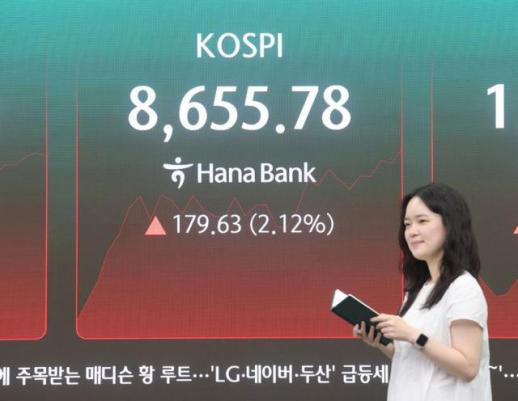 KOSPI hits fresh high as Nvidia chief's expected Seoul visit raises AI partnership hopes SEOUL, June 1 (AJP) - South Korea's benchmark KOSPI crossed the 8,500 mark for the first time in its history in early Monday trade, rising 2.2 percent to 8,662.4 points, extending last Friday's record close of 8,476.2. The gains came ahead of Nvidia chief executive Jensen Huang's expected visit to Seoul this week for meetings with LG and Naver, fueling expectations of potential artificial intelligence (AI) and robotics-related partnerships between the world's dominant AI chipmaker and South Korea's most aggressive robotics investors. LG Electronics advanced 28.0 percent to 375,000 won, sustaining the bulk of an earlier limit-up print, with the rally unmistakably a group-level rerating rather than a single-stock move: LG the holding company surged 21.1 percent to 177,500 won, LG CNS climbed 25.9 percent to 143,300 won, and NAVER advanced 10.3 percent to 258,000 won as the AI infrastructure theme widened beyond the LG orbit. The machinery sector rose 8.4 percent, led by Robostar at 30.0 percent and Doosan Robotics at 25.4 percent, confirming the buying is a physical AI and robotics rerating rather than a rotation within the semiconductor trade. Samsung Electronics rose a more measured 3.8 percent to 329,000 won while SK hynix eased to 2,313,000 won — the chip names rising but no longer leading, ceding the morning to a theme that has spent most of 2026 in their shadow. The rerating carries fundamental support: LG Electronics reported first-quarter operating profit of 1.67 trillion won in late May, 32.9 percent above the prior year and well ahead of consensus, validating the market's reassessment of a stock that spent five years as a chronic underperformer. Foreign investors extended their selling streak to at least a sixteenth consecutive session — a run that has seen them unload nearly 50 trillion won since early May, a cumulative figure without modern precedent in the South Korean market — but the more significant flow development of the morning was institutional investors turning net buyers of 836.3 billion won, a reversal from the institutional selling that defined much of May and a sign the demand base is broadening beyond the retail buying that has been the index's primary support. Domestic individuals added 486.3 billion won in net purchases. The won weakened to 1,510.1 against the dollar, breaching the level for the first time since the Bank of Korea flagged currency pressure in last Thursday's rate decision, a reminder that the equity record and the currency strain are two sides of the same foreign-selling dynamic. The junior KOSDAQ recovered to near flat at 1,074.2, reversing an earlier 2.2 percent decline as robotics and growth names caught the physical AI bid. The morning's gains rest on a question the market has not yet answered: whether the expected Huang's visit here would produce contractual cooperation or remain at the level of strategic signaling. LG Electronics has risen approximately 220 percent this year, surpassing every analyst price target, and the gap between a confirmed Nvidia partnership and a well-photographed meeting is the principal downside risk to an index that has now set records in four of its past five sessions. 2026-06-01 10:12:00
 -
 NVIDIA to Unveil Groundbreaking AI PC Chips Featuring SK Hynix Memory in Taiwan NVIDIA CEO Jensen Huang is set to unveil next-generation artificial intelligence (AI) PC chips in Taiwan, which will incorporate SK Hynix's LPDDR5X memory. Following its success in high-bandwidth memory (HBM) for servers, SK Hynix is accelerating its integration into NVIDIA's ecosystem within the AI PC market. According to industry sources, Huang will focus on the AI chips 'N1' and 'N1X' during his keynote address at GTC 2026 in Taiwan. These products are expected to be system-on-chip (SoC) solutions that combine Arm-based central processing units (CPUs) with NVIDIA graphics processing units (GPUs). Reports indicate that SK Hynix's LPDDR5X will serve as the primary memory supply for these chips. The chips are anticipated to support up to 128GB of LPDDR5X, a significant increase compared to typical smartphones or existing laptops. To run generative AI and on-device AI functions directly on laptops, not only CPU and GPU performance but also memory capacity and bandwidth for rapid data processing are crucial. This indicates that the expansion of AI PCs is directly linked to the growing demand for high-performance, low-power DRAM. The N1 and N1X are viewed as NVIDIA's first serious foray into the AI PC market. The N1 targets the premium AI laptop segment, while the N1X is aimed at high-performance laptops and mobile workstations. Specific details regarding core counts, power design, and GPU configurations are expected to be revealed in the official announcement. A key feature of these chips is the integration of CPU and GPU within a single package. Traditionally, the PC market has been dominated by Intel and AMD, with NVIDIA enhancing performance through external GPUs. In contrast, the N1 and N1X aim to redefine the fundamental computing architecture of PCs by combining Arm CPUs with NVIDIA GPUs, focusing on AI. The competitive landscape for AI PCs may also shift. Previously, laptop comparisons focused on CPU performance, battery efficiency, and graphics capabilities. However, as generative AI becomes integrated into PCs, the ability to execute large language models, generate images and videos, assist in coding, and analyze documents will become key competitive factors. The N1 and N1X are designed to consolidate CPU, GPU, and memory into a unified AI computing platform. Industry analysts suggest that these products could disrupt the Intel-centric PC ecosystem. Arm-based chips have already demonstrated energy efficiency in the smartphone and tablet markets. The combination of NVIDIA GPUs and AI software could create a new competitive axis in the Windows PC market. Analysts view NVIDIA's collaboration with Arm as a significant challenge to the x86-dominated PC landscape. For SK Hynix, the opportunity to benefit from NVIDIA's influence extends beyond HBM to LPDDR. The company has improved its performance in the AI server market through HBM supply, and expanding LPDDR5X supply for AI PCs would position it within NVIDIA's value chain on both server and client sides. The 128GB LPDDR5X integration is particularly significant for memory suppliers. This capacity far exceeds the LPDDR amounts typically found in smartphones. If AI PC shipments increase substantially, the rise in memory capacity per unit could lead to revenue growth. Unlike traditional PC DRAM demand, which has stagnated due to slower replacement cycles, AI PCs require high-capacity memory, presenting a new demand opportunity. The most direct beneficiaries of the N1 and N1X project are likely to be memory suppliers like SK Hynix. Just as NVIDIA elevated HBM to an essential component in the AI server market, the importance of high-capacity, low-power memory is expected to grow in AI PCs. As AI processing shifts from the cloud to PC devices, technologies that reduce memory bottlenecks will become critical for product performance. Recently, the presence of SK Hynix memory was confirmed on NVIDIA's N1 and N1X sample boards, increasing the likelihood of supply. In response, a representative from SK Hynix stated, "We cannot confirm details regarding collaborations with clients due to security regulations." 2026-06-01 10:09:00