
Journalist

Jun sungmin
-
 CJ Logistics CEO Shin Young-soo: Building a Competitive Edge Through Small Successes CJ Logistics CEO Shin Young-soo presented the accumulation of "small successes" and organizational culture innovation as key strategies for future growth during a town hall meeting with employees.On May 18, CJ Logistics reported that CEO Shin stated at the meeting on May 14, "The massive innovations that will change the future of the logistics industry begin with small successes." He emphasized that these small successes are crucial for creating new growth opportunities and enhancing future competitiveness.Shin explained, "Reducing delivery delays even slightly, improving the quality of customer service responses, and minimizing safety incidents in the workplace are all small successes. When these small successes are repeated, they build individual confidence, foster team culture, and ultimately lead to transformative changes in the company's structure."He also highlighted the importance of empathy and communication within the organization. Shin noted, "Change begins with the collective understanding of the company's vision and business strategy among all members. I will expand the operation of town hall meetings and broaden communication channels to strengthen organizational empathy."Securing a competitive edge through advanced technology was also identified as a major goal. He stressed, "By combining the big data and AI technologies accumulated by CJ Logistics, we will secure future growth engines early and take the lead in the paradigm shift within the logistics industry." Last year, CJ Logistics completed field trials of AI-based humanoid logistics robots and plans to deploy these robots in major fulfillment centers this year to enhance operational efficiency and productivity.Shin stated, "We will continuously accumulate small but certain success experiences, creating a virtuous cycle where our performance-generating DNA leads to new growth engines and innovations. Based on organizational empathy, we will establish a growth system that organically connects business strategies and advanced technologies, propelling us to become a leading competitive enterprise in the domestic and international logistics markets."Meanwhile, CJ Logistics reported a 7.9% increase in consolidated operating profit for the first quarter of this year, reaching 92.1 billion won, driven by an increase in parcel volume and improved profitability in global operations. The company plans to continue its growth trajectory through global business expansion, optimizing its cold chain operations in the U.S. and expanding into adjacent industries such as consumer goods and beauty, while also enhancing local operations and contract logistics in India and Vietnam.* This article has been translated by AI. 2026-05-18 15:52:35
 -
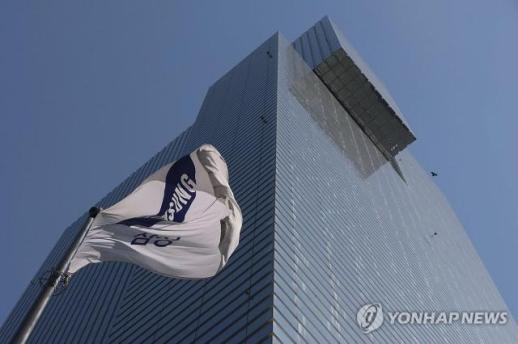 Economic Groups Urge Samsung Union to Withdraw Strike Plans Business groups have expressed concern over the Samsung Electronics union's plans to strike, urging the union to withdraw its strike announcement and return to negotiations. They warned that if a strike occurs, the government should consider invoking emergency measures to address the situation. On May 18, six major economic organizations, including the Korea Employers Federation, the Korea Chamber of Commerce and Industry, the Korea Economic Association, the Korea International Trade Association, the Korea Federation of Small and Medium Businesses, and the Korea Federation of Medium Enterprises, issued a joint statement expressing deep concern over the union's insistence on its position despite efforts by the government and the Central Labor Relations Commission. They stated, "The union's strike threatens the foundation of a key national industry, and it must withdraw its strike plans and seek solutions through dialogue." The business community called on the government to activate emergency measures immediately if a strike occurs, to prevent irreversible damage to the national economy and industrial ecosystem. With semiconductor exports accounting for 37% of the country's total exports this year, the business sector warned that a strike by the Samsung union could lead to reduced exports, a worsening trade balance, and even a loss of tax revenue, adversely affecting the overall economy. They also pointed out that a strike could significantly depress the domestic capital market, as Samsung Electronics accounts for about 25% of the KOSPI's market capitalization, potentially accelerating declines in the KOSPI index and foreign investor withdrawals. The business community criticized the union's demands for performance bonuses, which they described as inappropriate and excessive, noting that a court had already ruled that such bonuses do not constitute wages. The union's demand for approximately 45 trillion won in bonuses exceeds four times the total shareholder dividends from the previous year, which could severely undermine the company's sustainable investment capacity and future competitiveness. They argued that the issue of performance bonuses should be a matter of management judgment rather than a subject of collective bargaining, stating, "Excessive demands from some unions could deepen the dual structure of the labor market and increase social discord." Furthermore, they noted that it is rare for global companies to have pre-agreed systems for distributing a certain percentage of operating profits to employees, emphasizing that decisions on how to utilize operating profits typically fall under the purview of the board of directors. The business sector warned that a large-scale strike by the Samsung union could lead to national opportunity losses beyond mere labor disputes. Given the continuous operation required in semiconductor manufacturing, a strike could halt production lines, resulting in massive waste of wafers, equipment damage, and risks of chemical spills, leading to significant safety incidents. The six economic organizations expressed concern that the impact of the strike would not be limited to Samsung Electronics but could spread to thousands of small and medium-sized partner companies and the broader semiconductor materials, components, and equipment industries. Industry insiders have raised alarms that the economic damage from this strike could reach up to 100 trillion won, a scale that could inflict severe harm across the Korean economy.* This article has been translated by AI. 2026-05-18 15:50:12
 -
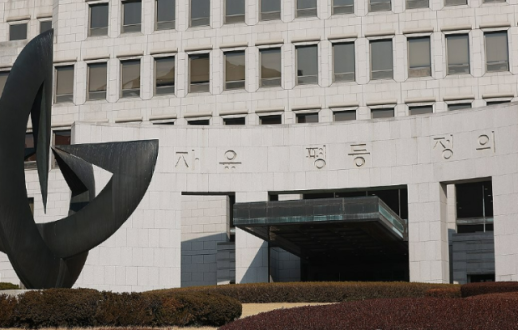 Supreme Court Rules U.S. Companies Must Pay Corporate Tax on Technology Transfer Fees to Korean Firms The Supreme Court has ruled that fees paid by U.S. companies to Korean firms for technology or know-how transfers are not exempt from corporate tax. On May 18, the Supreme Court's third division, led by Justice Oh Seok-jun, overturned a lower court ruling that favored U.S. pharmaceutical company Genosco in its lawsuit against the head of the Dongjak Tax Office regarding the denial of a tax refund for withholding tax. The case has been sent back to the Seoul High Court for further proceedings.In October 2016, Genosco entered into a contract with Yuhan Corporation to transfer technology and know-how related to a targeted treatment for liver cancer. The agreement stipulated that Genosco would receive a fixed technology fee and an annual royalty based on a percentage of net sales from the product until the expiration of the relevant patent.In November of the same year, Yuhan paid Genosco a contract fee of 500 million won and subsequently paid the withholding tax to the Dongjak Tax Office. According to corporate tax law, foreign corporations must pay corporate tax on domestic source income. While the foreign corporation is the substantive taxpayer, a Korean company can pay the tax on behalf of the foreign entity after deducting it from the payment.Genosco filed a claim for a refund of the withholding tax in July 2017, arguing that the income was not domestic source income under the Korea-U.S. tax treaty. However, the Dongjak Tax Office denied the claim in September of that year, prompting Genosco to sue for cancellation of the denial.The key issue in the appeal was whether the income was exempt from taxation under Article 16, Section 1 of the Korea-U.S. tax treaty, which states that "income derived by a resident of the United States from the sale of capital assets shall, in principle, be exempt from taxation by our country."The appellate court ruled that the know-how in question fell under the capital assets defined in the treaty, thus ruling in favor of Genosco.However, the Supreme Court found that the lower court had misinterpreted the legal definition of capital assets under Article 16, Section 1 of the tax treaty, accepting the appeal from the Dongjak Tax Office.The court noted that the term "capital assets" is not separately defined in the Korea-U.S. tax treaty, nor is it found in Korean law, and must be understood in the context of the treaty.The court stated, "The know-how in this case can be considered property used in the business of the plaintiff, which is subject to depreciation deductions. Therefore, based on the context at the time of the treaty's conclusion, it cannot be classified as capital assets under Article 16, Section 1 of the Korea-U.S. tax treaty."The Supreme Court referenced Section 1221 of the Internal Revenue Code from the time of the treaty's conclusion in 1976, which defines capital assets as all property held by the taxpayer except for certain specified properties. It further describes properties used in a business or held for income generation that are subject to depreciation under Section 167.The court explained, "Therefore, in the case of know-how used in business, it is reasonable to conclude that it is generally excluded from the definition of 'capital assets' as stipulated in Article 16, Section 1 of the Korea-U.S. tax treaty when referring to Section 1221, Subsection 2 of the Internal Revenue Code at the time of the treaty's conclusion."* This article has been translated by AI. 2026-05-18 15:48:00
 -
 Flights to Southeast Asia hit hardest as fuel costs force LCCs to cut routes SEOUL, May 18 (AJP) - South Korean low-cost carriers are cutting more international flights, particularly on Southeast Asian routes, even as fuel surcharges for June eased slightly from their peak, raising concerns over passenger inconvenience and limited compensation. Since the outbreak of the Middle East war, domestic low-cost carriers (LCCs) and mid-tier carriers have reduced more than 1,100 round-trip international flights, with Southeast Asian routes accounting for a large portion of the cuts, according to industry officials. The benchmark Singapore jet fuel price used to calculate June fuel surcharges stood at 410.02 cents per gallon, down about 20 percent from 511.21 cents per gallon for May. Accordingly, international fuel surcharges fell to level 27 from the highest level of 33. Still, industry officials say fuel costs remain high compared with prewar levels. Even in July and August 2022, when global fuel prices surged following Russia’s invasion of Ukraine, international fuel surcharges stood at level 22. Airlines usually decide which flights to reduce based on various factors, including profitability, passenger demand and alternative flight options. This time, routes with weaker demand and lower margins have been targeted first. Southeast Asian routes have been hit especially hard because they had been over-supplied amid fierce competition among LCCs. Vietnam routes, in particular, have become a major target for cuts as demand for Southeast Asian travel has weakened relatively compared to Japan and China. “Southeast Asian routes have seen softer demand compared with Japan routes,” an official from South Korean LCC Jin Air said. “Japan remains relatively resilient, supported by favorable exchange-rate conditions, while travel to Southeast Asia tends to be more affected by higher overall trip costs.” The official added that travelers to some Southeast Asian countries often face higher costs because they exchange money through the U.S. dollar first before converting it again locally. “Those extra costs appear to have affected demand,” the official said. “That is why many of the reductions have been concentrated on Southeast Asian routes.” Southeast Asian routes are often regarded as “mid-haul” routes that sit between short-haul and long-haul services. They require more fuel than flights to Japan or China, but airlines cannot charge fares as high as those on long-haul routes. Jin Air has cut 176 round-trip flights through this month due to the burden of higher fuel costs. The carrier canceled 45 round-trip flights on eight routes, including Guam, last month and 131 round-trip flights on 14 routes, including Phu Quoc, this month. The number could rise further once its June schedule is finalized. Jeju Air reduced flights from Incheon to Phu Quoc, Da Nang, Bangkok and Singapore from seven times a week to three or four times a week from May 8 to June 30. It also cut its Incheon-Hanoi service from seven times a week to four times a week from May 12 and suspended its Vientiane route for two months from April 29. Airportal data also shows that the cuts were concentrated in Southeast Asia even when all Korean carriers are included. Flights to Vietnam, the Philippines and Thailand fell far more sharply than the overall 7.9 percent decline in international flights from January to April. The Philippines posted the steepest percentage drop among the listed countries, down 43.8 percent, followed by Thailand at 38.7 percent and Vietnam at 31.3 percent. By contrast, Japan routes slipped only 5 percent, while China and U.S. routes increased. For passengers, however, the main issue is not just the number of flights being cut. Even if overall reductions remain limited, passengers whose flights are affected can face major disruptions to travel plans. “I’m planning to travel in July, but I think I’ll take my time and book only refundable accommodation because flight schedules seem uncertain,” one user wrote on an online travel community. The transport ministry said the cuts remain below the level that could lead to penalties. Airlines could lose route rights or airport slots if they cancel 20 percent or more of their approved flights, but no carrier has reached that threshold so far. 2026-05-18 15:47:32
 -
 Young adults mark Coming-of-Age Day with campus festivities SEOUL, May 18 (AJP) - Coming-of-Age Day celebrations were held across the country on Monday, with universities marking the occasion for students turning 19 this year. Observed every third Monday of May, the day encourages young adults to embrace their new responsibilities as members of society. It has long been a tradition to give roses and perfume to those reaching adulthood, while universities and local communities have increasingly hosted events celebrating young people entering a new stage of life. 2026-05-18 15:43:59
 -
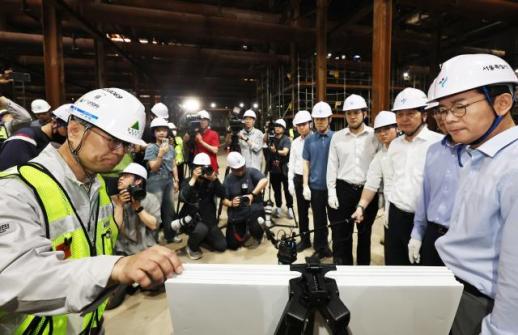 S. Korea launches special inspection to investigate construction defects in Seoul's GTX station SEOUL, May 18 (AJP) - South Korea's Ministry of Land, Infrastructure and Transport has launched a special on-site inspection of the GTX-A line's Samseong Station section over rebar omission and construction defects, the ministry said on Monday. The probe was triggered by the discovery that 50 of 80 main columns supporting the GTX platform at the underground fifth floor were built with only one row of main rebar instead of the two rows specified in the design, a shortfall of approximately 2,570 rebars across the affected columns, with up to 36 missing per column. Contractor Hyundai Engineering & Construction has acknowledged that workers misread the design drawing, interpreting a two-row "two bundle" specification as a single row. The contractor self-detected the error during a quality inspection in November 2025 and reported it to the Seoul Metropolitan Government, but the city did not formally notify the transport ministry until April 29, drawing political criticism over a five-month reporting gap. The probe adds fresh scrutiny to a 1.07 trillion won ($713.2 billion) underground transit complex that has been in planning or construction since 2015 and its completion has already slipped from 2027 to October 2028. According to the transport ministry, the inspection team includes 12 outside experts from the Korea Authority of Land and Infrastructure Safety, the Korea Railroad Research Institute and the Korea National Railway. The investigators will assess whether construction parties met legal obligations on construction management, safety, quality control and project management. The inspection period runs one month from its first meeting Monday and may be extended. Penalties available to the ministry include demerit points, corrective orders and fines against contractors and supervisors. The Yeongdong-daero Underground Complex Development project beneath Gangnam, Seoul's heart of fashion and finance, connected to the Samseong Station GTX section, is one of the largest underground infrastructure undertakings in South Korea. The 21 hectare facility runs 1,000 meters from Bongeunsa Station to Samseong Station and reaches 53 meters underground across seven floors, according to the Seoul Metropolitan Government. When complete, it will serve five rail lines — GTX-A, GTX-C, the Wirye-Sinsa line and Subway Lines 2 and 9 — alongside a bus interchange, commercial space and a ground-level park covering the buried roadway. Construction inspections are distinct from a separate audit the ministry launched on May 15 targeting the Seoul Metropolitan Government and Korea National Railway over delayed reporting of the defects, the ministry said. The Samseong project's timeline has been repeatedly pushed back. The feasibility study began in 2015 under planning name "Yeongdong-daero Underground Space Complex Development Feasibility Study and Basic Plan." Groundbreaking originally scheduled for November 2020 was delayed to June 30, 2021 after design changes consolidated two separate rail levels into one, requiring fresh permits. The completion target moved from December 2027 to April 2028, and most recently to October 2028. GTX-A trains will pass through Samseong without stopping until a temporary transit hub opens in June 2027. Full station opening is now scheduled for 2028. The project is funded by public contribution payments from Hyundai Motor Group's Global Business Center development rather than from tax revenue. Total project cost stands at 1.076 trillion won under the basic plan, according to the Seoul Metropolitan Government. Construction has been carved into six work zones. Civil engineering work is divided across four zones, with DL E&C, Hyundai E&C and Lotte E&C as principal contractors. Architecture is divided across two zones, with Hyundai E&C and a DL E&C consortium contracted. The 2nd architecture zone failed two bidding rounds before being awarded, contributing to schedule slippage. The Samseong corridor, dubbed by locals as "highway of hell," concentrates four major construction projects within a single neighborhood. The Hyundai Motor Group GBC tower, the GTX-A Samseong Station, the Yeongdong-daero complex transit center and a separate Yeongdong-daero road undergrounding project run by Daewoo E&C between Bongeunsa Station and Cheongdam-dong are all underway concurrently. Two subway Line 2 exits at Samseong Station — Exits 5 and 6, the route most heavily used by foot traffic toward COEX — are scheduled to close for construction. Exits 7 and 8 will also close. Permanent replacement exits will open when the complex is finished, with temporary exits to be designated in the interim, the Seoul Metropolitan Government said. The defect inspection is the second high-profile structural concern to surface at a GTX-A site in recent months. In late March, the ministry confirmed that the central section of GTX-A from Seoul Station to Suseo, originally scheduled to open in June, would be delayed to July or August due to construction coordination issues between the ministry's tunnel work and the Seoul city government's underground complex work. A ministry official said reinforcement methodology for the Samseong defects would be reviewed in consultation with certified institutions this week. The completion of the Samseong underground complex would mark the convergence point of Seoul's three GTX lines and reshape commuter flows across the metropolitan region. The project's cumulative delays — now spanning 11 years from feasibility study to projected opening — underscore the scale of risk in coordinating multiple rail authorities, a city government and several private contractors on a single underground site. 2026-05-18 15:42:03
 -
 Samsung Biologics Faces Labor Dispute Amid Rising Concerns for K-Bio The ongoing labor dispute at Samsung Biologics is raising concerns within and outside the bio industry as signs of a prolonged conflict emerge. Similar to the situation with Samsung Electronics, this issue should not be viewed merely as a wage negotiation for one company. Samsung Biologics symbolizes the South Korean bio industry, and any decline in its competitiveness could lead to a broader trust issue for K-Bio, especially as Chinese and Japanese firms aggressively pursue market share. A prolonged labor conflict could weaken South Korea's bio competitiveness even further. The global biopharmaceutical CDMO (Contract Development and Manufacturing Organization) market is akin to a battlefield. While South Korean companies have been leading the market with impressive growth, recent developments show that Japanese and Chinese firms are catching up rapidly. Japan's Fujifilm has made aggressive investments to establish one of the largest biomanufacturing facilities in Europe, quickly rising to the top tier of global production capacity. Meanwhile, China's CL Biologics is rapidly expanding its production facilities, backed by substantial capital and government support. It is crucial to note that this competition is not merely about production volume. Chinese and Japanese companies are expanding their reach not only in scale but also in technology and service areas, attracting global clients. These clients can easily switch to more stable and flexible production sources at any time. At this juncture, the labor conflict at Samsung Biologics cannot be dismissed as an internal issue. Trust is the cornerstone of the bio CDMO industry. Global pharmaceutical companies do not simply contract based on the size of production facilities; they prioritize stable supply capabilities. They assess whether production processes remain consistent, deadlines are met, and quality is maintained under any circumstances. Biomanufacturing is fundamentally different from traditional manufacturing. The cell culture process requires 24/7 real-time management. Any interruption in the process can lead to not just production delays but also the potential loss of entire batches, which could impact regulatory approvals. Therefore, global clients are particularly sensitive to production stability. Samsung Biologics' rise to become one of the world's largest CDMO companies is rooted in its foundation of stability and trust. The Samsung Biologics union has engaged in partial strikes since April, followed by a full strike from May 1 to May 5, and has now entered a phase of legal compliance protests starting June 6. Reports indicate that discussions with management under government mediation have not progressed. The union's demands include a 30 million won incentive payment per person, a 14% average wage increase, a 20% profit-sharing bonus, and the establishment of fair personnel standards. The ongoing legal compliance protests involve refusing to work on holidays and overtime, conducted within the legal framework. This has not completely halted production lines, making it difficult to accurately estimate the current financial losses. However, considering the nature of the bio industry, the more significant issue is the reduced ability to respond to unexpected variables rather than the immediate financial losses. In biomanufacturing, sudden situations frequently arise. Global clients may request urgent orders, or adjustments to production schedules may be necessary. Maintaining process stability often requires overtime or holiday work. The concern is that if the current legal compliance protests continue for an extended period, the ability to respond to such situations could become increasingly difficult. Ultimately, the CDMO industry relies heavily on trust with clients. It is essential to provide stable supplies when clients need them. However, if labor disputes lead to reduced production flexibility and weakened emergency response capabilities, global clients' anxiety will inevitably increase. Major pharmaceutical companies are highly sensitive to potential production disruptions and do not hesitate to consider alternative suppliers if signs of supply instability emerge. An even greater issue is that once trust is shaken in the bio industry, it is incredibly challenging to restore. Relationships with clients built over years can be jeopardized by a single concern about supply disruptions. This is particularly true now, as Japanese and Chinese companies aggressively seek to secure clients. Competitors are likely closely monitoring the labor conflict situation in South Korea. From the clients' perspective, it is only natural to choose a stable supply chain rather than risk exposure. What is needed now is not emotional confrontation but a perspective that considers the entire industry. Workers' rights must be respected, and demands for fair compensation are necessary. However, the bio industry has a strong national strategic industry character, unlike traditional manufacturing. Just as disruptions in semiconductor factories can impact the entire national economy, disruptions in biomanufacturing are directly linked to national industrial competitiveness. There is a need for a shared understanding that both labor and management must protect the future of the industry together. The global CDMO market is not waiting. Japanese and Chinese companies are aggressively pursuing South Korea with substantial investments and strategies. Just a decade ago, K-Bio was on the periphery of the global market, but through bold investments, technological accumulation, and production competitiveness, it has risen to the forefront. Now, the greatest threat is not just external competitors. The moment internal fractures undermine industrial competitiveness, the opportunities and trust built over time can collapse in an instant. The repercussions will not be confined to Samsung Biologics alone but will likely lead to a decline in K-Bio's industrial competitiveness as a whole. This is why the Samsung Biologics situation should be viewed as a warning for the entire bio industry.* This article has been translated by AI. 2026-05-18 15:42:00
 -
 MC Mong Promises to Expose Celebrities Involved in Illegal Gambling Singer MC Mong, 46, whose real name is Shin Dong-hyun, is stirring controversy by denying allegations against him and promising to expose celebrities linked to illegal gambling. On May 18, MC Mong stated on his social media that he would hold a live broadcast at 8 p.m. to discuss past events and everything related to him. He added, "I will reveal who MBC's 'PD Notebook' is colluding with in their investigations, including Chairman Cha and members of the illegal gambling group, as well as the celebrities involved with them." Previously, MC Mong co-founded One Hundred with Chairman Cha Gawon in 2023 and served as the executive producer for the rookie girl group Bad Villain under the subsidiary Big Planet Made Entertainment the following year. He left the company in July of last year. In December, MC Mong became embroiled in rumors of an affair and conflict with Chairman Cha, who was reported to have received a court order for the repayment of a loan amounting to 12 billion won from MC Mong. In relation to this, MC Mong revealed that Cha Jun-young, a relative of Chairman Cha, attempted to seize the company, stating, "Cha Jun-young told me he would help me maintain my status as the second-largest shareholder if I joined him in taking over the company," and that they drafted a stock transfer agreement. MC Mong claimed, "Cha Jun-young came to my house, threw things, slapped me, and threatened me like a thug to get me to sign the contract," adding, "I left One Hundred wanting to protect the company and Chairman Cha Gawon." Currently, MC Mong is under investigation by the Gangnam Police Station in Seoul following a complaint filed in January by former Korean Medical Association President Lim Hyun-taek for violations of drug management and medical laws. He is also facing allegations of violating foreign exchange laws for attempting to illegally export $70,000 in cash in 2022. One Hundred is also facing disputes with its artists. Singers Lee Seung-gi, Lee Mu-jin, BIBI, and EXO members Chen, Baekhyun, and Xiumin have all notified the company of contract terminations, while members of the group The Boyz have filed a lawsuit against Chairman Cha for embezzlement. The legal representatives for One Hundred have claimed these lawsuits are false accusations aimed at seizing the company.* This article has been translated by AI. 2026-05-18 15:39:24
 -
 France honors South Korean director Park Chan-wook with top cultural order SEOUL, May 18 (AJP) - France has awarded South Korean film director Park Chan-wook the Commandeur in the Order of Arts and Letters, the highest rank of its cultural merit. French Culture Minister Catherine Pégard presented the medal Sunday in Cannes. The ceremony took place during the 79th Cannes Film Festival, where the 62-year-old is currently serving as the first South Korean filmmaker to preside over the festival jury. Established in 1957 by the French Ministry of Culture, the order recognizes significant contributions to the arts and literature. The Commandeur grade is the highest of its three ranks, positioned above the Officier and Chevalier grades. Park has previously won three major awards at Cannes. He received the Grand Prix in 2004 for "Oldboy," the Jury Prize in 2009 for "Thirst," and the directing prize in 2022 for "Decision to Leave." He is the fourth South Korean to receive the Commandeur rank. Previous recipients include former Korean Culture and Arts Foundation president Kim Jung-ok in 2002, conductor Chung Myung-whun in 2011, and soprano Jo Su-mi in May of last year. The French government has decorated several other South Korean film industry figures with lower grades of the order. Directors Bong Joon-ho and Kim Jee-woon received the Officier grade in 2016 and 2018, respectively. Late actress Yoon Jeong-hee received the Officier honor in 2011, while her husband, pianist Paik Kun-woo, received the Chevalier in 2001, making them the first South Korean couple decorated by the order. Actress Jeon Do-yeon, who won best actress at Cannes in 2007, was awarded the Chevalier rank in 2009. 2026-05-18 15:36:19
 -
 Japan to Enhance AI Security Checks Amid Concerns Over Claude Mythos As concerns grow that Anthropic's new AI model, Claude Mythos, could be exploited for cyberattacks, the Japanese government is moving to utilize AI for security checks on information systems in both the private and public sectors. Mythos is a high-performance AI that surpasses previous models in identifying software vulnerabilities. While it can be beneficial for security assessments, if it falls into the hands of hackers, it could be used to discover unknown security flaws known as "zero-day" vulnerabilities. In tests conducted by the UK's Artificial Intelligence Security Institute (AISI), the model successfully extracted desired information approximately 70% of the time. Anthropic names its AI models after literary terms, with Mythos meaning "myth" in ancient Greek. On May 18, the Nihon Keizai Shimbun (Nikkei) reported that the Japanese government would discuss measures related to Claude Mythos at an inter-agency meeting. The plan includes requiring information system providers to conduct vulnerability assessments using AI, establishing cybersecurity guidelines for businesses, and creating a framework for information sharing between the government and local authorities. The meeting is chaired by Digital Minister Naoki Matsumoto and includes participation from the Ministry of Economy, Trade and Industry, the Financial Services Agency, the Ministry of Health, Labour and Welfare, and the Ministry of Land, Infrastructure, Transport and Tourism. Due to concerns about misuse, Anthropic has limited access to Mythos to around 50 companies and institutions primarily based in the United States. This group reportedly includes major tech firms like Google, Apple, and NVIDIA, as well as cybersecurity company CrowdStrike. The AI Safety Institute in Japan has also sought access to Mythos but had not secured it as of early this month. Conversely, organizations already using Mythos have reported significant results. The Mozilla Foundation, which supports the Firefox browser, announced that Mythos identified 271 vulnerabilities in the latest version of the browser. Given that Firefox typically reports 10 to 20 vulnerabilities per month, this represents a substantial increase in productivity. While Anthropic plans to expand its offerings beyond the U.S., the American government opposes widening access for security reasons, leaving Japan's ability to secure access uncertain. The Japanese government has been considering broadening the scope of its preparations related to Mythos from the financial sector to encompass all critical social infrastructure. Japan's three largest banks have already secured access to Mythos for system safety checks, and the government intends to expand the assessment to 15 critical infrastructure sectors, including finance, information and communications, power, water, gas, airports, railways, healthcare, and administrative services. The guidelines are expected to include procedures for identifying and addressing system vulnerabilities using high-performance AI, as well as operational methods for cybersecurity frameworks. Companies unable to use Mythos will be instructed to utilize other AI tools for vulnerability assessments, and products with identified vulnerabilities will need to be patched and reissued. The scope of these assessments will not be limited to private enterprises. Information systems of central and local governments will also be included in vulnerability checks. The government plans to gather information related to AI-based cybersecurity defenses at the National Cybersecurity Headquarters and will explore how to utilize AI when handling highly confidential information. A system for public-private information sharing will be established in collaboration with AISI, and cooperation with AISI institutions in major countries like the U.S. and the U.K. will be pursued. Service providers responsible for essential societal functions, such as power companies, telecommunications firms, railway and airport operators, hospitals, and financial institutions, will also be subject to these checks. The Japanese government will request that these providers' management teams ensure security system assessments and secure necessary budgets and personnel, urging them to prepare for potential disruptions to product or service supply due to cyberattacks. The controversy surrounding Mythos highlights the dual risks of AI being used as a tool for cyberattacks and the reality that defending against such attacks without AI is increasingly challenging. The Japanese government's requirement for system providers and critical infrastructure operators to conduct AI-based assessments reflects a shift in cybersecurity focus from human checks to continuous AI monitoring.* This article has been translated by AI. 2026-05-18 15:34:05