

Journalist

KI SU JEONG
-
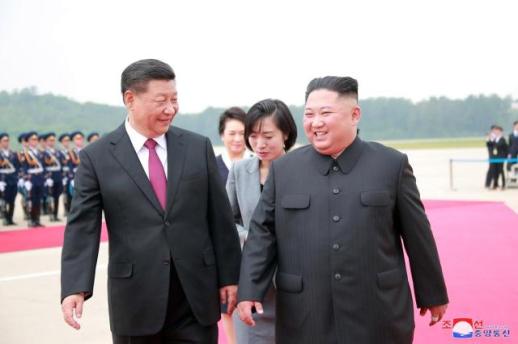 Xi Jinping to Visit North Korea for the First Time in Seven Years Chinese President Xi Jinping will make a state visit to North Korea on June 8-9, marking his first trip to the country in seven years and his second since Kim Jong Un took power. This visit comes amid escalating U.S.-China strategic competition and closer ties between North Korea and Russia. Analysts view it as a reaffirmation of the traditional friendship between China and North Korea, while also showcasing China's role as a key player in addressing issues on the Korean Peninsula. According to Yonhap News on June 5, the International Liaison Department of the Chinese Communist Party announced that Xi is visiting at the invitation of Kim. North Korea's state media, KCNA, reported the same. This meeting will occur about nine months after the two leaders last met during the 80th anniversary celebrations of China's victory in the war against Japan in Beijing last September. The visit coincides with the 65th anniversary of the China-North Korea Mutual Aid and Cooperation Treaty. Historically, both nations have used significant anniversaries to highlight their relationship, and this summit is expected to serve as a platform to reinforce their traditional alliance and strategic cooperation. Notably, this is Xi's first overseas trip of the year, which underscores the strategic importance of China-North Korea relations in his foreign policy. After refraining from international travel since attending the APEC summit in South Korea last year, Xi's choice of North Korea as his first destination signals the significance of this relationship in China's diplomatic agenda. This year, Xi has held meetings with South Korean President Lee Jae-myung, U.S. President Donald Trump, and Russian President Vladimir Putin. By meeting with Kim, he will have engaged with all major stakeholders concerning the Korean Peninsula. This has led to interpretations that China is positioning itself as a mediator in the region, seeking to expand its diplomatic influence. The situation on the Korean Peninsula has changed significantly since 2019. North Korea is now solidifying its status as a nuclear power, rejecting denuclearization. On June 4, KCNA reported that Kim inspected a new nuclear material production facility and held important discussions to strengthen the country's nuclear capabilities. This activity, revealed just before Xi's visit, is seen as a reaffirmation of North Korea's commitment to maintaining its nuclear status. While China officially upholds the principle of denuclearization on the Korean Peninsula, it has recently shifted its focus toward easing sanctions and expanding economic cooperation with North Korea. During last month's U.S.-China summit, denuclearization was mentioned as a common goal, but a joint statement from the China-Russia summit emphasized opposition to sanctions against North Korea instead. Experts believe that economic cooperation will be a key agenda item during the upcoming summit, alongside nuclear issues. There is a strong possibility that discussions will include the expansion of trade between China and North Korea, as well as cooperation in tourism, railways, healthcare, and Chinese investment in North Korea. Some analysts suggest that this visit could symbolize a strategic collaboration among North Korea, China, and Russia in opposition to a U.S.-centric international order. With military cooperation between North Korea and Russia strengthening, China may be looking to recalibrate its relationship with North Korea and actively reshape the Northeast Asian order. Ultimately, Xi's visit to Pyongyang carries implications beyond a mere friendly gesture. It is expected to serve as a diplomatic stage where China seeks to assert its influence and secure a leading role in addressing the complex issues surrounding North Korea's nuclear ambitions, sanctions, and the broader geopolitical dynamics involving the U.S. and Russia.* This article has been translated by AI. 2026-06-05 16:54:00
 -
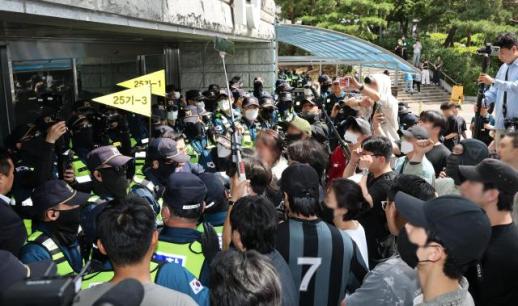
 Election Commission Chair Resigns Amid Ballot Shortage Crisis In the wake of ongoing controversy over a ballot shortage during the June 3 local elections, Na Tae-ak, the Chair of the National Election Commission, has resigned, taking responsibility for the crisis. On June 5, Na announced his resignation during a public apology at the commission's office in Gwacheon, Gyeonggi Province, stating, "I feel a deep sense of responsibility for all that has transpired and will step down from my position as Chair of the National Election Commission." He added, "The high level of public interest and active expression of will regarding local governance has been undermined by the ballot shortage. As the Chair, I feel a profound sense of despair and an immense responsibility for the erosion of public trust in election management, which has led to skepticism about the electoral process." Na emphasized, "There is no excuse for the occurrence of an event that infringes upon the precious right of citizens to participate in elections. I will establish an investigation committee as quickly as possible to identify the fundamental causes and issues surrounding the ballot shortage and to develop measures to prevent its recurrence, ensuring that all findings are transparently disclosed." He also pledged that the investigation committee would be composed entirely of external experts to ensure objectivity and thoroughness. Na committed to fully cooperating with any National Assembly inquiries regarding the commission's responsibilities in this matter, stating, "If there are responsibilities to be taken after the results are revealed, I will not evade them." Following Na's announcement, the commission plans to swiftly establish an investigation committee made up of external experts to determine the causes of the crisis and propose preventive measures. Na, who was appointed as Chair of the National Election Commission in May 2022 following the retirement of former Supreme Court Justice Na Jeong-hee, will leave office after approximately four years, failing to complete his six-year term. On the election day of June 3, unprecedented scenes unfolded as voters were unable to cast their ballots due to a shortage of ballots at polling stations in areas such as Gangnam, Gwangjin, and Songpa districts in Seoul. Some voters, exhausted from long waits, chose to abandon their attempts to vote, raising questions about the commission's response. Notably, far-right civic groups, including history lecturer Jeon Han-gil and former Prime Minister Hwang Kyo-ahn, who have long claimed electoral fraud, have been staging protests at polling stations in Songpa and the commission's office in Gwacheon. Additionally, the second polling station in Jamsil 7-dong, Songpa, which had been blocked by protesters, finally had two ballot boxes removed for counting after police deployed 1,000 riot officers over a period of two nights and three days. 2026-06-05 16:54:00
 -
 Oakley Meta Pop-Up Store Opens in Seoul's Musinsa Store Seongsu Musinsa announced on June 5 that it will host a pop-up store for the Oakley Meta, a next-generation artificial intelligence (AI) glasses developed in collaboration with Meta, at its Seongsu location in Seoul. The pop-up store will be open until June 18.The Oakley Meta combines the design of the sports eyewear brand Oakley with Meta's AI technology, making it suitable for both sports activities and everyday use.Visitors to the pop-up store can experience two products: the Oakley Meta Vanguard and the Oakley Meta Houston. The Oakley Meta Vanguard is tailored for sports environments, providing real-time workout data by connecting with Garmin devices and Strava. It also features 122-degree ultra-wide 3K UHD hands-free recording and is rated IP67 for water and dust resistance.The Oakley Meta Houston focuses on everyday use, supporting voice commands for Meta AI interaction, open-ear speaker functionality, a battery life of up to 48 hours, and the option for prescription lenses.Guests can participate in programs that offer AI-based voice interaction and simulated sports environments. An Oakley representative stated, "We will continue to explore various combinations of sports, lifestyle, and technology."A Musinsa representative added, "We hope many consumers will experience the convenience and innovative lifestyle offered by next-generation tech wearables through this pop-up store."According to market research firm Counterpoint Research, Meta currently holds over 70% market share in the global smart glasses sector.* This article has been translated by AI. 2026-06-05 16:51:00
 -
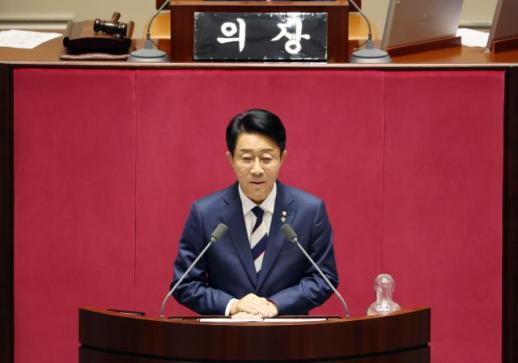 Six-term DP lawmaker Cho Jeong-sik elected National Assembly speaker SEOUL, June 5 (AJP) - Cho Jeong-sik, a six-term lawmaker of the ruling Democratic Party (DP), was elected on Friday as National Assembly speaker for the second half of the year. Cho won 267 of 276 votes cast during a parliamentary plenary session to assume the independent and impartial role. It follows his selection as the DP's candidate for the role after winning a majority in an internal party vote on May 13. His two-year term as speaker will run through May 2028. The veteran lawmaker entered parliament after winning a seat in Siheung, Gyeonggi Province, in the 2004 general elections and has since won six consecutive terms. During the first half of the 20th National Assembly, he served as chair of the Land, Infrastructure and Transport Committee. As vice speakers, Nam In-soon, a four-term DP lawmaker, and Park Deok-heum, a four-term lawmaker from the People Power Party (PPP), were also elected. Nam became the third woman in South Korean history to serve as National Assembly vice speaker. She worked as a women's labor activist for 30 years before entering parliament through proportional representation in the 19th National Assembly. She has since represented Seoul's Songpa district for three consecutive terms from the 20th to the 22nd National Assembly. She is currently the DP's only lawmaker representing one of Seoul's upscale districts of Gangnam, Seocho and Songpa. During the first half of the 20th National Assembly, she served as chair of the Gender Equality and Family Committee. Park is a former businessman who founded and served as CEO of a construction company before entering politics. He was first elected to the National Assembly in the 2012 general election and has since won four consecutive terms representing North Chungcheong Province. During the second half of the 21st National Assembly, he served as chair of the Intelligence Committee. By convention in South Korea, the largest party in parliament takes the National Assembly speakership, while the ruling and opposition parties each hold one vice speakership. Following the election of the Assembly leadership, the rival parties are expected to begin negotiations over the allocation of standing committee chairmanships and other parliamentary posts. 2026-06-05 16:46:15
 -
 Legal Battles Escalate Ahead of KDDX Contractor Selection As the competition for the KDDX project nears its conclusion, a series of lawsuits have intensified the confusion surrounding the selection process. HD Hyundai Heavy Industries has filed a lawsuit claiming that the penalties for security incidents, which will apply until December of this year, are unjust. The outcome of this legal battle is expected to influence the awarding of the KDDX detailed design and lead ship construction contract. According to legal sources on June 5, the Seoul Central District Court's Civil Division 50, led by Judge Lee Sang-hoon, held a hearing on June 1 regarding HD Hyundai Heavy Industries' request for an injunction against the application of penalties. During the hearing, HD Hyundai Heavy Industries argued, "Even if the cases involve different sentencing dates, penalties should be applied based on the initial sentencing date for three years." In contrast, the government contended that while nine individuals were indicted together, the cases of the eight who were sentenced earlier and the one sentenced later should be treated as separate incidents. Hanwha Ocean, which participated in the lawsuit, also requested the court to dismiss HD Hyundai Heavy Industries' motion, stating, "The actions involved multiple perpetrators, with different times, locations, and objects, making them distinct crimes." The disagreement between HD Hyundai Heavy Industries and the government, along with Hanwha Ocean, stems from the ongoing bidding for the KDDX detailed design and lead ship construction project. In 2013, HD Hyundai Heavy Industries illegally obtained 12 classified military documents related to the KDDX concept design from Hanwha Ocean (then Daewoo Shipbuilding & Marine Engineering) and shared them through the company's internal network. On November 8, 2022, eight individuals were convicted in this case. The illegally obtained materials included classified documents such as the KDDX concept design first review materials, the current status of the Changbogo-III concept design, a revised basic strategy for the Changbogo-III project, and the final report on performance improvement research for the Changbogo-I. As a result, security penalties are set to apply until November 2025 for defense project bids. However, after one individual received a partial acquittal in the first trial, the prosecution appealed, leading to a guilty verdict being confirmed in the second trial on December 2023. Consequently, the Defense Acquisition Program Administration announced that security penalties would be applied until December of this year, three years from the initial ruling. With the competition between HD Hyundai Heavy Industries and Hanwha Ocean for the KDDX detailed design and lead ship construction project, the application of security penalties could significantly favor Hanwha Ocean, given the nature of defense contracts where even a slight score difference can determine the contractor. In response, HD Hyundai Heavy Industries has argued that the Defense Acquisition Program Administration has unjustly extended security penalties without legal grounds, prompting the current injunction request. The court's decision on this injunction is expected to be announced by early next week, considering the timeline for the KDDX project. The KDDX project began with a concept design initiative in 2012. After a competitive bidding process, Hanwha Ocean secured the contract with a score difference of 21.264 points. In contrast, the basic design contract was awarded to HD Hyundai Heavy Industries, which edged out Hanwha Ocean by a mere 0.056 points before the prosecution indicted the employees involved in the leak in September 2020. Despite receiving a guilty verdict in the technology theft case, HD Hyundai Heavy Industries retained its position and role as the contractor for the basic design. An industry insider remarked, "The systematic illegal acquisition of military secrets and their storage and sharing on unapproved servers is a serious offense. The ruling clearly identifies which company benefited from the stolen technology." Following these illegal activities, Hanwha Ocean argued that HD Hyundai Heavy Industries should not be awarded a sole contract for the detailed design phase. After extensive discussions, the Defense Acquisition Program Administration ultimately decided to proceed with a competitive bidding process for the detailed design and lead ship construction project. In the context of expanding U.S.-Korea shipbuilding and defense cooperation, industry experts emphasize the need for clear government and judicial guidance regarding the KDDX military secrets theft case to avoid further confusion in the maritime defense sector. In the U.S., the principle of not exposing military secrets during defense projects is paramount. For instance, the U.S. imposes strict penalties on companies if any misconduct involving military secrets occurs with the knowledge or approval of executives, shareholders, partners, or employees. Particularly in cases involving criminal charges, companies are often barred from entering contracts due to a lack of integrity in their business dealings. 2026-06-05 16:42:00
 -
 NVIDIA CEO Jensen Huang Celebrates Korean Gaming Culture at T1 Base Camp Jensen Huang, CEO of NVIDIA, arrived in South Korea on June 5 and immediately visited a PC bang, expressing high regard for the country's gaming culture and esports. Huang landed at Gimpo Airport around 1 p.m. and headed to the T1 Base Camp PC bang in Hongdae, where he met with League of Legends esports team members, including star player Faker (Lee Sang-hyeok), Doran (Choi Hyun-jun), Owner (Moon Hyun-jun), Phase (Kim Soo-hwan), and Keria (Ryu Min-seok). The T1 Base Camp is operated by the T1 team. According to T1 officials, the players were pleased to meet Huang despite their busy schedules during the 2026 LoL Champions Korea season. Fans gathered to welcome Huang, who took time to pose for photos and sign autographs for those at the PC bang. Huang remarked, "The Korean gaming industry made GeForce a big bang." He expressed gratitude for the growth of NVIDIA alongside the popularity of gaming in Korea and the development of the PC bang culture. He added, "Korea's gaming culture has shaped GeForce into its current position, and that is entirely thanks to Korea." He also stated, "Korea is the birthplace of esports. Korea created esports and the culture of watching esports." Huang emphasized, "Korea has held a special place in my heart for a long time and is very important to NVIDIA. Thank you for supporting us for so long. We are also your passionate fans." On this occasion, Huang presented Faker with a signed GeForce RTX 5090 graphics card, which currently trades for over 4 million won. Huang described it as a "one-of-a-kind graphics card" and joked that it could be worth a million dollars. During the visit, Huang introduced NVIDIA's new PC superchip, the RTX Spark, which can handle complex software stacks like DirectX and OpenGL simultaneously and will support AI agents on PCs in the future. It is currently being developed for laptops, desktops, and workstations, with a planned release this fall. Huang and Faker also held a fan event, giving away GeForce and RTX Spark exchange vouchers to attendees. Faker reflected on the meeting, stating, "Graphics cards are very important to gamers. I believe we owe our success as gamers to NVIDIA's graphics cards, making this a very meaningful time."* This article has been translated by AI. 2026-06-05 16:39:00
 -
 Legal Battle Looms Over Voting Paper Shortage in Local Elections A historic shortage of voting papers during the June 3 local elections is set to escalate into a legal battle. A constitutional petition has been filed alleging violations of voters' rights, while defeated candidates are preparing lawsuits to invalidate the election and seek state compensation, indicating a broad legal confrontation ahead. According to legal sources on June 5, the Constitutional Court has accepted a petition filed by a citizen against the National Election Commission (NEC) regarding the constitutionality of the voting paper shortage. The petitioner claims that the NEC's failure to provide sufficient ballots infringed upon the fundamental right to vote. Additionally, attorney Do Tae-woo, who previously represented the defense during President Yoon Suk Yeol's impeachment trial, has announced plans to file a constitutional petition and a request for a provisional injunction against the NEC. The Constitutional Court will first review whether the petition meets legal requirements with a designated panel of three judges. If deemed valid, the case will be referred to the full panel of nine judges for further deliberation. Civic groups have also swiftly filed criminal complaints. On June 3, the Citizens' Livelihood Countermeasures Committee reported NEC Chairman Noh Tae-ak and Secretary-General Heo Cheol-hoon, among other senior officials, to the Seoul Metropolitan Police for neglect of duty and abuse of power. The police plan to begin investigations with witness interviews starting June 8. As the situation develops into a legal dispute, legal experts suggest that proving criminal intent may be challenging unless clear evidence is presented. The most contentious legal issue will likely arise from lawsuits filed by defeated candidates. The NEC has stated that there will be no re-voting or re-elections due to this incident. However, under the Public Election Act, candidates or parties can file for election invalidation or disqualification lawsuits within two weeks of the election date. The critical question remains whether the shortage of ballots had a tangible impact on the election results. Attorney Jeong Byeong-sil, an expert in election law, noted, "A shortage of ballots alone does not automatically invalidate an election. The specifics and extent of the violation, as well as the number of voters who left without voting, will be key issues that could affect the outcome of the election." Jeong added that since Oh Se-hoon, affiliated with the People Power Party, was elected, it seems unlikely that the party would continue to demand a halt to the counting process. However, for city councilors or district councilors, if they believe their election outcomes were affected, they may still pursue separate lawsuits for election invalidation or disqualification. In contrast, the situation could change for local council elections where outcomes are determined by narrow margins. If the number of voters who could not cast their ballots exceeds the vote difference, it could be argued that the irregularity affected the election results. Furthermore, there is a possibility that a similar case from the 2021 Berlin local elections, where a shortage of ballots led to a re-election order the following year, could be mirrored in local elections in South Korea. However, a lawyer from Seocho District stated, "The mentioned overseas case differs from our legal system, and the circumstances are quite different from those in South Korea, so even if a lawsuit proceeds, it seems unlikely that the results of the Seoul mayoral election would be deemed invalid." Separately from the potential for election result reversals through lawsuits, individual voters whose rights were infringed may have a strong case for civil claims against the state for compensation. Jeong explained, "Regardless of the conclusion on election invalidation or disqualification, voters who did not receive ballots could file for damages against the state due to the infringement of their voting rights." 2026-06-05 16:39:00
 -
 Starbucks Controversy Highlights Political Tensions in South Korea Initially, the controversy surrounding Starbucks Korea's 'Tank Day' appeared to be a marketing misstep. However, as time passed, it became evident that the incident exposed deep societal fractures in South Korea. The issue began on the anniversary of the May 18 Democratic Movement when Starbucks Korea used the phrase 'Tank Day' in its promotions, which was deemed highly inappropriate. Critics argued that the company showed a severe lack of historical sensitivity. For the people of Gwangju and the families of the victims, this was not merely a marketing slogan but a painful reminder of past wounds.In response, Starbucks quickly halted the event, dismissed its CEO, and both Jeong Yong-jin and the U.S. headquarters issued apologies. This marked the first time since the company's founding that the chairman publicly apologized to the nation. Jeong announced plans to conduct an internal investigation and implement measures to prevent a recurrence.Companies must take responsibility for their actions, especially when they trivialize issues connected to the tragedies of modern Korean history. Global corporations should adhere to stricter standards when addressing historical and social memories.However, the controversy did not stop there. It swiftly escalated into the political arena, with the ruling party, government ministries, and the Blue House all taking action. Some ministries effectively began to discourage the use of Starbucks products or halt collaborations. The Democratic Party even proposed amendments to the May 18 Special Act. In contrast, the opposition criticized this as a "government-led boycott," "political violence," and a "people's trial for the local elections." Ultimately, the Starbucks controversy transformed from a corporate crisis into a battleground for partisan politics.The May 18 incident is a significant historical event that cannot be treated lightly. Gwangju symbolizes South Korea's democracy. Given the upcoming local elections, the political response is somewhat understandable, as the May 18 movement remains a current political and social symbol.Nevertheless, there are boundaries that politics must respect. In a democratic society, voluntary boycotts by consumers are a form of freedom, and it is natural for civil society to criticize corporations. However, when government entities exert pressure to discourage the use of specific companies, it raises concerns about excessive state intervention in the market and consumer choices.Particularly concerning is the rapid escalation of pressure from government ministries and the ruling party following presidential remarks. Some ministers even suggested measures such as halting Starbucks operations or reviewing purchase histories. The opposition responded by stating, "We have become a society that judges even coffee brands through political lenses."This situation is not solely a result of Starbucks' misstep. Jeong Yong-jin's political image has also played a significant role. His previously established conservative image, shaped by past controversies such as the 'anti-communism' hashtag, has amplified the current backlash. Criticism from political circles and civic groups has shifted focus from Starbucks' management to Jeong personally, with demands for him to "kneel and apologize," "repent," and even "resign." What began as a marketing failure has morphed into a political trial of the corporate leader.In today's interconnected world, the social media statements and political images of corporate leaders carry significant weight. In a society like South Korea, where partisan divisions are pronounced, a business leader's image can become a corporate risk.At the same time, politicians must resist the temptation to overly politicize historical issues. When the pursuit of historical preservation devolves into a competition for political pressure, public fatigue is inevitable. Holding corporations accountable is one thing; expanding this into a political symbolic war during election seasons is entirely different. If historical issues become fodder for partisan mobilization, history itself risks being trapped within political discourse.What is particularly concerning is the current structure where all social issues are rapidly absorbed into partisan politics. Now, even a coffee brand, an advertising slogan, or a corporate leader's social media post can immediately become a subject of political interpretation. Companies begin to prioritize political considerations over consumer preferences, and consumption itself increasingly resembles a political choice. Such a society is not healthy.The fundamentals, principles, and common sense are surprisingly simple. Companies should not treat history lightly. Politicians should not overly politicize historical issues. State power must be cautious in its intervention in the market and consumer choices. And citizens should maintain their composure, even in moments of anger.The Starbucks controversy serves as a symbolic event illustrating how quickly South Korean society absorbs all issues into partisan politics. An event surrounding a cup of coffee has escalated into a matter involving the president, ministers, party leaders, special law amendments, boycotts, and political disputes. This reflects the current reality of South Korean politics.What is needed now is not greater anger but responsible reflection from corporations and measured restraint from politicians.“The Giwon-sang column is a representative opinion piece that examines the essence of Korean society and global trends based on the principles of 'fundamentals, principles, and common sense' as stated by Aju Business Daily.”* This article has been translated by AI. 2026-06-05 16:36:00
 -
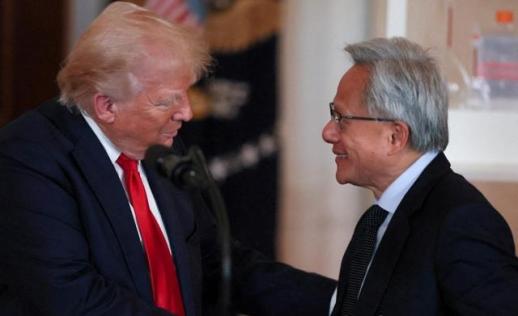 Why Xi Jinping Cannot Abandon Taiwan During a summit between U.S. President Donald Trump and Chinese President Xi Jinping, Taiwan emerged as the most discussed and sensitive topic. Trump himself revealed that Xi asked whether the U.S. would defend Taiwan, indicating that Taiwan was at the forefront of Xi's concerns, despite discussions on tariffs, trade, and supply chains.China has long referred to the Taiwan issue as a "core interest," but its obsession has intensified recently, primarily because Taiwan has become the heart of the global artificial intelligence (AI) industry.Until a few years ago, the Taiwan issue was mainly interpreted through the lenses of history, nationalism, and territorial sovereignty. While these factors remain significant, under Xi's regime, the "great rejuvenation of the Chinese nation" is not merely a slogan for economic growth; it is a political project aimed at achieving unification with Taiwan by 2049, the centenary of the founding of the People's Republic of China. For the Chinese Communist Party, Taiwan is not just an island but a symbol tied to its legitimacy. However, Taiwan now also represents a strategic asset in the realm of AI supremacy.Today, the global AI industry cannot function without Taiwan. NVIDIA's AI semiconductors, as well as servers from Apple and Meta, and Tesla's autonomous driving systems, all rely on advanced processes from Taiwan's TSMC. No matter how well U.S. tech companies design their products, they depend on Taiwan for production, making Taiwan the focal point of the world's cutting-edge semiconductor supply chain.Interestingly, the situation is similar for China. Amid U.S. semiconductor sanctions, China has been advocating for an "AI ecosystem without NVIDIA," yet many AI semiconductors developed by Chinese companies still rely on TSMC's production lines. Even the AI vehicle chips showcased by Chinese semiconductor firms at the Beijing International Auto Show were noted to be produced using TSMC's 4-nanometer process.Ultimately, both the U.S. and China, as well as the entire global AI industry, are dependent on Taiwan. This is why Xi cannot abandon Taiwan. While Taiwan was once a political symbol, it has now become a strategic asset for future industries. Semiconductors are no longer just components; they are critical infrastructure that influences military power, economic strength, and AI competitiveness. For Xi, Taiwan is a territory that "must be unified" and a technological hub that "cannot be surrendered to the U.S."Another crucial aspect is the Chinese leadership's perception of time. While U.S. policies can shift dramatically with elections, China operates on a 10- to 20-year timeline. There is a strong belief within China that "time is on China's side." In fact, economic ties between China and Taiwan have deepened significantly, with cross-strait trade volumes increasing substantially over the past decade and industrial connections strengthening.Xi's regime is also solidifying its long-term governance structure. China has entered a new five-year plan, and discussions suggest that Xi's leadership could continue beyond 2027. This indicates that Taiwan strategy is not a short-term event but a long-term project.The challenge is that as the AI era progresses, Taiwan's strategic value will only increase. Just as past struggles over oil shook the Middle East, future competition over semiconductors is likely to disrupt East Asia, with Taiwan at its center.In 1954, Mao Zedong stated, "The most important issue in U.S.-China relations is the Taiwan issue, and it is a long-term problem." Nearly 70 years later, that statement remains largely true. The difference now is that while Taiwan was once a geopolitical issue of the Cold War, it has become a key engine of the global economy in the AI era.This is why Xi cannot relinquish Taiwan—not just for territorial reasons, but because the future world order hinges on that island.* This article has been translated by AI. 2026-06-05 16:36:00
 -
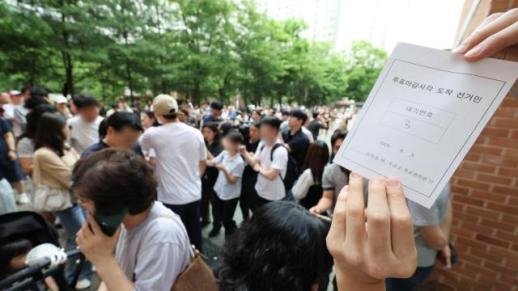 Voting Disruption Due to Ballot Shortage in South Korea's Local Elections In a democratic nation, a shortage of ballots has led to voting disruptions. The June 3 local elections have become a significant event due to this issue. How could such a situation occur? Elections are among the most critical and fundamental administrative tasks carried out by the state. For democracy to function, elections must be conducted fairly, allowing citizens to accept the results. This is why the Election Commission is granted a high status and authority, as specified by the constitution as an independent body. However, there was a shortage of ballots, the most basic requirement for an election. In certain polling stations in Songpa-gu, Gangnam-gu, and Gwangjin-gu, voting was delayed due to a lack of ballots, forcing voters to wait in long lines. In some areas, voting continued even after exit poll results were announced. The Election Commission has apologized, but an apology alone is insufficient. This incident is not merely an administrative error; it indicates a failure in the election management system. Ballots are essential for conducting elections. Situations where there are no ballot boxes, marking tools, or ballots should never occur. This is akin to a hospital operating room lacking surgical instruments or an airport control tower without communication equipment. The more serious issue lies in the Election Commission's response. When this situation arose, the Central Election Commission pointed to the responsibility of local election commissions. However, this does not appear credible to the public. The Central Election Commission oversees national elections, and the ultimate responsibility for election management lies with it. If problems arise on the ground, and the central body claims no responsibility while blaming local commissions, whom should the public trust? Controversies surrounding the Election Commission are not new. During the 2022 presidential election, there was a scandal involving 'basket voting,' where ballots were transported in baskets and shopping bags for COVID-19 positive voters, shocking the public. In 2023, allegations of preferential hiring for children of former and current officials emerged, with substantial evidence revealed during audits. Now, the ballot shortage incident has occurred. While one incident might be seen as a coincidence, repeated controversies of a similar nature cannot be dismissed as mere chance. This is why the public feels uneasy. Mistakes can happen once, but if problems persist within the same organization, the public will begin to question the very operation of that organization. The Election Commission has historically rejected external interference, citing its independence and political neutrality. While the independence of election management bodies is crucial, it cannot serve as a basis for evading responsibility. In fact, the stronger the independence, the greater the accountability should be. If an independent body operates without external oversight, lacks accountability when issues arise, and repeatedly encounters problems, public trust will inevitably erode. This incident has reignited discussions about the role of the Election Commission chairperson. Currently, the chair of the Central Election Commission is a non-permanent position held by a Supreme Court justice. Traditionally, a Supreme Court justice appointed by the Chief Justice has served as chair. However, the fact that the highest official responsible for overseeing elections has a primary job elsewhere has long been criticized. Many argue that the day-to-day operations of the Election Commission are often managed by the Secretary-General, leaving the chair in a largely symbolic role. While it cannot be definitively stated that having a Supreme Court justice as chair is the direct cause of this incident, it is clear that the current system has failed to earn public trust. Citizens want to know who is responsible after the election concludes. They seek clarity on who prepared, who received reports, who made final decisions, and who will be held accountable. However, finding those answers within the Election Commission is currently challenging. Democracy operates on trust. Trust in election results ultimately stems from confidence in the electoral process. The danger of the ballot shortage incident lies not merely in the lack of a few pieces of paper. It raises concerns about the fairness and reliability of elections, potentially increasing the number of citizens questioning the integrity of the process. Whether claims of electoral fraud are true or not is a separate issue. However, when the Election Commission repeatedly generates controversies, it creates an environment where such claims gain traction. This is even more dangerous. Democracy functions on trust, not conspiracy theories. Preserving that trust is the very reason for the existence of the Election Commission. This incident cannot be brushed aside as a simple administrative error. A thorough investigation is necessary to determine who made what decisions, why there was a ballot shortage, whether the reporting system functioned correctly, and what actions the Central Election Commission took. Those responsible must be held accountable. If an election management body cannot uphold the basics of its duties, it must question its own existence. Elections are the flowers of democracy, and the Election Commission is the gardener tending to them. If the gardener fails to perform their role, the flowers will inevitably wilt. This incident is not just about a shortage of ballots; it is a warning signal for the entire election management system in South Korea.* This article has been translated by AI. 2026-06-05 16:33:00