

Journalist

KI SU JEONG
-
 U.S. and South Korea Discuss Trade Issues Amid Ongoing Section 301 Investigation As the U.S. wraps up its Section 301 investigation, trade officials from South Korea and the United States discussed various trade issues between the two countries. The Ministry of Trade, Industry and Energy announced that Yeohang Gu, South Korea's Trade Negotiations Chief, met with Jamieson Greer, the U.S. Trade Representative, on June 3 in Paris during the 2026 OECD Ministerial Council Meeting. They addressed a range of trade concerns. Following a U.S. Supreme Court ruling on tariff violations, the U.S. has initiated a Section 301 investigation to address issues related to the importation of products made with forced labor and overproduction. Recently, the USTR proposed imposing a 12.5% tariff on products linked to forced labor from South Korea. During the meeting, Yeohang Gu sought to understand the background of the Section 301 investigation results concerning the ban on imports of forced labor products and the ongoing investigation into overproduction. He emphasized the importance of maintaining a balance of benefits under the existing U.S.-South Korea tariff agreement. The U.S. side reaffirmed its commitment to uphold the tariff agreement. Additionally, both sides reviewed the implementation status of the joint statement agreed upon by their leaders last November and committed to maintaining close communication to ensure the smooth progression of related follow-up actions. Yeohang Gu stated, "I clearly conveyed that not only the results of the Section 301 investigation but also any future trade issues should be discussed within the framework of the U.S.-South Korea tariff agreement. We will continue to communicate closely with the U.S. to ensure that trade issues between our countries are managed stably, responding calmly to the remaining Section 301 procedures." Meanwhile, Yeohang Gu also met with Maros Sefcovic, the EU Commissioner for Trade and Economic Security, in Brussels on June 1-2, where he strongly requested favorable treatment for South Korean steel. The EU has decided to reduce the tariff-free import quota for steel starting July 1.* This article has been translated by AI. 2026-06-04 08:51:00
 -
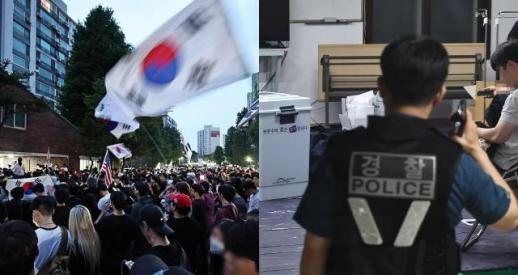 Voter Rights Compromised as Ballot Shortages Spark Outrage in Local Elections On June 3, the day of the local elections, a significant shortage of ballots at some polling stations disrupted voters' ability to exercise their rights, leading to widespread outrage on online communities. According to a report by Aju Economy on June 26, discussions emerged in two communities representing specific demographics where one gender outnumbered the other, focusing on keywords related to the elections. Women in their 20s and 30s criticize Democratic Party's response to ballot shortages In a women-focused community, a post titled "Election Commission: Ballot shortage does not warrant election delay or re-election" sparked a rare outcry from users criticizing the commission's handling of the situation. Comments included: "Is it acceptable for citizens to be unable to vote?", "In unfavorable districts, will they just print fewer ballots?", "This is essentially election fraud", "This undermines democracy", and "Why give ammunition to those claiming election fraud?" Many expressed that regardless of the election outcome, a re-vote should be conducted, with one user stating, "This is a shock comparable to a coup." Conversely, some users critiqued the appearance of protesting citizens, suggesting that the country is becoming a stronghold for far-right ideologies. Comments included: "Look at their faces", and "They probably were gaming during the military coup." Others defended the protests, arguing that the ballot issue warranted a response, stating, "It's strange to remain silent when such a problem arises with voting." Men in their 20s and 30s declare democracy is collapsing due to election mishaps In a male-focused community, discussions about the election quickly turned to the election commission and the ballot shortages. One user criticized a statement from Jo Seung-rae, the Democratic Party's Secretary-General, saying, "The attitude of the Democratic Party directly contradicts the values of fairness and common sense that resonate with the 2030 generation." Comments included: "Remove 'Democratic' from the party name, you authoritarian activists", and "Do they remember that the lack of will to uphold the Constitution was a reason for Park Geun-hye's impeachment?" Another user remarked, "Even if the results don’t change, this is a serious issue that undermines the foundation of our democracy." Many criticized Jo Seung-rae's remarks, suggesting they incited public unrest and questioning how anyone could dismiss the need for a re-vote after voters were unable to cast their ballots. Social media voices widespread claims of election fraud Numerous posts on social media have emerged alleging election fraud in connection with the local elections, particularly regarding the ballot shortages. On June 4, many users shared claims that it was impossible for there to be a shortage of ballots, suggesting potential election manipulation. One user pointed out that the voter turnout for the local elections was around 50%, yet the election commission ordered ballots for only 70% of registered voters. They questioned, "Was there an attempt to create fake ballots by diverting the actual ballots?" These posts garnered thousands of reactions, with comments like, "Was there manipulation of early voting?" and "We need an explanation." However, no objective evidence or official confirmation has emerged to support these claims. The ballot shortages may have resulted from various factors, including miscalculations in expected voter turnout, peak voting times, delays in securing additional ballots, and discrepancies between the voter registry and actual participation rates. The Central Election Management Commission has not yet indicated that the ballot shortages are linked to organized fraud or ballot leakage. Additionally, some users have circulated claims that election results were posted on Chinese social media prior to the elections, sharing images comparing Chinese posts with local exit poll results. They questioned, "How could such predictions be made before the election?" The election commission is currently investigating the causes and circumstances surrounding the ballot shortages at specific polling stations.* This article has been translated by AI. 2026-06-04 08:51:00
 -
 Samsung Heavy Industries Wins $2.9 Billion Delfin FLNG Contract, Transforming North American LNG Market Samsung Heavy Industries has signaled the start of a new era in floating liquefied natural gas (FLNG) production, moving beyond shipbuilding to lead a transformation in North America's LNG development. On June 2, Samsung Heavy Industries announced that its recent FLNG contract pertains to the first FLNG construction project for the Delfin LNG project in Louisiana, USA. The Delfin FLNG, which Samsung Heavy Industries has secured, marks the first FLNG project in U.S. history, with a contract value of $2.9 billion (4.33 trillion won). The Delfin LNG project breaks away from traditional reliance on large land-based LNG plants, adopting a multiple operational approach that involves deploying several FLNG units of the same specifications. Currently, three FLNG units are planned for order. This method offers advantages such as distributing initial investment burdens and allowing for flexible production adjustments based on market conditions. Industry experts view it as a new LNG production model with competitive advantages over land-based LNG projects. The Delfin FLNG is designed as a hybrid model that combines the economic benefits of nearshore FLNG with stability in offshore environments. The upper plant utilizes a slim structure that receives pre-processed gas from land, reducing construction costs, and is equipped with a living quarters for 120 personnel and a mooring system to ensure stable operations approximately 75 kilometers offshore from Louisiana. Additionally, eco-friendly technologies such as an air-cooled cooling system and a combined power generation system have been implemented. Notably, the FLNG is equipped with self-navigation capabilities to escape hazardous areas during hurricanes, enhancing safety. Samsung Heavy Industries attributes its ability to execute such advanced design and technology to its long-standing expertise in integrated FLNG operations. A company representative stated, "The Delfin project is significant as Samsung Heavy Industries will independently carry out the entire EPC (Engineering, Procurement, and Construction) process for the first time, leading series construction. We aim to drive the 'FLNG production era' by applying optimized designs and solutions proposed proactively by Samsung Heavy Industries to achieve groundbreaking cost reductions and flawless quality." Meanwhile, Samsung Heavy Industries has secured seven out of eleven newly ordered FLNGs globally, including the Prelude, the world's largest FLNG, achieving a 64% market share. Negotiations for subsequent orders related to the Delfin project are also ongoing. Samsung Heavy Industries offers a comprehensive lineup across the LNG value chain, from FLNG (production, liquefaction, and offloading) to LNG carriers and LNG-FSRUs (supply), providing integrated LNG solutions.* This article has been translated by AI. 2026-06-04 08:51:00
 -
 Padu Accelerates Push into Asian Market at Computex 2026 Data center semiconductor company Padu is ramping up its efforts to penetrate the Asian market, leveraging the ongoing expansion of artificial intelligence (AI) data centers that demand enhanced storage performance and energy efficiency. The company is showcasing its next-generation SSD controller technology to broaden its customer reach. According to industry sources, Padu conducted technology marketing for local clients during Computex 2026, which opened on June 2 in Taipei, Taiwan. The company introduced its Gen6 SSD controller and existing Gen5 SSD solutions to hyperscalers, server manufacturers, and SSD module companies. Padu emphasized its controller architecture designed to reduce storage bottlenecks in AI inference environments. The Gen6 SSD is noted for improved performance and energy efficiency compared to Gen5, along with enhanced random read and write capabilities for large block sizes. Industry experts report that as demand for inference services rapidly increases following AI training, the efficiency of SSD controllers in retrieving data has become a critical factor in data center competitiveness, alongside GPU processing power. Padu is also expanding its collaboration with Taiwanese partners. Since last year, the company has worked with Adata, a Taiwanese memory and SSD brand, to target the enterprise SSD market. Adata showcased its enterprise SSD, the TrusT TD7P51 Eco, at the event, which incorporates Padu's SSD controller and solution technology. This year, Padu secured a contract worth 60.4 billion won for the supply of enterprise SSD finished products in the Taiwanese market. Additionally, orders for SSD controllers from hyperscaler clients have surged, pushing new orders beyond 300 billion won as of early June. The company is maintaining a customer base centered on North American hyperscalers while strategically expanding its supply chain to Taiwanese and Asian server and module companies. With the AI server ecosystem increasingly centered around Taiwanese manufacturers, securing local partnerships is deemed essential. Nam Ihyun, CEO of Padu, stated, "Computex is a significant opportunity to showcase Padu's SSD controller technology in the Taiwanese and Asian markets. We aim to diversify our customer base and expand revenue through collaboration with key partners."* This article has been translated by AI. 2026-06-04 08:48:00
 -
 Kioxia Targets AI Server Market with Advanced NAND Technology Japanese semiconductor memory company Kioxia Holdings is making a push into the NAND flash market for artificial intelligence (AI) servers. Although it lags behind competitors like Samsung Electronics and SK Hynix in terms of memory cell stacking, Kioxia aims to compete on read and write speeds by leveraging its unique technology that separates memory cells from control circuits before combining them. According to the Nihon Keizai Shimbun (Nikkei), Kioxia is seeing improved performance driven by increased demand for memory in data centers, with its early adoption of substrate bonding technology leading to a rise in orders. During an investor briefing, Kioxia announced it would begin shipping samples of its next-generation NAND flash, referred to as the '10th generation,' this summer, with plans to increase the share of its enterprise sales, including data centers, to over 60% of total revenue. Atsushi Inoue, Kioxia's executive officer, stated, "We are achieving industry-leading performance and receiving high praise from many customers." NAND flash is a type of memory semiconductor used for long-term data storage, and the key to technological competition has traditionally been how many memory cells can be stacked. Kioxia's predecessor, Toshiba, pioneered vertical stacking technology in 2007, but it has recently been perceived as falling behind in the stacking race. Kioxia announced in 2023 that it successfully developed 218-layer NAND, but the gap became more pronounced when SK Hynix revealed products exceeding 300 layers in the same year. Kioxia's flagship products remain at 218 layers. The breakthrough for Kioxia is its CBA technology. While conventional NAND combines memory cells and control circuits on a single silicon wafer, CBA creates each on separate wafers and then precisely bonds them together. This process allows for more efficient use of wafer space and increases NAND storage density. However, the process is complex, requiring near-perfect alignment of the two wafers and precise connections between the upper and lower layer circuits. Kioxia was the first to commercialize this technology. Kazuyoshi Saito, a senior analyst at Daiwa Securities, noted that Kioxia's NAND is 20-30% faster in read and write speeds compared to its competitors. Initially, the reception was not entirely positive. When Kioxia announced CBA at the end of 2023, some in the industry viewed increasing stacking as the straightforward approach, arguing that CBA was unnecessarily complicated. However, as demand for NAND capable of quickly processing large amounts of data in AI servers grew, CBA began to gain attention for its speed advantages. Moreover, competitors like Samsung and SK Hynix focused their investments on DRAM, which saw a surge in demand during the early AI boom, creating an opportunity for Kioxia, which has concentrated on NAND research and development, to differentiate itself in the AI server storage market. Nevertheless, increasing market share will not be easy. According to Taiwanese research firm TrendForce, Kioxia held a 13.9% share of NAND sales by value from January to March this year, ranking third. Samsung led with a significant gap at 31.6%, while Micron and SanDisk also reached similar levels as Kioxia at 13.9%. Kioxia's customer base in data centers is relatively weak, and the impact of NAND price increases appears to have been reflected later than for its competitors. Given that Samsung and SK Hynix have secured long-term contracts with major customers based on their supply capabilities, it will be challenging for Kioxia to significantly boost its market share in the short term. Nonetheless, Nikkei views the shift in focus from stacking to processing speed in NAND competition, driven by the expansion of AI servers, as an opportunity. Analysts suggest that Kioxia's ability to secure data center customers with its CBA technology will be crucial for expanding its market share.* This article has been translated by AI. 2026-06-04 08:45:00
 -
 Daol Investment Securities Raises Target Price for Korea Carbon by 7% Daol Investment Securities announced on June 4 that it has raised its target price for Korea Carbon from 57,000 won to 61,000 won, an increase of 7%, citing strengthened growth momentum from expanded LNG ship orders and defense production capacity. The firm maintained its "buy" rating. Choi Kwang-sik, a researcher at Daol Investment Securities, stated, "The order for NO96 SUPER+ has established a growth foundation that can surpass the upper limit of LNG ship orders from Samsung Heavy Industries and HD Hyundai. Multiple growth factors, including investments in the Miryang industrial complex, the start of defense production, and the establishment of a U.S. subsidiary, are on the horizon." In the first quarter of this year, Korea Carbon reported sales of 211.8 billion won and an operating profit of 41.1 billion won. Although sales decreased by 6% compared to the same period last year, operating profit increased by 32%, exceeding market expectations. Analysts attribute the improvement in profitability to rising average selling prices (ASP), favorable exchange rates, enhanced productivity from new facilities, better management of partner companies, and reduced losses from new businesses. Despite rising raw material prices, such as methylene diphenyl diisocyanate (MDI), due to the conflict in the Middle East, the impact is expected to be limited. Considering inventory levels of about two months, cost pressures may be reflected in the second and third quarters; however, improvements in new facility productivity, contributions from the defense sector, and favorable exchange rates are expected to offset much of this. Daol Investment Securities anticipates that the performance improvement in 2027 will be even greater than in 2026. This year, sales are expected to be around 950 billion won, with operating profit projected in the mid-160 billion won range. Choi noted, "The significant rise in ASP since 2023 will be fully reflected, and the contribution from the defense sector will also expand." The firm positively assessed the recent order for insulation materials for four LNG ships from Hanwha Ocean, valued at approximately 72 billion won. This order is estimated to utilize the NO96 SUPER+ method, which improves the boil-off rate (BOR). Choi described it as a "monumental event" that could surpass the upper limit of 50 LNG ships from Samsung Heavy Industries and HD Hyundai, adding that demand for very large ethane carriers (VLEC) and floating liquefied natural gas production facilities (FLNG) could further sustain growth. Investment in the Miryang industrial complex is also seen as a positive factor. Korea Carbon plans to expand its production capacity for the SB (Triple-X) product, which is exclusively approved by GTT, from 80 LNG ships to 100 ships through automated facilities. The defense sector is also expected to contribute significantly to performance. After recording losses during the development, prototype production, and testing phases, the company began mass production last year and is attempting to turn a profit through increased deliveries of Cheongung and the Korean Vertical Launching System (KVLS-II).* This article has been translated by AI. 2026-06-04 08:45:00
 -
 Five Out of Seven Former Blue House Officials Win Elections Five of the seven former Blue House officials from the administration of President Lee Jae-myung were elected in the June 3 local elections and National Assembly by-elections.Woo Sang-ho, the former senior secretary for political affairs, won the governorship of Gangwon Province, while Son Hwa-jung, a former administrative officer in the Office of National Unity, became the inaugural mayor of Incheon Yeongjong.In the National Assembly by-elections, Kim Nam-jun, Jeon Eun-soo, and Kim Nam-guk, former spokespersons, successfully secured seats.However, Ha Jung-woo, the former chief of AI Future Planning, lost to independent candidate Han Dong-hoon in Busan Buk-gap, and Kim Byeong-wook, the former senior secretary for political affairs, was defeated by incumbent Kim Shin-gin of the People Power Party in the Seongnam mayoral race.Woo's victory marks a significant achievement for the Democratic Party, reclaiming Gangwon Province after four years by defeating the incumbent governor. The region is known for its strong conservative base, making this win particularly noteworthy.In the Incheon Yeongjong mayoral election, Son triumphed over Kim Jeong-heon of the People Power Party by a narrow margin of 349 votes. Son is expected to collaborate with Park Chan-dae, a former floor leader of the Democratic Party, to lead Incheon’s administration.In the National Assembly by-elections, Kim won in Incheon Gyeongyang, the previous constituency of President Lee, thus continuing his political legacy. Jeon maintained the seat in Asan, Chungnam, previously held by Chief of Staff Jeong Jin-seok, while Kim secured re-election in Ansan, Gyeonggi Province.These elected officials are anticipated to serve as a bridge between the Blue House and the National Assembly within the ruling party.Conversely, the elections in Busan Buk-gap and Seongnam resulted in losses. The Busan Buk-gap by-election was held following the resignation of former Busan mayor Jeon Jae-soo, making it a critical area for the ruling party, but Ha lost the seat. In Incheon Gyeongyang and Seongnam, both areas are politically significant as they were previously led by President Lee, yet Kim faced defeat.* This article has been translated by AI. 2026-06-04 08:45:00
 -
 Tmap Launches 'Movement Log' Service to Track Daily Travel Tmap Mobility has introduced a new service called 'Movement Log' that allows users to save and manage their travel and visit records. On June 4, Tmap Mobility announced the launch of the 'Movement Log' service, which records users' daily travel routes and visited locations for easy review. The Movement Log service consolidates driving records and check-in information in one place. Users can view their visited locations and travel routes on a map and timeline, enabling them to document and manage their travel history like a diary. Records are automatically saved when users complete driving or walking routes using the Tmap navigation app. Users can also leave more detailed location records by checking in at specific places. After a visit, users can select a date to add check-in records, and they can delete records for locations they prefer not to keep. The Movement Log is designed for personal access only. The service also includes a feature called 'Movement Log Insights,' which analyzes users' travel patterns. It provides intuitive insights into recent travel frequency, frequently visited locations, newly discovered spaces, and major visit categories, helping users understand their travel habits and radius. The Movement Log can be accessed through various pathways within the Tmap app, including the My Menu, saved locations screen, and end-of-trip screen. Jang Chang-geun, Chief Product Officer of Tmap Mobility, stated, "The Movement Log is not just a tool for storing travel data; it helps users discover and manage their travel experiences and preferences. We will continue to enhance user experience and content reliability based on actual travel data." Meanwhile, Tmap has been expanding user participation features, recently introducing a real-time road information sharing function called 'Social Reporting' as part of its service enhancement efforts.* This article has been translated by AI. 2026-06-04 08:45:00
 -
 'Wild Thing' Draws 160,000 Viewers on Opening Day, Surpassing 'The King and the Clown' The film 'Wild Thing' had a strong debut, attracting 160,748 viewers on its opening day. According to the integrated ticket sales network on June 4, 'Wild Thing' surpassed the opening day attendance of this year's top-grossing film, 'The King and the Clown,' which had 117,783 viewers on its first day. Despite being shown on a relatively limited number of screens, 'Wild Thing' achieved a high seat occupancy rate, securing the top spot at the box office for new releases. The film garnered attention prior to its release for its blend of 2000s pop music nostalgia and comedy, and early audience reactions have been positive. Audience feedback has been encouraging. 'Wild Thing' boasts a CGV Egg Index of 95%, a score of 9.2 on Lotte Cinema, and 9.01 on Naver, indicating strong ratings across major ticketing and review platforms. Viewers have commented, "It made me laugh and cry purely from its charm," "I laughed out loud for the first time in four years," "Just when I thought it would turn left, it made an unexpected U-turn," and "It's the essence of comedy that can make you laugh without a care in the world," reflecting their satisfaction with the humor and storyline. 'Wild Thing' is a comedy about a once-popular mixed-gender dance group, 'Triangle,' which was abruptly disbanded due to an unforeseen incident. The film follows the group's members as they embark on a reckless challenge to seize a second chance after 20 years. Actors Kang Dong-won, Um Tae-goo, and Park Ji-hyun portray the members of 'Triangle,' with supporting performances from Oh Jung-se and Shin Ha-kyun adding to the comedic dynamic. The film's nostalgic references to 2000s pop music and K-pop stage concepts, combined with the actors' performances, have captured the audience's interest in the early days of its release. Meanwhile, on the same day, 'The Army' maintained its position at the top of the box office, drawing 331,490 viewers and bringing its cumulative audience total to 4,043,759. 'Back Room' attracted 114,110 viewers, with a cumulative total of 572,775.* This article has been translated by AI. 2026-06-04 08:39:00
 -
 SK Group Chairman Chey Tae-won Meets TSMC President in Taiwan to Discuss AI Semiconductor Alliance SK Group Chairman Chey Tae-won met with TSMC Chairman C.C. Wei in Taiwan to discuss collaboration in the semiconductor sector amid the rapid growth of the artificial intelligence (AI) market. As the leading companies in memory and foundry sectors strengthen their alliance, competition for leadership in the next-generation AI ecosystem is expected to accelerate.SK Hynix announced that Chairman Chey and Chairman Wei held discussions on the latest trends in AI technology and future collaboration on June 3. This meeting marked the first in nearly two years, reaffirming the trust built between the two companies and solidifying their strategic partnership in the AI era.The two companies agreed to collaborate on alleviating supply chain bottlenecks that have emerged during the expansion of the AI market. With surging demand for AI servers, high-bandwidth memory (HBM) and advanced packaging capabilities have become crucial factors for the growth of the global AI industry, highlighting the importance of their cooperation.Currently, SK Hynix holds a competitive position in the HBM sector, leading the AI memory market, while TSMC plays a key role in the global AI semiconductor ecosystem based on its advanced process and packaging technologies. Their technological collaboration is expected to play a significant role in addressing the supply shortage of AI semiconductors.During the meeting, the development of next-generation HBM and advanced packaging technology collaboration were also key agenda items. As competition intensifies for AI semiconductor performance, the importance of packaging technology that efficiently connects memory and logic semiconductors is growing, prompting both companies to expand their related cooperation to enhance market responsiveness.Looking ahead, the two companies plan to accelerate their efforts to target the 'custom AI memory' market tailored to the demands of global tech giants. As AI services diversify, the demand for customized semiconductors reflecting specific performance and power efficiency requirements is expected to rise.SK Hynix aims to leverage its collaboration with TSMC to timely supply high-performance AI memory and further strengthen its leadership in the global AI market.* This article has been translated by AI. 2026-06-04 08:39:00