

Journalist

KI SU JEONG
-
 Fire Breaks Out at Gwacheon Election Commission Site; Arson Investigated On the evening of June 3, a fire broke out in a wooded area within the site of the Gwacheon Election Commission in Gyeonggi Province, prompting an investigation by police and fire authorities. According to Yonhap News, the fire started around 7:50 PM near a walking path approximately 100 meters from the main building of the Election Commission. Fortunately, there were no reported injuries, but some surrounding forested land was damaged. At the time of the incident, police officers from the Gyeonggi Southern Provincial Police Agency, who were stationed at the Election Commission in preparation for potential election day scenarios, quickly responded with fire extinguishers to control the flames. Firefighters, alerted by the Election Commission, dispatched 33 personnel and 11 pieces of equipment to the scene, successfully extinguishing the fire by 8:07 PM, about 10 minutes after it began. Investigators confirmed that the fire originated from a walking path within the site, which is secured by a fence to prevent unauthorized access. A police official stated, "The area outside the Election Commission is surrounded by a fence, making it inaccessible to outsiders. However, we will continue to monitor the situation using closed-circuit television (CCTV) footage." Currently, police and fire authorities are exploring all possibilities, including the potential for arson, as they investigate the cause and circumstances surrounding the fire.* This article has been translated by AI. 2026-06-03 21:36:00
 -
 People Power Party Calls for Election Delay Amid Ballot Shortage in Seoul The People Power Party has demanded a halt to the counting of votes and a delay in the elections following a ballot shortage at several polling stations in Seoul during the June 3 local elections. Song Eon-seok, the floor leader of the People Power Party, stated on June 3 at the party's election counting headquarters in Yeouido, "I urge an immediate suspension of the vote counting in Seoul." He formally requested a postponement of the elections, citing Article 196 of the Public Official Election Act, and emphasized that it is clear the elections cannot proceed as planned in Seoul. Song expressed concerns about whether proper management of ballots was maintained during the urgent transport of ballots from other locations. He also noted that with voting continuing past 6 p.m., the possibility of exit poll results influencing the votes cannot be dismissed. He described the situation as a "serious issue that significantly undermines the fairness of the election," adding that many citizens believe it is no longer feasible for the election to proceed normally. Earlier that day, some polling stations in Seoul's Songpa District experienced a shortage of ballots, causing voters to wait or temporarily halting voting. In response, Heo Cheol-hoon, Secretary General of the National Election Commission, issued a public apology, stating, "We have caused great confusion and concern among the public," while bowing his head in regret. The commission explained that additional ballots were sent to the affected polling stations and that voters waiting at those locations would be allowed to cast their votes even after the official closing time. He also stated that once the counting is completed, the commission will identify the causes and issues related to the ballot shortage and implement measures to prevent a recurrence.* This article has been translated by AI. 2026-06-03 21:33:00
 -
 Bank of Japan's Ueda Signals Possible Rate Hike This Month Kazuo Ueda, the Governor of the Bank of Japan, indicated that there may be an additional increase in the short-term policy interest rate during the monetary policy meeting scheduled for mid-June. According to Yonhap News on June 3, Ueda made these remarks at a seminar hosted by Kyodo News, stating, "Although the situation in the Middle East is uncertain, it is essential to discuss the appropriateness of a rate hike." As a result, there is growing speculation that the current interest rate of approximately 0.75% could be raised at the monetary policy meeting on June 15-16. The market anticipates a likely increase to 1.0%, a rise of 0.25 percentage points. He noted, "Given the impact of high oil prices, we cannot ignore the risk that inflation could exceed expectations," and warned that delaying a rate hike could impose significant burdens on both the economy and the market and financial systems, reiterating the need for a timely increase. Previously, Ueda assessed during a press conference following the G7 finance ministers and central bank governors' meeting in Paris on May 19 that the instability in the Middle East is gradually affecting Japan's economy and inflation. The pressure for a rate hike from the Bank of Japan is also linked to the recent depreciation of the yen. On the same day, the yen-dollar exchange rate surged to 160 yen per dollar in the Tokyo foreign exchange market, returning to levels seen before the Japanese government and central bank's large-scale currency intervention. Despite rising inflationary pressures due to the situation in the Middle East, analysts suggest that the Japanese government's continued expansionary fiscal policies, including oil price subsidies and supplementary budgets, are exacerbating the yen's depreciation. Consequently, there is a growing consensus among other members of the Bank of Japan's policy board regarding the need for a rate hike to defend the yen's value and combat high inflation. Junko Koeda, who voted in favor of keeping the interest rate unchanged during the last decision, also mentioned in a seminar on May 21 that it is necessary to continue raising the policy rate to adjust the degree of monetary easing. Kyodo News predicts that the Bank of Japan will closely examine the economic impact of the Middle East situation before making a final decision ahead of the meeting.* This article has been translated by AI. 2026-06-03 21:24:00
 -
 Election Commission Apologizes for Ballot Shortage During Local Elections The National Election Commission has issued an apology for a ballot shortage that occurred at several polling places in Seoul during the June 3 local elections. Heo Cheol-hoon, Secretary General of the National Election Commission, delivered a public apology on June 3 at 9 p.m. at the commission's office in Gwacheon, stating, "We caused significant confusion and concern among the public." He bowed his head in acknowledgment of the issue. Heo added, "We regret the inconvenience caused to citizens who came to exercise their precious right to vote due to the shortage of ballots at some polling places on election day. I take full responsibility for undermining public trust in fair election management and sincerely apologize." The shortage primarily affected polling places in the Songpa district of Seoul. Starting around 1 p.m., some locations, including the 6th polling station in Jamsil 2-dong, experienced a lack of ballots, leading to voters waiting on-site. Voters at the 3rd and 7th polling stations in Garak 2-dong also stood in line until the ballot shortage was resolved. The commission explained that once they became aware of the ballot shortage, they dispatched additional ballots to the affected polling places. They also ensured that voters waiting at the polling stations could cast their votes even after the official closing time of 6 p.m. Heo emphasized that the commission takes this matter very seriously, stating, "We will accurately identify the causes and issues related to the ballot shortage at some polling places as soon as the counting is completed and will implement measures to prevent a recurrence." The People Power Party also visited the commission to express their concerns. Shin Dong-wook, head of the party's Election Integrity Committee, demanded explanations regarding the scale and causes of the ballot shortage. Reports indicate that some voters waited for as long as two to three hours due to the ballot shortage, with some choosing to leave without voting. The commission plans to review the exact circumstances of the incident and the response measures taken after the counting concludes. 2026-06-03 21:12:00
 -
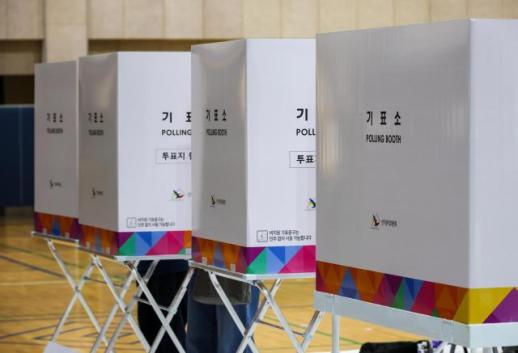 ASIA DEEP INSIGHT: Architecture of South Korean reconciliation At exactly 8:30 p.m. on Wednesday, the abstract statistics of South Korea’s ninth nationwide local elections collided with physical reality. Across 258 counting centers, the seals on the first ballot boxes were broken. As millions of paper slips began feeding into automated sorting machines—the initial step before a grueling, newly mandated manual verification process—the republic stood at a critical institutional juncture. Joint exit polls released at the close of voting projected the ruling Democratic Party of Korea claiming widespread administrative control, leading in 11 of 16 metropolitan mayoral and gubernatorial races. Yet, reading this moment as a simple partisan triumph fundamentally misunderstands the structural mechanics of the current political era. As the count begins, this election is not a standard referendum on municipal budgets; it is a live-fire test of whether a political architecture profoundly fractured by recent constitutional shocks can successfully contain a divided nation. The administration of President Lee Jae Myung reached its one-year milestone against the backdrop of deep institutional trauma. This midterm vote operates in the immediate wake of the December 2024 martial law decree and the subsequent impeachment of the former executive, events that fundamentally rewrote the boundaries of South Korean political conflict. The fallout left the conservative bloc fighting an explicit war for baseline political survival. Following a devastating defeat in the general elections two years ago, the conservative People Power Party arrived at this local cycle on the verge of territorial extinction. Stripped of executive authority and severely marginalized in the National Assembly, municipal and provincial governance represented their final remaining foothold on the domestic political map. Because the conservative establishment was backed into an existential corner, their electoral resistance was total. This desperation materialized not in civic apathy, but in a relentless mobilization of the base. By the time polls closed at 6:00 p.m., the National Election Commission verified a definitive national turnout of 60.9 percent. This figure represents the physical footprint of a cornered demographic. The electorate did not flood the polling stations out of a shared desire for national harmony; they mobilized because both factions viewed the alternative as political erasure. It is precisely within this climate of existential anxiety that the true mechanism of South Korean reconciliation reveals itself. True political stabilization in a deeply polarized society does not emerge from sentimental appeals to unity or emotional healing. It is forged when competing factions, driven by the sheer terror of eradication, are forced to channel their conflict entirely through the rigid infrastructure of the democratic state. The shared act of submitting to the ballot box institutionalizes the hostility, proving that even a highly traumatized political class prefers the grueling mechanics of the vote count to extra-parliamentary chaos. The material realities driving this mobilization were split along clear ideological lines. The opposition People Power Party successfully anchored its campaign to acute macroeconomic anxiety, focusing public attention on the 3.1 percent consumer inflation spike recorded in May—the largest inflationary surge in 26 months. While regional economic analysts correctly identify this strain as a byproduct of external pressures, including the depreciation of the Japanese yen and shifting Chinese export strategies, the domestic electorate processed it as an immediate failure of state management. The opposition framed the vote purely as a material defense of personal property and wages. Conversely, the ruling Democratic Party of Korea counter-mobilized by framing the election as a literal defense of the constitutional order, labeling the opposition as the remnants of an insurrectionist faction that sought to subvert the republic two winters ago. As the ballot boxes open under the glare of counting-room lights, the razor-thin margins projected by the exit polls guarantee an intensely volatile night. In the metropolitan city of Daegu, the traditional heartland of South Korean conservatism, exit polls place opposition candidate Choo Kyung-ho at a razor-thin 49.9 percent against the ruling party’s Kim Boo-kyum at 49.1 percent. In the southern port city of Busan, a critical economic hub and outward-facing logistics anchor, the ruling party's Jeon Jae-su holds a narrow edge of 50.2 percent over the opposition's Park Hyung-jun at 48.3 percent. In the capital city of Seoul, the primary national barometer, the ruling party's Jung Won-oh leads opposition incumbent Oh Se-hoon by a projected 51.4 percent to 46.0 percent. In an environment poisoned by the memory of martial law, these sub-one-percent margins will not instantly breed political harmony. In the immediate hours ahead, they will inevitably cause intense friction, legal challenges, and partisan paranoia. A margin of less than one percent is an operational invitation to contest every single ballot box. Yet, over the long arc of the administration, these microscopic margins function as the ultimate structural safeguard against ideological cleansing. A majority faction cannot govern as an absolute conqueror when its mandate rests on fractions of a single percentage point. The projected numbers indicate that the conservative establishment has managed to preserve its core geographic fortresses, denying the ruling party total hegemonic control over the state. Simultaneously, the ruling party’s deep penetration into traditionally hostile territory proves that old geographic dogmas no longer offer absolute insulation. This is the definition of mutually assured political survival. When neither side possesses the numerical superiority required to completely liquidate the other, both are structurally compelled to accept a cautious, administrative coexistence. To guarantee that this volatile equilibrium holds, the state has deployed its final institutional defense. Tonight, 314,000 management personnel across 258 counting centers are executing a completely manual, ballot-by-ballot review process after the automated sorting is complete. In a political climate saturated with institutional distrust, this logistical gauntlet is a deliberate decelerator. The agonizingly slow physical verification of millions of paper slips introduces an immediate surface area for human exhaustion and localized disputes over individual tables. Yet, this manual count is the only process capable of establishing an irrefutable boundary. South Korea's divided factions are not united by a shared vision of the future, and they still view each other's motives with profound suspicion. But by forcing this existential combat into the slow, indisputable, and manually verified reality of the 8:30 p.m. unsealing, the state is successfully engineering a cold, structural equilibrium. The divided hearts of the electorate are not being mended by mutual affection; they are being bound by an ironclad architecture where political survival depends entirely on submitting to the rule of the institution. 2026-06-03 20:51:44
 -
 Fire Breaks Out Near Gwacheon Election Commission on Election Night A fire broke out on June 3 near the Gwacheon Election Commission during the 9th nationwide local elections. According to fire authorities, a report of the blaze was received at 7:50 PM. The fire was brought under control within 12 minutes of the report. The term "brought under control" indicates that there was no longer a significant risk of the fire spreading. Firefighters have been deployed to the scene to manage the remaining embers and ensure safety. The exact cause of the fire has not yet been determined. Fortunately, there have been no reported injuries from the incident. The fire occurred as the nationwide vote counting was underway following the conclusion of the local elections. The Election Commission was scheduled to hold a public apology and briefing at 9 PM regarding a shortage of ballots at some polling stations in Seoul. There is currently no confirmed link between the fire and the election management activities or the ballot shortage. Fire authorities plan to investigate the cause of the fire once the situation is stabilized. It is important to note that wildfires can reignite due to wind or remaining embers after initial suppression, making it crucial to monitor the site and manage any lingering embers. Fire authorities will investigate the ignition point, cause, and extent of damage once the fire is completely extinguished. 2026-06-03 20:45:00
 -
 Tight Race for Daegu Mayor: Choo Kyung-ho and Kim Boo-kyum Neck and Neck DAEGU, South Korea — The Daegu mayoral election, considered one of the most critical contests in the local elections, is drawing national attention as exit polls indicate an extremely close race. Both the joint exit poll by three major broadcasters (KBS, MBC, SBS) and a prediction survey by JTBC show candidates Choo Kyung-ho of the People Power Party and Kim Boo-kyum of the Democratic Party nearly tied, leaving the final outcome uncertain until the votes are counted. According to the joint exit poll, Choo received 49.9% of the vote, while Kim garnered 49.1%, resulting in a narrow margin of just 0.8 percentage points. Given the margin of error, predicting a winner is virtually impossible. JTBC's prediction survey yielded similar results, with Kim at 49.7% and Choo at 49.2%. JTBC classified the Daegu mayoral race as a competitive area and refrained from declaring a frontrunner. Interestingly, the leading candidate varied depending on the polling agency. While the three broadcasters indicated Choo was slightly ahead, JTBC suggested Kim had a slight advantage. Ultimately, both surveys concluded that it is impossible to declare a winner at this stage. The significance of the Daegu mayoral election extends beyond its competitiveness. Daegu has long been regarded as a stronghold for conservative parties, with the People Power Party historically dominating local elections. The fact that a Democratic Party candidate is in a virtual tie at the exit poll stage is seen as a symbolic moment for this election. Kim Boo-kyum has previously demonstrated the potential for Democratic Party politics in Daegu by winning a parliamentary seat in the Suseong District. In contrast, Choo Kyung-ho, a former Deputy Prime Minister, has rallied conservative support as he campaigns in the region. Throughout the election, both candidates have focused on promises to revitalize the local economy and enhance industrial competitiveness, aiming to attract moderate voters. Political analysts believe the outcome of this election could have implications beyond a typical local government race. If Choo wins, it would symbolize the People Power Party's retention of its conservative base. Conversely, a victory for Kim could signal significant changes in the political landscape of Daegu. Combining the results from the three broadcasters and JTBC, the Daegu mayoral election is considered the most unpredictable among the 17 regional mayoral elections nationwide. Unlike major areas such as Seoul, Gyeonggi, Incheon, and Busan, where the Democratic Party shows a clearer advantage, Daegu remains uncertain until the very end. As the vote counting begins, attention is focused on key districts such as Suseong, Dalseo, and Bukgu. The level of support from traditional conservative voters, along with the choices of moderate and undecided voters, are expected to be crucial factors in determining the final outcome. Based on the exit polls so far, both candidates can claim a potential victory, making the Daegu mayoral election one of the most dramatic contests in this local election cycle.* This article has been translated by AI. 2026-06-03 20:42:00
 -
 Tight Race for Jeonbuk Governor: Lee Won-taek Leads, Kim Kwan-young Close Behind The Jeonbuk gubernatorial election is shaping up to be a much tighter contest than expected. Joint exit polls from three major broadcasters (KBS, MBC, SBS) and predictions from JTBC indicate that Lee Won-taek of the Democratic Party is leading, but Kim Kwan-young is mounting a strong challenge. According to the joint exit poll from the three broadcasters, Lee Won-taek garnered 48.5% of the vote, leading Kim Kwan-young, who received 46.3%, by a narrow margin of 2.2 percentage points. The close gap suggests that the outcome could still change as votes are counted. JTBC's prediction also shows Lee Won-taek ahead with 50.9% compared to Kim Kwan-young's 44.6%. However, JTBC classified the Jeonbuk gubernatorial race as competitive, making it difficult to predict the final results. Initially, the Jeonbuk gubernatorial election did not attract much attention due to its reputation as a stronghold for the Democratic Party. However, as the election progressed, it has drawn national interest due to the unexpectedly close race. In particular, the contest in Jeonbuk, traditionally a Democratic stronghold, is characterized by the incumbent's advantages, organizational strength, and regional development issues, leading to a split in voter preferences. While both the three broadcasters and JTBC predict Lee Won-taek's lead, they differ in the extent of that lead. The broadcasters assess the race as effectively within the margin of error, while JTBC indicates a slightly larger gap. Political analysts view the Jeonbuk gubernatorial election as a potential indicator of changes in the region's political landscape. It will reveal whether the Democratic Party's traditional support base remains strong or if the political dynamics in the area are shifting. Nationally, the Democratic Party appears to be winning in Seoul, Gyeonggi, Incheon, as well as Busan, Ulsan, and Gyeongnam, but the competitive nature of the race in Jeonbuk stands out. In the exit polls, the results from Seoul show candidate Jeong Won-o leading Oh Se-hoon by 5.4 percentage points, while in Gyeonggi, candidate Choo Mi-ae leads by 26.3 percentage points, and in Incheon, candidate Park Chan-dae has an 8.2 percentage point advantage. In contrast, Jeonbuk's margin is only 2.2 percentage points. As the vote counting begins, attention is focused on the major urban areas of Jeonju, Iksan, and Gunsan, as well as rural regions. The final outcome is likely to hinge on how urban and rural voters cast their ballots. Based on the exit polls so far, Lee Won-taek appears to have a slight edge in winning. However, the narrow margin and differing figures from polling organizations suggest that tension will continue until the final vote count is completed. Ultimately, the decision on who will lead Jeonbuk's next administration will be made when the ballots are officially counted. 2026-06-03 20:33:00
 -
 Data Breach at TVING Prompts Government Investigation A data breach at the domestic online video service TVING has prompted the government to initiate a joint investigation. According to Yonhap News on June 3, TVING reported that unauthorized external access led to the exposure of some users' personal information. The leaked data includes member IDs, names, birth dates, gender, phone numbers, and email addresses. However, it has been confirmed that sensitive information such as resident registration numbers and payment details were not compromised. The extent of the data breach is still being assessed, and details on victim compensation will be provided later. TVING officially reported the data breach to the Ministry of Science and ICT on June 1, after becoming aware of the incident. The Ministry and the Korea Internet & Security Agency (KISA) immediately requested that TVING preserve relevant data and began investigating the cause and scope of the breach. During a subsequent meeting of the Incident Investigation Review Committee, the incident was classified as serious, leading to the formation of a joint investigation team. This team includes officials from the Ministry and KISA, as well as private sector experts in forensics and cloud services. Additionally, the Ministry has issued a public security notice on the 'Protection Nation' website to prevent secondary damage, such as smishing, from the leaked personal information. In response to the incident, Choi Joo-hee, CEO of TVING, issued an official apology on June 3, acknowledging the breach. She stated, "We have confirmed the unauthorized access that led to the exposure of users' personal information. The responsibility for failing to protect the information entrusted to us lies entirely with TVING." Choi added, "We have implemented necessary response measures following the incident and are fully cooperating with the government's investigation and related agencies." She also mentioned that affected users are being individually notified and promised transparency in updates regarding the situation, stating, "We will take full responsibility for victim compensation and user protection."* This article has been translated by AI. 2026-06-03 20:30:00
 -
 Three-Way Race in Pyeongtaek By-Election Remains Uncertain The by-election for the National Assembly seat in Pyeongtaek, held alongside the local elections on June 3, is proving to be a closely contested race. Results from exit polls conducted by the three major broadcasters (KBS, MBC, SBS) and predictions from JTBC show conflicting outcomes, indicating that the final result may not be clear until the end of the vote counting process. According to the exit polls from the three broadcasters, Cho Kuk of the Justice Party leads with 31.1%, followed closely by Yoo Yi-dong of the People Power Party at 30.6% and Kim Yong-nam of the Democratic Party at 30.3%. The candidates are effectively within the margin of error, highlighting the tight nature of the race. In contrast, JTBC's predictive survey places Kim Yong-nam in the lead with around 34%, followed by Cho Kuk. This divergence in results has made Pyeongtaek one of the most unpredictable constituencies in the national by-elections. Political analysts have characterized this election as a 'three-way structure' rather than a simple contest between the ruling and opposition parties. Yoo Yi-dong, a local native and a three-term lawmaker, has built a strong regional base. Kim Yong-nam is leveraging the advantages of being from the ruling party and its organizational strength to close the gap. Cho Kuk is banking on his national recognition and the support of the Justice Party to make a significant impact. As the election nears its conclusion, no candidate can confidently claim an advantage. Public sentiment in Pyeongtaek appears to be influenced more by party affiliation, political symbolism, and local ties than by individual candidates. While the younger and progressive voter base has increased around the Godeok New Town area, traditional communities such as Paengseong-eup and Anjung-eup still show strong support for Yoo Yi-dong. The simultaneous competition between the Democratic Party and the Justice Party has also been identified as a major variable in this election, leading to a fragmentation of the progressive vote. The exit polls indicating all three candidates hovering around 30% reflect this phenomenon. The Pyeongtaek by-election carries significance beyond just a local contest. If Cho Kuk wins, the Justice Party will expand its presence in the National Assembly and gain momentum for future political agendas. Conversely, a victory for the Democratic Party would symbolize a strengthening of governmental authority early in its term. For the People Power Party, a win for Yoo Yi-dong would mean retaining a foothold in the metropolitan area. Political observers describe the current situation as a "de facto three-way tie," with no candidate able to guarantee victory. The differing results from the exit polls and the minimal gaps between candidates suggest that the final outcome will only become clear once a significant portion of the votes has been counted. Pyeongtaek is likely to be the final battleground in the June 3 by-elections. 2026-06-03 20:24:00