

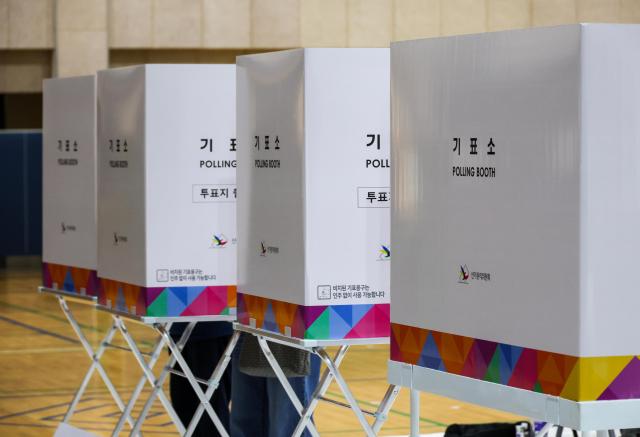
At exactly 8:30 p.m. on Wednesday, the abstract statistics of South Korea’s ninth nationwide local elections collided with physical reality. Across 258 counting centers, the seals on the first ballot boxes were broken. As millions of paper slips began feeding into automated sorting machines—the initial step before a grueling, newly mandated manual verification process—the republic stood at a critical institutional juncture. Joint exit polls released at the close of voting projected the ruling Democratic Party of Korea claiming widespread administrative control, leading in 11 of 16 metropolitan mayoral and gubernatorial races. Yet, reading this moment as a simple partisan triumph fundamentally misunderstands the structural mechanics of the current political era. As the count begins, this election is not a standard referendum on municipal budgets; it is a live-fire test of whether a political architecture profoundly fractured by recent constitutional shocks can successfully contain a divided nation.
The administration of President Lee Jae Myung reached its one-year milestone against the backdrop of deep institutional trauma. This midterm vote operates in the immediate wake of the December 2024 martial law decree and the subsequent impeachment of the former executive, events that fundamentally rewrote the boundaries of South Korean political conflict. The fallout left the conservative bloc fighting an explicit war for baseline political survival. Following a devastating defeat in the general elections two years ago, the conservative People Power Party arrived at this local cycle on the verge of territorial extinction. Stripped of executive authority and severely marginalized in the National Assembly, municipal and provincial governance represented their final remaining foothold on the domestic political map.
Because the conservative establishment was backed into an existential corner, their electoral resistance was total. This desperation materialized not in civic apathy, but in a relentless mobilization of the base. By the time polls closed at 6:00 p.m., the National Election Commission verified a definitive national turnout of 60.9 percent. This figure represents the physical footprint of a cornered demographic. The electorate did not flood the polling stations out of a shared desire for national harmony; they mobilized because both factions viewed the alternative as political erasure.
It is precisely within this climate of existential anxiety that the true mechanism of South Korean reconciliation reveals itself. True political stabilization in a deeply polarized society does not emerge from sentimental appeals to unity or emotional healing. It is forged when competing factions, driven by the sheer terror of eradication, are forced to channel their conflict entirely through the rigid infrastructure of the democratic state. The shared act of submitting to the ballot box institutionalizes the hostility, proving that even a highly traumatized political class prefers the grueling mechanics of the vote count to extra-parliamentary chaos.
The material realities driving this mobilization were split along clear ideological lines. The opposition People Power Party successfully anchored its campaign to acute macroeconomic anxiety, focusing public attention on the 3.1 percent consumer inflation spike recorded in May—the largest inflationary surge in 26 months. While regional economic analysts correctly identify this strain as a byproduct of external pressures, including the depreciation of the Japanese yen and shifting Chinese export strategies, the domestic electorate processed it as an immediate failure of state management. The opposition framed the vote purely as a material defense of personal property and wages. Conversely, the ruling Democratic Party of Korea counter-mobilized by framing the election as a literal defense of the constitutional order, labeling the opposition as the remnants of an insurrectionist faction that sought to subvert the republic two winters ago.
As the ballot boxes open under the glare of counting-room lights, the razor-thin margins projected by the exit polls guarantee an intensely volatile night. In the metropolitan city of Daegu, the traditional heartland of South Korean conservatism, exit polls place opposition candidate Choo Kyung-ho at a razor-thin 49.9 percent against the ruling party’s Kim Boo-kyum at 49.1 percent. In the southern port city of Busan, a critical economic hub and outward-facing logistics anchor, the ruling party's Jeon Jae-su holds a narrow edge of 50.2 percent over the opposition's Park Hyung-jun at 48.3 percent. In the capital city of Seoul, the primary national barometer, the ruling party's Jung Won-oh leads opposition incumbent Oh Se-hoon by a projected 51.4 percent to 46.0 percent.
In an environment poisoned by the memory of martial law, these sub-one-percent margins will not instantly breed political harmony. In the immediate hours ahead, they will inevitably cause intense friction, legal challenges, and partisan paranoia. A margin of less than one percent is an operational invitation to contest every single ballot box. Yet, over the long arc of the administration, these microscopic margins function as the ultimate structural safeguard against ideological cleansing.
A majority faction cannot govern as an absolute conqueror when its mandate rests on fractions of a single percentage point. The projected numbers indicate that the conservative establishment has managed to preserve its core geographic fortresses, denying the ruling party total hegemonic control over the state. Simultaneously, the ruling party’s deep penetration into traditionally hostile territory proves that old geographic dogmas no longer offer absolute insulation. This is the definition of mutually assured political survival. When neither side possesses the numerical superiority required to completely liquidate the other, both are structurally compelled to accept a cautious, administrative coexistence.
To guarantee that this volatile equilibrium holds, the state has deployed its final institutional defense. Tonight, 314,000 management personnel across 258 counting centers are executing a completely manual, ballot-by-ballot review process after the automated sorting is complete. In a political climate saturated with institutional distrust, this logistical gauntlet is a deliberate decelerator. The agonizingly slow physical verification of millions of paper slips introduces an immediate surface area for human exhaustion and localized disputes over individual tables.
Yet, this manual count is the only process capable of establishing an irrefutable boundary. South Korea's divided factions are not united by a shared vision of the future, and they still view each other's motives with profound suspicion. But by forcing this existential combat into the slow, indisputable, and manually verified reality of the 8:30 p.m. unsealing, the state is successfully engineering a cold, structural equilibrium. The divided hearts of the electorate are not being mended by mutual affection; they are being bound by an ironclad architecture where political survival depends entirely on submitting to the rule of the institution.

Copyright ⓒ Aju Press All rights reserved.
