
Journalist

Kang Jung-woo
-
 LG OLED TV secures top ratings in 14 global consumer media evaluations SEOUL, May 25 (AJP) - LG Electronics’ OLED TV secured the highest scores in performance evaluations conducted by consumer media outlets across 14 countries globally. The product achieved top rankings in major markets across North America, Europe, and Australia. Consumer media assessments, which were conducted independently on commercially available products, noted the TV's performance in key features such as accurate color reproduction, High Dynamic Range (HDR) performance, and wide viewing angle. In North America, the LG OLED TV received the highest scores in all tested size categories (70-inch and above, 65-inch, 55-60-inch, and 46-52-inch) in the latest assessment by U.S. consumer media Consumer Reports. Specifically, the 65-inch LG OLED evo AI model was reviewed, with the publication noting “very impressive HDR performance,” “excellent viewing angle with virtually no degradation from any seat,” and “satisfactory top-level sound” for general viewing of movies, music, and TV. In Europe, the U.K.'s Which? gave the 65-inch LG OLED evo AI the highest score. The publication called it "one of the best OLED TVs currently available," citing its "overwhelming 4K picture quality" and "rich yet accurate color reproduction". Portugal’s DECO PROteste awarded the 55-inch model the highest score, describing it as a "highly complete product" with "the best performance among equivalent products with virtually no flaws" and excellent power consumption. The product also received the highest marks from Australia's CHOICE for the 65-inch LG OLED evo AI model, which was praised for its excellent user interface, detailed and well-balanced picture quality, and delicate sound quality. The 14 countries where LG OLED TV received top scores include the U.S., U.K., Portugal, Australia, Italy, France, Belgium, Canada, Spain, Netherlands, Sweden, Germany, Denmark, and Finland. LG OLED TV has maintained its global No. 1 market share in the OLED TV category for 13 consecutive years since its launch in 2013. The 2026 LG OLED evo AI model features the '3rd generation Alpha 11 AI Processor 4K Gen3' and 'Reflection Free Premium,' which combine to enhance brightness and color with reduced light reflection. The TV also offers five enhanced AI features, including AI Concierge and AI Search, designed to provide a personalized viewing experience. "The rigorous evaluations by consumer media in each country prove that the LG OLED TV is the best TV," said Vice President Lee Choong-hwan, Head of LG Electronics Display Business Division. "We will continue to lead the premium TV market with our advanced technology." 2026-05-25 12:07:56
 -
 Samsung leads Q1 smartphone markets in LatAm, Middle East, SE Asia SEOUL, May 25 (AJP) - Samsung Electronics retained its top position in smartphone market share across Latin America, the Middle East, and Southeast Asia in the first quarter of 2026, despite a broader global market slowdown and rising memory costs. In Latin America, Samsung shipped 12.9 million units, reflecting a 9 percent year-on-year increase and securing a 37 percent market share. This marks the company's highest quarterly share in the region since the first quarter of 2023. The overall Latin American market grew 3 percent to 34.8 million units during the period. The company also maintained its lead in the Middle East and Southeast Asia, even as both regional markets contracted. The Middle East smartphone market shrank 6 percent year-on-year to 11 million units amid geopolitical uncertainties, slowing consumer sentiment, and rising memory costs. Nevertheless, Samsung held a 34 percent share in the region. In Southeast Asia, total shipments fell 9 percent to 21.6 million units. Samsung shipped 4.6 million units in the region to take a 21 percent share, even as the average selling price (ASP) in the market surged 19 percent year-on-year to $349. Market research firm Omdia noted that Samsung managed to increase its share in this environment through continued brand investment and channel expansion. Omdia attributed Samsung's performance across these regions to the solid initial sales of its flagship Galaxy S26 series and the diverse mid-tier A-series lineup. Industry analysts suggest that in the face of macroeconomic uncertainty and rising memory prices, consumers are gravitating toward proven brands that offer premium experiences and reliable after-sales service. Globally, Samsung captured a 22 percent share of the smartphone market in the first quarter. During its recent earnings call, the company indicated plans to pursue year-on-year revenue growth in the second quarter, driven by the rollout of new A-series models 2026-05-25 11:26:19
 -
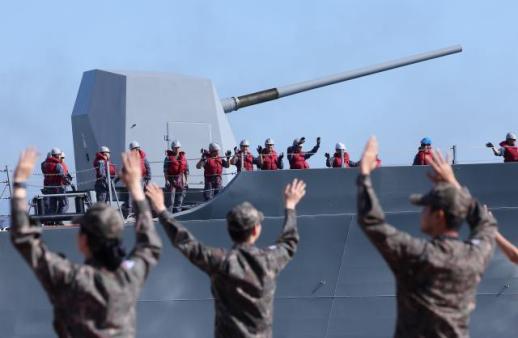 AJP Focus: Uncertain weekend for Iran deal that leaves much to be desired SEOUL, May 25 (AJP) - President Donald Trump’s warning on Sunday that U.S. negotiators should “not rush into a deal” with Iran underscored growing doubts over an emerging framework agreement that could reopen the Strait of Hormuz while leaving many of the Middle East conflict’s most dangerous questions unresolved. The remarks came soon after Washington officials said a deal with Tehran had been “largely negotiated” aimed at ending the war that erupted in late February following U.S. and Israeli strikes on Iran. “I have informed my representatives not to rush into a deal,” Trump wrote on Truth Social, adding that the U.S. blockade on Iranian shipping would remain “in full force and effect until an agreement is reached, certified, and signed.” The evolving stance reflected mounting concern inside Washington that the framework under discussion remains politically risky, strategically incomplete and economically uncertain despite hopes that the Strait of Hormuz could soon reopen. Under the proposed arrangement, Iran would restore commercial shipping access through Hormuz while the United States would eventually ease its naval blockade on Iranian ports. Tehran has also reportedly accepted the principle of disposing of its highly enriched uranium stockpile, although critical details remain unsettled. Iranian officials insist that no binding nuclear commitments have yet been finalized and say substantive negotiations over uranium enrichment, sanctions relief and inspections would continue over the next 30 to 60 days. Washington appears increasingly wary of locking in sanctions relief or military de-escalation before securing enforceable guarantees over Iran’s nuclear program. Major unanswered questions include whether Tehran would permanently dismantle uranium enrichment capability or merely suspend it temporarily, how long restrictions would last, and whether Iran’s ballistic missile program and regional proxy networks would be included in future negotiations. Trump reportedly wants restrictions lasting up to 20 years, while Tehran is pushing for a significantly shorter timeline. The deal has also triggered concern in Israel and Gulf Arab states, which fear the agreement could restore Iran’s economic breathing room while leaving its regional military leverage largely intact. Israeli officials remain especially uneasy that Hezbollah and Iran’s missile infrastructure have not been directly addressed in the framework. At the same time, the White House is facing mounting pressure from energy markets and inflation concerns ahead of the U.S. midterm election cycle. The Strait of Hormuz handles roughly one-fifth of global oil trade and a major portion of LNG shipments bound for Asia. Iran’s effective closure of the waterway following the outbreak of war triggered sharp increases in oil prices, tanker insurance premiums and fuel costs worldwide. White House National Economic Council Director Kevin Hassett acknowledged during an interview with CBS News' Face the Nation Sunday that even after Hormuz reopens, energy markets will require weeks or months to normalize. “Once the straits are open, then the tankers are going to go back and they're going to refill the refineries almost right away,” Hassett said. “A tanker goes about 300 nautical miles a day … between a month and two months, we expect everybody to have all the oil they need at every refinery on earth.” Hassett noted that nearby importers such as India and Pakistan would recover faster than more distant economies. “Places like India and Pakistan, which are close to the straits, are going to get their oil and then turn it into refined product right away … if you're down in New Zealand, it'll take a little bit longer.” For Asia, the comments reinforced expectations that oil and gas prices are unlikely to normalize any time soon even if the strait fully reopens. Physical energy deliveries to Northeast Asia still require roughly 15 to 20 days after loading resumes, while refiners continue processing expensive emergency inventories accumulated during the nearly three-month disruption. Shipping bottlenecks, elevated insurance costs and uncertainty over whether the ceasefire will hold are also expected to keep volatility high. Markets are particularly concerned that Hormuz may no longer function as a stable commercial waterway but as a recurring geopolitical bargaining chip. Iranian officials have suggested the strait would reopen under Iranian management terms, while Gulf states worry Tehran could emerge from the conflict with greater strategic leverage after demonstrating its ability to disrupt one of the world’s most vital energy corridors. South Korea and other Asian economies remain especially vulnerable. Although Seoul has diversified portions of its energy imports in recent years through increased purchases from the United States and other suppliers, Gulf crude and LNG remain structurally critical for Korean refiners and petrochemical manufacturers. That means even a successful diplomatic breakthrough may offer only partial relief. Iran is meanwhile demanding broader sanctions relief and access to frozen overseas assets estimated at tens of billions of dollars. U.S. officials have so far resisted confirming any immediate economic concessions, insisting sanctions easing would depend on verified Iranian compliance. The disagreement may become the defining obstacle in the next phase of negotiations. For now, Trump’s insistence on slowing the process signals that Washington itself recognizes the emerging accord remains far from a final peace settlement. Instead, the deal increasingly resembles a fragile economic truce designed to reopen Hormuz and calm energy markets temporarily while deeper disputes over nuclear capability, sanctions leverage and regional security remain unresolved. 2026-05-25 10:03:24
 -
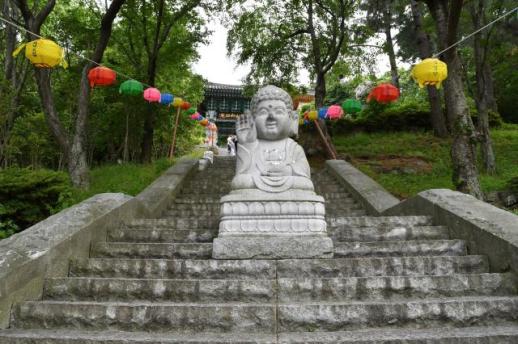 How wishes rise from cliff-side temple on Buddha's birthday SEOUL, May 24 (AJP) - Lotus lanterns glowed across South Korea on Sunday as temples filled with worshippers marking Buddha's Birthday, one of the country’s most widely observed religious celebrations and a day centered on compassion, reflection and prayer. At Hyangiram Hermitage in the southern coastal city of Yeosu, visitors climbed steep stone stairways beneath rows of colorful lanterns hung in honor of the birth of Siddhartha Gautama, the founder of Buddhism. The holiday, observed on the eighth day of the fourth month of the lunar calendar, commemorates the birth of the Buddha more than 2,500 years ago. In South Korea, where Buddhism has shaped art, architecture and spiritual life for centuries, the day is both a religious observance and a cultural tradition that draws believers and nonbelievers alike to temples nationwide. At Hyangiram, monks led chanting ceremonies inside prayer halls thick with incense smoke while worshippers bowed repeatedly before golden Buddha statues. Families arrived carrying children dressed in bright traditional clothing, elderly couples moved carefully along the uneven cliffside paths and younger visitors stopped to write personal wishes beneath hanging lanterns. Many of the lanterns carried handwritten prayers for peace, health and family. Others bore wishes reflecting anxieties of modern life: hopes for employment, recovery from illness or comfort during uncertain times. As sea winds swept through the temple grounds overlooking the South Sea, the lanterns shifted gently above visitors’ heads throughout the day. At Hyangiram, the occasion drew visitors who came not only to pray but also to experience a place where mountain, sea and centuries of faith converge. Families carrying lotus lanterns climbed the winding granite paths together, while elderly worshippers paused along the stone stairways to catch their breath before continuing upward. The scent of incense drifted through the narrow passages between the rocks as temple bells echoed faintly over the shoreline below. Some kneeled quietly before the main hall, pressing their palms together in prayer. Others stood near the cliff’s edge, looking out over the waters off Yeosu in silence. Monks in gray robes moved steadily between the prayer halls and lantern-lined courtyards, occasionally stopping to speak softly with visitors or help light candles placed before Buddhist statues. The hermitage’s name, meaning “hermitage facing the sun,” reflects both its geography and its spirit. Perched on the cliffs of Geumo Mountain at the southern tip of Dolsan Island, it looks directly toward the horizon where the sun rises over the South Sea. Even on a cloudy morning, shafts of light occasionally broke through the haze and reflected across the water beneath the temple cliffs. According to temple tradition, the site dates to 644 CE, when the Buddhist monk Wonhyo is said to have built a small hermitage here, originally called Wontongam. It was later known as Geumoam during the Goryeo period before taking its current name during the reign of King Sukjong in the Joseon era. Wonhyo is also said to have encountered Avalokitesvara, the Bodhisattva of Compassion, during meditation, a tradition that helped establish the site as a place of devotional prayer facing the sea. Hyangiram is best known as one of southern Korea’s most popular sunrise spots. On New Year’s Day, its narrow paths are often packed before dawn with visitors waiting for the first sunrise of the year. But on Buddha’s Birthday, the atmosphere carried a quieter rhythm. Instead of countdowns and celebration, there were hushed conversations, the soft rustling of prayer tags in the wind and the steady sound of footsteps against worn stone. The path up is not easy. Visitors must squeeze through tight gaps in the rock and climb steep, uneven stairs carved into the mountainside. Some sections are so narrow that people must turn sideways to pass. There are no shortcuts. But that effort is part of what the place gives back. At the top, the sea opens suddenly in front of you, and the climb makes the view feel earned. By mid-morning, the rock ledges around the temple had begun to fill. People sat alone or in small groups beneath strings of pink, blue and yellow lanterns. Some wrote wishes for health, peace or family on paper tags tied beneath the lanterns, while others carefully inscribed messages onto roof tiles that would remain at the temple long after the holiday ended. Small details gave the site much of its character: stacks of coins balanced in the hands of weathered stone Buddhas, tiny monk statues tucked between lanterns, candles flickering in lotus-shaped holders and handwritten prayers swaying in the ocean wind. Near one hall, visitors lined up quietly to pour water over a small baby Buddha statue resting inside a lotus basin, a traditional ritual symbolizing purification and renewal. The scenery here is not grand in the usual sense. What lingers instead is the layering: sea and rock, lantern and footstep, old story and today’s climb. On Sunday, the small cliff-top temple faced the sun as it always has, while those who came carried their prayers, memories and quiet intentions toward the water. 2026-05-25 09:34:50
 -
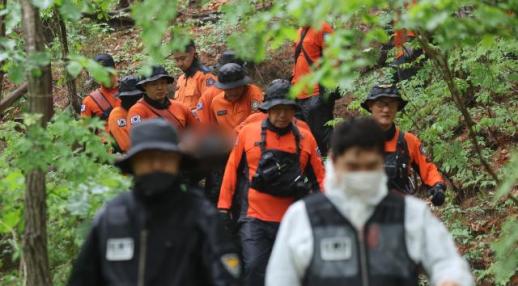 Police locate missing foreign national hiker in Korea after safe return home SEOUL, May 24 (AJP) -A woman believed to be a foreign national who was feared missing on Mount Cheolma after reporting that she had lost her way while hiking had safely returned home, authorities said Sunday, ending a two-day intensive search operation. According to the Gyeonggi Northern Fire and Disaster Headquarters, police located the woman at her residence in Seoul’s Gangbuk district at 10:51 a.m. Sunday. Officials said she was found in stable condition with no apparent injuries. The woman first contacted emergency services around 9 p.m. Friday, telling them in English that she had become lost while hiking. During the call, she repeatedly mentioned “Iron horse,” which authorities interpreted as a reference to Cheolmasan — the Sino-Korean term for “iron horse” and the name of the mountain in Namyangju. Rescue efforts were complicated because the call came through what authorities described as an “abnormal international network number,” preventing emergency services from accurately tracing her location. Police and firefighters nevertheless determined that the woman was likely referring to Mount Cheolma in Jinjeop-eup, Namyangju, and launched a search operation in the area. The woman contacted authorities again around 5:50 a.m. Saturday, saying she was still wandering the mountain and that her phone battery had fallen to 7 percent. Communication was lost after the call, and her phone was later switched off, intensifying concerns for her safety. Police and fire authorities deployed helicopters, drones, rescue dogs and dozens of personnel to comb trails leading toward Jinjeop, Onam and Sudong. Search teams continued operations throughout Saturday but found no trace of the woman before police eventually located her at her Seoul home Sunday morning. 2026-05-24 19:32:22
 -
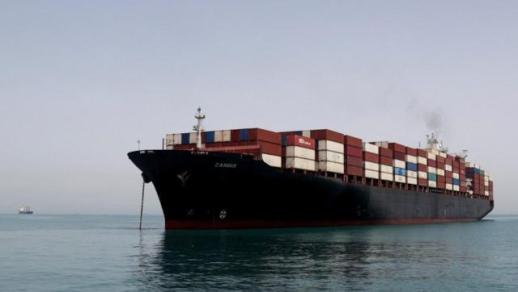 U.S.-Iran Ceasefire Offers Temporary Relief, Calls for 'Noah Covenant' for Lasting Peace In May 2026, the Middle East once again demonstrated its volatility as tensions escalated between the United States and Iran, bringing the world economy to a standstill amid fears of conflict in the Hormuz Strait. International oil prices surged, financial markets wobbled, and nations braced for the possibility of a full-scale war in the region. Fortunately, reports indicate that the U.S. and Iran are nearing an agreement to extend a ceasefire and finalize a memorandum of understanding (MOU) aimed at peace negotiations. This agreement is expected to include the reopening of the Hormuz Strait, a partial resumption of Iranian oil exports, and a revival of nuclear talks, potentially alleviating immediate economic concerns. However, this development can only be described as a temporary fix. The underlying issues in the Middle East remain unresolved. Distrust between the U.S. and Iran, conflicts involving Israel and Hezbollah, historical Sunni-Shia rivalries, and structural tensions intertwined with oil, religion, and power dynamics persist. The region requires a new civilizational order that goes beyond a mere ceasefire. A lasting peace can only be achieved when Judaism, Christianity, and Islam recognize each other not as adversaries but as civilizations with shared roots. I propose calling this new framework the 'Noah Covenant.' Why is the Hormuz Strait critical to the global economy? The Hormuz Strait is not just a maritime route; it is a vital artery for global oil transportation. Approximately 20 million barrels of oil and petroleum products pass through this narrow waterway daily, accounting for about one-fifth of the world's oil consumption. Oil and LNG from Middle Eastern producers like Saudi Arabia, the UAE, Kuwait, Qatar, and Iraq flow through this route to Asia and Europe. For industrial nations in Northeast Asia, such as South Korea, Japan, and China, the Hormuz Strait is a lifeline. A significant portion of South Korea's oil imports transit through this area, and the stability of its refining, petrochemical, steel, and shipping industries heavily relies on this route. Thus, instability in the Hormuz Strait is not merely a regional issue; it poses a risk to the South Korean economy. During the recent crisis between the U.S. and Iran, global financial markets reacted swiftly. Oil prices spiked, with Brent and WTI crude experiencing significant fluctuations due to the Middle East risk premium. Shipping insurance rates and oil transportation costs also rose. South Korean and Japanese stock markets saw volatility, particularly in energy and defense sectors, as global investors shifted towards safe-haven assets like the dollar and gold. The world was tense for one primary reason: What would happen if the Hormuz Strait were actually blocked? In the past, the Iranian Revolutionary Guard has effectively used the Strait as a 'strategic hostage' through mine-laying, tanker seizures, and drone threats. The U.S. has responded by significantly bolstering its military presence in the region with aircraft carriers, strategic bombers, and missile defense systems. The situation was perilous once again. Within the U.S., discussions arose about potential bunker-buster strikes on Iran's underground nuclear facilities in Isfahan, while Iran kept the door open for asymmetric retaliation against U.S. bases and allies. If military conflict had erupted, forecasts suggested that oil prices could have soared above $150 per barrel, potentially triggering inflation and supply chain shocks worldwide. Ultimately, the ceasefire agreement was a necessary choice for the global economy. The core of the U.S.-Iran MOU draft focuses on three key points: first, the reopening of the Hormuz Strait; second, a 60-day extension of the ceasefire; and third, the pursuit of peace negotiations, including nuclear talks, during this period. On the surface, this appears to be a significant advancement. Iran has promised to remove mines from the Strait and ensure freedom of navigation, while the U.S. is expected to allow some Iranian oil exports and ease port blockades. Both sides will also bring uranium enrichment and high-enriched uranium issues to the negotiating table. However, neither side has made fundamental concessions. The U.S. emphasizes the principle of 'relief for performance,' meaning sanctions will only be eased if Iran's nuclear abandonment measures are verified. Conversely, Iran maintains that 'preemptive concessions are impossible,' particularly regarding the 440 kg of 60% enriched uranium, which is tied to domestic political and Revolutionary Guard pride. President Donald Trump aims to frame this as a strategic victory for the U.S., while Iran insists it must not appear as 'capitulation.' This reveals the deep-seated distrust between the two parties. The U.S. suspects that Iran is trying to buy time to become a threshold nuclear state, while Iran believes the U.S. could reverse any agreement at any moment. The 2015 Joint Comprehensive Plan of Action (JCPOA) collapsed after the Trump administration's unilateral withdrawal, further complicating trust issues. From Iran's perspective, trusting U.S. promises is challenging. From the U.S. standpoint, Iran's nuclear activities are not trustworthy. Thus, reaching a final agreement in this negotiation will likely be difficult in the short term. Moreover, nuclear negotiations are not resolved overnight. Issues such as high-enriched uranium processing, International Atomic Energy Agency (IAEA) verification, inspections, facility access, sanctions relief, and unfreezing assets can take months or even years to resolve. Additionally, Iran is believed to possess a substantial amount of 60% enriched uranium, a situation that cannot be settled through mere political declarations. Ultimately, this 60-day negotiation period is more about buying time to avoid catastrophe than completing a peace agreement. It is likely that a 'long-term provisional agreement' will persist for several months or years, maintaining an unstable balance that avoids full-scale war but does not achieve complete peace. Why is Iran a country that the U.S. cannot easily manage? The U.S. is the world's strongest military power, but Iran is not a mere weak state. Iran is the heir to 5,000 years of Persian civilization. The ancient Persian Empire once dominated Mesopotamia, Central Asia, and the entire Middle East. Today, while Iran faces economic challenges, its historical pride and geopolitical survival instincts remain robust. The Iranian leadership is more accustomed to long-term attrition and asymmetric strategies than direct confrontation with the U.S. They prefer to utilize the Hormuz Strait, Shia networks, drone warfare, proxy wars, and psychological operations rather than engage in outright conflict. This is why, despite its overwhelming firepower, the U.S. struggles to maintain stable control over the entire Middle East. Furthermore, Iran is not just a single nation; it is part of a vast geopolitical network connected to Shia militias in Iraq, Hezbollah in Lebanon, and Houthi rebels in Yemen. While the U.S. and Israel may hold military superiority, stabilizing the Middle East in the long term presents a different challenge. Moreover, the U.S. is also grappling with war fatigue in the Middle East. Following the Iraq and Afghanistan wars, there is a deep skepticism within American society regarding 'endless wars' in the region. President Trump maintains a tough stance while keeping the door open for diplomatic resolution, reflecting this sentiment. Ultimately, the current situation in the Middle East is shifting from a simple military victory to a question of 'who will design the order in the long term.' Now, a 'Noah Covenant' is needed. Today, the Middle East is undergoing some changes through the Abraham Accords, with countries like Israel, Saudi Arabia, the UAE, Bahrain, and Morocco normalizing relations. However, this is not enough. True peace is possible only when Judaism, Christianity, and Islam acknowledge their common roots. Both the Bible and the Quran, along with Jewish tradition, recognize Noah as a common ancestor of humanity. Abraham is also ultimately part of Noah's lineage. Jews, Arabs, and Persians need to recognize that they are not entirely different entities but rather intertwined brother civilizations throughout history. I wish to call this the 'Noah Covenant.' The Noah Covenant is not merely a diplomatic agreement; it is a declaration of mutual recognition between civilizations. First, it acknowledges each other's right to exist. Second, it establishes principles for religious coexistence. Third, it transforms oil and energy from a basis for war into a foundation for shared prosperity. Fourth, it builds a new economic order in the Middle East that aligns with the AI era. The Middle East is a land of civilizations before it is a land of oil. It is where Persian and Arabian, Hebrew and Mesopotamian civilizations intersected, and where humanity's religions, philosophies, and trade converged. Yet today, the world views the Middle East solely through the lens of war, terrorism, and oil disputes. However, the region is also entering an era of competition in AI, semiconductors, digital finance, and smart cities. Saudi Arabia's NEOM city, the UAE's AI national strategy, and Qatar's energy and logistics hub strategy are all part of the trend preparing for a 'post-oil' era. Iran, too, will find it challenging to shape its future without cooperating with the international community in the long run. Ultimately, the Middle East can no longer survive solely by past methods. What should South Korea prepare for? South Korea must not view this situation as merely a diplomatic news story. First, energy security is crucial. South Korea has a high dependence on Middle Eastern oil. Instability in the Hormuz Strait translates directly into economic risks for South Korea. Expanding strategic oil reserves and diversifying supply sources are essential. Second, there are opportunities in shipbuilding, shipping, and defense industries. As tensions rise in the Middle East, demand for LNG carriers, oil tankers, and defense products is likely to increase. South Korean companies should connect geopolitical risks with industrial strategies. Third, a balanced approach to Middle Eastern diplomacy is necessary. While South Korea is an ally of the U.S., it must also maintain close economic cooperation with Middle Eastern oil-producing nations. Practical balanced diplomacy is needed rather than excessive leaning towards one side. Fourth, South Korea should consider its role as a 'civilizational mediator.' It is a rare country that has experienced colonization, war, industrialization, and democratization simultaneously. It is also a nation that has experienced both Eastern and Western, traditional and modern elements. In the AI era, the world is once again questioning the balance between humanity and civilization, religion and technology. South Korea should aim to be more than just an economic nation; it should serve as a platform for civilizational dialogue and peace. The Middle East stands at a crossroads of war and peace. The ceasefire between the U.S. and Iran is an important first step. However, the cessation of gunfire does not guarantee peace. True peace begins with recognizing that we are not forces to eliminate each other but rather part of the same humanity and civilization. Just as humanity rebuilt civilization after Noah's flood, today's Middle East must also establish a new order of coexistence. The recent ceasefire between the U.S. and Iran may be recorded not merely as a military compromise but as a pivotal moment where human civilization turned away from the brink of catastrophe once again. The world is entering a massive transition marked by the AI revolution, geopolitical conflicts, energy restructuring, and civilizational clashes. In such times, military power alone cannot stabilize the world. Ultimately, a profound understanding of humanity and civilization, along with a philosophy that acknowledges each other's existence, is essential. The 'Noah Covenant' embodies that question: Can humanity coexist after war? Can different religions and civilizations coexist? Can we discover our common fate beyond oil, nuclear weapons, and power struggles? And that may well be the new path of civilization that humanity must take in the AI era. 2026-05-24 18:06:00
 -
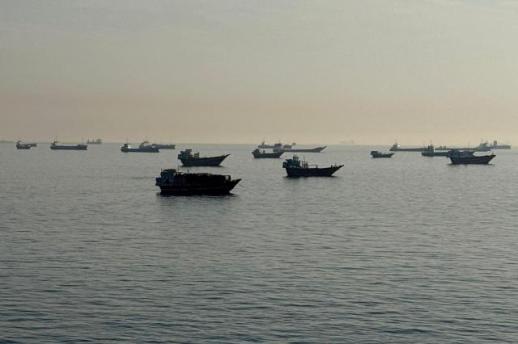 Hormuz reopening nears, but energy aftershocks to hit hard on Asia for months SEOUL, May 24 (AJP) -A draft framework between the United States and Iran to reopen the Strait of Hormuz is nearing finalization, Washington claims, offering hopes for relief from one of the worst energy supply disruptions in recent years. But for energy-dependent Asian economies including South Korea, the shock is far from over as crude shipments from the Gulf still require weeks to reach refineries even after maritime traffic resumes. U.S. President Donald Trump said Saturday that an agreement with Iran was “largely negotiated” and would include reopening the Strait of Hormuz, the strategic waterway through which roughly one-fifth of the world’s oil supply flows. The emerging framework would halt fighting, reopen shipping lanes and begin broader negotiations over Iran’s nuclear program and sanctions relief, according to U.S. and regional officials. Yet even if the strait reopens within days, the economic aftershocks from the nearly three-month disruption are expected to cut deep across Asia’s manufacturing economies well into the second half. Very Large Crude Carriers departing Persian Gulf terminals typically require about 15 to 25 days to reach East Asia, meaning Korean, Japanese and Chinese refiners will continue to face delayed arrivals, elevated freight costs and inventory pressure even after maritime passage normalizes. South Korea’s latest trade data already show the scale of the disruption. According to Korea International Trade Association data, Korea’s crude oil imports fell 22.8 percent on year in April to about 8.46 million tons. Imports from the Middle East plunged 37.3 percent to about 4.49 million tons amid the Strait of Hormuz crisis. The Middle East still accounted for the largest share of South Korea’s crude imports, but its portion dropped sharply to 53.1 percent from 65.2 percent a year earlier. Imports from Saudi Arabia, Korea’s largest supplier, fell 37.6 percent to roughly 2.15 million tons. Iraqi shipments dropped 42.4 percent while imports from Kuwait nearly collapsed, plunging 98.2 percent. Qatari crude imports were completely halted. The data underscore how rapidly Asian buyers were forced to redraw energy supply chains as the Hormuz disruption intensified. The United States, already South Korea’s second-largest crude supplier, nearly overtook Saudi Arabia last month. Imports of U.S. crude rose 13.4 percent to around 2.145 million tons, narrowing the gap with Saudi shipments to barely 1,000 tons. Just a month earlier, the difference exceeded 1.45 million tons. Seoul also accelerated diversification toward North America, Oceania and Africa. Crude imports from Australia surged 89 percent while Canadian shipments more than tripled. Imports from African producers including the Democratic Republic of Congo, Nigeria and Mozambique jumped more than fivefold. North America’s share of South Korea’s crude imports climbed to 28.3 percent, up 10.3 percentage points from a year earlier. Africa and Oceania also expanded their presence in Korea’s energy mix. Industry officials said the shift highlighted both the flexibility and structural vulnerability of Asia’s refining system. Korean refiners are heavily optimized for Middle Eastern medium and heavy crude grades, making a sudden switch operationally difficult and more expensive. Industry Minister Kim Jung-kwan previously said U.S. light crude had become the “most convenient” alternative for blending with Middle Eastern heavy crude during the crisis. Still, the replacement barrels came at a cost. Longer shipping distances from the Atlantic basin, elevated war-risk insurance premiums and vessel shortages sharply increased freight expenses during the crisis. Even after a reopening agreement, shipping markets are expected to remain volatile as insurers and operators assess security risks in the Gulf. Physical reopening of the strait also does not immediately restore normal trade flows. Hundreds of vessels were delayed, rerouted or stranded during the blockade period, creating a logistical backlog likely to persist for weeks. Iran has also signaled that it may retain significant control over navigation procedures and permits in the waterway even under a diplomatic settlement, adding uncertainty over how freely shipping can resume. The government has maintained that supply diversification and strategic stockpiles would stabilize energy procurement through July. The industry and resources ministry said Korea secured about 78.5 million barrels from 19 countries this month, up sharply from imports sourced from 14 countries in April. 2026-05-24 18:03:10
 -
 The executive who sent his AI to the meeting SEOUL, May 24 (AJP) - Reid Hoffman has given dozens of talks since 2024 without always being in the room. The LinkedIn co-founder built "Reid AI," a digital twin trained on 22 years of his books, speeches, articles and podcasts, using HeyGen for the face and ElevenLabs for the voice. It speaks in languages he doesn't, answers questions in his style, and stands in for him at events he never attends. It is not a chatbot. It is, by design, another him. The Wall Street Journal has been documenting a wave of these AI digital twins among US executives, and the pattern is consistent. Leaders feed their emails, interviews, lectures and management philosophy into a model and produce a working double — one that coaches employees, supports performance reviews and speaks at conferences in their place. Zoom's Eric Yuan has floated sending his twin to meetings. Bridgewater's Ray Dalio has built one to dispense his investment thinking on demand. The clearest example of what this does inside a company is at Greif, a US industrial packaging firm. Chief human resources officer Bala Sathyanarayanan says his twin, "BalaBot," has interacted with more than 3,300 employees, who consult it on sensitive matters such as managing underperformers and planning careers. One employee was credited with growing into a leader on coaching the AI provided. That is the shift worth paying attention to. The steam engine extended human muscle. The personal computer extended human work. The digital twin extends human judgment — and copies it without limit. A person's experience, once capped at 24 hours a day and one room at a time, can now run in many places at once. It also moves what a company is made of. Factories and capital were once the core assets, then data and platforms. Now the experience inside an employee's head is being converted into an asset the company can hold. The competitive question becomes uncomfortable: who has best turned their best people into software? The uncomfortable questions don't stop there. Who owns the twin when the employee quits — the person, or the company? What stops a firm from keeping the double and letting the human go? U.S. workers are already pushing back at having their entire way of thinking absorbed into a model. And the technology still hallucinates: Reid AI has given answers the real Hoffman wouldn't, down to the wrong favorite ice cream. An AI that misstates an employment rule or a medical instruction is not a curiosity but a liability, and the law has not caught up. For now, the honest framing is narrower than replacement. The twin reallocates time rather than eliminating the person — routine handled by the AI, judgment and creation left to the human. Whether companies hold that line, or use it as cover for cutting headcount, is a choice, not a feature of the technology. For South Korea, the case is sharper than for most. A society aging this fast loses decades of expertise every time a veteran retires, and the knowledge usually leaves with them. A digital twin can hold it — the manufacturing master's technique, the doctor's clinical pattern, the reporter's method and judgment — and pass it to the next generation in a usable form. In a country short on workers and long on accumulated skill, preserving that skill is not a luxury. Journalism is no exception. A model trained on a veteran reporter's prose, sourcing instincts and editorial judgment could change how juniors are trained and how copy is checked. An AI carrying a foreign-affairs analyst's framework could track the U.S.-China contest or Middle East shifts in real time. The advantage stops being how many articles a newsroom produces and starts being how much of its irreplaceable human judgment it can encode. South Korean firms are positioned for it. Samsung Electronics is pushing on-device AI, SK hynix is supplying the memory the AI buildout runs on, and Naver and Kakao are building Korean-language enterprise agents. The twin services — for executives, bankers, analysts, lawyers, journalists — are the logical next product. But the technology arrives with three obligations attached, and they are easy to skip. Keep it human-centered: a twin should extend a person's reach, not erase the person. Settle data sovereignty: an employee's knowledge is theirs, and ownership and compensation have to be written down before the model is trained, not after. And fix responsibility on a human: when the twin gets it wrong, a person answers for it, not the software. The digital twin is going to become mainstream, and agentic AI — systems that plan and act on their own — will speed it up. The open question is not whether the technology works. It is whether the companies deploying it use the time it frees to do something more human, or simply to do the same things with fewer people. The winner of this era won't be whoever builds the fastest machine. It will be whoever is clearest about what the machine is for. 2026-05-24 17:57:56
 -
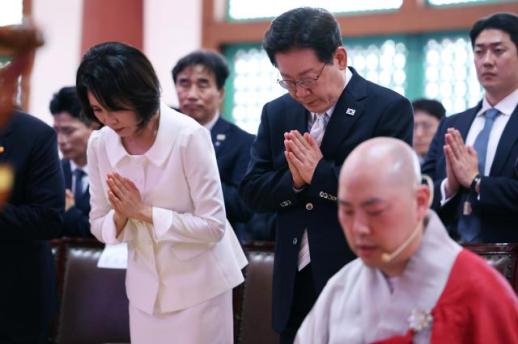 President Lee Visits Major Buddhist Temples to Promote National Unity President Lee Jae-myung attended ceremonies for Buddha's Birthday on May 24, 2026, visiting the Jogye, Taego, and Cheontae sects to promote national unity and well-being.This marks the first time a sitting president has visited all three major Buddhist sects on Buddha's Birthday. It is also the first instance of a sitting presidential couple attending these ceremonies together.On the morning of the celebration, President Lee and First Lady Kim Hye-kyung participated in the ceremony hosted by the Jogye Order at Jogyesa Temple in Seoul.The ceremony brought together prominent Buddhist leaders, government officials, representatives of other faiths, and citizens to reflect on the compassion and light of Buddha, while wishing for peace and harmony.During the event, President Lee lit a lamp and prayed for national peace and unity alongside Ven. Jinwoo, the head monk of the Jogye Order, and other attendees.The ceremony was attended by over 10,000 participants, including Ven. Seongpa, the head of the Jogye Order, Ven. Jinwoo, and other dignitaries such as National Assembly Speaker Woo Won-sik and Minister of Culture, Sports and Tourism Choi Hwi-young.From the Blue House, Chief of Staff Kang Hoon-sik and Senior Secretary Jeon Seong-hwan accompanied the president.In his address, President Lee stated, "I will deeply engrave the spirit of 'won-yung-hwa-tong' (harmonizing different arguments into one) in my heart and overcome the crisis with united strength."Following the ceremony, President Lee visited the Seoul Gwanmun Temple of the Cheontae Order, where he offered flowers at the main altar and shared a meal, according to Blue House spokesperson Kang Yoo-jeong.The visit was intended to express gratitude for the Buddhist community's role in practicing compassion, sharing, and valuing life, while also sharing wisdom for national unity and social solidarity.After offering flowers, the president and first lady engaged in conversation with Ven. Deok-soo, the head monk of the Cheontae Order, and enjoyed a meal featuring bibimbap, dried radish soup, and fried ginseng.In the afternoon, President Lee attended the Taego Order's Buddha's Birthday ceremony at Cheongnyeonsa Temple in Yangju, Gyeonggi Province.During the event, he lit a lamp alongside Ven. Sang-jin, the head monk of the Taego Order, while First Lady Kim offered tea at the altar.In his speech, President Lee emphasized that the teachings of 'hwa-jang' (harmonizing different thoughts) and 'ja-ta-bul-i' (the idea that you and I are not separate) are the wisdom most needed in today's society.Spokesperson Kang noted, "This is the first time a sitting president has visited all three major Buddhist sects on Buddha's Birthday, and it is also the first time a sitting presidential couple has visited these temples together." 2026-05-24 17:52:09
 -
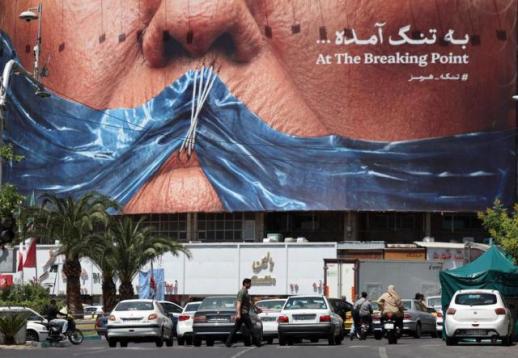 AJP DEEP INSIGHT: Middle East still needs 'Noah Covenant' for lasting peace SEOUL, May 24 (AJP) - In May 2026, the Middle East once again reminded the world how fragile the arteries of global civilization truly are. The United States and Iran moved perilously close to direct confrontation. Financial markets trembled. Oil traders watched every movement in the Persian Gulf with mounting anxiety. Governments across Asia and Europe feared that a single miscalculation could ignite a regional war capable of sending shock waves through the entire global economy. At the center of that anxiety stood the Strait of Hormuz — a narrow waterway through which roughly one-fifth of the world's seaborne oil supply passes each day. It is not merely a maritime corridor. It is one of the central arteries of the modern industrial world. For countries such as South Korea, Japan, and China, the stability of Hormuz is inseparable from economic survival itself. Oil, liquefied natural gas, shipping routes, insurance premiums, inflation, exchange rates, and industrial production are all tied, directly or indirectly, to the security of this narrow passage. That is why the recent reports of a potential U.S.–Iran memorandum of understanding have drawn such intense global attention. According to multiple reports, Washington and Tehran are nearing a provisional agreement built around three pillars: reopening the Strait of Hormuz, extending the current ceasefire for 60 days, and launching broader negotiations over Iran's nuclear program and the future security architecture of the region. If implemented, the agreement would represent a significant short-term de-escalation. Iran would reportedly remove naval mines and guarantee freedom of navigation through Hormuz, while the United States would ease certain maritime restrictions and permit limited Iranian oil exports. Both sides would then use the 60-day window to pursue negotiations over uranium enrichment, sanctions relief, and the handling of Iran's stockpile of highly enriched uranium. The immediate significance of such an arrangement is obvious. The world economy desperately needs stability. Yet beneath the surface, this is not peace. It is merely the temporary suspension of catastrophe. The structural conflict remains unresolved. The distrust between Washington and Tehran remains profound. The confrontation between Israel and Hezbollah remains volatile. The centuries-old rivalry between Sunni and Shiite power blocs continues to shape the strategic map of the Middle East. Oil, religion, security, nationalism, and great-power rivalry remain tightly intertwined. The proposed agreement is therefore less a peace treaty than an emergency brake pulled at the edge of a cliff. A Ceasefire Is Not the Same as Peace The core reality facing negotiators is simple: neither side truly trusts the other. The United States insists on what officials describe as "relief for performance" — meaning sanctions relief will come only after Iran demonstrates verifiable and irreversible nuclear concessions. Iran, meanwhile, remains deeply skeptical of American guarantees. From Tehran's perspective, the memory of Washington's unilateral withdrawal from the 2015 Joint Comprehensive Plan of Action under President Donald Trump remains a defining trauma. To Iranian hardliners, any premature surrender of strategic leverage risks appearing not as diplomacy, but as capitulation. That is particularly true regarding Iran's stockpile of uranium enriched to 60 percent purity — material approaching weapons-grade levels. For Washington, the removal or neutralization of that stockpile is essential. For Tehran, surrendering it outright could be politically explosive. This is why the proposed 60-day negotiation framework may buy time, but cannot realistically resolve the deeper nuclear dispute. The history of the original JCPOA itself illustrates the point. The path from preliminary understandings to the final 2015 accord took years of painstaking negotiations, inspections, verification protocols, technical disputes, and political brinkmanship. Today, the circumstances are even more difficult. Iran's nuclear infrastructure is more advanced. Regional distrust is deeper. Domestic political pressures in both Washington and Tehran are more intense. Verification challenges are greater, especially after recent military strikes on Iranian nuclear-related facilities. In reality, the most plausible outcome may not be a final peace settlement, but rather an extended state of managed instability — a prolonged interim arrangement in which both sides avoid outright war while postponing definitive resolution. That may not sound inspiring. Yet in the Middle East, preventing catastrophe is often itself a strategic achievement. Why Iran Cannot Be Understood as Merely Another Adversary One of the enduring errors in Western strategic thinking has been the tendency to view Iran solely through the lens of contemporary geopolitics while underestimating the weight of Persian civilization itself. Iran is not merely a modern nation-state. It is the heir to one of the world's oldest continuous civilizations. Long before the rise of modern Europe or the United States, the Persian Empire shaped the political and cultural order of vast regions stretching from Mesopotamia to Central Asia. That historical memory still matters deeply within Iran's strategic culture. Even under sanctions and economic hardship, Iran retains a powerful sense of civilizational continuity and geopolitical endurance. Unlike conventional military powers, Tehran has mastered asymmetric strategy. Rather than relying solely on direct confrontation, it leverages proxy networks, maritime pressure points, ideological alliances, cyber operations, drones, and long-term attritional tactics. This is why overwhelming military superiority alone cannot easily produce lasting stability in the region. The United States may possess unmatched military capabilities. Israel may dominate technologically. But neither can permanently impose order upon the Middle East through force alone. The region is simply too historically layered, too fragmented, and too emotionally charged. And America itself carries the scars of prolonged Middle Eastern wars. Iraq and Afghanistan left deep fatigue inside the American political system. Even among U.S. strategists, there is growing recognition that endless escalation risks draining American power rather than strengthening it. That reality explains why the Trump administration, despite maintaining military pressure, also appears increasingly open to a diplomatic off-ramp. Beyond the Abraham Accords: The Need for a 'Noah Covenant' The Middle East today stands at a civilizational crossroads. The Abraham Accords represented an important geopolitical breakthrough. They demonstrated that pragmatic normalization between Israel and several Arab states was possible. But the region now requires something deeper than transactional diplomacy. It requires a broader moral and civilizational framework capable of recognizing shared historical roots. Judaism, Christianity, and Islam all trace part of their spiritual lineage back to Noah. The story of the Flood survives across all three traditions as a narrative of destruction followed by renewal — of humanity beginning again after catastrophe. That symbolism matters. The peoples of the Middle East — Arabs, Persians, Jews, Turks, and others — are not isolated civilizations destined eternally for conflict. They are intertwined heirs of overlapping histories, cultures, and spiritual traditions. What the region ultimately needs is not merely another ceasefire agreement, but what might be called a "Noah Covenant": a recognition that coexistence is not weakness, but survival. Such a covenant would rest upon several principles. First, mutual recognition of each side's right to exist and survive. Second, the acceptance of religious coexistence as a strategic necessity rather than a reluctant concession. Third, the transformation of energy resources from instruments of geopolitical coercion into foundations for shared prosperity. Fourth, the creation of a post-oil regional order capable of adapting to the emerging era of artificial intelligence, advanced technology, and economic diversification. This transformation has already begun in parts of the Gulf. Saudi Arabia pursues the ambitious NEOM project. United Arab Emirates seeks leadership in artificial intelligence and advanced logistics. Qatar continues to position itself as a global energy and transportation hub. Even Iran, despite its isolation, cannot remain permanently detached from these global shifts. The age when Middle Eastern power rested solely upon oil is gradually fading. A new era — shaped by technology, logistics, data, energy transition, and artificial intelligence — is emerging. The region must decide whether it will enter that future through cooperation or through perpetual war. What South Korea Must Learn From This Crisis For South Korea, the current crisis is not a distant geopolitical drama. It is an immediate national concern. Energy security must become a central strategic priority. Any disruption in Hormuz directly affects Korean industry, shipping, inflation, and household stability. At the same time, the crisis also underscores the strategic importance of Korean shipbuilding, defense manufacturing, energy logistics, and advanced industrial capabilities. Equally important is diplomacy. South Korea remains a treaty ally of the United States while maintaining vital economic relationships across the Middle East. That requires careful strategic balance, not ideological rigidity. But beyond economics and security lies another potential role. South Korea is one of the few nations in modern history to have experienced colonization, war, rapid industrialization, democratization, and technological transformation within a single century. It understands both tradition and modernity, both vulnerability and growth. In an era increasingly defined by the collision of technology, geopolitics, religion, and civilization, countries capable of building dialogue may become as important as countries capable of projecting power. The Middle East today stands between war and reinvention. The current U.S.–Iran ceasefire effort may prevent immediate disaster. But stopping gunfire alone does not create peace. True peace begins when civilizations cease viewing one another as enemies fated for annihilation and instead recognize that they remain part of the same human story. After the biblical Flood, humanity was forced to rebuild civilization from ruin. The modern Middle East may now face a similar historical moment. The essential question is no longer whether military force can destroy an adversary. It is whether humanity still possesses the wisdom to coexist after standing once again at the edge of catastrophe. That may ultimately be the defining geopolitical question of the AI age. 2026-05-24 17:49:15