


Latest by
-
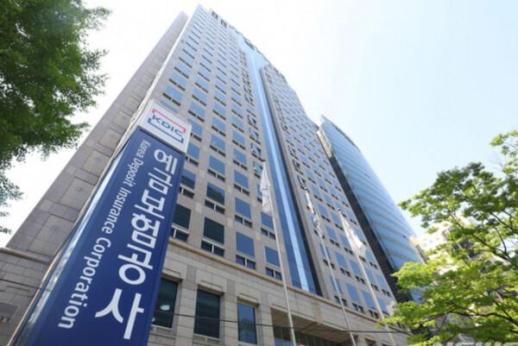 Impact of Savings Bank PF Restructuring: Reduction in Financial Firms with Increased Insurance Premiums The restructuring of non-performing loans in real estate project financing (PF) has led to an increase in savings banks returning to profitability, resulting in a decrease in the number of financial firms facing increased deposit insurance premiums. According to the Deposit Insurance Corporation on June 15, an evaluation of 269 insured financial companies at the end of last year revealed that the number of firms receiving a discount rating for deposit insurance premiums rose by 17 to a total of 59. In contrast, the number of firms with increased premiums dropped from 100 to 84, a decrease of 16. The standard rating accounted for 126 firms. The differential deposit insurance premium rate system applies different rates based on the financial and operational status of financial companies. Firms in good financial health can receive a discount of up to 10% from the standard premium rate for their sector, while those in weaker positions may pay up to 10% more. Notably, savings banks showed significant improvement. As more savings banks successfully addressed non-performing real estate PF loans and returned to profitability, the number of firms facing increased premiums decreased sharply. Conversely, the banking sector experienced a decline in the number of firms receiving discount ratings compared to the previous year, influenced by stricter liquidity regulations and a downturn in the domestic economy affecting asset quality. The insurance and financial investment sectors remained evenly distributed around the standard rating. This year, the total deposit insurance premiums expected to be paid by financial companies is projected to reach 25.64 trillion won, an increase of 69.5 billion won from the previous year. However, most of this increase is attributed to a rise of approximately 150 trillion won in insured deposits, with only 2.8 billion won of the increase resulting from changes in evaluation ratings.* This article has been translated by AI. 2026-06-15 11:21:00
 -
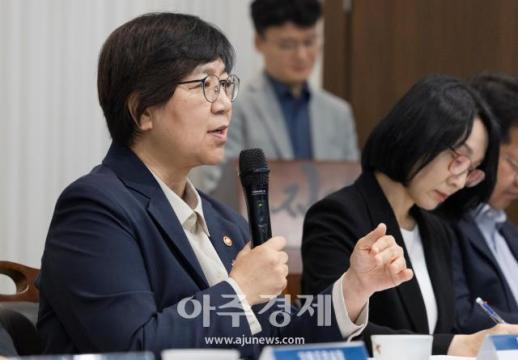 Korea to Expand Health Insurance Coverage for Hair Loss Treatments The South Korean government plans to expand health insurance coverage for hair loss treatments, a topic President Yoon Suk Yeol has emphasized as a "matter of survival, not beauty" since his presidential campaign. The initiative is expected to target young people initially, with details on eligibility and implementation to be clarified through a public discourse process. Additionally, discussions about raising cigarette prices, which have remained unchanged since a significant increase from 2,500 won to 4,500 won in 2015, are also being revisited, as the government seeks to strengthen its welfare safety net through comprehensive health funding reforms. Minister Jeong Eun-kyeong expressed her commitment to a strong policy drive for key health care initiatives during a press conference held on June 11 in Jongno, Seoul. Among the most notable changes is the renewed focus on making hair loss treatments eligible for health insurance, a topic that has previously faced caution due to concerns about the financial health of the insurance system. Jeong acknowledged the public's demand and suffering related to hair loss treatments, stating, "I deeply empathize with the national demand and pain regarding hair loss treatment." However, she also noted that the government must first consider the "priority of coverage" in relation to treatments for severe diseases and essential medical infrastructure. While her comments appeared cautious and principled, insiders interpret them as a de facto announcement of a conditional rollout. The government aims to prevent financial leakage from indiscriminate coverage by establishing clear criteria for prioritizing specific target groups, such as those with severe hair loss or young individuals affected in their social lives, before gradually implementing the program starting in the second half of the year. In conjunction with the push for hair loss coverage, discussions about raising cigarette prices, seen as a potential source of funding for health care, have also been cautiously reignited. Since the significant price adjustment in 2015, cigarette prices have remained stagnant for 11 years due to political considerations aimed at stabilizing living costs for the public. The current price structure, which falls short of inflation rates and the OECD average, continues to prompt calls for an increase from health and economic experts. When asked about the possibility of raising cigarette prices or introducing a sugar tax, Jeong firmly stated, "We have not considered that at all." However, economic and welfare experts interpret this as a temporary pause rather than a permanent abandonment, aimed at minimizing public resistance to taxation and inflationary pressures. To expand essential medical infrastructure and build a robust social welfare safety net, significant funding will be necessary. While the government may not immediately unveil specific plans to avoid market shocks, it has left the door open to raising cigarette prices in the future, using the justification of increasing tax revenue and enhancing public health.* This article has been translated by AI. 2026-06-15 11:18:00
 -
 Korea and Cambodia Discuss Expanding Trade and Investment Korea and Cambodia are set to enhance economic and trade cooperation based on their free trade agreement (FTA) and strengthen collaboration in future industrial sectors.The Ministry of Trade, Industry and Energy announced that Yeo Han-goo, head of the Trade Negotiation Headquarters, met with Sun Chanthol, Cambodia's Deputy Prime Minister and First Vice Chairman of the Cambodian Development Council (CDC), on June 15 at the Korea Chamber of Commerce and Industry in Seoul to discuss ways to expand economic cooperation between the two countries.The meeting was held at the request of Deputy Prime Minister Sun Chanthol, who was in South Korea to attend the '2026 Incheon-Cambodia Investment Roadshow.'Both sides reviewed the implementation status of the Korea-Cambodia FTA and exchanged views on expanding investment, official development assistance (ODA), and international greenhouse gas reduction projects, among other economic cooperation initiatives.Economic cooperation between Korea and Cambodia has been on the rise recently. The trade volume between the two countries increased from $966 million in 2021 to $1.163 billion last year, and the growth trend is continuing this year.Cambodia is emerging as a new manufacturing hub in ASEAN, with steady investments from domestic companies in the manufacturing sector.Yeo introduced the current status of the Korean government's ODA projects in Cambodia, particularly highlighting the 'TASK Center Development Project' aimed at enhancing the competitiveness of the food processing industry, as well as the ASEAN trade officials training program scheduled for the second half of this year.In response, Deputy Prime Minister Sun Chanthol praised Korea's ODA projects for providing substantial support to Cambodia's industrial development and workforce training, expressing hopes for expanded cooperation.The two countries also agreed to strengthen collaboration in the field of carbon neutrality. They shared the results of Korea's first international greenhouse gas reduction project in the industrial sector, which was approved by the Cambodian government last year, and agreed to expand cooperation in eco-friendly future industries such as green technology.The Ministry plans to continue expanding economic cooperation between the two countries based on a strategic partnership and actively support local entry and investment activities by Korean companies.* This article has been translated by AI. 2026-06-15 11:12:00
 -
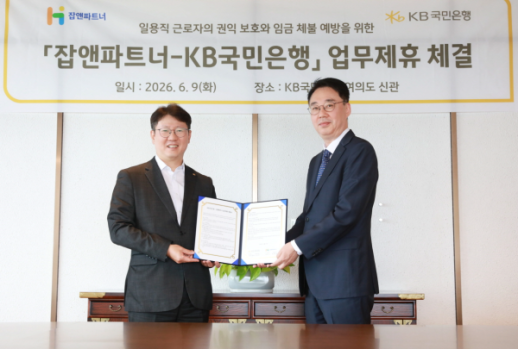 KB Kookmin Bank Launches Service to Prevent Wage Delays for Workers KB Kookmin Bank is expanding its inclusive finance initiatives by introducing a service aimed at preventing wage delays for temporary workers.On June 15, the bank announced its collaboration with the gig worker platform 'Ilgaja' to launch the 'Immediate Payment Service for Wage Delays,' designed for gig workers and temporary laborers. The service will target approximately 340,000 temporary workers and over 190,000 job sites nationwide.The Immediate Payment Service utilizes a firm banking system within the Ilgaja platform, allowing businesses to directly transfer wages to workers' accounts. This service clearly separates the introduction fees for labor brokerage from wages, ensuring transparency.Previously, businesses would send the total amount to the labor brokerage, which would deduct fees before disbursing wages to workers, creating risks of payment delays or wage theft.Additionally, the service offers features for online processing of essential labor and tax tasks, including electronic labor contracts, electronic signatures, electronic wage statements, fee settlements, and electronic invoices.In line with government efforts to eradicate wage delays, KB Kookmin Bank plans to accelerate the development of fintech technologies that integrate job placement platform information with financial infrastructure.A bank representative stated, "We will continue to expand our inclusive finance practices to protect the rights and improve access to finance for customers who are often in financial blind spots or vulnerable situations."* This article has been translated by AI. 2026-06-15 11:09:00
 -
 Starbucks Korea staff to undergo history training after 'Tank Day' controversy SEOUL, June 15 (AJP) - All employees of Starbucks Korea including its operator Shinsegae Group as well as other staff at its affiliates will undergo training to raise awareness of history and enhance social responsibility, the retail giant said Monday. The training is scheduled for Wednesday at its facility Shinsegae Namsan in central Seoul, where all Starbucks staff are expected to attend. It will include lectures delivered by Oh Je-yeon, a professor of Korean history at Sungkyunkwan University, and Koo Jung-woo, a sociology professor at the same university. They are expected to cover modern and contemporary history as well as social issues companies should be mindful of, including labor, gender, and human rights. The internal educational sessions come about a month after the popular coffee chain caused a stir over a tumbler promotion on May 18, coinciding with the anniversary of the 1980 Gwangju Democratic Uprising, which drew backlash for using the term "Tank Day," widely seen as reminiscent of painful historical memories. The group's CEO Chung Yong-jin will also attend separate training on June 24, before holding a meeting with affiliate heads and executives, as part of efforts to fulfill pledges made in his public apology at a press conference shortly after the controversy. From July 1, a similar two-week online training program will also be conducted for staff and executives at its affiliates including supermarket chain E-mart. All Starbucks Korea outlets will also close early at 3 p.m. next Monday, the first such move since its opening here in 1999, in a rare step seen as part of its efforts to rebrand itself. The coffee chain also vowed to overhaul its internal marketing processes, which will include a checklist and require reviews involving heads of multiple departments and outside experts before final approval is made. It also plans to support history education for younger generations including field trips for students and projects aimed at improving public understanding of history. "We will use the upcoming training as an opportunity to establish ourselves as a socially responsible company that grows together with South Korea," a Shinsegae spokesman said. 2026-06-15 11:08:01
 -
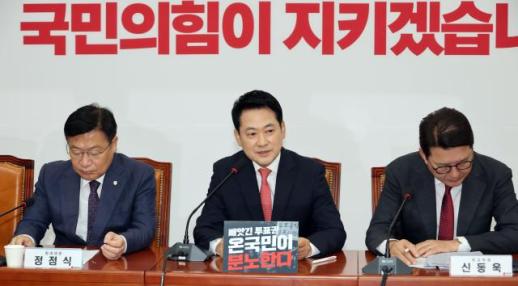 Jang Dong-hyuk: Referring to Leadership as 'Zombie' Disrespects Supporters Jang Dong-hyuk, leader of the People Power Party, stated on June 15 that referring to the party leadership as a "zombie" is an insult to the supporters who have shown their backing. He made these remarks during a Supreme Council meeting at the National Assembly, emphasizing that he wishes to refrain from discussing his own position but feels compelled to speak out against such disrespect toward party members and the public. He added, "We must unite to complete at least one special investigation regarding the ballot paper issue as a minimum courtesy to the citizens who continue to support us despite their disappointment. Now is the time to focus on the voices of the citizens gathered at Olympic Park." During the Supreme Council meeting, there were simultaneous attacks and defenses regarding Jang's leadership. Supreme Council member Yang Hyang-ja opened the discussion by stating, "I can't think of any other way to take responsibility for the results of the June 3 local elections. I propose a total resignation of the leadership. That would be a rational path that follows public sentiment." Yang further remarked, "Unfortunately, the leadership of the People Power Party is being called a zombie leadership. We must step aside as quickly as possible to allow a new leadership to guide the party." In response, Supreme Council member Cho Kwang-han countered, "If there is no reason to take responsibility, should we resign just because someone says, 'I don't like you'? We must not become foolish politicians who repeat baseless claims without logic or justification." He noted that the party's approval ratings have significantly increased following the elections, with some polls showing the People Power Party surpassing the Democratic Party. According to a recent poll commissioned by Energy Economy News and conducted by Realmeter from June 11 to 12, the People Power Party garnered a 44.3% approval rating, ahead of the Democratic Party's 38.0%. This marks the first time since the inauguration of the Lee Jae-myung administration that the approval ratings have reversed. The poll surveyed 1,002 voters nationwide using a wireless automated response method, with a margin of error of ±3.1 percentage points at a 95% confidence level and a response rate of 3.8%. For more details, refer to the website of the National Election Survey Deliberation Commission. Park Jun-tae, the party's secretary general, also expressed discomfort, stating after the Supreme Council meeting, "If they feel they should take responsibility, they can do so themselves. Those who continue to focus on undermining the leadership can only be suspected of doing so for their own political gain." Additionally, it was reported that during a closed-door meeting following the Supreme Council meeting, Secretary General Jeong Hee-yong expressed regret on behalf of the party's secretariat. Earlier, on June 11, Supreme Council member Woo Jae-jun had also suggested total resignation during a Supreme Council meeting, stating, "Our leadership must pave the way for the next leadership to prepare for the general elections." At that time, Supreme Council member Kim Min-soo strongly opposed, asking, "Why are those who do not properly attend closed meetings trying to act for personal factions rather than the party?"* This article has been translated by AI. 2026-06-15 11:06:00
 -
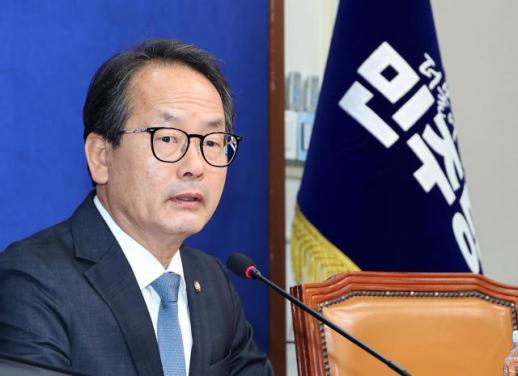 Ruling Party Acknowledges Responsibility for Declining Support in Polls The Democratic Party acknowledged on June 15 that it is trailing the People Power Party outside the margin of error for the first time since the inauguration of the Lee Jae-myung administration, stating it feels "responsibility" for the decline in support. Kang Jun-hyun, the party's spokesperson, spoke to reporters after a Supreme Council meeting, admitting, "There have been internal discord regarding the election results." He emphasized the need for reflection and reassessment of policies and political strategies. Recently, tensions within the Democratic Party have escalated as factions have clashed ahead of the party convention scheduled for August 17. Supporters of Representative Jeong Cheong-rae have called for his resignation, while the faction aligned with him has targeted Prime Minister Kim Min-seok, who is expected to run in the convention. Meanwhile, a Realmeter survey commissioned by the Energy Economy Newspaper, conducted from June 11 to 12, showed the Democratic Party's support at 38.0% and the People Power Party at 44.3%. The Democratic Party's support dropped by 3.8 percentage points, while the People Power Party increased by 3.2 percentage points. The survey was conducted using a wireless automated response method, with a sample size of 1,002 voters aged 18 and older. The margin of error is ±3.1 percentage points at a 95% confidence level, with a response rate of 3.8%. More details can be found on the website of the National Election Survey Deliberation Commission. Realmeter analyzed that the Democratic Party is facing intensified internal conflicts due to accountability discussions regarding the results of the June 3 local elections, controversies over poor election management, and ongoing debates about Representative Jeong's leadership and calls for the leadership's resignation.* This article has been translated by AI. 2026-06-15 11:06:00
 -
 China's State Media Comments on US-Iran Peace Agreement, Cautions on Israel's Role On June 15, China's state media commented on the progress of peace negotiations between the US and Iran, stating that "the world has taken notice of Iran's remarkable resilience" and warned that Israel could emerge as a significant variable in the Middle East situation. In a commentary on the social media account of the state-run Xinhua News Agency, Newtanqin, it was noted, "This war has dragged on for a long time and caused many casualties, but both the US and Iran will claim victory." It added, "In modern international politics, there are no absolute winners or losers, only face-saving measures." Newtanqin explained that President Donald Trump would highlight Iran's commitment to permanently abandon nuclear weapons as a major achievement, while Iran would assert its victory by maintaining control over the Strait of Hormuz despite pressure from superpowers and the US agreeing to lift asset freezes. Conversely, Israel was described as being in a "complex emotional state" and could potentially become another significant variable. The commentary pointed out that while Israel attempted to leverage instability in the Middle East to gain a strategic advantage, it ultimately failed to achieve its objectives. Newtanqin characterized the US-Iran peace agreement as a significant boon for a world fraught with uncertainty. It noted that the peace process was fraught with challenges, stating, "Peace is not a gift that comes easily; it is the result of parties that can no longer sustain war choosing to restrain their desires, cease conflicts, and minimize losses." The commentary further suggested that the recent developments serve as a textbook example revealing the illusion of military hegemony, asserting that while hegemony can instigate wars and chaos, it cannot control situations or resolve disputes. Newtanqin criticized the assumption that military attacks could subdue a major power like Iran, stating, "Ultimately, they found themselves trapped in the quagmire of war, exposing their weaknesses and left with no choice but to opt for a ceasefire and compromise." It emphasized that although Iran has paid a heavy price, the situation has led the world to reassess its view of Iran. The media noted, "Iran withstood attacks from two military powers (the US and Israel) and, by not backing down, managed to extract concessions from its adversaries," adding that some aspects of the agreement were previously unimaginable for Iran. It concluded that while great powers can exert pressure and torment, they cannot completely subdue a nation determined to maintain its bottom line. On June 14, the US and Iran announced they would officially sign a memorandum of understanding for the immediate and permanent cessation of military operations between the two nations. This comes 106 days after the US and Israel initiated the conflict with airstrikes on Iran on February 28. The two countries are set to hold an official signing ceremony in Switzerland on June 19. 2026-06-15 11:06:00
 -
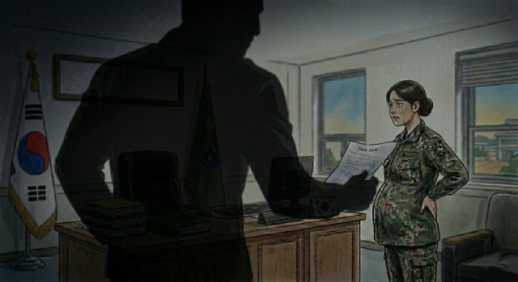 Army Investigates Allegations of Misconduct Following Miscarriage of Pregnant Soldier Following a series of tragic incidents in which four soldiers from the 53rd Division died, concerns have been raised about the conditions of military service. Allegations have emerged that a pregnant female soldier was coerced into early reporting times and subjected to verbal abuse and workplace harassment at the Capital Corps. The soldier ultimately suffered a miscarriage after experiencing repeated bleeding. The unit has since acknowledged the situation and initiated an investigation. According to a report from the Aju Economic Daily's investigative team, the Army's Capital Corps is currently investigating Lieutenant Colonel A for allegations of workplace harassment, including verbal abuse directed at subordinate officers. Lieutenant Colonel A is accused of using her position to issue unfair orders and verbally abuse junior officers, particularly focusing on Major B and Captain C, who were approaching promotion. Reports indicate that A made comments such as, "Should I swing a pen?" implying that her authority could influence their advancement. The Army's regulations state that the official reporting time is 8:30 a.m. However, the unit reportedly enforced an unofficial early reporting time of one hour earlier. Despite this, Lieutenant Colonel A allegedly criticized Captain C, who was in the early stages of pregnancy, for being late, using derogatory language and questioning her value to the unit. When Captain C submitted a pregnancy confirmation letter, the situation did not improve. A allegedly demanded that C buy alcohol for the unit, suggesting that her pregnancy was a joke. When C requested to use maternity protection time the following day, A reportedly clenched her fist and asked, "Can I show off my power to you?" and told her to "get down on the floor." Under pressure, C felt compelled to apologize and leave the situation. For about five weeks, Captain C was assigned to early reporting and tasked with carrying documents up and down six flights of stairs, a duty that was not part of her original responsibilities. This assignment, given to her by A, raised concerns about unnecessary physical strain during her pregnancy, leading to accusations of harassment. In May, during a training period, A reportedly forced Captain C to wear heavy gear, despite objections from other unit members who noted that pregnant soldiers should not have to wear such equipment. A allegedly insisted, "You don’t even have a belly yet. I ordered you to wear it." As a result of the ongoing pressure and workload, Captain C experienced repeated bleeding and ultimately miscarried at ten weeks of pregnancy. Following this, the unit recognized the situation and began an investigation into Lieutenant Colonel A. Current regulations provide specific maternity protection measures for pregnant female soldiers. Article 12 of the Enforcement Decree of the Basic Law on the Status and Service of Soldiers allows pregnant female soldiers to use up to two hours of maternity protection time for rest or medical appointments. Commanders are required to approve requests for maternity protection time for women who are within 12 weeks of pregnancy or beyond 32 weeks. The Ministry of National Defense also outlines protective measures for pregnant soldiers and military personnel. Article 60 of the Defense Gender Equality Support Directive prohibits assigning overtime work to those using maternity protection time. Additionally, Article 60-2 prohibits night shifts and weekend work for military personnel who are pregnant or have given birth within the past year. Lieutenant Colonel A's coercion of Captain C to report early clearly violates these regulations. Since taking office, Defense Minister An Gyu-baek has adjusted the timing of breakfast meetings to avoid imposing early work burdens on staff. However, despite efforts to improve military service culture, such as the abolition of breakfast meetings, violations of regulations and misconduct continue in frontline units. Given the serious allegations of improper orders issued to a pregnant soldier, there are calls for a thorough investigation by the Ministry of National Defense and the Army, along with measures to prevent recurrence. Representative Seong Il-jong of the People Power Party stated, "If these allegations are true, it is a direct violation of the current maternity protection time guaranteed to pregnant soldiers and represents a serious breach of military discipline through the abuse of command authority. The Ministry of National Defense and the Army must transparently disclose the results of the investigation to the public and conduct a comprehensive review of early reporting, verbal abuse, and unfair directives in frontline units." A military official stated, "The unit has prioritized measures to protect the victim and has implemented necessary actions, including separating the involved parties, and is conducting a thorough investigation. We are verifying the allegations and any violations of relevant regulations, and will take strict action based on the investigation results."* This article has been translated by AI. 2026-06-15 11:03:00
 -
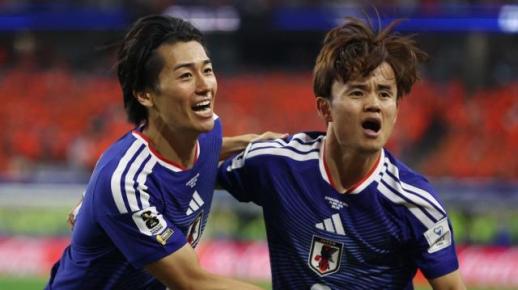 Sweden-Tunisia Match Could Impact Japan's World Cup Fate Japan's prospects in Group F of the 2026 North America World Cup may hinge on the outcome of the Sweden-Tunisia match. Sweden and Tunisia are set to face off on June 15 at 11 a.m. at the Estadio Monterrey in Guadalupe, Mexico. Group F includes the Netherlands, Japan, Sweden, and Tunisia. In the opening match, Japan drew 2-2 with the Netherlands. For Japan, the most favorable outcome from the Sweden-Tunisia match would be a draw. If Sweden and Tunisia tie, all four teams in Group F will finish their first matches with one point each. Japan would then be able to prepare for its second match against Tunisia while maintaining the value of its point earned against the strong Netherlands. This scenario would also provide Japan with more flexibility in navigating the group stage. Conversely, if either Sweden or Tunisia wins, a team will immediately secure three points in the group. Japan would then find itself in a position of needing to chase the group leader despite its draw with the Netherlands. In this tournament format featuring 48 teams, the top two teams from each group, along with the eight best third-place teams, will advance to the knockout stage. The pressure of competing for a top position differs significantly from that of fighting for third place. If Sweden wins, Japan's calculations become relatively straightforward, as Tunisia would be left with zero points. If Japan defeats Tunisia in its next match, it would earn four points and push Tunisia to the bottom of the group. However, if Sweden claims three points in its first match, Japan will likely have to continue competing for a top spot until its final match against Sweden. Should Tunisia defeat Sweden, it would create the most challenging scenario for Japan. This is because Japan's next opponent is Tunisia. With three points in hand, Tunisia would have less incentive to attack aggressively against Japan. A defensively strong team that has secured points early could complicate Japan's strategy. Tunisia qualified for the tournament by showcasing solid defensive skills, finishing the African qualifiers with nine wins and one draw, while not conceding a single goal. However, they face the challenge of regaining defensive stability after suffering a 5-0 loss to Belgium in a pre-tournament friendly. Sweden is known for its offensive strength, led by the attacking duo of Alexander Isak and Viktor Gyökeres. Gyökeres has made a name for himself in European football, while Isak is recognized for his speed and technical skills as a forward. Sweden is expected to target Tunisia's defense through these two key players. Japan demonstrated resilience in its match against the Netherlands. After finishing the first half scoreless, Japan conceded an early goal in the second half but quickly equalized. Despite falling behind again, Japan managed to secure a late equalizer, earning a valuable point. While salvaging a point from a potential loss is commendable, Japan will need to accumulate more points in its remaining two matches to advance from the group stage.* This article has been translated by AI. 2026-06-15 11:03:00