


Latest by
-
 South Korea to Explain Coupang Fine to U.S. Amid Diplomatic Concerns The South Korean government plans to explain the recent fine imposed on Coupang to the U.S. government to mitigate potential diplomatic tensions. According to a report by Yonhap News, a Foreign Ministry official stated on June 11 that the government will maintain a non-discriminatory policy toward U.S. digital companies, including Coupang, and will calmly explain the findings of the Personal Information Protection Commission regarding the company. On the same day, the Personal Information Protection Commission announced a fine of 624.7 billion won against Coupang related to a data breach. The official noted, "The commission conducted a fair investigation in accordance with domestic laws, adhering to the principle of proportionality in penalties, and provided Coupang with ample opportunity to present its views during the investigation." The U.S. government and some lawmakers have reacted sensitively to regulations targeting their digital companies, claiming that the South Korean government has unfairly investigated Coupang with unprecedented intensity, alleging that it is attempting to undermine the company to assist Chinese platform firms. However, the South Korean government maintains that the fine is a legitimate legal action against a company responsible for a data breach. Consequently, the government has been in contact with U.S. officials and lawmakers to clarify its position on the data breach and to resolve any misunderstandings. Yonhap News reported that while U.S. officials still express concerns regarding Coupang, there is a shared understanding that this issue should not negatively impact the overall Korea-U.S. relationship. According to the U.S. online media outlet Semafor, a U.S. official stated, "The U.S. government has concerns about regulations and laws that discriminate against American companies, including Coupang." Yonhap News also noted that the South Korean government needs to gauge how seriously the U.S. views the fine imposed on Coupang and whether it will prioritize discussions on key issues, such as recently resumed nuclear cooperation, over the situation with Coupang.* This article has been translated by AI. 2026-06-11 17:48:00
 -
 KOSPI claws back early rout, but SpaceX liquidity fears keep Korea on fragile ground SEOUL, June 11 (AJP) — After another volatile day — swinging between losses and gains more than 50 times — South Korean shares managed to end higher on Thursday. But with the market's fear gauge touching a record high intraday, the rebound underscored the panic behind foreign capital outflows and aggressive retail bargain hunting. The KOSPI rose 33.13 points, or 0.43 percent, to close at 7,763.95. The index opened 2.86 percent lower at 7,509.62 and briefly fell as low as 7,394.46, down more than 4 percent, before recovering to touch an intraday high of 7,800.62. The late recovery kept the benchmark above the 7,700 mark, but the rebound rested on a fragile foundation. Foreign investors remained firmly on the sell side, dumping 1.46 trillion won worth of KOSPI shares, while institutions sold 756.7 billion won. Retail investors absorbed much of the pressure, buying 2.08 trillion won. The pattern reinforced the market's central tension: the index can still bounce, but the foreign money that powered much of the earlier rally is still heading for the exit. The pressure was concentrated in large-cap names. Samsung Electronics fell 1.2 percent to 299,000 won after paring steeper early losses, while SK hynix reversed course to finish 2.6 percent higher at 2,101,000 won. LG Electronics added 0.9 percent to 226,000 won, but NAVER slipped 1.3 percent to 224,000 won and Doosan Enerbility lost 2.7 percent to 88,600 won. Hanwha Ocean, one of the recent beneficiaries of geopolitical tensions and defense-related buying, fell 5.2 percent to 104,500 won. The day's move was not simply about Middle East risk. It was also about cash. With SpaceX's long-awaited Nasdaq debut approaching, traders increasingly see the listing as a liquidity vacuum that could pull money away from existing equity positions, particularly Korean AI and semiconductor stocks that have been among Asia's most crowded trades this year. The SpaceX factor did not single-handedly trigger the selling, but it gave global investors another reason to take profits from Korean names that had already run hard. That theme was visible in individual stocks. Spear, viewed by investors as a SpaceX supply-chain play, hit the daily limit, surging 29.9 percent to 38,500 won. The rally reflected growing appetite for Korean companies with direct or indirect exposure to the U.S. space company's listing. Yet the same event that lifted aerospace-related names also raised concerns that broader market liquidity could be diverted elsewhere. The KOSDAQ told a very different story. The junior market jumped 45.30 points, or 4.76 percent, to close at 996.93, within sight of the 1,000-point threshold. The index opened lower at 937.17 but turned positive in morning trade and climbed as high as 997.11 during the session. Unlike the KOSPI, where retail investors carried the market against foreign and institutional selling, the KOSDAQ rally was led by institutions, which bought a net 695.5 billion won. Retail investors sold 352 billion won, while foreign investors sold 360.1 billion won. The strength was enough to trigger a buy-side sidecar at around 1:58 p.m., according to the Korea Exchange, marking the 10th such activation on the KOSDAQ this year and the first since Monday. The rally was concentrated in semiconductor equipment and materials stocks. Jusung Engineering surged 23.4 percent to 245,500 won, Wonik IPS jumped 20.8 percent to 141,000 won and Alteogen rose 10.2 percent to 347,000 won. Hyundai Movex also climbed 15.3 percent to 40,800 won. The split between the KOSPI and KOSDAQ suggested investors were not abandoning the semiconductor story altogether. Instead, money rotated away from crowded megacap positions and into smaller equipment and materials names. Healthcare providers, diversified telecom services and broadcasting and entertainment stocks also ranked among the day's strongest sectors, rising 7.7 percent, 7.3 percent and 6.9 percent, respectively. Oil prices eased slightly, offering some relief. WTI crude fell 0.5 percent to $89.56 a barrel, while Brent crude slipped 0.7 percent to $92.47 as investors weighed hopes that U.S. strikes on Iran could eventually give way to renewed negotiations. Global risk sentiment, however, remained fragile. The VIX rose 6.4 percent to 21.13 while the Philadelphia Semiconductor Index fell 3.6 percent to 12,206.5, maintaining pressure on Asian chip sentiment. The won traded around 1,529.9 against the U.S. dollar, remaining near global financial crisis-era levels as foreign investors continued to reduce exposure to Korean assets. The currency's failure to stage a meaningful recovery suggests that equity rebounds driven largely by domestic buying may remain vulnerable if overseas funds continue cutting positions. Across Asia, markets were mixed and far less volatile than Seoul. Japan's Nikkei 225 edged up 0.1 percent to 64,217.3, while China's Shanghai Composite slipped 0.2 percent to 3,987.02 and Hong Kong's Hang Seng Index fell 0.7 percent to 24,228.3. Tokyo remained capped by profit-taking in AI and semiconductor shares, contrasting with Seoul's violent intraday swings and underscoring how much more exposed Korea remains to memory chips, foreign selling and leveraged retail trading. Thursday's session was not a clean recovery. The KOSPI survived an early rout, the KOSDAQ nearly reclaimed 1,000 and semiconductor-equipment stocks roared back, but foreign investors kept selling, the won stayed weak and SpaceX-linked liquidity fears continued to hang over Korea's most crowded trades. Whether the rebound in KOSDAQ chip-equipment names can broaden into a more durable recovery remains the central question for Seoul heading into the next session. 2026-06-11 17:41:31
 -
 Vietnam U19 Team Exits Southeast Asia U19 Championship Amid Controversy The Vietnam U19 national team faced elimination from the 2026 Southeast Asia U19 Championship after a penalty kick loss in stoppage time against Indonesia and a draw between Australia and Cambodia. This outcome dashed their hopes of advancing to the semifinals. The situation has sparked discussions not only about performance but also about attitudes and competition culture at the youth level. According to the Vietnamese daily newspaper Người Lao Động on June 10, the Vietnam U19 team started strong with two consecutive wins in the group stage but suffered a 1-2 defeat to host Indonesia, with the decisive goal coming from a penalty awarded in stoppage time. Following this match, Vietnam closely monitored the results of the Thailand and Malaysia game. A draw in that match could have put Vietnam at a disadvantage, but Thailand won 3-2, keeping Vietnam's semifinal hopes alive. However, the final twist came in the match between Australia and Cambodia. Australia led 2-0, but Cambodia fought back to equalize at 2-2. Consequently, Cambodia advanced to the semifinals, leaving Vietnam out of the tournament. Some observers have pointed to bad luck as a factor in Vietnam's exit, citing the controversial penalty decision in the Indonesia match and the tournament's format, which required the second-place team to rely on results from other groups. Nonetheless, there are concerns that in youth football, the process is often more important than the outcome. Losses are a natural part of growth in sports, and young players often experience mistakes in passing, lack of decisiveness, defensive inexperience, and hasty reactions in the penalty area. These issues can be addressed through training and experience, but this tournament also highlighted controversies regarding game attitudes. Notably, a member of the Vietnamese coaching staff received a red card for what was deemed unsportsmanlike behavior, which was seen as a reflection of the leadership's approach rather than just tactical decisions. In professional sports, there are instances of players pulling on opponents' jerseys or disrupting the flow of the game, as well as psychological tactics to pressure referees. However, there is a clear line between tactical cleverness and unsportsmanlike conduct. It is important to distinguish between maintaining composure and resorting to unfair tactics, as well as between legitimate time management and intentional delays. Voices have emerged calling for stricter standards at the youth level. U19 players are at a stage where they develop their playing habits, style, and professional identity. They learn how to receive the ball under pressure, engage in legal physical confrontations, manage emotions in the face of unfavorable calls, and refocus after collisions. Concerns have been raised that excessive time-wasting or showing such behavior by coaches could send the wrong message to players. Youth coaches serve as both strategists and role models, meaning their actions on the field carry educational significance. This tournament has also raised questions about the culture of competition. Vietnamese youth football has traditionally emphasized skills, fitness, tactics, football intelligence, and international experience. However, following this exit, there is a call for a reassessment of game attitudes, values, and competitive methods. Additionally, it has been suggested that pressure should be applied through fitness and organization, rather than through rough tackles or excessive psychological games. It is crucial to recognize the difference between managing a score and deliberately delaying the game. Meanwhile, online discussions have continued to reflect on the situation. One netizen expressed full agreement with an article addressing the issues in football, while another praised it as an accurate assessment of the problems faced by the Vietnam U19 team. In particular, one commenter stated, "It is shameful that the Vietnam U19 coaching staff engaged in unsportsmanlike behavior against Indonesia U19. How can they train players with such conduct?" Additionally, some online commentators have suggested that this group stage exit serves as a turning point for the direction of youth football in Vietnam, indicating that the Vietnam U19 team has left behind significant challenges following this tournament.* This article has been translated by AI. 2026-06-11 17:33:00
 -
 Korea's Broadcasting Commission Plans Media Voucher for Low-Income Households The Broadcasting and Communications Commission (BCC) is preparing to implement a "Media Basic Society" initiative as part of its budget planning for the upcoming year. The proposal includes a media voucher system aimed at supporting online video service (OTT) fees for low-income households, with the goal of expanding access to content and addressing the digital service gap. According to the BCC on June 11, the commission is reviewing policies to establish a Media Basic Society as a key objective for next year's budget. With a consensus among members, led by Chairman Kim Jong-cheol, the focus is on enhancing content access for vulnerable populations and reducing disparities in digital service usage. A BCC official stated, "We are preparing a media voucher system that would support OTT fees and paid broadcasting costs as a long-term project. However, discussions with the Ministry of Economy and Finance and other financial authorities are still needed." The push for this policy comes in response to changing content consumption patterns. While OTT services have become a primary source for content, significant disparities in usage based on income and region persist. Data from the BCC's broadcasting statistics portal indicates that 80.2% of households earning less than 1 million won per month do not use paid OTT services. In contrast, only 22.9% of households earning over 8 million won are non-users, revealing a 57.3 percentage point gap between the two groups. Usage rates for Netflix, the most popular OTT service in Korea, also vary significantly by income. Only 16.5% of households earning under 1 million won use Netflix, compared to 71.6% of those earning over 8 million won. Regional disparities are also evident. Netflix usage is highest in Seoul at 56%, while it is only 32.2% in Gwangju, Jeolla, and Jeju. The highest non-usage rate for paid OTT services is found in Daegu and Gyeongbuk at 59.7%, while Seoul's rate is 36.2%. The BCC is examining policies to mitigate these access gaps. However, opinions differ on whether the proposed subsidies will enhance the competitiveness of the domestic media industry. The paid broadcasting sector has expressed concerns that the voucher system could lead to increased use of global OTT services. Since users are likely to apply vouchers to well-known platforms like Netflix, the benefits for nurturing the domestic media ecosystem may be limited. There are also calls to clarify the policy objectives of the Media Basic Society. An industry insider noted, "It is essential to define whether the media voucher is a support policy for vulnerable groups, an access expansion policy, or a domestic media industry development policy, as the support methods should vary accordingly." Experts emphasize the need for a cautious approach to using government funds to support OTT usage. Kim Yong-hee, a professor at Sun Moon University, stated, "While the intention to expand content access for vulnerable groups is commendable, using national resources to support specific platforms could lead to market distortion. There needs to be ample discussion on the scope and intensity of market intervention." He added, "Supporting OTT usage could ultimately imply incorporating OTT into policy and regulation frameworks, suggesting that discussions on deregulation and market restructuring should precede simple fee support measures."* This article has been translated by AI. 2026-06-11 17:30:00
 -
 TSMC Faces Patent Infringement Investigation That Could Impact U.S. Imports Taiwan's TSMC, the world's largest semiconductor foundry, is under investigation by the U.S. International Trade Commission (ITC) for patent infringement. If the allegations are upheld, imports of certain semiconductors into the U.S. could be restricted. On June 10, U.S. media outlet Axios reported that Irish companies Longitude Licensing and Malin Semiconductor have filed a complaint with the ITC, claiming that semiconductors produced using TSMC's advanced processes infringe on their patents. The ITC initiated a Section 337 investigation based on this complaint in March of last year. The Section 337 investigation is a procedure to determine whether imported products violate intellectual property rights. If infringement is found, the ITC can issue orders to ban imports or halt sales of the affected products. Companies including Apple, Broadcom, Qualcomm, Lenovo, Motorola, and OnePlus are also included in the investigation. Axios noted that since the disputed semiconductors are produced using TSMC's advanced processes, TSMC is at the center of the case. Longitude Licensing and Malin Semiconductor are subsidiaries of IPValue Management, owned by the U.S. private equity firm Vector Capital. Malin Semiconductor reportedly acquired some patents from TSMC's competitor, Taiwan's UMC, in 2021. An ITC administrative law judge is expected to issue a preliminary ruling later this month, with a final decision anticipated in October. In U.S. political circles, opinions are divided. Four Republican lawmakers sent a letter to ITC Chair Amy Kapfer on May 22, urging that imports of foreign semiconductors that infringe on patents should be blocked. They argued that TSMC should not receive special treatment due to its strategic importance in the U.S. semiconductor supply chain. In contrast, Democratic lawmakers from Arizona, where TSMC is building a factory, warned that actions affecting TSMC could burden U.S. semiconductor production, artificial intelligence development, defense systems, and the local economy. TSMC has announced plans to invest a total of $165 billion in expanding its semiconductor production facilities in Arizona. The company maintains that it complies with all relevant laws and regulations in its operating regions. The Taiwanese Ministry of Economic Affairs stated, "As the proceedings are ongoing, we respect the relevant processes and will monitor the situation, providing support if necessary."* This article has been translated by AI. 2026-06-11 17:30:00
 -
 Coupang Fined Record Amount for Data Breach The penalties for personal information breaches are increasing significantly. The Personal Information Protection Commission (PIPC) has imposed a fine of 624.7 billion won on Coupang, marking the largest penalty since the enforcement of the Personal Information Protection Act. This amount is approximately 3.7 times the total fines of 167.7 billion won imposed on companies last year, surpassing the total penalties for all companies with just one fine. The record for penalties has been broken annually. In 2022, the PIPC fined Google and Meta a combined total of 100 billion won for collecting online activity records without user consent, setting a previous record. Following that, SK Telecom faced a fine of 134.8 billion won for a data breach involving SIM card information, which set a new high. The fine against Coupang is about 4.6 times that of SK Telecom and six times the combined fines of Google and Meta. Penalties for major personal information breaches in South Korea have also been steadily increasing. KakaoPay was fined 5.968 billion won for providing user information to Alipay, while Woori Card received a fine of 13.451 billion won for inadequate management of customer data. Fines that once ranged in the tens of millions have now escalated into the hundreds of billions. The increase in fines is partly due to amendments to the Personal Information Protection Act. The current law allows fines of up to 3% of the revenue related to the violation. A 2023 amendment expanded the basis for calculating fines from revenue related to the violation to total revenue, meaning that larger platform companies with more users will face higher penalties. However, companies can exclude revenue unrelated to the violation if they can prove it. Stricter penalties are expected to take effect in September. The PIPC is currently proposing amendments to the Personal Information Protection Act. The proposed changes include imposing punitive fines on companies that repeat the same violations within three years, cause data breaches affecting over 10 million individuals, or leak personal information again after failing to comply with corrective orders. If these conditions are met, the maximum fine could increase from the current cap of 3% of total revenue to 10%. However, the Coupang case will not fall under this punitive fine provision as it occurred before the amendments take effect. The security industry anticipates that the level of penalties will rise further as major platforms experience increasingly large-scale personal information breaches. According to the Korea Internet & Security Agency (KISA), the number of reported personal information breaches reached 447 last year, a 45.6% increase from the previous year. IBM's '2025 Data Breach Cost Report' also indicates that as AI technology advances, companies with inadequate security controls and internal management are at greater risk of breaches.* This article has been translated by AI. 2026-06-11 17:30:00
 -
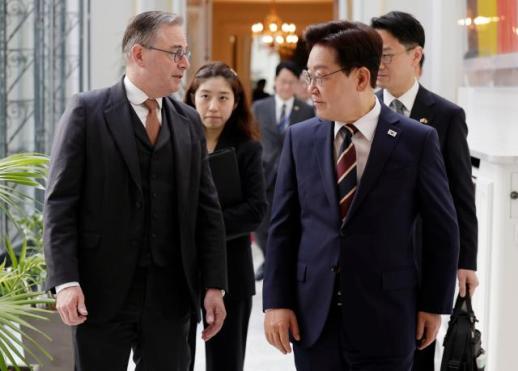 President Yoon Requests EU to Avoid Disadvantages for Korean Steel Industry President Yoon Suk Yeol has urged the European Union (EU) to ensure that Korean companies do not face disadvantages under the new steel quota system. Kim Yong-beom, the Chief of Policy at the Blue House, stated during a briefing in Rome on June 11 that President Yoon made this request during a meeting with António Costa, the President of the European Council, and Ursula von der Leyen, the President of the European Commission, in Brussels the previous day.The EU has announced plans to transition its current steel quota system, based on World Trade Organization (WTO) guidelines, to a tariff-rate quota (TRQ) system starting July 1, in response to global oversupply in the steel market.Under the new system, the EU's duty-free steel import quota will decrease, and tariffs on quantities exceeding the quota will rise from the current 25% to 50%.Specifically, the introduction of the TRQ system will reduce the duty-free steel import volume from the current 33.82 million tons to approximately 18.35 million tons, a reduction of about 46%.Last year, the EU was Korea's second-largest steel export market, importing 3.24 million tons and allocating a duty-free quota of about 2.58 million tons.President Yoon also explained that the EU's measures could have broad implications not only for the steel industry but also for industrial cooperation, supply chain stability, investment, and employment between the two countries.He emphasized the need for outcomes that reflect the mutually beneficial economic cooperation established through the Korea-EU Free Trade Agreement (FTA) and the strategic partnership between the two nations.He requested that the EU adjust interests not only in steel but also in other areas to ensure that the mutual benefits of the Korea-EU FTA are not undermined.In response, the EU stated, "Korea is a country that shares common values and is a strategically important partner, so we will consider the request as much as possible."Kim noted that, following the guidance of the two leaders, intensive negotiations on quota volumes have made significant progress, and he expects favorable results compared to other countries.He added, "This will serve as a good example of productive cooperation among partners with similar positions."* This article has been translated by AI. 2026-06-11 17:27:00
 -
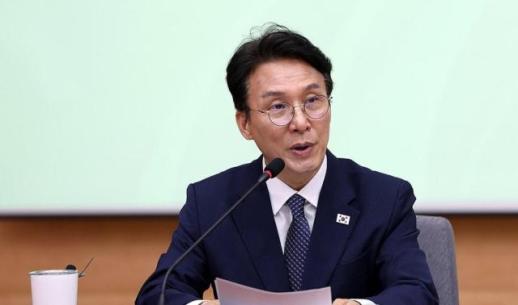 Prime Minister Kim Minsuk Remembers Former Japanese Speaker Kono Yohei Prime Minister Kim Minsuk expressed his condolences on June 11 following the passing of former Japanese House of Representatives Speaker Kono Yohei, wishing for the healthy development of Korea-Japan relations. In a post on his X (formerly Twitter) account, Kim stated, "Former Speaker Kono Yohei has passed away." He described Kono as a rare Japanese politician who acknowledged the coercion involved in the mobilization of comfort women and offered an apology, presenting the principle of "acknowledging history and moving toward the future." He also noted Kono's close relationship with his political mentor, former President Kim Dae-jung. Kim added, "His son, former Foreign Minister Kono Taro, is a long-time friend of mine," recalling their two-decade friendship characterized by open discussions despite political differences, saying, "We have talked about our true feelings regarding the difficult issues between Korea and Japan." The Prime Minister emphasized the importance of Korea-Japan relations, stating, "President Lee Jae-myung has broadened the horizons of Korea-Japan diplomacy, and business leaders like Choi Tae-won stress the necessity of economic cooperation between our two countries. The Korea-Japan relationship is more important than we think and must develop beyond the current state." Kang Chang-il, the former South Korean ambassador to Japan and current Vice Chairman of the Democratic Peace and Unification Advisory Council, reflected on Kono's legacy in a message to the press, stating, "He valued the peace of Northeast Asia and maintained a cautious stance on the revision of Japan's pacifist constitution, which explicitly renounces war, while promoting friendship between Korea and Japan throughout his life." Kang praised Kono's courageous decision in 1993 when he served as Japan's Chief Cabinet Secretary, acknowledging the forced mobilization of comfort women and the military's involvement in the Kono Statement, calling it a significant step toward improving bilateral relations and establishing a forward-looking Korea-Japan relationship.* This article has been translated by AI. 2026-06-11 17:21:00
 -
 U.S. Strikes Oil Tanker for Violating Iran Blockade, Killing Three Indians The United States struck a Palau-flagged oil tanker in the Gulf of Oman, claiming it violated a blockade against Iran, resulting in the deaths of three Indian crew members. On June 10, U.S. Central Command (CENTCOM) announced that it had neutralized the tanker M/T Setebello at 11:14 p.m. while it was navigating through the Gulf of Oman. CENTCOM stated that the vessel was attempting to transport Iranian oil and had repeatedly failed to comply with U.S. directives. U.S. aircraft targeted the engine room of the Setebello with precision munitions. CENTCOM also reported that it had attacked another Palau-flagged tanker, M/T Marivex, heading for Iran on June 8. Since the initiation of the blockade against Iran on April 13, the U.S. military has neutralized eight vessels that did not comply with orders and turned back 134 others. Humanitarian aid vessels, numbering 42, were allowed passage. According to the Indian government, there were 24 Indian crew members aboard the Setebello. Of those, 21 were rescued, while the three missing crew members were found deceased. In response, India summoned the U.S. chargé d'affaires to its foreign ministry to express its protest. The Indian Ministry of External Affairs issued a statement expressing serious concern over the ongoing attacks on vessels in the region and called for de-escalation and diplomatic solutions. Arsenio Dominguez, Secretary-General of the International Maritime Organization (IMO), condemned the strike on the Setebello, stating, "Any act that threatens the lives of seafarers and the safety of international shipping is strongly condemned." The IMO reported that it had confirmed 43 attacks on international vessels in the Strait of Hormuz and surrounding waters since February 28.* This article has been translated by AI. 2026-06-11 17:15:00
 -
 50,000 Fans Expected in Busan for BTS Concert; Special Immigration Measures Activated As global artist BTS prepares for their concert in Busan, the South Korean government anticipates a significant influx of international fans. To facilitate smooth entry, special transportation and immigration measures will be implemented. On June 11, the Ministry of Justice, led by Minister Jeong Seong-ho, announced that approximately 50,000 foreign fans are expected to arrive in South Korea for the BTS concert taking place from June 12 to 14. To ensure the convenience and speed of entry and exit for these fans, a 'special immigration inspection plan' will be in effect until June 14. This special plan will be executed simultaneously at four major immigration offices: Incheon International Airport, Busan Immigration Office, Gimhae Airport Immigration Office, and Gimpo Airport Immigration Office. The measures also account for passengers arriving via ferry at Busan Port. To minimize congestion, the Ministry of Justice will bolster staffing significantly. Incheon International Airport will receive the largest contingent, with an additional 140 inspection personnel deployed. Gimhae Airport will add 8 staff members, Gimpo Airport will have 7, and 3 personnel will be extended to support operations at Busan Port. Real-time monitoring will be enhanced at each airport and port to respond promptly to any congestion issues. Minister Jeong Seong-ho stated, "We will concentrate personnel and equipment to ensure that K-pop fans from around the world experience Korea's efficiency and convenience from the moment they arrive. We will carefully monitor to prevent any inconveniences for international visitors, contributing to local economic revitalization and enhancing the national image."* This article has been translated by AI. 2026-06-11 17:15:00