


Latest by
-
 Toss Bank's 'Wealth Management' Linked Sales Exceed 30 Trillion Won Toss Bank's asset management service, 'Wealth Management,' has surpassed 30 trillion won in cumulative linked sales.According to Toss Bank on September 18, Wealth Management is a service that introduces customers to selected investment products from Toss Bank's partner financial institutions. Launched in August 2022, it allows users to compare and invest in bonds, issued notes, repurchase agreements (RPs), and foreign bonds all in one place. Actual transactions are conducted through each partner financial institution.The linked sales amount increased from approximately 17.9 trillion won in August of last year to 22 trillion won in December of the same year, and has now exceeded 30 trillion won as of September this year.To expand its offerings, Toss Bank has also added the 'Kiwoom Securities Issued Notes' product. Issued notes are short-term financial products issued by securities firms based on their own credit to raise funds.The products are available in two types: flexible and fixed-term, with durations ranging from one day to a maximum of one year. The flexible type offers a pre-tax annual yield of 3.00% even if held for just one day. The fixed-term type is divided into maturities of 7, 31, 181, and 365 days, with pre-tax annual yields of 3.05%, 3.05%, 4.50%, and 4.70%, respectively. The minimum purchase amount for both products is 1 million won. Transactions can be made on business days from 8 a.m. to 4 p.m.A Toss Bank official stated, "We have continuously expanded product options that align with our customers' financial plans in collaboration with our partner financial institutions. With the addition of Kiwoom Securities issued notes, we aim to meet diverse asset management needs, from short-term surplus funds to larger amounts to be managed over a year."* This article has been translated by AI. 2026-09-18 16:24:00
 -
Chungnam National University Alumni Association Calls for Dialogue Amid Integration Conflict As tensions rise over the failed vote on the integration with Kongju National University and the promotion of the glocal university initiative, the Chungnam National University Alumni Association has stepped in to mediate. On September 18, the Alumni Association issued an official statement titled "We Must Open a Bold Future for Chungnam University Through Communication and Integration Beyond Conflict." In the statement, the association expressed deep concern over the recent internal conflicts arising from the university's integration efforts and the process of gathering opinions, calling for responsible leadership from the university administration and sincere dialogue among members. The Alumni Association acknowledged the necessity of integration in the rapidly changing higher education landscape. They stated, "In the context of declining school-age populations, intensified competition among universities, and concentration in the metropolitan area, the integration and glocal university initiative are crucial tasks for Chungnam University to enhance its global competitiveness." However, they drew a clear line regarding the approach to these initiatives. The association emphasized, "In the process of determining the university's future, we must not prioritize speed and results over the right direction." They added, "The academic history and identity that Chungnam University has built, the rights that students should enjoy, and the brand value that alumni and students should take pride in must be adequately considered." Specifically, the association pointed to the procedural legitimacy issues and strong backlash that arose during the recent vote on integration and the process of gathering opinions. They stated, "We must listen to the diverse voices of the university community, including faculty, staff, students, and alumni, and establish transparent procedures that members can accept. Policies without genuine consent and participation from students are unlikely to succeed." In response to students who are strongly opposed to the integration, the association urged a warm solidarity and rational response. They promised, "If it is about protecting students' rights and dignity, alumni will stand with them, and we will closely monitor the university administration's policies and processes, voicing our concerns as needed." However, the association expressed concern over the escalating internal conflict following the failed vote. They cautioned, "The current conflict should not lead to emotional confrontations or unilateral severance. We urge everyone to maintain dialogue with the university and to consider together what the wisest and most prudent choice is for the future of our alma mater." To address the situation, the Alumni Association has formally communicated three key demands to the university administration: thorough examination and transparent resolution of issues raised during the integration and opinion-gathering processes; restoration of trust through sufficient communication with members; and the exercise of responsible leadership for the successful promotion of the integration and glocal university initiative. The Alumni Association stated, "The future of Chungnam University is not just a matter for one group but a significant issue that involves all members and the aspirations of 230,000 alumni. Now is the time to transcend conflict and unite our efforts to leap forward as a leading university in South Korea and the world." They added, "The Alumni Association will listen more closely to the voices of our juniors and demand responsible communication and action from the university administration to fulfill our role in the sustainable development of our alma mater."* This article has been translated by AI. 2026-09-18 16:20:00
-
Doosan Robotics Appoints Kwon Young-min as New CEO Doosan Robotics announced on September 18 that it has appointed Kwon Young-min as its new CEO.Kwon joined Doosan in 2000 and served as Chief Strategy Officer (CSO) of Doosan Bobcat from 2018 to 2020. Since 2021, he has been leading Doosan Motrol, a subsidiary of Doosan Bobcat.A representative from Doosan Robotics stated, "We expect that his extensive experience in global business and management will contribute to the long-term growth and competitiveness of Doosan Robotics."Meanwhile, Doosan Robotics reported a consolidated revenue of 17.674 billion won for the second quarter of this year, marking a 290% increase compared to the same period last year. The operating loss was 14.417 billion won, which is a 7.9% reduction in the deficit compared to the previous year.* This article has been translated by AI. 2026-09-18 16:20:00
-
Gunpo City Corporation Launches Stress Relief Program for Customer Service Workers Gunpo City Corporation conducted a healing education program called 'Mind Reset Day' on September 14 for customer service workers aimed at alleviating emotional labor and job stress. According to the corporation on September 18, the program was designed to reduce the emotional burdens that can arise during customer interactions and to provide a brief respite for workers to recharge. The training was interactive, allowing participants to engage in activities such as making fruit tarts and writing supportive postcards. Workers experienced a sense of accomplishment by completing their tarts and took time to reflect on themselves while crafting encouraging messages. Participants reported that the activities facilitated natural communication with colleagues and helped relieve work-related stress. Citizens who learned about the program also expressed understanding of the need for customer-facing workers to have time to alleviate their workload and recharge. President Bae Jae-guk stated, “Customer service workers are exposed to various emotional burdens and stress due to the nature of their work.” He added, “We will continue to operate stress prevention and health promotion programs that consider the characteristics of their jobs to ensure workers can continue their duties healthily.” Meanwhile, the corporation plans to implement various support programs tailored to the working environment and job characteristics of customer service workers in the future.* This article has been translated by AI. 2026-09-18 16:16:00
-
KOSPI Recovers Above 6,900 Amid Strong Buying from Foreign and Institutional Investors The KOSPI index showed a rise of over 2%, nearing the 6,900 mark. Strong buying from foreign and institutional investors, along with gains in major semiconductor stocks like Samsung Electronics and SK Hynix, drove the index higher.On September 18, the KOSPI closed at 6,894.23, up 178.82 points (2.66%) from the previous trading day. The index opened at 6,885.70, up 170.29 points (2.54%), and maintained a rise of over 2% during the session.In the securities market, foreign and institutional investors made net purchases of 970.1 billion won and 1.7173 trillion won, respectively. In contrast, individual investors sold a net 4.3652 trillion won.Most of the top market capitalization stocks saw gains. Samsung Electronics rose by 3.37%, SK Hynix by 6.42%, SK Square by 7.04%, Samsung Electro-Mechanics by 4.36%, Hyundai Motor by 0.55%, and Samsung Biologics by 0.14%. However, LG Energy Solution fell by 0.27%, KB Financial by 2.40%, and Samsung C&T by 1.27%.The KOSDAQ index also continued its upward trend, closing at 827.12, up 4.94 points (0.60%) from the previous day. The index opened at 832.72, up 10.54 points (1.28%), but gave back some of its gains during the session.In the KOSDAQ market, individual and institutional investors made net purchases of 50.1 billion won and 20.6 billion won, respectively, while foreign investors sold a net 86.2 billion won.Top KOSDAQ stocks showed mixed results. Alteogen fell by 0.20%, EcoPro by 1.46%, Iot Technics by 1.95%, Simtech by 1.95%, and Robotechs by 1.13%. Conversely, EcoPro BM rose by 2.14%, Juseong Engineering by 0.74%, Rainbow Robotics by 1.75%, Wonik IPS by 2.97%, and Rino Industrial by 4.82%.Lee Kyung-min, a researcher at Daishin Securities, noted, "The domestic stock market showed strength as macro uncertainties that had limited the index's upper range eased. Foreign investors, who had been net sellers for seven consecutive trading days, turned to net buying, while institutions and financial investors expanded their net purchases, contributing to the index's strength."He added, "With the uncertainty surrounding the monetary policy path after the September Federal Open Market Committee (FOMC) meeting calming down, U.S. long-term bond rates have stabilized downward. The yields on 10-year and 30-year U.S. Treasury bonds fell to 4.94% and 5.29%, respectively, easing pressure on the stock market."* This article has been translated by AI. 2026-09-18 16:12:20
-
Second Round of 'Everyone's Startup' Sees Increased Participation from Youth and Non-Metropolitan Areas More than 90,000 applicants have applied for the second round of the 'Everyone's Startup' initiative, which aims to provide entrepreneurial opportunities to the public, showing a significant increase in interest compared to the first round. With a rise in participation from youth and those in non-metropolitan areas, the program is being watched closely to see if it can effectively foster a 'startup ecosystem'. According to the Ministry of SMEs and Startups on September 18, a total of 92,838 applications were received from August 20 to September 17 for the second round of the Everyone's Startup project, including 80,764 in the general and technology sectors and 12,074 in the local sector. This figure represents an increase of about 30,000 from the first round, which had 62,944 applicants over 51 days. Notably, the proportion of applicants from non-metropolitan areas rose to 63.3%, up from 53.4% in the first round, indicating a growing entrepreneurial spirit across various regions. The ministry has established regional startup communities to facilitate ongoing exchanges among all members of the startup ecosystem, including participants, experienced entrepreneurs, and investors. The program operates 'Startup Clubs' in four regions, where experienced entrepreneurs share insights and practical know-how with aspiring founders, and supports autonomous startup gatherings through 'Clubs We Create Together'. To enhance operational stability, regional hub organizations have been designated to manage and supervise local support institutions, establishing a continuous communication system between the Startup Promotion Agency and these hubs. The number of support institutions has increased from 119 in the first round to over 170 in the second round. New participants include major and mid-sized companies like Hana Bank and Shinhan Square Bridge Daegu, as well as public institutions such as the Gyeonggi Content Agency and Korea Water Resources Corporation. Various support institutions from across the country, including Gyeonggi Daejeon Technopark, Gangwon Design Promotion Agency, Chuncheon Middle-aged Technology Startup Incubation Center, Daejeon Job Economy Promotion Agency, Jeonbuk Venture Industry Development Council, Jeonju Information Culture Industry Promotion Agency, Daegu-Gyeongbuk Advanced Medical Industry Promotion Foundation, and Gyeongbuk Technopark, are also notable participants. The ministry explained that the expansion of support to 10,000 participants and the increase in the number of support institutions were aimed at ensuring that diverse ideas across various fields can be transformed into actual businesses. The number of young entrepreneurs has also increased, with those in their teens (15.4%) and twenties (36.4%) making up more than half of all applicants. The proportion of applicants aged 39 and under reached 71.8%, up from 68.0% in the first round. With the position of Minister of SMEs and Startups currently vacant, First Vice Minister Noh Yong-seok and Second Vice Minister Lee Byeong-gwon held a 'Second Round of Everyone's Startup Campus Tour' at Chungnam National University in Daejeon and Inha University in Incheon, engaging with young entrepreneurs and university students. During a talk concert, participants shared their experiences of transforming vague ideas into concrete business plans and the challenges they faced while balancing academics and entrepreneurship. The effectiveness of Everyone's Startup in nurturing a 'startup ecosystem' remains to be seen. This year, a total of 263.1 billion won has been allocated to the program, combining the main budget of 62.8 billion won and an additional budget of 200.3 billion won. The government budget proposal for next year includes an increase of 178 billion won (67.7%) to 441.1 billion won compared to this year. Jo Kyung-won, Director of Startup Policy at the Ministry of SMEs and Startups, stated, "The entrepreneurial enthusiasm has spread nationwide across all generations, with over 90,000 citizens participating in this short recruitment period, surpassing the first round. We will continue to strengthen support to ensure that these challenges lead to actual startups and growth, fostering the next generation of innovative entrepreneurs."* This article has been translated by AI. 2026-09-18 16:12:00
-
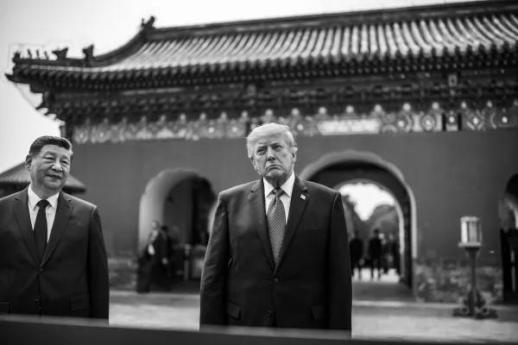 Trump-Xi chip bargaining puts Korean memory makers on alert SEOUL, September 18 (AJP) -From tariffs and rare earths to Iran and artificial intelligence, the U.S.-China summit on Sept. 24 has a crowded agenda. For South Korean chipmakers, the business issue to watch would be whether semiconductors become bargaining currency in a broader trade deal between the world's two largest economies. Chinese President Xi Jinping is said to be assembling an unusually large business delegation, possibly to match the high-profile entourage U.S. President Donald Trump brought to Beijing in May, which included 18 American business leaders such as Nvidia Chief Executive Jensen Huang and Elon Musk. China wants relief from U.S. restrictions on technology and greater access to advanced semiconductors. Washington, meanwhile, has been pressing Beijing over critical-mineral supplies and trade barriers while seeking commitments on purchases of American goods. An existing tariff truce expires Nov. 10. Semiconductors sit at the center of that bargaining because Washington controls access to much of the technology China still needs to move deeper into advanced chipmaking, while Beijing controls a vast technology market and important parts of the raw-material supply chain. The United States has restricted exports of advanced AI chips and chipmaking equipment to China since 2022, although the Trump administration has selectively eased some curbs. The Commerce Department in January shifted Nvidia's H200 and comparable processors to case-by-case licensing for approved Chinese customers, while keeping tighter controls on the most advanced products. Whether chipmaking equipment itself could become part of a summit bargain is less clear. There has been no public indication that Washington is prepared to dismantle its broader controls on advanced manufacturing technology. But for Beijing, equipment is increasingly the missing piece. China has made much faster strides in memory chips than it had only a few years ago. ChangXin Memory Technologies, or CXMT, has emerged as the world's fourth-largest DRAM maker. Its global DRAM revenue share climbed to 9.5 percent in the second quarter from 7.6 percent in the first, according to TrendForce, behind Samsung Electronics at 39.4 percent, SK hynix at 24.9 percent and Micron at 23.3 percent. CXMT this month announced mass production of LPDDR6, next-generation low-power memory used in mobile devices, after making substantial gains in DDR5. Its chips are increasingly being adopted across Chinese computing platforms. The Chinese company is now preparing to move beyond DRAM and mulling a NAND facility. Its Chinese peer YMTC is doing the opposite, testing low-power DRAM products as it looks beyond its traditional NAND business. The crossing of product lines by China's two major memory producers suggests Beijing's semiconductor drive is moving from simply filling domestic supply gaps toward building companies capable of competing across the memory spectrum. AI data-center construction has created severe shortages of both DRAM and NAND, giving even smaller suppliers greater bargaining power. Chinese memory makers have in some cases been able to charge domestic customers more than Samsung and SK hynix during the shortage, an unusual reversal for companies long dependent on price discounts to compensate for their technological lag. CXMT is gaining share among Chinese cloud-service providers, while domestic demand and government support give it a large captive market from which to improve yields and scale production. TrendForce said the company is expanding server DRAM output even as restrictions on foreign equipment continue to hamper progress at more advanced nodes High-bandwidth memory, or HBM, remains a much steeper barrier. Samsung and SK hynix retain a wide lead in HBM, the stacked high-speed memory used alongside Nvidia and other AI accelerators. Chinese producers are developing HBM products, but CXMT and other Chinese suppliers remain in early development and qualification stages, with limited near-term impact on the global market, according to TrendForce. China has built increasingly capable domestic suppliers of etching, deposition and other semiconductor equipment. Chinese equipment suppliers could capture as much as 40 percent of China's chip-tool market this year, excluding high-end technologies such as lithography. The largest gap remains at the cutting edge of lithography. ASML of the Netherlands holds an effective monopoly on extreme ultraviolet, or EUV, systems needed for the most advanced semiconductor processes. The company has never shipped an EUV machine to China. Its newest High-NA EUV systems cost about $400 million apiece and are being adopted by Samsung, SK hynix, TSMC and Intel for future generations of chips. China is developing its own immersion deep-ultraviolet equipment, but output remains tiny compared with ASML. Shanghai Aishengna Electronic Technology Group has targeted production of five domestic DUV systems this year and 20 next year, compared with 131 systems shipped by ASML in 2025. The equipment gap gives Washington leverage in negotiations with Beijing — and effectively gives Korean memory makers more time. Any meaningful loosening of restrictions that improves Chinese access to advanced lithography and other high-end manufacturing equipment could accelerate CXMT's migration to finer processes, improve yields and eventually shorten the technology gap with Samsung and SK hynix. The impact would probably appear first in mainstream DRAM and NAND rather than HBM. China's domestic producers already have scale and customers in those markets and better equipment would make it easier to raise yields, lower costs and push into products now dominated by the Korean and U.S. suppliers. Continued restrictions, on the other hand, preserve part of the technological moat enjoyed by Samsung and SK hynix but create a different problem for the Korean companies. Both have substantial manufacturing interests tied to China and must operate under an increasingly complicated U.S. export-control regime. Samsung and SK hynix have begun testing Chinese equipment partly because access to U.S.-made tools for their Chinese operations has become less certain. SK hynix's Solidigm is also considering building a NAND plant in the United States that could reduce its dependence on its Dalian manufacturing base in China. SK hynix separately has held exploratory discussions with Intel over possible memory production in Ohio. The pressure comes as Washington is simultaneously asking Korean chipmakers to manufacture more on American soil. Semiconductor investment has become part of Seoul's own negotiations with Washington, with President Lee Jae Myung saying Friday that the extent of additional U.S. production by Samsung and SK hynix would have to reflect both corporate decisions and South Korea's industrial strategy. The two countries are still negotiating details of South Korea's $350 billion U.S. investment commitment, including $200 billion of projects not earmarked for shipbuilding. Lee said questions over commercial viability, profit distribution and treatment of losses remain sticking points. A Washington-Beijing compromise that gives China greater access to advanced semiconductor technology could speed the emergence of a fourth major global memory supplier. A harder technology line would slow that challenge but increase pressure on Samsung and SK hynix to shift investment and production toward the United States and away from China. China has not caught South Korea at the top end of memory. In HBM and the manufacturing processes needed to make the most advanced chips efficiently, the gap remains substantial. But the distance below that top tier is narrowing fast. For Samsung and SK hynix, the question surrounding the Sept. 24 summit therefore is not simply whether Trump and Xi talk about chips. It is whether access to the equipment China still lacks becomes part of the price of a broader U.S.-China bargain — and how much time that bargain leaves Korea's memory giants before their Chinese rivals move further up the ladder. 2026-09-18 16:10:59
 -
President Yoon Aims to Revive U.S.-North Korea Dialogue for Peace 이재명 대통령은 18일 “북미대화 재개가 한반도 전쟁 종식과 평화체제 구축 논의로 발전할 수 있도록 최선을 다하겠다”고 밝혔다. 이 대통령은 이날 서울 여의도 국회 의원회관에서 진행된 ‘9·19 평양공동선언 및 남북군사합의 8주년 기념식’에서 김경수 정무특보가 대독한 축사를 통해 “멎었던 바람이 다시 일 기미가 아주 조금씩 보이고, 북미대화의 문을 다시 두드리는 손길이 있다”며 이같이 말했다. 이 대통령은 현재 한반도 정세와 관련해 “남북의 대화는 끊겼고 협력의 문은 닫혔으며 긴장의 밤은 다시 길어졌다”며 “8년 전에 비해 북측의 핵 능력은 고도화됐고 대외 환경도 결코 우리에게 유리하지 않다”고 진단했다. 그러면서도 “9·19 평양공동선언과 남북군사합의는 ‘싸울 필요가 없는’ 한반도를 위한 실마리를 어디서부터 풀지 남과 북이 함께 고민해 만든 소중한 약속”이라며 “우선 우리가 취할 수 있는 일부터 찾아 해나가고 한반도에 평화의 숨결을 다시 불어넣겠다”고 강조했다. 이어 “8년 전 평양에서 한 약속은 불필요한 전쟁 위험을 제거하고 적대관계를 해소하기 위한 의지에서 나온 것”이라며 “평화를 향한 우리 국민의 바람은 한 번도 멎은 적이 없다. 이제 그 바람을 다시 일으키겠다”고 말했다. 한편 9·19 평양공동선언은 2018년 9월 평양에서 열린 남북정상회담을 계기로 문재인 당시 대통령과 김정은 북한 국무위원장이 채택했다. 함께 체결된 남북군사합의에는 군사분계선 일대 적대행위 중지와 비무장지대 내 감시초소 철수 등 군사적 긴장을 완화하기 위한 조치가 담겼다. 이번 기념식은 선언과 합의 체결 8주년을 맞아 당시 합의의 의미를 되짚고 한반도 평화와 남북관계 복원 방안을 모색하기 위해 마련됐다.* This article has been translated by AI. 2026-09-18 16:08:10
-
Chinese Stock Market Rises on Peace Hopes; Semiconductor Sector Soars After a decline the previous day, the Chinese stock market rebounded on September 18. Analysts attribute this recovery to optimism surrounding the potential end of the Iran war. The Shanghai Composite Index closed up 0.94% at 3,911.87, the Shenzhen Component Index rose 1.72% to 13,640.87, and the ChiNext Index increased by 2.25% to 3,372.68.Marsad Bulos, senior advisor for Arab and Middle Eastern affairs to President Donald Trump, stated in an interview with European media outlet Euronews on September 17 that "President Trump believes the war will soon end" and that "he is committed to ending the war and is taking steps to do so." In a separate interview with Axios, Trump mentioned he is facing a "big decision" on whether to completely dismantle the Iranian regime or not, adding that "Iran is in direct contact with the U.S. and still wants to reach an agreement." International oil prices continued to decline. As concerns over Saudi Arabia's oil supply disruptions eased, Brent crude futures fell 0.95% to $104.82 per barrel, while West Texas Intermediate (WTI) futures dropped 0.51% to $101.91.Guotai Junan Securities noted that while the downward pressure on the Chinese stock market has significantly eased, the trading volume remains insufficient to confirm a full market recovery. They warned that if trading volume continues to decline, the index may experience further fluctuations. However, if trading volume increases significantly, it could lead to a breakout above key resistance levels, resulting in additional upward momentum.Notably, the semiconductor backend sector saw significant gains, with companies like Tuolun Si, Gongjin Jufen, and Chengbang Jufen hitting their daily price limits. According to a recent report from Morgan Stanley, the advanced packaging sector is expected to have long-term growth potential due to the rapid expansion of the AI industry. Morgan Stanley forecasts that the advanced packaging market in China could reach 100 billion yuan (approximately $20 billion) by 2029.Retail stocks also performed well, with Guofang Jituan, Guoguang Liansuo, and Shanghai Jiubai reaching their daily price limits. Data from the National Bureau of Statistics indicated that retail sales of consumer goods in China from January to August totaled 32.7569 trillion yuan, marking a 1.1% increase compared to the same period last year. Retail sales of consumer goods, excluding automobiles, rose by 2.7%. Additionally, the upcoming Mid-Autumn Festival and National Day holidays next week are expected to boost consumer goods and retail stocks.Meanwhile, the People's Bank of China set the yuan's central parity rate at 6.7521 yuan per dollar, a decrease of 0.0059 yuan from the previous day, reflecting a 0.09% increase in the value of the yuan.* This article has been translated by AI. 2026-09-18 16:08:00
-
Over 10,000 Real Estate Ads Found to Be False or Misleading Over the past year, more than 10,000 real estate advertisements posted online have been identified as potentially illegal due to false or exaggerated claims. More than half of these ads misrepresented property information, including usage, size, and options.According to the Ministry of Land, Infrastructure and Transport, a total of 10,412 suspicious advertisements were detected from July of last year to June of this year during inspections of online real estate ads.The inspections were conducted under the Real Estate Agent Law, delegated to the Korea Internet Advertising Foundation. Of the total, 9,383 ads were identified through ongoing monitoring based on public reports, while 1,029 were found through targeted monitoring of repeat offenders.The ministry has notified local governments about the detected ads and requested follow-up actions, including fines and investigations. Under the Real Estate Agent Law, fines for improper advertising can reach up to 5 million won, while violations of disclosure obligations can incur fines of up to 500,000 won.Among the 9,383 ads identified through ongoing monitoring, the most common violation was 'improper advertising,' which falsely listed property usage, size, and options, accounting for 5,201 cases (55.4%). 'Disclosure obligation violations,' which omitted essential information such as location, totaled 3,753 cases (40.0%), and 'unauthorized advertising' by individuals not licensed as real estate agents amounted to 429 cases (4.6%).Examples of detected violations include cases where accommodations were misrepresented as single-family homes, properties with a mortgage of 1.2 billion won advertised as having no loan, and important information such as location and building code violations omitted. Additionally, there were instances where unqualified individuals, such as brokerage assistants and employees of distribution companies, directly advertised properties.Shin Yoon-geun, the land policy director at the ministry, stated, "We will continue to strengthen monitoring of false and exaggerated real estate advertisements and do our utmost to create a transparent real estate market environment where everyone can conduct transactions with confidence."* This article has been translated by AI. 2026-09-18 16:04:00