


Latest by
-
 President Lee Addresses Public Concerns in Press Conference 이재명 대통령이 18일 청와대 영빈관에서 진행한 취임 후 7번째 기자회견은 대체로 절제 되고 무거운 분위기 속에서 진행됐다. 최근 국정 지지율이 취임 후 최저 수준으로 떨어진 가운데, 이 대통령은 국민에게 송구하다는 뜻을 밝히며 국정 운영의 부족함을 자신의 책임으로 돌렸다. 연임 논란과 조작기소 특검의 공소취소 논란에는 분명하게 선을 그었고, 여권 내 갈등과 단일종목 레버리지 상장지수펀드(ETF) 도입 등 논란이 된 사안에서도 책임을 피하지 않았다. 그러면서도 검찰개혁과 부동산 시장 안정 등 이재명 정부의 핵심 국정과제는 흔들림 없이 추진하겠다는 의지를 재확인했다. Serious Tone and Humble Responses: "All My Shortcomings" 이 대통령은 이날 오전 10시30분부터 낮 12시9분까지 99분 동안 연단에 서서 취재진의 질문에 답했다. 짙은 남색 정장과 넥타이를 착용한 이 대통령은 웃음이나 농담을 자제하고 시종 신중한 표정을 유지했다. 이 대통령은 모두발언에서부터 몸을 낮췄다. 그는 “지방선거 이후로 일면 갑작스러운 국민의 실망과 걱정에 직면해 당황했던 것도 사실”이라며 “많은 시간 숙고하고 성찰한 결과는 ‘언제나 국민은 옳다’이다. 모두 저의 부족함 때문”이라고 말했다. 이 대통령은 회견 말미에도 “일과 결과에 너무 집중하다 보니 그 과정에서 세심하지 못했던 것이 매우 큰 문제였다는 점을 아프게 깨닫게 됐다”며 “더 많이 소통하고, 더 많이 듣고, 더 많이 존중하겠다”고 말했다. Clarifying Re-election and Indictment Controversies 그동안 논란이 이어진 현안에는 비교적 명확한 답을 내놨다. 연임 개헌 논란에 대해서는 “헌법 개정을 통한 저의 연임은 헌법상 불가능하고 저 역시 연임을 생각해 본 적조차 없다”며 “저는 연임할 생각이 전혀 없다”고 못 박았다. 조작기소 의혹을 수사할 특검에 기존 사건의 공소를 취소할 권한을 부여하는 방안에도 선을 그었다. 이 대통령은 국회를 향해 “특검 권한 가운데 기존 기소 사건의 이송 또는 처분에 관한 조항은 삭제하고 진상 규명에만 집중해 달라”며 “불필요하게 공소취소 논란이 발생하지 않도록 조치해 달라”고 요청했다. 단일종목 레버리지 ETF 도입 논란에는 정책적 부족함을 인정했다. 이 대통령은 “정부 정책에 불완전성이 있었던 것 같다. 부족함이 있었던 것은 맞다”고 말했다. 사후 마련한 투자자 보호 장치를 처음부터 갖췄어야 한다는 비판도 수용할 수 있다고 했다. 최근 인사 논란과 관련해서도 “차제에 인사시스템을 재점검하겠다”고 밝혔다. 인사권을 포함한 모든 권력은 국민에게서 나오는 만큼 국가권력을 행사할 때 국민의 의사를 최대한 존중하겠다는 설명이다. Appealing for Unity Among Supporters: Reaffirming Commitment to Reforms 범여권 내부의 갈등을 향해서는 화합을 호소했다. 이 대통령은 “민주주의와 진보, 개혁의 이상을 꿈꾸며 더 좋은 세상을 위해 행동하는 우리는 모두 친문이고 친노이며 친김대중이고 이재명의 동지들”이라며 “미운 마음이 들고 누군가를 탓하고 싶더라도 저와 정부의 부족함을 탓해 달라”고 말했다. 개혁 기조가 후퇴한 것은 아니라는 점도 분명히 했다. 이 대통령은 검찰개혁에 대해 “사후 조치를 통해 불가역적으로 검사가 다시는 수사에 관여할 수 없게 만들고, 되돌아갈 수도 없게 철저히 할 것”이라며 “검찰을 편들어 개혁에서 후퇴한다는 의심은 거둬 달라”고 요청했다. 부동산 시장 안정에 대해서도 강력한 추진 의지를 드러냈다. 이 대통령은 전임 정부 당시 주택 인허가와 착공 물량 감소가 현재의 공급 부족으로 이어졌다고 진단했다. 택지 개발과 재건축·재개발 등 도시정비사업의 속도를 높여 공급을 확대하겠다는 방침도 재확인했다. 전월세 시장의 불안 국면이 이어지는 상황에서, 민감한 질문에는 전제를 바로잡으며 반문하기도 했다. “아직도 전세는 사라져야 할 제도라고 생각하느냐”는 취재진의 질문에 이 대통령은 “‘사라질 것’이라고 한 것으로 기억한다”며 “내가 언제 사라져야 한다고 했겠느냐”고 되묻기도 했다. Emphasizing National Interest in Foreign Policy 외교·안보 현안에는 국익을 견지하겠다는 원칙을 제시했다. 호르무즈 해협 기여 방안을 두고는 “전쟁에 관여하거나 개입하는 파병은 없다”며 “전쟁 불관여·불개입 원칙은 지금까지 지켜왔고 앞으로도 계속 지켜질 것”이라고 밝혔다. 3500억 달러 규모의 대미투자 협상에 대해서는 국익을 기준으로 재협의하고 있다고 밝혔다. 이 대통령은 “거의 합의가 됐다고 하는데 내용을 보니 동의하기 쉽지 않은 부분이 있어 다시 이야기하는 중”이라며 “대한민국의 국익이 훼손되지 않고 한미 양국 모두에 도움이 되는 내용으로 사업을 구성하기 위해 치열하게 협의하고 있다”고 말했다. 2026-09-18 15:24:10
 -
South Korea Revamps Certification System for Innovative Pharmaceutical Companies The South Korean government is overhauling its certification system for innovative pharmaceutical and biotech ventures to help them grow into leading global companies. The new system will differentiate between 'leading' companies focused on blockbuster drug development and 'growth' companies aimed at nurturing startups, creating a structured 'growth ladder' tailored to the stages of company development.On September 18, the Ministry of Health and Welfare announced that it will propose amendments to the enforcement decree and rules of the Special Act on the Promotion and Support of the Pharmaceutical Industry, as well as regulations on the certification of innovative pharmaceutical companies, for public comment until October 28.The core of this reform is to enhance the system so that promising startups can progress from 'growth' to 'leading' status, ultimately becoming anchor companies in the pharmaceutical sector. Initially, discussions began with the introduction of a 'quasi-innovative' category, but the dual system was established to assist promising small and biotech ventures in developing new drugs.According to the proposed amendments, innovative pharmaceutical companies will be certified as 'leading' if they score 65 points or higher in detailed evaluations, while those scoring below 65 will be classified as 'growth' companies. Both types will have a certification validity period of three years, with the possibility of renewal through re-evaluation. Notably, companies can transition from 'growth' to 'leading' based on re-evaluation results.To achieve 'growth' certification, companies must meet stringent research and development (R&D) investment criteria. Firms with average annual revenues below 100 billion won must invest at least 7% of their revenue (minimum 5 billion won) in R&D, while those with revenues above 100 billion won must invest at least 5%. However, companies meeting cGMP and EU GMP quality standards are subject to a reduced requirement of 3%.Disqualifying factors are also strict. Companies that have received administrative penalties more than twice or have been found guilty of illegal rebate practices involving amounts over 5 million won will be excluded from certification. However, violations occurring more than five years prior to the certification evaluation will not disqualify a company. Additionally, executives found guilty of embezzlement, breach of trust, stock manipulation, assault, or sexual crimes resulting in fines will also be disqualified from receiving certification.Benefits such as additional points for national R&D projects and price advantages will be tailored to the characteristics of each company based on their certification type. The proposed amendments will legally establish the basis for differentiated support for leading and growth companies, allowing the Minister of Health and Welfare to determine the scale of customized support.To prevent confusion during the transition to the new system, measures have been put in place. Existing innovative pharmaceutical companies that have already obtained certification will retain their status and benefits as 'leading' innovative pharmaceutical companies until their current certification expires.The Ministry plans to finalize the amendments after gathering feedback from the industry and the public during the comment period and will promptly initiate a new certification application process for 'growth' innovative pharmaceutical companies.* This article has been translated by AI. 2026-09-18 15:24:00
-
Strength of the Won Boosts Bank Stocks Amid Export Concerns The strengthening of the won is increasing the performance burden on export companies in the domestic stock market, while bank stocks are showing relatively strong trends. Analysts note that the direct impact of exchange rate changes on bank performance is limited, and expectations for foreign exchange translation gains and improvements in Common Equity Tier 1 (CET1) ratios due to the decline in the won-dollar exchange rate are raising expectations for third-quarter results.According to the Korea Exchange on September 18, the KRX Bank Index rose 2.53% over the past week, marking the highest increase among major sector indices. In comparison, the KRX 300 Financial Index rose 0.43%, while the KRX Insurance Index fell 0.10%. The relative strength of bank stocks is even more pronounced when compared to the 4.53% decline in the KOSPI.The rise in the bank index is supported by gains in most of its constituent stocks. Woori Financial Group saw the largest increase at 6.76%, followed by KB Financial (3.34%), Shinhan Financial Group (2.72%), Hana Financial Group (1.63%), BNK Financial Group (0.70%), and JB Financial Group (0.32%), all of which showed upward trends.Recent strength in the won is cited as a background for this relative strength. Since the Korean stock market has a high proportion of export companies, an increase in the value of the won reduces the won-denominated value of overseas sales and profits, which can burden export price competitiveness. In contrast, the financial sector is less directly affected by exchange rate changes, allowing for greater performance stability during periods of won appreciation.Yum Dong-chan, a researcher at Korea Investment & Securities, noted, "The stability of the financial sector's performance, which is relatively less affected by exchange rate changes, is noteworthy during periods of won strength."Additionally, the decline in the won-dollar exchange rate may lead to foreign exchange translation gains and improvements in CET1 ratios for some banks, further boosting performance expectations. Choi Jeong-wook, a researcher at Hana Securities, stated, "As the won-dollar exchange rate falls to the 1,350 won range, the positive impact on third-quarter bank profits and CET1 ratios is expected to expand further."If the downward trend in the exchange rate continues until the end of the quarter, it is theoretically estimated that Industrial Bank could see foreign exchange translation gains of about 250 billion won, while Hana Financial and Woori Financial could see gains of around 200 billion won and 130 billion won, respectively. The CET1 ratio may also improve due to a decrease in risk-weighted assets resulting from the exchange rate decline.Choi added, "For every 10 won decrease in the exchange rate, there is an improvement effect of about 1 to 2 basis points. For large bank holding companies, a rise in CET1 ratios of about 20 to 40 basis points is expected during the third quarter."Although recent government bond yields have risen, the improvement in third-quarter net interest margins (NIM) may be limited, making the interest rate environment a variable. However, there are expectations that loan growth rates may exceed market expectations, allowing net interest income to continue on a positive trajectory.* This article has been translated by AI. 2026-09-18 15:24:00
-
Park Hong-keun: Economic Growth Benefits Must Be Shared Across Generations and Regions Park Hong-keun, the Minister of the Office for Government Policy Coordination, stated on September 18 that the direction for establishing a national development strategy should focus on enhancing growth potential and ensuring that the benefits of economic growth are distributed across generations, regions, and social classes. He emphasized the need to provide hope for citizens to lead basic lives and to have opportunities for recovery even after failures.On this day, Minister Park co-chaired the fourth plenary meeting with Kwon Oh-hyun, chair of the Long-term Strategy Committee, at the Korea Press Center. They discussed the progress of the committee's policy initiatives and the public feedback process for the '2045 National Development Strategy' along with future plans.Minister Park assessed that South Korea is at a pivotal moment of historical change, such as the AI transformation, which will significantly influence the next 20 to 30 years.He noted that while the uncertainties in the economy and society make it difficult to predict what 2045 will look like, it is more important to contemplate what kind of nation to build rather than focusing solely on the precision of predictions. He stressed the need to foster a collective willingness to participate in creating the desired nation.Regarding the national development strategy that the government aims to announce by the end of the year, he insisted that it should not merely be a report. It must elevate public expectations and be a strategy that can be effectively implemented.To achieve this, he proposed enhancing growth potential, spreading the benefits of growth, and striving to become a global leader. He also stated that the strategy formulation process would adequately incorporate the opinions of experts, including those from the Long-term Strategy Committee.The committee discussed the current status and future plans for seven policy initiatives it has selected. It proposed a policy framework aimed at establishing 'hope, welfare, and a leading nation' as future goals, focusing on strengthening national resilience through responses to complex crises and creating new growth engines. Strategies to support this include institutional innovation, talent development, and national investment innovation.Chair Kwon explained that they are discussing factors that hinder the achievement of economic and social goals and the necessary foundations, and that they will continue to coordinate specific policy directions with experts, including institutional improvements.The committee is conducting research with the Korea Institute for Industrial Economics and Technology to detail the implementation tasks and action plans. The government plans to incorporate necessary elements from the research into the 2045 National Development Strategy.The Office for Government Policy Coordination is also conducting in-depth interviews to understand the difficulties and expectations of young people regarding the future. They plan to carry out street interviews with young people and foreigners from various regions and continue to gather opinions through expert consultations and meetings.* This article has been translated by AI. 2026-09-18 15:20:00
-
Hwawoo Law Firm Concludes Seminar on Corporate Criminal Risks Hwawoo Law Firm announced on September 18 that it held a seminar on September 17 at its training center, titled 'Transformation of Investigation Structure: Changes in Corporate Criminal Risks and Response Strategies.'The seminar was organized to proactively assess the criminal risks that companies may face in response to fundamental reforms in the criminal justice system, including the abolition of the prosecution office, the establishment of the Public Prosecution Service and the Serious Crimes Investigation Agency, and the expansion of special judicial police authority.More than 100 in-house lawyers from domestic and international companies participated in the seminar, demonstrating significant interest in the evolving criminal justice system.The seminar opened with a welcoming address by Kang Nam-il, the representative lawyer of Hwawoo, and featured three sessions that examined the trends in investigation system changes and practical issues from various angles.The first session, titled 'Legislative Progress and Amendment Trends,' was presented by partner lawyer Jo Gyu-woong, a former prosecutor at the Suwon District Prosecutors' Office. He explained the structural changes in criminal justice procedures resulting from the separation of investigation and prosecution, emphasizing the importance of initial responses to specialized investigative agencies and the Public Prosecution Service following the abolition of the prosecution office.The second session, 'Changes in Special Judicial Police Investigations and Corporate Responses,' was led by partner lawyer Lee Seong-sik, a former deputy chief prosecutor at the Seoul Central District Prosecutors' Office. He discussed the practical changes in the status of special judicial police following the reform of the investigation structure and the procedures for handling cases. He also analyzed changes in the investigation procedures of special judicial police through key case studies and proposed strategies for companies to respond early in investigations and document procedures.The final session, 'Changes in Serious Criminal Investigations and Corporate Responses,' featured partner lawyer Kim Sang-moon, a former investigation review officer at the Seoul Metropolitan Police Agency. He examined the changes in the investigation environment centered on the police and explained practical strategies for securing defense rights by quickly establishing facts from the early stages of investigations and linking them with digital forensics.Lee Myung-soo, the representative lawyer of Hwawoo, stated, 'The rapid changes in the investigation structure require a complete shift in the paradigm of corporate investigation responses.' He added, 'The Hwawoo Corporate Criminal Response Strategy Center will continuously provide optimal solutions for preventing and responding to corporate criminal risks based on close collaboration among professionals with rich practical experience and expertise.'* This article has been translated by AI. 2026-09-18 15:12:10
-
Xi Jinping's Early Return from BRICS Sparks Health Speculation Chinese President Xi Jinping has not appeared in public since returning early from the BRICS summit in New Delhi, leading to speculation about his health.According to reports from the UK’s Independent and Newsweek on September 17, Xi returned to China on the 13th after attending the 18th BRICS summit on the 12th and 13th, departing ahead of other leaders. He also did not attend the gala dinner associated with the summit and has remained out of the public eye since his return.This visit marked Xi's first trip to India in seven years. Although the schedule was originally set for the 12th and 13th, his actual stay lasted only about 24 hours, prompting speculation on social media regarding the reasons for his early departure.Concerns about Xi's health were fueled by a video released during the summit. In footage aired by Indian state television, Indian Prime Minister Narendra Modi paused during his opening remarks to ask Xi, "Are you okay?" This moment was accompanied by aides moving closer to Xi.However, Chinese reporters later released a longer version of the video, clarifying that Modi's inquiry was related to an issue with the earphones used for real-time translation, not a health check on Xi.The Chinese Foreign Ministry confirmed that Xi successfully completed his schedule at the summit and left New Delhi on the afternoon of the 13th, without issuing any statements regarding his health.Speculation about Xi's health has been further fueled by unverified claims from overseas dissidents. She Wan-jun, a member of the Chinese Democratic Party residing in the U.S., alleged on social media platform X (formerly Twitter) that Xi collapsed during the summit and was urgently transported back to China. However, the Independent reported that there has been no official confirmation of this claim.As speculation continues, attention is also focused on Xi's upcoming meeting with U.S. President Donald Trump scheduled for September 24. So far, the Chinese government has not announced any changes to this schedule. The Independent noted that health concerns surrounding Xi are intensifying ahead of the U.S.-China summit. 2026-09-18 15:12:10
-
Heavy Traffic Expected During Short Chuseok Holiday With this year's Chuseok holiday lasting only four days, a surge in travel is anticipated on specific dates, prompting special traffic measures nationwide.The Southern Gyeonggi Police Agency announced on September 18 that it will implement a special traffic management period from September 17 to 27. According to the police, the average daily traffic volume during this year's Chuseok holiday is expected to reach 6.05 million vehicles, an 11.8% increase from last year's 5.41 million. In the metropolitan area, the daily average is projected to be 2.44 million, up 16.2% from last year.According to Yonhap News, the heaviest traffic is expected on the morning of September 24, the day before Chuseok, for outbound travelers, and on the afternoon of September 25, Chuseok day, for those returning home. The Southern Gyeonggi Police Agency will deploy 715 personnel, including traffic and local police, along with 215 pieces of equipment such as patrol cars and drones to monitor traffic conditions on highways and connecting national roads. Drunk driving enforcement will also be conducted continuously during the holiday period.Local governments are also implementing measures to secure parking spaces and improve traffic convenience.According to Yonhap News, Jeonju City will open 42 paid public parking lots with a total of 3,544 spaces for free from September 24 to 27. However, the public parking lots in Hanok Village and those at Ogeori, Samcheon 2-dong, and Deokjin Plaza will be excluded due to expected congestion. Jeonju City will utilize CCTV from the traffic information center to monitor real-time traffic conditions and will station personnel at key congested areas such as Hanok Village.The Jeonbuk Education Office will also open parking lots at 739 educational institutions, including 705 schools in the province, for free during the Chuseok holiday to assist travelers and residents. Details on opening hours can be found on the Jeonbuk Education Office website.Some regions are also alleviating toll burdens. According to Yonhap News, Gyeongnam Province will waive tolls on three privately operated expressways, including the Geoga Bridge, Machang Bridge, and the road between Changwon and Busan (Bulmosan Tunnel), from midnight on September 24 to midnight on September 27. Approximately 660,000 vehicles are expected to benefit from this. The tolls for passenger cars are 10,000 won for the Geoga Bridge, 2,500 won for the Machang Bridge, and 1,100 won for the Changwon-Busan road. The Pallyong Tunnel and the Jigae-Namsan road, managed by Changwon City, will also be free during the same period.Given the expected concentration of vehicle movement during the short holiday, it is advisable to check real-time traffic information and the availability of free parking before departure. 2026-09-18 15:12:00
-
 South Korea sees growing use of electronic prepaid payments SEOUL, September 18 (AJP) - South Korea's use of prepaid electronic payment services jumped 21.9 percent in the first half of this year, driven by growing use of simple payments and money transfers, according to data by the Bank of Korea (BOK) released on Friday. The daily average value of such services rose to 1.55 trillion won (US$1.12 billion), up from 1.27 trillion won a year earlier, the central bank said. Daily transaction volume also increased 14.5 percent to 39.22 million. These services allow users to pay for goods and transportation or transfer money using prepaid funds or linked bank accounts. Most transactions were made through financial service providers, with their daily payment value rising 21.4 percent to 1.50 trillion won. Simple-payment value increased 23.1 percent to 237.2 billion won per day, while simple remittances rose 19.9 percent to 1.16 trillion won. Transportation-card payments increased 15.9 percent to 15.2 billion won. Across electronic financial firms, smartphone manufacturers and financial institutions, the daily value of simple-payment services rose 16.8 percent from a year earlier to 1.23 trillion won, while transaction volume increased 12.8 percent to 38.22 million. Electronic financial firms accounted for 55.4 percent of simple-payment value, up from 55.1 percent a year earlier. Smartphone manufacturers held a 23.3 percent share and financial institutions 21.2 percent. Among payment methods offered by electronic financial firms, credit cards remained dominant with a 58.1 percent share, followed by prepaid funds at 34.9 percent and account-based payments at 7.1 percent. Simple remittance services showed a divergence between value and volume. Their daily value rose 19.8 percent to 1.17 trillion won, while the number of transfers fell 1.5 percent to 7.43 million per day. Payment gateway services also expanded, with their daily transaction value rising 12.6 percent to 1.72 trillion won and transaction volume increasing 12.1 percent to 36.75 million. Credit-card payments, which accounted for 74.2 percent of payment gateway transaction value, increased 12.8 percent. Account-transfer payments rose 16.7 percent, while other payment methods climbed 27.7 percent. The daily value of escrow services increased 6.2 percent to 207.1 billion won, while electronic billing and payment services rose 8.9 percent to 97.6 billion won. The BOK survey covered 250 electronic payment service providers as of the end of June, including 226 registered electronic financial businesses and 24 financial institutions. AJP TAKEAWAYS - Daily prepaid electronic payment use rose 21.9 percent to 1.55 trillion won in the first half, supported by continued growth in simple payments and remittances. - Simple-payment value increased 16.8 percent to 1.23 trillion won per day, with electronic financial firms accounting for 55.4 percent of the market. - Remittance value climbed 19.8 percent even as transaction volume fell 1.5 percent, while payment gateway transactions increased 12.6 percent in value. 2026-09-18 15:11:34
 -
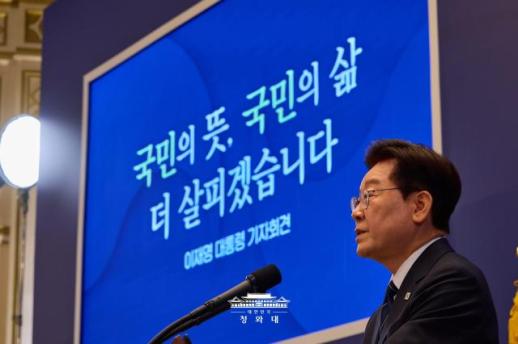 Korea's Lee rules out Gulf combat role, reelection bid SEOUL, September 18 (AJP) - South Korean President Lee Jae Myung on Friday sought to clear up two sources of uncertainty and debate, articulating a clear “no” to South Korean combat involvement in the Gulf conflict and to any intention of seeking a second presidency. “There will clearly be no troop deployment that involves or intervenes in a war,” Lee told a live press conference at the Cheong Wa Dae. “There is no change in that principle.” Lee, however, left room for Seoul to expand non-combat maritime-security operations, saying South Korea must carry out a minimum level of activity needed to protect its commercial vessels, crude-oil routes and citizens. The government is considering strengthening the role of the Cheonghae Unit, which has operated in waters off the Middle East since 2009, he said. An assessment team recently visited the United Arab Emirates to examine security and logistical conditions as Seoul weighs its response to calls for a greater contribution to maritime security around the Strait of Hormuz. Lee was equally categorical on a domestic controversy over constitutional revision and the possibility of extending his presidency. “I have absolutely no intention of seeking reelection,” he said. Lee said any constitutional amendment allowing a president to serve two four-year terms could not apply to him and rejected suggestions that his support for constitutional revision was intended to extend his time in office. South Korea's current Constitution limits presidents to a single five-year term. The president said constitutional revision was nevertheless necessary to reflect changes since the current charter was adopted in 1987, citing stronger basic rights, greater decentralization and a possible four-year renewable presidency. He said the details should be decided through bipartisan debate in the National Assembly and public consensus. Lee also acknowledged that negotiations with Washington over South Korea's planned $350 billion investment in the United States remain unresolved despite a series of visits by senior Korean officials. “I was told that we were almost at an agreement, but when I looked at the details, there were parts that were difficult for me to agree to, so we are discussing them again,” Lee said. The investment package forms part of a bilateral trade agreement under which Washington capped tariffs on South Korean imports at 15 percent. Seoul has sought to ensure investments meet a standard of “commercial rationality,” with outstanding issues including how profits, losses and investment returns would be handled. Asked about U.S. pressure for more semiconductor production on American soil, Lee noted that Samsung Electronics and SK hynix were already investing there and said additional expansion should reflect both corporate judgment and South Korea's broader industrial strategy. On North Korea, Lee said another summit between U.S. President Donald Trump and North Korean leader Kim Jong-un could not be ruled out and disclosed that Seoul was continuing behind-the-scenes coordination aimed at creating conditions for U.S.-North Korea dialogue. Lee dismissed concerns that South Korea could be sidelined if Washington and Pyongyang resume direct talks, saying Seoul would still have a role in any broader process involving peace and security on the Korean Peninsula. The wide-ranging press conference came as Lee sought to reset his domestic agenda after a prolonged fall in public support. A Gallup Korea survey released Friday put positive assessments of Lee's job performance at 37 percent, down one percentage point from the previous week and the lowest recorded by the pollster since his inauguration. Negative assessments rose five points to 56 percent. Real estate policy, personnel appointments and economic and livelihood issues were the most frequently cited reasons for negative evaluations. The survey of 1,002 adults was conducted Sept. 15-17 and had a margin of error of plus or minus 3.1 percentage points at a 95 percent confidence level. Addressing the public while standing throughout the 100-minute session, rather than sitting as in his previous news conferences, Lee struck a more contrite tone than in many of his past public appearances as he acknowledged shortcomings in communication and his failure to fully grasp public frustration over some policies and appointments. After reflecting on the decline in public support, Lee said his conclusion was that “the people are always right,” and attributed the setback to his own lack of attentiveness, consideration and communication. He nevertheless made clear that the change in tone would not mean abandoning his core policy agenda. Lee pledged to press ahead with prosecutorial and police reform, stabilize housing prices and put greater emphasis on improving household livelihoods. He also reiterated a decentralization drive under which Seoul would serve as the country's economic capital and Sejong as its administrative capital. “I will communicate more, listen more and show greater respect,” Lee said in closing, while adding that he would not give up on the policy goals his administration had set out to pursue. AJP Takeaways - Lee ruled out any Hormuz deployment that could involve South Korea in war but left open an expanded maritime-security role. - Seoul's $350 billion U.S. investment package remains under negotiation, with Lee saying some proposed terms are still difficult to accept. - Lee backed efforts to revive Trump-Kim dialogue as he sought to reset his presidency amid a record-low 37 percent approval rating. 2026-09-18 15:10:46
 -
Naver Cloud Unveils Defense AI Strategy for Military Applications Naver Cloud has introduced a Defense Sovereign AI strategy aimed at applying and validating civilian AI technology in military operations. The strategy includes plans for enhancing autonomous weapon systems and supporting real-time decision-making based on data, while ensuring that the military retains control over data and AI models through a specialized defense cloud.On September 18, Naver Cloud hosted the 'Defense AI Day' seminar at the Shilla Hotel in Seoul, attended by 550 representatives from the Ministry of Defense, the Joint Chiefs of Staff, and various military branches.This year, Naver Cloud has actively pursued the commercialization of its Defense AX initiative. In March, the company began promoting specialized AI technology collaboration for defense, followed by the establishment of a dedicated organization in June. They have since started applying their AI models and cloud capabilities to meet military data security and control requirements.In his welcoming remarks at the seminar, Naver Cloud CEO Kim Yoo-won stated, "We will support problem-solving in defense operations by connecting the capabilities of the military, defense companies, startups, and research institutions."The presentations outlined how the military can apply civilian technology to its missions while maintaining control over AI, and how to incorporate field experiences for continuous improvement.Yoo Kyung-beom, Executive Vice President of Naver Cloud's Defense Business, emphasized the importance of establishing a comprehensive operational system rather than relying solely on individual AI models. He explained that it is crucial to connect battlefield data so that AI can utilize it effectively, and to design cloud and data centers that support the military's actual missions.Yoo suggested that the military should first validate missions that can safely connect data and models within a closed network, utilizing civilian technological capabilities. This would involve field engineers operating the systems alongside military personnel to reflect requirements and improve performance.Seong Nak-ho, Executive Vice President of Naver Cloud's AI Technology Division, stressed the need to design the entire force as a single intelligent network, rather than just enhancing the intelligence of individual equipment. He explained that it is essential to understand the information collected by different sensors and weapon systems as a unified battlefield situation, allowing the connected forces to operate cohesively.To achieve this, he proposed using spatial intelligence to reconstruct image and sensor data into spatial information, along with a world model to predict the outcomes of actions. Seong noted that the world model can simulate the potential results of specific actions in advance.To effectively utilize battlefield data in commanders' decision-making, it is necessary to understand the meaning and relationships of the data, according to Naver Cloud Director Lee So-eun. She stated, "AI is not the beginning of technology, but the final stage," emphasizing the need to connect dispersed military data through a data fabric and structure its context using defense ontology.The data fabric technology connects necessary information without moving or duplicating existing system data. Naver Cloud aims to support real-time utilization of battlefield information from various sources while maintaining the security policies of each system.Lee also showcased two demo videos during the seminar, simulating artillery fire and maritime anomalies. The videos illustrated how Naver Cloud connects and analyzes information from different systems into a single situation. In the artillery scenario, multiple response options and decision-making bases were presented based on drone and CCTV footage, as well as voice reports. In the maritime scenario, radar information from unidentified vessels and aircraft was combined with footage from fishing boats to analyze the situation.Lee remarked, "AI does not make decisions on behalf of commanders but analyzes various options and risks to support their final decisions."In the final presentation, Naver Cloud Director Park Jong-geon proposed a defense-specialized cloud as the foundation for applying the previously introduced AI technologies to military missions. He emphasized that the military must retain ultimate control over missions, data, and policies. After central AI models are trained and evaluated, they will undergo military validation and approval before being deployed to mission sites.Park explained that even in situations where communication is limited or cut off, approved AI services and necessary data must be utilized to continue missions. Data collected from the field will be used to improve models, but any updated models will also require military validation and approval before redeployment.* This article has been translated by AI. 2026-09-18 15:08:00