

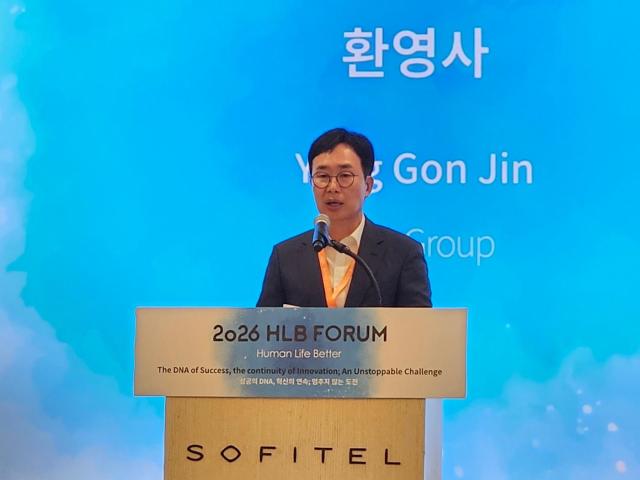
While the semiconductor industry thrives, the biotech sector faces ongoing challenges, including reduced investment sentiment and rising funding costs. Amid these difficulties, the upcoming FDA approval decision for HLB's liver cancer first-line treatment, the combination therapy of riboceranib and camrelizumab, is drawing significant attention as a potential turning point for K-Bio. The outcome of this approval could determine the future direction of the group, with market observers wondering if Jin Yang-gon, chairman of HLB, can finally shed the 'three-time loser' label.
According to industry sources, HLB has several major events lined up, including the FDA approval for the liver cancer first-line treatment in July, the approval for the second-line treatment for bile duct cancer in September, and clinical results for a treatment for neurotrophic keratitis. The approval of any of these treatments could significantly alter the future trajectory of the entire HLB Group.
The most anticipated candidate is the combination therapy of riboceranib and camrelizumab for liver cancer. This treatment is currently under FDA review, with a final decision expected on July 23.
Riboceranib is a targeted therapy that blocks growth signals in liver cancer cells, while camrelizumab is a PD-1 inhibitor that activates the immune system to attack cancer cells. Riboceranib inhibits VEGFR-2, which is involved in tumor angiogenesis, thereby restricting nutrient supply to cancer cells and normalizing abnormal blood vessel structures to facilitate immune cell infiltration. When combined with camrelizumab, it releases T-cell immune evasion mechanisms, enhancing the attack on cancer cells. This combination strategy is believed to improve the tumor microenvironment and activate immunity, significantly extending overall survival compared to existing standard treatments.
HLB is advancing its development and approval strategy in the U.S. through its subsidiary Elevate Therapeutics. Recently, Elevate confirmed industry expectations for its liver and bile duct cancer drugs, which are set for FDA approval in the second half of the year, at the American Society of Clinical Oncology (ASCO 2026), the world's largest cancer conference.
Chairman Jin has been buying shares in key affiliates of HLB Group, signaling confidence in the FDA approval process. Between July 2 and 8, he purchased 103,735 shares of HLB Genex, and on July 5 and 8, he acquired an additional 37,109 shares of HLB Innovation.
As a result, Jin's holdings in various affiliates have increased significantly: 719,430 shares in HLB Genex, 405,373 shares in HLB Panajin, 359,013 shares in HLB Therapeutics, 221,490 shares in HLB Innovation, and 171,706 shares in HLB Biostep.
This move is interpreted as a signal of commitment to long-term growth, even amid increased market volatility and a downturn in the biotech sector compared to the semiconductor boom.
Ultimately, the FDA's decision—whether approval or rejection—will be a key variable in shaping HLB Group's future strategy. If approved, HLB would become the only K-Bio company with global competitiveness in the oncology sector, potentially serving as a catalyst for reaffirming the global competitiveness of the Korean biotech industry. It would also establish a revenue base that maximizes profitability through direct sales in the global oncology market.
However, if the FDA approval is denied again, the commercialization timeline could be significantly delayed without a clear path forward. This would likely damage market trust, leading to reduced investment sentiment and a decline in corporate value. Concerns are growing that this could hinder HLB Group's funding capabilities and overall strategies for expanding global clinical trials and partnerships.
In recent years, while the number of companies with late-stage clinical candidates in the Korean biotech industry has increased, there have been relatively few cases of successful FDA approvals for entry into the global market. An industry insider noted, "The outcome of HLB's FDA approval is not just a corporate challenge; it represents a 'big event' for the K-Bio industry to confirm its independent competitiveness in the global oncology market."
* This article has been translated by AI.
Copyright ⓒ Aju Press All rights reserved.