


Latest by
-
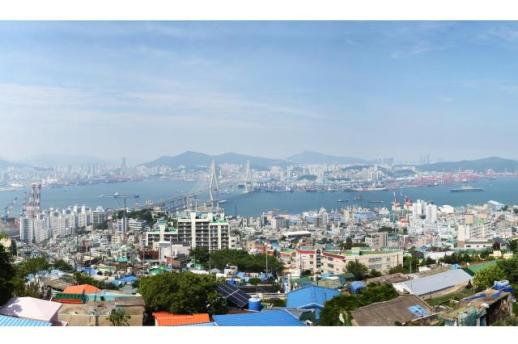 Seoul kicks off preparations for 2028 UN Ocean Conference in Busan SEOUL, September 18 (AJP) - Seoul has begun preparations for the 2028 United Nations Ocean Conference in Busan, holding its first consultation with foreign diplomats to discuss key ocean issues and priorities. Vice Minister of Oceans and Fisheries Nam Jae-heon met diplomats from Norway, Chile, the Netherlands, Germany, Greece and Brazil in Seoul on Thursday to discuss preparations for the fourth UN Ocean Conference, or UNOC4. The conference, scheduled to be held in Busan in 2028, is one of the world’s largest high-level forums on ocean issues and supports the implementation of UN Sustainable Development Goal 14, which focuses on conserving and sustainably using oceans and marine resources. About 20,000 participants from 193 UN member states, international organizations and nongovernmental groups are expected to attend. During the meeting, participants discussed marine environmental protection, the sustainable use of ocean resources and responses to sea-level rise, while sharing policy experiences and areas of interest. “These ocean challenges require cooperation among many countries, and what is especially important is putting the measures discussed into practice,” Espen Fredrik Larsen, Norway’s ambassador-designate to South Korea, said. He added that Norway would work closely with South Korea and Chile, the co-hosts of UNOC4. The ministry plans to hold two additional meetings with foreign diplomatic missions in South Korea, one with Asia-Pacific countries and another with African countries, to gather views and priorities for the conference. “It is important for UNOC4 to lead to practical action and cooperation in addressing global ocean challenges,” Nam said. “We will continue communicating with the international community and reflect a wide range of national experiences and views in the preparation process.” AJP Takeaways - South Korea has begun preparations for the 2028 UN Ocean Conference in Busan, launching its first consultation with foreign diplomats on key ocean policy priorities. - UNOC4 is expected to bring about 20,000 participants from 193 UN member states, with discussions focused on marine protection, sustainable ocean use and sea-level rise. - South Korea and Chile will co-host the conference, while Seoul plans further consultations with Asia-Pacific and African countries to gather priorities and policy input ahead of UNOC4. 2026-09-18 17:19:59
 -
 Gwangmyeong Mayor Park Seung-won Institutionalizes Citizen Sovereignty with First 'Constitution-Friendly City Ordinance' in Korea Gwangmyeong Mayor Park Seung-won is drawing attention for institutionalizing a 'citizen sovereignty' policy that places the dignity and fundamental rights of citizens at the center of administration. On September 18, Mayor Park announced that the 'Ordinance on the Creation and Support of Constitution-Friendly City in Gwangmyeong' was approved during the 302nd regular session of the Gwangmyeong City Council. The ordinance is set to be promulgated in October and will take effect thereafter. This ordinance aims to reflect the fundamental principles of popular sovereignty, the guarantee of fundamental rights, and the values of democracy and decentralization throughout Gwangmyeong's administration. Mayor Park clarified that the establishment of this ordinance is intended to empower citizens as active participants in the policy-making process rather than mere subjects of administration. He stated, "The constitution should not just be a value confined to legal texts; it must serve as a standard that protects citizens' lives and guides the direction of administration. We will create a city where the dignity and fundamental rights of citizens are at the center, and where citizen sovereignty translates into real rights." Under the ordinance, Mayor Park is required to establish and implement a 'Basic Plan for Constitution-Friendly City' every five years, along with annual implementation plans based on this basic plan. Procedures will also be established to review and evaluate progress, ensuring that the policies of the constitution-friendly city are sustainable and effective. The roles of public officials are also clearly defined. They are expected to reflect the values promoted by the constitution in their duties, protect citizens' rights, and work to expand citizen participation in policy-making. Additionally, a 'Constitution-Friendly City Creation Committee' will be established to review key policies and projects aimed at creating a constitution-friendly city. The committee will consist of up to 15 members, including experts, city councilors, and citizen representatives. Mayor Park plans to implement tailored constitutional education for citizens and public officials, as well as expand forums and deliberative programs that discuss local issues alongside constitutional values. Furthermore, he aims to promote cooperation among local governments that advance constitutional values and citizen sovereignty by forming a 'Constitution-Friendly City Local Government Council.' Mayor Park has previously emphasized citizen participation and decentralization as key directions for his administration. The establishment of this ordinance appears to be a measure to expand these policy directions into institutional principles aligned with constitutional values. Meanwhile, Mayor Park plans to gradually implement citizen constitutional education and participation programs, reflecting citizens' fundamental rights and participation throughout the administration.* This article has been translated by AI. 2026-09-18 17:12:00
 -
Financial Supervisory Service Head Lee Chan-jin Visits Traditional Market to Support Vulnerable Communities Lee Chan-jin, head of the Financial Supervisory Service, engaged in charitable activities with financial companies at a traditional market ahead of Chuseok. On September 18, the Financial Supervisory Service announced that Lee visited Bangsin Traditional Market in Gangseo-gu, Seoul, alongside the Salvation Army of Korea, IBK Industrial Bank, Kiwoom Securities, KB Insurance, and Shinhan Card to conduct charitable activities. The Financial Supervisory Service and the participating financial companies jointly raised 130 million won to purchase daily necessities and Onnuri gift certificates at the market. The items and gift certificates were distributed to local vulnerable groups and social welfare organizations. During the visit, Lee personally purchased daily necessities and spoke with market vendors to hear about their challenges and suggestions. Lee expressed hope that the charitable activities would help market vendors and those in need enjoy a bountiful Chuseok, stating, "We will continue to engage in activities that support traditional markets and local communities in collaboration with the financial sector." Representatives from the participating financial companies also affirmed their commitment to fostering cooperative values with local communities.* This article has been translated by AI. 2026-09-18 17:12:00
-
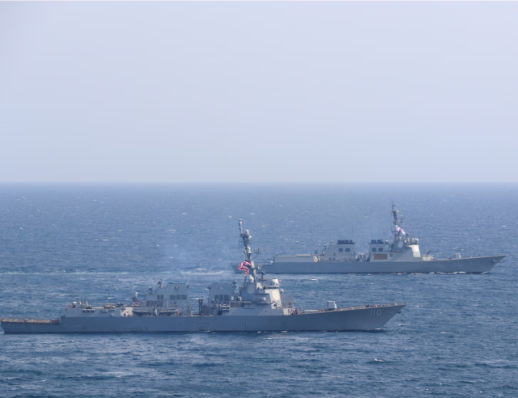 Seoul draws Hormuz line as Tokyo weighs mine-clearing role SEOUL, September 18 (AJP) - President Lee Jae Myung on Friday ruled out any South Korean military deployment that would draw the country into the war involving Iran, while leaving room for a narrowly defined mission to protect Korean vessels, citizens and energy routes around the Strait of Hormuz. The remarks marked Lee’s clearest attempt yet to draw a line between joining a war and contributing to maritime security as Seoul faces sustained U.S. pressure over Hormuz. “There will be no deployment that involves or intervenes in war,” Lee said during a press conference at Cheong Wa Dae. “We will not make such a troop deployment or dispatch military assets.” Lee said the principle of noninvolvement would remain unchanged but added that South Korea still needed to conduct a “minimum level of activities” to protect its merchant ships, crude oil transportation routes and citizens, as other countries do. He specifically pointed to the Cheonghae Unit, South Korea’s long-running anti-piracy naval contingent, saying Seoul was reviewing ways to strengthen its role in responding to threats to ships and Korean nationals. But Lee rejected sending forces or military assets in a way that would involve South Korea in the fighting. “To make it clear once again, there will be no deployment to the war,” Lee said. Lee’s comments came after weeks of government preparations to examine what a potential South Korean contribution could look like. A government assessment team made up of defense and foreign ministry officials traveled to the United Arab Emirates earlier this month and returned on Sept. 10 after examining military facilities and ports that could support South Korean assets, as well as maintenance, logistics and operational conditions. The UAE, which lies near the Strait of Hormuz, hosts Al Dhafra Air Base, one of the main U.S. military facilities in the region and a possible operating location for P-8A Poseidon maritime patrol aircraft. The Defense Ministry has stressed that the assessment mission was intended to review local conditions and the security environment and did not presuppose a deployment. U.S. President Donald Trump has repeatedly criticized South Korea for not providing military support related to the Iran conflict. In August, Trump said Lee had declined when asked to assist U.S. efforts involving Iran and cited Seoul’s stance when ordering the Pentagon to substantially reduce a major South Korea-U.S. military exercise. “If we operate under U.S. command and control, that means participating in the war,” said Paik Seung-hoon, a senior researcher at the Institute of Middle East Studies at Hankuk University of Foreign Studies, adding that the most important dividing line was who controlled the mission and what its purpose was. “But if we retain our own operational control, as we did in 2020, and define the mission as protecting our civilian merchant vessels, that is something we can do.” South Korea expanded the operating area of the Cheonghae Unit in 2020, originally deployed for anti-piracy operations in the Gulf of Aden, so it could protect South Korean merchant vessels amid heightened tensions in the region. The unit remained under South Korean command rather than operating as part of a U.S.-led force. Paik said, however, that an independent mission under current wartime conditions would require a much larger force than South Korea currently has deployed in the region. “If we want to conduct an independent operation, we would need at least around 10 vessels,” he said, explaining that South Korea would have to provide its own command and control, surveillance and defensive capabilities against threats ranging from anti-ship rockets and drones to fast attack boats and mines. That would not mean deploying 10 Aegis destroyers, Paik said, but assembling a broader naval formation that could include destroyers, mine-countermeasure assets and potentially submarines. One or two South Korean vessels could operate with far fewer supporting assets if integrated into U.S. intelligence and command networks — a scenario Paik said would blur the line between maritime protection and participation in the war. Lee on Friday appeared to leave open the possibility of reinforcing the existing Cheonghae mission without crossing that line. “We are reviewing and carefully considering ways to strengthen that role,” Lee said. Unlike the war in Ukraine, where South Korea has sought to manage relations with both Kyiv and Moscow, the conflict with Iran directly involves the United States, South Korea’s treaty ally, said Kim Hong-yoo, a professor at Kyung Hee University and a policy committee member at the Korea Defense Industry Association. “This is a war involving our ally because the United States itself is directly fighting,” Kim said. “If an ally is under attack and the other ally simply stands aside, it raises the question of what the alliance means.” Japan faces a similar calculation as Washington presses allies to do more to help secure the Strait of Hormuz. Tokyo has emphasized legal constraints on overseas Self-Defense Forces operations and has not decided on a deployment. Japanese officials have instead raised mine-clearing as a possible contribution once active hostilities have ended. Japan has particular expertise in the area. The Maritime Self-Defense Force sent minesweepers to the Persian Gulf after the 1991 Gulf War. Under Japan’s existing legal framework, however, minesweeping during active hostilities could amount to combat activity, making a ceasefire a critical condition for such a mission. Hosaka Yuji, a specially appointed professor at Korea University specializing in international politics and Korea-Japan relations, said Prime Minister Sanae Takaichi has favored a more active security role alongside the United States but faces domestic and legal constraints on a direct deployment. Hosaka said mine-clearing would be one of Japan’s most realistic options once the fighting stopped. “If there is a ceasefire, Japan can move quickly to send the Self-Defense Forces to the Strait of Hormuz,” Hosaka told AJP in an earlier interview, pointing in particular to Japan’s mine-clearing capabilities. Foreign Minister Toshimitsu Motegi said in March that minesweeping could be considered if a ceasefire were reached and mines continued to obstruct navigation. Takaichi has likewise said any dispatch would depend on conditions at the time and Japanese law. South Korean Foreign Minister Cho Hyun is due to meet U.S. Secretary of State Marco Rubio in Washington on Friday local time, with cooperation over the Strait of Hormuz expected to be among the issues on the agenda. Lee has now defined what South Korea will not do. The harder question is how far Seoul can expand a maritime-protection mission without allowing command, intelligence and operational requirements to turn that mission into participation in the war — a line Tokyo, too, is having to navigate. AJP Takeaways - President Lee Jae Myung ruled out South Korean military involvement in the Iran war, drawing a clear line against troop or military asset deployments tied to combat. - Seoul is still considering limited maritime measures around the Strait of Hormuz, including strengthening the Cheonghae Unit to protect Korean vessels, citizens and energy routes. - South Korea faces continued U.S. pressure over Hormuz, raising questions over how far Seoul can support its treaty ally without becoming directly involved in the conflict. - Japan is another key variable in the regional response, with Tokyo considering post-ceasefire mine-clearing while remaining constrained from joining active hostilities. 2026-09-18 17:06:25
 -
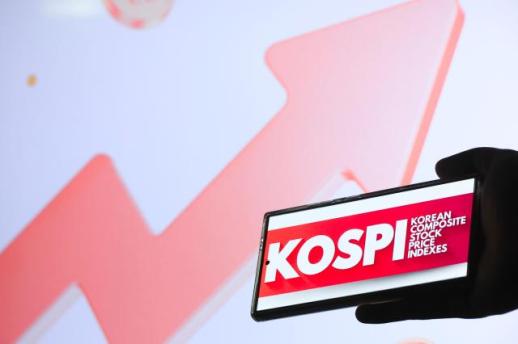 KOSPI jumps 2.7% as chips rally on lower oil, yields SEOUL, September 18 (AJP) - South Korean stocks jumped nearly 3 percent Friday as falling oil prices and U.S. Treasury yields eased inflation concerns. Samsung Electronics and SK hynix led the broad rebound as foreign investors returned after uncertainties over rate decisions by the U.S. and Japanese central banks were removed. The benchmark KOSPI closed at 6,894.23, up 2.66 percent from the previous session. The index opened 2.54 percent higher at around 6,885 and climbed as high as 6,914.08 during the session. Institutions bought a net 1.51 trillion won ($1.09 billion) of KOSPI shares, while foreign investors bought 419.1 billion won ($303 million). Retail investors sold a net 3.59 trillion won ($2.59 billion). The rebound came as investors absorbed the Fed's first rate increase in three years. The U.S. central bank raised its benchmark rate by 0.25 percentage point to a range of 3.75 percent to 4.00 percent Wednesday and signaled that further tightening remains possible this year. The Bank of Japan (BOJ) on Friday raised its benchmark interest rate by 25 basis points to 1.25 percent in a 7-2 vote at the end of its two-day monetary policy meeting, resuming tightening after a three-month pause. The increase took the policy rate to its highest level since 1995. Samsung Electronics and SK hynix led the rally. In after-market trading as of 4:20 p.m., Samsung Electronics was up 3.37 percent at 261,000 won. SK hynix was up 6.13 percent at 1,852,000 won. Samsung Electronics' preferred shares gained 1.91 percent to 197,000 won. The gains followed a strong session for U.S. chip stocks. The Philadelphia Semiconductor Index rose 3.14 percent overnight as Intel, Advanced Micro Devices and other semiconductor shares rallied on continued optimism over artificial intelligence demand. Other technology shares also advanced. SK Square climbed 6.55 percent to 1,074,000 won, while Samsung Electro-Mechanics rose 4.66 percent to 1,392,000 won. Among other large-cap stocks, Hyundai Motor gained 0.83 percent to 366,000 won and Samsung Biologics edged up 0.14 percent to 1,398,000 won. Battery maker LG Energy Solution slipped 0.14 percent to 364,500 won. KB Financial fell 2.34 percent to 175,000 won, while Samsung C&T lost 0.70 percent to 353,000 won. Lower oil prices and U.S. Treasury yields eased some of the pressure that had weighed on equities earlier in the week. West Texas Intermediate crude fell about 2.3 percent overnight, and Brent crude dropped about 3 percent. Expectations of additional Saudi supply and easing tensions involving Yemen's Houthi movement reduced concerns over oil disruptions. The U.S. 10-year Treasury yield also retreated to 4.939 percent as investors reassessed the outlook after the Fed decision. Still, concerns over prolonged monetary tightening remain. Sixteen of 18 Fed policymakers expect at least one additional rate increase before the end of 2026, according to projections released with the latest decision. The junior KOSDAQ also closed higher, rising 0.60 percent to 827.12. Institutions bought a net 23.2 billion won of shares and retail investors bought 12.8 billion won. Foreign investors sold a net 46.6 billion won. Orum Therapeutics plunged 29.96 percent to 37,400 won after Bristol Myers Squibb (BMS) stopped developing ORM-6151, an experimental blood cancer drug it acquired from Orum in 2023. The decision wiped out up to $80 million in potential future payments tied to the drug's development, weighing on the stock. The company will keep the $100 million upfront payment it already received. Among other junior stocks, cathode-material maker EcoPro BM was up 1.85 percent at 104,600 won. Semiconductor equipment maker Wonik IPS was up 3.22 percent at 121,800 won, while robotics company Rainbow Robotics was up 1.40 percent at 434,500 won. Jusung Engineering, which makes semiconductor and display equipment, was unchanged at 204,000 won. Alteogen was also flat at 254,000 won. Battery-material holding company EcoPro was down 0.97 percent at 81,500 won, while laser equipment maker EO Technics was down 1.62 percent at 455,000 won. Semiconductor test-component maker Leeno Industrial was up 4.22 percent at 69,200 won. Printed-circuit-board maker Simmtech was down 1.56 percent at 126,200 won, while robotics company Robotis was down 0.97 percent at 307,000 won. The Korean won traded at around 1,383 per dollar in late trading, compared with 1,382.20 in the previous session. AJP Takeaways - South Korea's KOSPI jumped 2.66 percent to 6,894.23 on September 18, 2026, as lower oil prices and U.S. Treasury yields supported a rebound led by semiconductor shares. - Samsung Electronics was up 3.37 percent at 261,000 won and SK hynix was up 6.13 percent at 1,852,000 won in after-market trading as of 4:20 p.m. - Orum Therapeutics plunged 29.96 percent to 37,400 won after Bristol Myers Squibb ended development of ORM-6151, removing up to $80 million in potential future payments while allowing Orum to keep its $100 million upfront payment. 2026-09-18 17:05:23
 -
Medical Students' Lawsuit Against Cancellation of Enrollment Increase Dismissed A lawsuit filed by medical students seeking to cancel the government's decision to revoke a planned increase of 2,000 medical school admissions has been dismissed once again.The Administrative Division 3 of the Seoul Administrative Court, led by Chief Judge Ho Seong-ho, dismissed the lawsuit on September 18, brought by 4,058 students from 40 medical schools and graduate schools against the Minister of Health and Welfare and the Minister of Education. A dismissal occurs when a court ends a case without a hearing due to failure to meet legal requirements.This ruling marks the conclusion of a series of lawsuits initiated by over 13,000 medical students in response to the government's enrollment increase policy. The previous two lawsuits were also dismissed for the same reasons. As a result, all administrative lawsuits filed by medical students opposing the government's enrollment increase plan have been resolved with the court's dismissal.The plaintiffs began their collective lawsuit in April 2024, protesting the government's announcement in February of that year regarding the increase of 2,000 medical school admissions and the allocation of seats among universities. However, the court determined that the government's announcement was merely a statement of the Minister of Health and Welfare's consultation with the Minister of Education and did not constitute an independent administrative action subject to appeal.Furthermore, the court clarified that there was no legal benefit to be gained from the lawsuit. The allocation of admissions for the 2025 and 2026 academic years had already lost its effect due to the execution of the decision, and the enrollment numbers for the 2027 to 2031 academic years would be newly allocated by each university, effectively nullifying the previous increase allocation.The court concluded that the change in policy had resolved any infringement on the rights or interests of the plaintiffs, and even if the previous decision were canceled, it could not revert to the state prior to the decision, thus there was no benefit in seeking cancellation.However, the medical students argued that the Board of Audit and Inspection had pointed out procedural issues in the enrollment increase process, claiming that the legality should be examined. The court, however, did not accept this argument, stating that there was no concern of similar issues arising in the future.Earlier, two lawsuits ruled in June were also dismissed for the same reasons, and the plaintiffs withdrew their appeals, finalizing the ruling in July. Additionally, a cancellation lawsuit filed by the faculty council of 33 medical schools has also been dismissed.Meanwhile, the medical school enrollment policy has been revised, with a new plan confirmed to select 3,548 students for the 2027 academic year, an increase of 490 from the 3,058 admissions in 2024.* This article has been translated by AI. 2026-09-18 17:04:00
-
 Icheon to bring Goryeo diplomat Seo Hui's legacy to life SEOUL, September 18 (AJP) - The city of Icheon will turn the legacy of Goryeo-era diplomat Seo Hui into a two-day history and culture festival next month, the city said Friday. The Jangwigong Seo Hui Diplomacy Culture Festival will run Oct. 3-4 at Seo Hui Theme Park in Icheon, about 60 kilometers southeast of Seoul. Held under the theme "Seo Hui Speaks K-Diplomacy," the event will mark the 1,028th anniversary of Seo's death. Programs include a memorial ceremony, a history concert hosted by broadcaster Seo Kyung-seok and a quiz competition for elementary school students. Visitors will also be able to take part in activities including a citywide search for Seo Hui statues, an art contest, a traditional-style writing test and a recreation of a Goryeo-era marketplace. Some programs require advance registration or will be offered on a first-come, first-served basis. Icheon said the festival is intended to introduce Seo Hui's diplomatic legacy through history, culture and hands-on activities. AJP Takeaways - Icheon will hold the Seo Hui Diplomacy Culture Festival on Oct. 3-4. - The festival will take place at Seo Hui Theme Park. - Programs include a memorial ceremony, history concert and children's quiz competition. 2026-09-18 17:02:34
 -
Choi Tae-won Appeals Supreme Court Ruling on Property Division of 944 Billion Won Choi Tae-won, chairman of SK Group, has filed an appeal with the Supreme Court against a ruling that ordered him to pay 944 billion won to Noh So-young, director of the Art Center Nabi. Choi's legal team is contesting only 244 billion won of the total amount.According to legal sources on September 18, the Supreme Court received the case involving Choi and Noh on September 14. The case has not yet been assigned to a panel of judges.After filing the appeal last month, Choi's team submitted a request to limit the appeal to the 244 billion won, stating they would not contest the remaining 700 billion won. As a result, the expected court fee, initially projected to be in the tens of millions of won, has been reduced to approximately 85 million won, which Choi's team has already paid.Choi's representatives stated, "Given the prolonged nature of the dispute, we aim to reduce the conflict and resolve it quickly. We accept the 700 billion won but believe there are legal issues with the amount beyond that, which we will contest."According to Yonhap News, Choi's team plans to challenge both the assets recognized for division and the division ratio established by the appellate court.In July, the Seoul High Court determined that, excluding the value of stocks and other assets Choi had gifted or disposed of during the management of SK Group, the total divisible assets amounted to 2.9 trillion won. The division ratio was set at 66.6% for Choi and 33.3% for Noh.A key issue in the case is whether the shares of SK Siltron acquired in 2017, after the marriage had broken down, should be included in the divisible assets. Additionally, the appropriateness of excluding former President Roh Tae-woo's slush funds from the division ratio while still recognizing Noh's contribution at 33.3% is expected to be contested.As of now, Noh has not filed a counter-appeal. A counter-appeal allows a party to contest unfavorable aspects of a lower court's ruling when the opposing party has filed an appeal. Noh can file a counter-appeal within 20 days after receiving notice of the appeal from Choi's team.* This article has been translated by AI. 2026-09-18 17:00:00
-
 BOJ rate increase fails to aid FX but sets a common path for BOK SEOUL, Sept. 18 (AJP) — The renewed tightening in Tokyo that places the base rate at its 31-year high came short in weakening the greenback's value against Asian currencies but set a common rate path for the Korean central bank. The Bank of Japan (BOJ) raised its policy rate by 25 basis points to 1.25 percent Friday, its highest in 31 years, in a 7-2 vote. The yen weakened to around 157 per dollar after the widely expected move as investors focused on the two dissenting votes and the pace of further tightening. "The outcome has somewhat tempered expectations for further rate hikes and conveyed a dovish impression," said Hirofumi Suzuki, chief foreign exchange strategist at SMBC in Tokyo. The won weakened to 1,383.3 per dollar at the Seoul close from 1,382.2 Thursday. It had briefly weakened past 1,386 in afternoon trading after strengthening below 1,380 earlier in the session. Before the BOJ decision, KB Kookmin Bank's capital markets group said a hawkish policy signal could strengthen the yen and pull the won higher in tandem. The yen's post-decision decline left that potential source of support for the Korean currency weaker than expected. Korean government bonds closed broadly stronger Friday. The three-year yield fell 2.8 basis points to 4.035 percent, while the benchmark 10-year yield dropped 4.0 basis points to 4.466 percent. The broader external backdrop has also turned less favorable for the won after the U.S. Federal Reserve raised its benchmark rate by 25 basis points this week to a range of 3.75 to 4.00 percent. Sixteen of 18 Fed policymakers projected at least one more increase this year, keeping U.S. rates and the dollar among the main external variables facing Asian currencies. For the Bank of Korea (BOK), the significance of Japan's move lies primarily in the exchange-rate and inflation channels. The BOK raised its base rate for a second consecutive meeting on Aug. 27 to 3.00 percent and said inflation was likely to remain above its 2 percent target for a considerable period. Its September Monetary Policy Report maintained a tightening bias, citing inflation, economic conditions and financial stability as the factors shaping further tightening. "All upcoming meetings are live," BOK Governor Shin Hyun-song said after the August decision, while emphasizing the need to monitor how two consecutive hikes feed through the economy and financial markets. The BOK's latest conditional rate projections also leave room for more tightening. Of 21 dots submitted by the seven Monetary Policy Board members, 10 were placed at 3.25 percent, six at 3.50 percent and five at the current 3.00 percent. Each member submits three conditional dots, meaning the distribution does not represent formal policy votes. "The policy focus has shifted from whether to raise rates to the timing and pace of further increases," said Kim Myung-sil, a researcher at iM Securities, in an assessment of the August policy minutes. Kim said the BOK could raise the key rate to 3.25 percent in November if strong growth, underlying inflation and risks from housing prices and household debt persist. A third consecutive hike in October appears less favored. The semiconductor boom has yet to produce the broader domestic spillover needed to meet higher growth expectations, reducing the case for another immediate increase, said Lim Jae-kyun, a researcher at KB Securities. JPMorgan also expects tightening to resume in November rather than October. Economist Park Seok-gil projects quarter-point increases in November, February and May, placing the final destination at 3.75 percent.' The BOK's remaining policy meetings this year are scheduled for Oct. 22 and Nov. 26. November therefore remains a prominent window in existing forecasts, while October could come back into play if the won weakens more sharply, oil prices remain elevated or domestic inflation and financial-stability risks intensify. A clearer BOJ signal of further tightening that strengthens the yen could work in the opposite direction, easing one source of pressure on regional currencies and giving the BOK more time to assess the effects of its previous increases. The BOJ decision therefore does not mechanically raise the likelihood of a Korean rate hike. Its significance for Seoul rests on whether Japanese tightening eventually strengthens the yen enough to support the won or leaves currency-driven inflation risks in place as the BOK decides when to move again. AJP TAKEAWAYS - Japan's rate increase to 1.25 percent failed to strengthen the yen, limiting a potential source of support for the South Korean won. - The won weakened to 1,383.3 per dollar at the Seoul close from 1,382.2 Thursday after trading as weak as the 1,386 level in the afternoon. - November remains a prominent window for the BOK's next increase, while a third consecutive hike in October is viewed as less likely unless currency, inflation or financial-stability risks intensify. 2026-09-18 16:59:54
 -
 IU celebrates 18th debut anniversary with another generous donation SEOUL, September 18 (AJP) - Singer and actress IU has donated 200 million won (US$145,00) to mark the 18th anniversary of her debut, her agency said on Friday. According to EDAM Entertainment, IU donated 50 million won each to four nonprofit organizations, including Korea Welfare Services, Habitat for Humanity Korea, Seoul Rehabilitation Center and Heart to Heart Foundation. The donated money will be used to support young patients from low-income families, war veterans and others recognized for their service and sacrifice for the country. Since making her debut with an album in 2008, the versatile star has regularly made donations on special occasions including her debut anniversary and birthday, as well as to support various causes. IU released a new album last week, offering fans a more mature message about love, imperfections and farewells. She is also meeting fans at special screenings of her concert films at a theater in Yongsan this weekend. AJP Takeaways - IU donated 200 million won to mark the 18th anniversary of her debut, with 50 million won going to each of four nonprofit organizations. - The donations will support vulnerable groups, including young patients from low-income families, war veterans and others recognized for their service to South Korea. - IU continues her charitable activities alongside her music career, following the release of a new album and special screenings of her concert films in Yongsan. 2026-09-18 16:57:09