

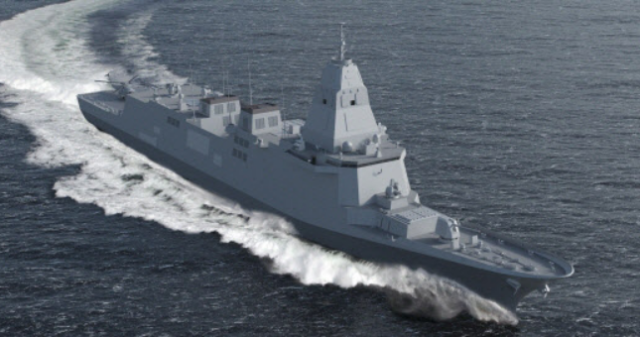
Hanwha Ocean has effectively been chosen as the contractor for the detailed design and lead ship construction of the Korean next-generation destroyer (KDDX), edging out HD Hyundai Heavy Industries by a narrow margin. With a score difference of less than one point, HD Hyundai Heavy Industries received a 1.2-point security penalty, raising the possibility of future appeals and legal challenges.
On June 11, the Defense Acquisition Program Administration (DAPA) completed its evaluation of the proposals for the KDDX project and notified both companies of the results.
The score difference between the two companies was reported to be 0.5867 points, a gap that ultimately determined the bidding outcome.
The decisive factor was the 1.2-point security penalty applied to HD Hyundai Heavy Industries. Prior to the penalty, HD Hyundai Heavy Industries reportedly led Hanwha Ocean by 0.6425 points in technical scores.
HD Hyundai Heavy Industries faced the penalty after a guilty verdict related to the unauthorized photographing and leaking of military secrets concerning the KDDX project.
DAPA decided to apply the 1.2-point security penalty to HD Hyundai Heavy Industries until December of this year. Although the company filed for an injunction against the penalty, the court dismissed the request on June 5.
As a result, the security penalty effectively determined the outcome of the bidding process.
DAPA plans to conduct follow-up procedures, including requests for explanations from each company regarding the evaluation results and potential appeals, with the aim of selecting a preferred bidder by early next month. Subsequent negotiations are expected to lead to a contract by the end of next month.
This evaluation result marks the nearing conclusion of the KDDX contractor selection process, which has been mired in controversy and delays for nearly two years. While there are speculations that the two companies may split the construction of six ships—three each or four and two—Hanwha Ocean's role as the lead ship contractor places it in a significantly advantageous position.
However, given HD Hyundai Heavy Industries' technical score advantage, disputes surrounding the evaluation results are likely to persist. Some observers suggest that HD Hyundai Heavy Industries may file an appeal or seek further legal action, which could delay the project significantly.
In response to the evaluation results, Hanwha Ocean stated, "We will closely collaborate with DAPA to make up for the delayed project schedule and ensure there are no disruptions to naval capabilities by mobilizing all our ship design and construction capabilities. Particularly, as KDDX is a domestically produced destroyer equipped with nine key indigenous development systems, we will strive to achieve world-class performance and quality through perfect system integration."
A representative from HD Hyundai Heavy Industries expressed disappointment at not being selected despite having a significant lead in technical scores, stating, "We plan to request a debriefing to confirm the details and rationale behind the evaluation results."
The KDDX project involves an investment of 7.8 trillion won to construct six 6,000-ton mini Aegis ships using domestic technology. The contractor selected for this project will gain a strong reference for future exports of Aegis ships, leading to ongoing competition, technical development, and legal disputes between HD Hyundai Heavy Industries and Hanwha Ocean.
In a previous conceptual design project conducted in 2012, Hanwha Ocean (then Daewoo Shipbuilding & Marine Engineering) won the contract over HD Hyundai Heavy Industries by a margin of 21.264 points.
Conversely, HD Hyundai Heavy Industries secured the basic design contract by a narrow margin of 0.056 points over Hanwha Ocean. Despite a subsequent conviction of its personnel for technology theft, HD Hyundai Heavy Industries retained its status and role as the contractor for the basic design.
Following this, DAPA deliberated between direct contracts, joint designs, and competitive bidding for the detailed design and lead ship construction, ultimately deciding to proceed with competitive bidding in December of last year and to select a contractor in the first half of this year.
* This article has been translated by AI.
Copyright ⓒ Aju Press All rights reserved.