

Journalist

Kim Sang-cheol
-
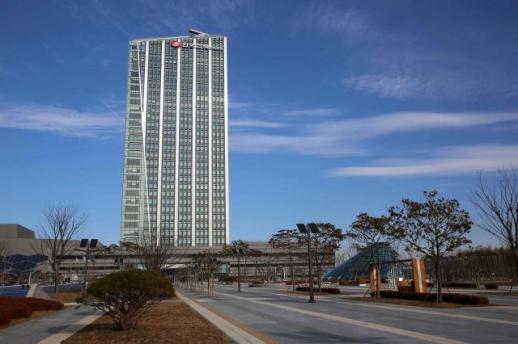 Korea Electric Power Corporation Wins $1.6 Billion Contract for Jafurah Phase 2 Project Korea Electric Power Corporation (KEPCO) is accelerating its entry into the Middle Eastern energy market by securing the Phase 2 cogeneration project at Jafurah, Saudi Arabia.On June 3, KEPCO announced that it successfully signed a power and steam sales contract for the construction and operation of the Jafurah Phase 2 cogeneration plant with Saudi Arabia's state-owned oil company, Aramco, and completed a construction contract with Doosan Enerbility.The project involves constructing a cogeneration plant with a capacity of 331 megawatts and a steam production rate of approximately 465 tons per hour, which is expected to be completed by June 2029. KEPCO anticipates around 2.1 trillion won (approximately $1.6 billion) in revenue over the project's duration.The Jafurah Phase 2 project is an expansion of the Jafurah Phase 1 cogeneration project (317 MW) that KEPCO secured through an international competitive bidding process in 2022. KEPCO plans to complete the Phase 1 project by the end of this month and was awarded the Phase 2 project based on its recognized technical expertise and operational capabilities gained during the first phase.The Phase 2 project will be managed by a special purpose company (SPC) jointly established by KEPCO and Aramco, with construction led by Doosan Enerbility, financing provided by the Korea Export-Import Bank, and operations managed by KEPCO. This collaboration is expected to generate approximately 1.2 trillion won in export effects for domestic companies.This contract is significant as it represents a comprehensive export model involving not only the construction of the power plant but also participation from domestic companies in operations, financing, and equipment supply. With Saudi Arabia pursuing large-scale energy transition projects, there are expectations for additional business opportunities in power generation, power grids, and energy storage systems (ESS) in the future.Since starting with the Rabigh heavy oil power project in 2009, KEPCO has expanded its presence in the Saudi power market by securing contracts for the Jafurah Phase 1 cogeneration, the Sadawi solar power project, and the Rumah 1 and Nairiya 1 gas combined cycle projects.A KEPCO official stated, "With this contract, we plan to expand our entry into the Middle Eastern market across various sectors, including gas combined cycle power, renewable energy, power grids, and ESS, and actively pursue the follow-up cogeneration projects that Aramco is expected to announce in the second half of the year."* This article has been translated by AI. 2026-06-03 10:00:00
 -
 WNMC 26: No map in AI age. Newsrooms must chart their own course MARSEILLE, June 03 (AJP) - If there was one message that echoed through the halls on the second day of the World News Media Congress on Tuesday, it was that nobody knows exactly where artificial intelligence is taking journalism. "There is no map," WAN-IFRA AI in Media Lead Ezra Eeman told editors, publishers and newsroom leaders gathered in Marseille. For an industry accustomed to navigating disruption, the statement was both unsettling and liberating. The internet had a roadmap. Mobile had a roadmap. Social media eventually had a roadmap. But artificial intelligence is creating a fundamentally different environment—one in which technology increasingly mediates the relationship between publishers and audiences, while the rules of value creation, distribution and discovery are being rewritten in real time. "That is not how the new world works. The map does not fully explain what's happening now," Eeman said. The challenge facing publishers, he argued, is not simply adopting AI tools. It is learning how journalism survives and thrives when AI becomes the primary interface through which people access information. Charting a Course Without a Map Rather than offering a blueprint, Eeman outlined the choices publishers are already making as they attempt to navigate the uncertainty. Some are taking a defensive approach. According to data he shared, 56 percent of publishers have blocked AI bots from accessing their content. Others are pursuing engagement. Another 31 percent are actively negotiating or striking licensing agreements with AI companies. Neither approach is universally right, Eeman suggested. "It depends on your setup and size." The larger point is that publishers must make deliberate choices about how they participate in the emerging AI ecosystem. Because in a world where AI systems increasingly summarize, interpret and distribute information, ownership and control matter more than ever. "Without control, no market. No ability to capture value," Eeman warned. For decades, publishers competed for audience attention. Today they are also competing for their place within AI systems that may become the dominant gateway to information. From Ingredient to Destination Eeman argued that one of the greatest dangers facing publishers is becoming accessory. The challenge is not to fall into an ingredient, but survive as the destination. As AI systems generate answers, summaries and recommendations, journalism risks being reduced to an ingredient inside someone else's product. If publishers merely supply content to AI systems, they risk losing audience relationships, subscription opportunities and revenue streams. If they create distinctive experiences, services and products that users actively seek out, they remain relevant regardless of how information is distributed. The future, Eeman argued, will favor organizations that understand emerging AI behaviors and adapt accordingly. "Understand AI habits, avoid commodity, master scarcity, grow your own intelligence, serve the agents." The message reflected a growing consensus that abundance makes uniqueness more valuable. "Market favors exclusive, specific and authenticity." In a world flooded with AI-generated content, original reporting, trusted brands, expertise and human judgment become strategic advantages. Learning While Moving What made the discussion notable was that no speaker claimed to have solved the problem. Instead, leaders from some of the world's largest news organizations described their own efforts to navigate uncertainty. Fabrice Bakhouche, chief executive of SIPA Ouest-France Group, acknowledged that publishers are still trying to understand what AI will mean for their organizations. "The impact on roles, processes and management is only beginning to emerge," he said. "There is no clear picture on impact." His response has been to encourage experimentation while avoiding paralysis. "Bottom-up approaches are relevant," he said, cautioning against becoming "too conservative." Rather than waiting for certainty, organizations must learn through action. Building the Aircraft While Flying At British 24-hour broadcaster Sky News, the challenge is equally complex. Managing Director Jonathan Levy described an industry facing "constant, simultaneous and accelerating" disruption. Quoting former Washington Post executive editor Marty Baron, Levy called this period "head-spinning change in media consumption." Sky's answer has been to embrace innovation while maintaining its core journalistic mission. "We must deliver trusted journalism and simultaneously build the aircraft while in flight," Levy said. The organization is pursuing a premium, video-first future while continuing to cover breaking news around the clock. For Levy, successful navigation depends on leadership that acknowledges uncertainty rather than pretending certainty exists. "Honesty, leadership in transition, not pretending to have answers." The objective is not to eliminate uncertainty but to create enough confidence for organizations to move forward. Building the Scaffolding At Reuters, AI strategy leader Jane Barrett described a different approach to charting a course. Rather than focusing primarily on technology, Reuters has concentrated on building structures that allow experimentation without sacrificing trust. She outlined three layers of what she called "scaffolding." The first is editorial: governance committees, updated guidelines and clear rules governing AI use. The second is technological: approved tools, data security protections and content safeguards. The third is psychological: creating a culture where experimentation is encouraged and failure is accepted as part of learning. "Failure is learning," Barrett said. Her observation that "10 percent is about AI, 20 percent about technology, 70 percent about people and processes" captured a theme repeated throughout the day. The challenge is not simply deploying AI. It is helping organizations adapt to a new reality. Following Signals, Sharing Failures Perhaps the most revealing part of Eeman's presentation was his acknowledgment that the industry remains in the early stages of transformation. "No publisher has a map," he said. Instead, organizations are navigating through experimentation, observation and collaboration. The goal is not to discover a single correct route but to learn from one another's successes and mistakes. "Sharing signals, failures." 2026-06-03 09:58:25
 -
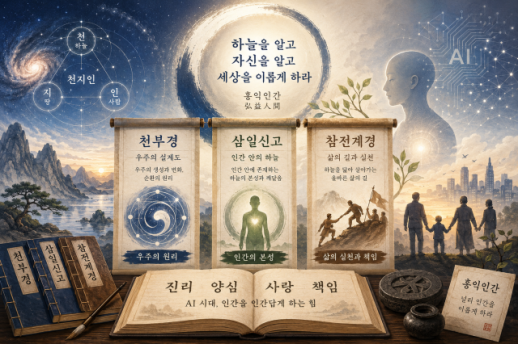 The Three Major Texts of Daejonggyo: Cheonbugyeong, Samilshingo, and Chamjeonggyeong Throughout the history of human civilization, great cultures have left behind their own scriptures. These texts are not merely religious documents; they serve as a spiritual map and blueprint for how a civilization understands the universe, perceives humanity, and defines how to live. While the Vedas of India sing of the principles of cosmic creation, the Upanishads explore the inner divinity of humans, and the Bhagavad Gita outlines ethical practices, the Korean people have also preserved a unique spiritual heritage over the centuries through the Cheonbugyeong, Samilshingo, and Chamjeonggyeong. Each of these texts serves a distinct purpose. The Cheonbugyeong explains the principles of the universe, the Samilshingo describes the relationship between humans and heaven, and the Chamjeonggyeong outlines how humans should live. Together, these three texts form a cohesive worldview that connects the cosmos, humanity, and life. Today, humanity stands at the forefront of a monumental civilizational shift brought about by the artificial intelligence revolution. AI is learning human language, robots are replacing human labor, and algorithms are encroaching on human judgment. However, as technology advances, humans are confronted with more fundamental questions. Who are we? What is the universe? How should we live? Remarkably, the three major texts of the Korean people have already explored these questions thousands of years ago. Cheonbugyeong: A Blueprint of the Universe The Cheonbugyeong consists of just 81 characters, yet it is interpreted as containing a condensed explanation of the principles of cosmic creation, change, and circulation. It begins with the phrase "Ilsi Musil Il (一始無始一)," meaning that the one is both a beginning and without a beginning. This signifies that all existence in the universe originates from one and ultimately returns to one, illustrating the idea that all things are interconnected within a single web of life. The subsequent phrase, "Ilseok Samgeuk Mujinbon (一析三極無盡本)," is interpreted to mean that the one unfolds into three, giving birth to all things. Here, the three refer to heaven, earth, and humanity, indicating that these elements are not separate entities but rather three axes that form a unified cosmic order. The Cheonbugyeong does not view the universe as divided into heaven, earth, and humanity; rather, it understands them as existing in a continuous cycle and harmony within a single life order. This is the essence of the Cheonjiin philosophy. One of the key phrases widely interpreted from the Cheonbugyeong is "Injung Cheonji Il (人中天地一)," meaning that humans are the axis of the universe, existing between heaven and earth. While Western anthropocentrism places humans above nature, the Cheonbugyeong views humans as beings that coexist with heaven and earth. Humans are not rulers over nature but rather fulfill the will of heaven and earth. Another significant teaching conveyed as "Bonsim Bon Taeyang (本心本太陽)" is also noteworthy. It suggests that the original human heart is bright like the sun, indicating that humans are inherently good and bright, with greed, anger, and ignorance merely obscuring that brightness. This idea later connects to the understanding of humanity in the Samilshingo. Additionally, the principle of "Yongbyeon Budong Bon (用變不動本)" is central to the Cheonbugyeong. It states that while all things are in constant change, the fundamental essence remains unchanged. Even as seasons change, dynasties rise and fall, and civilizations evolve, the fundamental principles of the universe do not change. This is why truth, conscience, love, and responsibility persist even in the age of AI. Interestingly, the Cheonbugyeong is composed of exactly 81 characters, just as Laozi's Tao Te Ching consists of 81 chapters. While a direct historical relationship between the two texts cannot be definitively established, it is noteworthy that the number 81 holds special significance in East Asian philosophical traditions, symbolizing completion and circulation. The number 9 is the highest single-digit number, and 81 is the square of 9, understood as a symbol of heavenly order and cosmic completion. In this sense, the Cheonbugyeong can be seen as a literal blueprint of the universe left by the Korean people. Samilshingo: The Heaven Within Humanity While the Cheonbugyeong explains the laws of the universe, the Samilshingo elucidates the divine nature that exists within humanity. Traditionally, the Samilshingo is said to consist of five parts: Cheonhun, Sinhun, Cheongungun, Segyehun, and Jinrihun. Cheonhun explains the essence of heaven, Sinhun describes the meaning of divinity, Cheongungun explores the inner world of humanity, Segyehun outlines the structure of the world in which humans live, and Jinrihun describes the path of practice and enlightenment. The most well-known teaching in Cheonhun is "Cheon-eun Muhyeongjil Hada (天是無形質하되無所不在하니라)," meaning that heaven is formless yet omnipresent. This understanding sees heaven not as a deity confined to a specific space but as a fundamental existence that permeates the entire universe. Humans are not separate from heaven; they live as part of it. In Sinhun, the spirit of "Seongtong Gongwan (性通功完)" is emphasized, which means to realize one's nature and complete one's practice. Knowing alone is insufficient; it must be followed by action. This connects to the East Asian philosophical principle of the unity of knowledge and action. Cheongungun describes humans as beings of mind, energy, and spirit. When the mind is right, the energy is right, and when the energy is right, the body is also right. Ultimately, all human problems begin in the mind. The Samilshingo teaches that before changing the universe, one must first set oneself right. In Segyehun, it warns that when humans are consumed by greed, anger, and ignorance, they lose their original bright nature. The true enemy that corrupts humanity is not external but the desires within. Jinrihun presents a path to overcome such desires and restore one's original bright nature. Ultimately, the Samilshingo teaches that divinity already exists within humanity and can be restored through practice and action. Chamjeonggyeong: How Humans Should Live While the Cheonbugyeong explains the universe and the Samilshingo describes humanity, the Chamjeonggyeong outlines how to live. Traditionally, it is said to consist of 366 verses, a number that corresponds to the days in a leap year. This suggests that our ancestors believed human life should also align with the cosmic order and harmony. The 81 characters of the Cheonbugyeong, the 366 characters of the Samilshingo, and the 366 verses of the Chamjeonggyeong can be understood as symbolic expressions aimed at connecting the cosmic order with human order. The Chamjeonggyeong presents a path for humans to emulate divinity. The first emphasis is on loyalty, but this loyalty is not blind obedience to power; it means being faithful to one's conscience and mission. It also stresses filial piety, which goes beyond simply honoring parents to encompass respect for all life. Trust is also crucial. The Chamjeonggyeong views trust between individuals as one of the most important forces sustaining society. The teachings on courage are also striking. The courage described in the Chamjeonggyeong is not recklessness but the strength to overcome fear for the sake of doing what is right. The spirit that enabled independence activists to sacrifice their lives for the nation can also be traced back to these values. The Chamjeonggyeong also emphasizes moderation and justice. Humans must restrain their desires and act for the justice of the community. While AI technology is rapidly advancing, it cannot create a just society on its own. Ultimately, human conscience and responsibility are necessary. The Chamjeonggyeong is a scripture that teaches the ethics of that responsibility. Revisiting the Spirit of Heaven in the Age of AI The Cheonbugyeong speaks of the laws of the universe, the Samilshingo discusses the heaven within humanity, and the Chamjeonggyeong outlines the path for humans to live in accordance with heaven. These three texts are not separate; if the Cheonbugyeong is the seed, the Samilshingo is the stem, and the Chamjeonggyeong is the fruit. It is about understanding the universe and humanity and then moving towards a life that benefits the world. The ultimate conclusion is Hongik ingan, a life that benefits all humanity. In an era where AI mimics human intelligence, humans must become more human. Technology can make life convenient, but it cannot make humans great. What makes humans great are truth, conscience, love, and responsibility. The Cheonbugyeong, Samilshingo, and Chamjeonggyeong pose the same questions to us today as they did thousands of years ago: What is the universe? Who are we? How should we live? Ultimately, the answers converge into one: to know heaven, to know oneself, and to benefit the world. This is why the three major texts of the Korean people remain relevant today, and as we delve deeper into the age of AI, their significance only grows. Truth, justice, and freedom will always outlast technology, as the power that makes humans truly human comes from a heart directed towards heaven and a sense of responsibility towards the world.* This article has been translated by AI. 2026-06-03 09:57:00
 -
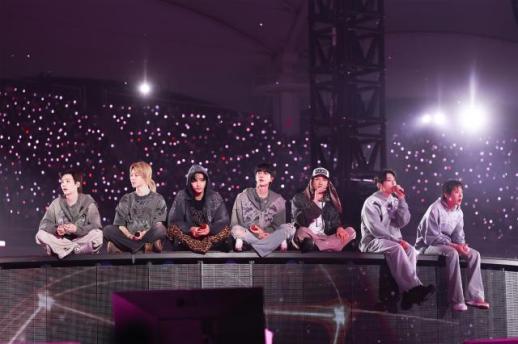 BTS Expands World Tour with Additional Concert in Australia Amid Billboard Success BTS continues to break records on the Billboard charts while expanding their world tour with an additional concert in Australia. Their North American tour, major award wins, and global chart success have contributed to the sustained popularity of their fifth studio album, 'Arirang.'On June 2, BTS announced through the global fan platform Weverse that they will add a performance in Melbourne on February 10, 2027, as part of their 'BTS World Tour: Arirang.' Initially scheduled for two shows at Marvel Stadium on February 12 and 13, the additional concert was added in response to local fan support. This brings the total number of performances in the tour to 86 across 34 cities.This will mark BTS's return to Australia nearly 10 years after their last visit in May 2017 for the '2017 BTS Live Trilogy: Episode III. The Wings Tour.' The upcoming tour will include stops in Melbourne and Sydney, with the Sydney concerts set for February 20-21, 2027, at Accor Stadium. This venue is known for hosting major artists like Adele and Oasis, and BTS will be the first Korean act to perform there.As the global tour expands, BTS's chart performance remains strong. According to the latest Billboard chart released on June 2, the title track 'SWIM' from 'Arirang' has maintained its position at number one on the 'Global (Excluding U.S.)' chart for four consecutive weeks. This marks the eighth time the song has reached the top, extending its record for the most number one hits on this chart in 2026.'SWIM' has tied with BTS's previous hit 'Dynamite' for the longest duration at number one. Billboard reports that BTS has a total of eight number one songs on this chart, double the number achieved by artists like Bad Bunny and Taylor Swift, who have four each. The album features 13 tracks that have remained on the chart for 10 weeks.The song has also seen success on other charts, climbing six spots to number four on the 'Global 200' and rising 11 spots to number 44 on the 'Hot 100.' It also ranks at 17 on 'Adult Contemporary,' 13 on 'Pop Airplay,' 18 on 'Adult Pop Airplay,' and 25 on 'Radio Songs.'The album 'Arirang' continues to perform well on the charts, securing the ninth position on the main album chart 'Billboard 200' for 10 consecutive weeks in the top 10. It also ranks fourth on 'Top Album Sales,' 18th on 'Top Streaming Albums,' and sixth on 'Vinyl Albums,' rebounding seven spots from the previous week. The track 'MIC Drop' has re-entered the 'World Digital Song Sales' chart, marking a total of 164 weeks on the chart.BTS recently concluded the first leg of their North American tour on May 28 at Allegiant Stadium in Las Vegas. This tour included 15 performances across five cities, all of which sold out, drawing approximately 840,000 fans.The North American tour received significant media attention. Consequence, a U.S. music publication, described the Las Vegas concert as a “triumphant return,” highlighting BTS's ability to connect with audiences in large venues. A standout moment was the performance of 'Body to Body,' during which the audience sang along to the Korean folk song 'Arirang.'The Hollywood Reporter referred to BTS as a “global powerhouse,” noting their energetic performances captivated local audiences. Forbes covered key moments from the concert alongside the city-wide campaign 'BTS The City Arirang - Las Vegas,' emphasizing BTS's influence extending beyond the concert venue.BTS's award recognition also continues. On May 25, they won the prestigious 'Artist of the Year' award at the American Music Awards, marking their second win in this category after their first in 2021.Looking ahead, BTS is set to perform at the '2026 iHeartRadio Music Festival' on September 18 at T-Mobile Arena in Las Vegas, joining a lineup that includes Cardi B and Snoop Dogg. The festival will be broadcast live across more than 150 iHeartMedia radio stations and on Disney+ and Hulu.Additionally, BTS will hold 'BTS World Tour: Arirang in Busan' at the Asiad Main Stadium in Busan on February 12-13, celebrating their 13th anniversary with domestic fans.* This article has been translated by AI. 2026-06-03 09:54:00
 -
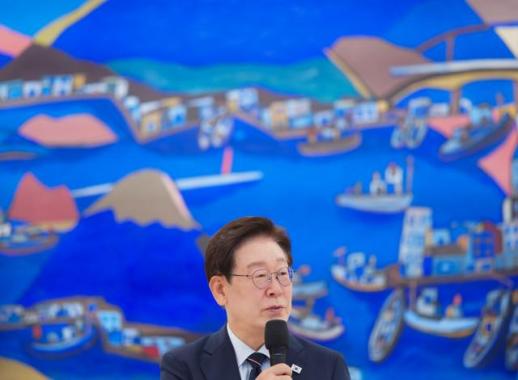 President Lee Encourages Voter Participation on Local Election Day President Lee Jae-myung encouraged voter participation on June 3, the day of the local elections, stating, "Did you vote to avoid being ruled by the worst of the worst, as Plato said?"In a post on X (formerly Twitter), President Lee reiterated a quote from philosopher Plato, which he had shared on May 31: "The cost of political apathy is being ruled by the worst of the worst."He added, "In a democratic republic, the silence and abandonment of voting by the sovereign gives opportunities to those who deceive the public, abuse power for personal gain, and ruin the lives of myself and my family."Additionally, President Lee shared a post from Justice Minister Jeong Seong-ho, who announced he would begin using X to communicate with the public, and encouraged followers to support him. President Lee introduced Minister Jeong, saying, "Please welcome Jeong Seong-ho to the world of X with a massive following."Minister Jeong is a classmate of President Lee from the 18th Judicial Research and Training Institute and is mentioned as a potential candidate for Prime Minister if Kim Min-seok resigns to run in the Democratic Party's convention in August.* This article has been translated by AI. 2026-06-03 09:54:00
 -
 S&P Upgrades LG Electronics Credit Rating to 'BBB+' for First Time in 12 Years International credit rating agency Standard & Poor's (S&P) announced on June 2 that it has upgraded LG Electronics' credit rating from 'BBB (Positive)' to 'BBB+ (Stable).' This marks the first upgrade for LG Electronics since 2014, a span of nearly 12 years. S&P stated, "The upgrade reflects expectations of debt reduction and improved financial structure due to solid growth in core businesses." The stable outlook indicates confidence that strong cash flow generation and debt reduction will continue, supported by the company's competitive edge in its main sectors. S&P anticipates that LG Electronics' core businesses will achieve robust performance over the next two years, driven by enhanced competitiveness in premium products and expansion in subscription and B2B services. In the home appliances sector, S&P expects stable profitability based on a strong position in the less cyclical premium market. The differentiated subscription services and brand image are seen as accelerating growth in emerging markets. For the media entertainment solutions segment, S&P forecasts modest revenue growth over the next one to two years, supported by demand for premium products like large OLED TVs and expansion of the webOS platform. The automotive business is expected to continue its growth and profitability improvements, bolstered by a strong market position in key product lines such as telematics and infotainment. A significant backlog of orders is projected to ensure stable revenue growth and enhance profitability through economies of scale. This year, LG Electronics' automotive business backlog has surpassed 100 trillion won, demonstrating rapid growth. Recently, the company has strengthened global collaborations to secure a foothold in the future mobility market, including a partnership with Qualcomm to co-develop an AI-based 'AI Cabin Platform' and joining a 6G vehicle communication alliance. S&P also predicts continued improvement in financial health, projecting that LG Electronics' debt ratio relative to EBITDA will decrease from 1.6 times in 2025 to 1.2 times in 2026, and further to 1.0 times in 2027. Additionally, the performance and financial structure improvements of LG Display, in which LG Electronics holds a 36.7% stake, positively influenced this rating upgrade. LG Electronics has received favorable evaluations from domestic and international credit rating agencies this year. In January, Moody's upgraded LG's credit rating from 'Baa2 (Positive)' to 'Baa1 (Stable).' Last month, Korea Credit Rating Agency also raised its outlook for LG Electronics from 'AA (Stable)' to 'AA (Positive).'* This article has been translated by AI. 2026-06-03 09:51:00
 -
 U.S. Tariff Revisions Expected to Ease Export Burden for South Korean Machinery The U.S. government’s recent revisions to its tariff system for steel and aluminum derivatives are expected to alleviate the export burden for South Korean machinery manufacturers. With the reduction of tariffs on key industrial machinery such as forklifts, bulldozers, and tractors, approximately $2.3 billion worth of South Korean exports will benefit from these tariff cuts. The Ministry of Trade, Industry and Energy announced on June 3 that the U.S. government issued a proclamation on June 1 (local time) regarding the revisions to the Section 232 tariff measures on steel, aluminum, and copper derivatives. The U.S. government explained that the revisions aim to encourage foreign companies to use American-made steel and aluminum. The changes include lowering the threshold for reduced tariffs on U.S. steel usage from 95% to 85%. Additionally, tariffs on certain industrial machinery items exported from countries with tariff agreements, including South Korea, Japan, the United Kingdom, and the European Union, will be reduced. According to the revisions, the Section 232 tariff rate on certain mobile industrial machinery such as forklifts, bulldozers, and tractors will decrease from 25% to 15%. In contrast, products from countries without tariff agreements will maintain the existing 25% tariff. Tariffs on agricultural equipment and HVAC systems will also be reduced from 25% to 15%, regardless of tariff agreements. This measure will be effective from August 8 until December 31, 2027. Conversely, aluminum printing plates and metal racks will be newly included under Section 232 tariffs, incurring a 25% duty. The Ministry estimates that the total value of U.S. export items expected to benefit from tariff reductions will be around $2.3 billion. The easing of tariffs on forklifts, bulldozers, and tractors is anticipated to improve export conditions to the U.S. However, as the U.S. has been actively adjusting tariffs on specific items, the government plans to closely monitor the potential for additional U.S. tariff measures. A ministry official stated, "We will closely monitor trends in U.S. trade measures, including Section 301 investigations, Section 122 tariffs, and Section 232 item tariffs, to minimize the impact on our companies and maintain the balance of benefits under the existing South Korea-U.S. tariff agreement."* This article has been translated by AI. 2026-06-03 09:45:00
 -
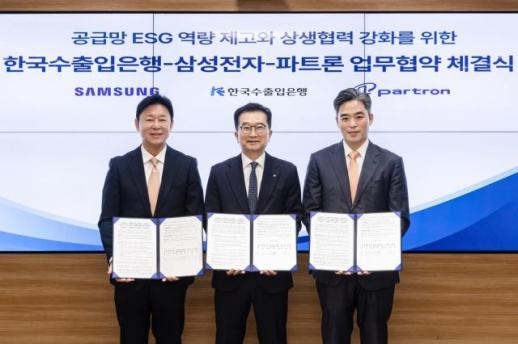 Korea Export-Import Bank Supports Samsung Partners' Transition to Renewable Energy The Korea Export-Import Bank has partnered with Samsung Electronics to support the transition of its overseas partners to renewable energy. This initiative is seen as a new collaborative model for large corporations, their partners, and policy finance institutions to establish a foundation for carbon reduction. On June 3, the Export-Import Bank announced that it has signed a memorandum of understanding with Samsung Electronics and Partron, a key partner of Samsung, to enhance supply chain environmental, social, and governance (ESG) capabilities and promote cooperative growth. The agreement includes provisions for the Export-Import Bank to support consulting costs related to joint purchasing of renewable energy power purchase agreements (PPAs) for small and medium-sized partners of Samsung Electronics operating in Vietnam. Eleven small and medium-sized partners will work together to negotiate contracts for renewable energy purchases, with an energy consulting firm assisting throughout the process. Samsung Electronics will identify and recommend partners to participate in the consulting initiative and will support their ESG management activities. Partron, representing Samsung's partners with a production subsidiary in Vietnam, has committed to ensuring the active participation and compliance of its partners in this initiative. As global ESG regulations tighten, including the European Union's Carbon Border Adjustment Mechanism (CBAM) and Corporate Sustainability Reporting Directive (CSRD), the burden of securing renewable energy for small and medium-sized enterprises expanding overseas has increased. In response, Samsung Electronics is sharing its expertise in renewable energy procurement, and the partners in Vietnam have formed a joint purchasing consortium. The Export-Import Bank is providing support for related consulting costs, establishing a collaborative model for carbon reduction among large corporations, partners, and policy finance institutions. Ahn Jong-hyuk, Executive Director of the Export-Import Bank, stated, "The ability of small and medium-sized partners to transition to eco-friendly practices is now a core prerequisite for our companies' global competitiveness. We will actively support the ESG transition of small and medium-sized enterprises." 2026-06-03 09:36:00
 -
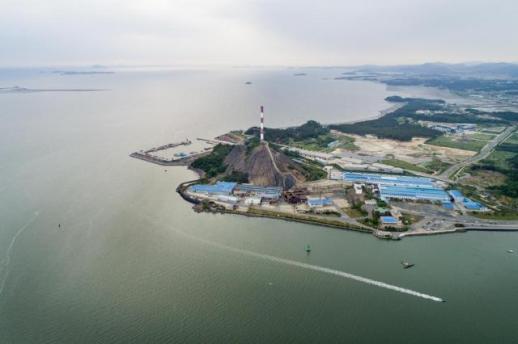 Korean Non-Ferrous Metal Industry Celebrates 90th Anniversary Amid AI Boom The Korean non-ferrous metal industry is set to celebrate its 90th anniversary on June 3. Since the first smelting of copper ore at the Janghang Smelter in Chungcheongnam-do in 1936, the industry has laid the groundwork for industrialization and is now gaining renewed attention due to the growth of artificial intelligence (AI) data centers, electric vehicles, and renewable energy. Once considered a traditional smokestack industry, smelting is re-emerging as a key strategic sector in the era of supply chain security. On June 2, the 19th Non-Ferrous Metals Day celebration took place at the LS MnM Onsan Smelter in Ulsan. Jo In-rae, team leader at LS MnM, received a presidential citation for his contributions to stabilizing the supply chain by improving facilities and optimizing processes, increasing the processing volume of copper concentrate and scrap by 170%. Eighteen individuals were also recognized with government awards for their contributions to the development of the non-ferrous metal industry. Since its inception at the Janghang Smelter on June 3, 1936, the domestic non-ferrous metal industry has supplied essential metals such as copper and zinc for key national industries, including electrical, electronics, automotive, and shipbuilding. It played a crucial role in industrialization until the 1980s, when environmental pollution issues led to its classification as a typical smokestack industry. The Janghang Smelter, which marked the beginning of the domestic non-ferrous metal industry, ceased operations in 1989 amid environmental controversies. However, the smelting industry itself did not come to a halt. The Onsan Smelter, completed in 1979, took over as the center of domestic non-ferrous metal production. Since then, LS MnM, Korea Zinc, and Youngpoong have expanded the domestic supply chain through significant investments in facilities. The status of the smelting industry, once viewed as a typical smokestack sector, is rising again due to the proliferation of AI data centers. The demand for transformers and circuit breakers is surging due to the need to upgrade the U.S. power grid and the expansion of AI data centers, leading to intense competition for copper. Industry experts have referred to copper as the “oil of the AI era.” Copper, known for its high conductivity, is widely used in servers, power supply units, cooling systems, transformers, distribution panels, cables, and communication infrastructure necessary for AI computations. According to S&P Global, global copper demand is expected to reach 28 million tons by 2025 and surge to 42 million tons by 2040, a 50% increase. There are also analyses suggesting a potential annual copper supply shortage of 10 million tons during this period. Copper prices are soaring, reaching approximately $14,490 per ton, a nearly 40% increase from the $10,360 recorded in May of last year. Compared to early this year, when prices were around $13,150 per ton, this represents about a 10% rise. The competition for copper extends beyond pricing to issues of supply chain security. As copper is essential for key national industries such as electric vehicles, semiconductors, defense, and power grids, major countries are seeking stable sources of supply. While the U.S. does not rely heavily on imports of high-purity copper from China, it views the concentration of global smelting and refining capabilities in China as a risk. According to the United Nations Conference on Trade and Development, China accounts for about 60% of global copper ore imports and over 45% of high-purity copper production. The U.S. has already begun treating copper imports as a national security issue. Last year, the White House directed an investigation into the impact of copper imports on U.S. national security, covering raw ore, copper concentrate, refined copper, copper alloys, scrap, and copper derivatives. As the demands of AI data centers, power grids, and defense intersect, copper is increasingly being classified as a strategic national asset rather than just a raw material. However, South Korea is a resource-poor country with almost no copper mines. Most of its copper concentrate is imported from countries like Chile, Peru, and Indonesia for smelting. Nevertheless, South Korea has maintained a presence in the global non-ferrous metal supply chain with world-class smelting technology. Additionally, as the shift away from Chinese supply chains for critical minerals strengthens, South Korean smelting and refining technology is gaining attention. Companies like LS MnM, focused on copper, and Korea Zinc and Youngpoong, centered on zinc, lead, and rare metals, are crucial pillars of the domestic non-ferrous metal supply chain. An LS MnM representative stated, "With the surge in copper demand driven by the expansion of AI data centers and the growth of the electric vehicle and battery markets, securing stable raw materials has become a core competitive advantage for South Korea's future growth industries. We aim to establish a long-term stable copper supply chain through diversified sourcing, investments in metal recycling, and strengthening global partnerships."* This article has been translated by AI. 2026-06-03 09:33:00
 -
 Hyundai and Kia Achieve Record Hybrid Sales in U.S. Market in May Hyundai Motor and Kia achieved their highest-ever monthly sales of hybrid electric vehicles (HEVs) in the U.S. market in May.Hyundai Motor America announced on June 2 that it sold a total of 87,468 vehicles in May, marking a 3% increase compared to the same month last year.Notably, HEV sales surged by 90% year-over-year, reaching a record high. Sales of specific models included a 10% increase for the Tucson, 30% for the Santa Fe, 29% for the Elantra, and a remarkable 250% increase for the Sonata, all contributing significantly to overall performance.Electric vehicle sales also rose by 10%, setting a new record for May. The Ioniq 5 saw an increase from 3,898 units to 5,002 units, a 28% rise, achieving its highest May sales ever. The Tucson and Palisade also reached their highest sales records for May.Randy Parker, CEO of Hyundai Motor North America, stated, "In May, we saw growth across nearly all models in our lineup, including sedans and SUVs, featuring hybrid and electric vehicles. The visibility gained from our sponsorship of the 2026 FIFA World Cup has positioned us favorably for sustained growth throughout the summer."Kia America also reported that its retail sales in May surpassed the previous record set in August 2025. Total sales reached 80,502 units, a 2% increase from 79,007 units in the same month last year. Cumulative sales for May also hit a record of 360,220 units, up 2% from the same period last year.The hybrid models experienced a dramatic growth of 179%. All models saw significant increases, with the Sportage up 171%, the Sorento up 101%, and the Carnival up 32%, achieving record sales for May. The Carnival also reached its highest monthly sales ever.Eric Watson, Vice President of Sales at Kia America, emphasized, "Despite ongoing shifts in consumer preferences, Kia continues to break retail sales and monthly cumulative sales records thanks to our diverse lineup that includes internal combustion, hybrid, and electrified models. We expect this upward trend to continue into the second half of the year, even amid recent economic challenges."Meanwhile, Hyundai and Kia are maintaining their sales growth in the U.S. market with a focus on HEV-centered eco-friendly vehicle strategies. The ongoing trend of high fuel prices has increased consumer preference for fuel-efficient HEVs.* This article has been translated by AI. 2026-06-03 09:33:00