
Journalist

Kim SeongSeo
-
 South Korea's 'beloved music coach' to bring spirit of cultural diplomacy to Paris SEOUL, May 20 (AJP) - There are moments when music accomplishes what politics, diplomacy, and economics often cannot. It dissolves distance. It softens history. It reminds people, however briefly, that civilization is ultimately sustained not only by power and institutions, but by the human heart. This spring, Lee Gi-yeon, widely known in South Korea as the "Music Coach for the Nation" will travel to Paris with a group of South Korean amateur vocalists and professional musicians to commemorate the 140th anniversary of diplomatic relations between South Korea and France. Organized by the Lee Gi-yeon Opera Institute, the performances will take place on May 24 and May 28 in Paris and are being viewed not merely as concerts, but as a form of cultural diplomacy carried out by ordinary citizens through the universal language of music. Following last year's warmly received musical busking journey across Italy, Lee's Paris project represents a broader artistic mission: to bring together people of different nations, professions, and backgrounds through classical music and shared emotion. The principal event, a commemorative concert titled Hymne à l'amour ("Hymn to Love"), will be held on May 24 at 5 p.m. local time at the historic Église protestante unie du Saint-Esprit in central Paris. The venue itself carries a quiet but profound symbolism. The church, among the oldest Protestant churches in France, was once attended by members of the Hermès family and remains deeply woven into the cultural and spiritual memory of Paris. Against that backdrop, Korean amateur vocalists — many of them doctors, professors, business executives, and financial professionals — will step onto the stage alongside accomplished musicians based in France. Together they will perform not as celebrities or officials, but as citizens connected by a love of music. Participants include Kim Moon-ja, Kim Hyun-mi, Noh Hee-jin, Park Byung-joo, Park Young-mi, Seo Mi-ra, Ahn Dong-hyun, and Jeon Hyo-jin. Joining them as special guests will be soprano Seo Su-min of the Paris National Opera, tenor Seo Hyung-seok, baritone Kim Young-woo, and violinist Choi Seul-gi, a professor at the Arpajon Conservatory. The result promises to be something increasingly rare in modern cultural life: a performance where professionalism and sincerity coexist without hierarchy. Four days later on May 28 at 2:30 p.m., the atmosphere will shift from the grandeur of a historic sanctuary to the quieter emotional world of healing and consolation. At Hôpital Vaugirard Gabriel-Pallez AP-HP, Lee and her fellow musicians will present Bienvenue au concert de printemps! ("Welcome to the Spring Concert!"), a special healing concert organized in cooperation with the hospital’s Protestant chaplaincy. The performance is intended for patients, caregivers, and medical staff — individuals carrying the physical and emotional burdens of illness, exhaustion, and recovery. Lee, serving as artistic director and opera coach, will again be joined by violinist Choi Seul-gi and tenor Seo Hyung-seok in delivering music designed not for spectacle, but for comfort. In many respects, the hospital concert reveals the deeper philosophy behind Lee's artistic life. For her, music is not merely performance. It is companionship, consolation and restoration. Speaking ahead of the Paris events, Lee reflected on the emotional meaning of the project. "To sing together in Paris with Korean amateur vocalists who possess a pure passion for music, alongside musicians living and working in France, during this meaningful year marking the 140th anniversary of Korea–France relations, is profoundly moving," she said. "I hope that South Korean residents in Paris, as well as French citizens, will gather together through music and experience moments of happiness, harmony, and shared humanity." Both performances will be offered free of charge to local residents and members of the Korean community, with open admission for anyone who loves classical music and opera. At a time when the world feels increasingly fractured by geopolitical conflict, ideological division, and digital isolation, these concerts offer something fundamentally human: people gathering in one physical space to listen together, breathe together, and feel together. In that sense, the performances transcend the boundaries of ordinary cultural events. They represent a form of civilian diplomacy — one in which artists, educators, and ordinary citizens become ambassadors of goodwill without official titles or political authority. Music, after all, remains one of the few languages that does not require translation. Who Is Lee Gi-yeon? Lee is one of South Korea's most recognizable public music educators and opera coaches, widely admired for her efforts to bring classical music closer to everyday audiences. She currently serves as director of the Lee Gi-yeon Opera Institute and as an adjunct professor in the Department of Korean Music at Seoul Institute of the Arts. She is also a successful YouTube creator with approximately 170,000 subscribers, where she introduces opera, vocal technique, and classical music appreciation to the broader public in an accessible and engaging way. Lee studied piano and completed the advanced opera coaching program at the prestigious Santa Cecilia Conservatory in Rome, one of Europe's oldest and most respected musical institutions. Over the years, she has pursued a career that combines artistic excellence with public education and cultural outreach. In 2018, she received a commendation from the Ministry of Land, Infrastructure and Transport in recognition of her contributions in public lectures and cultural engagement. From 2020 through 2025, she also served as a program review committee member for the Korea Forest Service. Lee previously taught in the Future Culture Executive Program at Sookmyung Women's University and has delivered invited lectures and performances for major Korean institutions and corporations, including Samsung Life Insurance, Hyundai Mobis, LG Uplus, the Ministry of National Defense, and Korea Hydro & Nuclear Power. Her performances and musical projects have been staged at some of Korea's most prestigious cultural venues, including Sejong Center for the Performing Arts, Seoul Arts Center, and Lotte Concert Hall. As an opera coach, she has participated in productions including L'elisir d'amore, Samson et Dalila, and Le nozze di Figaro. Yet perhaps her most meaningful contribution has been her effort to restore humanity to classical music itself. For Lee, opera is not an elite ornament reserved for concert halls and specialists. It is a living art capable of comforting ordinary people, healing emotional wounds, and reconnecting individuals to beauty in an increasingly anxious world. That may ultimately be the lasting meaning of these Paris concerts. They are not simply performances commemorating 140 years of diplomatic relations between two nations. They are reminders that culture, at its best, allows human beings to recognize one another beyond language, nationality, profession, or ideology. And in an unsettled age, such recognition may itself be a form of hope. 2026-05-20 14:42:49
 -
 Rain drenches Seoul and cools off unseasonable heat wave SEOUL, May 20 (AJP) - Rain drenched Seoul and surrounding areas on Wednesday, offering some relief from the unseasonable heat wave in May. According to the Korea Meteorological Administration (KMA), the rain that began overnight in central and southern regions is forecast to spread across most parts of the country, with up to 80 millimeters of rainfall expected in Seoul, Incheon and other areas of Gyeonggi Province. The much-needed rain to end a late-spring drought sharply lowered temperatures, with morning lows ranging from 15 to 19 degrees Celsius and daytime highs between 18 and 23 degrees Celsius, easing recent unseasonably hot weather. Strong winds are also forecast across many regions later in the day, with the KMA urging caution over facility safety and outdoor activities. 2026-05-20 14:37:36
 -
 LIGHTSUM's Nayoung releases cover of YOASOBI's 'Yoru ni Kakeru' SEOUL, May 20 (AJP) - Nayoung of K-pop girl group LIGHTSUM has released a cover video of Japanese duo YOASOBI's "Yoru ni Kakeru," according to a press release from Cube Entertainment. The video, uploaded to LIGHTSUM's official social media channels on Tuesday, features Nayoung performing the song at nighttime locations in Seoul, including Namsan and Hangang Bridge. The cover had drawn more than 22,000 views and 1,300 likes within about 14 hours of its release as of Tuesday evening. Nayoung is a member of LIGHTSUM, a six-member girl group that debuted under Cube Entertainment in June 2021. The group comprise of — Sangah, Chowon, Nayoung, Hina, Juhyeon and Yujeong — has promoted itself as a performance-driven girl group, building an image around bright energy, sharp choreography and youthful concepts. "Yoru ni Kakeru" is the debut single of YOASOBI, a Japanese duo consisting of composer Ayase and vocalist Ikura. The song, based on Mayo Hoshino's short story "Thanatos no Yuwaku," topped Billboard Japan's 2020 year-end Hot 100 chart and has surpassed 700 million streams on Spotify. 2026-05-20 14:36:19
 -
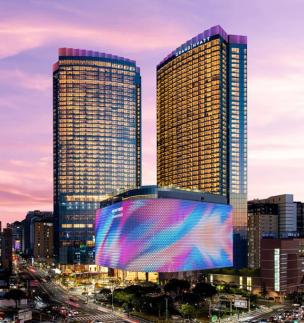 Jeju casino operator Lotte Tourism gains "buy" reinforcement from Hana Securities SEOUL, May 20 (AJP) - Hana Securities reiterated a "buy" rating and a 28,000 won ($18.53) target price on Lotte Tourism Development on Tuesday, designating the Jeju Dream Tower operator its top pick in the leisure sector after the company posted a 121.5 percent jump in first-quarter operating profit even as its two foreign-only casino rivals both saw earnings fall. The stock traded at 19,080 won on Tuesday morning, leaving Hana's target roughly 47 percent above current levels. Shares have lagged the operational momentum since falling 6.84 percent on December 17, 2025, after President Lee Jae Myung publicly characterized foreign-only casino licenses granted to private operators as preferential treatment and ordered the Ministry of Culture, Sports and Tourism to review the framework. The ministry has not announced specific changes in the months since. Lotte Tourism Development is one of three listed foreign-only casino operators in Korea — Paradise (034230) and Grand Korea Leisure (114090) being the others — a category restricted to non-Korean nationals and distinct from Kangwon Land, the only Korean casino open to domestic players. Its first-quarter earnings, disclosed May 14, made the divergence among the three sharper than at any point since the pandemic recovery began. Lotte Tourism Development reported revenue of 156.2 billion won and operating profit of 28.8 billion won, up 28.1 percent and 121.5 percent respectively, with operating margin rising to 18.4 percent from 8.3 percent a year earlier. Paradise reported a 34.9 percent drop in operating profit despite 3.8 percent revenue growth. Grand Korea Leisure, which leases space inside three hotels and pays 30 to 40 billion won in annual rent, saw operating profit fall 10.4 percent. The Jeju Dream Tower's casino segment drove the outperformance. Casino revenue rose 40.3 percent to 118.6 billion won, visitor entries grew 37.3 percent to 150,553, and the table drop — money exchanged for chips — rose 36.7 percent to 573.9 billion won. The casino's hold rate, the share of money the house wins, reached 22.6 percent in April, approaching the 26.1 percent average held by Macau's nine major Cotai integrated resorts. Hana Securities' bull case rests on three levers. Casino tables increased from 149 in 2024 to 169 by first quarter of 2026 with three more planned. Slot machines will expand from 287 in 2025 to 371 this year. Of the 1,600 hotel rooms at the complex, the share offered as casino complimentary inventory has grown from 30 percent to between 45 percent and 50 percent, with Hana estimating 60 percent could push monthly casino revenue to 60 billion won. A new rolling commission program launching in May leverages Korea's 15 percent casino tax rate against Macau's 37 percent, and could add more than 100 billion won in annual revenue, according to analyst Lee Ki-hoon. The structural backdrop is the return of Chinese tourists to Jeju under the island's visa-free entry program and the lifting of China's unofficial restrictions on Korean tourism. Casino drop at the Dream Tower rose to 2.77 trillion won in 2025 from 1.73 trillion won in 2024, a 60 percent increase. Foreign hotel occupancy at the in-house Grand Hyatt Jeju rose to 73.5 percent in Q1 from 66.8 percent. Debt remains the principal overhang. The company refinanced an 839 billion won secured loan in November 2024, cutting annual interest by about 20 billion won, but still pays roughly 100 billion won in annual interest costs. Hana Securities said additional refinancing should become available in the second half of 2026, when stronger cash flow, the new rolling program and peak tourism season are projected to converge. 2026-05-20 14:32:58
 -
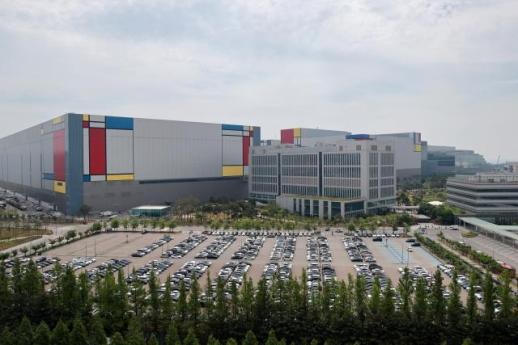 Samsung Live: Seoul presses management and union not to give up on talks SEOUL, May 20 (AJP) -The South Korean government pressured the management and union of Samsung Electronics not to give up talks to avert a general strike starting Thursday that could rattle the core chip sector sustaining Asia’s fourth-largest economy and one of the world’s hottest stock markets against Gulf war shocks. The presidential office Wednesday expressed “deep regret” after three days of government-mediated wage talks collapsed in Sejong City, while the Ministry of Employment and Labor vowed to use “every possible method” to keep both sides engaged ahead of the union’s planned 18-day walkout from May 21 through June 7. The strike would mark the most serious labor disruption in Samsung Electronics’ history and comes at a particularly sensitive moment for the global semiconductor industry as artificial intelligence-driven demand fuels a worldwide race for advanced memory chips. Samsung Electronics, which accounted for 36 percent of the global DRAM market and 22 percent of the high-bandwidth memory market as of the end of 2025, plays a central role in the AI supply chain powering data centers and next-generation computing systems. At the heart of the dispute is the union’s demand that Samsung allocate 15 percent of annual operating profit to bonuses, scrap the current cap equivalent to 50 percent of annual salary and institutionalize the revised compensation structure as a permanent rule. Samsung rejected the demands, arguing that the proposal would undermine performance-based pay by forcing the company to compensate even loss-making divisions at levels it described as “socially difficult to justify.” “There should be no strike under any circumstances,” Samsung said in a statement, while adding that it remained open to further dialogue to avoid production disruptions. Union leaders accused management of dragging out decisions until the mediation deadline expired despite meaningful progress during the talks. “The union participated sincerely throughout the three days of talks and did its best to find common ground,” said Choi Seung-ho, head of the Samsung Electronics chapter of the National Samsung Group Union. “We accepted the mediation proposal presented by the National Labor Relations Commission, but management failed to make a decision in time.” The labor ministry declined to comment on whether it could invoke emergency arbitration powers, a rarely used mechanism that allows the government to suspend strikes for up to 30 days in industries deemed critical to the national economy. Industry estimates cited by government officials suggest that an 18-day strike could inflict direct and indirect economic losses of up to 100 trillion won ($72 billion). Prime Minister Kim Min-seok earlier publicly warned about the possibility of “100 trillion won in damage” if semiconductor production suffers prolonged disruptions. A recent Bank of Korea report delivered to the presidential office reportedly estimated that a prolonged strike combined with the time required to fully restore semiconductor production lines afterward could shave 0.5 percentage point off South Korea’s annual economic growth while causing roughly 30 trillion won in semiconductor output losses. Samsung has also warned of serious operational risks unique to semiconductor manufacturing. The company said cleanroom systems require uninterrupted temperature and humidity control while wafers can become unusable if they fail to move through fabrication processes within strict time limits. A local court earlier this week partially sided with Samsung by ordering the union to maintain minimum staffing levels necessary for safety, facility protection and quality control during any industrial action. The ruling also barred union leaders from blocking access to production facilities. Suppliers have urged the union to reconsider the strike, warning that disruptions to chip production could quickly spread to equipment suppliers, subcontractors and nearby commercial districts. The dispute has additionally exposed tensions within the union itself. Some members from Samsung’s DX division filed injunction requests accusing union leadership of bypassing normal voting procedures and focusing excessively on semiconductor-related bonus demands while failing to adequately represent other business divisions. Legal controversy surrounding the strike is also expected to intensify. South Korea’s Supreme Court has previously ruled that Samsung’s excess-profit incentives are not ordinary wages but post-performance distributions tied to management results, raising broader questions over whether strikes centered on profit-sharing disputes fall within the traditional scope of collective bargaining. 2026-05-20 14:26:36
 -
 aespa to open 'LEMONADE' pop-ups in Seoul, LA, New York and Shenzhen SEOUL, May 20 (AJP) - K-pop girl group aespa will open a series of pop-up events in Seoul and major overseas cities to celebrate the release of its second full-length album “LEMONADE,” SM Entertainment said Monday. The album is scheduled for release at 1 p.m. on May 29 on major streaming platforms and as a physical album. The pop-up campaign, titled “aespa WEEK - MAKE IT LEMONADE,” will run from May 29 to June 7 across Yeouido and Banpo in Seoul. In the capital city, events will be held at IFC Mall in Yeouido, the Moonlight Rainbow Fountain at Banpo Hangang Park and Yeouido Hangang Park. The sites will offer merchandise, photo booths, name sticker events, media wall installations and other album-related experiences. SM Entertainment said pop-ups will also open in Los Angeles, New York and Shenzhen, China, alongside the Seoul events. Additional events are planned in Bangkok, Tokyo, Taipei and other major cities. The campaign follows aespa’s prerelease single “WDA (Whole Different Animal) (Feat. G-DRAGON),” released ahead of the full album. aespa debuted in 2020 with “Black Mamba” and is known for its AI avatar and metaverse-themed concept, as well as hits including “Next Level,” “Savage,” “Spicy” and “Drama.” 2026-05-20 14:11:08
 -
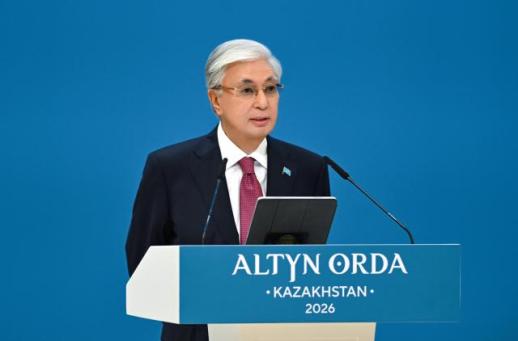 Kazakhstan ties Golden Horde legacy to tech ambitions SEOUL, May 20 (AJP) - The Kazakhstan Embassy in Seoul released a statement on Wednesday detailing an international symposium in Astana that frames the heritage of the Golden Horde as a pillar for the country's modern technological transformation. President Kassym-Jomart Tokayev stated that the medieval empire's advanced administrative and trade systems serve as historical precursors to the nation's current digital infrastructure goals. The UNESCO-backed event highlights how Kazakhstan is leveraging its historical identity to build international academic and economic partnerships. By branding its modernization initiatives under the concept of digital nomads, the Central Asian nation seeks to position its heritage as an inspiration for future development rather than a relic of the past. According to the embassy statement, the Golden Horde historically controlled key Eurasian trade routes and transformed the steppe into a secure transit corridor between the East and the West. Tokayev noted that this historic interaction between nomadic and urban societies laid the foundation for the empire's long-term prosperity and adaptability. Kazakhstan is currently connecting this legacy to state investments in artificial intelligence, data storage, and international transport networks. As part of this digital push, the country plans to host an international artificial intelligence olympiad under the auspices of UNESCO, drawing participants from 100 countries. To institutionalize research into this period, the government established the Institute for the Study of the Ulus of Jochi, marking the first specialized academic institution dedicated to the subject. Tokayev also proposed the creation of an international center for the promotion of steppe civilization to help bridge societies during periods of global geopolitical fragmentation. The symposium also highlighted the international recognition of the manuscript titled Genealogy of the Khans, which contains historical records from the Golden Horde era. The state continues to utilize the traditional steppe concept of Mangilik El, or the Eternal Nation, as a guiding framework for its modern national renewal and state-building initiatives. 2026-05-20 13:36:43
 -
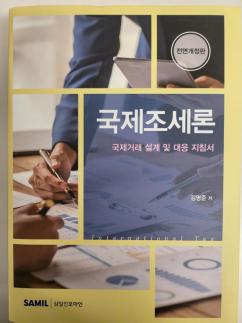 AJP Review: A guide to international taxation in AI age SEOUL, May 20 (AJP) -The world of international taxation has never been simple. But in the age of artificial intelligence and digital commerce, it has become extraordinarily complex. As multinational corporations move capital, data, and services across borders at unprecedented speed, governments around the world are entering an increasingly sophisticated struggle to defend their tax sovereignty. International cooperation aimed at preventing tax avoidance has tightened dramatically, while businesses face mounting pressure to navigate the narrow space between legitimate tax planning and aggressive regulatory scrutiny. Into this rapidly shifting landscape comes a book that seeks to map the entire terrain. Kim Myung-jun, the former Commissioner of the Seoul Regional Tax Office, has published a fully revised edition of International Taxation, a comprehensive work widely regarded as one of Korea’s leading practical guides to the field. The new edition arrives roughly five years after the first publication in 2021 and reflects the profound transformation now reshaping the global tax order. The author is not merely an academic theorist. He is a career tax official who spent decades at the center of Korea’s international tax administration system. After entering public service through Korea’s highly competitive civil service examination, he served in a series of influential positions, including Tax Attaché to Korea’s Mission to the OECD, Director of the International Tax Investigation Bureau at the Seoul Regional Tax Office, Director of the National Tax Service Investigation Bureau, and ultimately Commissioner of the Seoul Regional Tax Office. Coming from someone with deep hands in tax investigations, the book offers a deep insight to tax system. Since retiring from public office, Kim has continued his scholarly and professional work in the field of international taxation. He earned a doctorate from University of Seoul Graduate School of Taxation with research focused on the interpretation and application of the Principal Purpose Test (PPT) and the substance-over-form doctrine under the OECD’s Multilateral Instrument framework designed to prevent Base Erosion and Profit Shifting (BEPS). He has published numerous academic papers through the Korea International Fiscal Association and was awarded the association’s 2025 International Tax Academic Prize for his study on value-added tax obligations in international B2B service transactions. Today, he serves as Senior Adviser and Director of the International Tax and Investment Center at Bae, Kim & Lee LLC, one of Korea’s leading law firms. Yet the significance of International Taxation lies not simply in the résumé of its author, but in the breadth of its intellectual ambition. This revised edition moves well beyond a conventional explanation of tax statutes. It addresses the sweeping transformation of the global tax system in the era of AI and digital commerce, including BEPS 2.0 reforms, the Global Minimum Tax regime, cross-border tax avoidance, and the increasingly contentious struggle over taxation rights in the digital economy. Particularly notable is the book’s treatment of some of the most difficult and controversial concepts in international tax law, including treaty shopping, beneficial ownership, and the Principal Purpose Test. Drawing extensively on OECD standards, international case law, and practical enforcement experience, Kim explains these subjects with unusual clarity and precision. For practitioners, the book functions not merely as a reference volume, but as something closer to a strategic field manual. International taxation has long been regarded as one of the most difficult disciplines in modern law and finance. Kim attempts to reduce that complexity through an unusually reader-friendly structure that includes approximately 190 transaction flow charts, practical case studies, and carefully sourced references to OECD and United Nations Model Tax Convention commentaries. The result is a work that enables readers not only to understand abstract legal doctrines, but also to follow the underlying logic of cross-border transactions and international tax disputes. More importantly, the book approaches taxation not as an isolated legal problem, but as a central component of the emerging global economic order. The rise of AI-driven platforms and digital services has effectively blurred the traditional meaning of national borders. A multinational company may maintain servers in one country, manage data in another, and generate consumer revenue in dozens more simultaneously. Tax systems designed for the industrial age struggle to adapt to such realities. As a consequence, governments are racing to construct new taxation frameworks. The OECD-led Global Minimum Tax initiative represents one of the most ambitious attempts in modern history to coordinate international tax policy and limit aggressive tax avoidance by multinational corporations. For businesses, however, the environment has become increasingly difficult. Regulatory systems overlap, legal interpretations diverge, and compliance risks continue to grow. This is precisely where Kim’s book finds its importance. Because the author understands both the perspective of the taxpayer and the logic of the tax authority, the book maintains a rare balance between enforcement and compliance, between public interest and private strategy. The revised edition also separates transfer pricing taxation into an independent future volume. Kim has indicated that a more advanced and specialized work on transfer pricing will be published separately, a development already attracting considerable interest among tax professionals. The structure of the book reflects the broad scope of modern international taxation. Part One, “General Theory of International Taxation,” examines the foundations of international tax systems, global tax avoidance, tax administration, international tax audits, and the allocation of taxation rights between states. Part Two, “Tax Treaty Theory,” addresses treaty interpretation, residency determination, treaty abuse, beneficial ownership, permanent establishments, double taxation relief, mutual agreement procedures, and tax information exchange. Part Three, “Domestic Source Income Theory,” analyzes taxation issues involving non-residents and foreign corporations, including business income, dividends, royalties, interest income, and personal service income. Part Four, “Prevention of International Tax Avoidance,” explores anti-avoidance frameworks such as GAAR, SAARs, thin capitalization rules, Controlled Foreign Corporation regulations, hybrid mismatch arrangements, BEPS 2.0 reforms, global minimum taxation, offshore tax evasion, and the emerging challenges posed by AI-era commerce. Ultimately, International Taxation is far more than a technical handbook for accountants and tax attorneys. It is, in many respects, a guide to understanding how power, capital, sovereignty, and technology intersect in the twenty-first century. Today, capital flows across borders instantly. Data moves globally. AI systems operate beyond traditional jurisdictional boundaries. Yet taxation authority remains fundamentally national. The tension between those realities is becoming one of the defining economic and political struggles of our age. In that sense, this book speaks not only to tax professionals, government investigators, lawyers, and policymakers, but to anyone seeking to understand the deeper architecture of the emerging global economy. Its greatest strength may lie in the fact that it never reduces taxation to mere technical maneuvering. International taxation is ultimately about fairness, sovereignty, economic strategy, and the moral structure of global capitalism itself. As artificial intelligence reshapes commerce and human life alike, international taxation can no longer remain a niche concern reserved for specialists alone. In an era of increasingly fierce global tax competition, International Taxation stands out as a sophisticated compass — a work capable of helping readers navigate one of the most complicated frontiers of modern economic life. ■ About the author: Kim Myung-jun is widely regarded as one of South Korea’s leading experts in international taxation and cross-border tax investigations. After entering public service through Korea’s national civil service examination system, he spent more than three decades within the National Tax Service, building a career at the highest levels of tax administration and international fiscal policy. Over the course of his career, Kim held several key positions, including Tax Attaché to Korea’s delegation at the OECD, Director of the International Tax Investigation Bureau at the Seoul Regional Tax Office, Director of the National Tax Service Investigation Bureau, and ultimately Commissioner of the Seoul Regional Tax Office. He became particularly well known for his expertise in multinational corporate taxation, international tax enforcement, and cross-border transaction investigations. Few officials in Korea have possessed such extensive firsthand experience in both the design and execution of international tax investigations. Following his retirement from government service, Kim transitioned into academic research and professional advisory work. At University of Seoul Graduate School of Taxation, he completed doctoral research focused on BEPS-related international tax reforms, treaty interpretation, and substance-over-form principles in international tax law. He has since published numerous scholarly articles addressing BEPS, tax treaty interpretation, value-added taxation in international digital commerce, and anti-avoidance frameworks. His recent study on VAT obligations in international B2B service transactions earned him the 2025 International Tax Academic Prize awarded by the Korea International Fiscal Association. Today, Kim serves as Senior Adviser and Director of the International Tax and Investment Center at Bae, Kim & Lee LLC, where he continues to advise corporations, investors, and institutions on international tax strategy and global regulatory developments. More than anything else, Kim belongs to a rare generation of officials who experienced firsthand the transformation of taxation from a largely domestic administrative function into one of the defining geopolitical and economic battlegrounds of the modern world. For that reason, International Taxation reads not merely as a professional textbook, but as the intellectual culmination of a lifetime spent at the front lines of global tax policy and enforcement. 2026-05-20 12:40:52
 -
 Samsung Live: Union to launch 18-day strike as planned after marathon talks collapse SEJONG, May 20 (AJP) -Samsung Electronics faces an unprecedented 18-day strike from Thursday after the union walked out of government-mediated marathon talks over revisions to the employee reward system at the tech giant whose market valuation has swelled to nearly $1 trillion amid the AI boom. Management and the Korean tech giant’s largest union held three days of talks at a government complex in Sejong under the mediation of the National Labor Relations Commission (NLRC), seeking to avert a general strike involving some 50,000 workers, mostly from semiconductor production lines. The planned 18-day walkout is feared to inflict billions of dollars in losses not only on the chipmaker but also on the broader South Korean economy, which heavily depends on chip exports. Shares of the No. 1 stock fell 2.5 percent to 269,500 won ($178.7) following the news. The final round of talks collapsed late Wednesday morning after management held off on signing a compromise proposal put forward by government arbitrators, despite the union's official endorsement. In a statement to reporters, the union blamed management's indecisiveness for the breakdown. "The union agreed to the mediation proposal presented by the NLRC on Tuesday night," said Choi Seung-ho, chief of the Samsung labor union. "However, management repeatedly stated on Wednesday morning that a decision had not been made, delaying the process until the mediation was officially terminated." Choi confirmed the strike would proceed as planned on Thursday but noted the union remains open to dialogue during the walkout. Samsung Electronics immediately issued a fierce counter-statement, shifting the blame to the union’s "excessive demands" and defending its core business principles. "The failure to reach an agreement at the final moment was because accepting the union's excessive demands would shake the basic principles of corporate management," Samsung said in its official statement. "In particular, even though the company accepted most of the bonus scale and details, the union refused to back down on its demand for socially unacceptable levels of compensation for deficit-making business divisions." The world's largest memory chipmaker emphasized that giving in to such demands would directly violate its core principle of "rewarding where there is performance," warning of negative ripple effects across other industries. NLRC Chairman Park Soo-keun confirmed that the labor side had made significant concessions, but the two parties ultimately failed to narrow differences on a few critical clauses, leading management to "reserve" its signature. "The employer requested to hold off on signing, leaving the proposal unfulfilled," Park told reporters in Sejong. "However, because a resolution must eventually be reached, the commission stands ready to respond to any joint request for arbitration at any time, whether it be at night or over the weekend." 2026-05-20 11:48:18
 -
 Seoul, Washington to launch working group to advance nuclear submarine deal SEOUL, May 20 (AJP) - South Korea and the United States have agreed to launch a bilateral working group to implement security agreements reached at their summit last October, including Washington’s approval for Seoul to build nuclear-powered submarines. U.S. Under Secretary for Political Affairs Allison Hooker is set to visit Seoul within weeks to lead an interagency delegation for the talks. South Korea’s Foreign Ministry said First Vice Foreign Minister Park Yoon-joo, who is visiting the United States, met with Hooker in Washington on Tuesday and exchanged views on overall bilateral relations, including the implementation of the Joint Fact Sheet adopted at last year’s summit, as well as regional and global affairs. Park and Hooker agreed to hold a kickoff meeting on nuclear-related security commitments under the Joint Fact Sheet released by the two countries in November, “sharing the view that the two allies should swiftly produce tangible results,” the ministry said. U.S. President Donald Trump visited South Korea last October on the occasion of the Asia-Pacific Economic Cooperation summit and reached a set of trade and security agreements with President Lee Jae Myung. The security commitments included U.S. approval for South Korea’s nuclear-powered submarine program, as well as Seoul’s authority to pursue uranium enrichment and spent nuclear fuel reprocessing — measures South Korea secured in return for its $350 billion investment commitment to the U.S. The latest announcement is expected to give momentum to the implementation of the agreements, which have drawn criticism for making little progress since they were announced. The U.S. State Department also said after the meeting that Hooker will travel to Seoul in the coming weeks with an interagency delegation “to launch a bilateral working group” to continue implementing the agreements reached during Trump’s visit to South Korea in October 2025. At the same time, the department said Hooker emphasized that the United States “expects continued progress in bilateral trade and industrial partnerships,” as well as “the need for fair treatment of U.S. companies” and the swift removal of market access barriers. The remarks were seen as underscoring Washington’s call for South Korea to quickly follow through on its promised investment in the United States, while also alluding to issues that have emerged between the two countries, including the Coupang data leak and South Korea’s proposed Online Platform Act, which the U.S. has viewed as a non-tariff barrier. 2026-05-20 11:20:58