


Latest by
-
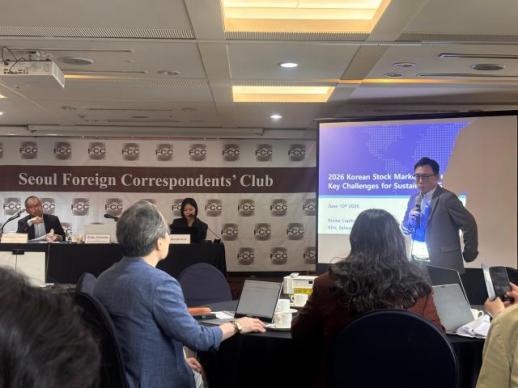 Risks remain for South Korea's historic stock market rally, expert warns SEOUL, June 10 (AJP) - South Korea's stock market has seen one of the fastest rallies in modern history, driven initially by major governance reforms that helped boost long-undervalued South Korean stocks. Many economists now say the rally will only last if the country strengthens institutions, encourages greater corporate innovation, and expands its economy beyond semiconductors. Similar remarks were made by Kim Sei-wan, president of the Korea Capital Market Institute during a press briefing at the Korea Press Center in central Seoul on Wednesday. Kim said the South Korean market has long remained undervalued, compared to global peers, despite strong players like Samsung Electronics and SK hynix. He attributed much of the market's revaluation to regulatory reforms aimed at strengthening shareholder rights and improving board independence, implemented after President Lee Jae Myung took office in June last year. He added that those reforms were likely the main driver behind the market's recent rally from roughly the 2,000-point range to around 6,000, before strong corporate earnings and market expectations provided further momentum. "As far as I know, this is one of the fastest rises in stock market history," he said. "We joke that this rise should be registered in Guinness World Records." In fact, the country's benchmark KOSPI has risen about 225.6 percent since June 2025, while the junior KOSDAQ has gained 41.8 percent, repeatedly setting record highs. Kim said Korea had delivered the strongest stock market performance among major economies over the past year. He explained the rally was initially driven by institutional changes including stronger protection for minority shareholders and greater independence of corporate boards. But this year's gains have increasingly been supported by improving earnings at major companies, particularly in technology and artificial intelligence (AI)-related sectors such as semiconductors, defense, and biotechnology. But Kim warned that the market still relies heavily on the two major chipmakers, which now account for more than half of the stock market's total value, up from about 40 percent last year. Kim said South Korea should use the current boom to restructure its economy toward advanced manufacturing, AI, and other services, citing Japan, which once dominated the global memory chip market but lost ground after failing to make timely large-scale investment. "South Korea's semiconductor competitiveness can weaken at any time," he said. "When we have the world's strongest competitiveness, we must use this opportunity to restructure our industries." Kim said domestic individual and institutional investors have been the main buyers of South Korean stocks this year, while foreign institutional investors have been net sellers. He said this marked a reversal from last year, when foreign investors helped support the market. Kim also said South Korea's possible inclusion in the MSCI developed market index would be a major event, as many global institutional investors use MSCI benchmarks to allocate their portfolios. "It would be a very important milestone, as it could open another channel for foreign liquidity into the South Korean stock market," he said. Asked about risks from retail investors borrowing money to buy stocks and investing in leveraged products, Kim said margin lending by securities firms is already tightly capped and monitored. But he warned that leveraged products can increase market volatility. He said, "It is true that leveraged products carry the risk of increasing volatility," but added that financial authorities are closely watching the market. Kim also cautioned against debt-fueled investing among younger investors. "Investment should be made with surplus funds, not with borrowed money," he said. "The government cannot stop people from making such investments if they are legal, but financial education is essential." Kim said the next stage of South Korea's market reforms should focus on building trust. He pointed to stronger shareholder protection, better enforcement of rules, consistent policies, improved corporate governance, more innovation, and clearer communication with investors as key tasks. "The government's role is very important in maintaining the momentum of the stock market boom," Kim stressed. But he pointed out that market behavior is influenced by countless variables. "We always say everything affects stock prices," he said. "Corporate earnings matter, interest rates matter, the weather matters — even the number of birds flying in the sky." 2026-06-10 18:03:16
 -
 Mercedes-Benz Launches New Arocs Dump Truck to Compete in South Korea Mercedes-Benz has introduced a new truck model optimized for South Korea's driving conditions after three years of development. This model aims to maximize operational efficiency beyond simple performance improvements, targeting a more robust long-distance driving capability in a market dominated by Hyundai Motor Company. On June 10, Start Truck Korea, the domestic importer and distributor of Mercedes-Benz trucks, unveiled the 'New Arocs 4153K Single Reduction Dump' at the Truck Star Center in Asan, South Chungcheong Province. The new model is based on the fifth-generation 'New Arocs' launched in 2021. It is the result of a systematic analysis of South Korea's driving environment conducted over three years at the company's headquarters in Germany. The company focused particularly on maximizing efficiency. It implemented the 'X-Pulse high-pressure common rail injection system,' which delivers fuel more precisely to the engine, reducing unnecessary fuel consumption. This enhancement allows the truck to achieve excellent fuel efficiency and durability even in challenging work environments while providing strong power and towing capacity at low speeds. This strategy aligns with the evolving needs of the commercial vehicle market. Recently, factors such as a sluggish construction sector and reduced transportation margins due to high fuel prices have shifted buyer priorities from merely high output or large payloads to the ability to operate vehicles more reliably and for longer periods. The increase in heavy-load and long-distance operations has also contributed to growing consumer interest in operational efficiency, maintenance reliability, and total cost of ownership (TCO). This is why Mercedes-Benz has launched the New Arocs 4153K Single Reduction Dump at this critical juncture. Antonio Landazo, CEO of Start Truck Korea, stated, "We focused on providing durability, efficiency, and stable operational value, which are crucial for Korean dump truck customers. Our goal is to enhance vehicle uptime and contribute to profitability for truck operators in Korea." However, Hyundai continues to maintain a dominant position in the domestic dump truck market. According to the Korea Automobile Mobility Industry Association (KAMA), as of late April, Hyundai accounted for 16,849 registered dump trucks in South Korea, representing one in three dump trucks currently in operation. In response, Start Truck Korea plans to first expand its presence in the import vehicle market rather than the overall market. Last year, Volvo led the domestic dump truck sales among imports with 429 units sold. Dong Geun-tae, CEO of Start Truck Korea, noted, "We are aiming for a sales target of about 150 to 200 dump trucks this year."* This article has been translated by AI. 2026-06-10 18:03:00
 -
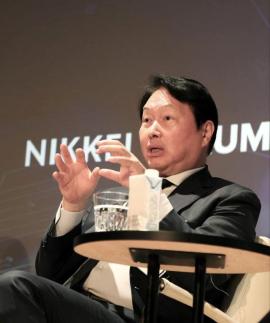 SK Group's Chey Tae-won Emphasizes Importance of AI Transition at Unified Forum Chey Tae-won, chairman of SK Group, has set the transition to artificial intelligence (AI) as an urgent priority, merging the group’s two major events—the management strategy meeting and the Icheon Forum—into a platform for in-depth discussions on AI. "If we fail to keep pace with AI advancements, we cannot guarantee our future survival," Chey emphasized, reflecting a heightened sense of urgency for organizational innovation. SK Group announced on June 10 that it will host the '2026 New Icheon Forum' from June 11 to 13 at the SKMS Research Institute in Icheon, Gyeonggi Province, under the theme 'Disruptive Innovation Brought by AI: A Major Shift to AI-Centric Management.' More than 50 executives, including Chey, Vice Chairman Chey Jae-won, and Chairman of the SUPEX Council Chey Chang-won, as well as CEOs from major subsidiaries, will participate. The New Icheon Forum combines the management strategy meeting, which focuses on group strategies, with the Icheon Forum, which discusses future agendas, marking its inaugural event this year. Historically, SK Group has convened its key executives for a management strategy meeting around June and held the Icheon Forum in August, where group members and domestic and international experts engage in focused discussions on global industry trends and future business directions. The integration of these two events this year is reportedly driven by Chey’s strong directive to enhance the implementation of AI. Recently, he has been actively engaging in the AI sector. Earlier this month, at the 'Computex 2026' event in Taiwan, he met with Jensen Huang, CEO of NVIDIA, and C.C. Wei, Chairman of TSMC, to discuss collaboration in the AI semiconductor ecosystem. During Huang's visit to South Korea, they held multiple meetings to explore expanding AI infrastructure cooperation. The forum is also expected to address the current status of restructuring efforts and future directions. Since 2023, SK Group has been restructuring its business by divesting non-core assets, streamlining overlapping operations, and enhancing investment efficiency. Recently, the group has been deliberating the sale of SK Siltron. Although the sale was initiated to reduce debt burdens, the recovery of the semiconductor market and increased AI investments have led to a reevaluation of SK Siltron's corporate value. SK Siltron is the world's third-largest producer of silicon wafers, a key material for semiconductors, with SK Hynix as a major customer. Internally, there is a growing sentiment within SK Group that the focus should shift from short-term financial improvements to securing a long-term semiconductor value chain. The decision regarding the sale of SK Siltron is reportedly under reconsideration.* This article has been translated by AI. 2026-06-10 18:03:00
 -
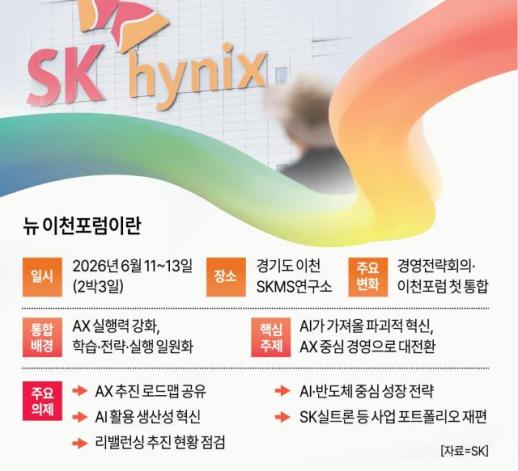 SK Group Accelerates AI Agent Adoption Amid Semiconductor Security Concerns As Samsung Group accelerates its transition to artificial intelligence (AI) through the adoption of external generative AI, SK Group faces increasing complexity in its own strategy. Until now, SK has limited the use of external generative AI due to concerns over internal information leaks, opting instead for in-house AI solutions. However, recent meetings between SK Group Chairman Chey Tae-won and NVIDIA CEO Jensen Huang, along with the upcoming New Icheon Forum, have sparked discussions about a comprehensive AX (AI transformation) innovation utilizing external generative AI and AI agents. According to industry sources, the New Icheon Forum, taking place from June 11 to 13, will serve as a critical opportunity for SK's leadership and members to discuss strategies and execution roadmaps to enhance the group's AX response. On the first day, participants will share AX goals and roadmaps from major affiliates, and a CEO panel discussion will focus on securing the implementation of AI innovations. The forum aims to facilitate broad communication regarding the necessity and direction of AX tailored to each company's circumstances. On June 12, discussions led by members will take place, allowing them to share firsthand experiences of changes in the AI era and brainstorm solutions to challenges faced during the AX process, as well as ways to enhance organizational operations. On the final day, June 13, SK Group executives will present the AX initiatives discussed by each affiliate and reinforce the group's commitment to accelerating AX. The push for AX is driven by a sense of urgency as global companies increasingly adopt generative AI-based agents as the new normal, prompting SK Group to avoid falling behind. SK has been pursuing AX strategies at the affiliate level, but the approach varies significantly among companies. For instance, SK Telecom has implemented its own foundation model-based AI, 'A.Dot Biz,' across its operations, allowing for the creation of AI agents specialized for corporate tasks while preventing the leakage of trade secrets. However, this approach is feasible only for companies with large-scale AI data centers and supercomputers ranked among the top 100 globally, which may limit practical performance compared to external generative AI. SK Hynix has developed its own AI model based on external generative AI to utilize in operations while preventing leaks of sensitive semiconductor information. However, the nature of the semiconductor business, which is highly sensitive to government leaks, makes it challenging to implement AI agents in core tasks. SK Innovation has allowed limited use of generative AI on a company intranet, but the performance of the AI models has been a concern. Industry insiders predict that the forum will lead SK Group to decide on the full-scale adoption of external generative AI in its operations and explore measures to address the increased operational costs associated with the spread of AI agents. Following Samsung Group's lead, SK Group's decision to fully integrate external generative AI and AI agents into its operations is expected to accelerate AX across major South Korean corporations. An SK Group official stated, "This year's New Icheon Forum will be a platform for broadly discussing AX strategies to lead in the AI era. We will accelerate the transition to AX-centered management based on consensus among our members." 2026-06-10 18:03:00
 -
 LS Cables Plans Major Lawsuit Against Daehan Cable Over Technology Theft Allegations LS Cables, the leading cable manufacturer in South Korea, has announced plans to file a significant lawsuit against Daehan Cable, the second-largest company, over allegations of technology theft related to submarine cables. If the prosecution decides to indict those involved, a historic civil lawsuit is expected to unfold alongside the criminal proceedings.According to industry sources on June 10, LS Cables is preparing a robust legal response following the police's referral of 13 individuals, including Daehan Cable executives and representatives from the architectural firm Goun, to the prosecution for alleged trade secret violations.Daehan Cable is accused of unlawfully acquiring and utilizing critical technical information, including design blueprints and production layouts, during the construction of its cable manufacturing facility in Dangjin, South Chungcheong Province. The police concluded that Goun, which was responsible for the design of LS Cables' Donghae factories 1 through 4, violated confidentiality agreements by providing internal documents to Daehan Cable. This conclusion comes nearly three years after the investigation began.LS Cables asserts that the damages claim could be substantial, considering the costs incurred for establishing submarine cable production facilities, technology development, and lost opportunities for domestic and international projects. The company invested approximately 1 trillion won in building its Donghae submarine cable factory, claiming that the unauthorized use of its technology has resulted in losses amounting to hundreds of billions of won. They argue that this issue is critical to South Korea's industrial competitiveness, as the technology in question is designated as a national core technology.An LS Cables representative stated, "Daehan Cable secured contracts for submarine cable supply projects for the Anma Offshore Wind Farm and the Yeonggwang Nakwol Offshore Wind Farm based on the factory implicated in the technology theft. The Nakwol Offshore Wind project is already underway, and we anticipate damages could reach hundreds of billions based on the scale of various projects."Lawsuits involving damages in the trillions of won between domestic companies are rare. The most recent case involved LG Energy Solution (then LG Chem) and SK Innovation, which faced a potential damages claim in the trillions over a trade secret dispute regarding battery technology. The dispute concluded in 2021 when SK Innovation agreed to pay LG Chem 2 trillion won.The initiation of the lawsuit depends on the prosecution's decision. The police have submitted their findings with an indictment recommendation, and the prosecution plans to review the investigation records before making a final decision. With the prosecution reform plan set to take effect in October, which separates investigative and indictment functions, a resolution is expected before then.Submarine cables are considered essential infrastructure for power supply in the era of artificial intelligence (AI). As demand for electricity surges due to the expansion of AI data centers, establishing submarine cables capable of long-distance and high-capacity transmission is crucial for supplying power generated from offshore wind and nuclear power to metropolitan areas and industrial complexes.The production facilities and process know-how are critical for ensuring product quality, with LS Cables and Daehan Cable forming a duopoly in the market. LS Cables is advancing its submarine cable business centered around its Donghae factory, while Daehan Cable is focusing on its Dangjin facility.In response, Daehan Cable has countered that the allegations pertain only to a small part of its overall production system. A Daehan Cable representative stated, "The current investigation targets only specific designs and equipment related to the submarine cable factory, not the overall production technology or system. Most of the costs for establishing submarine cable production facilities and technology development investments are not included in this investigation, and the submarine cable factory in question is unrelated to the national core technology designation."Daehan Cable also argues that a lawsuit seeking damages in the trillions is inappropriate. They emphasized, "The research and development investments or total construction costs for the submarine cable business cannot be directly claimed as damages. Major projects like the Anma Offshore Wind and Yeonggwang Nakwol Offshore Wind were secured after rigorous evaluations of technology, quality, and execution capabilities by the clients, and claims linking specific design materials to contract outcomes lack objective evidence. The scale of damages claimed by the competitor is merely an unsubstantiated estimate made before any factual or legal determinations have been established." 2026-06-10 18:03:00
 -
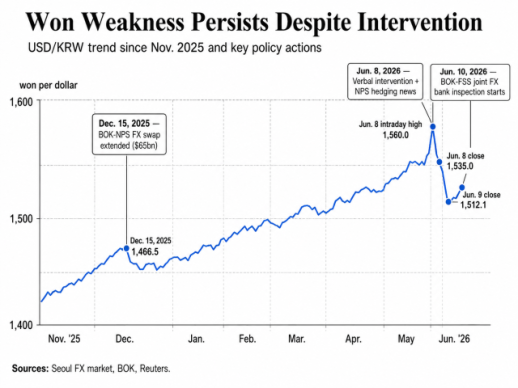 Korea's defense of won falls short against foreign capital exodus SEOUL, June 10 (AJP) - South Korean authorities this year have been employing every tool in the playbook to bolster the Korean won, dangerously flirting around post-2008 crisis levels — from a $65 billion FX swap arrangement with the National Pension Service and suspected smoothing operations to a rare joint probe into foreign exchange activities at major banks. But so far, all have proved of little avail. Each measure has offered short-term relief, only to wear off with every bout of KOSPI volatility and fresh wave of capital outflows driven by geopolitical risks, tighter global monetary conditions and a growing shift of funds toward U.S. assets. The dollar ended Wednesday at 1,524.2 won, up from 1,512.1 won the previous session, though below Monday's intraday high near 1,560 won. Stock market flows have increasingly dictated the won's direction. Foreign stock selling increases demand for dollars as investors repatriate funds overseas, adding upward pressure on the exchange rate. A weaker won, in turn, raises concerns over currency losses and prompts further reductions in Korean equity exposure, creating a potentially self-reinforcing cycle. Foreign investors sold a net 2.77 trillion won ($1.8 billion) worth of Korean stocks on Wednesday, extending cumulative net selling this month to nearly 30 trillion won and putting outflows on track to surpass May's record 51.5 trillion won. Foreigners have sold a net 144.2 trillion won worth of KOSPI shares this year. During the same period, the won has lost more than 5 percent against the dollar, significantly underperforming both the dollar index, which gained about 1.75 percent, and the Japanese yen, against which the greenback rose roughly 2.2 percent. One emerging catalyst behind the recent acceleration in outflows is the upcoming debut of SpaceX on Nasdaq on Friday. The highly anticipated listing, expected to value the company at around $1.8 trillion, has prompted global investors to reposition capital toward U.S. technology assets, making Korea's highly liquid equity market an attractive source of funds. One of the authorities' key tools has been the foreign exchange swap arrangement with the National Pension Service. The foreign exchange authorities and the pension fund agreed last December to extend their $65 billion FX swap line through the end of 2026. Because large overseas investments by the pension fund can intensify downward pressure on the won, the arrangement allows part of that dollar demand to be absorbed outside the spot market. Still, repeated stabilization efforts appear to be placing pressure on the country's foreign exchange reserves. According to the Bank of Korea, foreign exchange reserves fell from $430.66 billion at the end of November last year, just before the swap line was extended, to $426.99 billion at the end of May, a decline of $3.67 billion over six months. The drop in May alone was notable. Reserves fell by $880 million even as the KOSPI reached record highs during the month. Although the benchmark index climbed above 8,400 on May 27, foreign investors remained net sellers for 16 consecutive trading days from May 7 through the end of the month. The Bank of Korea said the decline in reserves partly reflected market stabilization measures, effectively acknowledging that intervention-related operations contributed to last month's fall. On Wednesday, when the KOSPI tumbled 4.52 percent to close at 7,730.82, foreign investors sold a net 2.77 trillion won worth of shares, extending their selling streak to 23 consecutive trading days. The sustained outflows have continued to pressure the won even as authorities intensify efforts to stabilize financial markets. A foreign exchange dealer at a local commercial bank, who requested anonymity, said authorities appeared determined to defend the currency. "Although it is impossible to officially confirm whether the authorities are conducting direct smoothing operations, the market has clearly observed continued inflows and movements aimed at defending the won's lower bound," he said. Policymakers are also publicly acknowledging rising volatility in financial markets. The Bank of Korea and the Financial Supervisory Service on Wednesday launched a joint inspection of major foreign exchange banks to examine speculative transactions and potential market-disrupting activities. The same day, Deputy Prime Minister and Finance Minister Koo Yun-cheol chaired an expanded macroeconomic, fiscal and financial policy meeting attended by Budget Minister Park Hong-keun, Financial Services Commission Chairman Lee Eog-weon and BOK Governor Shin Hyun-song to review financial-market risks and vulnerabilities. Market participants view the inspection as a sign that authorities have stepped up their defense of the currency, with regulators now scrutinizing actual trading records. So far, policymakers have managed to prevent the won-dollar exchange rate from testing the psychologically important 1,600 level. What they have not achieved is a decisive reversal of the broader weakness that has kept the currency trapped in the 1,500-won range. "Since mid-May, the scale of foreign selling in the stock market has increased sharply to around 3 trillion won per day on average," said Jung Yong-taek, an analyst at IBK Securities. "The current factors are unlikely to be resolved in the short term." For now, Seoul's financial markets remain caught in a vicious cycle in which foreign capital outflows weaken both stocks and the currency, while authorities can slow the slide but struggle to change its direction. 2026-06-10 17:59:24
 -
 Experts Say AI Could Have Prevented Voting Paper Shortage Crisis A voting paper shortage has caused voters to turn away in what is being described as a crisis in a developed democracy. Despite artificial intelligence (AI) predicting election outcomes every minute during the vote count and forecasting a turnout of nearly 60% for the June 3 local elections, the situation unfolded due to a failure in administrative planning by the election commission. Experts criticized the commission for not utilizing basic demand forecasting through AI. On June 10, Aju Economy reported that the election commission conducted demand forecasting for the election while blocking information since June 2. Based on predictions made on May 27, considering the time needed to prepare voting papers, the 'basic scenario' indicated a final turnout of 58% to 61%. The 'pessimistic scenario' projected 54% to 56%, while the 'optimistic scenario' estimated 62% to 64%. Taking into account early voting and potential errors, it was recommended that at least 60% of voting papers be printed, with high-risk areas advised to prepare over 75%. Fable5, the AI model used, analyzed factors such as the political mobilization environment and the simultaneous holding of 14 by-elections, concluding that despite a turnout of only 50.9% in the 2022 local elections, this year's turnout would reach around 60%. The actual turnout for the 9th nationwide local elections held on June 3 was 61%, closely aligning with AI predictions. Experts agree that had the election commission conducted even basic AI simulations, the crisis could have been avoided. They noted that the data accumulated from multiple elections would have allowed for relatively accurate predictions through AI simulations. Lee Jong-ho, a professor at Seoul National University and former Minister of Science and ICT, stated, "This is a disastrous event that should not happen in a developed country. The accumulated data and trends were rich, yet the failure to conduct even basic simulations was the cause of the incident." Professor Lee added, "It’s as if they predicted demand based on feeling, like saying it might rain because my back hurts. This was entirely predictable, and the technology was available, yet they made an amateur mistake." Choi Byeong-ho, a professor at Korea University’s Human-Inspired AI Research Institute, emphasized that AI excels in simulation and prediction, making it essential to assess voting paper demand in advance. He noted, "Collective intelligence has its limits, which is why we should utilize AI." Professor Choi also pointed out that there were issues not only with demand forecasting but also with real-time information sharing during the election. He stated, "If real-time data on voter turnout, spare ballots, and hourly voting status had been linked, we could have responded adequately on the day of the election." The need for integrating vision technology with AI was also raised. This technology could have allowed for real-time tracking of voter numbers, enabling the printing of additional ballots if a shortage was anticipated. Professor Choi remarked, "By utilizing vision technology, we could have analyzed waiting lines by time slot to determine if there was a shortage of ballots. It’s puzzling that such considerations were not made." He further noted, "Korea is a country that exports voting technology, and by incorporating AI systems, we could reach a global standard. While this incident is unprecedented, I hope it leads to significant advancements in Korea's electoral system." Calls for the introduction of electronic voting as a long-term solution have also emerged. Park Chun-sik, a professor in the Cybersecurity Department at Ajou University, stated, "Recurring issues such as early voting, paper shortages, and overseas voting stem from manual processes. While full electronic voting may be premature due to public trust issues, we should aim for a direction toward digitization and establish a reliable electoral system incorporating AI."* This article has been translated by AI. 2026-06-10 17:57:00
 -
 SpaceX IPO Sparks Investment Shift in Aerospace ETFs The upcoming initial public offering (IPO) of SpaceX on June 12 is expected to reshape the investment landscape for aerospace exchange-traded funds (ETFs) in South Korea. Asset management firms are aggressively marketing ETFs that prominently feature SpaceX, aiming to attract investors. However, analysts warn that after the IPO, investors may shift their funds from these ETFs to individual SpaceX shares, leading to unexpected changes in capital flow. According to the Korea Exchange, the combined net assets of five aerospace ETFs listed in South Korea, which target SpaceX benefits, totaled 4.32 trillion won as of June 9. The competition to dominate the market has intensified since the launch of the 1Q U.S. Aerospace ETF in November 2022, followed by the KODEX U.S. Aerospace ETF, TIGER U.S. Space Tech ETF, ACE U.S. Space Tech Active ETF, and SOL U.S. Aerospace TOP10 ETF. Fund managers are designing their products with the assumption that SpaceX will be included, promoting strategies to maximize its weight in the ETFs. With SpaceX's IPO expected to exceed 1,500 trillion won, they are emphasizing the benefits of these ETFs. However, there are concerns that the SpaceX IPO could trigger a capital exodus from aerospace ETFs. Funds that previously chose ETFs as an indirect investment in the unlisted SpaceX may move to individual stocks after the IPO. A similar trend was observed recently with single-stock leveraged products. Following the launch of a single-stock leveraged ETF based on Samsung Electronics and SK Hynix on May 27, significant capital flowed out of existing semiconductor leveraged ETFs. The Korea Exchange reported that the net assets of the KODEX Semiconductor Leveraged ETF dropped from 32.76 trillion won on May 26 to 19.79 trillion won by June 9, a decrease of 12.97 trillion won in just two weeks. This trend of capital concentration has continued post-listing. According to Koscom ETF CHECK, the ETF with the largest net outflow in the past week was KODEX Semiconductor Leveraged, with 656.9 billion won, while TIGER Semiconductor TOP10 Leveraged saw the fourth-largest outflow at 293.4 billion won. Conversely, the largest net inflows during the same period were seen in KODEX SK Hynix Single Stock Leveraged (1.1021 trillion won), KODEX Samsung Electronics Single Stock Leveraged (951.2 billion won), TIGER Samsung Electronics Single Stock Leveraged (675 billion won), and TIGER SK Hynix Single Stock Leveraged (635.2 billion won). If a similar trend of moving funds from ETFs to individual stocks occurs after SpaceX's listing, it could lead to decreased trading volumes in existing ETFs, temporarily widening premiums and bid-ask spreads, thus increasing transaction costs for investors. Hana Securities Research Center noted, "If market funds concentrate on SpaceX shares, smaller component stocks within the ETF's value chain may be neglected, leading to a situation where 'SpaceX rises, but ETF returns stagnate.'" The management strategy following the IPO will also be a key factor influencing ETF performance. Hana Securities stated, "Global mega IPOs have historically shown significant volatility immediately after listing due to the release of lock-up periods and the digestion of supply. The ability to strategically adjust the timing of inclusion to avoid the initial overheating phase will determine ETF performance." However, there is a prevailing outlook that the long-term inflow of passive funds will have a more substantial impact. Should SpaceX be specially included in the Nasdaq 100 index after its IPO, global passive funds are expected to flow in, potentially increasing valuations across the aerospace and artificial intelligence sectors, which could subsequently benefit domestic aerospace ETFs that include these stocks.* This article has been translated by AI. 2026-06-10 17:51:00
 -
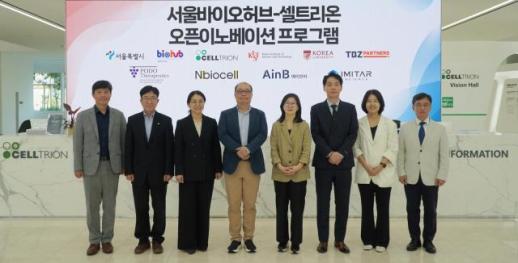 Celltrion Expands Collaboration with Seoul Bio Hub for Bio Startup Support Celltrion is expanding its collaboration with the Seoul Bio Hub to enhance its bio startup discovery and partnership program. The company has selected four startups with next-generation technologies, including AI-based protein antibody development, organoids, disease modeling, and oral delivery formulations, for its fourth phase of the Open Innovation Program. This initiative is expected to contribute to the ongoing growth of the domestic biotech ecosystem.On June 10, Celltrion announced the final selection of four companies for the fourth phase of the 2026 Seoul Bio Hub-Celltrion Open Innovation Program.The selected companies include: 1) AINB, which specializes in AI-based protein antibody development; 2) EnbioCell, which focuses on a GLP-1 derivative oral delivery formulation platform based on ChargeSmed; 3) Imita Science, known for its biomimetic tissue-based disease modeling and drug evaluation technology; and 4) Podotherapeutics, which offers a precision medicine platform based on patient-derived organoids (PDO).These companies were chosen after a thorough evaluation by a review panel that included external technology assessors. The four startups will receive tailored support at various stages of growth, including joint research and commercialization opportunities, technology advancement, and mentoring from Celltrion.A Celltrion representative stated, "This program aims to discover biotech and medical startups with innovative technologies that can align with Celltrion's research and development needs, and to support technology advancement and growth through collaboration with the Seoul Bio Hub." The company plans to assist the growth of promising firms and expand the collaborative foundation of the domestic biotech ecosystem.Since 2020, Celltrion has participated as a private operator in the Incheon Startup Park development project. Additionally, it is involved in the K-Bio Lab Hub construction project, leading efforts to discover and nurture promising companies through its open innovation strategy.* This article has been translated by AI. 2026-06-10 17:51:00
 -
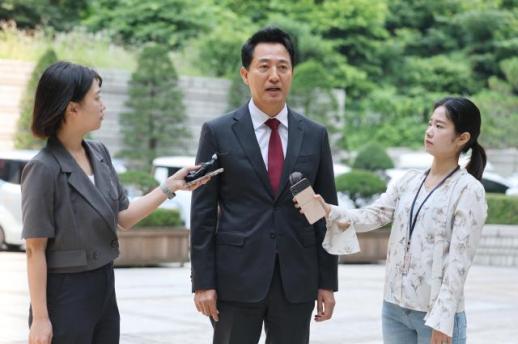 Trial Resumes for Seoul Mayor Oh Se-hoon on Political Fund Law Violations The trial against Seoul Mayor Oh Se-hoon for alleged violations of the Political Fund Law resumed on June 10, following a pause due to the June 3 local elections. Oh's defense team continues to deny all allegations. The hearing at the Seoul Central District Court was the first since Oh was elected mayor on June 3. During the session, Kang Cheol-won, a former deputy mayor and key figure in Oh's campaign during the 2021 Seoul mayoral by-election, testified. Prosecutors focused on whether Oh's campaign had commissioned Myung Tae-kyun for polling related to the mayoral election. They alleged that Oh's team had a close working relationship with Myung, including direct requests for polling and sharing internal documents regarding candidate nominations. However, Kang firmly denied these claims, stating they were completely unfounded. Prosecutors cited Myung's statements during his investigation, claiming that Oh had mentioned the need for a poll to defeat candidate Na Kyung-won in January 2021 and had asked his supporter, Kim Han-jeong, to fund it. Kang rejected this assertion, saying, "I have never heard anything related from Mayor Oh" and emphasized that they had never conducted any internal polls during their campaign. Kang described the polling results brought by Myung as merely a sample he voluntarily presented, stating, "It was not even at the stage to discuss costs." As Kang continued to deny the allegations, prosecutors presented KakaoTalk messages from January 2021, where Kang had sent documents mentioning polling to Ji Sang-wook, then a member of the People Power Party's nomination committee. They questioned whether this constituted evidence of polling activity. Kang downplayed the significance, saying he sent the documents out of courtesy and that the materials were unrelated to polling, focusing instead on verifying Myung's credibility and abilities. Kang also recounted his doubts about the reliability of the unpublished polling results provided by Myung, which he had assigned to Lee Chang-geun, a former spokesperson for the Seoul City government, for analysis. He argued that the results were distorted due to incorrect demographic ratios and claimed he had strongly criticized Myung. Kang admitted to having heated exchanges with Myung, stating he referred to him as someone trying to deceive with dubious data. After their confrontation, he reported back to Oh and severed ties with Myung. Oh, dressed in a dark suit and red tie, listened expressionlessly to Kang's testimony throughout the trial. He occasionally smirked when prosecutors directed questions to Kang. Upon arriving at the court, Oh told reporters, "The investigative agency should charge Myung Tae-kyun and his associates with fraud. The allegations aimed at influencing the election have already passed." He strongly denied any wrongdoing, stating, "The worst investigative agency is one that reverses the roles of criminals and victims. In that sense, the special investigation team is truly malicious." Oh asserted that the polling provided by Myung and his associates was proven to be inflated and fake, with confessions made in court. He urged the investigative agency to conclude its investigation and charge Myung's group with fraud promptly, expressing concern over the lack of progress. The court has scheduled another hearing for June 12, followed by a decision hearing on June 17. Attention is focused on what charges the prosecution will bring against Oh. If he is convicted of violating the Public Official Election Act with a fine of over 1 million won, his election could be invalidated, and he could face restrictions on public office and voting rights for a certain period.* This article has been translated by AI. 2026-06-10 17:48:00