

Journalist

Lee Baek-soon
-
 UPDATE: Korea's May inflation hits 26-mo high, hastening hike agenda *Updated with additional information and market response. SEOUL, June 02 (AJP) - South Korea's inflation accelerated by the fastest pace in 26 months to run above 3 percent in May as energy shocks from prolonged Gulf conflicts pushed up prices from fueling to service charges coupled with crisis-level exchange rate to rock capital markets and send the central bank scrambling for emergency actions. The composite consumer price index for May rose 3.1 percent from a year earlier, according to the Ministry of Data and Statistics on Tuesday. The annual inflation rate accelerated from 2.6 percent in April and marked the fastest pace since March 2024. Petroleum products were the main driver of the May pickup, rising 24.2 percent on year. Diesel prices jumped 33.3 percent, while gasoline climbed 23.1 percent. In May, the average retail price of gasoline at gas stations in Seoul stood at 2,051.1 won ($1.38) per liter, while diesel recorded 2,038.85 won per liter. The figures represent expansions of 1.46 percent and 1.66 percent, respectively, compared to April's averages of 2,021.6 won and 2,005.46 won when government capped the gains. The impact was most visible in transport costs, which rose 11.6 percent from a year earlier. Recreation and entertaining prices also increased 5.0 percent, while miscellaneous goods and services rose 4.1 percent. An index measuring the prices of daily necessities rose 3.3 percent, the highest level since April 2024, suggesting that households continued to feel the pressure of rising prices. The burden was concentrated more in non-food items, as the non-food component of the living necessities index climbed 4.2 percent while non-food items showed a rather modest rise of 2.1 percent. Fresh food prices, by contrast, fell 1.4 percent from a year earlier, with fresh vegetables and fresh fruit declining 4.9 percent and 2.8 percent, respectively. Agricultural, livestock and fishery products still rose 2.2 percent overall, as livestock and fishery prices increased despite relatively stable agricultural prices. Service prices rose 2.8 percent from a year earlier, led by travel-related items such as domestic and international airfares. Personal services increased 3.7 percent, while personal services excluding dining out climbed 4.4 percent. As of the end of the morning session, the three-year government bond yield rose 3.3 basis points to 3.823 percent, while the 10-year yield edged down 0.7 basis points to 4.167 percent. The longer-dated yields remained largely flat, benefiting from the spillover effects of a 3 trillion won auction for 30-year government bonds scheduled for the day. The benchmark KOSPI fell more than 2 percent while the dollar spiked above 1,518 won. The core inflation measure used by the Organization for Economic Cooperation and Development, which excludes food and energy, rose 2.5 percent, up from 2.2 percent in April. Another core gauge that excludes agricultural products and petroleum products also increased 2.5 percent. The Bank of Korea also held an inflation review meeting Tuesday morning, chaired by Lee Ji-ho, Head of Research Department, to assess recent price conditions and the outlook. The Bank of Korea in late May held the benchmark at 2.5 percent, unchanged for a full year, while clearly indicating rates would go higher possibly through multiple hikes depending on the inflationary trajectory. The next meeting is in July, but the monetary policy board can hold emergency rate-setting meetings. Lee said May inflation rose sharply from April as the pace of petroleum price increases widened and service price growth picked up, particularly in travel-related services such as domestic and international airfares. The central bank said most major categories acted as upward factors in May, with services, agricultural, livestock and fishery products, and petroleum products all contributing to the acceleration in headline inflation. The BOK also warned that inflation is likely to remain around 3 percent as the impact of oil price shocks gradually spreads to other sectors. Last month, it upped this year's inflation forecast to near 3 percent. "Uncertainty remains high over the future inflation path, depending on developments in the Middle East and the resulting movement in oil prices," Lee said. "As oil price shocks are gradually spreading to other sectors, inflation is expected to remain in the 3 percent range for the time being, and we will closely monitor price conditions with vigilance." The central bank also noted that the rise in living necessities prices to the low-to-mid 3 percent range has increased living cost burdens for vulnerable groups, whose spending is more heavily concentrated on essential goods. The latest inflation data came a day after BOK Governor Shin Hyun-song said Korea remains vulnerable to energy price shocks but has room to respond to renewed inflation pressure. "Korea is sensitive to energy price shocks, similar to the euro area," Shin said Monday during a policy dialogue at the 2026 BOK International Conference in Seoul. He added that there are fewer obstacles to adjusting monetary policy in relation to inflation, saying the central bank has "greater room for maneuver" to ease price pressures with potential rate hikes. 2026-06-02 12:23:22
 -
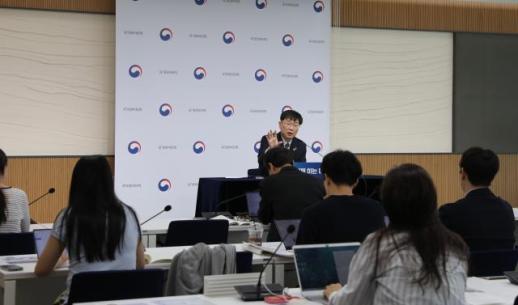 National Data Agency Advances Data Integration and Utilization for AI Competitiveness The National Data Agency is working to establish a national data management system through the promotion of the National Data Basic Law and the expansion of public and private data integration. During the first year of the Lee administration, efforts have intensified to position the agency as the central authority for national data in the era of artificial intelligence (AI), marking the beginning of a national-level data ecosystem. In a report titled "Achievements of the People's Sovereignty Government After One Year," released on June 2, the agency highlighted four key areas of focus: establishing government-wide data governance, enhancing data value, developing national statistics, and strengthening statistical services and infrastructure. As part of these efforts, the agency has prepared a draft of the National Data Basic Law, which was submitted to the National Assembly on May 27. The proposed law includes provisions for establishing a comprehensive coordination system for national data, designating and managing national data, ensuring quality control, and designating national data utilization centers. Ahn Hyung-jun, head of the National Data Agency, stated during the June 1 briefing, "Previously, data governance was fragmented across public data, industrial data, and personal data, leading to a lack of a cohesive national management system. The core of promoting this basic law is to enable citizens to utilize data more easily." The agency is also advancing initiatives to enhance data value. It is working on building AI-friendly metadata (ontology) to ensure that AI can accurately read and interpret statistical data, and is introducing new data protection technologies such as homomorphic encryption and reproducible data. In November of last year, the agency launched a database service for small and medium-sized enterprises, and plans to provide integrated data on the elderly, deceased individuals, and homeowners later this year. Ahn noted, "Data on the elderly can be used to address issues related to an aging society, data on deceased individuals can inform policies to prevent suicide and solitary deaths, and data on homeowners can aid in the development of housing and real estate policies." The agency is also developing statistics to support national policy initiatives. It has published a regional supply and use table that shows the movement of goods and services between regions for the first time and expanded the areas for compiling living population statistics from 89 to 107. Additionally, it has developed population dynamics panel statistics to analyze changes in marriage and childbirth and has expanded youth-related statistics, including a youth statistical map and quality of life analysis. To make data more accessible to the public, the agency is enhancing its statistical services. It has introduced new features for data visualization and industry statistical maps, and starting this month, it will apply AI technology to operate the statistical data center during evenings and weekends. Ahn concluded, "AI competitiveness ultimately stems from data competitiveness. We will accelerate data innovation and actively support the resolution of national issues through the integration and utilization of diverse data."* This article has been translated by AI. 2026-06-02 12:03:00
 -
![[6·3 Local Elections] Ruling Party Appeals for Votes Ahead of Election Day](https://image.ajunews.com//content/image/2026/06/02/20260602115433687314_518_323.jpg) [[6·3 Local Elections]] Ruling Party Appeals for Votes Ahead of Election Day On June 2, the Democratic Party made a final appeal for votes ahead of the June 3 local elections, urging voters to choose the ruling party candidate who will work with President Lee Jae-myung. Jo Seung-rae, the party's secretary-general, spoke to reporters at the National Assembly, stating, "With just one day left until the election, it is time to vote for the normalization of South Korea and to create an effective local government." He emphasized that the essence of this election is to judge the far-right forces and to support a capable president. Jo urged citizens to actively participate in the voting process and reflect on the significance of the election, asking them to support a president who works effectively. "Please choose candidates who will work in sync with the president throughout his term," he added. He also targeted candidates from the People Power Party, including Oh Se-hoon, Yoon Jeung-bok, Park Wan-su, and Choo Kyung-ho, who have faced various allegations. "Oh is under investigation for allegations of polling fraud, while Yoon is currently on trial for violating election laws," Jo pointed out. He noted that Park is facing accusations related to the illegal production and distribution of AI-generated fake videos, and Choo has been indicted for serious charges related to insurrection. "If they are elected, can they govern effectively?" he questioned. Regarding Han Dong-hoon, Jo stated, "There are already allegations of operating an illegal election office, and discussions in a group chat among Han's supporters have raised concerns about fraudulent residency registrations. This is a clear violation of election laws. We request prompt cooperation from the National Election Commission and investigative authorities." Jo also criticized candidates who have run as independents, such as Kim Kwan-young, who was expelled from the party for cash distribution, and Jo Guk, who is running in Pyeongtaek. "Kim Kwan-young was expelled not for political oppression but for distributing cash. We cannot entrust the future of Jeonbuk to a candidate who consistently lies to cover up his wrongdoings," he said. He urged Democratic supporters in Pyeongtaek to choose candidate Kim Yong-nam instead of Jo Guk.* This article has been translated by AI. 2026-06-02 12:00:00
[[6·3 Local Elections]] Ruling Party Appeals for Votes Ahead of Election Day On June 2, the Democratic Party made a final appeal for votes ahead of the June 3 local elections, urging voters to choose the ruling party candidate who will work with President Lee Jae-myung. Jo Seung-rae, the party's secretary-general, spoke to reporters at the National Assembly, stating, "With just one day left until the election, it is time to vote for the normalization of South Korea and to create an effective local government." He emphasized that the essence of this election is to judge the far-right forces and to support a capable president. Jo urged citizens to actively participate in the voting process and reflect on the significance of the election, asking them to support a president who works effectively. "Please choose candidates who will work in sync with the president throughout his term," he added. He also targeted candidates from the People Power Party, including Oh Se-hoon, Yoon Jeung-bok, Park Wan-su, and Choo Kyung-ho, who have faced various allegations. "Oh is under investigation for allegations of polling fraud, while Yoon is currently on trial for violating election laws," Jo pointed out. He noted that Park is facing accusations related to the illegal production and distribution of AI-generated fake videos, and Choo has been indicted for serious charges related to insurrection. "If they are elected, can they govern effectively?" he questioned. Regarding Han Dong-hoon, Jo stated, "There are already allegations of operating an illegal election office, and discussions in a group chat among Han's supporters have raised concerns about fraudulent residency registrations. This is a clear violation of election laws. We request prompt cooperation from the National Election Commission and investigative authorities." Jo also criticized candidates who have run as independents, such as Kim Kwan-young, who was expelled from the party for cash distribution, and Jo Guk, who is running in Pyeongtaek. "Kim Kwan-young was expelled not for political oppression but for distributing cash. We cannot entrust the future of Jeonbuk to a candidate who consistently lies to cover up his wrongdoings," he said. He urged Democratic supporters in Pyeongtaek to choose candidate Kim Yong-nam instead of Jo Guk.* This article has been translated by AI. 2026-06-02 12:00:00 -
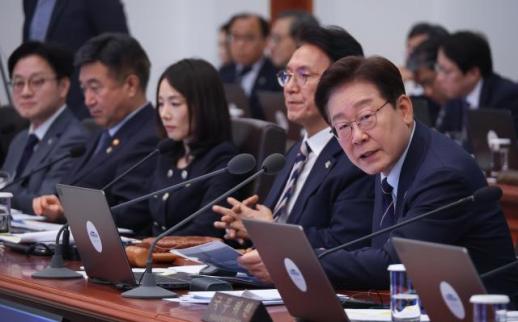 President Lee Calls for Accountability in Biased Broadcasting President Lee Jae-myung criticized certain terrestrial and comprehensive channels on June 2, questioning whether they face penalties for losing neutrality and fairness, likening their reporting to that of a political party's mouthpiece.During a Cabinet meeting and emergency economic review at the Blue House, President Lee made these remarks after receiving a report from Kim Jong-cheol, chairman of the Korea Communications Commission."While newspapers should allow for broad competition, public broadcasters and channels are restricted by the government to prevent other operators from entering the market," President Lee stated. "This can be seen as a type of patent, and with that protection comes responsibility."He further challenged Kim, asking, "From the public's perspective, how can we determine whether some broadcasts are affiliated with a specific political party or merely reflect personal preferences, given their lack of objectivity and frequent dissemination of false information? What happens when such practices become habitual?"In response, Kim noted that the broadcasting review system imposes penalties, stating, "If sanctions accumulate, there could be disadvantages in the process of re-licensing and re-approval for broadcasts."President Lee expressed skepticism, saying, "I have not heard of any significant penalties being enforced over a long period. There have been instances where people have said, 'This is really too much,' but I have not heard of any actions taken in response to that."He emphasized the need for broadcasting and communications administration to be conducted in a calm, fair, transparent, and objective manner that aligns with public expectations. "How can we allow practices that make people frown and question their validity to persist for so long?" he asked.President Lee concluded by stating, "We must ensure that broadcasting and communications administration is clearly aligned with the intent of the law and the expectations of the public."* This article has been translated by AI. 2026-06-02 11:39:00
 -
 Grocery delivery app Kurly to acquire AI startup SEOUL, June 2 (AJP) - Grocery delivery app Kurly will acquire Seoul-based artificial intelligence (AI) startup 1Z Labs in a bid to improve efficiency across its business operations, according to industrial sources on Tuesday. Kurly plans to issue around 453,518 new shares by early August in a stock-swap deal that will make the startup its wholly owned subsidiary. The two companies have already been jointly developing AI-related technologies, with plans to expand the use of AI across their business, from customer service and advertising to the development of new products and services. According to Kurly, it uses artificial intelligence to automate routine tasks such as producing advertising banners and product images, from planning and design through to final delivery. It also uses AI to handle customer service tasks like inquiries, cancellations, and returns, processing about 40 percent of requests on the same day. The upcoming acquisition comes as the company looks for new growth opportunities after postponing its initial public offering (IPO) in 2023 due to a market downturn that sharply reduced valuations. Founded in 2015, Kurly was among the frontrunners in offering overnight grocery delivery in South Korea through its signature "dawn delivery" service, which allows customers to receive fresh food orders by the next morning. The company was valued at about 4 trillion won (US$3 billion) at its peak in late 2021 after raising 250 billion won in a pre-IPO funding round led by Hong Kong-based private equity firm Anchor Equity Partners. Its valuation later dropped sharply as investor appetite weakened. Since postponing its IPO, Kurly has focused on improving profitability. It posted record first-quarter results in 2026, with revenue up 28.4 percent from a year earlier to 745.7 billion won and operating profit jumping to 24.2 billion won. "The acquisition would help the company strengthen its AI capabilities," said Kurly Chief Executive Sophie Kim. 2026-06-02 11:25:04
 -
 The Future of Search: From SEO to AEO and GEO in the Age of AI For over 20 years, search engine optimization (SEO) has been a key growth strategy in the digital media industry. However, the rise of generative artificial intelligence (AI) is fundamentally changing the concept of search itself. As we transition from an era where users clicked links to visit websites to one where AI provides direct answers, media organizations are reevaluating their optimization strategies. During the World News Media Congress (WNMC) held in Marseille, France, on June 1, discussions centered on the evolution of search strategies from SEO to AEO (Answer Engine Optimization) and GEO (Generative Engine Optimization). In the session titled 'Discovery: How to Rethink Search in the AI Era,' experts Clara Soteras, founder of The Audience Club, Barry Adams, a consultant at Polemic Digital, and David Burt, founder of DJB Strategies, noted that the search ecosystem is shifting from a link-based structure to an answer-based one. Traditionally, the goal of SEO was clear: to appear at the top of search results to secure more clicks and visitors. Strategies included keyword optimization, backlink building, and technical SEO. However, the landscape is changing. Services based on generative AI, such as Google AI Overviews, AI Mode, ChatGPT Search, and Perplexity, are increasingly providing direct answers by synthesizing information rather than directing users to web pages. AI answer windows are emerging as new channels for information consumption. This shift has led to the introduction of AEO, which focuses on optimizing content so that it can be cited or referenced in AI-generated answers. Rather than merely aiming for top search results, the priority is now to be recognized as a trustworthy source by AI. Establishing clear information structures, expertise, and credibility has become essential competitive advantages. Recently, GEO has also gained traction in the industry. GEO aims to ensure that generative AI platforms like ChatGPT, Gemini, and Claude actively incorporate specific brands and content during the answer generation process. The goal is to be included in the AI's answer creation rather than just appearing in search results. However, industry experts caution that AI has not yet reached a level where it can fully replace existing search traffic. Panelists noted that while traffic from generative AI is rapidly increasing, it still accounts for less than 1% of total traffic for most media organizations. Although AI-based search is growing, it has a long way to go before it can substitute the large-scale traffic provided by traditional search engines. Consequently, there is a growing sentiment in the industry that SEO, AEO, and GEO should be viewed as an evolutionary process rather than interchangeable concepts. If SEO was a competition for clicks, AEO represents a competition for citations in answers, while GEO signifies a competition to become information selected by AI. Yet, a recurring message at WNMC emphasized that, despite technological advancements, the most crucial element remains the relationship with readers. Experts like Barry Adams stressed that while algorithms and platforms constantly evolve, the direct relationship with readers endures. As a result, media organizations are increasing investments in direct engagement through subscriptions, newsletters, mobile apps, and podcasts. Ultimately, while AI is reshaping the future of search, the essence of the media industry remains unchanged. Strong content, a robust brand, and a loyal readership continue to be the foundation of sustainable media business competitiveness. The evolution from SEO to AEO and GEO will persist, but the key to attracting readers remains the same.* This article has been translated by AI. 2026-06-02 11:21:00
 -
 China Strengthens Regulations on Foreign Investment Amid Security Concerns China is significantly tightening regulations on foreign investments that may impact national security and interests. This move follows the recent acquisition of the Chinese AI startup Manus by U.S. tech giant Meta, prompting concerns about the outflow of advanced technologies, critical data, and skilled personnel. According to China's state-run Xinhua News Agency, the State Council announced new regulations on foreign investment on June 1, set to take effect on July 1. The new regulations consist of 34 articles that prohibit companies and individuals from transferring restricted goods, technologies, services, and data abroad without government approval during overseas investment processes, including the dispatch of technical personnel, provision of technical support, and operation of training programs. A new security review system for overseas investments will allow authorities to assess investments that could threaten national security and, if necessary, order their suspension. Violations could result in the confiscation of illegal profits and fines. Even completed overseas investments can be halted if deemed a national security risk, with authorities able to order the sale of related stocks and assets. The Hong Kong Ming Pao reported that China has established comprehensive legal grounds to cancel completed overseas investments, suggesting that the risks for foreign investments in sensitive areas like AI technology are increasing. The regulations also explicitly outline penalties for illegal overseas investments, including orders to halt investments and dispose of assets within a specified timeframe, confiscation of investment returns, and fines ranging from 0.05% to 1% of the total investment amount. Authorities may also impose a ban on overseas investments for up to three years or restrict new business registrations. Additionally, foreign companies and individuals that discriminate against Chinese entities during the overseas investment process may face corresponding restrictions or bans on their investment and business activities in China under the Anti-Foreign Sanctions Law. This regulatory tightening comes as the U.S. has been increasing restrictions on China in the high-tech sector. China's measures can be seen as a formalization of its response to enhance scrutiny of foreign investments and technology controls under the guise of national security. The Ministry of Commerce stated that these measures are necessary to protect the legitimate rights and interests of Chinese investors and their overseas investments, as well as to safeguard China's overseas interests from threats or infringements. It emphasized that the protective and defensive nature of these regulations will not affect normal market transactions or the resolution of legitimate commercial disputes. Market observers note that these regulations follow China's intervention in Meta's acquisition of Manus in April. Authorities determined that Manus, which grew based on Chinese technical talent and infrastructure, was circumventing regulations by relocating its headquarters to Singapore after attracting U.S. capital, a practice referred to as 'Singapore Washing.' Xu Xiaoli, head of the WTO Law Research Center at China University of Political Science and Law, told Global Times that the new regulations demonstrate that overseas investments using the Singapore Washing method are illegal and serve as a warning to Chinese companies to strictly comply with overseas investment regulations.* This article has been translated by AI. 2026-06-02 11:21:00
 -
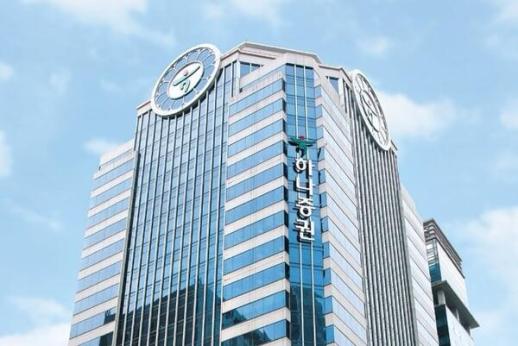 Hana Asset Management's four US index ETFs cross 1 trillion won in combined assets SEOUL, June 2 (AJP) - The combined net assets of Hana Asset Management's four U.S.-index exchange-traded funds have surpassed 1 trillion won, the company said on Tuesday. The fastest growth has come not from its plain index trackers, but from two bond-mixed products designed to take advantage of a 2023 revision to pension-account rules allowing investors to hold them at a full 100 percent allocation. The four funds held a combined 1.0431 trillion won (US$691 million) as of the end of last month. Two are straightforward index trackers: 1Q US S&P 500, which follows the 500 large-cap U.S. stocks in the Standard & Poor's 500, held 308.9 billion won, while 1Q U.S. Nasdaq 100, tracking the technology-heavy Nasdaq 100, held 181.3 billion won. The more telling numbers belong to the other two. The bond-mixed products, 1Q U.S. S&P 500 U.S. Treasury Mixed 50 Active and 1Q U.S. Nasdaq 100 U.S. Treasury Mixed 50 Active, held 286.0 billion won and 266.9 billion won respectively, together accounting for more than half the four-fund total despite being the more specialized offering. The reason is regulatory. Under a supervisory revision that took effect in 2023, these "second-generation" bond-mixed ETFs carry up to a 50 percent weighting in a U.S. index yet are classified as non-risk assets. That classification is the entire story. Current rules bar a retirement pension account from holding more than 70 percent of its reserves in risk assets such as equities. Because the bond-mixed ETFs fall outside that cap, pension investors can hold them at a full 100 percent weighting in defined-contribution, individual retirement pension, and personal pension accounts, raising effective US-index exposure while preserving room under the risk-asset limit. It is that arbitrage, rather than raw appetite for U.S. stocks, that Hana credits for the inflows. "On the basis of the convenience of real-time trading, low fees, and high management transparency, pension investors' use of ETFs is expanding rapidly," said Kim Tae-woo, chief executive of Hana Asset Management. "We plan to continue introducing a range of products tailored to the portfolio needs of pension investors." The milestone illustrates a broader shift in how Korean retirement capital reaches Wall Street: not through direct equity allocation, which the rules constrain, but through structures designed around the constraint itself. 2026-06-02 11:13:24
 -
 Police forward Gangnam Style rapper Psy to prosecution over illegal drug prescriptions SEOUL, June 02 (AJP) - South Korean police have referred Gangnam Style rapper Park Jae-sang, globally known as Psy, to prosecutors on charges of violating medical laws by using his staff to illegally obtain highly regulated prescription drugs. The case highlights South Korea's strict enforcement of regulations governing psychotropic medications. The 48-year-old singer is accused of bypassing mandatory face-to-face medical consultations to secure sleeping pills and anxiety medication over a multi-year period. Authorities at the Seodaemun Police Station near central Seoul announced Tuesday that they transferred Park, a university hospital professor and management personnel to the prosecution on May 29. A total of six individuals face charges stemming from an investigation that began last summer following an informant tip. From 2022 until last year, Park allegedly received prescriptions for Xanax and Stilnox from a university hospital in Seoul without meeting a doctor in person. He then dispatched his managers and other third parties to collect the medications from the pharmacy. Under South Korean medical law, only physicians who conduct direct patient examinations are authorized to issue prescriptions. The legal framework also strictly dictates that only the examined patient is permitted to collect the prescribed medication. Xanax and Stilnox are psychotropic drugs primarily used to treat sleep disorders, anxiety and depression. Due to their high potential for addiction and dependency, medical protocols dictate that direct in-person consultations and prescriptions are mandatory. 2026-06-02 11:13:05
 -
 APAR Opens 'Pink Lounge' Pop-Up Featuring MediCube Beauty Tech APAR is launching a pop-up store for its beauty brand MediCube to showcase its beauty tech capabilities. The pop-up store will operate from June 3 to 14 on the basement level of the 'The Crown' at Lotte Department Store Avenue L in Jamsil, APAR announced on June 2. The store, themed 'Pink Glow Tech Lounge,' features a signature pink-toned interior to enhance brand immersion. The main area of the event will showcase the full lineup of MediCube's AGE-R beauty devices, developed in-house by APAR. Visitors can experience the recently launched next-generation product, the 'Booster Pro X2,' along with other devices such as the Booster Glow, Booster Pro Mini Plus, Booster V Roller, Booster Vibration Cleanser, and High Focus Shot Plus. Complementary skincare products that enhance the effectiveness of the devices will also be featured. Popular items in the global market, including the 'Zero Pore Pad' and 'Collagen Night Wrapping Mask,' will be available for attendees to try. Various interactive programs will be offered, including a 'Number Matching Game' and a 'Buddy Drawing Game' to help participants intuitively understand the functions of the beauty devices. A separate consultation area will provide personalized product recommendations. In the first quarter of this year, APAR reported a consolidated revenue of 593.4 billion won and an operating profit of 152.3 billion won, marking increases of 123% and 173.7%, respectively, compared to the same period last year. Both figures represent the highest quarterly results in the company's history. Revenue from overseas markets, including the United States, surpassed 500 billion won for the first time. APAR is preparing to enter over 3,000 Walmart stores in the U.S. and is in final negotiations for entry into Costco, following partnerships with Ulta Beauty and Target. This domestic pop-up is seen as an opportunity to directly inform local consumers about the brand's expanding presence in global markets. An APAR representative stated, "By internalizing the entire value chain from research and development (R&D) to planning, production, and sales of beauty devices, APAR is achieving a significant competitive edge in the beauty tech market. We hope this pop-up will allow us to showcase MediCube's unique products and brand competitiveness to our customers."* This article has been translated by AI. 2026-06-02 11:12:00