

Journalist

Lee Baek-soon
-
 Eight Percent and Kaia Partner to Build RWA Investment Infrastructure Online investment platform Eight Percent has partnered with the blockchain platform Kaia to establish an investment infrastructure based on real-world assets (RWA) derived from domestic loan receivables. This initiative aims to create pathways for foreign investors to invest in Korean financial assets, enhancing global accessibility to the domestic alternative investment market.On June 2, Eight Percent announced that it has signed a memorandum of understanding (MOU) with Kaia to develop the RWA investment infrastructure based on the rights to receive principal and interest from domestic loan receivables.The agreement is part of a 'cross-border financing project' that connects Eight Percent's domestic loan receivables with Kaia's global investor network. The core objective is to establish new investment channels that can attract foreign capital into the domestic asset market.Through this collaboration, the two companies plan to facilitate easier access for global investors to Korean financial assets, thereby increasing the potential for capital inflows into the domestic investment market. They also intend to gradually expand the scale of investments and the types of asset classes involved.Song Bo-geun, head of Eight Percent, stated, "Our goal is to create an environment where global investors can easily access high-quality loan receivable assets in Korea. We aim to establish an investment gateway that allows foreign capital to steadily flow into assets based on the real economy in Korea."Hwan Lee, team leader at Kaia, added, "We expect this project to set a meaningful precedent for connecting Korean real assets with global investors."* This article has been translated by AI. 2026-06-02 17:18:00
 -
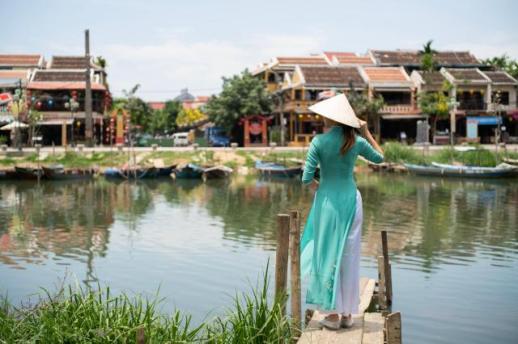 Travel Industry Launches Campaigns and Customized Services for Summer Vacationers As the summer vacation season approaches, major online travel agencies (OTAs) are launching diverse campaigns and specialized services to attract travelers. From brand campaigns to enhanced local services in specific countries, special interest tourism (SIT) reflecting individual preferences, and unique events with influencers, the industry is bustling to capture customer interest. ◆MyRealTrip Enhances Local Services in Vietnam, Top Southeast Asian Destination MyRealTrip is strengthening its local services in Vietnam, which ranks first in tour and activity transactions. The company reports that South Korean travelers have increasingly favored independent travel, particularly to Vietnam during peak summer and winter holiday seasons. In response to the growing demand for independent travel, MyRealTrip has significantly improved the quality of its airport pickup and drop-off services at Cam Ranh International Airport, the most sought-after location. The company has deployed dedicated staff and branded vehicles to reduce confusion for travelers, and introduced new vehicles and an instant confirmation system. Additionally, in collaboration with local partners such as Benaza, Da Nang Ghost, and Phu Quoc Ghost, MyRealTrip has established a QR-based reservation system across 36 local locations and 258 touchpoints, allowing travelers to easily book various tour products by scanning QR codes inside vehicles or at local points. A MyRealTrip representative stated, "We started by considering what travelers need most, most often. Our goal is to create a 'complete connection of travel experiences' from the moment they arrive at the airport until their last moments enjoying the destination." ◆Trip.com Launches Summer Campaign and Major Promotions Trip.com has launched its 2026 summer brand campaign titled "Travel (TRIP) Must Be Real, Hotels Must Be TRIP." This campaign reflects the current era of generative artificial intelligence (AI) and emphasizes that the genuine sensations and excitement experienced during travel cannot be replaced by AI. The campaign features five videos showcasing travel destinations that incorporate the letters "AI," including locations in the UK, Shanghai, and Jeju Island. The launch video captures moments that can only be felt through direct experience, such as morning sunlight in hotel rooms and the air of unfamiliar cities. Subsequent videos will depict the vibrant excitement of travel through the eyes of various travelers, including families, couples, and solo adventurers. Alongside the campaign, Trip.com is running a promotional event from June 1 to August 9, offering discounts on domestic and international flights and premium 4-5 star hotels. Every Monday, customers can enjoy up to 50% off on flights, hotels, and popular tours and tickets. Hong Jong-min, head of Trip.com’s Korea branch, remarked, "As advanced technology perfectly captures images, the wonder and unforgettable memories encountered in unfamiliar travel destinations become even more precious. We hope many people can enjoy 'real travel' this summer through Trip.com's robust global infrastructure and 24-hour customer support services." ◆NOL Introduces Packages Linked to Japanese Music Festivals NOL, operated by NOL Universe, has unveiled a package plan that focuses on individual purposes, aligning with the SIT trend, which goes beyond simple sightseeing. This package allows customers to focus on enjoying music festivals by bundling accommodation, flights, and festival tickets into a one-stop service. The package includes six options, featuring major Asian music festivals such as the "Fuji Rock Festival 2026," "Tokyo Summer Sonic Festival," and "Tokyo World DJ Festival." NOL Universe plans to gradually introduce sports tour packages for watching live events in Japan in the future. Han Jeong-hyup, head of NOL Universe's package division, stated, "Recently, there has been explosive demand for SIT packages among the MZ generation, who deeply consume their hobbies and interests. Leveraging NOL Universe's unique synergy between performance and cultural content and travel platforms, we will continue to expand innovative themed products that provide unforgettable leisure experiences for our customers." ◆Yogiyo Unveils 'Bucket Pack' Trip to Taiwan with Influencer Captain Dagger Yogiyo has launched a 'Bucket Pack' trip to Taiwan's Kinmen Island in collaboration with travel influencer Captain Dagger, who has 730,000 subscribers. The Bucket Pack is an exclusive package available only through Yogiyo, featuring trips with celebrities such as Noh Hong-chul, Yoo Byung-jae, and Choo Sung-hoon, as well as YouTubers Won Ji, Pani Bottle, and Kwak Tube, who have traveled with their fans. Captain Dagger participated in selecting the travel destination and planning the itinerary for this Bucket Pack. He will accompany travelers for all activities from August 6 to 9 during the four-day, three-night trip. The package includes round-trip airfare to Taiwan, hotel accommodations, and limited-edition merchandise. Interested participants can apply through the Yogiyo app for 1,000 won until the 28th of this month, with Captain Dagger personally reviewing the entries to select ten winners. The 1,000 won payment will be fully refunded as points within the app. Kim Yong-kyung, head of the Yogiyo brand division, stated, "We planned this Bucket Pack so that customers can experience the travel stories and romance shared by Captain Dagger. We hope those who want to experience a travel adventure filled with human connection will apply for this unique opportunity." 2026-06-02 17:18:00
 -
 KOSPI Ends Slightly Higher Despite 8 Trillion Won in Foreign Sales; KOSDAQ Drops Over 2% The KOSPI index closed slightly higher on June 2, buoyed by strong buying from individual investors despite significant profit-taking by foreign investors. The index experienced increased volatility, dipping below the 8,500 mark during trading but managed to recover by the end of the session. In contrast, the KOSDAQ index fell sharply by over 2% due to profit-taking in recently leading stocks. According to the Korea Exchange, the KOSPI finished the day at 8,801.49, up 13.11 points (0.15%) from the previous trading day. The index opened at 8,883.19, rising as high as 8,933.62 shortly after the market opened. However, as foreign selling intensified, it dropped to 8,503.48 around 9:09 a.m. It later recovered much of its losses, successfully turning upward by the end of the trading day. Lee Kyung-min, a researcher at Daishin Securities, noted, "The recent surge in prices led to short-term overheating concerns and profit-taking, resulting in a volatile market. The increased net selling by foreign investors applied downward pressure on stock prices, particularly in leading stocks that had recently surged." He added, "However, news of Israel's decision to withdraw its plans for additional airstrikes helped stabilize international oil prices and eased geopolitical risk concerns, allowing individual buying to expand and the KOSPI to recover significantly from its intraday lows." In the securities market, individuals and institutions net bought 8.1191 trillion won and 237 billion won, respectively, while foreign investors net sold 8.0505 trillion won. Among the top market capitalization stocks, Samsung Electronics (up 3.30%), SK Square (up 7.17%), Samsung Life Insurance (up 17.07%), and Samsung C&T (up 6.70%) all closed higher. SK Hynix, which showed weakness during the day, managed to reduce its losses, closing down 0.13%. Conversely, Hyundai Motor (-2.80%), Samsung Electro-Mechanics (-9.58%), LG Energy Solution (-2.75%), and HD Hyundai Heavy Industries (-1.61%) all declined. By sector, semiconductor and AI-related stocks, which had been leading recently, faced profit-taking pressure, while insurance stocks and some holding companies showed relative strength. The KOSDAQ index closed at 1,026.03, down 24.00 points (2.29%) from the previous trading day. In the KOSDAQ market, foreign and institutional investors net bought 337.3 billion won and 126.2 billion won, respectively, but individuals net sold 449.6 billion won. Among the top market capitalization stocks, EcoPro BM (-4.35%), Alteogen (-2.46%), EcoPro (-2.15%), Rainbow Robotics (-3.30%), Samchundang Pharmaceutical (-7.50%), Rino Industry (-4.62%), HLB (-6.13%), and Pepton (-2.87%) all closed lower. In contrast, JUSUNG Engineering (up 6.15%) and Kolon TissueGene (up 15.26%) showed gains. Lee noted, "While some related stocks continued to rise on expectations surrounding Jensen Huang, CEO of NVIDIA, the momentum appears to be gradually weakening. As leading stocks take a breather, a rotation among sectors is becoming evident."* This article has been translated by AI. 2026-06-02 17:09:00
 -
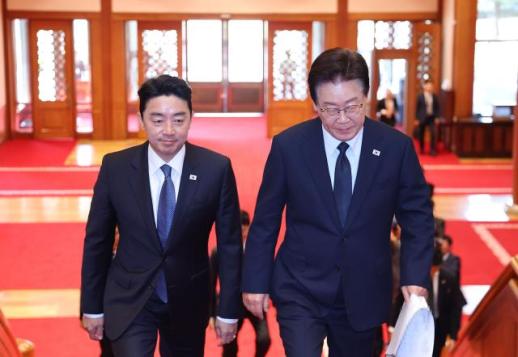 Kang Hoon-sik: South Korea is Canada's Unique Partner for Submarine Procurement Kang Hoon-sik, Chief of Staff to the President, stated on June 2 that selecting South Korea as a partner for Canada’s submarine procurement process would exemplify a successful case of defense procurement reform and serve as a new engine for economic growth. Currently visiting Canada as a special envoy for strategic economic cooperation, Kang shared this insight on his Facebook page after meeting with Canadian Minister of Defence Procurement Steven Pure and Minister of National Defence David McGuinty. Kang departed for Canada on May 31 to support South Korean companies in their bid for the Canadian next-generation submarine project, with the selection process set to conclude in just over a month. During a meeting in Ottawa on June 1, Kang emphasized to Ministers Pure and McGuinty that South Korea, as a leading defense nation, is willing and capable of actively contributing to Canada’s security amid increasing uncertainties in international affairs, such as the prolonged conflict in the Middle East. Before meeting with the Defence Minister, Kang arrived at Toronto Pearson International Airport and first visited the 'Sewol Ferry Memorial Chair' located by Lake Ontario, followed by participation in the 'Korea-Canada Advanced Industry Cooperation Business Roundtable.' In his remarks at the business roundtable, Kang noted that combining Canada’s abundant resources and technology with South Korea’s advanced manufacturing capabilities could serve as a true model of the 'middle power solidarity' emphasized by Mark Carney. He also outlined plans to continue expanding purchases and investments in Canadian crude oil, LNG, LPG, and critical minerals. Kang further shared a vision during his meeting with Ontario Premier Doug Ford, stating that the two countries could become leaders in the global market through cooperation in hydrogen vehicles and defense vehicles. He emphasized his commitment to contributing to the creation of future growth engines for the economy and establishing a stable energy supply structure that can withstand changes in international circumstances.* This article has been translated by AI. 2026-06-02 17:09:00
 -
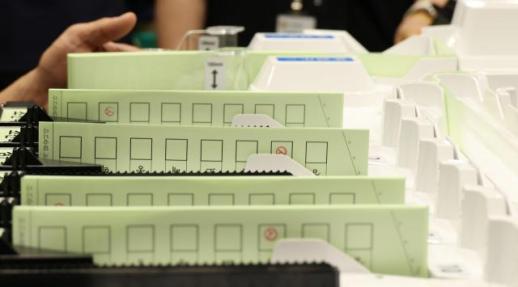 Election officials make final preparations ahead of local elections SEOUL, June 2 (AJP) - Election officials were making final preparations across the country on Tuesday, just a day ahead of this year's local elections. They inspected polling stations while testing ballot machines and conducting simulations to ensure smooth vote counting. According to the National Election Commission (NEC), polling stations nationwide will be open from 6 a.m. to 6 p.m. on Wednesday. Voters will be allowed to cast their ballots at designated polling stations based on their registered residential address and must present a valid photo ID such as a resident registration card, driver's license or passport. After voting concludes, ballot boxes will be sent to counting centers across the country for machine sorting and manual checks to tally the results. The elections, held every four years, will choose about 4,000 officials this time including metropolitan mayors, provincial governors, local government heads and education superintendents, and fill other vacancies. 2026-06-02 17:08:36
 -
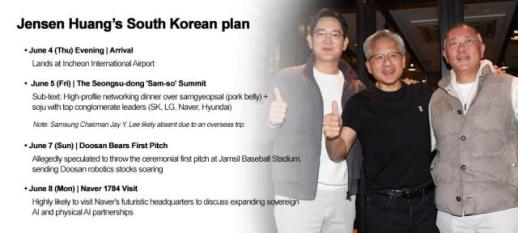 Buzz builds ahead of Nvidia CEO Jensen Huang's Seoul visit SEOUL, June 2 (AJP) - Nvidia CEO Jensen Huang is visiting Seoul this week, and his trip is already generating buzz across local industries and financial markets, with major deals expected across areas including memory chips and artificial intelligence (AI). The excitement follows Huang's announcements Monday at Nvidia's developer conference in Taipei, where he said that the company's next-generation AI chips have entered mass production. "Now in full production - HBM4 memory from Micron, SK hynix and Samsung, the Vera Rubin computer," Huang said, confirming that South Korean memory chipmakers are a key part of Nvidia's supply chain. Huang also pointed out Nvidia's wider partnerships in the region, saying, "Here's Naver Cloud from Korea, Bank of Korea, Hyundai, so many other companies." That had an immediate impact on the South Korean stock market, with Samsung Electronics surging 10 percent and crossing the 350,000 won mark for the first time ever during intraday trading earlier in the week. South Korea's largest internet portal Naver also jumped 16 percent, while LG Electronics, whose executives are scheduled to meet with Huang, surged sharply for a third consecutive trading session. Industry observers say Huang's meetings with key business leaders here could go beyond routine business talks, potentially reshaping the global AI supply chain. In the semiconductor sector, SK hynix maintains its stronghold as a core supplier of high-bandwidth memory (HBM) for Nvidia's AI accelerators. For Samsung Electronics, the visit marks a critical juncture to evaluate its HBM competitiveness and explore further collaboration in foundry operations. The agenda is also expected to focus heavily on physical AI. LG Group chairman Koo Kwang-mo is expected to discuss expanding partnerships in robotics, smart homes, and on-device AI. Talks with Hyundai Motor Group chairman Chung Eui-sun are expected to cover autonomous driving, software-defined vehicles and robotics. There are also high expectations around Naver in the area of sovereign AI, with Huang potentially visiting the company's robot-friendly 1784 headquarters. Doosan Group's robotics and smart factory divisions are also expected to benefit, while Doosan Enerbility is seen as a key player in meeting the growing power demands of AI data centers. Huang is scheduled to arrive at Incheon International Airport on Thursday evening, before meeting with heads of South Korea's largest conglomerates and tech experts the following day including Chung, Koo, SK Group chairman Chey Tae-won, Naver's Lee Hae-jin, and Doosan Group chairman Park Jeong-won. But Samsung Electronics chairman Lee Jae-yong is reportedly likely to miss the gathering this time due to an overseas business trip. Beyond formal meetings, an informal gathering is also expected on Friday evening. Huang is expected to join major tech leaders for samgyeopsal or pork belly with soju at a restaurant in Seoul's hip district of Seongsu-dong, in what analysts say could be an intimate dinner that may strengthen personal ties across the global AI industry. 2026-06-02 17:06:12
 -
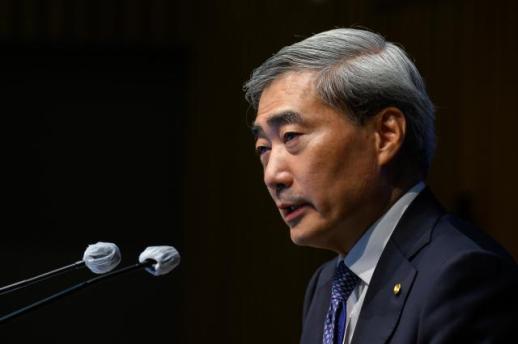 Loan Rates Rise Again, Vulnerable Borrowers and Small Business Owners on Alert South Korea's Bank of Korea has signaled the start of a tightening cycle, raising concerns among borrowers. With mortgage and credit loan rates already hovering between 6% and 7%, further increases could heighten the risk of defaults, particularly among vulnerable borrowers and small business owners.As of June 2, the five major banks (Kookmin, Shinhan, Hana, Woori, and NH Nonghyup) are offering fixed-rate mortgages with interest rates ranging from 4.34% to 7.32%. Some banks have already seen their lower rates exceed 5%.Market analysts predict that if the Bank of Korea raises the benchmark interest rate by 0.25 percentage points up to three times this year, the upper limit for mortgage rates could surpass 8%. This is due to the correlation between benchmark rate hikes, rising bank bond rates, and increased funding costs, which ultimately affect loan interest rates.The burden is expected to fall heavily on borrowers exposed to interest rate fluctuations. Those who took out loans five years ago during the peak borrowing period with mixed rates and are now switching to variable rates, as well as those with six-month variable loans, are particularly at risk. For instance, a borrower who took out a 400 million won loan at a 5% interest rate with a 30-year equal principal and interest repayment plan would see their monthly payment rise from approximately 2.14 million won to about 2.93 million won if rates increase to 8%, an increase of around 800,000 won.The challenges for vulnerable borrowers are intensifying. The number of individual business owners registered as financial defaulters surged from 67,900 in 2022 to over 120,000 in April this year. The delinquency rate for loans to individual business owners from domestic banks has also reached its highest level in five years. As the economic difficulties for small businesses and self-employed individuals worsen, the number of personal bankruptcy filings has risen to its highest level since 2021.Borrowers with credit loans are also facing uncertainty. Amid a booming stock market, the trend of borrowing to invest, known as 'debt investment,' has led to the highest level of personal credit loan balances at the five major banks since November 2023. The upper limit for credit loan rates at major banks has already reached around 6%, raising concerns about increased default risks if rates continue to rise.Rising interest rates also pose challenges for banks. If borrowers' repayment abilities decline, financial institutions will need to bolster their loss absorption capabilities by increasing provisions for bad debts.A financial industry official stated, "If the defaults among small businesses and self-employed individuals worsen, it could lead to a vicious cycle of domestic economic stagnation. Policy measures are needed to ensure that the impact of interest rate hikes does not disproportionately affect vulnerable borrowers and marginal businesses."* This article has been translated by AI. 2026-06-02 17:06:00
 -
 China Accelerates Memory Chip Offensive, Challenging South Korea's HBM Dominance As Samsung Electronics and SK Hynix focus on high-bandwidth memory (HBM), a key product in the artificial intelligence era, Chinese companies are making inroads into the general DRAM and NAND flash markets to expand their market share.Recently, China's leading memory firms, Changxin Memory Technologies (CXMT) and Yangtze Memory Technologies Co. (YMTC), have initiated initial public offerings (IPOs) to secure funding, signaling a serious commitment to developing next-generation memory technologies, including HBM. Some analysts suggest that the technology gap between South Korea and China in high-performance memory semiconductors has narrowed to between three to five years.According to industry sources, CXMT, China's largest DRAM manufacturer, and NAND flash producer YMTC are currently pursuing stock market listings to raise capital for expanding production capacity and investing in R&D for next-generation memory.CXMT recently passed IPO review by the Shanghai Stock Exchange and is in the final stages of the registration approval process, aiming to complete its listing soon. The company plans to raise 29.5 billion yuan (approximately $4.5 billion), marking the second-largest IPO since the 2020 listing of Semiconductor Manufacturing International Corporation (SMIC).CXMT has increased its global DRAM market share to about 8%, positioning itself as the fourth-largest player, effectively challenging the dominant trio of Samsung, SK Hynix, and Micron. The company's first-quarter revenue reached 50.8 billion yuan (approximately $7.4 billion), a staggering 719% increase from the previous year, driven by the localization policies of Chinese smartphone manufacturers and aggressive pricing strategies.YMTC is also enhancing its presence in the NAND market, having developed 200-layer and higher 3D NAND flash technology, targeting the solid-state drive (SSD) and mobile storage markets. Despite U.S. export restrictions, the company is leveraging substantial domestic demand to boost its technological competitiveness and is preparing for its own IPO within the year.Following their IPOs, both companies are expected to intensify their efforts in HBM development. They plan to allocate the funds raised to R&D in premium memory sectors essential for AI infrastructure. Reports indicate that the Chinese government has urged CXMT to significantly enhance its HBM production capabilities, with plans to commence mass production of HBM3 within the year.Analysts predict that Chinese memory firms could catch up to South Korea's HBM technology within three years, given China's vast financial resources and significant investments in R&D. The strategy of scaling production in the general DRAM and NAND markets to establish a profitable foundation before entering the high-performance memory sector is becoming a reality.Ahm Ki-hyun, executive director of the Korea Semiconductor Industry Association, stated, "Chinese memory companies are likely to reach a level similar to that of Samsung and SK Hynix in HBM technology within three to five years," adding that the technology gap between South Korea and China is gradually closing. He emphasized that while China has an unrestricted environment for research and development, South Korea faces limitations under labor laws, suggesting that a more conducive environment for R&D is necessary in South Korea.* This article has been translated by AI. 2026-06-02 17:03:00
 -
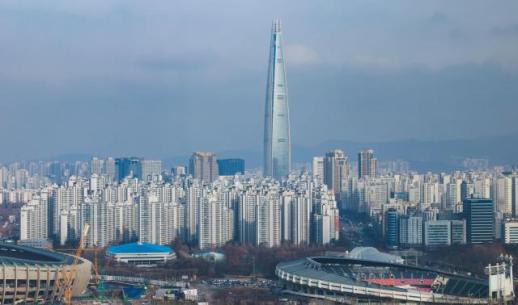 Interest Rate Hikes Dampen Expectations for Lower Borrowing Costs Borrowers who increased their loans in anticipation of lower interest rates are now facing a backlash. With the likelihood of interest rate hikes growing, those who recently purchased homes using mortgage loans, known as the "young-gul" generation, are expected to experience increased repayment burdens. On June 2, financial authorities reported that Lee Hyun-sung, the Governor of the Bank of Korea, stated the day before, "All indicators, including housing prices, household debt, and exchange rates, point in the same direction," indicating that there is sufficient room for monetary policy adjustments. Market observers interpret this as a signal for potential interest rate increases. Rising housing prices, expanding household debt, and exchange rate instability all contribute to the need for tightening monetary policy to ensure price stability and financial security. The Governor's simultaneous mention of these indicators suggests a perception that there are few constraints on raising interest rates. Financial analysts predict that the Bank of Korea may raise the benchmark interest rate twice in the second half of this year, potentially increasing it from the current 2.50% to 3.0% by year-end, and possibly reaching as high as 3.25% in early next year. A significant concern is that much of the funding that has flowed into the housing market recently was predicated on expectations of interest rate cuts. As the U.S. adopts a more accommodative monetary policy and domestic economic slowdown concerns grow, many had anticipated lower borrowing costs. According to the Bank of Korea, the outstanding balance of household loans at the end of the first quarter was 1,865.8 trillion won, an increase of 12.9 trillion won from the end of the previous year. Of this, housing-related loans accounted for 1,178.6 trillion won, making up 63.2% of total household debt. Notably, the increase in loans is shifting from banks to non-bank financial institutions. While the growth of housing-related loans from commercial banks has slowed, loans from mutual finance, Saemaul Geumgo, and credit unions have expanded. This indicates that demand for housing purchases and loans continues despite stricter regulations in the banking sector. When interest rates rise, the first to feel the impact are borrowers with large loan amounts. The "young-gul" generation, in particular, is sensitive to interest rate fluctuations. An increase in the benchmark rate leads to higher market and loan rates, exacerbating repayment burdens. Financial experts believe that if interest rate hikes materialize, the burden will quickly escalate for borrowers with variable-rate loans. Fixed-rate loans that reach maturity are also likely to incur higher rates during renewal or refinancing processes. Kim Dae-jong, a professor at Sejong University, stated, "The trend of rising benchmark rates will quickly translate into higher lending rates from commercial banks, putting significant pressure on the 'young-gul' generation with high debt service ratios (DSR)." He added, "It is essential to adopt a conservative approach focused on reducing debt and securing cash flow rather than aggressive asset expansion. Furthermore, measures such as expanding fixed-rate refinancing loans should be considered to prevent a chain of defaults among vulnerable borrowers."* This article has been translated by AI. 2026-06-02 17:03:00
 -
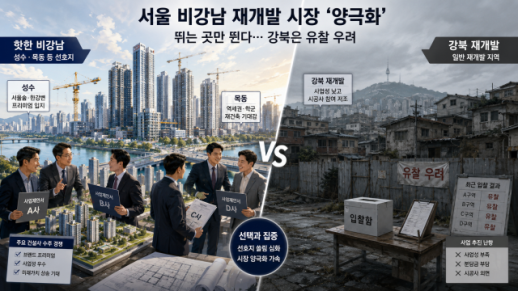 Non-Gangnam Areas See Increased Competition in Construction Projects The construction market in non-Gangnam areas of Seoul is becoming increasingly polarized. While the distinction between Gangnam and non-Gangnam areas used to define market dynamics, recent trends show that even within non-Gangnam areas, factors such as proximity to the Han River, educational districts, transportation hubs, and large-scale developments are influencing construction companies' strategies. According to the construction industry on June 2, major construction firms are competing for contracts in key redevelopment sites in non-Gangnam areas, including the Seongsu Strategic Redevelopment Zone, Mokdong New Town, and Yeouido reconstruction projects. Although these sites are not in Gangnam, their locations along the Han River, large-scale development potential, and prospects for high-priced sales have made them battlegrounds for high-end brands and specialized designs. The Seongsu Strategic Redevelopment Zone is attracting the most attention. The redevelopment of Seongsu 4 District involves constructing 1,439 residential units across a site of 89,828 square meters in Seongdong-gu, with a total construction cost of approximately 1.36 trillion won. Lotte Construction and Daewoo Engineering & Construction have entered a competitive bidding process after submitting a bid guarantee of 50 billion won. The bidding process faced a setback when it was initially declared invalid, but a re-bidding has reignited competition. Mokdong New Town is also emerging as one of the largest bidding markets in non-Gangnam areas. All 14 complexes in Mokdong have passed safety inspections, and the designation of the redevelopment zone has been completed. The total scale of the redevelopment is estimated to be around 30 trillion won. Major construction firms, including Hyundai Engineering & Construction, Samsung C&T, GS Engineering & Construction, Daewoo Construction, Lotte Construction, DL E&C, and POSCO E&C, are evaluating their bids for each complex. Complex 6 is projected to have a total construction cost of around 1.2 trillion won, which could serve as a benchmark for negotiations on the overall redevelopment costs in Mokdong. Yeouido is following a similar trend. The selection process for construction companies for the Sibeom and Mukhwa apartments has intensified the competition for high-end contracts along the Han River. The Sibeom apartments are set for redevelopment with a scale of 2,491 units across 59 to 65 floors, with an estimated construction cost of about 2 trillion won. The Mukhwa apartments are planned for 416 units across 49 floors. Both complexes are expected to see competition among major construction firms due to a ban on joint bidding. However, not all projects in non-Gangnam areas are attracting interest from construction firms. General redevelopment projects in northern Seoul or those with high construction costs have seen instances where multiple firms attend information sessions but end up with single bids or no bids at all during the actual bidding process. For example, the redevelopment of Jungnim-dong 398 saw eight firms, including POSCO E&C and Lotte Construction, attend the first information session, but only POSCO E&C submitted a bid, resulting in a failed auction. A similar trend is observed in public redevelopment projects. In the first bidding for the Sin-gil 1 district, Hyundai Construction, POSCO E&C, and Lotte Construction attended the information session, but no firm submitted a bid, leading to a failed auction. In the re-bidding process, Hyundai Construction was the only bidder. The Chungjeongno 1 district also followed a similar path with a single bid from Doosan Construction. An industry insider noted, "With rising construction costs, financial burdens, and risks of unsold units increasing simultaneously, the criteria for selecting projects have become stricter. In major redevelopment projects in Seoul, participation in information sessions has become more exploratory, while actual bidding is increasingly focused on projects with confirmed profitability." The industry believes that the redevelopment market in non-Gangnam areas can no longer be simply categorized as 'Gangnam versus non-Gangnam.' Even within non-Gangnam areas, competition exists in locations with proven sales potential, such as along the Han River, near transportation hubs, and in educational districts. However, projects with uncertain profitability or high additional costs for members are finding it difficult to attract bidders. A representative from a major construction firm stated, "The era of entering projects in Seoul just for the sake of being in Seoul has passed. We must evaluate construction costs, financial conditions, sale prices, and member demands to select only those projects that can yield profitability. While high-profile locations like Seongsu or Mokdong can consider brand effects, we view risks in general redevelopment projects more conservatively."* This article has been translated by AI. 2026-06-02 17:03:00