

Journalist

Lee Bu-hyung
-
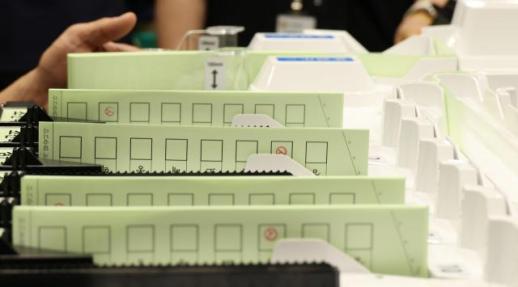 Election officials make final preparations ahead of local elections SEOUL, June 2 (AJP) - Election officials were making final preparations across the country on Tuesday, just a day ahead of this year's local elections. They inspected polling stations while testing ballot machines and conducting simulations to ensure smooth vote counting. According to the National Election Commission (NEC), polling stations nationwide will be open from 6 a.m. to 6 p.m. on Wednesday. Voters will be allowed to cast their ballots at designated polling stations based on their registered residential address and must present a valid photo ID such as a resident registration card, driver's license or passport. After voting concludes, ballot boxes will be sent to counting centers across the country for machine sorting and manual checks to tally the results. The elections, held every four years, will choose about 4,000 officials this time including metropolitan mayors, provincial governors, local government heads and education superintendents, and fill other vacancies. 2026-06-02 17:08:36
 -
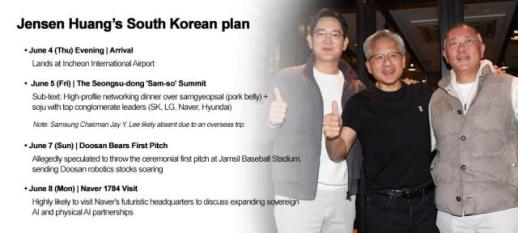 Buzz builds ahead of Nvidia CEO Jensen Huang's Seoul visit SEOUL, June 2 (AJP) - Nvidia CEO Jensen Huang is visiting Seoul this week, and his trip is already generating buzz across local industries and financial markets, with major deals expected across areas including memory chips and artificial intelligence (AI). The excitement follows Huang's announcements Monday at Nvidia's developer conference in Taipei, where he said that the company's next-generation AI chips have entered mass production. "Now in full production - HBM4 memory from Micron, SK hynix and Samsung, the Vera Rubin computer," Huang said, confirming that South Korean memory chipmakers are a key part of Nvidia's supply chain. Huang also pointed out Nvidia's wider partnerships in the region, saying, "Here's Naver Cloud from Korea, Bank of Korea, Hyundai, so many other companies." That had an immediate impact on the South Korean stock market, with Samsung Electronics surging 10 percent and crossing the 350,000 won mark for the first time ever during intraday trading earlier in the week. South Korea's largest internet portal Naver also jumped 16 percent, while LG Electronics, whose executives are scheduled to meet with Huang, surged sharply for a third consecutive trading session. Industry observers say Huang's meetings with key business leaders here could go beyond routine business talks, potentially reshaping the global AI supply chain. In the semiconductor sector, SK hynix maintains its stronghold as a core supplier of high-bandwidth memory (HBM) for Nvidia's AI accelerators. For Samsung Electronics, the visit marks a critical juncture to evaluate its HBM competitiveness and explore further collaboration in foundry operations. The agenda is also expected to focus heavily on physical AI. LG Group chairman Koo Kwang-mo is expected to discuss expanding partnerships in robotics, smart homes, and on-device AI. Talks with Hyundai Motor Group chairman Chung Eui-sun are expected to cover autonomous driving, software-defined vehicles and robotics. There are also high expectations around Naver in the area of sovereign AI, with Huang potentially visiting the company's robot-friendly 1784 headquarters. Doosan Group's robotics and smart factory divisions are also expected to benefit, while Doosan Enerbility is seen as a key player in meeting the growing power demands of AI data centers. Huang is scheduled to arrive at Incheon International Airport on Thursday evening, before meeting with heads of South Korea's largest conglomerates and tech experts the following day including Chung, Koo, SK Group chairman Chey Tae-won, Naver's Lee Hae-jin, and Doosan Group chairman Park Jeong-won. But Samsung Electronics chairman Lee Jae-yong is reportedly likely to miss the gathering this time due to an overseas business trip. Beyond formal meetings, an informal gathering is also expected on Friday evening. Huang is expected to join major tech leaders for samgyeopsal or pork belly with soju at a restaurant in Seoul's hip district of Seongsu-dong, in what analysts say could be an intimate dinner that may strengthen personal ties across the global AI industry. 2026-06-02 17:06:12
 -
 Loan Rates Rise Again, Vulnerable Borrowers and Small Business Owners on Alert South Korea's Bank of Korea has signaled the start of a tightening cycle, raising concerns among borrowers. With mortgage and credit loan rates already hovering between 6% and 7%, further increases could heighten the risk of defaults, particularly among vulnerable borrowers and small business owners.As of June 2, the five major banks (Kookmin, Shinhan, Hana, Woori, and NH Nonghyup) are offering fixed-rate mortgages with interest rates ranging from 4.34% to 7.32%. Some banks have already seen their lower rates exceed 5%.Market analysts predict that if the Bank of Korea raises the benchmark interest rate by 0.25 percentage points up to three times this year, the upper limit for mortgage rates could surpass 8%. This is due to the correlation between benchmark rate hikes, rising bank bond rates, and increased funding costs, which ultimately affect loan interest rates.The burden is expected to fall heavily on borrowers exposed to interest rate fluctuations. Those who took out loans five years ago during the peak borrowing period with mixed rates and are now switching to variable rates, as well as those with six-month variable loans, are particularly at risk. For instance, a borrower who took out a 400 million won loan at a 5% interest rate with a 30-year equal principal and interest repayment plan would see their monthly payment rise from approximately 2.14 million won to about 2.93 million won if rates increase to 8%, an increase of around 800,000 won.The challenges for vulnerable borrowers are intensifying. The number of individual business owners registered as financial defaulters surged from 67,900 in 2022 to over 120,000 in April this year. The delinquency rate for loans to individual business owners from domestic banks has also reached its highest level in five years. As the economic difficulties for small businesses and self-employed individuals worsen, the number of personal bankruptcy filings has risen to its highest level since 2021.Borrowers with credit loans are also facing uncertainty. Amid a booming stock market, the trend of borrowing to invest, known as 'debt investment,' has led to the highest level of personal credit loan balances at the five major banks since November 2023. The upper limit for credit loan rates at major banks has already reached around 6%, raising concerns about increased default risks if rates continue to rise.Rising interest rates also pose challenges for banks. If borrowers' repayment abilities decline, financial institutions will need to bolster their loss absorption capabilities by increasing provisions for bad debts.A financial industry official stated, "If the defaults among small businesses and self-employed individuals worsen, it could lead to a vicious cycle of domestic economic stagnation. Policy measures are needed to ensure that the impact of interest rate hikes does not disproportionately affect vulnerable borrowers and marginal businesses."* This article has been translated by AI. 2026-06-02 17:06:00
 -
 China Accelerates Memory Chip Offensive, Challenging South Korea's HBM Dominance As Samsung Electronics and SK Hynix focus on high-bandwidth memory (HBM), a key product in the artificial intelligence era, Chinese companies are making inroads into the general DRAM and NAND flash markets to expand their market share.Recently, China's leading memory firms, Changxin Memory Technologies (CXMT) and Yangtze Memory Technologies Co. (YMTC), have initiated initial public offerings (IPOs) to secure funding, signaling a serious commitment to developing next-generation memory technologies, including HBM. Some analysts suggest that the technology gap between South Korea and China in high-performance memory semiconductors has narrowed to between three to five years.According to industry sources, CXMT, China's largest DRAM manufacturer, and NAND flash producer YMTC are currently pursuing stock market listings to raise capital for expanding production capacity and investing in R&D for next-generation memory.CXMT recently passed IPO review by the Shanghai Stock Exchange and is in the final stages of the registration approval process, aiming to complete its listing soon. The company plans to raise 29.5 billion yuan (approximately $4.5 billion), marking the second-largest IPO since the 2020 listing of Semiconductor Manufacturing International Corporation (SMIC).CXMT has increased its global DRAM market share to about 8%, positioning itself as the fourth-largest player, effectively challenging the dominant trio of Samsung, SK Hynix, and Micron. The company's first-quarter revenue reached 50.8 billion yuan (approximately $7.4 billion), a staggering 719% increase from the previous year, driven by the localization policies of Chinese smartphone manufacturers and aggressive pricing strategies.YMTC is also enhancing its presence in the NAND market, having developed 200-layer and higher 3D NAND flash technology, targeting the solid-state drive (SSD) and mobile storage markets. Despite U.S. export restrictions, the company is leveraging substantial domestic demand to boost its technological competitiveness and is preparing for its own IPO within the year.Following their IPOs, both companies are expected to intensify their efforts in HBM development. They plan to allocate the funds raised to R&D in premium memory sectors essential for AI infrastructure. Reports indicate that the Chinese government has urged CXMT to significantly enhance its HBM production capabilities, with plans to commence mass production of HBM3 within the year.Analysts predict that Chinese memory firms could catch up to South Korea's HBM technology within three years, given China's vast financial resources and significant investments in R&D. The strategy of scaling production in the general DRAM and NAND markets to establish a profitable foundation before entering the high-performance memory sector is becoming a reality.Ahm Ki-hyun, executive director of the Korea Semiconductor Industry Association, stated, "Chinese memory companies are likely to reach a level similar to that of Samsung and SK Hynix in HBM technology within three to five years," adding that the technology gap between South Korea and China is gradually closing. He emphasized that while China has an unrestricted environment for research and development, South Korea faces limitations under labor laws, suggesting that a more conducive environment for R&D is necessary in South Korea.* This article has been translated by AI. 2026-06-02 17:03:00
 -
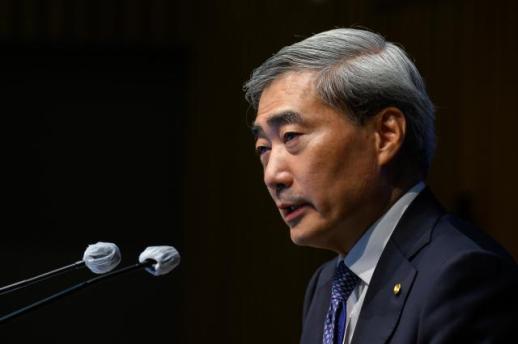
 Interest Rate Hikes Dampen Expectations for Lower Borrowing Costs Borrowers who increased their loans in anticipation of lower interest rates are now facing a backlash. With the likelihood of interest rate hikes growing, those who recently purchased homes using mortgage loans, known as the "young-gul" generation, are expected to experience increased repayment burdens. On June 2, financial authorities reported that Lee Hyun-sung, the Governor of the Bank of Korea, stated the day before, "All indicators, including housing prices, household debt, and exchange rates, point in the same direction," indicating that there is sufficient room for monetary policy adjustments. Market observers interpret this as a signal for potential interest rate increases. Rising housing prices, expanding household debt, and exchange rate instability all contribute to the need for tightening monetary policy to ensure price stability and financial security. The Governor's simultaneous mention of these indicators suggests a perception that there are few constraints on raising interest rates. Financial analysts predict that the Bank of Korea may raise the benchmark interest rate twice in the second half of this year, potentially increasing it from the current 2.50% to 3.0% by year-end, and possibly reaching as high as 3.25% in early next year. A significant concern is that much of the funding that has flowed into the housing market recently was predicated on expectations of interest rate cuts. As the U.S. adopts a more accommodative monetary policy and domestic economic slowdown concerns grow, many had anticipated lower borrowing costs. According to the Bank of Korea, the outstanding balance of household loans at the end of the first quarter was 1,865.8 trillion won, an increase of 12.9 trillion won from the end of the previous year. Of this, housing-related loans accounted for 1,178.6 trillion won, making up 63.2% of total household debt. Notably, the increase in loans is shifting from banks to non-bank financial institutions. While the growth of housing-related loans from commercial banks has slowed, loans from mutual finance, Saemaul Geumgo, and credit unions have expanded. This indicates that demand for housing purchases and loans continues despite stricter regulations in the banking sector. When interest rates rise, the first to feel the impact are borrowers with large loan amounts. The "young-gul" generation, in particular, is sensitive to interest rate fluctuations. An increase in the benchmark rate leads to higher market and loan rates, exacerbating repayment burdens. Financial experts believe that if interest rate hikes materialize, the burden will quickly escalate for borrowers with variable-rate loans. Fixed-rate loans that reach maturity are also likely to incur higher rates during renewal or refinancing processes. Kim Dae-jong, a professor at Sejong University, stated, "The trend of rising benchmark rates will quickly translate into higher lending rates from commercial banks, putting significant pressure on the 'young-gul' generation with high debt service ratios (DSR)." He added, "It is essential to adopt a conservative approach focused on reducing debt and securing cash flow rather than aggressive asset expansion. Furthermore, measures such as expanding fixed-rate refinancing loans should be considered to prevent a chain of defaults among vulnerable borrowers."* This article has been translated by AI. 2026-06-02 17:03:00
 -
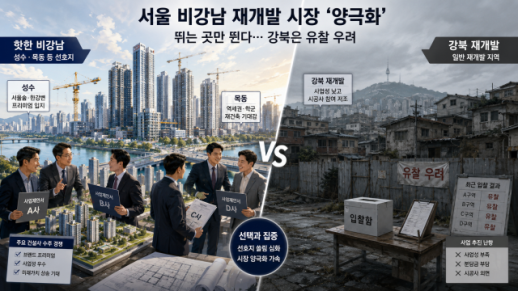 Non-Gangnam Areas See Increased Competition in Construction Projects The construction market in non-Gangnam areas of Seoul is becoming increasingly polarized. While the distinction between Gangnam and non-Gangnam areas used to define market dynamics, recent trends show that even within non-Gangnam areas, factors such as proximity to the Han River, educational districts, transportation hubs, and large-scale developments are influencing construction companies' strategies. According to the construction industry on June 2, major construction firms are competing for contracts in key redevelopment sites in non-Gangnam areas, including the Seongsu Strategic Redevelopment Zone, Mokdong New Town, and Yeouido reconstruction projects. Although these sites are not in Gangnam, their locations along the Han River, large-scale development potential, and prospects for high-priced sales have made them battlegrounds for high-end brands and specialized designs. The Seongsu Strategic Redevelopment Zone is attracting the most attention. The redevelopment of Seongsu 4 District involves constructing 1,439 residential units across a site of 89,828 square meters in Seongdong-gu, with a total construction cost of approximately 1.36 trillion won. Lotte Construction and Daewoo Engineering & Construction have entered a competitive bidding process after submitting a bid guarantee of 50 billion won. The bidding process faced a setback when it was initially declared invalid, but a re-bidding has reignited competition. Mokdong New Town is also emerging as one of the largest bidding markets in non-Gangnam areas. All 14 complexes in Mokdong have passed safety inspections, and the designation of the redevelopment zone has been completed. The total scale of the redevelopment is estimated to be around 30 trillion won. Major construction firms, including Hyundai Engineering & Construction, Samsung C&T, GS Engineering & Construction, Daewoo Construction, Lotte Construction, DL E&C, and POSCO E&C, are evaluating their bids for each complex. Complex 6 is projected to have a total construction cost of around 1.2 trillion won, which could serve as a benchmark for negotiations on the overall redevelopment costs in Mokdong. Yeouido is following a similar trend. The selection process for construction companies for the Sibeom and Mukhwa apartments has intensified the competition for high-end contracts along the Han River. The Sibeom apartments are set for redevelopment with a scale of 2,491 units across 59 to 65 floors, with an estimated construction cost of about 2 trillion won. The Mukhwa apartments are planned for 416 units across 49 floors. Both complexes are expected to see competition among major construction firms due to a ban on joint bidding. However, not all projects in non-Gangnam areas are attracting interest from construction firms. General redevelopment projects in northern Seoul or those with high construction costs have seen instances where multiple firms attend information sessions but end up with single bids or no bids at all during the actual bidding process. For example, the redevelopment of Jungnim-dong 398 saw eight firms, including POSCO E&C and Lotte Construction, attend the first information session, but only POSCO E&C submitted a bid, resulting in a failed auction. A similar trend is observed in public redevelopment projects. In the first bidding for the Sin-gil 1 district, Hyundai Construction, POSCO E&C, and Lotte Construction attended the information session, but no firm submitted a bid, leading to a failed auction. In the re-bidding process, Hyundai Construction was the only bidder. The Chungjeongno 1 district also followed a similar path with a single bid from Doosan Construction. An industry insider noted, "With rising construction costs, financial burdens, and risks of unsold units increasing simultaneously, the criteria for selecting projects have become stricter. In major redevelopment projects in Seoul, participation in information sessions has become more exploratory, while actual bidding is increasingly focused on projects with confirmed profitability." The industry believes that the redevelopment market in non-Gangnam areas can no longer be simply categorized as 'Gangnam versus non-Gangnam.' Even within non-Gangnam areas, competition exists in locations with proven sales potential, such as along the Han River, near transportation hubs, and in educational districts. However, projects with uncertain profitability or high additional costs for members are finding it difficult to attract bidders. A representative from a major construction firm stated, "The era of entering projects in Seoul just for the sake of being in Seoul has passed. We must evaluate construction costs, financial conditions, sale prices, and member demands to select only those projects that can yield profitability. While high-profile locations like Seongsu or Mokdong can consider brand effects, we view risks in general redevelopment projects more conservatively."* This article has been translated by AI. 2026-06-02 17:03:00
 -
 Ministry of SMEs to Enhance Support for New Startups in Non-Metropolitan Areas The Ministry of SMEs and Startups is set to strengthen policy support for new super-gap startups in 12 key sectors located in non-metropolitan areas. On June 2, the ministry held a plaque ceremony and meeting at the Korea Advanced Institute of Science and Technology (KAIST) Munji Campus in Daejeon, targeting new super-gap startups established in non-metropolitan regions in 2026. The meeting aimed to encourage super-gap startups driving innovative growth in non-metropolitan areas and to gather feedback to enhance region-focused new industry startup policies. The 'Super-Gap Startup Project' selects startups in new industry sectors that will lead the future of the national economy and nurtures them into global unicorns through support programs for technology commercialization and development. Since its launch in 2023, the project has selected around 200 companies annually and has nurtured a total of 804 companies to date. Notably, the selection rate for new companies in non-metropolitan areas has increased from 28.7% in 2023 to 35.5% this year. The annual selection rates for non-metropolitan areas are 28.7% in 2023, 30% in 2024, 33% in 2025, and 35.5% in 2026. Starting this year, the government has expanded and restructured the focus from 10 key sectors to 12 new industries, reflecting global technology and market trends. The 12 new industry sectors identified by the ministry include: AI models and infrastructure, semiconductors, mobility, quantum security and networks, robotics, life sciences and new drugs, healthcare, content, defense, aerospace and marine, eco-friendliness, energy, nuclear power, and fusion, and advanced manufacturing (sensors and processes). The selected 200 startups will receive up to 600 million won in commercialization funds over three years, along with additional technology development funds of up to 600 million won based on separate evaluations, totaling 1.2 billion won in direct support. They will also benefit from infrastructure for technology development, open innovation, and global expansion through specialized institutions in various fields, including investment and exports. Additionally, from 2023, 15 outstanding startups that have achieved significant results in sales, employment, and investment will be selected for follow-up support of up to 1 billion won in commercialization funds for global scaling over the next two years. The ministry aims to use this meeting as a starting point to spread the entrepreneurial wave of new industries in the region by establishing 'super-gap regional governance' involving local governments, related organizations, venture capital, and startups across 10 regional offices. They plan to continue supporting local startups through investment briefings, one-on-one investment consultations, and meetups with large and medium-sized enterprises. Noh Yong-seok, the first vice minister of SMEs and Startups, stated, "The increasing selection rate of new super-gap startups in non-metropolitan areas will greatly contribute to regional economic growth."* This article has been translated by AI. 2026-06-02 17:00:01
 -
 Ace Bed Launches New Classic Bed 'Onore' Featuring 'Two Mattress' System Ace Bed has introduced its new product, 'Onore,' equipped with the 'Two Mattress' system. According to Ace Bed, 'Onore' reinterprets classic aesthetics through a modern lens. The design features a minimalist approach, eliminating excessive ornamentation while highlighting restrained details and the beauty of proportion. The headboard is particularly eye-catching, made with walnut veneer that showcases the natural grain of the wood. The front is adorned with a textured fabric pattern, adding a softer touch to the wooden frame. The wooden pillars, a key design element, exhibit delicate sculptural beauty and detail. The harmonious balance of curves and straight lines in the pillars complements the silhouette of the headboard, enhancing its luxurious presence. Ace Bed's unique bed technology is also incorporated. The 'Two Mattress' system features specialized springs in the foundation that effectively absorb weight and impact on the top mattress, providing solid support and stability. Additionally, the design includes a 190mm foundation and 60mm low-profile legs, lowering the overall height to allow for comfortable use with thicker premium mattresses. The minimalist design of the backboard is said to enhance visual openness. Previously, Ace Bed launched the low-profile hotel-style bed 'Opimo3' to improve profitability. Furthermore, a pop-up event for the premium mattress brand 'Ace Heritage' is being held at the Shinsegae Department Store in Gangnam until June 4. An Ace Bed representative stated, "The new product 'Onore' showcases timeless classic beauty in a modern interpretation, highlighting its luxurious and trendy appeal."* This article has been translated by AI. 2026-06-02 17:00:00
 -
 Buhyung Group Partners with Military Manpower Administration to Offer Discounts for Military Families Buhyung Group has partnered with the Military Manpower Administration to provide discounts on resort, hotel, and golf course usage for military families. On June 2, Buhyung Group announced that it signed a memorandum of understanding (MOU) with the Military Manpower Administration at its headquarters in Jung-gu, Seoul, to offer preferential treatment for military families. The signing ceremony was attended by over ten officials, including Lee Joong-geun, Chairman of Buhyung Group, and Hong So-young, Commissioner of the Military Manpower Administration. The agreement aims to honor military families who have fulfilled their service obligations and to foster a culture of pride in military service. Under the agreement, military families with three generations of active service will receive discounts at six Buhyung Group recreational facilities across the country, including Muju Deogyusan Resort, Taebaek O2 Resort, Jeju Buhyung Hotel & Resort, Jeju Buhyung Country Club, Jeju The Classic Country Club, and Suncheon Buhyung Country Club. During the signing ceremony, Chairman Lee stated, "We initiated this agreement with the Military Manpower Administration to express our respect and gratitude to military families who have dedicated themselves to serving the nation across generations. I hope the culture of honoring military service spreads widely throughout society, and we will continue to collaborate with the Military Manpower Administration in the future." Since 2004, the Military Manpower Administration has been promoting the 'Military Family Honor Project' to enhance pride in military service and to spread respect and gratitude for military families. A military family is defined as one where all three generations have completed their active service diligently. Additionally, Buhyung Group has consistently engaged in social contribution activities in the field of national defense and veterans' affairs. For 27 years, it has provided care packages to military personnel and, in 2023, donated 10 billion won to the Air Force Sky Love Scholarship Foundation to support the families of deceased Air Force pilots. The company also supports various national defense activities, including sponsoring the Ministry of Veterans Affairs' 'Heroes in Uniform' project, donating to the Korean War Foundation, improving facilities for remote military units, and participating in the 'One Company, One Barracks' campaign. Buhyung Group has reported a cumulative total of over 1.22 trillion won in social contributions to date. In addition to its veterans' activities, Buhyung Group has contributed to national housing stability by providing 230,000 rental units out of approximately 300,000 homes nationwide. The company has also attracted attention for its bold childbirth incentive policy, offering 100 million won for each employee's child to address the country's low birth rate issue.* This article has been translated by AI. 2026-06-02 17:00:00
 -
 Prosecutors Indict Jang Yoon-ki for Murder of High School Student in Gwangju Jang Yoon-ki has been indicted for the murder of a high school student in Gwangju, whom he killed on the street without any prior acquaintance. Prosecutors determined through further investigation that sexual assault was the primary motive behind the crime. According to the legal community on June 2, the Gwangju District Prosecutors' Office's Criminal Division 3, led by Chief Prosecutor Kim Jin-hee, has charged Jang with murder under the Special Act on the Punishment of Sexual Violence Crimes. On May 5, at approximately 12:10 a.m., Jang fatally stabbed 17-year-old Lee Chae-won near Namseong University in the Gwangsan District of Gwangju. He also injured a male student who attempted to intervene. Immediately after the attack, Jang fled in his vehicle and discarded both the car and the weapon about a kilometer from the crime scene. He turned off his phone and washed his blood-stained clothes at a nearby laundromat, demonstrating a calculated effort to evade capture. Despite these actions, Jang was apprehended by police at 11:24 a.m., just 11 hours after the incident, near his residence. During police questioning, Jang reportedly stated that he was contemplating suicide when he saw the passing high school student and decided to kill her. The weapon used in the crime was purchased prior to the attack. Initially, police treated the case as a random murder, but prosecutors concluded through additional investigation that Jang had planned to abduct Lee for sexual assault. Prosecutors cited evidence that Jang attempted to overpower Lee from behind and drag her toward his vehicle, as well as similarities between this incident and a previous sexual assault he committed against a foreign female coworker in her twenties. While police initially charged Jang with general murder, prosecutors have now applied charges of rape and murder. The minimum sentence for general murder is five years in prison, whereas the penalty for rape and murder can be death or life imprisonment. Additionally, prosecutors have added charges of assault, attempted murder, confinement, and violations of the Stalking Punishment Act related to the previous assault on the female coworker. In response to Jang's indictment, Justice Minister Jung Sung-ho expressed his condolences to Lee's family on Facebook, noting that just two days prior, they had publicly appealed for severe punishment for Jang. "As a father of two daughters myself, I can hardly fathom the grief of parents who have lost their beloved child overnight," he wrote. Jung emphasized that the Ministry of Justice will ensure strict penalties for Jang's crimes, as well as for heinous acts targeting vulnerable groups such as youth and women. He pledged to prevent offenders from receiving unjust leniency through claims of mental instability or false remorse during trial.* This article has been translated by AI. 2026-06-02 16:57:00