

Journalist

Lee Bu-hyung
-
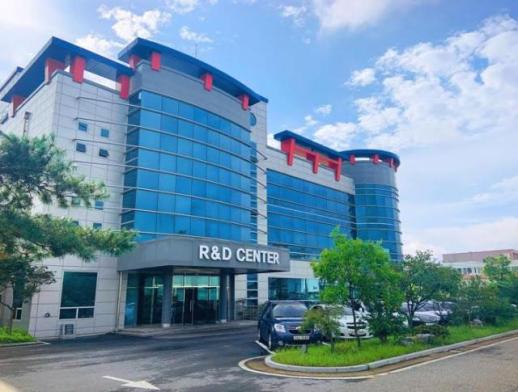 Namsun Aluminum Named GM's Supplier of the Year for 15th Consecutive Year SM Group's manufacturing subsidiary, Namsun Aluminum, has once again been named Supplier of the Year (SOY) by General Motors (GM). According to industry sources on June 2, Namsun Aluminum's automotive division was recognized at GM's 34th Supplier of the Year awards ceremony held recently in Austin, Texas, marking the 15th consecutive year it has received this honor from 2011 to 2025. Namsun Aluminum's CEO, Jeong Soon-won, attended the ceremony to accept the award. The SOY award is given annually by GM to approximately 6,000 global partners based on a comprehensive evaluation of their technology, innovation, supply stability, and sustainability. This year, a total of 103 companies, including 20 from South Korea, received the prestigious award. Namsun Aluminum's key bumper systems and large injection molds supplied to GM Korea were highlighted as factors in its selection. A representative from SM Group stated, "Notably, there have been no issues with the Supplier Parts Quality System (SPPS) in the past year, and we achieved the highest rating of 'BIQS Level 5' in GM's quality evaluation system, which significantly contributed to our assessment." SPPS is a communication tool used by suppliers and customers to resolve product quality issues. Jeong Soon-won commented, "Being named SOY for 15 consecutive years is a recognition of our consistent efforts in enhancing quality, developing new technologies, and ensuring stable supply. Our entire team has proven that we are at a global top level in quality management." He added, "We will not rest on our laurels but will maximize our expertise and business know-how to become a more trusted partner in the global automotive parts market." Meanwhile, Namsun Aluminum, a key subsidiary of SM Group, focuses on its aluminum division, which manufactures window frames and curtain walls, as well as its automotive parts division, which supplies bumpers to GM Korea and others. Recently, it has expanded into eco-friendly and high-value markets, including solar structures and high-performance window systems.* This article has been translated by AI. 2026-06-02 16:57:00
 -
 Jensen Huang Expands AI Full Stack, Tests Samsung and SK Hynix's Memory Strategies Jensen Huang, CEO of NVIDIA, is demonstrating a keen interest in the South Korean semiconductor ecosystem while on a busy schedule in Taiwan. As the AI semiconductor market shifts towards NVIDIA's leadership, the strategic importance of South Korean memory companies like Samsung Electronics and SK Hynix is becoming increasingly prominent. On June 2, industry sources reported that Huang hosted a "Korea Partner Night" event in Taipei the previous evening. When asked by reporters about the possibility of holding GTC Seoul, he indicated that it could happen. He also expressed a desire to invest in South Korea's robotics sector, highlighting Taiwan's role as a key hub in the AI supply chain while sending a clear message of collaboration with South Korean firms. That same evening, Huang met separately with Choi Tae-won and SK Hynix executives, showcasing their camaraderie by putting their arms around each other. Huang's ongoing engagement with South Korean companies is driven by the growing importance of memory in NVIDIA's AI ecosystem. The performance of AI accelerators relies not only on graphics processing units (GPUs) but also on the supply capabilities of high-bandwidth memory (HBM), low-power DRAM, and high-performance storage. As demand for AI computing expands from data centers to AI PCs, robotics, and autonomous vehicles, the role of South Korean memory companies is also broadening. On the same day, Samsung Electronics unveiled its next-generation HBM technology at Computex 2026 in Taipei. Song Jae-hyuk, CTO of Samsung's Semiconductor Division, introduced the HBM5 prototype for the first time and presented a new heat management technology called "HPB (Heat Path Block)." He stated, "As AI systems evolve into ultra-high-performance and ultra-dense architectures, not only memory performance but also data processing efficiency and heat control are becoming key competitive factors." Samsung aims to enhance operational stability by adding a separate heat transfer path to HBM5, thereby reducing thermal resistance. SK Hynix is recognized as having the closest HBM partnership with NVIDIA. Choi's unique leadership style has facilitated their third meeting this year, solidifying a strong trust relationship. Recently, SK Hynix also introduced a next-generation heat management technology called iHBM, aimed at enhancing the competitiveness of high-density AI memory. Kim Yong-seok, a distinguished professor at Gachon University’s Semiconductor College, noted, "There are two main reasons for Jensen Huang's visits to Korea. First, he seeks product supplies from Samsung and SK Hynix for NVIDIA's chips and software solutions. Second, he aims to secure stable access to memory, including HBM and DRAM, necessary for building AI infrastructure like smart factories."* This article has been translated by AI. 2026-06-02 16:57:00
 -
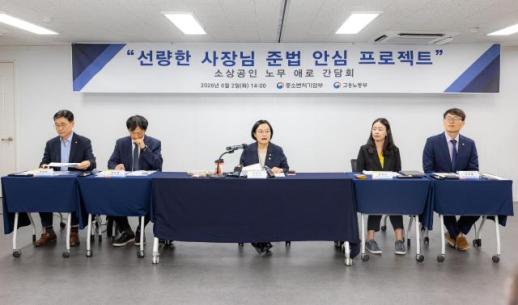 Ministry of SMEs and Startups to Ease Labor Burden for Small Businesses The Ministry of SMEs and Startups and the Ministry of Employment and Labor are taking steps to alleviate the labor burdens faced by small businesses and provide support for hiring lawyers when necessary to prevent disputes. On June 2, Minister Han Seong-sook announced a plan to support small business owners in hiring lawyers during a meeting focused on labor issues at the Korea Certified Labor Attorneys Association in Yeongdeungpo-gu, Seoul. The meeting included small business owners from sectors such as convenience stores, restaurants, and cafes, where labor-related disputes frequently arise due to high employee hiring rates. Participants shared their challenges in labor management and discussed potential improvements. The Small Business Association explained the labor-related difficulties faced by on-site small business owners and proposed an expansion of government support to address these issues. Previously, on May 29, the association signed a memorandum of understanding with the Korea Certified Labor Attorneys Association to establish a management safety net for small businesses and improve labor conditions. Following this, the Ministry of SMEs and Startups and the Ministry of Employment and Labor announced government support measures to resolve labor issues for small businesses. The Ministry of SMEs and Startups plans to collaborate with the Korea Certified Labor Attorneys Association to create a Q&A-style guidebook focusing on common labor cases that small business owners often overlook. Additionally, they will hold regional briefings and produce online informational videos, including short-form content. Furthermore, the Small Business Association will operate a counseling center where small business owners can seek advice in the event of labor disputes. For serious labor issues, they will support consultations and the hiring of specialized labor attorneys. The Ministry of Employment and Labor introduced a 24-hour 'AI Labor Law Counseling' service for individual small business owners and plans to integrate it with the 'Small Business 24' support platform to enhance accessibility. Participants expressed the need for government consulting support due to the significant management burden caused by complex wage and allowance systems, such as weekly holiday pay and severance pay. Minister Han Seong-sook stated, "Small business owners often find it difficult to keep up with complex labor laws while focusing on their daily operations. We will implement the announced support measures effectively and strive to create an environment where small business owners can manage their businesses with peace of mind by better understanding and preventing common labor issues."* This article has been translated by AI. 2026-06-02 16:54:00
 -
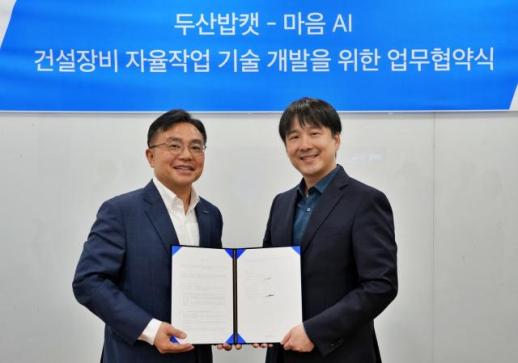 Doosan Bobcat Partners with Mind AI to Develop Construction Equipment Technology Doosan Bobcat announced on June 2 that it has signed a memorandum of understanding (MOU) with AI solutions company Mind AI to develop autonomous operation technology for construction equipment at Doosan Tower in Bundang, Seongnam. This collaboration is part of Doosan Bobcat's initiative in physical AI for the construction equipment sector. Doosan Bobcat will provide small construction equipment products and data, while Mind AI will explore the application of vision-language-action (VLA) based AI technology for autonomous operations on Doosan Bobcat equipment. The two companies plan to jointly verify the feasibility and conduct practical demonstrations of the autonomous operation technology. Doosan Bobcat has accumulated key technologies and data necessary for autonomous operations and automation through collaborations and investments with global companies, focusing on areas such as radar, equipment automation, information recognition, and decision-making. Mind AI possesses capabilities in VLA model-based AI technology and has experience in commercializing related technologies across various sectors, including agriculture, manufacturing, logistics, and defense. Park Hyun-cheol, Vice President of Doosan Bobcat, stated, "This collaboration will enhance the practical applicability of autonomous operation technology in the construction equipment sector. We will continue to develop technologies that improve productivity and operational efficiency for our customers, leading the future construction equipment market." Choi Hong-seob, CEO of Mind AI, remarked, "The scope of tasks that AI can understand and perform in the construction equipment industry will rapidly expand. Mind AI will focus on elevating the level of autonomy in industrial equipment through VLA-based physical AI technology and implementing AI technologies that can be utilized in real-world applications." Meanwhile, Park Jung-won, Chairman of Doosan Group, visited Doosan Bobcat's Incheon facility in February, where he received reports on the business performance of products produced for the ALAO (Asia, Latin America, and Oceania) region, including forklifts, skid loaders, and mini excavators, and inspected the manufacturing site.* This article has been translated by AI. 2026-06-02 16:54:00
 -
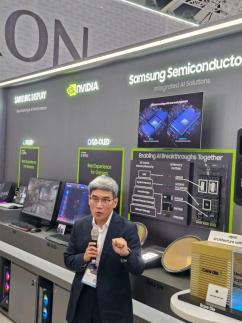 Samsung Electronics unveils HBM5 roadmap, new cooling tech at Computex SEOUL, June 02 (AJP) - Samsung Electronics on Tuesday showcased a mock-up of its next-generation High Bandwidth Memory 5 (HBM5) chips and introduced a new thermal management technology at the Computex exhibition in Taipei. The South Korean tech giant is moving to secure its position in the expanding artificial intelligence (AI) memory sector, following its recent mass production of HBM4 and sample shipments of HBM4E chips. Song Jae-hyuk, Chief Technology Officer of Samsung’s Device Solutions (DS) division, stated at the event that turnkey solutions spanning memory, foundry, logic, and packaging are becoming increasingly critical as AI infrastructure demands higher performance and density. To address overheating issues in advanced AI systems, Samsung introduced its Heat Path Block (HPB) technology for HBM5. The HPB design lowers thermal resistance and improves operational stability by creating additional heat dissipation paths, specifically targeting the physical layer (PHY) of the chip. Samsung noted that it has already implemented and verified the HPB technology in its HBM4E chips to ensure structural and package reliability. The company plans to fully integrate HPB into its upcoming HBM5 lineup, which will also feature a 2-nanometer base die. During the exhibition, Samsung also displayed its HBM4E wafers and chipsets. The HBM4E integrates a 1c-nanometer DRAM core die with Samsung’s own 4-nanometer foundry base die. Having commenced sample shipments on May 29, the HBM4E operates at a pin speed of 14 Gbps, with the capacity to reach up to 16 Gbps, delivering a maximum bandwidth of 4 Terabytes per second (TB/s). Market research firm Omdia projects the global HBM market will more than triple from approximately $58.9 billion in 2026 to $198.3 billion by 2029. Samsung also highlighted its supply chain role for Nvidia Corp's next-generation Vera Rubin AI platform. A Vera Rubin system equipped with Samsung memory was displayed at the pavilion. According to the company, it is currently the only vendor capable of supplying a comprehensive portfolio for the platform, including HBM4, LPCAMM2/SOCAMM2, and PM1763 storage solutions. Samsung's HBM4 chips, which entered mass production in February, achieve a performance rate of 11.7 Gbps, with peak speeds reaching 13 Gbps. "We plan to continuously strengthen our next-generation memory competitiveness through ongoing collaborations with global partners, including Nvidia," Song said. 2026-06-02 16:52:26
 -
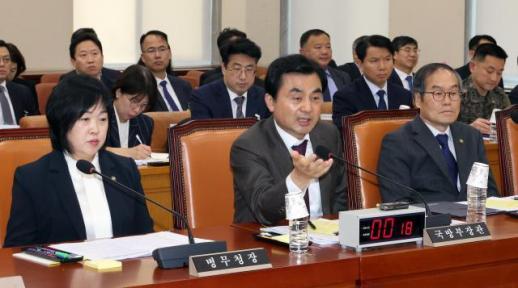 South Korea to Systematically Develop Defense Semiconductors The South Korean government is set to systematically develop defense semiconductors, which serve as critical components in future combat systems, including AI-based manned and unmanned hybrid combat systems. The "Defense Semiconductor Development and Support Act" passed the Cabinet meeting on June 2, aimed at securing the capability to develop and manufacture defense semiconductors and establishing an industrial ecosystem. The Ministry of National Defense and the Defense Acquisition Program Administration announced that the act, which includes the establishment of a basic and implementation plan for the development of defense semiconductors and prioritizing the purchase of domestically developed semiconductors, is expected to be announced in June. Despite being essential components of advanced weapon systems, defense semiconductors have lacked dedicated legislation, limiting the ability to reflect the unique characteristics of the defense sector in policies and to establish comprehensive support. With the advent of the AI era, the importance of defense semiconductors as a strategic asset has been increasingly recognized, raising ongoing calls for self-sufficiency and stable supply chains. It is reported that approximately 99% of the defense semiconductors used in South Korea's domestic weapon systems are imported. In response, the Blue House and the Defense Acquisition Program Administration have been operating a government-wide "Defense Semiconductor Development Task Force" since October 2025 to support the enactment of the Defense Semiconductor Act and to promote policies for the development of defense semiconductors. The recently passed Defense Semiconductor Act includes provisions for the establishment of a basic and implementation plan for the development of defense semiconductors, support for specialized research and development projects, the establishment of reliability testing and certification systems, prioritizing the purchase of domestically developed semiconductors, reducing penalties for applying defense semiconductors to weapon systems, and designating defense semiconductor businesses to foster domestic industry and self-sufficiency. Lee Yong-cheol, head of the Defense Acquisition Program Administration, stated, "The enactment of the Defense Semiconductor Act will mark a significant turning point for our defense industry, moving beyond merely manufacturing weapon systems to securing self-reliance in core semiconductor technologies. We aim to strengthen the competitiveness of defense semiconductors and contribute to revitalizing the national economy through synergies with the civilian industry." The Defense Semiconductor Act is expected to take effect as early as the fourth quarter of this year, following the establishment of subordinate regulations and implementation rules. * This article has been translated by AI. 2026-06-02 16:51:00
 -
 Seoul Mayoral Candidates Exchange Final Attacks Ahead of Election As the June 3 local elections approach, Jung Won-oh of the Democratic Party and Oh Se-hoon of the People Power Party have exchanged sharp criticisms of each other. Jung's camp claimed that Oh's decade-long tenure as mayor has been marked by incompetence, irresponsibility, and wartime administration. They attributed recent issues, such as the omission of rebar at the GTX Samsung Station and the Seosomun overpass accident, to Oh's alleged negligence regarding safety. They also pointed to the recent housing crisis as a consequence of inadequate housing supply during Oh's time in office. In response to Oh's campaign statement urging voters to preserve Seoul as a final bastion of government checks and balances, Jung's team accused him of cowardice, saying, "It shows a willingness to save only himself even if his fellow opposition candidates fail." They labeled Oh as a "tax-eating hippo," citing the city's plan to cover a 13.5 billion won deficit for the Han River Bus operation with taxpayer money over two years. Jung's camp questioned whether taxpayer funds should be used to support Oh's stubbornness and wartime administration. During a campaign event in Yeouido, Jung urged voters to replace the "incompetent and irresponsible" Oh Se-hoon and establish new leadership. He appealed for votes to create a safer, more convenient, and happier Seoul. Oh, in a press conference held in front of Hyochang Park, criticized Jung as an unqualified candidate. He stated that only by creating a platform for self-verification can one be deemed fit to lead Seoul, directly addressing Jung's refusal to participate in a one-on-one debate. Oh also criticized Jung for failing to provide clear explanations regarding allegations of favoritism in the Jupok and Haengdang-dong Baby Goods Store and hiring irregularities related to Cancun trips. He remarked, "Labeling unfavorable media coverage or comments from opponents as negative campaigning shows a fear of self-verification." Oh asserted that Jung is unprepared to take responsibility for a city that the world wants to visit and that citizens admire for its lifestyle. He emphasized, "We cannot turn Seoul into a practice course for a novice driver," intensifying his criticism by declaring Jung unqualified and unprepared.* This article has been translated by AI. 2026-06-02 16:45:00
 -
 KOSPI ekes out gains as rally extends beyond tech giants SEOUL, June 2 (AJP) - South Korea's benchmark KOSPI edged to another record close on Tuesday, finishing slightly higher in a session whose flat headline masked one of the most dramatic shifts of the year. The index closed at around 8,799 points, up 0.1 percent, after having fallen more than 1 percent around midday on oil-price nerves before clawing the entire loss back by the close. Beneath the surface, the top performers that had defined the rally for months gave way. Money rushed out of the semiconductor giants that carried Monday's record, with SK hynix and Samsung Electro-Mechanics both falling, and into three very different destinations: the companies expected to meet Nvidia's visiting chief executive, the robotics names riding the same theme, and a startling rotation into South Korea's long-discounted financials. The biggest of those was a genuine surprise. Samsung Life Insurance soared nearly 15 percent to around 471,000 won (US$311.9), leading the single best-performing sector on the day, as some investors began to look past the crowded AI trade toward value names that have lagged most of the year. The robotics and telecom moves, by contrast, ran on what local investors are calling the "Jensen Huang effect": with Nvidia's chief executive due in Korea this week after appearances at Computex and GTC Taipei, SK Telecom surged more than 12 percent to around 126,000 won on hopes tied to sovereign AI infrastructure, while Doosan Robotics jumped more than 20 percent to around 167,000 won, with Huang expected to meet Doosan's chairman and to throw the ceremonial first pitch at a Doosan Bears baseball game. China's Shanghai Composite was the region's quiet outperformer, rising about a third of a percent to around 4,070, a clear break from its recent habit of trailing Seoul and Tokyo. The driver was structural: the Shanghai Stock Exchange has raised the weightings of technology and chipmaking stocks in its key indexes this month, a change Goldman Sachs estimates could draw in roughly 3 billion dollars of fresh inflows. That lit a fire under China's chip-sovereignty names. Cambricon, often described as China's answer to Nvidia, jumped more than 5 percent to around 1,300 yuan, while SMIC, the country's largest foundry, edged up to around 133 yuan. CNOOC rose nearly 1 percent to around 35 yuan as oil held firm. Japan's Nikkei 225 was the region's only decliner, slipping about a third of a percent to around 66,734, though the headline masked an important detail: the AI trade did not unwind. SoftBank Group, after Monday's historic surge that made it Japan's most valuable listed company, held its ground and edged up about half a percent to around 8,592 yen, while Advantest, the chip-testing equipment maker, rose more than 2 percent to around 26,200 yen. What dragged the index lower was the old economy, as Toyota Motor fell about 2 percent to around 2,846 yen, extending Monday's decline as investors kept rotating out of the traditional exporters. The day's pattern across the region pointed to an AI trade that is broadening rather than breaking. In Korea it spread out from memory chips into robotics, telecom, and even life insurers; in China it rotated into domestic chipmakers on an index reshuffle; in Japan it held firm even as the broader index dipped. Whether that breadth holds or the money rushes back into the chip leaders is likely to turn on two events now in view, Huang's Seoul visit this week and China's Politburo meeting in July, either of which could set the region's next direction. 2026-06-02 16:44:35
 -
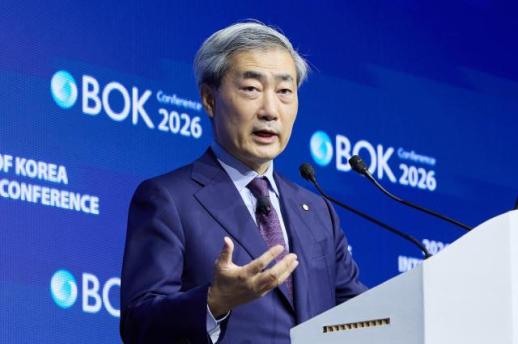 Shin's BOK signals active central bank intervention, putting monetary tightening and CBDC in spotlight SEOUL, June 02 (AJP) - The Bank of Korea (BOK) International Conference themed "Central Banks and the Future of Money," which ran from Monday to Tuesday, served as less of a purely academic event and more of a debut public stage highlighting the long-term vision of BOK Governor Shin Hyun-song. The central bank positioned staunch advocates of price and financial stability at the forefront while pitching a future monetary order centered around central bank digital currencies (CBDCs) as its core agenda. Since Governor Shin took office, the BOK’s strategic policy color has crystallized into three pillars: a hawkish monetary policy stance that dampens expectations for premature interest rate cuts; a macrofinancial stability framework that elevates financial vulnerability into a core variable for monetary policy decisions; and institutional restructuring aimed at redesigning the central bank’s payment and settlement infrastructure through CBDCs and tokenized deposits to fit the evolving digital economy. The lineup of participants at this year's conference directly mirrored these institutional priorities. Keynote speaker Isabel Schnabel, an Executive Board member of the European Central Bank (ECB), is recognized as a prominent inflation hawk in Europe. Neel Kashkari, president of the Federal Reserve Bank of Minneapolis, is also a figure who has consistently championed price stability and a highly cautious approach to rate cuts. Tobias Adrian, financial counsellor of the International Monetary Fund (IMF), addressed the critical linkages between financial vulnerability and monetary policy, while Princeton University Professor Markus Brunnermeier presented the policy dilemmas that digital currency creates among payments, credit, and privacy. Ultimately, the event merged a hawkish central banking philosophy emphasizing price and financial stability with a public payment infrastructure theory centered on CBDCs. This aligns closely with Governor Shin’s core philosophy, developed during his tenure at the Bank for International Settlements (BIS). Shin has long maintained a macrofinancial perspective, arguing that monetary policy should not be viewed merely as adjustments to the benchmark interest rate, but rather as an interplay where institutional leverage, asset prices, exchange rates, payment infrastructures, and global liquidity flows can collectively disrupt economic stability. It is hardly a coincidence that Adrian's paper on financial vulnerability—which posits that while easing financial conditions may support the economy in the short term, it exacerbates leverage and risk-taking over time, fueling deeper recession risks—was placed in the very first general session. This reflects Shin’s recent warnings against a simultaneous buildup in household debt, real estate, equity leverage, and lopsided foreign exchange movements. The message is clear: the era when monetary policy focused solely on inflation and growth is over; financial vulnerability must now be factored in. The CBDC discussions follow a similar logic. Participants, including Governor Shin, stressed that as stablecoins and big tech payment networks proliferate, central banks can no longer remain institutions that merely manage physical cash and bank reserves. If private digital currencies capture payment grids, the transmission channels of monetary policy, the commercial bank deposit base, and the broader financial stability architecture could all be destabilized. This concern was echoed by Executive Board Member Schnabel, who drew parallels between stablecoins and Money Market Funds (MMFs) to warn against financial stability risks. "Central banks cannot remain passive observers of these developments," Schnabel said. "The appropriate response is therefore not to resist innovation but to ensure that it develops within a framework that preserves stability, monetary control and trust in the currency." Professor Robert Townsend’s evaluation of this approach as a benchmark case study for central bank digital currency innovation underscores that the BOK under Shin aims to act as an architect, rather than a passive observer, of global payment debates. There were voices of caution, such as Professor Brunnermeier, who emphasized that CBDC is not simply a "nice-to-have technology." He highlighted a "triple dilemma" where boosting payment efficiency could weaken credit supply; strengthening credit supply could erode privacy; and enhancing privacy could hinder transaction tracking and loan enforcement, thereby impairing financial intermediation. Environmental shifts notwithstanding, the BOK continues its aggressive experiments with CBDCs, tokenized deposits, and cross-border payment infrastructures through Project Hangang and Project Agora. Initiated under former Governor Rhee Chang-yong, Phase 1 of the Bank of Korea’s flagship digital currency pilot, Project Hangang, ran from October 2023 to August 2025 to test the real-world viability of wholesale CBDCs and commercial bank deposit tokens. Phase 2, launched in March 2026, expands this scope to peer-to-peer transfers and programmable features, aiming to establish a next-generation public settlement infrastructure that integrates deposit tokens, government treasury execution, and private digital asset transactions. Such blueprints, however, will inevitably clash head-on with ongoing legislative debates over stablecoins. Once private stablecoins enter institutional frameworks, the central bank will need to re-demarcate the roles assigned to commercial bank deposit tokens and its own central-bank-led digital currency infrastructure. Ultimately, the trajectory of the BOK under the Shin administration points toward a "central-bank-led monetary order." It sends a dual signal: the central bank will design public infrastructure and regulatory frameworks ahead of the private sector, while refusing to ease its tight monetary stance until both inflation and financial vulnerabilities are firmly brought under control. Market participants who previously focused solely on interest rate decisions must now navigate a new landscape, tracking how the BOK scales its CBDC pilots, which public and private settlement networks it connects to deposit tokens, and what regulatory principles it establishes for private digital currencies. 2026-06-02 16:37:43
 -
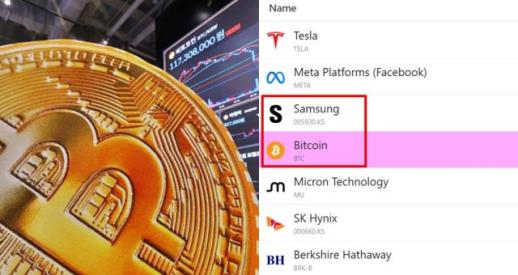 Samsung Electronics Surpasses Bitcoin in Market Capitalization Bitcoin, once a symbol of global investment fervor, has fallen behind Samsung Electronics in market capitalization rankings. Analysts suggest that as the AI semiconductor supercycle gains momentum, global funds are shifting towards semiconductor companies rather than virtual assets. According to global market capitalization tracking site CompaniesMarketCap, Samsung Electronics recently reached a market cap of approximately $1.5 trillion, surpassing Bitcoin, which now ranks 14th. Just over a year ago, Bitcoin's market cap approached $2 trillion, buoyed by the anticipation of the U.S. spot ETF launch and increased global liquidity. However, recent trends indicate that investor interest is shifting towards AI semiconductors and the data center industry, resulting in a change in funding flows. The surge in Samsung's performance is largely attributed to increased investment in AI infrastructure. Major global tech companies are competing to build AI data centers, leading to a surge in demand for AI semiconductors, including high-bandwidth memory (HBM). Samsung Electronics, SK Hynix, and Micron are currently at the center of the memory market, which is crucial in the AI era. Samsung has recently entered the era of a 1 quadrillion won market cap, driven by expectations for expanded supply of next-generation HBM products, and is being reevaluated as a beneficiary of the AI semiconductor boom. Optimists believe that AI infrastructure investment is still in its early stages, with both Samsung and SK Hynix focusing on expanding AI memory production, suggesting that the semiconductor boom may last longer than expected. Conversely, cautious analysts point out that the pace of stock price increases for semiconductor companies is outpacing actual earnings growth. They warn that if enthusiasm for AI investment wanes or data center investment plans are scaled back, semiconductor stocks could also face corrections. They caution that funding is becoming overly concentrated in specific industries, reminiscent of the dot-com bubble era. Ultimately, the competition in market capitalization between Samsung Electronics and Bitcoin can be interpreted as a contest over where greater value is assigned: the future of the AI industry or the future of digital assets. Currently, the market favors AI, but Bitcoin could rebound due to the expansion of the U.S. ETF market, inflows from institutional investors, and changes in global monetary policy.* This article has been translated by AI. 2026-06-02 16:33:00