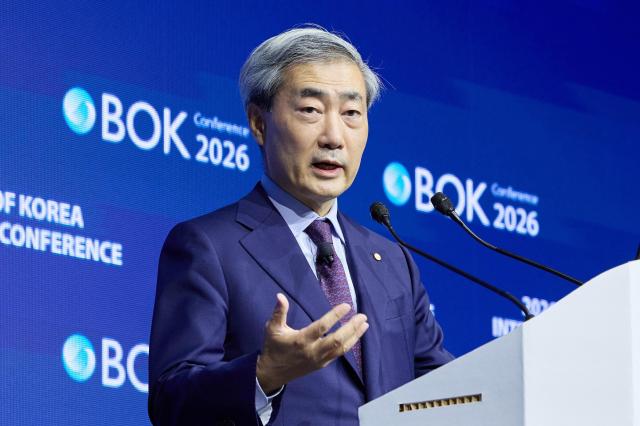
Since Governor Shin took office, the BOK’s strategic policy color has crystallized into three pillars: a hawkish monetary policy stance that dampens expectations for premature interest rate cuts; a macrofinancial stability framework that elevates financial vulnerability into a core variable for monetary policy decisions; and institutional restructuring aimed at redesigning the central bank’s payment and settlement infrastructure through CBDCs and tokenized deposits to fit the evolving digital economy.
The lineup of participants at this year's conference directly mirrored these institutional priorities. Keynote speaker Isabel Schnabel, an Executive Board member of the European Central Bank (ECB), is recognized as a prominent inflation hawk in Europe. Neel Kashkari, president of the Federal Reserve Bank of Minneapolis, is also a figure who has consistently championed price stability and a highly cautious approach to rate cuts.
Tobias Adrian, financial counsellor of the International Monetary Fund (IMF), addressed the critical linkages between financial vulnerability and monetary policy, while Princeton University Professor Markus Brunnermeier presented the policy dilemmas that digital currency creates among payments, credit, and privacy.
Ultimately, the event merged a hawkish central banking philosophy emphasizing price and financial stability with a public payment infrastructure theory centered on CBDCs.
This aligns closely with Governor Shin’s core philosophy, developed during his tenure at the Bank for International Settlements (BIS). Shin has long maintained a macrofinancial perspective, arguing that monetary policy should not be viewed merely as adjustments to the benchmark interest rate, but rather as an interplay where institutional leverage, asset prices, exchange rates, payment infrastructures, and global liquidity flows can collectively disrupt economic stability.
It is hardly a coincidence that Adrian's paper on financial vulnerability—which posits that while easing financial conditions may support the economy in the short term, it exacerbates leverage and risk-taking over time, fueling deeper recession risks—was placed in the very first general session.
This reflects Shin’s recent warnings against a simultaneous buildup in household debt, real estate, equity leverage, and lopsided foreign exchange movements. The message is clear: the era when monetary policy focused solely on inflation and growth is over; financial vulnerability must now be factored in.
The CBDC discussions follow a similar logic. Participants, including Governor Shin, stressed that as stablecoins and big tech payment networks proliferate, central banks can no longer remain institutions that merely manage physical cash and bank reserves. If private digital currencies capture payment grids, the transmission channels of monetary policy, the commercial bank deposit base, and the broader financial stability architecture could all be destabilized.
This concern was echoed by Executive Board Member Schnabel, who drew parallels between stablecoins and Money Market Funds (MMFs) to warn against financial stability risks.
"Central banks cannot remain passive observers of these developments," Schnabel said. "The appropriate response is therefore not to resist innovation but to ensure that it develops within a framework that preserves stability, monetary control and trust in the currency."
Professor Robert Townsend’s evaluation of this approach as a benchmark case study for central bank digital currency innovation underscores that the BOK under Shin aims to act as an architect, rather than a passive observer, of global payment debates.
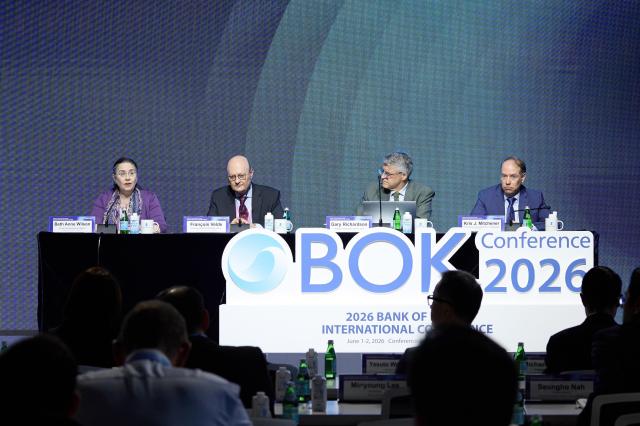
There were voices of caution, such as Professor Brunnermeier, who emphasized that CBDC is not simply a "nice-to-have technology." He highlighted a "triple dilemma" where boosting payment efficiency could weaken credit supply; strengthening credit supply could erode privacy; and enhancing privacy could hinder transaction tracking and loan enforcement, thereby impairing financial intermediation.
Environmental shifts notwithstanding, the BOK continues its aggressive experiments with CBDCs, tokenized deposits, and cross-border payment infrastructures through Project Hangang and Project Agora.
Initiated under former Governor Rhee Chang-yong, Phase 1 of the Bank of Korea’s flagship digital currency pilot, Project Hangang, ran from October 2023 to August 2025 to test the real-world viability of wholesale CBDCs and commercial bank deposit tokens. Phase 2, launched in March 2026, expands this scope to peer-to-peer transfers and programmable features, aiming to establish a next-generation public settlement infrastructure that integrates deposit tokens, government treasury execution, and private digital asset transactions.
Such blueprints, however, will inevitably clash head-on with ongoing legislative debates over stablecoins. Once private stablecoins enter institutional frameworks, the central bank will need to re-demarcate the roles assigned to commercial bank deposit tokens and its own central-bank-led digital currency infrastructure.
Ultimately, the trajectory of the BOK under the Shin administration points toward a "central-bank-led monetary order." It sends a dual signal: the central bank will design public infrastructure and regulatory frameworks ahead of the private sector, while refusing to ease its tight monetary stance until both inflation and financial vulnerabilities are firmly brought under control.
Market participants who previously focused solely on interest rate decisions must now navigate a new landscape, tracking how the BOK scales its CBDC pilots, which public and private settlement networks it connects to deposit tokens, and what regulatory principles it establishes for private digital currencies.

Copyright ⓒ Aju Press All rights reserved.