

Journalist

Lee Bu-hyung
-
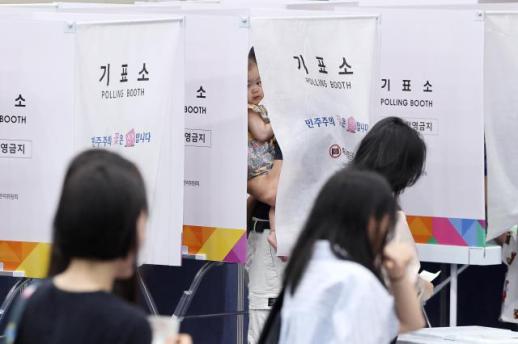 Early Voting Participation Reaches 46.0% in Local Elections The voter turnout for the 9th nationwide local elections reached 46.0% as of 1 p.m. on June 3. This figure is 7.7 percentage points higher than the turnout of 38.3% at the same time during the 8th local elections in 2022. According to the National Election Commission, out of a total of 44,649,908 eligible voters, 20,518,553 had cast their ballots by 1 p.m. This includes 10,564,222 participants in early voting and 9,954,331 on the day of the election. Regionally, South Jeolla Province recorded the highest turnout at 56.1%. It was followed by North Jeolla Province at 52.2%, Gangwon Province at 51.8%, and South Gyeongsang Province at 49.4%. In contrast, Gyeonggi Province had the lowest turnout at 43.0%. Other regions with relatively low participation included Gwangju at 43.3%, Incheon at 43.4%, and Jeju at 44.4%. Additionally, turnout figures included Sejong at 47.8%, North Gyeongsang Province at 47.3%, Ulsan at 46.9%, Daegu at 46.5%, North Chungcheong Province at 46.3%, Seoul at 46.1%, South Chungcheong Province at 45.6%, Daejeon at 45.5%, and Busan at 45.1%. Voting for this local election is taking place from 6 a.m. to 6 p.m. on the election day. All citizens aged 18 and older are eligible to participate, but voting can only be done at designated polling places based on their registered addresses. Voters must present an identification card that includes a photo and date of birth, such as a resident registration card, driver's license, or passport. Mobile identification is also accepted, but saved photo files or screenshots are not valid.* This article has been translated by AI. 2026-06-03 13:36:00
 -
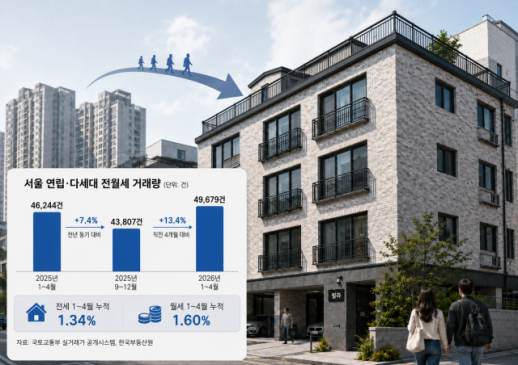 Demand for Villas Rises Amid Apartment Rental Crisis in Seoul Seoul's rental crisis for apartments is spilling over into the non-apartment rental market, including villas and multi-family homes. Following a series of rental scams, demand for villas has rebounded, leading to a 7.4% increase in rental transactions for multi-family housing in Seoul during the first four months of this year compared to the same period last year. As transaction volumes rise, rental prices are also climbing. As of June 3, an analysis of rental transaction data reported to the Ministry of Land, Infrastructure and Transport shows that there were 49,679 transactions for multi-family housing from January to April this year, up 3,435 transactions or 7.4% from 46,244 during the same period last year. This marks a 13.4% increase compared to the previous four months, which recorded 43,807 transactions from September to December last year. There are still pending transactions from April that have not yet been reflected due to delays in reporting final payments or contract dates, suggesting that the final transaction volume may increase further. Market analysts attribute the rising demand for multi-family housing to increasing rental prices and a shortage of available apartments in Seoul. As barriers to entering the apartment rental market have risen, mid- to low-income renters are shifting to villas and multi-family homes, which are perceived as more affordable. Although there remains a reluctance to rent non-apartment properties due to concerns over rental scams, the prolonged apartment rental crisis has led tenants to explore options in the non-apartment market. Notably, properties that qualify for rental insurance or are located near transit hubs are seeing quicker inquiries, according to industry insiders. The increase in demand for non-apartment rentals is also reflected in the sales market. According to Real Estate Planet, the transaction volume for multi-family housing in Seoul reached 10,201 in the first quarter of this year, a 48.6% increase from 6,864 during the same period last year, marking the highest level since the second quarter of 2022. The rental transaction volume for multi-family housing also rose to 37,764 in the first quarter, a 14.2% increase from the previous quarter, with monthly rentals accounting for 63.5% of the total. As demand grows, prices are also on the rise. According to the Korea Real Estate Agency, the average rent for multi-family homes in Seoul increased by 0.44% in April compared to the previous month, marking the highest rate of increase in 12 years and seven months since September 2013. The cumulative increase from January to April this year stands at 1.34%, the highest for the same period since 2011. Monthly rents are also surging. The cumulative increase in monthly rent for multi-family homes in Seoul from January to April is 1.60%, surpassing the increase in lease prices. This is the highest level recorded since July 2015. The average security deposit for multi-family housing during this period was 240.98 million won, up 7.75 million won from 233.23 million won last year. The average monthly rent also rose from 548,000 won last year to 562,000 won this year. More tenants are opting to stay in their existing homes. The proportion of renewal contracts for multi-family housing from January to April this year was 27.25%, up from 26.73% during the same period last year. Notably, the share of renewal contracts utilizing the right to request renewal increased from 24.8% last year to 32.0% this year, reflecting a growing trend of tenants preferring to limit rent increases and remain in their current homes rather than seeking new properties. Industry experts view this trend as a response to the apartment rental crisis rather than a full recovery of the non-apartment market. Concerns about the risk of deposit returns following rental scams remain prevalent, leading to significant variations in preferences based on factors such as the availability of rental insurance, landlord creditworthiness, and the condition of the property. A real estate agent in the Hwajeong-dong area of Gangseo-gu noted, "As the supply of mid-priced apartments decreases, more tenants are looking into multi-family homes. Although there is still caution due to fears of rental scams, properties that meet price conditions and qualify for rental insurance are moving quickly."* This article has been translated by AI. 2026-06-03 13:24:00
 -
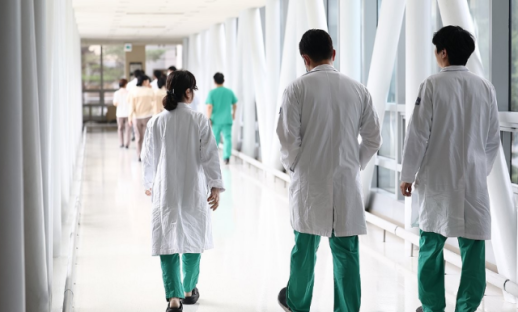 Resident Doctor Found Guilty for Distributing Medical Blacklist A resident doctor has been found guilty by the Supreme Court for distributing a so-called "medical blacklist" that revealed the personal information of doctors and medical students who did not participate in collective actions during a conflict between the medical community and the government. As a result, the doctor is set to lose their medical license under the law. On June 3, legal sources reported that the Supreme Court's third division, led by Justice Lee Suk-yeon, upheld a lower court's sentence of two years in prison with four years of probation for 33-year-old Ryu, who was charged with violating the Stalking Punishment Act and the Information and Communications Network Act (defamation). Ryu was accused of posting the names of 2,974 individuals, including doctors, medical students, and hospital staff who did not participate in collective actions from August to September 2024, on foreign websites. He reportedly uploaded this information a total of 21 times on sites such as "Pastebin" and "Archive." The list, referred to as the "medical blacklist" within the medical community, included names and affiliations of those who either did not join the collective actions or returned to work. During the trial, a key issue was whether posting the list online constituted stalking. Ryu's defense argued that the posts were merely expressions directed at an unspecified audience and did not meet the criteria for persistent and repeated harassment as defined by the Stalking Punishment Act. However, the first trial court rejected this argument. The Seoul Central District Court's Criminal Division 31 stated in June of last year that Ryu's actions caused fear and anxiety among the victims by distributing personal information via the internet to third parties. The court noted, "The defendant defamed the victims and engaged in blatant criticism, malicious attacks, and threats. The victims experienced severe mental distress, including fear of social interactions and concerns for their families' safety, leading to panic and avoidance of public spaces." The appellate court also upheld the guilty verdict. The Seoul High Court's Criminal Division 8 stated in October of the same year that Ryu's actions constituted a socially problematic form of "doxxing" aimed at pressuring others, warranting strict punishment. However, considering that Ryu was a first-time offender, acknowledged his wrongdoing, and reached settlements with some victims, his sentence was reduced to two years in prison with four years of probation. The Supreme Court also found no errors in the lower court's legal reasoning and dismissed Ryu's appeal. With this final ruling, Ryu is now subject to medical license revocation under the medical law. Current regulations stipulate that medical professionals who receive a prison sentence of more than one year with probation are subject to license cancellation, and they can apply for reinstatement three years after the cancellation date. Meanwhile, Ryu's legal team requested a constitutional review of the stalking law provisions applied to him, arguing they violated the principle of clarity, but this request was denied. It has been reported that Ryu has recently filed a constitutional petition with the Constitutional Court. 2026-06-03 13:00:00
 -
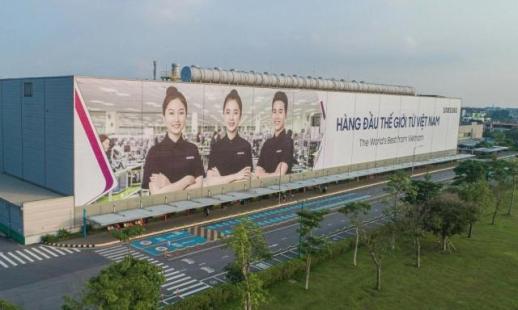 Samsung Begins Direct Purchase of Renewable Energy at Vietnam Factory Samsung Thai Nguyen (SEVT) and the TTC Duc Hue 2 solar power plant have marked the first instance of a Direct Power Purchase Agreement (DPPA) in Vietnam. As the system allowing large-scale consumers to directly contract with power producers through the national grid officially begins, interest is growing in the potential expansion of renewable energy trading and its cost structure. This has sparked both positive feedback, with calls to "continue supporting investments," and questions about who will bear the transmission costs, drawing public attention. On June 1, local media outlet VnExpress reported that the National Power System and Market Operation Organization (NSMO) announced that Samsung Thai Nguyen and the TTC Duc Hue 2 solar power plant had completed the necessary technical and legal procedures and officially commenced operations under the DPPA system. In this agreement, Samsung Thai Nguyen acts as the power buyer, while TTC Duc Hue 2 serves as the power seller. This marks the first instance of direct trading between renewable energy producers and large electricity consumers since the implementation of Decree 57/2025 in early March of last year. With this contract, Samsung's production facility is expected to receive approximately 70GWh of renewable energy annually, equivalent to the electricity consumption of about 17,000 households in Vietnam. This is also anticipated to reduce carbon dioxide emissions by approximately 46,000 tons each year. The TTC Duc Hue 2 solar power plant, located in Tay Ninh Province, is invested in by TTC Duc Hue-Long An Power Joint Stock Company. It has a designed capacity of 49MWp and began commercial operations on May 19. The plant is equipped with a battery energy storage system (BESS) and has been participating in Vietnam's competitive wholesale electricity market since early this month. The DPPA system has been a policy that foreign direct investment (FDI) companies in Vietnam have requested for early implementation. These companies have previously expressed expectations that the system would enhance competition in the energy sector. Five years ago, Samsung was among the companies that indicated interest during policy discussions. A survey by the Ministry of Industry and Trade at the end of 2023 revealed that about 20 large corporations expressed intentions to directly purchase nearly 1,000MW of electricity, with 24 renewable energy projects totaling 1,773MW indicating interest in selling. Additionally, 17 projects totaling 2,836MW are under consideration for participation. Samsung is the largest foreign investor in Vietnam, with accumulated registered capital amounting to tens of billions of dollars. In recent years, the company has aimed to increase the share of clean energy used in its global production facilities, and this contract is part of its commitment to reducing carbon emissions. ◆ Online Reactions: Support for Clean Energy Expansion vs. Questions on Transmission Costs Following the announcement, various reactions emerged online. One user expressed support for Samsung's continued investment in Vietnam. However, questions were raised regarding the use of the national grid and who would bear the transmission costs. One commenter asked, "If power is traded through the national grid, who pays for the transmission costs?" Another user noted, "Electricity is produced in Tay Ninh and consumed in Thai Nguyen, so how will it be transmitted without using the EVN grid?" They further questioned, "Ultimately, transmission must go through EVN, and infrastructure rental costs are high; has it become cheaper now?" Another user remarked, "I have a 5x15m rooftop, so if they install solar equipment, I will pay for the electricity," indicating hopes for the expansion of residential solar energy. Additionally, there were calls for more models like this to promote green power production and lower energy costs through direct connections. Meanwhile, the launch of the DPPA signifies a significant step in realizing direct trading between renewable energy producers and large electricity consumers within a regulated framework. At the same time, public interest in the use of the national grid and the cost burden structure is also increasing.* This article has been translated by AI. 2026-06-03 12:24:00
 -
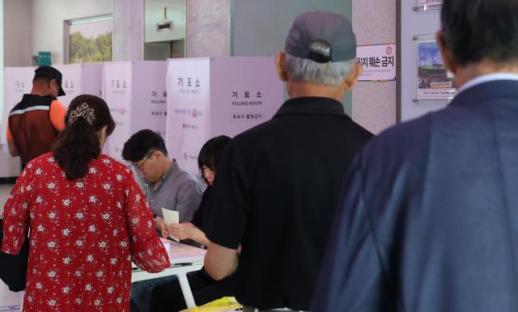 Voter Turnout Reaches 19.0% at Noon, Highest in Daegu at 23.7% As the 9th nationwide local elections are underway, the voter turnout across South Korea reached 19.0% by noon on June 3. This figure is 4.0 percentage points higher than the turnout of 15.0% recorded at the same time during the 8th local elections in 2022. According to the National Election Commission, by noon, 8,497,711 of the 44,649,908 registered voters had cast their ballots. Voting began at 6 a.m. at 14,288 polling stations nationwide. Regionally, Daegu reported the highest voter turnout at 23.7%, followed by North Gyeongsang Province at 21.7%, Gangwon Province at 21.6%, South Gyeongsang Province at 21.2%, Ulsan at 20.6%, South Chungcheong Province at 20.2%, and Busan at 20.0%. In contrast, Gwangju recorded the lowest turnout at 13.1%. Other regions with relatively low turnout included North Jeolla Province at 14.8%, South Jeolla Province at 14.9%, and Sejong at 16.8%. The metropolitan area saw turnouts of 18.6% in Seoul, 18.4% in Gyeonggi Province, and 18.2% in Incheon. This turnout figure does not include the early voting rate of 23.51% recorded on May 29-30. The rates for early voting, overseas voting, shipboard voting, and absentee voting will be combined and announced starting at 1 p.m. today. In this local election, a total of 4,227 positions will be filled, including 16 heads of regional governments, 16 education superintendents, 227 heads of local governments, 933 local council members, and 3,035 district council members. Additionally, by-elections for 14 parliamentary seats, including Pyeongtaek in Gyeonggi Province and Busan North Gap, are also taking place. Voting will continue from 6 a.m. to 6 p.m. today. Unlike early voting, voters must cast their ballots at their designated polling stations and must present a photo ID, such as a resident registration card, driver's license, or passport. Mobile IDs must be verified through an app at the polling station, and screenshots will not be accepted.* This article has been translated by AI. 2026-06-03 12:24:00
 -
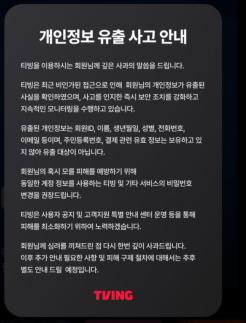 TVING Reports Data Breach Affecting User Information TVING, an online video streaming service, has reported a data breach that has compromised the personal information of some users due to unauthorized external access. On June 3, TVING announced on its official website that it had confirmed the unauthorized access to its systems, which resulted in the leakage of certain members' personal information. The company stated that it took immediate security measures upon discovering the breach and significantly enhanced its monitoring systems to prevent further damage. The leaked information includes user identification IDs, names, birth dates, genders, phone numbers, and email addresses. However, sensitive financial information such as resident registration numbers and payment details were not part of the breach. TVING clarified that it does not hold such sensitive information due to the structure of its services, thus this breach does not involve those data points. To prevent secondary damage, TVING has advised users to change their passwords immediately. The company emphasized the importance of changing passwords, especially if users have reused their TVING account credentials (ID and password) on other sites or services, as this poses a risk of identity theft. Additionally, TVING has established a dedicated customer support center and plans to focus on minimizing user impact through public notifications. Further details regarding the breach's specifics and remedial procedures will be provided as they become available. A TVING representative stated, "We are closely investigating the cause of the breach and the extent of its impact, prioritizing customer protection and taking all necessary measures. We will cooperate fully with government and relevant agencies to establish preventive measures against future incidents."* This article has been translated by AI. 2026-06-03 12:18:00
 -
 Nonghyup Distribution Supports Rural Labor in Pyeongchang Employees of Nonghyup Distribution visited Pyeongchang, Gangwon Province, to assist with labor shortages during the farming season. On June 2, Nonghyup Distribution, which operates Nonghyup Hanaro Mart, announced that its employees visited farms in the Jinbu Nonghyup area to help install support stakes for pepper plants. This volunteer activity was organized to address the worsening labor shortages in agriculture due to an aging rural population and the migration of young people to urban areas. CEO Lee Dong-geun and other employees participated in the effort. The employees assisted in setting up stakes to ensure that the pepper seedlings would not be damaged by wind and rain, allowing them to grow steadily. Installing these stakes is considered a crucial task that affects crop growth and yield. Nonghyup Distribution has been actively supporting farmers, having previously conducted similar volunteer activities in Dangjin, South Chungcheong Province, in May. A representative from Nonghyup Distribution stated, "We hope this assistance can provide some relief to farmers struggling with labor shortages during the busy farming season."* This article has been translated by AI. 2026-06-03 12:09:00
 -
 City Construction Fined 38 Million Won for Delayed Contracts and Unpaid Discounts City Construction has been found to have issued contracts late to its subcontractors and failed to pay subcontracting fees in accordance with legal standards. Despite receiving full payment in cash from the client for construction work, the company paid subcontractors significantly less than the legal requirement. On June 3, the Fair Trade Commission announced that it imposed a corrective order and a fine of 38 million won on City Construction for violating subcontracting laws. The company also received a warning for failing to pay discount fees on promissory notes. According to the Fair Trade Commission, City Construction issued contracts for 61 projects, including reinforced concrete work, to 44 subcontractors with legal requirements included in the contracts at least one day and up to 310 days after the start of construction. Additionally, while receiving full cash payments from the client for landscaping infrastructure projects contracted to 144 subcontractors, City Construction paid subcontracting fees in cash ranging from 0% to a maximum of 89%. City Construction also issued promissory notes to 82 subcontractors with due dates exceeding 60 days from the receipt of goods, failing to pay 79.36 million won in discount fees for the extended period. However, during the Fair Trade Commission's investigation, City Construction paid the full amount of the unpaid discount fees to the subcontractors, resulting in only a warning for that violation. The Fair Trade Commission determined that the delayed issuance of contracts violated the written contract issuance obligation under the subcontracting law, and the failure to maintain the cash payment ratio and unpaid discount fees also constituted violations of the law. This case highlights the need for transparency in the payment process for subcontracting fees, as the cash benefits provided by the client did not adequately reach the subcontractors. A Fair Trade Commission official stated, "We plan to continuously monitor violations of subcontracting laws by primary contractors and impose strict penalties when violations are confirmed."* This article has been translated by AI. 2026-06-03 12:03:00
 -
 Contractor Fined for Failing to Pay Subcontractor in Sehwa Academy Case School corporation Sehwa Academy has been penalized by the Fair Trade Commission for failing to pay a subcontractor despite agreeing to do so. On June 3, the Fair Trade Commission announced that it had issued a corrective order to Sehwa Academy for not paying 26.4 million won to the subcontractor as required under a direct payment agreement. In 2021, Sehwa Academy commissioned a construction project to reinforce a hazardous area at Sehwa High School in Pohang to a primary contractor, Company A. Company A then subcontracted the earthworks to subcontractor Company B, and all parties reached a tripartite agreement for Sehwa Academy to pay Company B directly for the earthworks. While Sehwa Academy had made payments according to the agreement, it withheld the final payment of 26.4 million won, citing construction defects. However, during a meeting attended by Sehwa Academy, the primary contractor, the subcontractor, and the supervisor, it was confirmed that the remaining payment for the earthworks was indeed 26.4 million won. Investigations revealed that the defects raised by Sehwa Academy were related to landscaping work performed by another company, not the earthworks. The Fair Trade Commission determined that Sehwa Academy's failure to pay the subcontractor without just cause constituted a violation of subcontracting law. Considering that the primary contractor is currently pursuing a civil lawsuit against Sehwa Academy for the payment, the Commission opted not to issue a separate payment order but instead imposed only a corrective order. This decision is significant as it reaffirms that even parties not directly involved in a subcontracting agreement, such as the contractor, have payment obligations under the subcontracting law when they agree to direct payments. A Fair Trade Commission official stated, "We will continue to monitor violations of payment obligations by contractors and take strict action when violations are confirmed to protect the integrity of subcontracting transactions."* This article has been translated by AI. 2026-06-03 12:03:00
 -
 Generative AI Becomes Ubiquitous, 92.6% Usage Rate Among 20-Somethings Generative artificial intelligence (AI) is transforming the way people search for information, shifting from traditional search engines to asking AI questions. Notably, the usage rate of generative AI among individuals in their 20s has reached 92.6%, indicating its establishment as a daily service. On June 3, the Ministry of Science and ICT released the results of its '2025 Telecommunications Business Survey.' According to the findings, the experience rate of using generative AI stands at 78.1%. Among age groups, those in their 20s reported the highest usage rate at 92.6%. Furthermore, 47.1% of respondents expressed trust in the information or news obtained through generative AI, significantly outpacing the 9.2% who did not trust it. The survey also indicated that generative AI is influencing changes in search service usage behavior. About 60% of generative AI users reported that they have replaced more than 50% of their search functions with AI. Specifically, 18.8% indicated that they have replaced 60-70% of their searches with AI, followed by 17.7% who replaced 50-60%, and 16.5% who replaced 70-80%. The tool is also being utilized extensively in work and study, with 76.4% of respondents stating that generative AI has helped improve productivity in these areas. Conversely, only 1.9% felt it was not helpful. In examining overall digital platform usage, search portals and messaging services continue to show the highest usage rates. The survey found that 98.7% of respondents used search portals, followed closely by messaging services at 98.5%, place and map services at 96.8%, e-commerce at 95.6%, and video-sharing services at 92.7%. Daily usage rates were highest for messaging services at 91.3%, followed by search portals at 85.8%, video-sharing services at 69.5%, and social networking services at 56.6%. This suggests that most citizens are using major platform services almost daily. Competition among platforms is intensifying. In the past three months, the rate of 'multi-homing,' or using two or more platforms, was highest for e-commerce at 83.9%, followed by social networking services at 79.9%, search portals at 76.9%, and place and map services at 69.1%. E-commerce users were found to use an average of 3.4 platforms, indicating a highly competitive market. In contrast, the rates for secondhand trading (25.9%) and app markets (24.9%) were relatively low, suggesting that users exhibit strong loyalty to specific platforms. Experiences of changing primary platforms were notably higher in food delivery (27.0%) and e-commerce (20.9%). However, app markets (10.3%) and messaging services (9.4%) showed lower transition rates, indicating a strong lock-in effect among users. Common reasons for not switching platforms included habits, service quality, and the desire to maintain usage history. Additionally, last year's revenue from domestic value-added telecommunications services was estimated at 502.9 trillion won, with digital platform service revenue accounting for 161.5 trillion won. These figures represent increases of 15.3% and 5.4%, respectively, compared to the previous year. According to real-time app and payment data analysis solution WiseApp and Retail, ChatGPT had 23.45 million monthly active users in April. Gemini recorded 8.45 million users, while Claude had 2.41 million. Among these, Claude saw the most significant growth compared to the same month last year, with a user growth rate of 1,148%. Gemini followed with a growth rate of 1,034%, while ChatGPT's growth was 34%. 2026-06-03 12:03:00