
Journalist

Lee Hak-loh
-
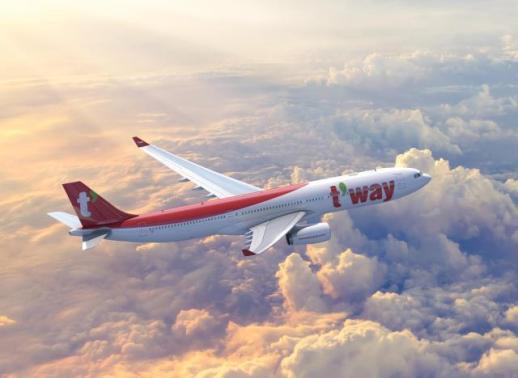 T'way Air returns to black in Q1, ending two years of losses SEOUL, May 13 (AJP) - Budget carrier T'way Air posted an operating profit of 19.9 billion Korean won (US$14 million) in the first quarter of this year, returning to the black for the first time in eight quarters. In a preliminary report released on Wednesday, the airline posted first-quarter revenue of 612.2 billion won, up about 37 percent from a year earlier, and an operating profit of 19.9 billion won, marking its first return to the black after eight consecutive quarters of losses. The airline attributed the turnaround to strong demand on domestic and short-haul routes linking cities in Japan and Taiwan, as well as increasing passenger numbers on longer-haul routes to Europe, Australia, and the Americas. T'way Air is also expanding its fleet. The airline, which currently operates 49 aircraft, added two Boeing 737-8 jets in the first quarter and plans to gradually acquire more fuel-efficient, lower-emission aircraft such as the Airbus A330-900neo later this year. Its cargo business is also growing, with total cargo volume reaching about 9,000 metric tons in the first three months of this year. The airline said the planned procurement of larger aircraft is expected to further expand cargo capacity. It also said it is making efforts to strengthen its safety and operations systems including the construction of its own aircraft maintenance facility and hangar at Incheon International Airport. "The acquisition by Sono Trinity Group helped us restructure our operations and sharpen our competitiveness," said a T'way Air spokesperson. "Safety would remain our top priority as we work to improve our services." Following the acquisition by the leisure and infrastructure company early last year, the airline recently agreed at a shareholders’ meeting to rename itself Trinity Airways. But its new name and logo will take effect only after approval from relevant aviation authorities. 2026-05-13 14:19:17
 -
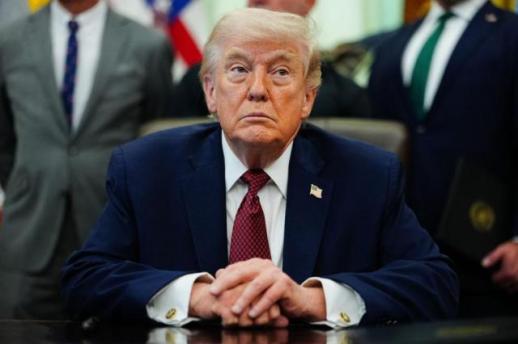 U.S. appeals court revives Trump tariff, renewing uncertainty for Korean Inc. SEOUL, May 13 (AJP) - A U.S. federal appeals court ruling temporarily reinstating the Trump administration’s 10 percent global tariff has created fresh uncertainty for South Korean exporters and the $350 billion investment commitment underpinning Seoul’s trade deal with Washington. The ruling came just days after a lower court declared the 10 percent global tariff unlawful. The U.S. Court of Appeals for the Federal Circuit issued the administrative stay Tuesday, according to Reuters and U.S. court filings. The order pauses a May 7 ruling by the U.S. Court of International Trade, which found the blanket 10 percent tariff unlawful under Section 122 of the Trade Act of 1974 — the statute the White House invoked after the Supreme Court struck down its earlier reciprocal tariffs in February. The stay keeps the tariff in place while the appeals court considers whether to grant a longer pause. The Trump administration must file briefs supporting the stay within days, while the small businesses and state plaintiffs that won the lower court ruling must respond within a week, according to court filings reviewed by Bloomberg. The decision comes as the Lee Jae Myung administration finalizes the first investment project under the bilateral deal that lowered South Korea’s tariff rate from 25 percent to 15 percent last year. South Korea negotiated the tariff reduction during the October 2025 summit in Gyeongju. In exchange, Seoul committed to a $350 billion investment package over 10 years, including $200 billion in cash installments and $150 billion under the “Make American Shipbuilding Great Again,” or MASGA, framework, with an annual ceiling of $20 billion. Seoul also pledged to purchase $100 billion worth of U.S. oil, LNG and LPG over four years. The National Interest noted in March that the commitment amounted to only about $6.8 billion in incremental purchases above existing trade flows. The lower court ruling, now paused by the appeals court, does not directly affect Korean imports. Relief was granted only to the named plaintiffs — two U.S. small businesses and the state of Washington — rather than through a nationwide injunction. Korean exporters, like other foreign entities, generally cannot file suit in U.S. trade court. Industry Minister Kim Jung-kwan returned to Seoul on Saturday after a four-day trip to Washington, during which he met U.S. Commerce Secretary Howard Lutnick to discuss specific projects under the bilateral investment framework, the Industry Ministry said. The first formal project under the deal has yet to be announced. The deeper concern in Seoul is what happens after July. Under the law, Section 122 tariffs are limited to 150 days and are set to expire in late July. The Trump administration has signaled that it intends to replace them with tariffs imposed under Section 301 of the Trade Act, which allows duties to be levied following investigations into trade practices and imposes no statutory ceiling on tariff rates. According to CNBC, the U.S. Trade Representative has launched Section 301 investigations into 16 trading partners, including South Korea, over concerns related to overcapacity and forced labor. Korean industries most exposed to the 10 percent global tariff include automotive, steel and batteries. Hyundai Motor Group and Kia, both heavily reliant on U.S. sales, have faced mounting cost pressure since the tariff took effect, according to Korean trade publications. Korean steelmakers, already operating under quota and product-specific tariff restrictions, face additional strain, while battery manufacturers have seen input costs rise sharply under U.S. supply-chain restructuring policies. If the 10 percent global tariff is ultimately struck down, Korean exporters could become eligible for refunds. The U.S. government is currently processing about $166 billion in refunds tied to the earlier reciprocal tariffs invalidated by the Supreme Court in February under the International Emergency Economic Powers Act, according to a customs official’s filing reviewed by Transport Topics. Roughly $35.5 billion in claims have been filed through an online portal launched in late April. For Korean firms, however, the key question is whether the legal momentum will translate into meaningful relief. The Trump administration has consistently moved to substitute one tariff authority for another when blocked, while Korea’s negotiated 15 percent reciprocal tariff rate exists outside the Section 122 framework now under review. The U.S.-Korea Strategic Investment Special Act, which provides the legal basis for the projects tied to $350 billion investment package, was passed by the National Assembly on March 12 and will take effect next month. 2026-05-13 14:11:24
 -
 Kookmin University alumni selected for Cannes immersive competition SEOUL, May 13 (AJP) - Two South Korean Kuukmin University alumni directors have been named to the official Immersive Competition at the 79th Cannes Film Festival for their experimental installation, the university said Wednesday. The project, titled VOOOOOO---PEEEEEE---, was created by Woopark Studio's directors Woo Hyun-ju and Park Ji-yoon. The Immersive Competition is a specialized category at Cannes that focuses on virtual reality (VR), extended reality (XR), and interactive storytelling. The selection of the South Korean directors places their work among a group of international projects recognized for exploring new ways to combine technology with narrative. The work originally debuted at a solo exhibition in November 2025. It utilizes a VR cinema setup paired with a pneumatic wearable interface, which allows the viewer to physically feel the sensation of volume and pressure as it expands within the virtual environment. According to the creators, the installation is designed to investigate the sensory gap between digital volume and the actual human body. "The conversations, advice, and support we received along the way were a great source of strength in bringing this work to this stage," Woo and Park said in a joint statement. "We would like to thank everyone who watched over us and cared for this project." Woo and Park are graduates of the Department of Entertainment Design at Kookmin University. During their time as students, their research focused on expanded cinema and interactive media. The department currently provides a curriculum that covers a range of visual arts, including documentary, animation, and immersive media. The two directors will travel to France to present their work and participate in international industry meetings during the festival. The Immersive Competition is scheduled to run from May 12 to May 22, 2026, at the Carlton Hotel in Cannes. 2026-05-13 14:05:04
 -
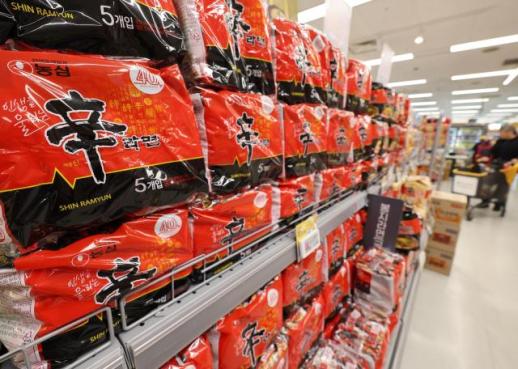 K-ramyeon makers race overseas as Nongshim eyes 60% global sales SEOUL, May 13 (AJP) - South Korea's instant noodle makers are accelerating a pivot abroad as a saturated home market and surging foreign appetite for K-food reshape the industry, with Nongshim unveiling its most aggressive overseas push yet. Nongshim CEO Jo Yong-chul said Tuesday that the company aims to lift overseas sales to more than 60 percent of total revenue and reach 7.3 trillion won ($4.88 billion) in sales by 2030, alongside a 10 percent operating margin. Overseas business currently accounts for about 40 percent of Nongshim's revenue. "We will sufficiently achieve this sales target if we secure logistics hubs to support our overseas business," Jo told reporters at a briefing in Seoul marking the 40th anniversary of flagship brand Shin Ramyun, adding that an export-only plant in Busan's Noksan district will start operations in the fourth quarter and that the company will widen distribution in the United States, Japan and China. Nongshim, which holds more than 60 percent of Korea's domestic ramyeon market, plans to launch a sales unit in Moscow next month to tap the European and Commonwealth of Independent States markets, on top of existing factories in Los Angeles and three Chinese cities. Shin Ramyun's overseas sales reached 1.02 trillion won last year, or 66% of the brand's 1.54 trillion won total. The drive reflects a broader industry scramble. Korea's ramyeon exports hit a record $1.52 billion in 2025, up 21.9 percent from a year earlier and extending an 11-year streak of growth, according to the Korea Customs Service, with China and the U.S. together absorbing more than 40 percent of shipments. Rival Samyang Foods, maker of the viral Buldak spicy noodles, has moved faster. Its 2025 sales surged 36 percent to 2.35 trillion won, with oversea sales accounting for over 70 percent of revenue, and the company broke ground in July on its first non-domestic plant in China. Ottogi, maker of Jin Ramen, has set a target of 1.1 trillion won in overseas sales by 2030, while smaller player Paldo continues to lean on Russia and Central Asia, where its Doshirak cup noodle is a household name. 2026-05-13 14:01:33
 -
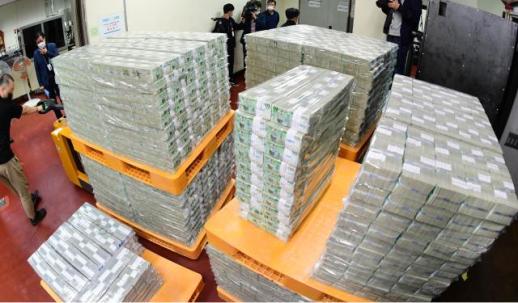 Korea's M2 growth runs twice Japan's, deepening inflation and FX dilemma SEOUL, May 13 (AJP) - South Korea’s liquidity expanded sharply in March, with much of the abundance funneling toward the red-hot asset market rather than helping to bolster weakening economic fundamentals and creating a headache for monetary authorities battling looming imported energy-triggered inflation and a stubbornly weak currency. The M2 money supply reached 4,132.1 trillion won ($2.76 trillion) in March, up 5.6 percent from a year earlier, according to the Bank of Korea on Wednesday. M2 includes cash, demand deposits and other highly liquid financial instruments. Under the BOK’s previous calculation standard, the figure would have stood at 4,625.1 trillion won, marking a 9.3 percent on-year increase. By either measure, liquidity growth is accelerating noticeably. The last time M2 growth exceeded 9 percent under the old standard was in April 2022, when it reached 9.4 percent, at a time when markets were still awash with liquidity injected during the Covid-19 pandemic. That period later prompted aggressive interest rate hikes by the U.S. Federal Reserve and other major central banks to absorb excess liquidity. Even under the revised standard introduced late last year — after criticism that the central bank’s loose policy stance had contributed to the won’s weakness against major currencies — Korea’s liquidity growth still more than doubled Japan’s roughly 2 percent pace and outpaced the eurozone’s 3.2 percent expansion during the same period. The surge comes amid growing rationale for monetary tightening. New Bank of Korea Governor Shin Hyun-song, Senior Deputy Governor Ryoo Sang-dai and recently retired monetary board member Shin Sung-hwan have all recently mentioned the possibility of an interest rate hike. The won on Wednesday hovered close to the psychologically sensitive 1,500-per-dollar mark, a level previously seen mainly during periods of financial crisis. Consumer prices rose 2.6 percent in April even as the impact of disruptions around the Strait of Hormuz has yet to fully reach Korean shores through higher energy costs. The government, meanwhile, continues to lean toward fiscal stimulus despite mounting concerns over debt and excess liquidity in an effort to pre-empt stagnationary risks. During a Cabinet meeting Tuesday, President Lee Jae Myung criticized calls for tightening as “populist” and signaled fiscal expansion in the second half and next year’s budget planning. Lee argued that the livelihood recovery support payments distributed last year generated roughly 430,000 won in additional consumption for every 1 million won provided. The government is currently preparing another round of high oil-price relief payments ranging from 100,000 won to 600,000 won per person depending on income level and region. The total package is expected to amount to 6.1 trillion won. The real question lies in the effectiveness of the stimulus measures. The money multiplier — calculated by dividing the new M2 measure by the monetary base — stood at 13.43 in March, continuing a steady decline from its peak of 14.5 in November 2023. The indicator measures how actively liquidity is being used across consumption, investment, lending and asset purchases. A lower multiplier suggests money is not circulating efficiently despite the growing supply. “The increase in money supply only becomes meaningful when consumption and investment expand, but currently only stocks and real estate are rising,” said Ahn Dong-hyun, an economics professor at Seoul National University. 2026-05-13 13:55:09
 -
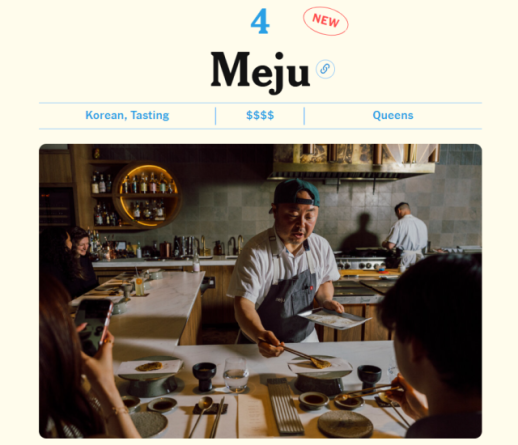 Seven Korean eateries join the NYT list of New York's 100 best restaurants for 2026 SEOUL, May 13 (AJP) - Seven Korean restaurants were included in The New York Times’ latest list of “The 100 Best Restaurants in New York City in 2026,” underscoring the growing influence of K-food and cuisine across New York’s cosmopolitan dining scene. The highest-ranked Korean restaurant was Meju, which placed fourth on the list. The restaurant, led by chef Hooni Kim, was praised for its fermentation-focused tasting menu hidden behind a banchan shop in Long Island City. The newspaper described fermentation as Kim’s central theme, calling it “the manipulations of time and how a dance with decay can change our understanding of what food can be.” It added that the chef “buildan arc with genuine suspense, which he does with a true believer’s fervor.” Coming in seventh was Atomix, the two-Michelin-star Korean fine dining restaurant run by chef Junghyun Park. The NYT described the restaurant’s tasting menu as “a series of meditations,” noting that each course is accompanied by an illustrated card explaining the chef’s thinking behind the dish. At No. 30 was Sunn’s, a restaurant known for elevating Korean banchan into the centerpiece of the dining experience. The paper noted that chef Sunny Lee’s small plates remain “stubbornly original,” blending Korean traditions with occasional French and Italian influences. Jungsik ranked 41st. The restaurant is widely credited with pioneering “New Korean” fine dining in New York and last year became the first Korean restaurant in the city to earn three Michelin stars. The NYT said the restaurant helped introduce New Yorkers to “a rarefied modern elaboration” of Korean cuisine. Korean barbecue restaurant Yoon Haeundae Galbi placed 46th, while tofu specialty restaurant Cho Dang Gol ranked 51st. Also included was Kisa at No. 79, a restaurant inspired by Korea’s working-class diner concept. The NYT described the establishment as a “gleefully un-sleek restaurant styled as a Korean blue-collar cabby spot.” 2026-05-13 13:21:36
 -
 NCT's Jaehyun sells out for his first fan concert after military discharge SEOUL, May 13 (AJP) - K-pop boy band NCT's Jaehyun sold out within minutes for both dates of his upcoming Seoul fan concert, which would be his first major solo event since completing mandatory military service, SM Entertainment said Wednesday. “JAEHYUN FAN-CON TOUR in SEOUL” will take place on June 6 and 7 at Jamsil Indoor Stadium. Tickets released through Melon Ticket on Monday and Tuesday were immediately snapped up after sales opened, according to SM Entertainment. The concerts will be Jaehyun’s first fan concert in about one year and eight months. His previous solo fan event, “2024 JAEHYUN FAN-CON,” held in October 2024 at Seoul’s Ticket Link Live Arena — also known as the Handball Gymnasium — likewise sold out all seats. This year’s concerts were upgraded to the larger Jamsil Indoor Stadium, underscoring rising demand as Jaehyun resumes entertainment activities following his military discharge. SM Entertainment said the new concert continues the storyline established in its predecessor, with “Mono” exploring themes of rediscovery and artistic identity following “Mute.” The performances are expected to include Jaehyun’s solo tracks, live stages and fan interaction segments. Jaehyun debuted with NCT in 2016 and later expanded into solo music activities while building a reputation as one of the group’s prominent vocalists. NCT is currently carrying out the large-scale anniversary project “NCT 10TH ANNIVERSARY ” to commemorate the 10th anniversary of the group’s debut. 2026-05-13 11:44:55
 -
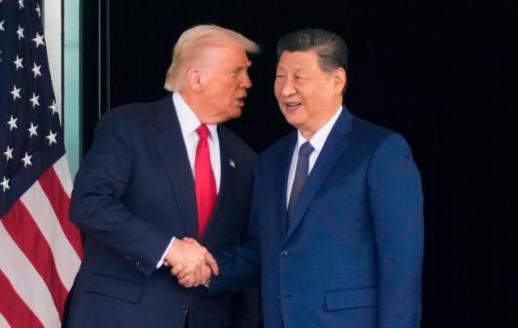 Iran war likely to sideline North Korea at Trump-Xi summit of reduced ambitions SEOUL, May 13 (AJP) - North Korea is expected to take a back seat at this week’s summit between U.S. President Donald Trump and Chinese President Xi Jinping as the Iran war, disruption in the Strait of Hormuz and intensifying superpower rivalry overshadow Pyongyang in what increasingly appears to be a crisis-management meeting rather than a breakthrough summit. Iran looms large over the two superpowers even as both sides seek to avoid openly framing the summit around the conflict. Broader issues including trade tensions, Taiwan, rare earths, semiconductors and energy security are expected to dominate the two-day talks, leaving limited room for North Korea to emerge as a central agenda item. Trump departed for China aboard Air Force One on Tuesday, leaving Joint Base Andrews in Maryland at 2:36 p.m. local time. He is expected to arrive in Beijing late Wednesday afternoon ahead of a two-day official visit beginning Thursday. Trump is making the first U.S. presidential state visit to China in nearly a decade after the trip was delayed by the Iran war. The meeting is also the first of several planned face-to-face encounters between the two leaders this year. The summit comes after Washington and Beijing lowered tensions in their trade war, but the two sides remain divided over tariffs, rare earth minerals, advanced semiconductors, electric vehicles and sanctions linked to Iranian oil shipments. Trump said last week, “We’re doing a lot of business with China.” He also said the United States was “making a lot of money” from trade with China. But the meeting arrives under the shadow of the unresolved Iran conflict that delayed Trump’s Beijing trip and sharply reduced expectations for major diplomatic breakthroughs. Instead of projecting decisive strength after the U.S. strikes on Iran, Washington now faces mounting pressure over the continued closure of the Strait of Hormuz, a critical chokepoint for global energy flows. The Strait of Hormuz, through which roughly a fifth of the world’s oil traditionally flows, remains closed with no clear pathway toward reopening. The disruption poses a direct threat to China’s economy and its Gulf relationships because Beijing relies heavily on energy imports transiting the route. U.S. Treasury Secretary Scott Bessent called on China this week to “step up with some diplomacy,” as Washington looked to Beijing for help in easing the crisis. Rather than pursuing sweeping diplomatic breakthroughs, the summit is increasingly shaping into an exercise in managing instability across trade, Taiwan, energy security and supply chains amid mounting uncertainty over the Iran war. Taiwan is also expected to be among the most sensitive agenda items. Beijing claims the self-ruled island as part of its territory and has vowed to take control of it, using force if necessary. Washington does not formally recognize Taiwan but continues to provide defensive weapons to Taipei. An $11 billion U.S. arms package for Taiwan has reportedly been stalled ahead of the summit. Beijing is also expected to press Washington to change its official wording on Taiwan from saying it “does not support” Taiwanese independence to explicitly “opposing” it. Against that backdrop, North Korea appears likely to remain a secondary issue despite historically serving as an occasional diplomatic icebreaker between Trump and Xi as the two share a degree of personal rapport with reclusive ruler Kim Jong-un. Political scientists and regional experts broadly predicted that the summit would focus overwhelmingly on Iran and economic security rather than the Korean Peninsula. Dov Levin, a professor in the Department of Politics and Public Administration at the University of Hong Kong, predicted that there will be no significant discussion on North Korea at the summit. Levin said the Iran war and maintaining the truce in the U.S.-China trade war would be the two major topics. He said Trump may ask Xi for help on Iran to get Tehran to “make more concessions to the U.S. regarding the nuclear issue” and reopen the Strait of Hormuz. “I do not expect North Korea to emerge as a key issue during the summit,” Christopher Fariss, a professor in the Department of Political Science at the University of Michigan agreed. Fariss said he expects the meeting to focus on trade and tariff issues, noting chief executives of major U.S. Big Tech and Wall Street firms are accompanying Trump to China. He added that South Korea and Taiwan could emerge as talking points within broader economic discussions. Elon Musk, Apple CEO Tim Cook and Boeing CEO Kelly Ortberg are reportedly included in Trump’s delegation to China. Greg Albo, a professor in the Department of Political Science at York University, also argued that North Korea would not be treated as a major agenda item. “The main items will be on several economic matters,” Albo said, citing as examples “the tariff war, e-vehicles and rare earths, the chip war and international monetary issues.” Iran war and the Strait of Hormuz instead would be treated as important agenda items. He added that “the Gulf states bending away from the U.S. adds to the east-east trade linkages between the GCC and China.” James Morrow, a professor of world politics at the University of Michigan, said other issues are likely to overshadow North Korea during the visit. He pointed first to U.S.-China trade and broader global trade tensions, followed by Taiwan, which he said Xi is expected to raise, and the U.S.-Israel war against Iran. Compared with those issues, Morrow said North Korea appears less urgent in Washington, noting that Kim Jong-un has not pushed the country back onto the international agenda as he did in 2017, when Pyongyang conducted a series of missile and nuclear demonstrations. While South Koreans may view the situation differently, Morrow said North Korea’s tests this year are not seen as a central concern in the United States. Watchers in South Korea are in general agreement. “I expect that North Korean issues will not be addressed, as this U.S.-China summit is focused on economic security,” said Rep. Kim Young-bae of the Democratic Party of Korea, vice chair of the National Assembly’s Foreign Affairs and Unification Committee. “I think North Korean issues may be addressed sometime next year after the Iran issue is settled following the U.S. midterm elections in November,” Kim added. Rep. Yoon Hu-duk of the Democratic Party of Korea, also a member of the Foreign Affairs and Unification Committee, similarly predicted that North Korean issues would not be addressed at the summit. “Ahead of last year's U.S.-China summit in Busan, President Trump continued to send love calls to Kim Jong-un, raising the possibility of a North Korea-U.S. summit, but currently President Trump is not sending any love calls to Kim Jong-un at all,” Yoon said. “North Korean issues appear to be outside President Trump's current area of interest,” he added. “The Iran issue and economic issues such as rare earths will make up most of the discussions, and North Korean issues may be addressed formally but will not become a major agenda item,” said Rep. Kim Ki-woong of the People Power Party, a former vice unification minister. Kim said that for Trump, North Korean issues are not urgent and remain merely a diplomatic card that could be used later as a political achievement before the U.S. midterm elections. He added that with Trump currently needing Xi’s cooperation because of the Iran war, there is little reason for Washington to specifically press Beijing on North Korea. “There are many other issues, and North Korea is not responding to the United States, so the possibility of a North Korea-U.S. summit is slim,” said Rep. Kim Joon-hyung of the minor Rebuilding Korea Party and former chancellor of the Korea National Diplomatic Academy. “However, as six meetings are scheduled between President Trump and Chinese President Xi Jinping, I expect the U.S. side will bring up a discussion on North Korea at least once,” Kim added. Dong Wang, a professor at the School of International Studies at Peking University, maintained that the two leaders would still treat North Korea as an important agenda item. He said regional security in Northeast Asia is a “critical matter for peace and stability,” and therefore the two leaders will address it as a major issue. 2026-05-13 11:40:53
 -
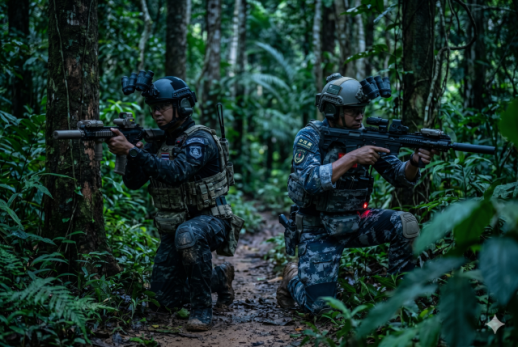 ASIA INSIGHT: Bangkok's survival in socialist ring In the sweltering heat of the Indochinese Peninsula, Bangkok is performing a masterclass in geopolitical hedging that the West—and its neighbors—ignore at their peril. The thick, humid silence of the Kanchanaburi jungle is about to be broken by a sound that remains unfamiliar to many in the West. It is not the roar of an American-made turbine or the familiar cadence of English-language commands that have echoed through these valleys since the early years of the Reagan administration. Instead, as the final weeks of May 2026 approach, the canopy will vibrate with the hum of Chinese-manufactured tactical drones and the rhythmic marching of the People’s Liberation Army. These are the opening movements of Assault 2026, a joint special forces exercise that, despite its relatively small scale, represents a tectonic shift in the strategic landscape of Southeast Asia. To the casual observer, this looks like a kingdom in the midst of a messy divorce from Washington. To the structural skeptic, it is something far more ancient and calculated. Thailand is a capitalist island navigating a socialist sea. To its east and north lie Laos and Vietnam, Marxist-Leninist states that have spent a century balancing ideological purity with the harsh realities of global trade. To the west, Myanmar remains trapped in the grip of a military junta that has long flirted with isolationist socialist doctrines and now relies on authoritarian gravity to survive a brutal civil war. Even Cambodia, though nominally a monarchy, functions as a one-party state deeply tethered to Chinese patronage. For Bangkok, the pursuit of a partnership with Beijing is not a rejection of democratic ideals—it is a survival strategy forced by the sheer, unyielding geography of its neighborhood. The structural reality is that Thailand cannot afford the luxury of picking a side in a world that increasingly demands binary loyalties. This is a nation that currently ranks as the 24th strongest military power in the world and the 10th most powerful in Asia. It is a formidable regional anchor with a professionalized officer corps and an arsenal that reflects its dual identity. By hosting the United States-led Cobra Gold exercises in the spring and the Chinese-led Assault drills in the summer, Bangkok is performing a masterclass in what scholars call "Bamboo Diplomacy." Like the bamboo, Thailand aims to bend with the prevailing winds of power without ever being uprooted by them. The evolution of these military marriages tells the story of this friction. Cobra Gold, which began in 1982, remains the crown jewel of American presence in mainland Asia. It is a massive, multi-national spectacle involving over 30 nations and nearly 8,000 troops, designed to project a vision of a free and open Indo-Pacific through humanitarian aid and high-end interoperability. But while Cobra Gold is about the optics of an alliance, the drills with Beijing are about the mechanics of intimacy. Falcon Strike, the air force drills that initiated in 2015, allowed Thai pilots to train alongside Chinese fighter jets, providing the Royal Thai Air Force with a rare glimpse into the combat doctrine of a rising superpower. More significant, however, is the Assault series. Started in 2005 as a modest special forces exchange, it has metamorphosed into a sophisticated laboratory for modern warfare. Assault 2026, running from mid-May through the end of the month, represents a critical iteration of this partnership. It has moved far beyond the infantry-focused mobility drills of the past. Today, the focus is on non-kinetic effects—electronic warfare, the deployment of unmanned systems in dense jungle environments, and coordinated counter-terrorism operations that mirror Beijing’s own domestic security priorities. The pivot toward Chinese equipment, including the acquisition of S26T Yuan-class submarines and VT-4 main battle tanks, was a predictable reaction to Washington’s habit of using arms sales as a moral lever. When the U.S. froze assistance following the 2014 coup and later blocked the sale of F-35 fighter jets, Bangkok did not suddenly become pro-China. It simply became practical. In a neighborhood where the neighbors are permanent and the distant protector is temperamental, Thailand chose to diversify its insurance policy. The kingdom realized that the American security umbrella is often held by a hand that trembles with every election cycle, while the Chinese presence is as constant as the Mekong River. This dual-track diplomacy is often dismissed as a lack of conviction, yet the socialist ring argument provides the necessary context that Western analysts often miss. Thailand’s borders are a tapestry of one-party regimes and authoritarian strongmen. China is the primary architect of the infrastructure that now defines the Indochinese Peninsula. From the high-speed rail lines snaking through Laos to the deep-water ports in Cambodia, the regional economy is increasingly synchronized with Beijing’s rhythm. For Bangkok to ignore Chinese military overtures would be to invite isolation within its own backyard. The kingdom is not drifting toward China out of ideological affinity; it is doing so because the alternative is a lonely existence on a very crowded peninsula. There is, of course, a significant risk to this strategy. In an era where military technology is increasingly defined by data links and integrated battle networks, it is becoming nearly impossible to be a dual-use ally. The Pentagon is understandably wary of sharing sensitive electronic intelligence with a military that hosts Chinese electronic warfare units just months later. There is a growing fear in Washington that Thailand is becoming a potential security leak—a Major Non-NATO Ally that may accidentally share the keys to the kingdom with its neighbors. The United States is beginning to treat its oldest Asian ally as a potential security leak, a fear that only accelerates Bangkok’s pivot toward Chinese hardware that does not come with lectures on democratic backsliding. The kingdom is effectively attempting to defy the laws of geopolitical gravity. By embedding itself within the security apparatus of both superpowers, it hopes to become too integrated to be abandoned by either. But as the technological divide between the East and West becomes an unbridgeable chasm, the middle ground is disappearing. Thailand may soon find that the bamboo which bends too far in both directions eventually loses its ability to stand at all. As the Assault 2026 drills conclude this May, the world will likely see more images of Thai and Chinese soldiers sharing rations and tactical data. These images will cause a predictable stir in the halls of Congress, where analysts will fret over the loss of a traditional ally. But to see this as a loss is to misunderstand the nature of Thai sovereignty. The kingdom is not drifting; it is balancing. It is maintaining a close friendship with the iconic capitalist power across the Pacific while building a necessary partnership with the socialist giant next door. In a world of friend-shoring and integrated battle networks, you cannot easily plug a Chinese data link into an American command structure. Thailand’s attempt to remain everyone’s partner may eventually leave it as the ally that no one fully trusts—a lonely position for a nation that has spent centuries avoiding exactly that. The true measure of Thailand’s success will not be found in which drill is larger, but in which side trusts them less. For a nation surrounded by the ghosts of socialist revolutions and the pressures of modern empire, being slightly untrusted by everyone is often the only way to ensure they are beholden to no one. The jungle does not care about the free world or socialist fraternity—it only cares about what survives the rainy season. 2026-05-13 11:04:26
 -
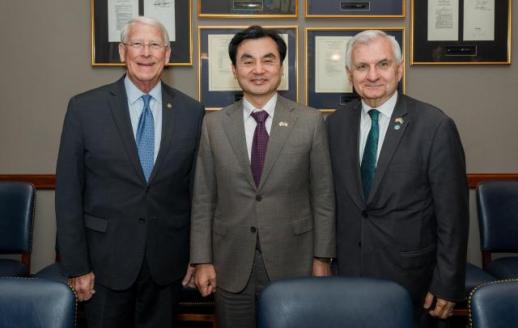 Defense minister seeks US support for Korea's nuclear-powered submarine plan SEOUL, May 13 (AJP) - Defense Minister Ahn Gyu-back has asked senior U.S. Navy and congressional officials to support South Korea’s push to acquire nuclear-powered submarines, the Ministry of National Defense said Wednesday. Ahn, who is visiting the U.S. for the first time since taking office, met with Hung Cao, acting secretary of the U.S. Navy, in Washington on Tuesday morning to discuss key alliance issues, according to the ministry. During the meeting, Ahn stressed that South Korea is an ideal partner for shipbuilding cooperation with the U.S., citing its advanced shipbuilding capabilities and the enactment of a special law providing a legal basis for investment in the U.S. He also said South Korea’s acquisition of nuclear-powered submarines would contribute to shared security interests between Seoul and Washington and mark an important milestone in upgrading the bilateral alliance. Ahn asked for active support from the U.S. Navy Department, the ministry said. The two sides agreed to continue close cooperation, the ministry said. The leaders of South Korea and the U.S. agreed in a joint fact sheet last year to cooperate on South Korea’s construction of nuclear-powered submarines as part of Seoul’s broader $350 billion investment package for the U.S., but follow-up negotiations have made little progress. Ahn also met with key U.S. lawmakers on Monday and Tuesday to discuss alliance issues, including the transfer of wartime operational control, or OPCON, from Washington to Seoul. They included Senate Armed Services Committee Chairman Roger Wicker, ranking member Jack Reed and Sen. Rick Scott, chairman of the Senate Armed Services Subcommittee on Seapower. Ahn thanked Congress for its longstanding support for the alliance and asked for bipartisan cooperation to help develop the alliance in a future-oriented and mutually beneficial way. Ahn also visited Arlington National Cemetery on Monday and the Korean War Veterans Memorial on Tuesday to lay wreaths. 2026-05-13 10:50:55