
Journalist

Lee Hugh
-
 Climate Ministry Approves 12 Circular Economy Sandbox Projects, Including Plastic Pyrolysis The Ministry of Climate, Energy and Environment said Tuesday it approved regulatory exemptions, or sandbox status, for 12 projects tied to circular-economy technologies and services. The ministry said the move is expected to significantly overhaul standards for recognizing recyclable resources, making chemical recycling such as pyrolysis easier to carry out. The ministry said it held a Circular Economy New Technology and Service Review Committee meeting on April 30 at Seoul Square and conducted the reviews there. The circular-economy regulatory sandbox, introduced in January 2024, allows companies to test new technologies and services within limited time, locations and scale; if safety and effectiveness are proven, related regulations can be improved or supplemented. The latest review focused largely on expanding chemical recycling of waste plastics through pyrolysis and reducing packaging waste, as part of a shift away from plastics. In South Korea, waste-plastic recycling currently consists of 58% thermal recycling and 41% material recycling, while chemical recycling through pyrolysis accounts for just 1%, the ministry said. Under the plan, waste-plastic projects will receive exemptions from waste-related regulations during the demonstration period. Based on the results, the ministry said it will revise standards for recognizing circular resources so that chemical recycling such as pyrolysis can be more readily used. It said most waste plastics generated at worksites are now sent to thermal recycling because collection systems are inadequate and treatment costs are an issue. Regulatory exemptions were also granted for a project to test whether solid fuel products can be used as pyrolysis feedstock. Solid fuel products made from combustible waste are currently limited to use in power generation facilities or industrial boilers. During the test period, the fuel will be fed into pyrolysis facilities to verify the volume and composition of pyrolysis oil produced, and the ministry said it will consider revising related rules. The ministry also said it will adjust regulations to test recycling options for pyrolysis residue. Because the residue has lacked a separate classification number, it has been disposed of in landfills. The ministry said it plans to allow various recycling uses, including as a soil conditioner and solid fuel, and to create new waste classification numbers and recycling categories. Other projects granted sandbox status include reducing packaging waste by improving labeling methods for household chemical products and producing leather and cosmetics materials using plant-based residues. Kim Go-eung, director general of the ministry's Resource Circulation Bureau, said the ministry will provide broad support to promote high-quality circular use of plastics and reduce plastic waste. He said the ministry will work with industry to improve the on-site applicability of recycling technologies so the circular economy can spread across society.* This article has been translated by AI. 2026-05-05 12:06:03
 -
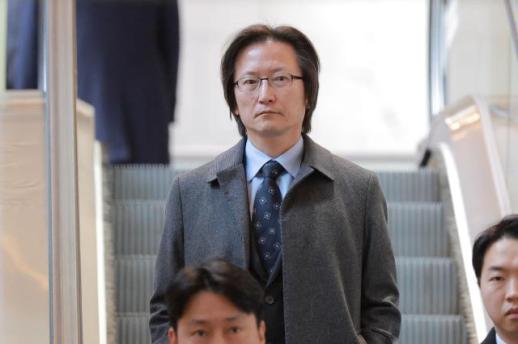 Korea Fair Trade chief to attend ICN annual meeting in Manila to discuss global cooperation South Korea’s Fair Trade Commission said Tuesday that Chairman Joo Byung-ki will attend the 25th annual conference of the International Competition Network, to be held in Manila from May 6-8. Hosted by the Philippine Competition Commission, the meeting is expected to focus on strategic planning and priority-setting; responses to algorithm-driven collusion in the digital environment; merger policy amid changing economic conditions; balancing effectiveness and predictability in enforcement against unilateral conduct; and new approaches to competition advocacy. The ICN, founded in 2001, is a forum of 148 competition authorities, including the U.S. Federal Trade Commission and Justice Department and the European Commission’s Directorate-General for Competition. The FTC is a founding member and serves on the ICN steering group. The agency sent a bureau director last year, but Joo will attend in person this year. On May 6, Joo is scheduled to join a plenary session on strategic planning and priority-setting to build agile, future-oriented competition authorities. The FTC said he plans to exchange views on challenges and responses with the heads of competition agencies from Greece, Hungary, the United Kingdom, Kenya and Poland. The FTC said Joo will present South Korea’s efforts to strengthen the effectiveness of enforcement tools, including reforms to its administrative fine system and easing criminal penalties. He also plans to highlight steps to expand judicial remedies, including introducing a Korean-style evidence-discovery system and widening the scope of injunctions available through consumer class actions and consumer group lawsuits. The FTC said Joo will also pursue bilateral cooperation during the conference, holding high-level talks with counterparts from the Australian Competition and Consumer Commission, Italy’s competition authority and the European Commission’s competition directorate. It said he will sign a memorandum of understanding with Philippine authorities to strengthen cooperation on competition-law enforcement and will meet with South Korean businesspeople in the Philippines to hear their concerns. “This visit will be a meaningful opportunity to seek response directions with the heads of competition authorities worldwide at a time when the competitive landscape is being rapidly reshaped by digital technology such as artificial intelligence,” Joo said. 2026-05-05 12:05:05
 -
 Korea Fair Trade Commission Fines SL 38 Million Won for Late Subcontract Documents A South Korean auto-parts maker has been sanctioned for issuing required subcontract documents late to its subcontractors. The Korea Fair Trade Commission said May 5 it will fine SL 38 million won for delaying written documents when outsourcing mold manufacturing to subcontractors. SL is a first-tier supplier to Hyundai Motor Co., providing automotive lamps and electronic parts. According to the commission, SL outsourced 328 cases of mold production for auto-parts manufacturing from May 2020 to May 2023, but issued subcontract-related documents only after work had begun, with delays ranging from at least eight days to as long as 605 days. The commission also said SL failed to pay 728,894,000 won in late-payment interest and promissory note discount fees across 342 contracts, even though more than 60 days had passed since the delivery date. The unpaid amounts included 509,651,000 won in late interest and 219,243,000 won in note discount fees. For violating its obligation to issue written documents, the commission ordered SL to prevent a recurrence and imposed the 38 million won fine. It issued a warning over the unpaid interest and discount fees, citing SL’s voluntary corrective action. A commission official said it will continue to address unfair trade practices that harm subcontractors’ rights and will impose strict penalties when violations are found to help establish fair subcontracting practices.* This article has been translated by AI. 2026-05-05 12:04:15
 -
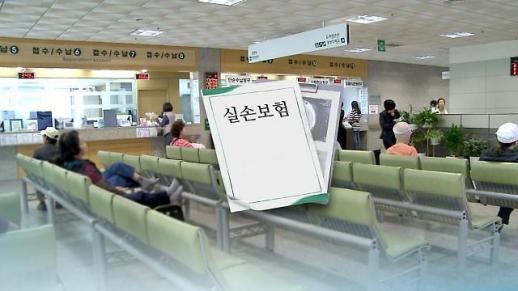 South Korea to Launch 5th-Generation Indemnity Health Plan With Premiums About 30% Lower A fifth-generation indemnity health insurance plan with lower premiums will go on sale starting on the 6th. The key change is reduced coverage for some noncovered services, including manual therapy, aimed at easing a cycle in which heavy use of noncovered care drives up loss ratios and, in turn, premiums. Financial authorities said on the 5th that 16 life and nonlife insurers will sell the fifth-generation plan starting on the 6th. Premiums are expected to be about 30% lower than fourth-generation plans and at least 50% lower than first- and second-generation plans. The overhaul comes as indemnity insurance faces chronic losses. With broad coverage of noncovered treatment, the loss ratio for first- through fourth-generation plans has reached 119.3%, a factor behind premium hikes. Authorities said they see high risk of overuse in certain nonsevere noncovered items, including manual therapy, extracorporeal shock wave therapy and noncovered injections, and adjusted the benefit structure accordingly. Under the fifth-generation plan, noncovered care is split into severe and nonsevere categories. Coverage levels are maintained for severe noncovered treatment for cancer, cerebrovascular and heart disease, and rare and intractable diseases. A new annual out-of-pocket cap of 5 million won applies to inpatient treatment costs at advanced general hospitals and general hospitals. Coverage for nonsevere noncovered care is reduced. The reimbursement limit is cut to 10 million won from 50 million won, and the coinsurance rate rises to 50% from 30%. Some items, including musculoskeletal physical therapy, extracorporeal shock wave therapy and noncovered injections, are excluded from coverage. Covered benefits are also linked to the national health insurance system. For covered inpatient care, the coinsurance rate remains 20%, but for covered outpatient care, the coinsurance rate will be set in line with the national health insurance patient share. Covered medical costs related to pregnancy and childbirth and developmental disabilities, which were not covered under existing indemnity plans, are newly included. Authorities also prepared options for early-generation policyholders facing high premiums. The measures apply to first- and second-generation policyholders whose contracts, before March 2013, did not require revised terms or re-enrollment. Starting in November, eligible first- and second-generation policyholders can choose either an optional discount rider or a contract-conversion discount program. The optional discount rider keeps the existing contract but lowers premiums by excluding certain benefits, including musculoskeletal physical therapy, extracorporeal shock wave therapy, noncovered injections, and some noncovered MRI and MRA coverage. The contract-conversion discount program offers a 50% discount on fifth-generation premiums for three years for early-generation policyholders who switch. In principle, conversion is possible without separate screening, and policyholders can return to the previous product if they have not received an insurance payout within six months after switching. Authorities said consumers should check benefit changes that come with lower premiums. Switching to the fifth-generation plan or choosing the optional discount rider may be an alternative for people who use medical services less or feel burdened by premiums. Those who frequently use nonsevere noncovered treatments such as manual therapy or noncovered injections may be better off keeping their current coverage.* This article has been translated by AI. 2026-05-05 12:03:16
 -
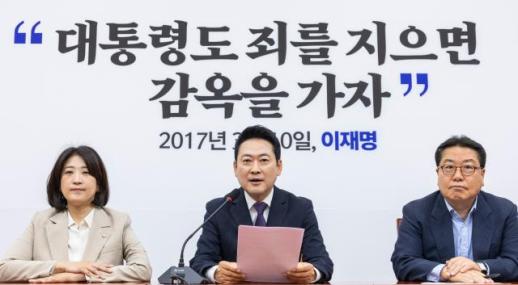 Jang Dong-hyeok Slams Special Prosecutor Plan as Bid to Drop Lee Jae-myung Indictments Jang Dong-hyeok, leader of the People Power Party, said May 5 that President Lee Jae-myung was writing a “dictatorship guidebook” that would be remembered in world history. Speaking at a news conference at the National Assembly, Jang said Lee had not only adopted “every method” used by dictators to control the judiciary, but was now seeking to appoint a special prosecutor to “erase” alleged crimes. Jang also criticized Lee’s call for public input and deliberation on a special prosecutor bill aimed at uncovering alleged “fabricated investigations and indictments” under the Yoon Suk Yeol administration. Jang said it amounted to trying to cancel indictments while merely delaying the timing, adding, “Even after the local elections, something unconstitutional does not become constitutional.” A bill introduced by the Democratic Party on April 30 would allow a special prosecutor to withdraw indictments in related cases. The People Power Party and the minor Reform Party, among other opposition forces, have strongly opposed the bill, saying it infringes on judicial independence and threatens the separation of powers. Jang said those involved would face heavier punishment if “illegal and unconstitutional” indictment withdrawals were later added. He urged voters to cast their ballots properly in the local elections, calling it the way to stop an “Lee Jae-myung bomb.” With the June 3 local elections and National Assembly by-elections approaching, Jang also stepped up election-related criticism. He cited a joint police-prosecutor task force’s decision not to prosecute Democratic Party Busan mayoral candidate Jeon Jae-su over allegations of receiving money from the Unification Church; police decisions not to forward a case involving Democratic Party South Chungcheong gubernatorial candidate Park Soo-hyun and allegations tied to the UN-Habitat Korea Committee; and prosecutors’ decision to clear suspects in the “money envelope” case involving the Democratic Party’s national convention. “Police and prosecutors have become a pardon mill for the Democratic Party,” Jang said. Addressing claims that his party’s approval ratings were low, Jang said local elections depend more on regional support and trends than national numbers, and said it was hard to accept conclusions based on a single phrase such as “low approval ratings.” Asked about nominating Chung Jin-suk, a former presidential chief of staff, in a by-election or forming an election alliance with other opposition forces, Jang gave a general response, saying he would support his party’s candidates so they can win. 2026-05-05 12:01:12
 -
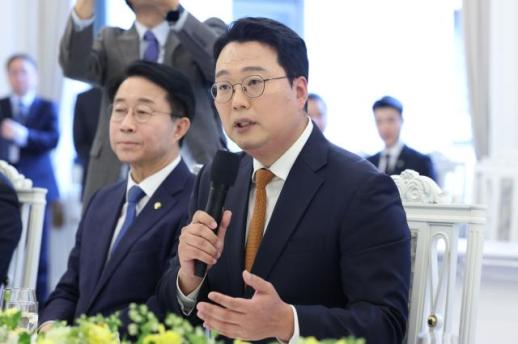 Reform Party floor leader proposes bill to exempt children's play noise from regulation Cheon Ha-ram, floor leader of the Reform Party, said Monday he has introduced amendments to the Noise and Vibration Control Act and the Minor Offenses Act that would, in principle, exclude sounds generated during child care, education and play from being treated as regulated noise. Cheon said the bills would exempt sounds from activities at day care centers, kindergartens, schools and children’s playgrounds from the scope of noise under the current Noise and Vibration Control Act and from “nearby disturbance” provisions under the Minor Offenses Act. “Children’s voices are not noise,” Cheon said. “Schools should not repeatedly end up closing their playgrounds because they feel pressured by complaints and reports.” He said lawmakers from five parties agreed to pursue legal safeguards so children can “run and laugh freely” on Children’s Day. Cheon previously released analysis saying there were 350 reports to the 112 emergency line related to school sports days in 2025, and that 345 of those led to police being dispatched. He also raised the issue during a National Assembly question-and-answer session last month on education, social and cultural affairs, pressing Prime Minister Kim Min-seok, Interior and Safety Minister Yoon Ho-jung and Education Minister Choi Gyo-jin about noise complaints at schools and the need for outdoor activities for children and teenagers. At the time, Cheon said a small number of people who file excessive complaints were depriving children of the right to play. He questioned whether it was appropriate for police patrol cars to be sent to schools when noise-related reports are filed during sports days.* This article has been translated by AI. 2026-05-05 12:00:16
 -
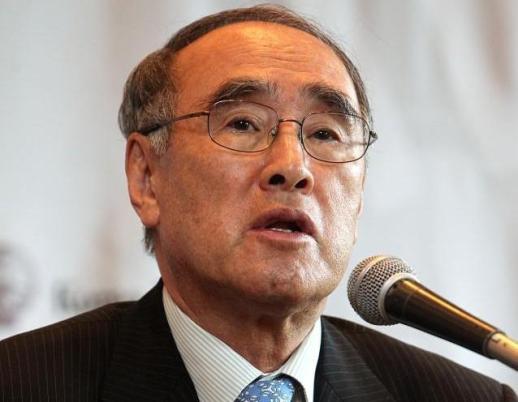 Former South Korean prime minister Lee Hong-koo dies at 92 SEOUL, May 05 (AJP) - Former South Korean Prime Minister Lee Hong-koo, a prominent scholar-statesman who led the government during the mid-1990s and managed critical diplomatic ties with the United States, died on May 5. He was 92. Lee served as a rare bridge between academia and high-level politics, holding senior positions under both conservative and liberal administrations. His career spanned several pivotal moments in modern South Korean history, including the 1997~1998 Asian financial crisis. Born in 1934, Lee graduated from the Seoul National University College of Law before pursuing further studies in the United States. He earned a doctorate in political science from Yale University and returned to South Korea in 1968 to serve as a professor at his alma mater. His transition to public service began in 1988 when he was appointed as the Minister of National Unification. He later served as a special advisor to the president and as the ambassador to the United Kingdom before being named the 28th prime minister in 1994 under President Kim Young-sam. In 1998, under the liberal Kim Dae-jung administration, Lee took the post of ambassador to the United States. He is credited with stabilizing the bilateral relationship during the height of the economic turmoil commonly referred to in South Korea as the IMF crisis. After returning from Washington in 2000, Lee joined the JoongAng Ilbo as an advisor. He remained an active public voice through a regular column where he provided insights on inter-Korean relations and domestic political affairs. Lee is survived by his wife, Park Han-ok, his son Lee Hyun-woo, and his daughters Lee So-young and Lee Min-young. The family includes daughter-in-law Hwang Ji-young and son-in-law Lee Kang-ho. A funeral service will be held at the Seoul Asan Hospital until May 8, followed by burial at the Cheonan Memorial Park. 2026-05-05 11:39:37
 -
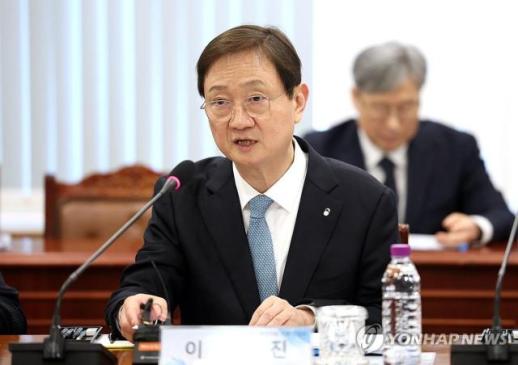 Korean Financial Groups Warn Inclusive Finance Could Strain Asset Quality Finance always speaks two languages: growth and risk. It helps companies expand, creates jobs and supports the broader economy. But it also measures and manages the losses that can come with that expansion. When those forces stay in balance, finance underpins society. When one side dominates, finance can become the starting point of a crisis. Recent signals from South Korea’s major financial holding companies to overseas investors suggest that balance is under pressure. KB Financial Group, Shinhan Financial Group and Woori Financial Group have each said that expanding “productive finance” and inclusive finance could weigh on future soundness. They warned that a push to grow corporate lending can lead to bad loans, and that support for vulnerable borrowers carries a higher risk of delinquency. The fact that the firms formally disclosed such concerns to the U.S. Securities and Exchange Commission is significant, indicating internal worries have become an external message. On its face, the message can sound odd. Finance is expected to support businesses and help people in difficulty. Why describe those roles as risks? The answer is that finance is not simply lending money; it is pricing risk. Lending means taking on the possibility of loss, and finance is sustainable only when returns match that risk. When that principle weakens, finance turns into a policy tool and ultimately erodes its own foundation. That is where inclusive finance creates tension. Its purpose is to provide funding to people who struggle to borrow under normal market rules. If risk is fully reflected in pricing, those borrowers face higher interest rates or exclusion from credit. Inclusive finance therefore adjusts market pricing by design, putting the principle of risk-based pricing in direct conflict with the policy goal of lowering costs. Resolving that conflict does not require abandoning principles, but redesigning the system. The core idea is to share the burden rather than pretend risk disappears. Parts the market cannot absorb can be offset externally, while financial institutions manage risk within reasonable limits. Examples include government interest subsidies or guarantee agencies absorbing part of the losses. In that sense, the central question is not whether to lower prices, but who pays the difference. Debate often stops at the idea of “spreading losses,” but that raises another question: Who ultimately bears them? If the government guarantees loans and injects fiscal resources, the cost eventually falls on taxpayers. If it is problematic to impose the burden on banks alone, it is also fair to ask whether shifting it to society as a whole is justified. The article argues the question cannot be avoided, even if the answer is not simple. Financial-crisis history shows that costs paid early can be far smaller than costs paid after a collapse. The U.S. financial crisis and Europe’s fiscal crisis followed a similar pattern: risks were left unchecked at first, then much larger public funds were deployed after problems erupted. The choice, it says, is whether to pay manageable costs now or face unmanageable costs later. What matters, then, is not whether costs are shared, but the conditions for doing so. It is not justified for taxpayers to absorb all risks. But in areas tied to overall stability, some shared burden may be unavoidable. That requires clear standards: who qualifies for support, how large programs should be, and how results will be evaluated. Without such rules, dispersing losses becomes a way to evade responsibility. Overseas cases illustrate the point. The 2008 global financial crisis is often labeled the “subprime mortgage” crisis. Under a policy goal of expanding homeownership among low-income households, lending increased, and those loans were packaged into complex financial products that spread worldwide. The article notes the collapse cannot be explained by a single cause; policy-driven credit expansion and excessive risk-taking by financial institutions combined to bring down the system. It was neither only a policy failure nor only a market failure. Europe, it says, left a similar lesson. Southern European countries expanded credit to boost growth and maintain social stability, but finance not linked to productivity eventually turned into bad debt. The result was fiscal stress and instability in the financial system. Finance can support policy, the article argues, but it cannot replace policy itself. South Korea has not reached that stage. Delinquency rates are rising but remain within a manageable range, and the financial system is stable. Still, the direction is clear, the article says: the pace of policy finance is beginning to outstrip the financial sector’s capacity. The task now is not simply to slow down, but to fix the structure. First, the roles of policy and finance should be separated. The government can set direction and goals, but it should not unilaterally shift costs onto financial institutions. Policy costs should be addressed with policy tools, including fiscal spending, guarantees and tax measures, in a structure that shares burdens. Second, financial institutions should keep to their principles. They can cooperate with policy, but should not loosen risk-management standards. Lowering standards for short-term results, the article warns, can produce larger long-term costs. Finance’s most important asset is trust, rooted in soundness. Third, transparency should be strengthened. The disclosures to overseas investors were more than routine filings, the article says; they were a warning about the current structure. Risks detected internally will eventually become visible externally, making management more important than concealment. Fourth, the pace should be managed. Finance is not a sprint. Rapid expansion is easy, but the aftereffects can last. The article calls for a step-by-step approach that checks policy results as programs grow. The article concludes that finance does not run on good intentions alone. Intent matters, but without a supporting structure, good intentions can quickly turn into bad loans. Inclusive finance is necessary, it says, but to be sustainable it needs clear rules on pace, costs and responsibility. The signal from the financial sector is straightforward: the direction may be right, but the design is lacking. If policymakers and markets do not absorb that warning together, the article says, South Korea could end up repeating a path other countries have already taken.* This article has been translated by AI. 2026-05-05 11:18:21
 -
 Gunfire erupts near White House during Trump event, second shooting in 9 days U.S. Secret Service agents exchanged gunfire with an armed suspect near the White House complex on May 4 (local time), raising fresh security concerns around President Donald Trump as Washington has seen a second shooting in nine days. According to The Associated Press and other outlets, Secret Service Deputy Director Matt Quinn said plainclothes agents spotted the man around 3:30 p.m. near the White House complex and saw what appeared to be a firearm on his body. Quinn said the agents followed the man briefly and relayed the information to uniformed officers. When uniformed officers approached, the unidentified man tried to flee and fired at agents, prompting them to return fire, Quinn said. The suspect was taken to a nearby hospital, and his condition was not immediately known, Quinn said. A minor wounded by gunfire was also taken to a hospital and was not in life-threatening condition. It was not confirmed whether the minor was hit by the suspect’s gunfire. Quinn said, “Medical personnel will determine that,” but added that investigators believe the minor was struck by the suspect’s shots. The Metropolitan Police Department will lead the investigation. The Secret Service urged the public to avoid the area as the response continued. Trump was holding an event related to small businesses at the White House at the time. After the shooting, the White House was temporarily locked down, and reporters outside were moved into the briefing room. Trump did not stop the event and continued with his schedule. The incident came after a May 25 case in which a suspect tried to force his way into the White House Correspondents’ Association dinner venue at the Washington Hilton Hotel while carrying a gun and a bladed weapon. The suspect, Cole Thomas Allen, was charged, including with using a firearm and assaulting a federal officer. In that case, one Secret Service agent avoided serious injury because the agent was wearing body armor. Quinn declined to speculate on whether the latest shooting was aimed at Trump. “I won’t speculate,” he said, adding that it is not yet known whether the president was the target but that it would be determined later. Vice President JD Vance’s motorcade was confirmed to have passed through the area shortly before the shooting, but there were no indications the suspect was targeting Vance. * This article has been translated by AI. 2026-05-05 11:15:04
 -
 Coupang to Donate Up to 180,000 New Fashion Items to Vulnerable Children, Families Coupang is launching a large-scale giving campaign to support vulnerable groups, including underserved children, by donating new fashion items in proportion to what customers buy. According to the industry on the 5th, Coupang will run a promotion through the end of this month titled “One Piece of My Clothing That Becomes a Donation,” and plans to donate up to 180,000 fashion items to Good Neighbors, a global NGO specializing in children’s rights. The campaign is the company’s second relay-style giving effort this year, following a book-donation drive for children in underserved households held in March. It is designed as a “matching donation” program, linking everyday shopping directly to giving. Under the program, when customers purchase items in Coupang’s fashion category — including men’s and women’s apparel such as T-shirts, pants and dresses, as well as children’s clothing, underwear, shoes and bags — donation items are accumulated in the same quantity. To bolster transparency, real-time progress will be posted on the promotion page. Coupang said all donated items, up to 180,000, will be new products currently sold on its platform. More than 50,000 pieces are set aside for infants’ and children’s clothing, which the company said could provide practical help to low-income families where children quickly outgrow clothes. All accumulated items will be delivered through Good Neighbors to underserved children and local residents in South Korea and abroad immediately after the campaign ends. A Coupang official said the campaign was planned so customers can “naturally take part in giving through everyday shopping,” adding that the company will continue expanding social-contribution efforts that provide “practical help” to marginalized neighbors. Coupang has also been running other initiatives for vulnerable communities. On April 7, marking Health Day, it began operating “Coupang Ondongne Care,” a health screening project that visits residents in depopulating areas with limited medical infrastructure. The program was launched with the aim of building a health safety net by minimizing underserved areas in medical services, similar to Coupang’s logistics network, the company said. Coupang plans to visit township-level areas nationwide at least once a month, including regions in Jeolla, Gyeongsang, Gangwon and Chungcheong, focusing on communities with poor access to hospitals. The company said it will continue expanding Ondongne Care by touring medically underserved areas nationwide, starting with Jangsu County and holding the next program this month in Danyang, North Chungcheong Province.* This article has been translated by AI. 2026-05-05 11:13:15