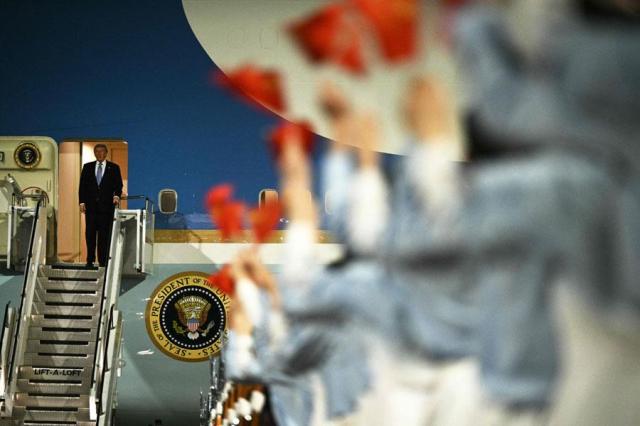
Technically, that is not unusual. First ladies are neither constitutionally required nor politically obligated to accompany presidents abroad. But presidential trips are never only about policy. They are also about symbolism, optics and public perception.
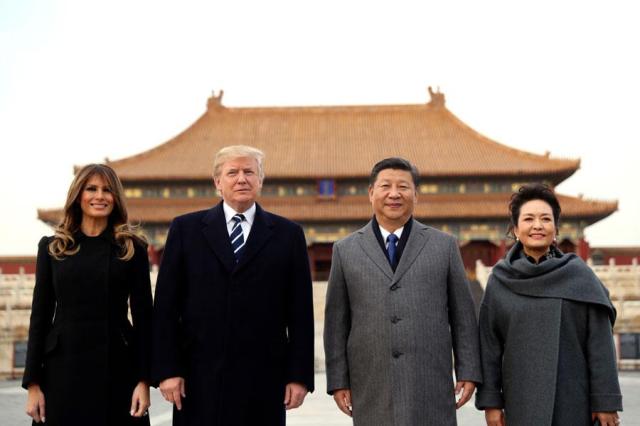
Particularly with China, even photo ops are carefully choreographed. When the Trumps visited Beijing in 2017, Melania was central to the visual choreography of the trip. Chinese state media devoted lavish attention to the couple's appearances, carefully staging scenes of ceremony, continuity and prestige. In highly managed diplomatic environments, spouses are not decorative additions. They are instruments of soft power.
This time, however, the atmosphere surrounding the visit is entirely different. More than a traditional state visit, the trip appears heavily focused on business.
Trump's large entourage includes technology executives, trade advisers, corporate leaders and economic negotiators, with Nvidia CEO Jensen Huang joining the trip at the last minute. The agenda is centered on tariffs, artificial intelligence (AI), semiconductors and economic rivalry between the world's two largest markets. The atmosphere surrounding the summit feels less like a traditional state visit and more like a high-level business negotiation.
The two-day summit starting Thursday, in fact, arrives at a moment when Trump is politically preoccupied at home and strategically constrained abroad, with the U.S. still entangled in the prolonged conflict in the Middle East that began with its joint airstrike with Israel against Iran in late February.
Tariffs remain unresolved, while AI has emerged as the defining battleground in the rivalry between the world's two largest powers. Restrictions on exports of semiconductors, rare earth minerals and soybeans, along with broader supply-chain issues, now dominate their talks, leaving long-standing concerns over North Korea's nuclear threat quietly sidelined on the agenda.
Trump's delegation reflects those priorities. CEOs and technology leaders are taking center stage, and the trip is squarely focused on "opening up" China to American business interests and easing economic friction between the two countries.
That alone may explain why Melania chose to stay home. In that sense, her absence may not be particularly mysterious at all.
Speaking from the White House last month, she dismissed the claims as false and politically motivated. But the unusual nature of the statement and its timing only revived public attention to a controversy Trump would rather leave behind, even as it had been fading from the front pages. It also raised fresh questions about why Melania had chosen to step into such a legal and political minefield at all.
Melania has long kept a certain distance from Washington politics. Unlike previous first ladies who embraced advocacy campaigns or constant public visibility, she speaks publicly less often, appears at fewer political events and carefully controls her visibility.
For years, that distance created mystery. Now, it fuels speculation amid rumors that the first couple have become increasingly isolated, though the White House would clearly prefer the Beijing summit to focus on economic issues, with its business-heavy delegation reflecting that goal.
In Beijing, Trump will spend the coming days trying to demonstrate his trademark deal-making skills and economic pragmatism at a time when geopolitical tensions and domestic political pressures continue to weigh on him.
But sometimes, the people missing from a room attract as much attention as those inside it.
Copyright ⓒ Aju Press All rights reserved.