
Journalist

Lee Hugh
-
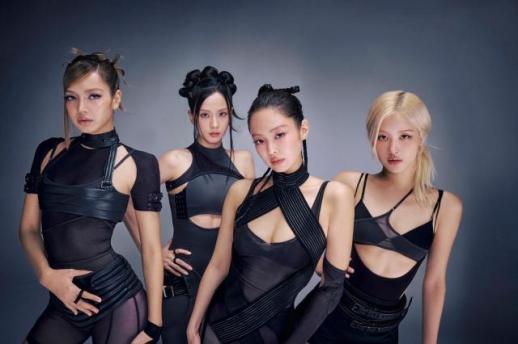 YG doubles operating profit Q1 on year on BLACKPINK comeback SEOUL, May 08 (AJP) - South Korea’s K-pop powerhouse YG Entertainment more than doubled first-quarter operating profit as revenue from BLACKPINK and rising contributions from younger artists boosted earnings, reinforcing expectations for a stronger comeback cycle this year despite weaker-than-expected net profit. According to its earnings report released Thursday, YG Entertainment posted an operating profit of 19.4 billion won ($13.2 million) in the January-March period, up 103.9 percent from a year earlier. Revenue jumped 46.9 percent to 147.1 billion won, while net profit slipped 4.6 percent to 9.8 billion won. The company’s sales exceeded market expectations, while operating profit largely matched analyst forecasts. According to local market tracker FnGuide, analysts had projected first-quarter operating profit of 19.3 billion won and revenue of around 138.1 billion won. Net profit, however, missed the consensus estimate of roughly 15.0 billion won. Compared with the previous quarter, operating profit and revenue fell 13.1 percent and 14.3 percent, respectively, reflecting fewer large-scale artist activities. Net profit, however, rose 23.9 percent from the prior quarter. YG attributed the earnings growth to expanding monetization of artist intellectual property, including merchandise and licensing revenue from younger acts such as BABYMONSTER and TREASURE, alongside continued contributions from BLACKPINK-related touring and album sales. BLACKPINK’s latest release, Deadline, sold more than 1.77 million copies in its first week, according to Hanteo Chart, underscoring the group’s enduring global commercial power. The company is expected to maintain stronger earnings momentum in the second half of the year as major artists ramp up activities and touring schedules expand globally. According to FnGuide, YG Entertainment is projected to post operating profit of 80.8 billion won and annual revenue of 590.1 billion won in 2026, surpassing its previous peak in 2023, when operating profit reached 79.5 billion won and revenue totaled 569.2 billion won. BABYMONSTER is scheduled to begin its second world tour in Seoul in June before expanding into Latin America, Oceania and Europe. TREASURE is also expected to release a new album in June and continue solo and unit activities in the second half. YG is additionally preparing to debut a new boy group in September as part of its broader push to strengthen its next-generation artist pipeline. Shares of YG Entertainment closed down 0.2 percent at 50,200 won on Friday. 2026-05-08 16:26:47
 -
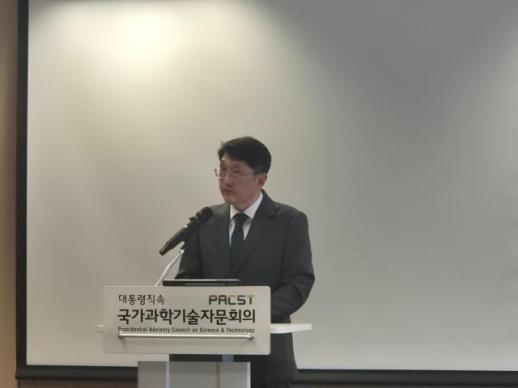 AI Can Identify Vulnerabilities in 10 Minutes, South Korea's Ministry of Science Says The Ministry of Science and ICT is examining the need for developing security-focused AI models to counter evolving AI-based cyber threats. During a briefing on May 8 in Gwanghwamun, Seoul, Choi Woo-hyuk, head of the Cybersecurity Policy Division, stated, "There was a consensus that the current information security system is insufficient to address threats based on AI models. We discussed the necessity of a dedicated AI model specialized in cybersecurity." Earlier that day, the ministry held a meeting with experts from academia and industry to discuss responses to global AI companies' cybersecurity projects. Participants included firms involved in developing independent AI foundation models, such as SK Telecom, Upstage, and Motif Technologies, as well as key AI companies, the president of the Korean Society for Information Security, and chief information security officers (CISOs) from major corporations. The ministry's position is to enhance the performance of currently available security-focused models in the short term while considering the establishment of a security response system based on independent AI models in the medium to long term. Choi noted, "There was a consensus on utilizing independent AI models to create a security-focused AI system. We are not at the stage of finalizing a plan but are in the process of discussing its necessity." He added that a new direction for the information security paradigm will be explained between late May and early June. The meeting also showcased a demonstration of AI-based penetration testing. The ministry and the Korea Internet & Security Agency (KISA) used Anthropic's Opus model to identify vulnerabilities in specific corporate services, leading to account theft and unauthorized access. Choi explained, "There was a case where AI found a way to generate a new password without knowing the existing one. We confirmed the process of AI identifying vulnerabilities and accessing services after securing accounts." According to the ministry and KISA, the test revealed a total of seven vulnerabilities. Notably, AI was able to perform what would typically take professional hackers several days in just about ten minutes. Choi remarked, "AI identified vulnerabilities that would take professional hackers days to find manually in a short time. While it is currently not at a level that general users can easily utilize, the speed of attacks could increase as professional hackers become more adept at using prompts." Meanwhile, on May 11, Deputy Minister Ryu Je-myung is scheduled to meet with representatives from Anthropic to discuss strategies for addressing AI-based cybersecurity threats. Choi stated, "The need for a response related to Mitos has been raised, prompting the government to request cooperation in advance."* This article has been translated by AI. 2026-05-08 16:23:28
 -
 Samsung Elec management, union to sit down at govt mediation SEOUL, May 08 (AJP) - Samsung Electronics and its union agreed to meet next week to iron out differences and possibly avert a full-scale strike scheduled for May 21, after the South Korean government stepped in amid fears that labor unrest could undermine a key pillar sustaining the economy and the stock market rally. The Samsung Electronics Labor Union (SELU) announced Friday it will enter a formal "post-mediation" process, with intensive negotiations scheduled for May 11 and 12. The breakthrough came after a meeting earlier Friday between union leadership and the head of the Gyeonggi Regional Employment and Labor Office. During the meeting, the government "strongly recommended" mediation and promised full support to facilitate a resolution, the union said in a statement. Despite agreeing to the talks, the union maintained its hardline stance, noting that it will continue preparations for the planned walkout. "If a satisfactory outcome is not reached, we will not hesitate to launch a general strike," SELU Chairman Choi Seung-ho said in the statement. Management welcomed the resumption of talks. When asked earlier if the company would participate in a post-mediation process should the union agree, a Samsung Electronics official indicated readiness to engage. "Reaching a settlement is naturally preferable to a strike for the company, so there would be no reason to refuse," the official said. The intervention follows increasingly pointed remarks from President Lee Jae Myung, a former factory worker who has traditionally maintained labor-friendly credentials but has recently emphasized balancing workers’ rights with economic stability. “If organized workers make excessive or unreasonable demands, they will face public criticism and ultimately harm the broader workforce,” Lee said during a meeting with senior aides on April 30. Although he did not name any company, industry observers widely interpreted the remarks as a warning directed at the Samsung union as labor tensions intensified over bonuses and compensation tied to the semiconductor boom. Labor Minister Kim Young-hoon reinforced the message during a separate meeting with regional labor officials. “The achievements of Samsung Electronics were made possible by the dedication of its workers, but we cannot deny the role of countless suppliers, government support and R&D investment,” Kim said. The government’s unusual intervention reflects the outsized importance of Samsung Electronics to the South Korean economy. Semiconductors account for roughly one-fifth of the country’s exports, while Samsung Electronics and its affiliates make up around 20 percent of the KOSPI’s total market capitalization, effectively anchoring the broader market rally. The SELU, now the company’s largest labor organization with more than 40,000 members, has announced plans for an 18-day general strike beginning May 21 after wage negotiations collapsed. The union is demanding that 15 percent of Samsung Electronics’ operating profit be allocated to employee bonuses, arguing workers have not received a fair share of profits generated during the AI-driven semiconductor supercycle. Management has proposed a 10 percent bonus pool alongside additional one-time incentives. The dispute comes as Samsung Electronics is racing to regain ground in high-bandwidth memory (HBM) chips used in artificial intelligence servers, an area where rival SK hynix has recently outpaced Samsung through early supply deals with AI chip leader NVIDIA. Analysts warn that even limited disruptions inside semiconductor fabrication lines can trigger expensive yield losses because chip plants operate around the clock and require uninterrupted ultra-precise processing conditions. Should disruptions escalate into a full production halt, estimated daily losses could climb to as much as 1 trillion won ($730 million), according to industry estimates. Any deterioration in yields or wafer damage would be especially costly as Samsung pushes to expand next-generation HBM shipments amid exploding global AI demand. The confrontation is also exposing widening divisions inside Samsung itself. Employees in consumer electronics and device divisions have increasingly voiced resentment over compensation disparities favoring semiconductor workers, mirroring broader concerns over South Korea’s growing economic dependence on a narrow group of AI-linked exporters. The labor standoff arrives at a politically delicate moment for the Lee administration, which is trying to preserve both labor support and industrial competitiveness as geopolitical instability and technology fragmentation intensify pressure on the export-driven economy. 2026-05-08 16:21:32
 -
 Blue House Expresses Regret Over Failed Constitutional Amendment Due to Opposition The Blue House expressed regret on May 8 that a proposed constitutional amendment was not presented at the National Assembly due to opposition from lawmakers of the People Power Party. It urged continued discussions on the amendment in the upcoming second half of the 22nd National Assembly. Chief Spokesperson Kang Yoo-jung stated in a written briefing that the amendment aimed to incorporate the spirit of the Busan Democratic Uprising and the May 18 Democratic Movement into the preamble of the constitution, as well as to clarify the government's responsibility for regional balanced development and enhance the National Assembly's oversight of martial law. He noted that reflecting the lessons of the December 3 illegal martial law was a national demand, and there was little disagreement between the ruling and opposition parties on this matter. Kang emphasized, "The public will find it hard to understand why even the minimal constitutional amendment necessary to safeguard the nation and democracy was opposed." He further stated, "The discussions on constitutional amendments promised to the public must not be halted. We request that the National Assembly approach these discussions with a greater sense of responsibility in the second half and uphold the commitments made to the people." Kang added, "Constitutional amendment is not merely a matter of changing systems. It should serve as a new starting point for restoring cooperative politics, national unity, and social harmony beyond extreme confrontation and political strife." He assured that the Blue House would continue to pursue discussions on constitutional amendments as a pressing issue alongside the public.* This article has been translated by AI. 2026-05-08 16:21:25
 -
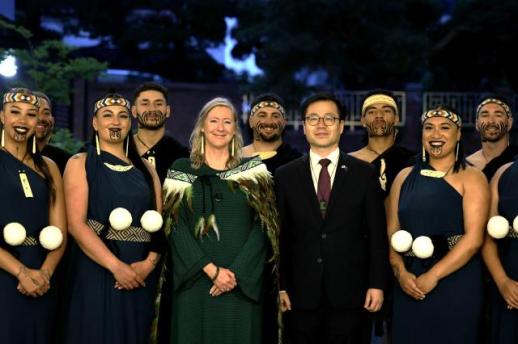 New Zealand ambassador hosts Māori culture night in Seoul SEOUL, May 08 (AJP) - New Zealand Ambassador Dawn Bennet hosted an evening of traditional Māori performance at her Seoul residence on Thursday, emphasizing the deep-seated societal parallels between New Zealand and South Korea. The event brought together influential guests to witness indigenous cultural displays, signaling a continued commitment to soft-power diplomacy between the two nations. The two nations share a history that predates their modern economic ties, beginning with the Korean War when New Zealand deployed more than 6,000 personnel to the peninsula, according to the New Zealand Ministry for Culture and Heritage. Today, that relationship is defined by a comprehensive free trade agreement and a shared vision for the Indo-Pacific region. The guest list for New Zealand Culture Night 2026 included approximately 100 South Korean lawmakers, diplomats, scholars, and business leaders. The evening featured a performance by the Hiwa Crew, a group previously recognized for their appearance at the National Museum of South Korea during the Mana Moana exhibition. The performance focused on kapa haka, a Māori performing art that combines vocal music, rhythmic movement, and storytelling. Bennet explained that the art form is essential for passing on indigenous history and language to future generations. "Kapa haka is a treasured Māori performing art that brings together song, chant, movement, expression, and storytelling," Bennet said. "It is a way of passing on history, values, language, and identity, from one generation to the next." During her address, the ambassador identified direct parallels between Māori and South Korean social foundations, specifically the emphasis on lineage and respect for elders. She noted that both cultures value the concept of individuals being shaped by their broader communities. "There is much that connects Māori and Korean cultures," Bennet said. "For example, ancestry, which we call whakapapa, respect for elders, hospitality, and the concept of individuals being shaped by the communities they come from." The event also welcomed members of Te Rūnanga o Te Āti Awa, a Māori tribal authority that arrived in Seoul on the day of the event. The group participated in the haka, a traditional dance of focus and strength, alongside waiata, which are melodic songs of joy and warmth. "Through kapa haka, Māori communities affirm their connection to the land of Aotearoa, New Zealand; to their ancestors; and to one another," Bennet said. 2026-05-08 16:20:05
 -
 South Korea pushes for drone autonomy through standardization SEOUL, May 08 (AJP) - South Korea is moving to standardize its drone industry around K-MOSA as the government seeks to shorten development cycles, lower production costs and build a scalable domestic manufacturing ecosystem for unmanned systems. The initiative comes as drones rapidly redefine modern warfare from Ukraine to the Middle East, exposing how military competitiveness increasingly depends not only on advanced unmanned systems but also on resilient supply chains and the capacity for fast, low-cost mass production. “Drones have already changed the battlefield, but South Korea still has a long way to go,” said Chun In-bum, a retired South Korean Army lieutenant general. The Office for Government Policy Coordination said Thursday that it had finalized key policy tasks during the third meeting of the government’s drone and counter-drone task force. Officials said they had completed scenario analyses on evolving security threats, including hybrid drones, and agreed to coordinate inter-ministerial response systems under a broader national defense framework. At the center of the strategy is a standardized marketplace built on K-MOSA, short for Korea’s modular open systems approach for defense unmanned systems. The framework is designed to move the industry away from fragmented proprietary specifications by allowing certified drone parts and modules to operate interchangeably across platforms. Under the envisioned system, authorized buyers would be able to compare, select and procure interoperable components through a digital platform, reducing dependence on single vendors while making drone systems easier to upgrade as battlefield requirements evolve. The government said the framework is intended to shorten development timelines and enable low-cost mass production. The push also reflects a broader industrial vulnerability. Although South Korea’s drone exports have expanded rapidly, the domestic ecosystem remains heavily exposed to cheaper Chinese products and components. According to a report by the Korea International Trade Association (KITA) released last November, South Korea’s drone exports reached $27.54 million in 2024, nearly 10 times higher than three years earlier. Yet the country still accounted for less than 0.5 percent of global drone exports, underscoring the gap between outward growth and meaningful global competitiveness. The same report showed global drone trade more than doubled over the past three years to exceed $6 billion, while the overall market is projected to expand more than 14 percent annually to reach $163.6 billion by 2030. Despite that growth, South Korea’s drone sector continues to struggle with weak manufacturing infrastructure, low localization of critical parts and heavy dependence on imports. DJI remains the dominant global player. Trade data cited by Monthly Trade, a publication affiliated with the KITA, showed China accounted for roughly 37.8 percent of global drone exports in 2024, down from 64.5 percent in 2022 but still by far the largest share. DJI alone is estimated to control more than 70 percent of the global finished-drone market. South Korea’s dependence is especially acute in components. Recent trade analysis found that Chinese products accounted for roughly 70 percent of South Korea’s drone-parts imports on average over the past three years, leaving domestic manufacturers vulnerable to supply disruptions or export controls from Beijing. Industry officials say the imbalance ultimately comes down to cost. Chinese components are often significantly cheaper than domestic alternatives, making it difficult for smaller Korean drone makers to source locally while competing in an intensely price-sensitive market. Kim Mu-hyun, a researcher at the KITA, said South Korea’s dependence on Chinese drone parts does not stem from a lack of technological capability. “South Korea has the technology,” Kim said. “The fundamental problem is that there is not enough domestic demand, so even if companies make the parts, it does not become profitable.” Kim argued that localization is necessary over the long term, but demand must come first. Without sustained civilian, public-sector or defense procurement, manufacturers have little incentive to invest in production lines or expand hiring. That imbalance is reflected in the industry’s structure. According to the 2024 Drone Industry Survey cited in industry reports, South Korea had 6,835 drone-related companies as of December 2023, but combined industry sales totaled just 1.09 trillion won ($1.4 billion). Of those firms, only 608 were manufacturers, while 6,227 focused on services or drone utilization, highlighting how the sector remains centered more on operation than deep manufacturing capacity. Employment data points to a similar weakness. According to figures from the Korea Institute of Aviation Safety Technology cited in local industry reports, the number of workers employed by drone manufacturers fell from 4,152 in 2021 to 2,740 in 2023, even as the number of drone manufacturers rose from 345 to 608 over the same period. Experts say the government’s latest initiative could mark a shift from fragmented support measures toward a more coordinated national drone strategy. But its ultimate success will depend on whether the framework can generate enough sustained demand to justify large-scale domestic investment and reduce South Korea’s reliance on cheaper foreign supplies during a military contingency. 2026-05-08 16:14:50
 -
 Dyson Expands Product Lineup, Aiming for Recovery in 2026 During the COVID-19 pandemic, Dyson experienced significant growth due to increased demand for home appliances. This year, the company is expanding its product lineup significantly, aiming for a rebound. By diversifying its offerings from robot vacuums to travel hair dryers and portable fans, Dyson seeks to enhance its public appeal beyond its premium image and accelerate its recovery.According to industry sources, Dyson Korea will officially launch its first portable fan, the Dyson Hushjet Mini Cool, in South Korea on May 13, with online sales starting that day.The Dyson Hushjet Mini Cool incorporates 17 years of airflow technology, generating winds of up to 25 meters per second for a powerful and refreshing experience. Weighing just 212 grams and featuring a slim 38mm design, it is highly portable. The fan also boasts a battery life of up to six hours, making it convenient for outdoor activities or travel.This year, Dyson is accelerating the release of new products across its home appliance and beauty categories. The strategy aims to broaden consumer engagement through various product categories, moving beyond its high-end brand image.One of the standout products is the Spot and Scrub AI robot vacuum, launched in January. This marks the first new product release in two years. Although Dyson introduced its first robot vacuum in 2016, slow market growth led to the discontinuation of sales in some countries. The introduction of its first hybrid (vacuum and wet cleaning) robot vacuum has garnered significant industry attention.The new model features extensive AI capabilities, utilizing an HD camera and AI technology to identify wet liquids and dry debris, repeating cleaning up to 15 times for stain removal. It also recognizes obstacles using 24 sensors and dual laser LiDAR technology.As a latecomer to the market, Dyson has enhanced its price competitiveness. The suggested retail price in South Korea is 1.79 million won, lower than the main products of Chinese competitor Roborock, which are priced at 1.89 million won. Dyson is aggressively penetrating the market with various promotional discounts during the initial launch phase, indicating a shift from its traditional high-price premium strategy to a balanced approach between price and technology for market share acquisition.Additionally, Dyson is targeting diverse consumer needs by launching portable products. A notable example is the recently released Supersonic Travel hair dryer, which is 32% smaller and 25% lighter than previous models. Its universal voltage design allows for use anywhere in the world, catering to travelers and business professionals. Furthermore, the company has enlisted popular actor Park Bo-gum as its Asia-Pacific ambassador and is actively promoting the Supersonic Travel through a marketing campaign.James Dyson, the founder and chief engineer, stated, "We didn't just make a smaller hair dryer; we completely redesigned it for travel environments. The Supersonic Travel offers excellent styling capabilities while protecting hair from excessive heat. It is designed with performance, portability, and hair health in mind."This strategy is seen as a response to recent performance challenges. Dyson Korea experienced rapid growth during the pandemic due to increased demand for premium appliances, but has faced two consecutive years of declining performance.According to Dyson Korea's 2025 audit report, the company's revenue last year was 527.6 billion won, a 3.9% decrease from the previous year’s 549.2 billion won. Operating profit also fell from 16.9 billion won to 16 billion won, a 5.3% decline.Since establishing its South Korean branch in 2017, Dyson Korea has recorded its first revenue drop since its inception in 2024, with both revenue and operating profit declining for two consecutive years. This downturn is attributed to intensified competition in the premium appliance market and a slowdown in consumer spending.The rise of Chinese brands, such as Roborock and Dreame, has also been a contributing factor, as they rapidly expand their market share in the robot vacuum segment.However, there is optimism for Dyson's recovery this year. The company is broadening its product range from traditional vacuum cleaners and beauty products to include robot vacuums and small appliances. Additionally, by enhancing its innovative premium image with AI features, Dyson is implementing a strategy focused on technological differentiation.Industry insiders believe that with various new product launches planned for both the first and second halves of the year, Dyson's performance improvement is anticipated. 2026-05-08 16:14:41
 -
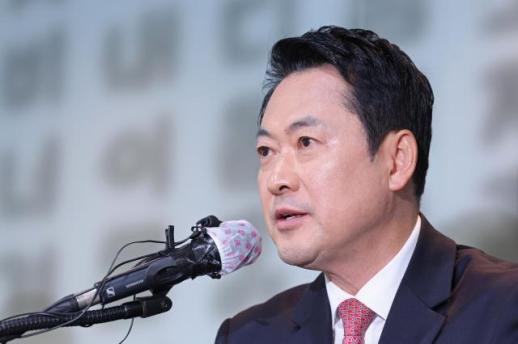 Jang Dong-hyuk Calls Opposition's Special Prosecutor Proposal Unconstitutional Jang Dong-hyuk, the leader of the People Power Party, criticized the opposition's proposed "manipulated prosecution special prosecutor" as "unconstitutional and illegal." Speaking at a press conference hosted by the Seoul Foreign Correspondents' Club in central Seoul on May 8, Jang stated, "The special prosecutor appointed by President Lee Jae-myung would have the authority to dismiss charges against the president, ultimately aiming to eliminate the trial of the president altogether." He added, "This directly contradicts the fundamental principle of the rule of law that states 'no one can be a judge in their own case' and the constitutional spirit that 'all citizens are equal before the law.' Such a special prosecutor is unimaginable in a country that adopts liberal democracy and the rule of law." Jang also expressed concerns regarding the foreign and security policies of the Lee Jae-myung government. He remarked, "I have significant concerns about the foreign and security policies of the Lee administration," noting that the current policies differ considerably from those of past progressive governments. He pointed out that President Lee referred to U.S. Forces Korea as a "foreign military" and is hastily pushing for the transfer of wartime operational control. "Many South Koreans are worried that this policy direction is aimed at the withdrawal of U.S. Forces Korea," he said. Jang urged a shift in the government's foreign and security policy. He emphasized, "The People Power Party firmly believes in strengthening the South Korea-U.S. alliance and adopting 'peace through strength' as the cornerstone of our foreign and security policy. I hope the government will change its policy direction now to prioritize national interests and the well-being of the people."* This article has been translated by AI. 2026-05-08 16:09:05
 -
 KOSPI Closes Slightly Higher on Individual Investor Buying Amid Profit-Taking The KOSPI, which started lower, closed slightly higher on May 8, buoyed by buying from individual investors. As the market digests the recent surge, a rotation among stocks continues. According to the Korea Exchange, the KOSPI rose by 7.95 points (0.11%) to close at 7,498.00. The index opened at 7,353.94, down 136.11 points (1.82%) from the previous session. Lee Kyung-min, a researcher at Daishin Securities, noted, "The domestic market is seeing profit-taking after a sharp rise recently, with foreign investors expanding net selling, particularly in large electric and electronics sectors." He added, "The semiconductor sector within the KOSPI is taking a breather, while rotation into robotics and neglected sectors continues." In the securities market, individuals and institutions net bought 4.79 trillion won and 1.28 trillion won, respectively, while foreign investors net sold 6.23 trillion won. Among the top market capitalization stocks, SK Hynix (1.93%), Hyundai Motor (7.17%), Samsung C&T (4.32%), and Samsung Biologics (0.27%) saw gains, while Samsung Electronics (-1.10%), SK Square (-0.09%), LG Energy Solution (-1.35%), Doosan Enerbility (-4.99%), and HD Hyundai Heavy Industries (-5.05%) declined. The KOSDAQ index closed at 1,207.72, up 8.54 points (0.71%). It started the day at 1,199.47, a slight increase of 0.29 points (0.02%), and quickly regained the 1,200 mark shortly after opening. In the KOSDAQ market, foreign and institutional investors net bought 518.3 billion won and 82.6 billion won, respectively, while individuals net sold 592 billion won. Among the top KOSDAQ stocks, EcoPro BM (0.85%), Rainbow Robotics (12.48%), Kolon TissueGene (11.52%), Samchundang Pharm (1.13%), ABL Bio (2.93%), and Rigakem Bio (2.41%) closed higher, while EcoPro (-2.94%), Alteogen (-4.49%), Rino Industrial (-0.79%), and HLB (-2.18%) fell.* This article has been translated by AI. 2026-05-08 16:07:16
 -
 Kolmar posts record quarterly profit amid rising demand for sunscreen products SEOUL, May 8 (AJP) - Cosmetics maker Kolmar posted its best-ever quarterly results, thanks to surging demand for sun-care products ahead of the summer season. Its operating profit for the first three months of this year rose 31.6 percent from a year earlier to 78.9 billion Korean won (about US$54 million), while revenue increased 11.5 percent to 728 billion won and net profit jumped 158.7 percent to 60 billion won. Both operating profit and revenue reached record highs for any quarter, a notable achievement given that the first quarter is typically a slow season for the cosmetics industry. Kolmar manufactures a range of cosmetics including sunscreen and skincare products for major brands such as Innisfree and Dr.Jart+ as well as indie beauty brands like Goodai Global. In particular, its line of sun-care products developed in collaboration with Goodai Global recently surpassed 100 million units in cumulative sales over the past five years. A Kolmar staffer attributed the company's best-ever first-quarter performance to surging demand for sunscreen and related products as consumers stock up ahead of the summer months. 2026-05-08 16:06:02