
Journalist

Lee Hugh
-
 Sulwhasoo Targets Japan With Pop-Up Experience at @cosme Tokyo Amorepacific’s luxury cosmetics brand Sulwhasoo is stepping up its push into Japan, setting up a brand experience space at the country’s largest beauty platform to go beyond sales and introduce its K-luxury skincare philosophy and heritage. According to the beauty industry on the 7th, Sulwhasoo will run a large-scale brand experience event through the 12th at @cosme Tokyo in Tokyo. @cosme Tokyo is a leading Japanese beauty platform where brand trust is built on consumer reviews and in-person testing, and it is considered a key retail channel that strongly influences purchasing decisions. Sulwhasoo said it is prioritizing building trust to appeal to Japanese consumers known for demanding standards in basic skincare. Rather than focusing on immediate results or sales volume, the brand plans to emphasize its long-standing story of blending Eastern aesthetics with modern science. Pop-up visitors can try Sulwhasoo’s signature lineup and experience the brand firsthand. The move is also drawing attention as part of Amorepacific’s broader expansion strategy in Japan. In 2022, the company placed Laneige officially on @cosme, marking a major step in its Japan entry. More recently, it has reported notable growth in Japan led by function-focused derma cosmetic brands such as Aestura and COSRX. By widening customer touchpoints for Sulwhasoo, the group’s flagship high-end brand, Amorepacific aims to strengthen its position in Japan’s beauty market as a leading K-beauty company. “Using this brand experience event as a starting point, Sulwhasoo plans to gradually expand brand awareness in Japan and continue strengthening points of contact with local consumers,” an Amorepacific official said. 2026-05-07 10:52:11
 -
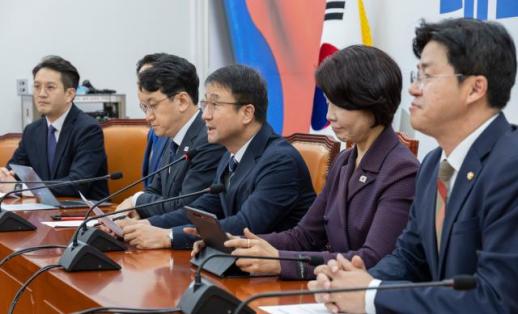 Democratic Party urges People Power Party to join vote on constitutional amendment The Democratic Party on May 7 again urged the People Power Party, which is maintaining a party line opposing a proposed constitutional amendment, to cooperate by taking part in a floor vote. The party also said that if a vote cannot be held at the plenary session because the People Power Party does not attend, it will move to convene another session soon and try again. The Democratic Party made the request at a policy coordination meeting held at the National Assembly on Thursday morning. Floor leader Han Byung-do said, “The only party opposing a constitutional amendment that has built social consensus and is supported by a majority of the public is the People Power Party.” He warned that, as President Lee Jae-myung has said, those who oppose the amendment could be seen as “defenders of an illegal martial law.” Addressing People Power Party lawmakers, Han said, “If you have even a shred of conscience and conviction, I hope you will participate in the vote.” He added that if the party “evades the historic responsibility of constitutional reform,” it will face “the people’s judgment.” Cheon Jun-ho, senior deputy floor leader for parliamentary operations, said a vote is scheduled on an amendment aimed at enshrining the spirit of the May 18 movement in the Constitution. “The National Assembly should not be ashamed before the fallen and the bereaved,” he said, urging the People Power Party to enter the chamber and vote. Cheon added that lawmakers should not “take away the public’s chance to choose the amendment directly,” and said that if they do, they cannot avoid criticism, as Lee has said, of being “defenders of an illegal martial law.” He urged them not to “commit another wrongdoing in history.” After the meeting, Kim Han-kyu, senior deputy floor leader for policy, told reporters that because a constitutional amendment requires approval by two-thirds of lawmakers, it cannot pass without attendance. He said that if the vote is not established, National Assembly Speaker Woo Won-shik, who has the authority to convene and place items on the agenda, will set another plenary schedule. Senior spokesperson Kang Jun-hyeon also said that if the People Power Party does not come to Thursday’s plenary session, the vote cannot proceed. He said he understands the floor leadership is pushing to hold another plenary session as early as Friday if the measure is rejected.* This article has been translated by AI. 2026-05-07 10:51:16
 -
 HLB Group to Hold 2026 HLB Forum to Review Drug Pipeline, Strategy HLB Group said Wednesday it will hold the “2026 HLB Forum” for two days starting May 12 at Sofitel Ambassador Seoul, under the theme “DNA of Success, Continuous Innovation; Unstoppable Challenge.” Now in its fourth year, the forum will bring together the group’s biotech affiliates along with pharmaceutical, biotech and investment experts from South Korea and abroad. The event will review global industry trends and assess progress and next steps for key pipelines, the company said. HLB said it will share updates on new modality development alongside broader global biotech trends. A main focus will be development and commercialization strategy for next-generation oncology programs following its liver cancer and bile duct cancer drug candidates that are in the approval stage. Affiliates will also present pipeline progress and follow-up plans, with discussions aimed at refining specific approaches. The forum will also cover major industry issues including the regulatory environment, disease-specific development strategies, artificial intelligence-based drug development, investment trends and examples of entering the U.S. market. HLB said it plans to use the forum to strengthen cooperation among affiliates and speed commercialization of its pipeline. The group recently hired global pharmaceutical and biotech business development expert Yang Eun-young as president to bolster global commercialization capabilities across its affiliates, it said. “This forum is an opportunity to make our future strategy more concrete based on the drug development experience and global network the group has built,” Nam Gyeong-suk, managing director in HLB Group’s Bio Strategy Planning Team, said in a statement. “We will continue strengthening our R&D and commercialization capabilities so each affiliate’s pipeline can translate into meaningful results in the global market.”* This article has been translated by AI. 2026-05-07 10:49:01
 -
 CJ CheilJedang to Showcase Korean Traditional Spirits at PGA Tour CJ Cup Byron Nelson CJ CheilJedang is using the PGA Tour’s CJ Cup Byron Nelson to promote Korean traditional spirits in the United States. The company said May 7 it will serve cocktails made with Munbaeju and Gamuchi soju at this year’s tournament, aiming to introduce players and spectators to the aroma and flavor of Korean traditional liquor and build a foothold for expansion in global markets. CJ CheilJedang also offered four Munbaeju-based cocktails at last year’s event. Munbaeju is a distilled spirit made from grains such as millet and sorghum, known for a wild pear-like aroma even without additives. Lee Seung-yong, head of Munbaeju Brewery, said, “It is meaningful to be able to introduce Munbaeju to local U.S. and global consumers again this year,” adding that he expects a positive impact on future sales. The company is also preparing a traditional-liquor business to globalize “K-liquor.” In November last year, it partnered with small Korean distilleries and applied for a trademark for a premium distilled-spirit brand, jari. The name refers to a place where people gather and reflects an aim for Korean traditional liquor to “take its place” in consumers’ minds worldwide. CJ CheilJedang has signed contracts with Munbaeju Brewery and Danong Bio, which produce Munbaeju and Gamuchi soju, and is aging each base spirit at a maturation facility in Nonsan, South Chungcheong province. Targeting the U.S. market, where consumers are familiar with K-food and value food-and-drink pairings, CJ CheilJedang plans to launch related products in the second half of this year. A company official said it will work to modernize the traditional-liquor industry and promote shared growth so Korean-style distilled spirits can become a leading Asian category alongside Japanese sake and Chinese baijiu. CJ CheilJedang has recently stepped up K-food promotion through sports events. In February, it operated a “bibigo zone” in Milan, Italy, where the 2026 Milan-Cortina d’Ampezzo Winter Olympics were held, serving items including dumplings, chicken and tteokbokki. * This article has been translated by AI. 2026-05-07 10:48:05
 -
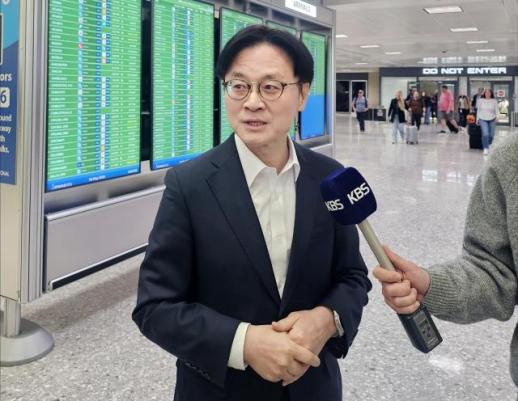 Korea weighs Louisiana LNG project for $200 bln US investment package SEOUL, May 07 (AJP) - South Korea has begun reviewing a liquefied natural gas export terminal project in Louisiana as a potential first project under its $200 billion strategic investment package with the U.S., officials and industry sources said Thursday. The Ministry of Trade, Industry and Energy recently selected a consortium of Samil PwC and Kim & Chang to advise on the Louisiana LNG project, part of the Korea-U.S. strategic investment package agreed last year. Industry watchers say the Louisiana LNG project reflects Washington’s broader push to increase LNG exports, particularly as demand for non-Russian energy has grown in Europe following the war in Ukraine and Asian demand for alternative supplies has risen amid instability around the Strait of Hormuz. The project involves building export infrastructure to liquefy and ship natural gas produced along the U.S. Gulf Coast to markets in Europe and Asia. For South Korea, however, the key issue will be whether the investment can generate tangible benefits for Korean companies, rather than simply meeting U.S. demands. Seoul is expected to seek conditions that allow Korean firms to participate in construction, supply steel and equipment, and secure stable access to U.S. LNG. The move comes as Industry Minister Kim Jung-kwan departed for North America on Tuesday for a four-day trip focused on advancing investment talks with the U.S. and strengthening industrial cooperation with Canada. Kim arrived in Washington on Thursday after visiting Ottawa, where he sought Canadian support for Korean companies bidding for the country’s submarine procurement project. He said the U.S. Trade Representative’s ongoing Section 301 investigation into countries including South Korea and Japan appeared to be aimed at restoring the 15 percent reciprocal tariff that had been ruled unlawful. “I understand the purpose of the investigation is to restore the 15 percent tariff,” Kim said. “Any U.S. measures following the investigation are likely to remain within that scope, and we will make every effort to ensure that they do.” Kim also pushed back against concerns that South Korea was moving slower than Japan in implementing its U.S. investment package. “Specific projects cannot be realized simply by announcing them. They need to be carried out in concrete terms,” he said. Kim said details could be discussed only after the special act on U.S. investment takes effect in June. The special act on the management of Korea-U.S. strategic investment was passed by the National Assembly on March 12 and is scheduled to take effect on June 18. Asked about the Louisiana LNG project, Kim stopped short of confirming it as the first investment. “It is true that the Louisiana project was among the projects being reviewed,” Kim said. “But we are not yet at a stage where we can say whether it will become the first project.” 2026-05-07 10:45:10
 -
 SK Biopharm Q1 Operating Profit Jumps to 89.8 Billion Won on Cenobamate U.S. Growth SK Biopharm posted its strongest results on record, driven by accelerating U.S. growth of its epilepsy drug cenobamate, sold in the United States as Xcopri. The company said in a regulatory filing on 7 that its first-quarter operating profit on a consolidated basis totaled 89.8 billion won, up 249.7% from a year earlier. Revenue rose 57.8% to 227.9 billion won. A company official said the quarter was notable because operating profit came in close to 90 billion won even as research and development and marketing costs increased from a year earlier, marking an all-time high. The official added that a structure in which sustainable profit and cash flow generated by cenobamate are reinvested into R&D is taking hold, putting the company on what it described as a virtuous cycle. Net profit was 102.7 billion won, up 423.5%. U.S. cenobamate sales rose 48.4% to 197.7 billion won, supporting the overall gain. Prescription metrics also improved, the company said. In March, total monthly prescriptions (TRx) approached about 47,000, and new patient prescriptions (NBRx) topped 2,000 for the first time. For further growth, SK Biopharm said it submitted a New Drug Application to the U.S. Food and Drug Administration in March for an oral suspension formulation. It is also seeking to file within the year to expand indications to primary generalized tonic-clonic seizures (PGTC) and pediatric patients. The company is also pushing overseas expansion. In China, it began commercialization in March through partner company Ignis Therapeutics. In Japan, it said approval procedures are under way within the year.* This article has been translated by AI. 2026-05-07 10:36:18
 -
 Arm Says Demand for Its Data Center AI Chip Has Doubled, Challenging Nvidia’s Grip British chip designer Arm says demand for its in-house data center artificial intelligence chip is running ahead of expectations, accelerating its shift into selling finished chips. The move puts Arm into more direct competition in an AI chip market that has largely grown around Nvidia’s graphics processing units, as Arm pushes its own CPU-based product. The Financial Times and The Wall Street Journal reported that Arm said in an earnings release on 7일(현지시간) that combined demand for its self-developed data center chip, the “AGI CPU,” is projected at $2 billion for fiscal 2027 and 2028. That is double the $1 billion demand forecast Arm gave when it introduced the chip in March. Arm kept its revenue outlook for the chip at $1 billion, saying it has not yet secured enough supply to meet the full $2 billion in projected demand. On a conference call, Arm CEO Rene Haas said the $1 billion figure cited in March reflected “secured supply” that could support that level of demand. He said that includes access to memory, wafers, packaging and test equipment, and that the company is now working to line up supply to support $2 billion in demand. Haas added that the company is working around the clock “to find the right solutions for customers.” Arm expects revenue from the chip to begin showing up in the fourth quarter of its current fiscal year. Arm has long grown by licensing semiconductor design intellectual property to companies including Nvidia, Google and Amazon. By launching its first finished, in-house chip in its roughly 35-year history, Arm is also positioning itself as a competitor to some of its existing customers. The FT said that early in the AI boom, demand for CPUs was relatively limited as customers rushed to buy Nvidia GPUs to train AI models. More recently, it said, demand has risen for CPUs that support running AI applications, benefiting Arm as well as Intel and AMD. Haas said demand for the AGI CPU “exceeded expectations” and that Arm has established itself as a computing platform for the AI era. He also forecast that CPU demand will quadruple in the future. Arm said it expects supplying technology for AI data centers to become its biggest business over the long term. It maintained its target of reaching $15 billion in chip revenue by 2031. “The direction is clear,” Haas said, adding that customers want Arm “at the center of the data center.” The push also aligns with a strategy by Arm’s largest shareholder, SoftBank Chairman Masayoshi Son, to build an AI semiconductor supply chain. Son has promoted what he calls the “Izanagi Project” to foster an AI chip ecosystem that can take on Nvidia. Haas was appointed last month as CEO of SoftBank International Group, taking a central role in that strategy. Record revenue, but rising costs in focus Arm reported first-quarter revenue of $1.49 billion, up 20% from a year earlier and a record high. Adjusted earnings were 60 cents a share, above the market estimate of 58 cents. Royalty revenue rose 11% to $671 million on growth in smartphones and AI applications, though it fell short of some market expectations. License and other revenue climbed 29% to $819 million, beating expectations; the company attributed the increase to stronger demand for AI chip design and platforms. For the second quarter, Arm forecast revenue of $1.21 billion to $1.31 billion and adjusted earnings of 36 cents to 44 cents a share. The market expects revenue of $1.25 billion and adjusted earnings of 37 cents a share. Arm executives said costs tied to building out supply chains are likely to be a near-term burden. They said operating expenses are expected to rise sequentially by a few percentage points each quarter this year, but projected that by year’s end revenue growth will outpace expense growth. Arm shares have more than doubled so far this year on expectations for its new AI chip. After the earnings release, the stock fell in after-hours trading as concerns about supply constraints and rising costs drew attention.* This article has been translated by AI. 2026-05-07 10:34:52
 -
 Kakao posts record first-quarter earnings as AI fuels Korea's platform giants SEOUL, May 07 (AJP) - South Korea's platform giants are converting an artificial intelligence investment cycle into top-line momentum, with Kakao joining rival Naver in delivering AI-revved first-quarter earnings. According to regulatory filings on Thursday, Kakao's consolidated operating profit jumped around 65.9 percent from a year earlier to 211.4 billion won ($145.7 million) on an adjusted basis, while revenue climbed 11.1 percent to 1.94 trillion won — both first-quarter records. The figures reclassify Kakao Games as a discontinued operation following its planned divestiture. Platform revenue, the company's core engine, rose 16 percent to 1.18 trillion won. Talk Biz advertising sales advanced 16 percent to 338.4 billion won, helped by a 27 percent surge in business-messaging revenue as financial-sector advertisers ramped up spending and Kakao diversified its message products. Mobility and payments, grouped under "platform others," climbed 30 percent to 506.5 billion won. Kakao Mobility logged a third consecutive quarter of double-digit growth across taxi, parking and last-mile logistics, while Kakao Pay topped 300 billion won in quarterly revenue for the first time. "The first quarter was encouraging in that we achieved qualitative growth by reinforcing our fundamental competitiveness," Kakao CEO Chung Shin-a said, adding that Kakao would now pivot from a messenger used by 50 million Koreans into "an agentic AI platform." Shares of Kakao edged down 0.70 percent to 45,959 won as of 10:30 Thursday amid broad KOSPI profit-taking. The company, running a chat platform that most Koreans use, has been racing to embed generative AI across its services, including a high-profile tie-up with OpenAI to integrate ChatGPT-based features into KakaoTalk, alongside infrastructure and model partnerships aimed at accelerating its agentic AI roadmap. The tailwind echoes that of larger rival Naver, which reported earlier a 16.3 percent jump in first-quarter revenue to 3.24 trillion won and a 7.2 percent rise in operating profit to 541.8 billion won, as AI-integrated advertising and consumer-to-consumer commerce drove growth. Naver said AI now accounts for more than half of its advertising revenue growth through sharper targeting, while its global ventures arm — anchored by Spain's Wallapop, Poshmark and Kream — saw sales climb 18.4 percent. The company has also signed memorandums with AMD and Tata Consultancy Services to build out AI infrastructure and cloud services 2026-05-07 10:33:58
 -
 LG Uplus Q1 Operating Profit Rises 6.6% to 272.3 Billion Won on Subscriber Growth LG Uplus said revenue and operating profit rose in the first quarter, helped by subscriber growth and gains in its corporate infrastructure business. On May 7, the company reported first-quarter 2026 consolidated revenue of 3.8037 trillion won, up 1.5% from a year earlier. Service revenue rose 3.3% to 3.0370 trillion won, while handset revenue fell 5.2% to 766.9 billion won. Operating profit increased 6.6% to 272.3 billion won. Mobile revenue climbed 3.2% to 1.6526 trillion won on higher subscriber lines and stronger core telecom competitiveness. Mobile service revenue, excluding interconnection revenue, rose 3.7% to 1.5878 trillion won. Total mobile subscriber lines grew 6.4% from a year earlier to about 30.931 million, with a net increase of 220,000 lines during the quarter. MNO lines rose 7.1% to about 21.967 million, and MVNO lines increased 4.7% to about 8.964 million. 5G handset subscribers rose 11.0% to 9.473 million, lifting 5G penetration among handset subscribers to 84.2%. MNO service ARPU, excluding IoT and MVNO lines, edged up 0.3% to 35,646 won. Smart home revenue, which includes IPTV and internet, increased 4.1% to 656.3 billion won, supported by growth in gigabit internet subscribers. Internet revenue rose 7.9% to 320.0 billion won, and internet subscribers posted a net gain of 62,000 in the quarter to 5.64 million, up 4.5% from a year earlier. IPTV revenue increased 1.5% to 335.1 billion won, and IPTV subscribers rose 2.8% to 5.767 million. Corporate infrastructure revenue grew 6.3% to 435.6 billion won. AIDC revenue jumped 31.0% to 114.4 billion won on expanded colocation and DBO sales. Solution revenue slipped 0.8% to 117.9 billion won, and corporate line revenue fell 0.1% to 203.3 billion won. Voice revenue rose 1.1% to 84.5 billion won. Internet phone revenue fell 1.1% to 40.9 billion won, while corporate and international voice revenue increased 3.2% to 43.6 billion won. "LG Uplus aims to build a stable profit structure by making stronger profitability in its core telecom business a key task and systematically securing competitiveness in its AX business," said CFO and CRO Yeo Myeong-hee. "We will consistently pursue this strategic direction to accelerate mid- to long-term growth and continue to enhance corporate value," she said. LG Uplus said it will not pay a first-quarter dividend. The company said it will maintain its current dividend policy of paying twice a year, with interim and year-end dividends, instead of quarterly dividends. 2026-05-07 10:27:07
 -
 BTS gets state-visit red-carpet treatment in Mexico SEOUL, May 07 (AJP) - K-pop supergroup BTS appeared alongside Mexican President Claudia Sheinbaum at the presidential office in Mexico City on Thursday, drawing tens of thousands of fans ahead of the group's sold-out stadium concerts. Sheinbaum welcomed the seven-member band during her regular morning press briefing, known as "Mañanera," describing BTS as artists who "always convey messages of friendship, peace and love." The group is scheduled to perform at Estadio GNP Seguros on Thursday, Saturday, and Sunday, the third stop on the North American leg of their "ARIRANG" World Tour, following Tampa and El Paso. All three concerts were sold out immediately after tickets went on sale, local organizers said. The Mexico City Chamber of Commerce estimated the performances could generate approximately $107.5 million in economic activity. After Mexico City, the tour moves on to Stanford and Las Vegas before heading into Europe. BTS is also set to return to Latin America in October, with dates scheduled in Bogotá, Lima, Santiago, Buenos Aires and São Paulo. Member Jimin shared a brief video from the scene on his Instagram story, captioning it "Mexico, Gracias" with purple heart. BTS remains the most-streamed K-pop act in Mexico, which ranked as the world's fifth-largest K-pop streaming market, according to a report published by Spotify in August 2025. The group's 2020 album "MAP OF THE SOUL : 7" topped Mexico's most-streamed K-pop albums list, while "Dynamite" ranked as the country's most-streamed K-pop song. Eight of Mexico's top 10 most-streamed K-pop albums were BTS releases, Spotify said. On the global charts, BTS' latest title track "SWIM," from its fifth studio album "ARIRANG," ranked No. 2 on both Billboard's weekly Global Excl. U.S. and Global 200 charts for a sixth consecutive week as of May 4. 2026-05-07 10:23:41